REVIEW · ANGKOR WAT
Angkor Wat: Guided Jeep Tour Inclusive lunch at local house
Book on GetYourGuide →Operated by Tours by Jeeps · Bookable on GetYourGuide
Rumbling over temple roads beats bus trips. This guided jeep tour strings together Angkor Thom, Bayon, Ta Prohm, and Angkor Wat with an expert guide who explains what you’re seeing. It’s built for a full day that still feels manageable, with breaks, snacks, and a comfy ride between sites.
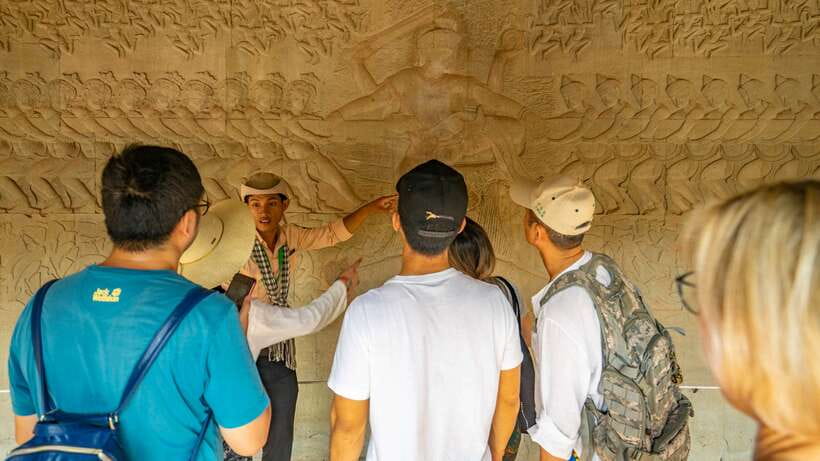
I love the storytelling. Guides like Sorphea, Mao, Bopha, and Sok (you may get one of these guides) help you read the temple carvings and understand why these places matter to Cambodians today.
One thing to plan for: the Angkor Pass costs extra ($37), and temple dress rules can be strict (no shorts/short skirts/sleeveless, and hems must be knee length). If you show up unprepared, that can slow your day.
In This Review
- Key things I’d circle before you book
- Why this Angkor Wat jeep format makes sense
- 8AM pickup and the first wow at Angkor Thom’s gate
- Bayon Temple: what the Giant Faces actually help you notice
- Ta Prohm’s jungle drama, plus the reality of uneven ground
- Snack and water breaks that keep the day from getting ugly
- Lunch at a local house, then a community center moment
- Angkor Wat in the afternoon: your main centerpiece visit
- The jeep ride itself: comfortable, but know the roads
- Dress code and packing: small prep, big payoff
- Price and value: $75 plus the Angkor Pass question
- Who this jeep tour suits best (and who should skip it)
- Should you book this Angkor Wat jeep tour?
- FAQ
- What temples are included on this tour?
- How long is the experience?
- What time does pickup happen in Siem Reap?
- What’s included in the $75 price?
- Is the Angkor Pass included?
- What should I wear to enter the temples?
- Is this tour suitable for pregnant women or wheelchair users?
Key things I’d circle before you book
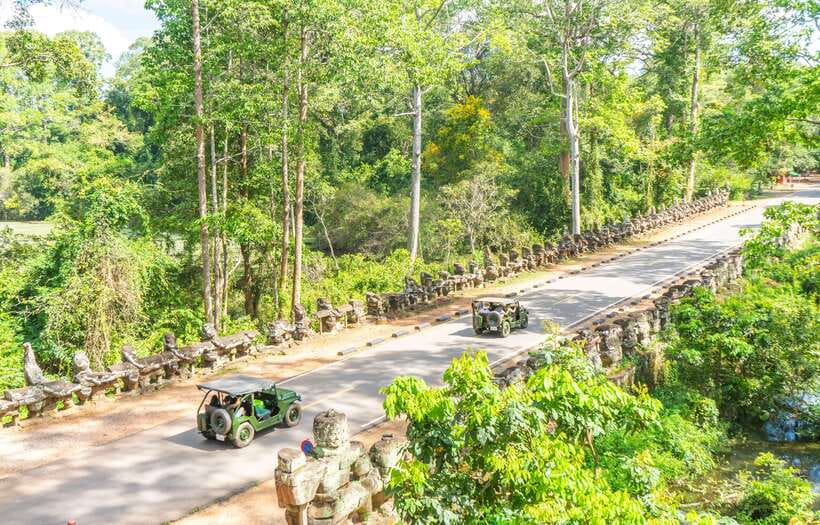
- Jeep comfort plus covered breaks: cold towels, water, and fruit/snacks keep you steady in the heat
- Big-name temples in one day: Angkor Thom, Bayon (Giant Faces), Ta Prohm, and Angkor Wat
- Guide support matters: you’ll get English explanations that connect architecture to local meaning
- Local house lunch: Khmer food in a quieter setting breaks up the temple run
- Community center visit: you also get a chance to meet local Cambodians beyond the temples
Why this Angkor Wat jeep format makes sense
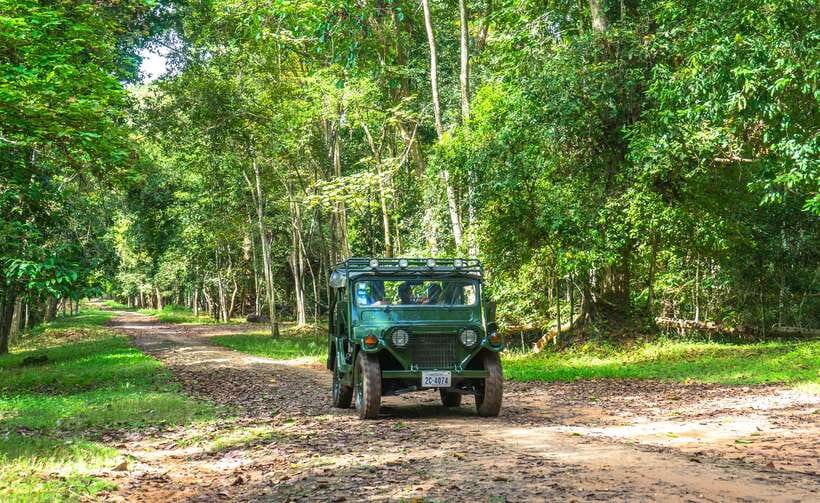
Angkor is huge. Trying to bounce between highlights with slow transport or too many transfers can turn your day into a logistics contest. This tour keeps it simple: you’re in a jeep from morning pickup to late afternoon return, so you spend more time looking up at stone and less time figuring out rides.
I also like the pacing approach. The day isn’t just “walk, walk, walk.” You get scheduled moments to regroup: a snack/fruit break during the temple circuit, plus lunch in a local house setting. That matters because Angkor is visually intense and hot; your brain needs small rests.
And the guide component is the point, not an extra. The temples are easier to appreciate when someone helps you notice details: where the architecture points, why certain carvings show up, and how the sites fit into the bigger Angkor story in ways that locals still value.
You can also read our reviews of more tours and experiences in Angkor Wat.
8AM pickup and the first wow at Angkor Thom’s gate
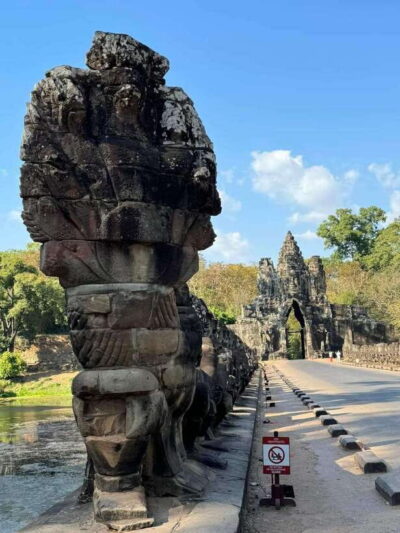
Your day starts with hotel pickup at 8:00am (you should be waiting in the lobby). Then you head for the ancient city of Angkor Thom, entering through a stone-carved gate famous for giant faces and elephant imagery.
This first stop sets the tone. Angkor Thom isn’t just another ruin; it’s where you start seeing how the city was designed as a spiritual and political space. If you’re the kind of person who likes to understand what you’re looking at before you climb too much stone, this is a smart order.
Practical note: you’ll likely be in bright sun for portions of the morning walk. Bring sunglasses and sun hat so the first “wow” moment doesn’t turn into squinting and rushing.
Bayon Temple: what the Giant Faces actually help you notice
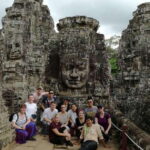
Next comes Bayon Temple, in the middle of Angkor Thom, known for the Giant Face Temple look—those repeating faces that seem to watch you from every direction.
Here’s why this stop is so valuable. Bayon feels like a maze because of its density of details. Without guidance, you can end up taking photos while missing the meaning of the composition. With an English guide, you’re more likely to understand what you’re seeing: the way the faces are positioned, and how the temple’s layout connects symbolism to daily life for those who live around it now.
Also, you’ll typically get time to explore at a comfortable rhythm. From the way the guides operate, it’s not just a drive-by stop—people are given time to look, ask questions, and take photos.
Ta Prohm’s jungle drama, plus the reality of uneven ground
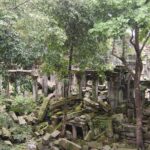
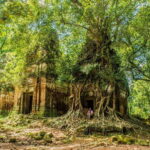
Then you head to Ta Prohm, the temple famous for growing vines and trees that take over the stonework. It’s often the most cinematic site in the complex, because large sections feel like they’re mid-collapse—yet it’s preserved enough to show you the original texture of the place.
This is a stop I’d call “feel it with your feet.” The ground can be uneven, and parts of the structure are crumbling. So if you want great photos, you’ll be moving around a bit more than at some other temples.
One small tip: plan to slow down. Ta Prohm can be visually overwhelming fast. Give yourself time to notice the contrast—green growth beside carved stone, broken edges beside intact details. That contrast is what makes the place memorable.
Snack and water breaks that keep the day from getting ugly
Between temple areas, the tour builds in a break for Cambodian snacks and fruit, plus you’ll have water on hand. Multiple experiences also mention cold towels and drinks like coconut water along the way.
That may sound like “nice extras,” but in practice it changes the experience. A long day at Angkor can wear you out just from heat and concentration. When you’re refreshed, you look longer and remember more.
You’ll also want a daypack for sunscreen, water bottles if needed, and your camera gear. If you keep your essentials easy to grab, you’ll spend more time enjoying stops and less time digging through your bag when the sun hits.
Lunch at a local house, then a community center moment
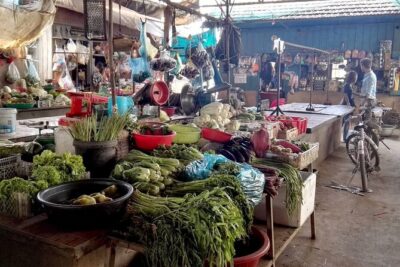
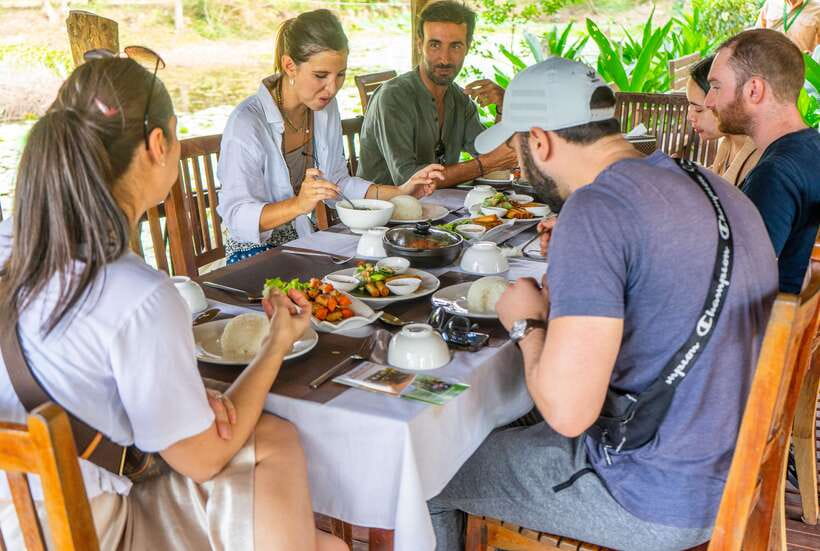
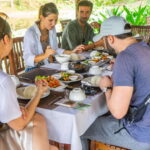
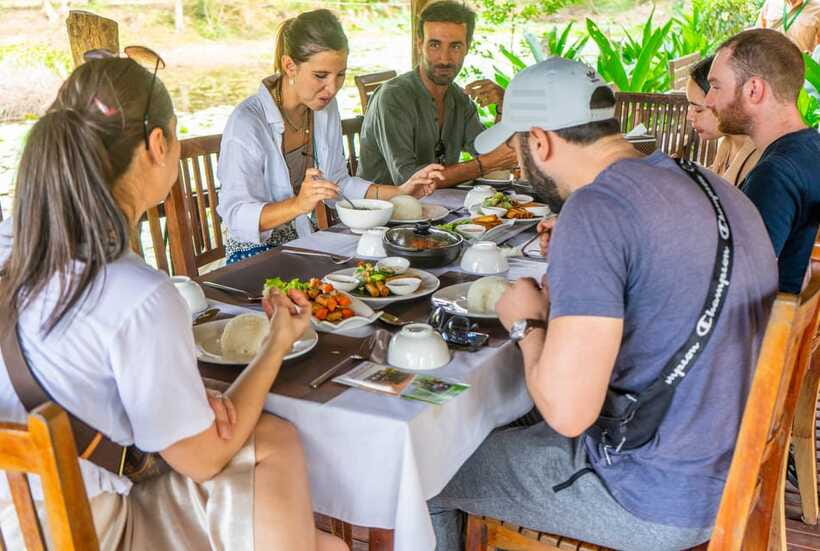
After you’ve worked up an appetite, you stop by a local house for a Khmer lunch in a quieter, more local atmosphere. This is one of the best “reset” points in the day. Temples are loud in your mind—history, scale, detail. Lunch gives you a chance to breathe and recharge.
And the day doesn’t stop at food. The tour also includes time to meet local Cambodians at a community center. That’s a meaningful addition because it shifts the day from only looking at the past to seeing how real people live with the heritage surrounding them.
If you’re curious about daily life in Siem Reap beyond the tourist strip, this combo can feel more grounded than another temple-only day.
Angkor Wat in the afternoon: your main centerpiece visit
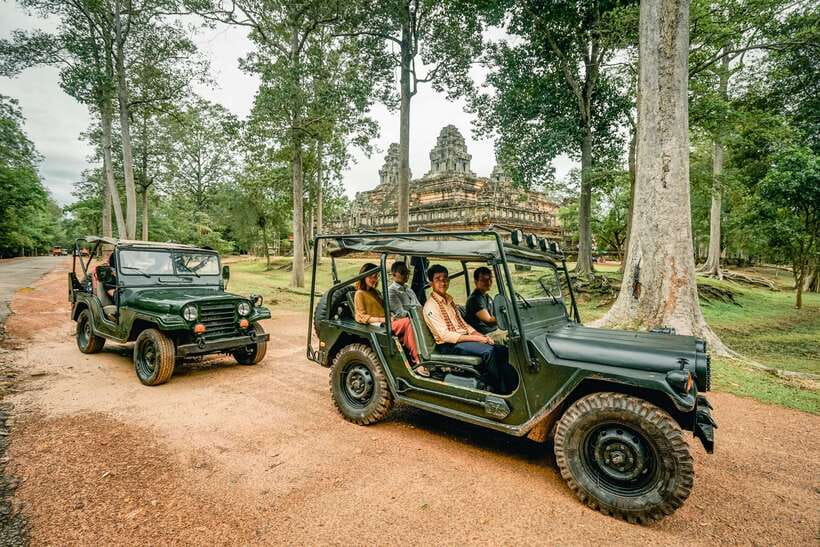
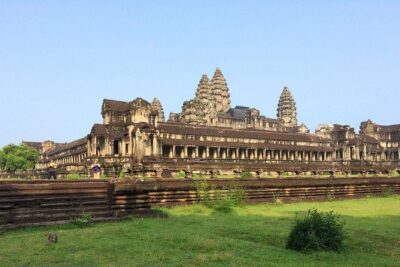
After lunch and the cultural stop, you drive to Angkor Wat. This is the moment most people plan for, and with a guide, it’s also the moment where explanations can really lock in your understanding.
Angkor Wat can feel overwhelming because it’s so large and so carefully composed. The guide’s job here is to help you connect what you see—structures, carvings, and the logic of the layout—to why this temple became such a symbol.
Expect the day to end around 4:00pm, with return pickup to your accommodation. That timing is helpful if you still want energy left for dinner plans in Siem Reap.
The jeep ride itself: comfortable, but know the roads
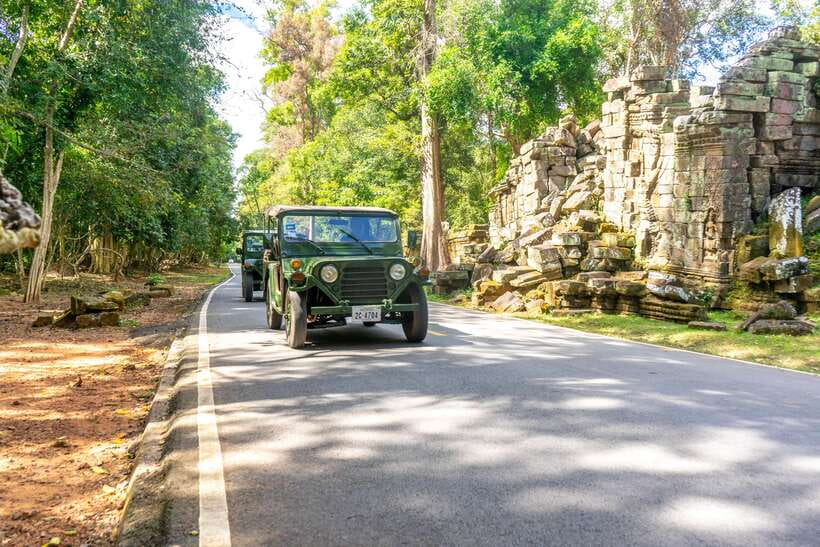
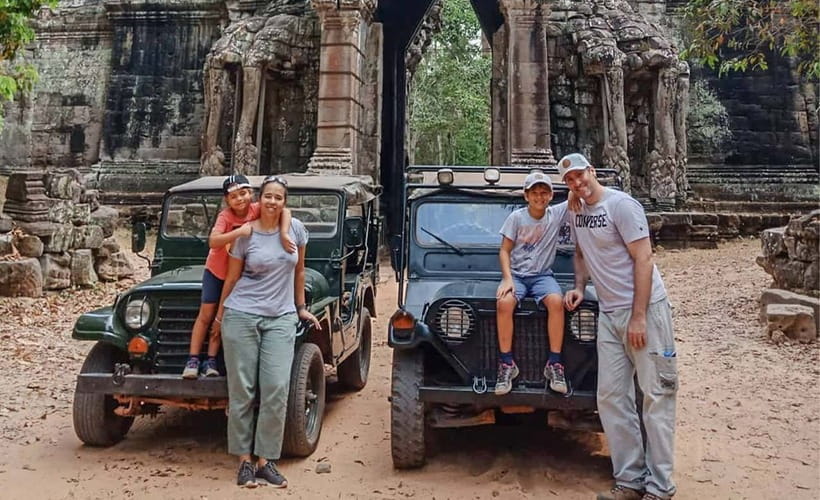
The round trip by jeep is one of the headline features, and the ride quality seems to be a strong point. People describe the jeeps as comfortable and in excellent condition, with a focus on safe driving.
Just don’t expect perfectly smooth roads all day. The route uses a mix of tarmac and dirt paths through and around the Angkor area. If you’re prone to motion sickness, it’s worth thinking ahead.
This is also the best kind of vehicle for seeing Angkor in segments. From the jeep, you can get quick context before walking, then you step out and explore on foot with your guide guiding your attention.
Dress code and packing: small prep, big payoff
Angkor is strict about what you wear. This tour follows the temple entry rules: no shorts, short skirts, or sleeveless shirts. Pants and shorts must be at least knee length long to be permitted.
So if you’re packing light, bring a spare option for temple days—something comfortable but covered. In the heat, that can mean thin, breathable fabric that still meets the knee-length requirement.
For what to bring, the essentials are straightforward:
- Sunglasses
- Sun hat
- Camera
- Sunscreen
- Daypack
This is a day where your comfort affects your photo quality and your attention span. If you’re sun-protected, you’ll see more.
Price and value: $75 plus the Angkor Pass question
At $75 per person for an 8-hour day with jeep transport, an experienced driver, and a professional English-speaking guide, this is not the cheapest option you’ll see in Siem Reap. But it’s also not just transport in disguise.
You’re paying for:
- A structured circuit across multiple major sites in one day
- Guided explanations at the temples (this is the part that improves understanding fast)
- Lunch at a local house plus water, soft drinks, snacks, and fruit
The one financial line-item you must factor is the Angkor Pass, which is not included and costs $37. So your real total is closer to $112 before personal spending.
If you value guided clarity and want to avoid the headache of coordinating your own transport between several temples, the pricing can make sense.
Who this jeep tour suits best (and who should skip it)
This tour is a strong fit if you want:
- A guided Angkor day that covers multiple highlights without switching vehicles repeatedly
- Comfortable transport plus real breaks for food and water
- A clear English guide who connects carvings and layout to meaning
It may not be right for you if:
- You’re pregnant (the tour is noted as not suitable, and you should consult your doctor)
- You use a wheelchair (not suitable per the tour info)
- You strongly dislike walking on uneven, ancient surfaces (especially at Ta Prohm)
If you’re traveling with teenagers or adults who want a “see a lot, understand more” day, this format often works very well.
Should you book this Angkor Wat jeep tour?
If you’re choosing between an all-in-one day tour and a do-it-yourself plan, I’d lean toward booking this one when you care about explanations and comfort. The combination of jeep transport, English guide storytelling, temple-focused stops, and a local Khmer lunch keeps the day moving without feeling rushed.
If you’re on a tight budget, you may want to compare against cheaper options—but remember you still have to buy the Angkor Pass either way. Also, check your clothing before you go so you don’t lose time at the gate.
Overall: if you want one day that feels organized, human, and easy to follow while still covering the major Angkor hits, this is a solid choice.
FAQ
What temples are included on this tour?
The tour includes stops at Angkor Thom (including the carved gate entrance), Bayon Temple, Ta Prohm, and Angkor Wat.
How long is the experience?
The total duration is 8 hours.
What time does pickup happen in Siem Reap?
Pickup is optional, but if you choose it you should be waiting in your hotel lobby at 8:00am.
What’s included in the $75 price?
Round-trip jeep transport, an experienced driver, a professional English-speaking guide, Khmer lunch at a local house, water and soft drinks, plus local snacks and fruits.
Is the Angkor Pass included?
No. The Angkor Pass costs $37 and is not included.
What should I wear to enter the temples?
You can’t wear shorts, short skirts, or sleeveless shirts. Your pants or shorts must be at least knee length to be permitted entry.
Is this tour suitable for pregnant women or wheelchair users?
No. The tour is listed as not suitable for pregnant women and not suitable for wheelchair users.