REVIEW · ANGKOR WAT
Angkor Wat Sunrise by Vintage Jeep – Private Tour
Book on GetYourGuide →Operated by BAYON GUIDES · Bookable on GetYourGuide
Waking up before dawn pays off. This private vintage Jeep tour turns the big-name temples into a smoother, quieter story, starting with sunrise and ending with Bayon’s stone smiles.
What I like most is the early start: you get Angkor Wat when the sky is still changing and the paths feel calm.
The second thing I really like is the mix of famous and off-the-map stops. You do Ta Prohm at a smart time, then roll into Ta Nei for a rare, peaceful jungle-temple pause before the crowds gather.
One consideration: it’s a long, early day with some walking on uneven ground, and you’ll need to follow the dress code for temple areas.
In This Review
- Key highlights you’ll feel right away
- Sunrise at Angkor Wat: lotus ponds, photo angles, and dress rules
- The Jeep ride itself: why private transport changes the day
- Ta Prohm before the crowds: tree roots and the Tomb Raider vibe
- Ta Nei Temple: the quiet jungle stop that often steals the show
- Angkor Thom and Bayon: the royal city scale and the smiling stone faces
- South Gate Angkor: a strong ending point for photos and atmosphere
- Price and tickets: what $76 covers, what costs extra, and why it can still be good value
- What to expect from guides like Long, Leang, and Chomnan
- Who this tour suits best (and who might want another option)
- Small, real-world tips for a smoother day
- Should you book Angkor Wat Sunrise by Vintage Jeep?
- FAQ
- What time does pickup happen?
- How long is the tour?
- Is the Angkor Archaeological Park pass included?
- What temples are included in the itinerary?
- What is included in the price besides the tour guide and transport?
- What should I wear or bring?
- Is free cancellation available?
Key highlights you’ll feel right away
- Sunrise timing at Angkor Wat with calm viewing and lotus-pond reflections
- Private vintage Jeep for open-air views and a guide who can adjust your pace
- Ta Prohm early access to see the tree roots before the biggest waves arrive
- Ta Nei jungle temple stop that’s quieter and less visited
- Angkor Thom + Bayon for the classic smiling stone faces and royal-city scale
- Cold water, fresh fruit, and cold towels to make the morning easier
Sunrise at Angkor Wat: lotus ponds, photo angles, and dress rules
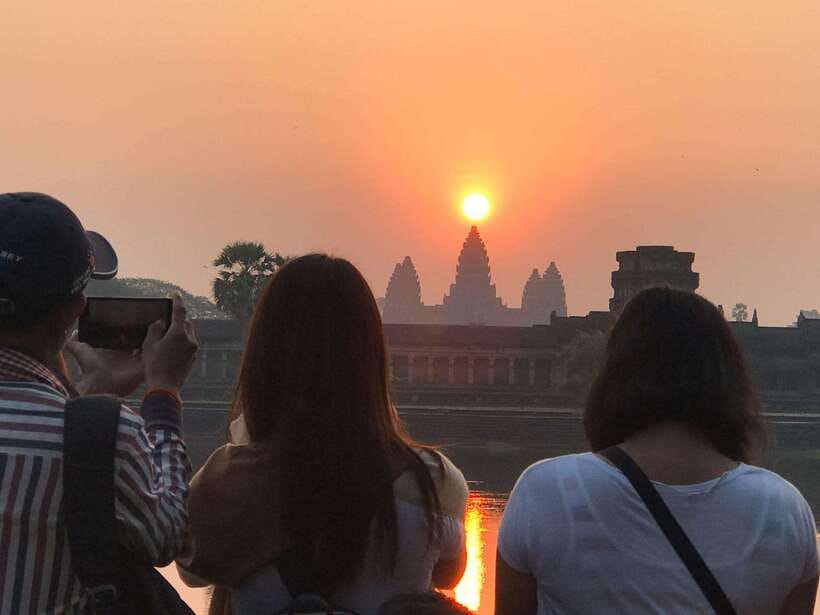
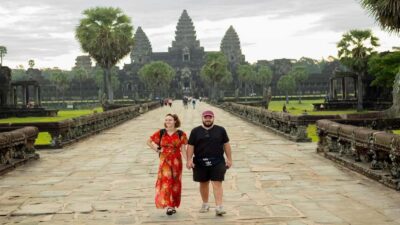
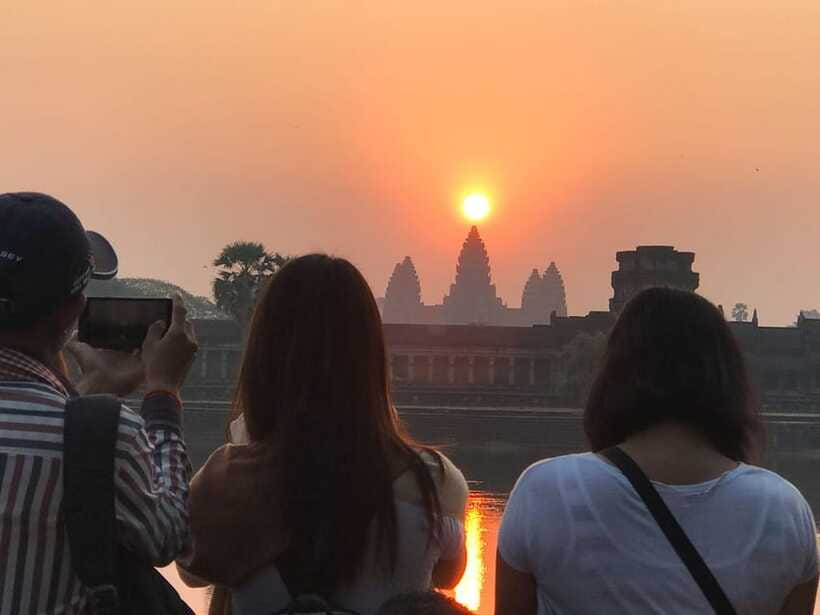
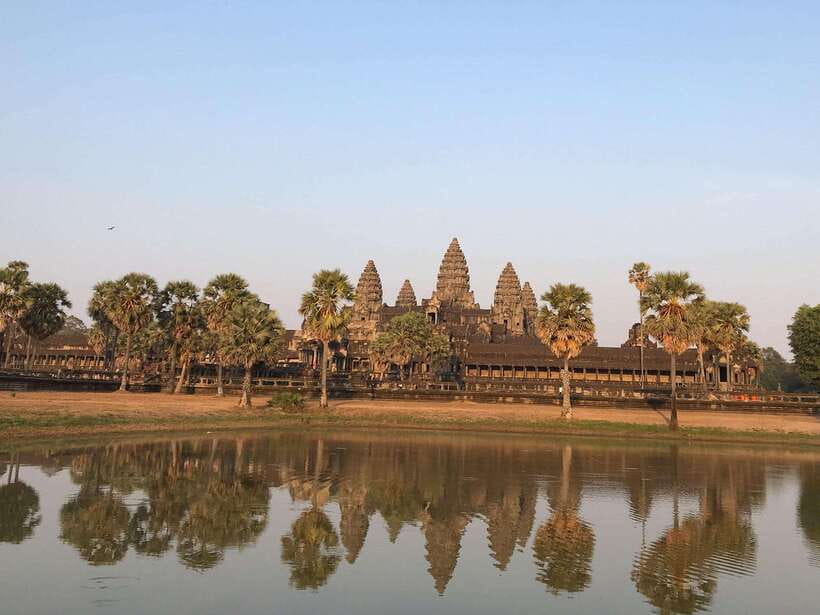
Angkor Wat at sunrise is the kind of sight that’s hard to explain until you’re there. The timing matters because the light shifts fast, and the lotus ponds can look almost mirror-like when the air is still. Your guide brings the background too, so you’re not just staring at impressive towers.
The key practical win is that you start early enough to find calmer viewing. You’ll spend about 3 hours around Angkor Wat at sunrise, which is enough time to take photos, walk the grounds, and get oriented without feeling rushed by crowds.
You also want to plan your comfort around the early hours. Bring a flashlight (useful in the dark before things open), wear comfortable shoes, and use insect repellent. The morning is cool at first, but the day builds heat once you’re out in the open.
Dress rules are not just formalities here. Shorts and sleeveless shirts aren’t allowed, and for the central Angkor Wat tower area you need knee and shoulder coverage. If you forget, you might end up sitting out parts of what you came for, so pack accordingly (sport sandals are recommended).
You can also read our reviews of more tours and experiences in Angkor Wat.
The Jeep ride itself: why private transport changes the day
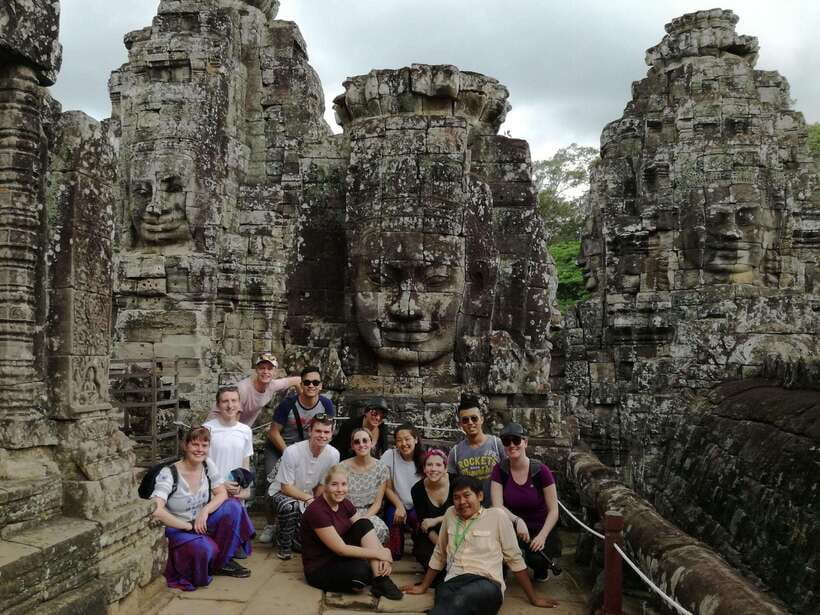
This isn’t a bus tour. It’s a private vintage Jeep with an experienced driver and a local English-speaking guide, so you move as a group and your schedule isn’t tied to a long line of strangers.
That flexibility shows up in small ways that add up. Your itinerary is fixed on paper, but you can keep a steadier pace, stop when you want better photos, and spend your energy where it actually matters. In past days with this tour style, guides like Long and Chomnan have been praised for picking smart spots away from the busiest areas and helping guests with photo timing.
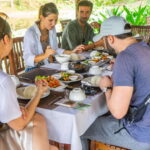
Also, the included comfort items help a lot at sunrise. You get cold drinking water, fresh fruit, and cold towels, which is a simple touch but makes a real difference when you’re up early and moving between temple zones.
Ta Prohm before the crowds: tree roots and the Tomb Raider vibe
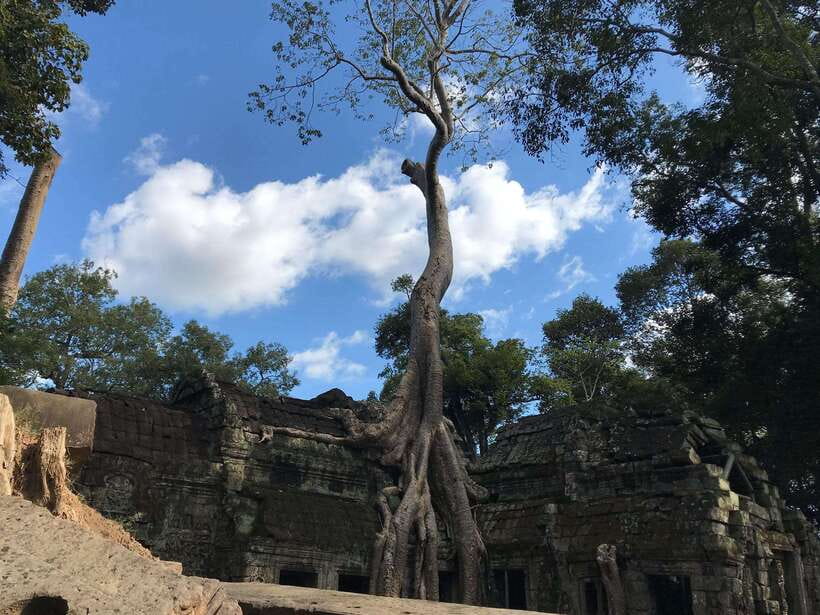
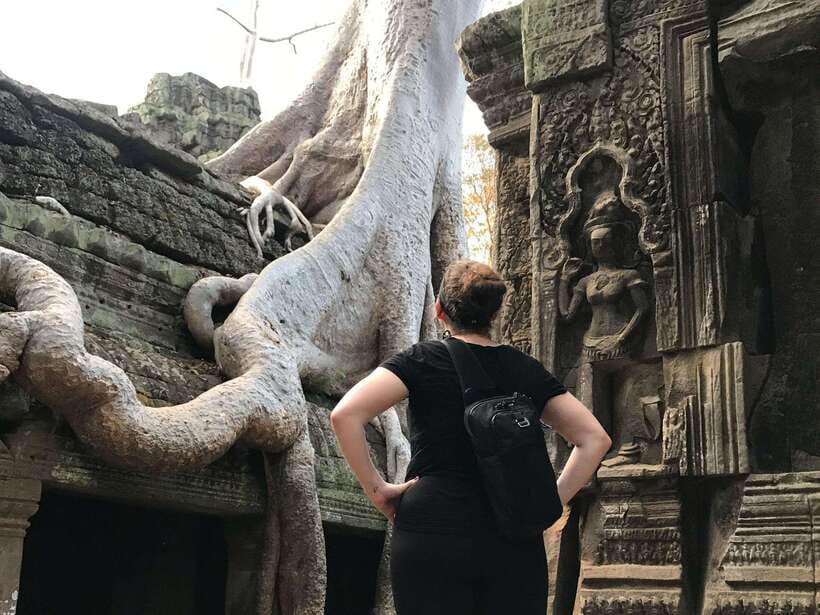
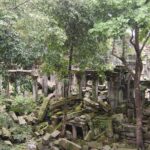
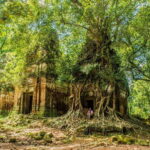
After sunrise, you head to Ta Prohm by Jeep, with about 1 hour for a guided visit. This is the temple people instantly recognize because the giant tree roots wrap the ruins in a way that looks staged, even though it’s natural growth holding ancient stone together.
The best part is doing it early. Ta Prohm can get busy fast, and the difference between arriving in the morning wave versus the main wave is night and day for how you experience the place. When it’s quieter, you can actually look closely at carvings, root patterns, and the layered angles of the courtyard without weaving through constant streams.
Your guide also helps you see Ta Prohm as more than movie scenery. They’ll explain what you’re looking at—how the ruins were preserved and why the roots matter—so your visit feels connected to the wider Khmer story rather than just a set of dramatic scenes.
Ta Nei Temple: the quiet jungle stop that often steals the show
Then comes one of the most memorable shifts of the day: you leave the main roads for Ta Nei, a jungle temple stop that many people find their favorite moment. Your time here is shorter—about 30 minutes—but it’s built for calm. The point is less about checking a box and more about slowing down in a place that doesn’t feel built for crowds.
This is also where the Jeep format helps. The ride deeper into the forest makes the temple feel like it’s “arriving,” not just walking up to another highlight. You’ll get a cold drink from the Jeep, and your guide shares stories about local life and Cambodia today, which makes the morning feel human, not just historical.
One practical note: the jungle can mean bugs and damp patches. You’ll already be using repellent, but keep it handy. Also, wear the shoes you actually trust on uneven ground, because the path won’t always be flat.
Angkor Thom and Bayon: the royal city scale and the smiling stone faces
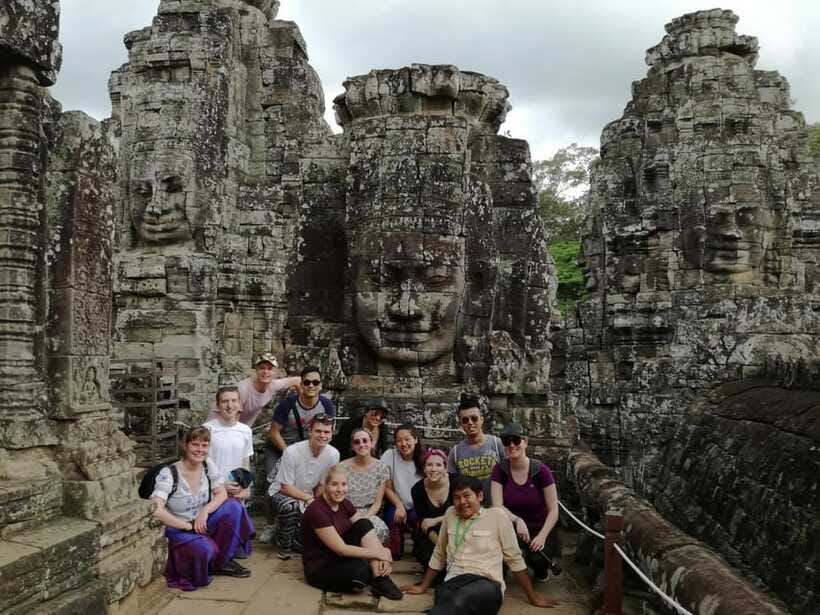
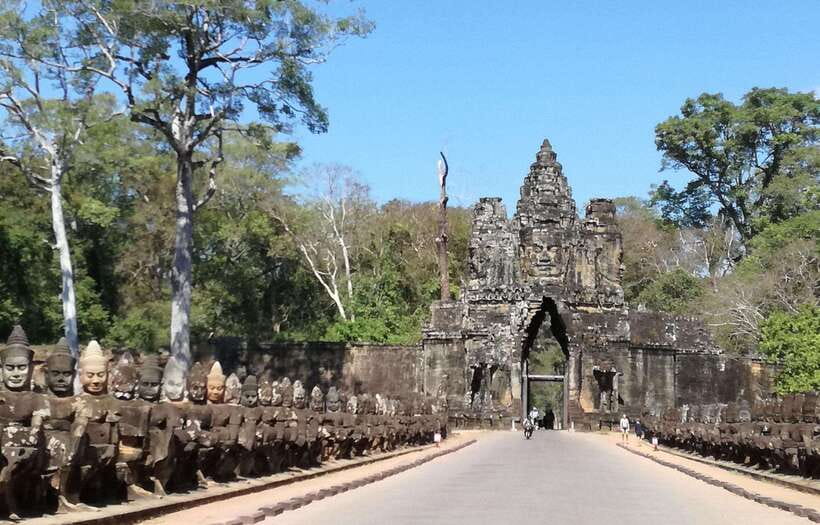
Next you enter Angkor Thom, the ancient royal city of the Khmer Empire. You’ll have about 1 hour here, starting at a monumental gate and moving into the temple areas that define the complex.
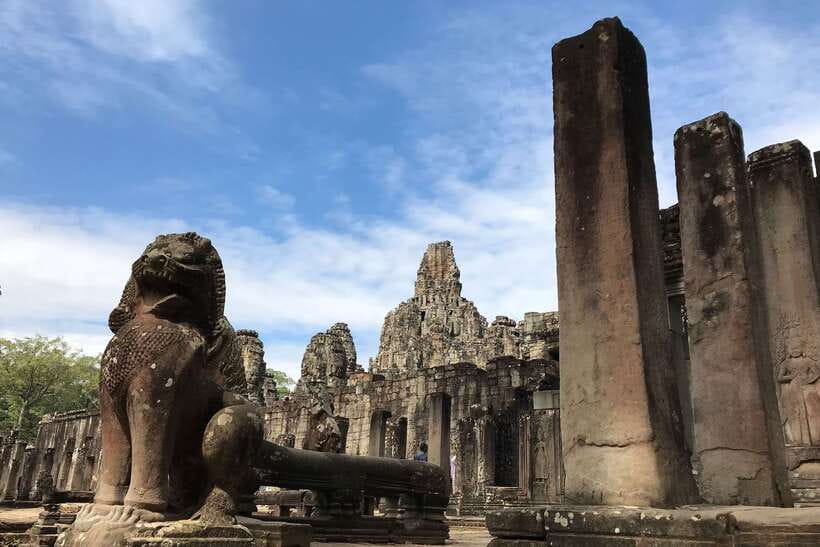
The headline stop is Bayon Temple, famous for its many stone faces. What hits you here is scale. Even when you know the photos, being inside the maze of towers and terraces makes the artwork feel more immediate—and a guide helps you connect the views to the meaning behind the imagery.
I like that the tour doesn’t throw every stop at you at once. You’ll get time to see the faces, pause for photos, and understand what you’re seeing. Some guides in this tour style are also known for photography help—standing positions, timing, and small adjustments that can improve your results a lot.
South Gate Angkor: a strong ending point for photos and atmosphere
After Bayon, you continue to South Gate Angkor, with about 30 minutes for a guided visit. This part is often underrated because the big faces take the spotlight, but the gate area gives you a different angle on the city’s layout.
It’s also a good place to end your walking loop. You’ve seen temple entrances, courtyards, and towers already, and now you’re shifting to the “city edge” feeling—wide space, strong lines, and a clearer sense of how the Khmer capital worked.
If the morning has you a bit tired (it will), this is a nice section to slow down. You can focus on photos and atmosphere rather than sprinting between monuments.
Price and tickets: what $76 covers, what costs extra, and why it can still be good value
The price is $76 per person for an 8-hour private tour with a vintage Jeep, hotel pickup and drop-off, a local English-speaking guide, and included refreshments (water, fresh fruit, cold towels).
The big “extra” is the Angkor Archaeological Park pass, which is US$37 and not included. Meals aren’t included either. That means you should budget for entry and food when you plan your day.
So is it good value? For me, the answer is yes if you care about timing and comfort. Sunrise at Angkor Wat is when you benefit most from a private guide and a vehicle that gets you there efficiently. The pass cost is the same regardless of who you tour with, but the experience quality—crowd avoidance, pacing, and photo help—often depends on how your day is organized.
One more bonus: the tour includes skip-the-line access through a separate entrance. That doesn’t remove every waiting moment, but it can cut down the time you spend standing around at the ticket area.
What to expect from guides like Long, Leang, and Chomnan
A lot of people book this kind of Angkor morning because they want context, not just landmarks. In this tour style, guides are frequently praised for timing and storytelling, which is exactly what you need when you’re seeing several temples back-to-back.
You may encounter guides such as Long, who has been described as friendly and accommodating and good at choosing times and locations to avoid the biggest crowds. Others like Leang are mentioned for explaining carvings in detail and helping with photo spots. Chomnan is also named often for making Khmer history feel alive through story and for guiding guests to calmer angles for pictures.
Even if your guide’s name is different, the pattern is consistent: good guiding here is about turning a huge site into something you can actually follow, remember, and photograph well.
Who this tour suits best (and who might want another option)
This tour is ideal if you only have one day and you want the essentials without feeling like you’re trapped in a crowd. The schedule hits Angkor Wat sunrise, then adds Ta Prohm, Ta Nei, and finishes with Angkor Thom and Bayon plus South Gate.
It’s also a strong pick if you like getting off the main road. Ta Nei is short, but it’s the kind of stop that makes the morning feel less predictable and more personal.
You might choose something else if you want a very relaxed pace or if you can’t handle early mornings. This day starts before dawn, and the combination of uneven ground, temple stairs, and heat later on can be tiring.
Small, real-world tips for a smoother day
A few details make a big difference in comfort. Wear shoes you can walk in for hours, and bring sunscreen since you’ll be exposed as the day warms up. Insect repellent is essential around jungle stops like Ta Nei.
Plan your clothing around the temple rules, not just the weather. Knee and shoulder coverage is required for areas around Angkor Wat’s central tower, and you need to avoid shorts and sleeveless shirts.
Finally, bring patience for the sunrise logistics. People race for angles and light, but with a guide and private setup, you’re more likely to get a good spot without feeling stressed.
Should you book Angkor Wat Sunrise by Vintage Jeep?
Book it if you want the best shot at sunrise, strong crowd management, and a morning that mixes famous temples with a quieter jungle stop. The private vehicle and guide support make it feel efficient without turning it into a checklist.
Skip this one if you want a slower day, don’t like early alarms, or you already have the timing and photo plan nailed down. In that case, you might prefer a more relaxed approach.
For most first-timers, though, this is a smart way to experience Angkor: start with sunrise reflections, add Ta Prohm’s rooted ruins, take the short detour into the forest at Ta Nei, and end with Bayon’s smiling faces inside Angkor Thom.
FAQ
What time does pickup happen?
Pickup is before dawn, and starting times vary by availability. In past bookings with this tour style, pickup has been reported around 4:40–4:45am.
How long is the tour?
The tour duration is listed as 8 hours, including hotel pickup and drop-off.
Is the Angkor Archaeological Park pass included?
No. The Angkor Archaeological Park pass is not included and costs US$37.
What temples are included in the itinerary?
You’ll visit Angkor Wat for sunrise, then Ta Prohm, Ta Nei, Bayon Temple (in Angkor Thom), and South Gate Angkor.
What is included in the price besides the tour guide and transport?
Included are the private vintage Jeep with an experienced driver, hotel pickup and drop-off, a professional local English-speaking guide, plus cold water, fresh fruit, and refreshing cold towels.
What should I wear or bring?
Bring comfortable shoes, sunscreen, insect repellent, and a flashlight. Shorts and sleeveless shirts aren’t allowed, and for the central tower area at Angkor Wat you need knees and shoulders covered.
Is free cancellation available?
Yes. Free cancellation is offered up to 24 hours in advance for a full refund.