REVIEW · ANGKOR WAT
Angkor Temples Highlights Tour: 2 Days with Sunrise
Book on GetYourGuide →Operated by BAYON GUIDES · Bookable on GetYourGuide
Angkor at dawn feels like a reset button. This 2-day highlights tour starts with a 4:00 AM pick-up for Angkor Wat sunrise, then keeps the momentum with Ta Prohm and other Khmer icons—so you spend your time seeing the real architecture instead of guessing your way around. One thing I really like is how your guide connects what you’re looking at to why it matters.
You’ll also get a professional English-speaking guide, and you can choose private or a small-group format with the right vehicle (private air-conditioned car or a small-group bus). That guide-led structure is the difference between walking through ruins and actually understanding the place as you go.
The main consideration is time and conditions. A sunrise start means early wake-ups, and the midday heat can be intense—so it helps to have a guide who paces you and gives you water and a cold towel on the go.
In This Review
- Key takeaways before you go
- Two days that actually feel like Angkor
- The 4:00 AM ride and Angkor Wat at sunrise
- Angkor Thom gates and Bayon’s calm faces
- Ta Prohm and Ta Keo: two temple moods in one morning
- The Grand Circuit route: Preah Khan to East Mebon
- Banteay Srei: the detail temple you’ll want to slow down for
- Beng Mealea: a final one-hour stop for the road-weary temple lover
- Guides are the secret ingredient: pacing, context, and small wins
- Value check: $39 isn’t the full cost
- Who should book this sunrise Angkor tour
- Should you book it
- FAQ
- What is the duration of the Angkor Temples Highlights Tour?
- What time is the hotel pick-up for sunrise?
- Is the Angkor Temple Pass included?
- Are meals included?
- What’s included in the tour price?
- What languages are available for the guide?
- Can I choose a private or small-group tour?
- Can the tour be extended until sunset?
Key takeaways before you go
- 4:00 AM hotel pick-up sets you up for Angkor Wat sunrise timing
- Angkor Wat + Angkor Thom give you both the monument and the capital-city feel
- Ta Prohm’s tree-root temple delivers a dramatic, photo-friendly atmosphere
- Grand Circuit pacing mixes major sights with lesser-known stops like Neak Pean and East Mebon
- Banteay Srei’s pink sandstone carvings are the “slow down and look” reward
- Optional sunset extension can add more temple time without extra charge if you request it
Two days that actually feel like Angkor
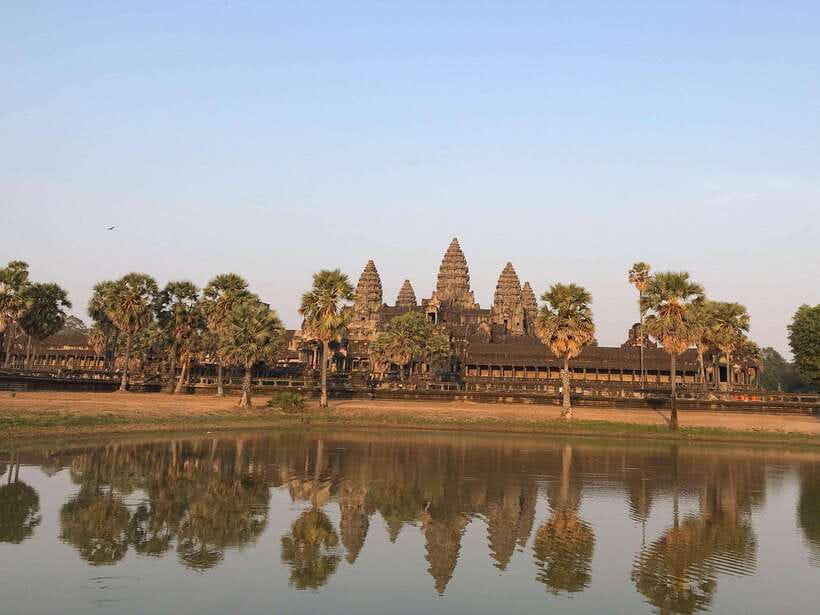
Angkor is so big that even a “highlights” route can turn into a blur if you’re not careful. What I like about this plan is that it’s built for momentum without turning every stop into a checklist. You get sunrise at Angkor Wat on Day 1, then you’re back for more serious temple time the next day on the Grand Circuit.
The other smart part: you’re not only visiting the headline temples. Yes, you hit Angkor Wat and Angkor Thom. But you also spend time on Ta Prohm and Ta Keo, then work through the Grand Circuit route and finish with the delicate carving focus at Banteay Srei. The end result is a two-day arc that moves from iconic power to intricate detail.
You’ll be touring with a guide who explains what you’re seeing in plain language (English is the live guide language). That matters because Angkor’s temples aren’t just old buildings; they’re layered with meaning, symbolism, and historical context that you’ll miss if you’re only staring at stone.
You can also read our reviews of more tours and experiences in Angkor Wat
The 4:00 AM ride and Angkor Wat at sunrise
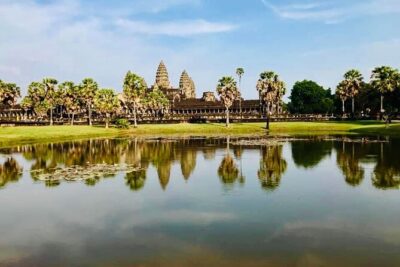
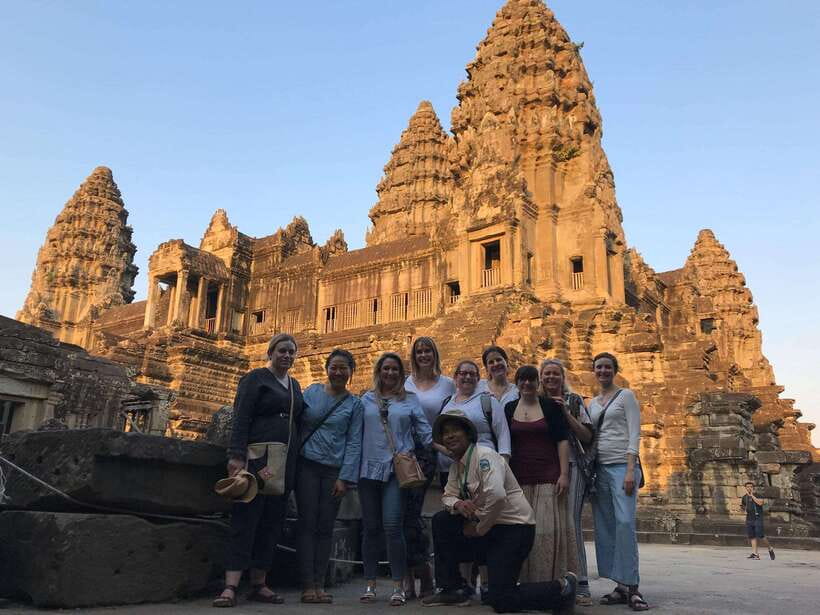
Day 1 begins with a hotel pick-up at 4:00 AM, and the tour runs as a private guided Jeep option. If you’re thinking sunrise is only for photographers, this is your chance to prove yourself wrong. Sunrise at Angkor Wat changes the mood fast: light shifts across the stone, reflections come alive in the right conditions, and the whole site feels less like a crowd scene and more like a living ritual.
You’ll get guided sightseeing for about 2 hours at Angkor Wat, which is a solid chunk of time. For many people, that window is enough to see the main angles, understand the layout, and still have moments to slow down and actually look at carvings and structure instead of rushing to the next photo spot.
Practical notes for sunrise day:
- Wear something light you can layer, because early mornings can feel cool.
- Bring sun protection even if it doesn’t feel hot yet—you’ll be outside.
- If you’re picky about crowds, know that sunrise draw is real. You’ll still have a plan, but arrive with realistic expectations.
One other detail I appreciate: this tour can extend into sunset later if you request it. So sunrise isn’t the end of your day—it’s the start.
Angkor Thom gates and Bayon’s calm faces
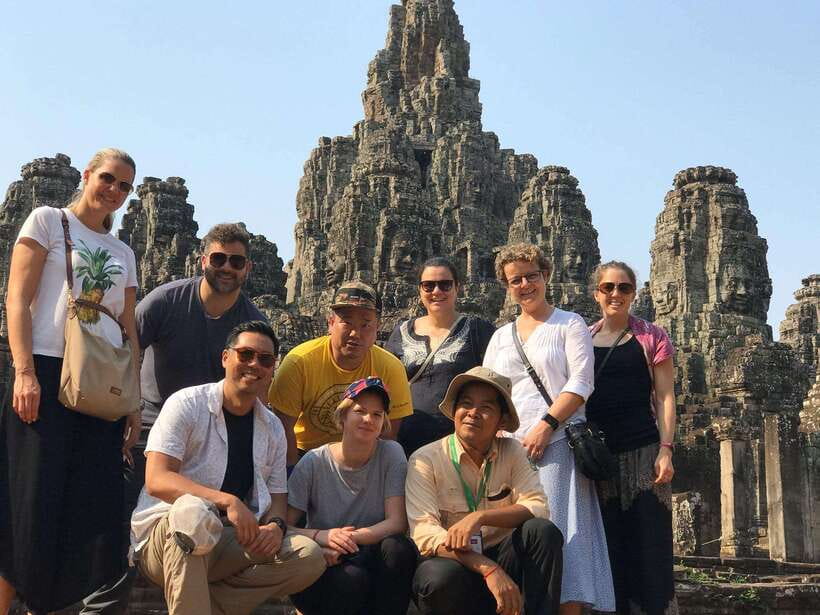
After Angkor Wat, the tour moves into Angkor Thom, the last capital of the Khmer Empire. This section is less about one monument and more about the feeling of entering a city made of stone.
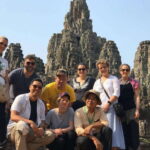
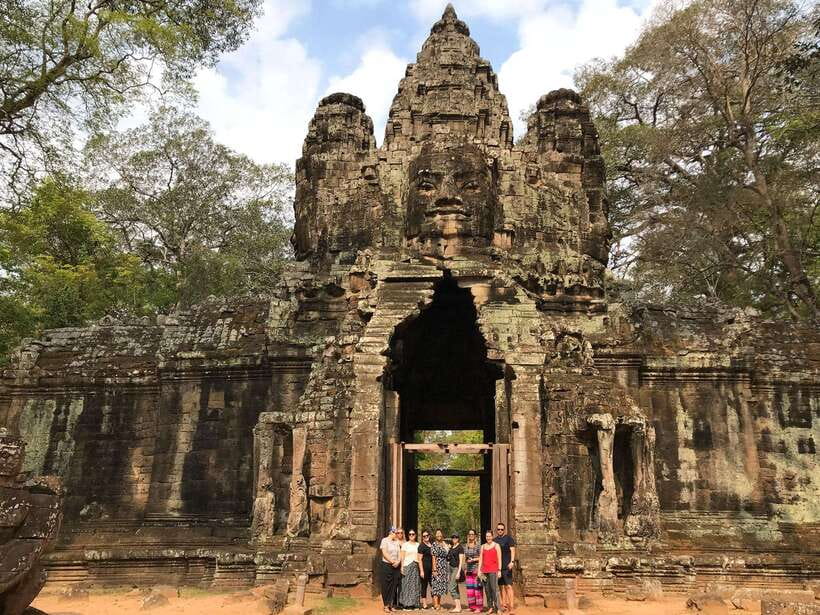
You’ll walk through the grand gates and visit Bayon Temple, known for its serene, smiling stone faces. The guide’s job here is important. Bayon isn’t just “pretty faces”—the real value is learning how the temple fits into the city and how to read the space so your brain stops treating it like a maze.
This stop is timed at about 1 hour guided sightseeing. That’s long enough to understand the story and take in key views without turning your legs into noodles. If you prefer lingering, this is one of the places where a guide can adjust pacing, especially if your vehicle plan allows it.
Ta Prohm and Ta Keo: two temple moods in one morning
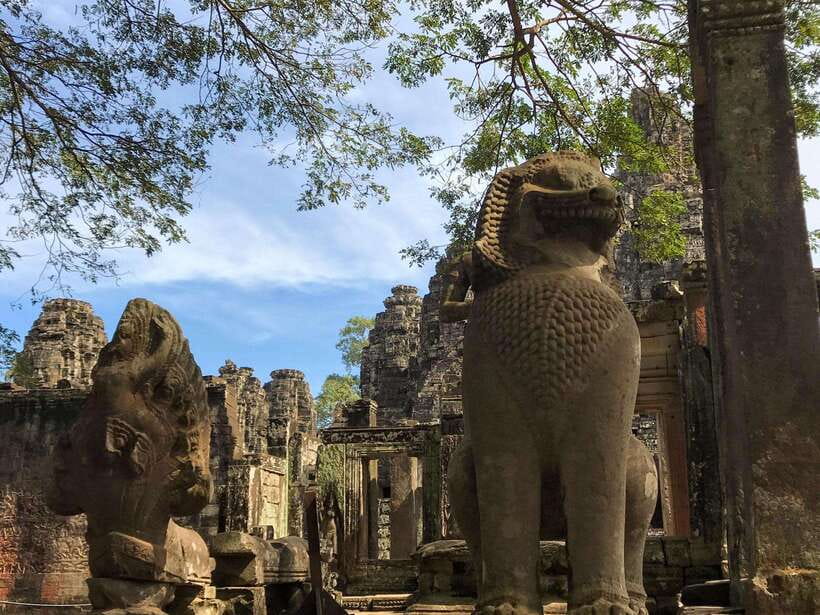
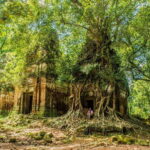
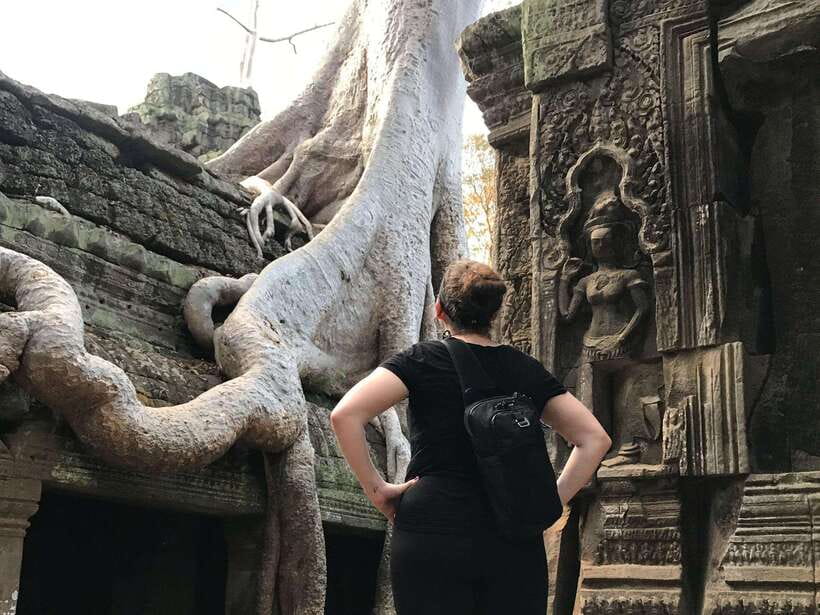
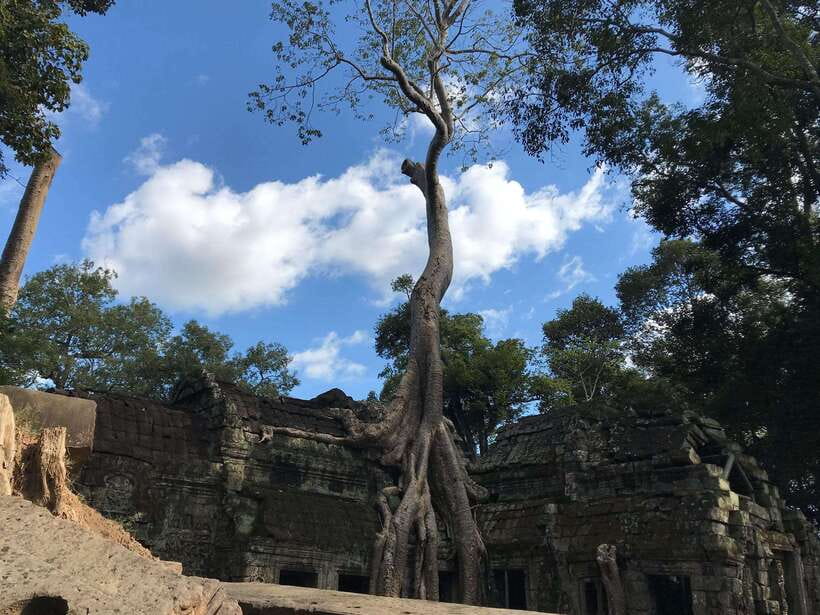
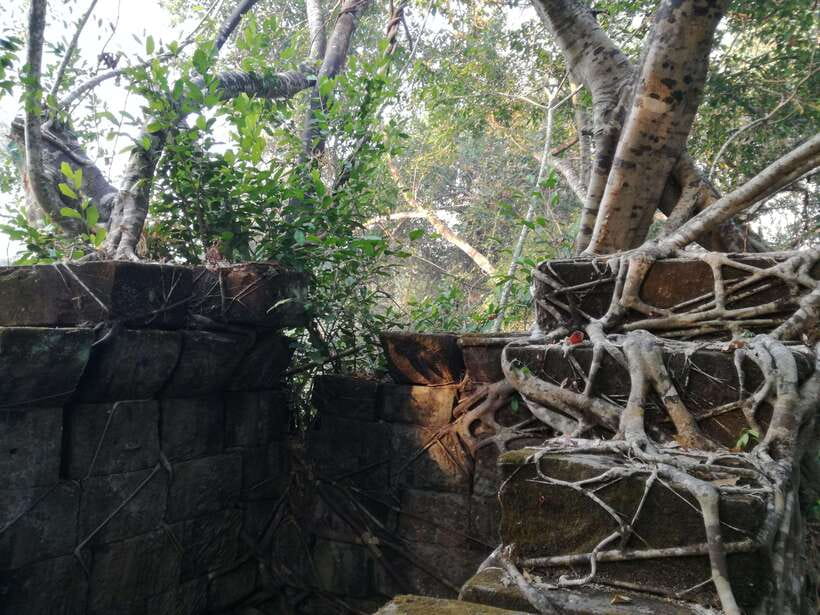
Then comes Ta Prohm, the jungle-temple experience people talk about for a reason. Here, the big visual is the meeting of massive tree roots and carved stone. It feels cinematic without you needing filters. Your guide walks you through what you’re looking at and helps you understand why this kind of “nature + temple” scene is more than just a famous photo setting.
Ta Prohm is listed at about 1 hour guided sightseeing. That sounds short until you realize the temple’s visual energy can swallow time. With a guide, you spend that hour looking at the right details—roots, faces, doorways, stone textures—rather than wandering until you notice you’re off track.
Next is Ta Keo, another stop on Day 1, also about 1 hour guided. Ta Keo’s appeal is more straightforward: it’s a great contrast after Ta Prohm. Where Ta Prohm is dominated by organic chaos, Ta Keo feels more defined and architectural—so your eyes get a breather. It’s a nice mental reset before you move on to the next part of the day.
The Grand Circuit route: Preah Khan to East Mebon
Day 2 focuses on the Grand Circuit, a scenic temple route designed to show you Cambodia’s Khmer-era breadth across multiple sites. This is where the tour earns its “2 days” promise. In one day, you’d be rushing. In two, you get enough time to notice differences in temple layouts, stonework, and spiritual themes.
On the Grand Circuit, you’ll visit:
- Preah Khan: described as a sprawling complex with intricate carvings
- Neak Pean: a temple on an island with spiritual significance
- Ta Som and East Mebon: lesser-known stops with character
What I like about this set of stops is variety. Preah Khan gives you scale and complexity. Neak Pean adds a quieter, more symbolic feel because it’s tied to a specific setting. Ta Som and East Mebon help you avoid the “same-looking temple fatigue” that can hit when every stop is a carbon copy of the last.
Also, the Grand Circuit is an opportunity to learn how Khmer temple design expresses meaning. Your guide’s explanations help you see patterns—how space is organized, how ornamentation connects to ideas, and why certain sites are built the way they are.
Heat tip: Day 2 is often the day people feel the weather most. Keep an eye on water breaks. The tour includes drinking water and a cold towel, which makes a real difference for comfort.
You can also read our reviews of more tours and experiences in Angkor Wat
Banteay Srei: the detail temple you’ll want to slow down for
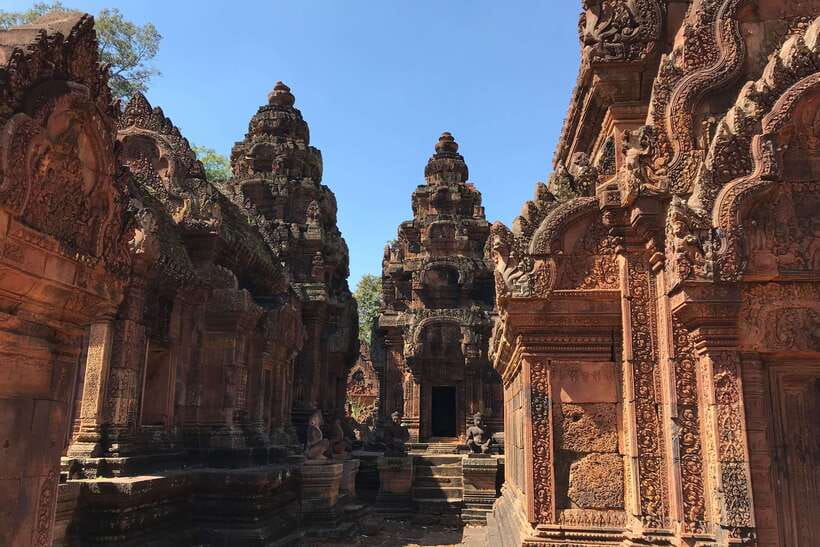
The highlight on Day 2 for many people is Banteay Srei, often called the Citadel of Women. It’s famous for pink sandstone and delicate, intricate carvings. This is one of those temples where “highlights” logic flips: instead of chasing the biggest view, you’ll want to zoom in on craft.
You’ll have about 1 hour guided sightseeing here. That’s a good time length for Banteay Srei because it lets you look closely without you feeling like you’re standing in the same place forever. Your guide can also point out what to look for so you don’t miss the best carving work in the shadows.
If you care about photography, Banteay Srei rewards patience. Carvings look different as the light changes, and a good guide helps you choose viewing angles without wasting time walking in circles.
Beng Mealea: a final one-hour stop for the road-weary temple lover
To close out the program, you’ll visit Beng Mealea for about 1 hour guided sightseeing. This stop gives you a different flavor from the “perfectly framed” temples you may have seen earlier. It’s a way to end your two-day loop with something that feels less polished, more rugged, and more about the experience of moving through temple space.
It’s also practical: one hour is enough to enjoy the site without turning your final day into a leg workout. By the end of two temple-heavy days, that matters.
Guides are the secret ingredient: pacing, context, and small wins
At Angkor, a great guide changes everything. The tour includes a professional English-speaking guide, and that’s a big deal because you’re dealing with temples that can look similar until someone helps you read them.
From past experience with guides on this kind of route, the best ones do three things:
- They explain what you’re seeing in context, so the stones have meaning.
- They help you find good photo angles without dragging you away every 30 seconds.
- They manage pacing so you don’t burn out halfway through Day 1.
Some guides people request by name—like Leang—are known for careful context and for showing small spots you might not notice otherwise. Other guides mentioned in real bookings, such as Tida, Sam, Steve, and Chennai, are described as very flexible and helpful with both temple knowledge and tour flow.
One caution: on very crowded days, pacing can vary. If your first stop ever feels rushed, ask your guide to slow the rhythm for the next site. A good guide can usually adjust.
Value check: $39 isn’t the full cost
The listed price is $39 per person for the 2-day tour. That’s a fair starting point because you’re paying for an English guide, transportation, and comfort touches like water and a cold towel.
But Angkor temples require a pass. A 2–3 Day Angkor Temple Pass is listed at USD 62 per person, and it’s not included. So your total budget for the core experience is closer to $39 + $62, before meals.
Also worth knowing: the tour can be extended until sunset at the temple without extra charge upon request. There’s also an option to arrange an early start to catch sunrise at the temple for an extra charge (on request). That’s useful if you want more temple time than the baseline plan gives you.
My practical take: if you’re going to see multiple temples across two days, the pass cost makes sense. The real question is whether you’ll use the time well—this route is designed to help you do exactly that.
Who should book this sunrise Angkor tour
This tour fits best if you:
- Want a structured two-day plan that avoids the “we should get tickets and then figure it out” chaos
- Like early starts when the temples are more atmospheric
- Prefer guided context, not just wandering
- Want a mix of big icons (Angkor Wat, Angkor Thom) and detail-focused visits (Banteay Srei)
It’s also a good match for families or groups who want flexibility. Private or small-group options mean you’re less likely to get stuck waiting on a large bus schedule.
If you’re the type who hates crowds above all else, sunrise is still crowded. Your advantage is having timing and a guide’s route choices.
Should you book it
Yes—if you want the best shot at seeing Angkor’s core temples without turning the trip into a logistics puzzle. The biggest strengths are the early sunrise start, the smart spread across Angkor Wat, Ta Prohm, Angkor Thom, and the next-day Grand Circuit sequence, ending with the carving-lovers’ stop at Banteay Srei.
Book with confidence if you’re comfortable with an early morning and you plan around heat by using the included water and towel breaks. And do yourself a favor: if you can request a specific guide (names like Leang show up often for a reason), try to align your booking with the pacing style you prefer.
If you want total freedom to linger forever at your favorite temple with no scheduled timing, a private custom day might suit better. But for most people, this 2-day highlights flow hits the sweet spot between time and depth.
FAQ
What is the duration of the Angkor Temples Highlights Tour?
It runs for 2 days.
What time is the hotel pick-up for sunrise?
The sunrise day includes a hotel pick-up at 4:00 AM.
Is the Angkor Temple Pass included?
No. A 2–3 Day Angkor Temple Pass is listed as USD 62 per person and is not included.
Are meals included?
Meals are not included.
What’s included in the tour price?
Included are a professional English-speaking guide, transportation (private air-conditioned car or small-group bus tour), and drinking water plus a cold towel.
What languages are available for the guide?
The guide language is English.
Can I choose a private or small-group tour?
Yes. Private or small groups are available, and transportation can be arranged as private or small-group based.
Can the tour be extended until sunset?
Yes. An extension until sunset at the temple can be provided without extra charge upon request.