REVIEW · ANGKOR WAT
Two Days Angkor Wat Park-Beng Mealea and Kampong Phluk Village
Book on Viator →Operated by Toptrip Inspire Cambodia · Bookable on Viator
A two-day Angkor plan starts before sunrise. This one goes out at 5 AM for the magic moment at Angkor Wat, when you can see the temple glow with far fewer people around. It then rolls into the main Angkor sights and swaps the crowd energy for the rougher, more jungle-feeling temples on day two.
I like how efficiently Day 1 covers the big-name temples—Bayon, Baphuon, Terrace of the Elephants, and Ta Prohm—without turning your day into a blur. I also appreciate the guidance from Thom, who’s known for steering both the details and the pacing, so you’re not just walking from stone to stone.
The main thing to factor in is cost at the sites: temple fees are not included, and Kampong Phluk has a boat fee of $25 per person. Add those on top of the $260.69 group price, and you’ll want to budget accordingly.
In This Review
- Key highlights in plain terms
- Catching Angkor Wat at 5 AM without getting crushed
- Day 1: Angkor Thom highlights from South Gate to major central temples
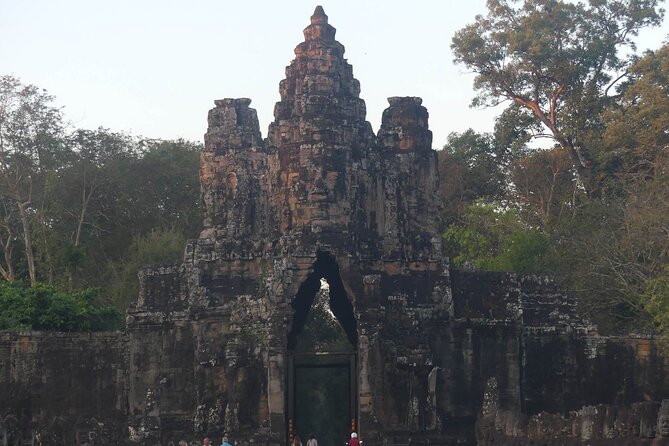
- Angkor Thom South Gate photos (the quick win)
- Bayon Temple (the center temple feeling)
- Baphuon (pyramid style, great viewpoints)
- Terrace of the Elephants and the leper king angle
- Phimeanakas and the former Royal place compound
- Ta Prohm is the mood shift: jungle temple time on purpose
- Day 2: Kampong Phluk floating village and Tonle Sap life
- Prasat Beng Mealea: a jungle sanctuary that feels less finished
- Banteay Srei: pink sandstone carvings to close out strong
- Price and logistics: what $260.69 really buys you
- Thom’s guiding style: detail plus pace (and not rushing you out)
- Who this tour suits best (and who should think twice)
- Should you book this two-day Angkor Wat, Beng Mealea, and Kampong Phluk tour?
- FAQ
- FAQ
- What time does the tour start for the sunrise?
- What is the total duration of the tour?
- Is pickup included?
- What’s included in the price?
- Are temple entrance fees included?
- What is the boat fee at Kampong Phluk?
- Is this a private tour?
- What is the cancellation window?
Key highlights in plain terms
- 5 AM Angkor Wat sunrise: early start to cut the heavy crowd pressure.
- A guided Day 1 route through Angkor Thom: South Gate photos, plus major central temples.
- Ta Prohm’s jungle temple vibe: built into the schedule, not a random add-on.
- Kampong Phluk floating village with boat time: water-life on the Tonle Sap.
- Beng Mealea as a jungle sanctuary: less polished, more “real” temple feel.
- Banteay Srei pink sandstone carvings: a strong finish with standout details.
Catching Angkor Wat at 5 AM without getting crushed
The best part of this tour is the timing. You start early enough to catch sunrise at Angkor Wat, when the experience feels more like a quiet ritual than a stampede. The tour also builds in the idea of getting ahead of crowds, so you can actually look at carvings and layout instead of just snapping photos while everyone shoves forward.
For you, that means two things: better photos, and better thinking time. When you’re not constantly fighting for position, you can notice differences between temples and understand why Angkor looks the way it does. The tour’s goal is to help you connect the dots between the sites, not just tick them off.
One practical note: sunrise trips are still early mornings. You’ll want to plan for a slow start the rest of the day after you’ve already pulled the sunrise weight, and you’ll likely feel it if you’re not used to early alarms.
You can also read our reviews of more tours and experiences in Angkor Wat
Day 1: Angkor Thom highlights from South Gate to major central temples
Day 1 is built around Angkor Thom, and it moves in a sensible sequence. You’ll start with the Angkor Wat sunrise portion, then head into the Angkor Thom area with a plan that hits the most recognizable stops while keeping travel time reasonable.
Angkor Thom South Gate photos (the quick win)
You get time at the South Gate to take photos. It’s not a long stop—about 20 minutes—but it’s enough to grab the classic angles and orient yourself in the complex. If you’ve never been here before, that short photo-and-orient moment helps you make sense of what you’ll see next.
Bayon Temple (the center temple feeling)
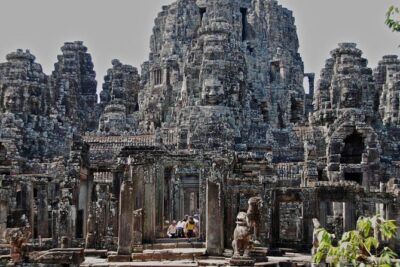
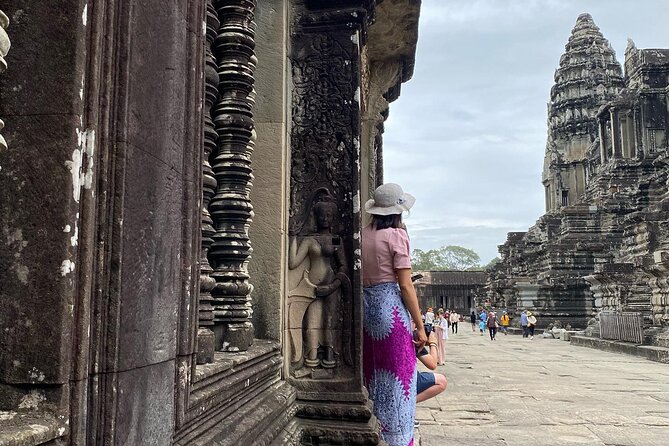
Next up is Bayon, the center temple in Angkor Thom. You get about an hour here, which is useful because Bayon rewards looking around. If you rush, the details disappear. With guided time, you can slow down and actually take in the layout and what makes this temple distinct in the Angkor Thom group.
Baphuon (pyramid style, great viewpoints)
Then comes Baphuon, described as a top picturesque pyramid-style temple. You’ll spend about 45 minutes, which is a good length for a place like this: long enough to climb/walk where you can, but not so long that you’re exhausted before the next stop.
Terrace of the Elephants and the leper king angle
At the Terrace of the Elephants, you get a short stop (about 20 minutes). The tour also includes time walking past the terrace of the leper king, which gives you an easy “story thread” through the carvings. It’s a good place to practice your patience: the carvings are there, but your eyes need a few minutes to adjust from distance to detail.
Phimeanakas and the former Royal place compound
Then you move to Phimeanakas, with around 30 minutes to walk past the wall of the former Royal place and some small temples in the compound. This stop helps you understand the site beyond the loudest landmarks. It’s one of those temples where the value is in how the spaces relate.
Ta Prohm is the mood shift: jungle temple time on purpose
Ta Prohm is part of the day’s plan for a reason. The tour frames it as the most famous jungle temple, and once you’re there, it’s easy to see why. Even if you’re not hunting for every detail, the “jungle and stone” contrast gives your brain a break after more formal temple shapes.
This is also where early timing can matter. If the schedule works so you see it before the heaviest crush, you’ll notice the difference in how you can move, how long you can stop, and how comfortable you feel taking it in slowly.
The practical upside: with Ta Prohm in the middle-to-late part of the day, you avoid the all-day trap where everything feels the same. Day 1 gives you the structured Angkor Thom focus, then Ta Prohm adds atmosphere.
Day 2: Kampong Phluk floating village and Tonle Sap life
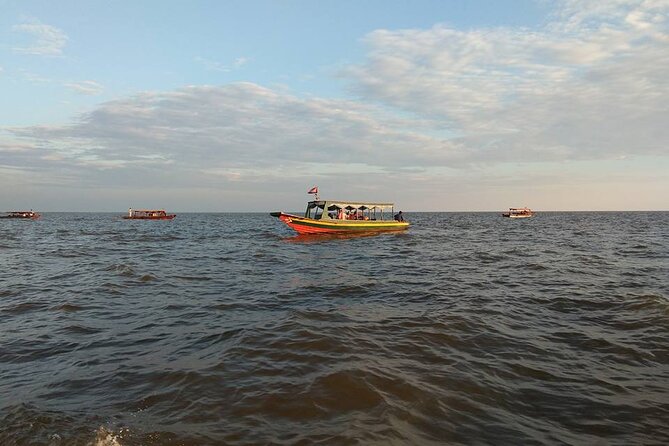
Day 2 changes the energy. Instead of only temple stone, you get Kampong Phluk floating village, tied to the Tonle Sap lake area. You spend about two hours here, and the tour’s intention is cultural immersion beyond the temples—seeing how people live and move along the water.
The big practical detail is the boat. The boat fee is $25 per person and not included in the tour price. Plan for that as part of your “must-do” budget, because you’ll want the boat time to properly experience the floating village setting. One extra tip that matters: take your time. If you rush the small-boat portion, you miss the rhythm of the place.
What you’ll walk away with is a different kind of understanding. Temples tell you about power and belief, but Kampong Phluk shows you the everyday side of Cambodia’s life along the water.
Prasat Beng Mealea: a jungle sanctuary that feels less finished
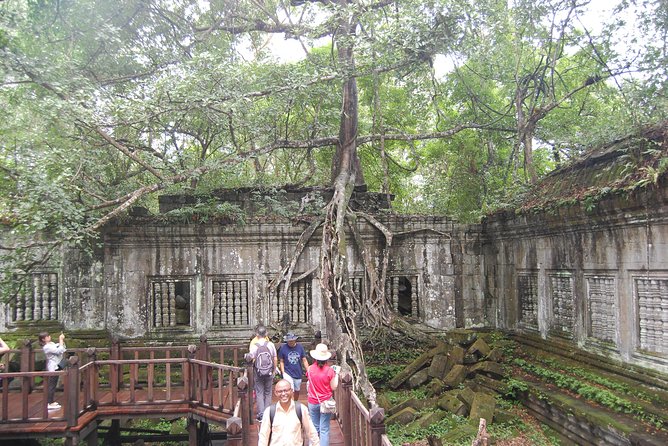
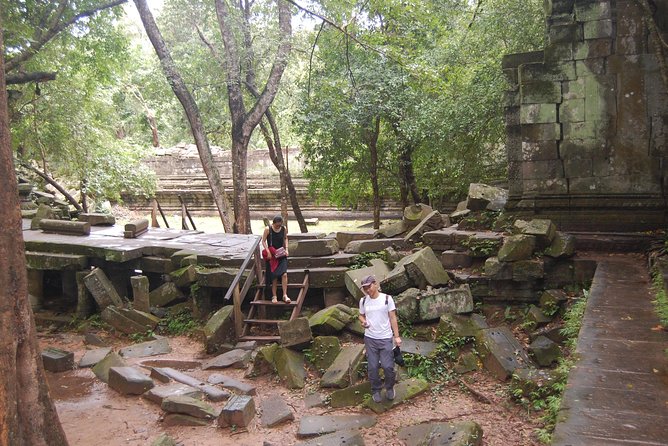
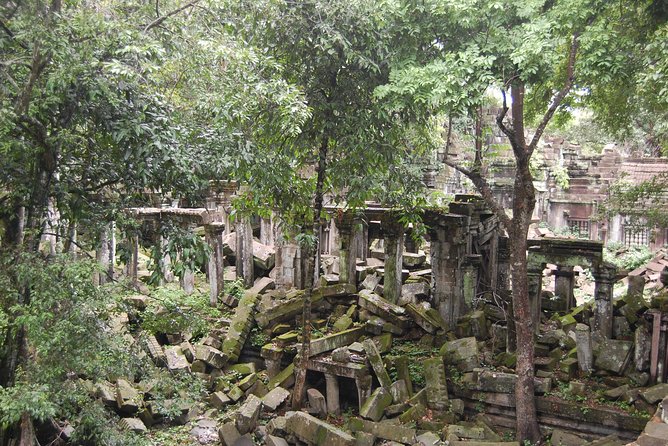
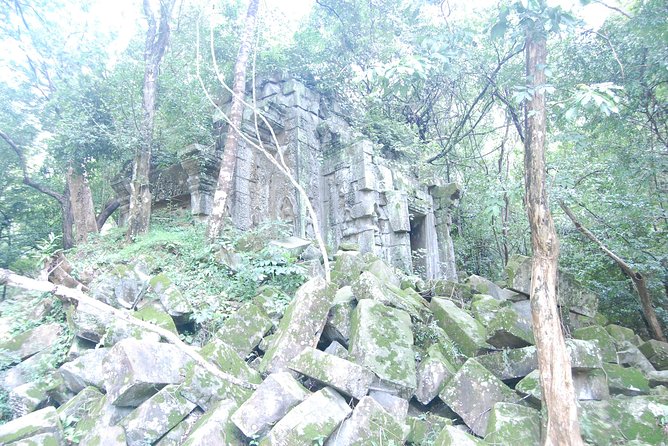
After Kampong Phluk, you head to Prasat Beng Mealea. The tour describes it as a jungle sanctuary that is not fully revamped, which changes the feeling fast. Where some famous Angkor structures can look polished and tour-ready, Beng Mealea leans rough and real. That’s a good thing if you like temples with texture and atmosphere.
You get about 1.5 hours here. That’s a solid chunk of time because Beng Mealea isn’t a “blink and move on” site. It takes a bit of wandering to appreciate the scale and the way nature works around the stones.
The likely drawback for some people: this is the kind of temple where footing and movement may feel more uneven than the smoother, restored areas. If you prefer perfectly leveled paths, your comfort might vary. But if you want that jungle-temple mood, this stop is the star.
Banteay Srei: pink sandstone carvings to close out strong
To finish the second day, you visit Banteay Srei, known for its pink sandstone and standout carvings. The tour specifically highlights that the carvings are among the best, even compared against Angkor Wat (as a point of pride). You get about an hour here.
This last stop is a smart move because it gives you a detail-focused ending. After big complexes and jungle stone, Banteay Srei encourages you to slow down again and look at workmanship. It’s also a good way to balance the overall trip: you get sunrise grandeur, Thom’s central monuments, a village with water-life, then a jungle sanctuary, and finally a carving-heavy closer.
Price and logistics: what $260.69 really buys you
The tour price is $260.69 per group (up to 3), for about two days. That can be good value if you’re splitting it with others, because you’re paying for private guidance and transport for the whole group, not per-person add-ons.
Here’s the math to help you decide:
- If you travel as a full group of 3, you’re effectively around $87 per person for the tour portion.
- If you book for 1–2 people, your per-person cost is higher (closer to the full price divided by fewer seats).
Either way, remember what’s not included. You still need to budget for:
- Temple entrance fees (not included)
- Boat fee at Kampong Phluk: $25 per person
- Travel insurance (also not included)
What you do get as part of the price is helpful: an air-conditioned vehicle, an English speaking tour guide, and drinking water, plus a mobile ticket. Pickup is offered, and since this is a private tour, it’s only your group participating.
From a value standpoint, I like that the itinerary isn’t just “temples only.” The Kampong Phluk village time is a meaningful change of pace, and Beng Mealea gives you a different temple texture than the main Angkor sites.
Thom’s guiding style: detail plus pace (and not rushing you out)
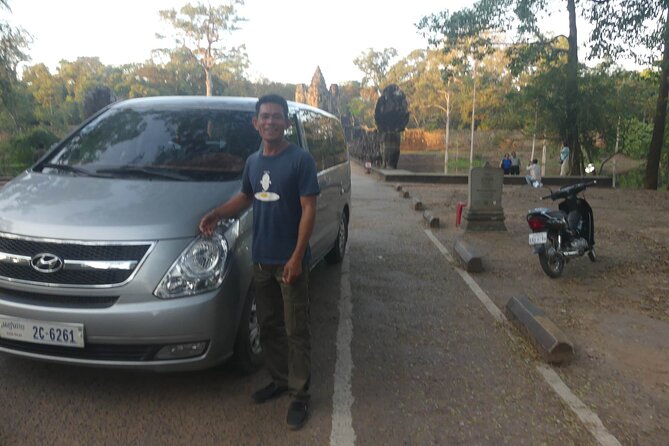
One standout from the experience is the guide, Thom, who’s described as incredibly knowledgeable and able to steer you through both days with clarity. That matters more than people expect. Angkor can feel overwhelming fast: too many names, too many similar-looking towers, and not enough context.
With Thom, you’re guided through the architectural differences and the big picture of what you’re seeing, but you’re also not moved along at an unnatural speed. In fact, the schedule includes short photo stops and timed temple visits that give you enough breathing room to look without burning your legs out early.
There’s also a practical culture angle. The tour frames village time as more than a scenery break, and that can be a big payoff if you want Cambodia beyond stone temples.
Who this tour suits best (and who should think twice)
This tour is a strong fit if you:
- Want two days so you can cover major temples and still have a second-day change of pace
- Like early starts and value sunrise timing to reduce crowd stress
- Enjoy a mix of sightseeing and cultural experiences, not only temple crowds
- Are traveling in a small group (up to 3) to spread the $260.69 cost
You might think twice if you:
- Hate very early mornings (5 AM sunrise is part of the plan)
- Don’t want extra site costs, since temple fees and the $25 boat fee will land on top of the base price
- Prefer very smooth, easy walking environments everywhere (Beng Mealea is the rougher, more natural-feeling stop)
Should you book this two-day Angkor Wat, Beng Mealea, and Kampong Phluk tour?
If your goal is to see the famous Angkor sites with smart timing, then get out into the jungle-feel of Beng Mealea and finish with real life at Kampong Phluk, this is the kind of itinerary that makes sense. You get the early Angkor Wat sunrise, a tight set of Angkor Thom anchors, and then day two avoids the “temples forever” trap.
Book it if you’re okay paying temple and boat fees on top, and if you’re the kind of traveler who likes looking closely (not just walking fast). Skip it if you want everything included with zero extras or if you’re not willing to work around a 5 AM start.
FAQ
FAQ
What time does the tour start for the sunrise?
The tour is designed around a 5 AM start to watch dawn at Angkor Wat.
What is the total duration of the tour?
The tour runs for 2 days (approx.).
Is pickup included?
Pickup is offered, and the tour starts in Krong Siem Reap, Cambodia.
What’s included in the price?
The price includes an air-conditioned vehicle, an English speaking tour guide, and drinking water.
Are temple entrance fees included?
No. Temple fees are not included.
What is the boat fee at Kampong Phluk?
The boat fee is $25 per person and is not included.
Is this a private tour?
Yes. This is described as a private tour/activity, meaning only your group participates.
What is the cancellation window?
You can cancel for a full refund if you cancel up to 24 hours in advance of the experience start time.