REVIEW · PHNOM PENH
Remnants of a Khmer Rouge Era
Book on Viator →Operated by Asian Trails LTD · Bookable on Viator
Cambodia’s darkest places, up close. I like the way Tuol Sleng (S-21) turns history into something you can see, room by room. I also like the simple logistics: hotel pickup plus guided transport means you spend less time figuring it out and more time paying attention. The one drawback is obvious but worth naming up front: this is emotionally heavy, and the S-21 dress code is strict enough that you’ll want to plan your outfit.
This half-day is priced around $80.77 per person for a 4-hour outing, with entrance and donation fees included. It’s a solid value if you want a human guide to connect the dots, not just facts on a screen. If you’re sensitive to graphic memorials and stories of torture, take that seriously before you go.
In This Review
- Key things I’d plan around
- How this 4-hour Phnom Penh route actually plays out
- Hotel pickup and where it can (and can’t) reach
- Tuol Sleng (S-21): walking through a prison turned museum
- Getting into S-21: dress code rules you should not ignore
- Cheung Ek Killing Fields: mass graves, a memorial stupa, and scale you can feel
- Value at about $80.77: what you’re really paying for
- Private guide context vs audio-only time
- Practical timing, tech safety, and a few non-glamorous rules
- Who this tour is best for (and who should pause first)
- Should you book this tour?
- FAQ
- How long is the tour?
- What’s the price per person?
- Is hotel pickup included?
- Where are transfers excluded?
- Do I need an entrance ticket or is it included?
- What should I wear for Tuol Sleng (S-21)?
- Is the tour suitable for children?
- Is the tour private?
- What language is the guide?
- When can I cancel for a full refund?
Key things I’d plan around
- Two major sites in one day: S-21 first, then Cheung Ek Killing Fields, both about two hours each
- Strict S-21 dress code: shoulders covered and knees covered, with rules about prints and bright colors
- Private tour feel: you’ll have a dedicated English-speaking guide for just your group
- Memorials made of real artifacts: cells, photos, and a stupa displaying skulls and personal items
- Camera and electronics caution: natural elements can damage devices, so wrap/protect your gear
How this 4-hour Phnom Penh route actually plays out
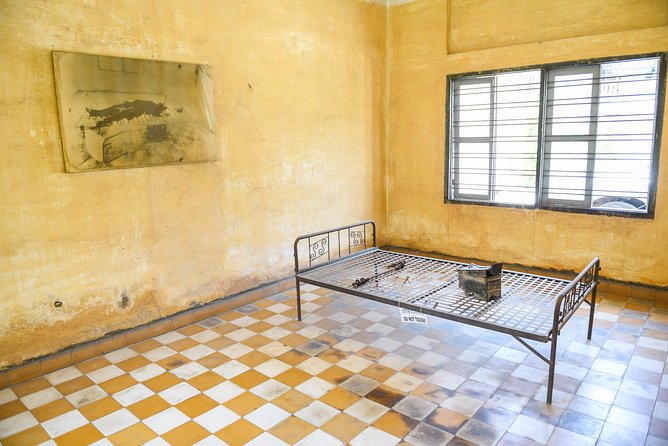
This tour is built as a tight half-day loop, with roughly two hours at each site. You start with Tuol Sleng Genocide Museum (S-21), then you head to Cheung Ek Killing Fields outside the city center. The timing matters here: both places ask for attention, and the schedule keeps you from rushing in a way that turns memorials into a checklist.
The day’s structure is also practical. You get round-trip transport, and you don’t have to worry about navigating between the sites on your own. That’s a real benefit in Phnom Penh, where you may not want to spend your limited time on logistics.
One more thing: the tour description makes it clear this is a sobering experience. I’d treat it like a “slow down” day, not a grab-and-go activity.
You can also read our reviews of more tours and experiences in Phnom Penh.
Hotel pickup and where it can (and can’t) reach
The package includes pickup and drop-off for accommodations in and inside Phnom Penh. That means most centrally located hotels are covered. If you’re staying outside that area—places like Koh Dach, Tonle Bati, Oudong, or any river and cruise ferry terminals—transfers aren’t included, and supplements may apply.
Also, pickup details can depend on your lodging. If you’re in a non-registered accommodation (or a private residence or apartment complex), you might be asked to meet at a nearby hotel. Before your tour date, confirm the exact hotel information so you don’t lose time on arrival day.
This kind of detail sounds small, but with a 4-hour schedule, small delays add up.
Tuol Sleng (S-21): walking through a prison turned museum
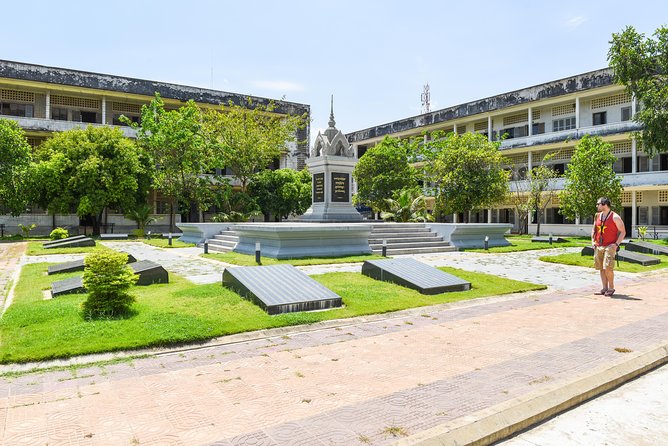
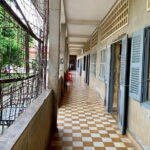
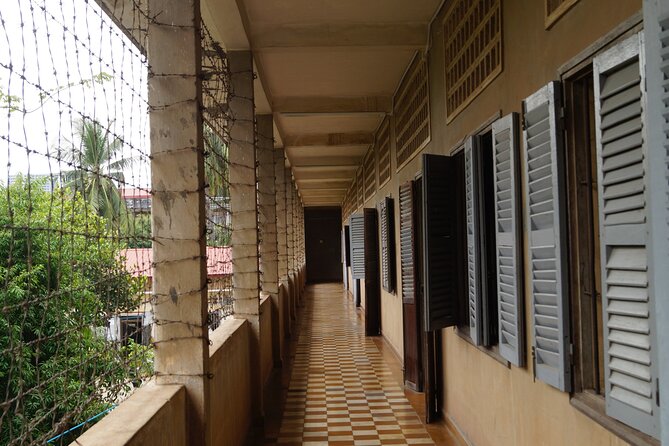
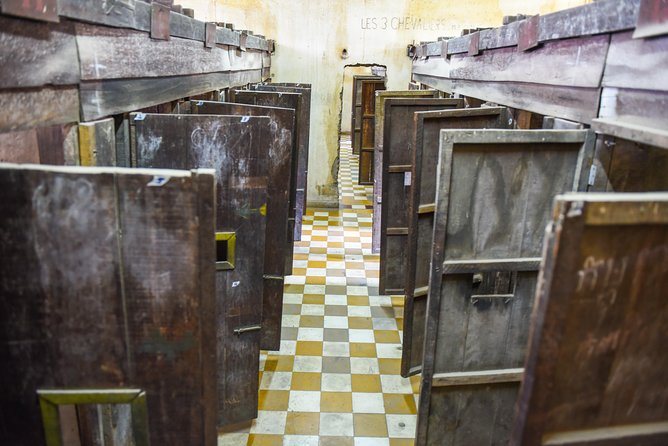
Tuol Sleng Genocide Museum is the former S-21 prison, created when a school building was converted into a detention center during the Pol Pot era. The site’s setup helps you understand the process instead of only memorizing dates. You learn that prisoners were interrogated—often through torture—and then transferred to the Killing Fields, where they faced more violence and death.
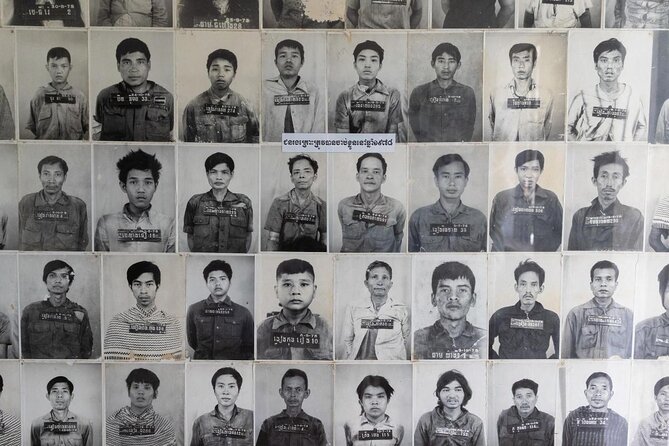
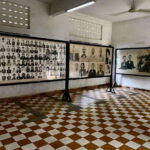
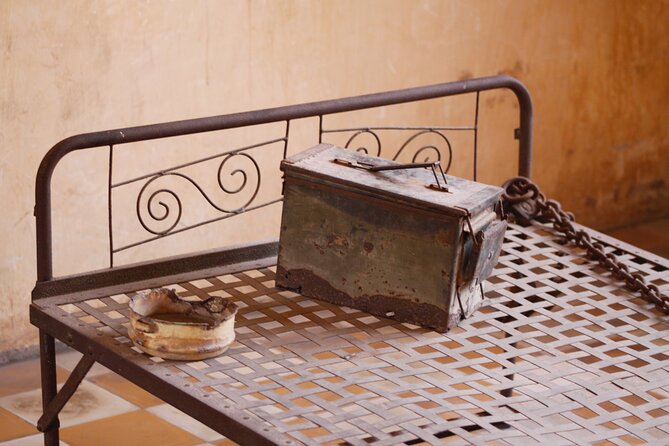
Inside, you’ll see how the museum presents what happened. The building now houses exhibits including paintings and photographs of victims, plus the crude cells that were built in classrooms. There are also torture devices shown as part of the display, aimed at helping you grasp how confessions were extracted in the late 1970s.
There’s a certain kind of silence you’ll feel in a place like this. The value of the guided format is that you’re not left alone with your thoughts and guesses. A good guide helps you connect what you’re seeing—cells, records, images—to the wider Khmer Rouge system.
Getting into S-21: dress code rules you should not ignore
This is the part that can trip people up, so plan your outfit early. The museum requires modest, appropriate clothing out of respect for the premises and the victims. You need clothes that cover shoulders and fall below the knees.
The rules also mention that shirts with obscene or disrespectful prints and pictures are a problem, and brightly-coloured clothing may lead to refusal of entrance. That’s a clear warning. Don’t test the boundaries hoping for a lenient moment.
If you’re coming from a day at the beach or from warm-weather shopping, consider bringing a simple layer for your shoulders and legs. You’ll feel better walking in when you know you won’t be turned away.
Cheung Ek Killing Fields: mass graves, a memorial stupa, and scale you can feel
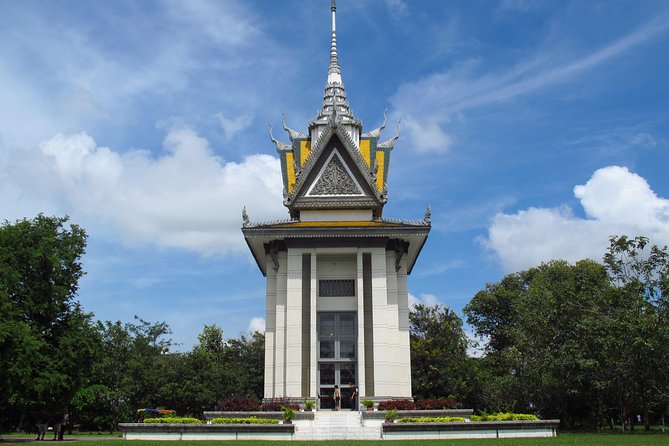
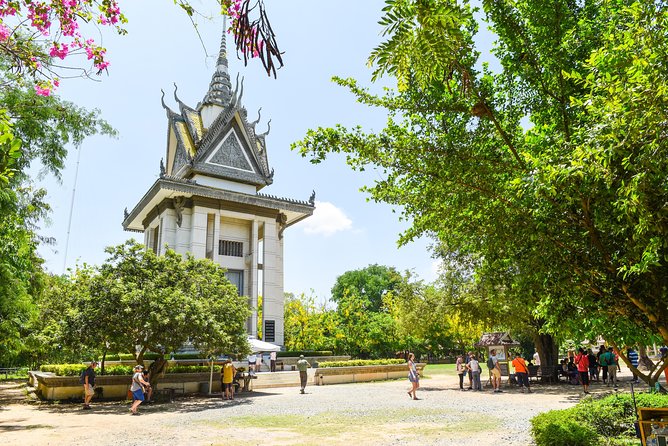
After S-21, you’ll go to Choeung Ek Genocidal Center, known as one of the Khmer Rouge’s most infamous Killing Fields. The site is just outside the city center, which is why the included transport is helpful—you don’t want to add extra travel time on a day like this.
Cheung Ek has a history that adds another layer to what you’re seeing. It was a Chinese cemetery before it became a Killing Field. During the Khmer Rouge years, thousands of Cambodians were tortured and imprisoned around the country, and many were brought here.
The museum and memorial focus heavily on the aftermath:
- Remains of almost 9,000 bodies have been excavated from mass graves.
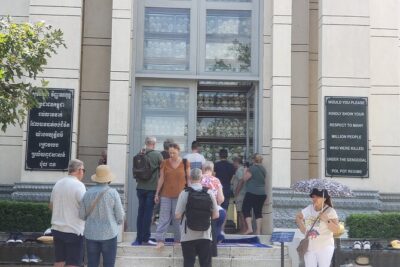
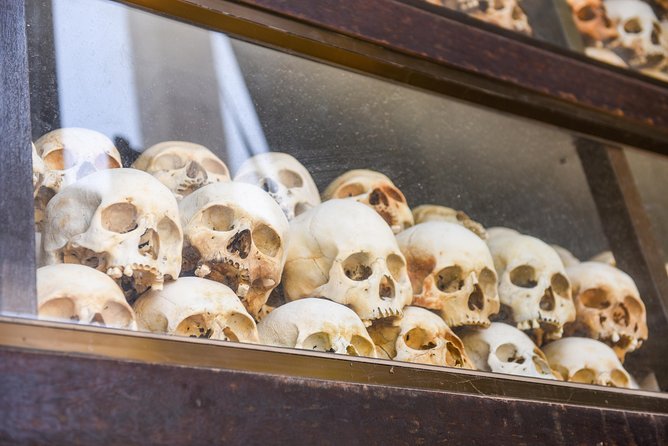
- A memorial stupa displays over 5,000 human skulls, bones, and clothes of victims.
That’s the kind of number your brain tries to shrink into something manageable. A guided visit helps you keep the scale grounded without letting it turn into just data.
Expect to walk around memorials that are designed for remembrance, not entertainment. Give yourself permission to slow down.



Value at about $80.77: what you’re really paying for
The price is listed at $80.77 per person, for an outing that runs about 4 hours. For that, you get a half-day tour with:
- a professional English-speaking guide
- transportation by car / mini-van / coach with a professional driver
- all entrance and donation fees for the sites included
- taxes and service charges
When you compare this to DIY travel (tickets, transport, and time spent coordinating), the included fees often bring the price into a reasonable zone. The biggest value piece for me is not just the rides. It’s the fact that the guide can explain what you’re looking at as you look at it.
What’s not included is also worth noting: meals and drinks, and any personal expenses. You’ll need to handle those on your own. If you’re planning your day around this tour, don’t assume someone else will fill that time gap for you.
Private guide context vs audio-only time
One practical consideration: the tour is set up as a private tour/activity, with only your group participating, and you’ll have an English-speaking guide. That means you can ask questions and get explanations tailored to your pace.
That said, there’s a common trade-off in memorial sites. Some people prefer audio guides so they can move at their own speed. There was at least one concern raised about whether a dedicated guide costs more than an audio option at each location.
My take: for places like S-21 and Cheung Ek, the guide isn’t just a bonus. Context matters. You’re seeing rooms and objects that can be hard to interpret emotionally and historically on your own. Even if you read signs, a human guide can help you understand what’s essential and what to notice.
One guide name that shows up in feedback for this tour is Sony—described as excellent and considerate, with lots of information shared. If you get a guide like that, the experience is likely to feel more grounded and less overwhelming.
Practical timing, tech safety, and a few non-glamorous rules
This day follows a strict schedule with pickup, transfer, museum time, then return. The tour provider says they’ll make efforts to confirm the exact pick-up time upon reservation. If they can’t lock in the time in advance due to operational issues, they may inform you the day before.
So don’t plan a tight meeting right before pickup. Treat pickup like a real appointment.
On the electronics front, the tour info includes a direct warning: natural elements can damage electronic equipment. You should wrap and protect cameras and phones. That’s not about being paranoid—it’s about not having a broken device ruin your photos or your plans.
Also, the tour is not recommended for families with children under 12 years old. This is one of those experiences where age can matter for emotional readiness.
Who this tour is best for (and who should pause first)
This tour makes the most sense if you want to understand Cambodia’s recent past through the two places where it was carried out and documented. If you’re the type who likes to see how a system worked—how detention, interrogation, and execution were connected—this format is strong.
It also fits you if you prefer a guided walk through difficult material, especially with a guide who can explain what you’re looking at without turning it into entertainment.
I’d reconsider if:
- you’re not emotionally prepared for the memorial focus at Cheung Ek (skulls, bones, clothes, mass graves)
- you’re likely to struggle with the realities described at S-21 (cells, torture devices, photos of victims)
- you’re traveling with younger kids under 12
This is a heavy day. You don’t have to like it, but you do need to respect it.
Should you book this tour?
If your goal in Phnom Penh is to understand how the Khmer Rouge’s machinery operated—and what’s left behind—you should seriously consider booking this tour. The mix of S-21 and Cheung Ek gives you a full picture of the detention-to-death pathway, not just one site in isolation. Plus, the included transport and entrance fees simplify your day in a way that feels worth the money.
Book it if you can handle emotional intensity and you’re ready for a museum visit that shows real evidence, not vague summaries. Skip it (or look for a lighter alternative) if graphic memorial content or torture-related context would be too much for you.
If you do book, come prepared: follow the S-21 dress code and protect your phone and camera. Then let the tour take the time it needs. This isn’t a quick stop. It’s a responsibility.
FAQ
How long is the tour?
It’s about 4 hours.
What’s the price per person?
The listed price is $80.77 per person.
Is hotel pickup included?
Yes. The tour includes hotel pickup and return transfers for customers staying in and inside Phnom Penh.
Where are transfers excluded?
Transfers are excluded for accommodations outside Phnom Penh, including Koh Dach, Tonle Bati, and Oudong, plus any river and cruise ferry terminals and Phnom Penh International Airport. Supplements apply if you want to join from outside the included regions.
Do I need an entrance ticket or is it included?
Entrance and donation fees for the included visits are included.
What should I wear for Tuol Sleng (S-21)?
You must dress modestly: cover shoulders and wear clothes that fall below the knees. Shirts with obscene or disrespectful prints and pictures and brightly-coloured clothing may result in refusal of entrance.
Is the tour suitable for children?
It’s not recommended for families with children under age 12.
Is the tour private?
Yes. It’s a private tour/activity, and only your group will participate.
What language is the guide?
The tour includes an English-speaking guide. Other languages are on request, subject to availability and supplementary charges may apply.
When can I cancel for a full refund?
You can cancel up to 24 hours in advance for a full refund. If you cancel less than 24 hours before the start time, the amount paid is not refunded.