REVIEW · PHNOM PENH
Phnom Penh: killing field & Toul Sleng genocide museum Tour
Book on GetYourGuide →Operated by Phnom Penh Green Tours · Bookable on GetYourGuide
Dark places in Cambodia, explained clearly. This half-day tour pairs Tuol Sleng (S21) with the Killing Fields at Choeung Ek, and an English-speaking guide helps you make sense of what you’re seeing. I also like the practical comfort touch: air-conditioned transport and hotel pickup and drop-off keep the logistics simple.
The main drawback is that it’s emotionally intense, and the entrance fees are extra (plus a strict dress code and no shoes).
In This Review
- Quick hits
- Tuol Sleng S21: What you’re really looking at
- Choeung Ek Killing Fields: The memorial and the scale
- Timing a 4-hour day without feeling rushed
- Price and what you’re paying for (tour vs entrance fees)
- Dress code, shoes, and the practical rules that catch people
- English guides like Chanrouen, Net, Ran, and Dara make the difference
- Who should book this Phnom Penh genocide museum tour
- Should you book this Phnom Penh Killing Fields and S21 tour?
- FAQ
- How long is the tour?
- Does the tour include hotel pickup and drop-off?
- Is there an English-speaking guide?
- Are entrance fees included in the tour price?
- How much cash should I bring for entrance fees?
- What’s included with the tour besides the guide?
- What’s the transport like?
- What should I wear (and are there rules about shoes)?
- Is cancellation free?
- Is the tour suitable for elderly travelers?
Quick hits
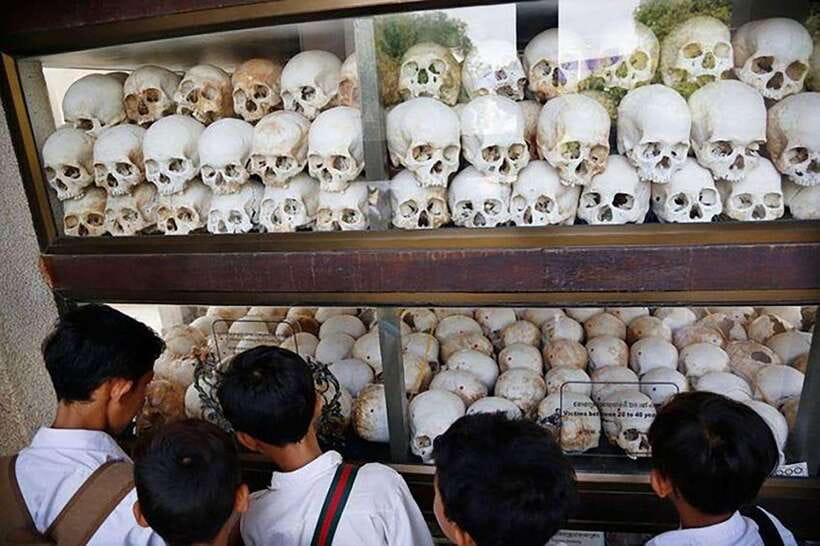
- Two guided sites, about 1.5 hours each: S21 first, then Choeung Ek.
- English-speaking guide who connects context to exhibits, including personal family stories from some guides.
- Comfortable air-conditioned vehicle with cool water, so you can focus on the day.
- Entrance tickets are separate: budget cash USD 8 per person for admission.
- Dress code rules matter: cover shoulders and knees, and shoes aren’t allowed.
- Small-group feel in practice, with guides able to answer questions at a human pace.
Tuol Sleng S21: What you’re really looking at
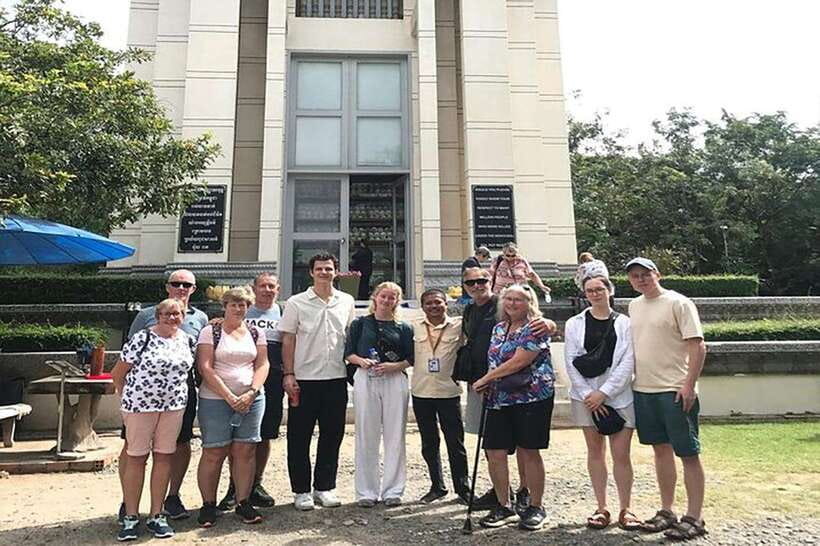
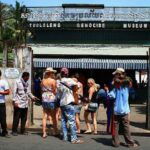
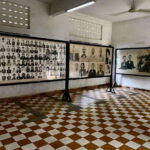
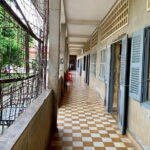
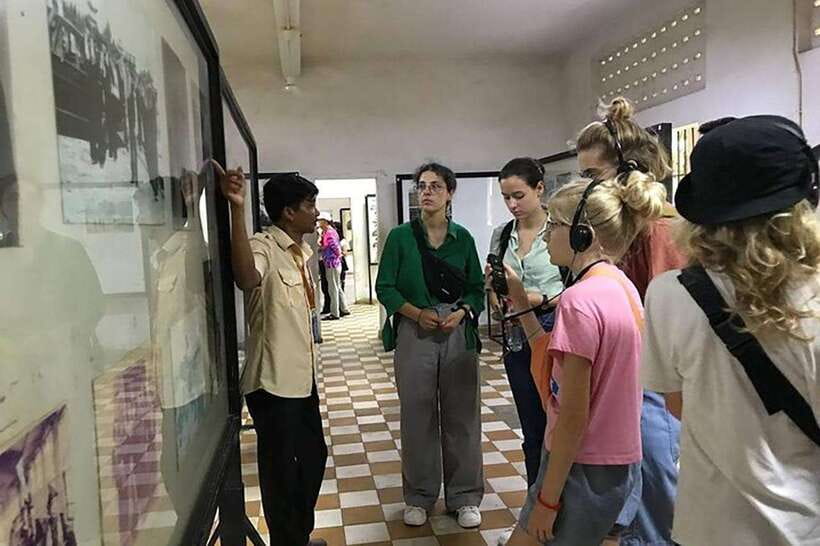
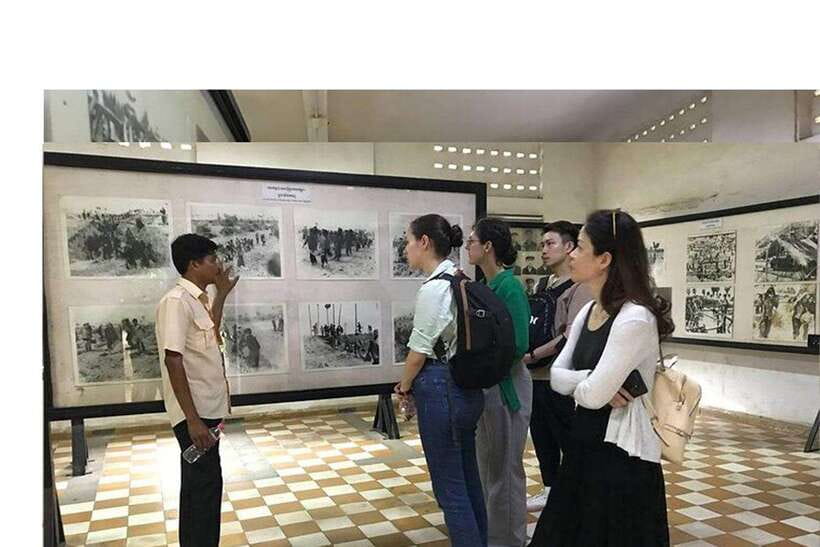
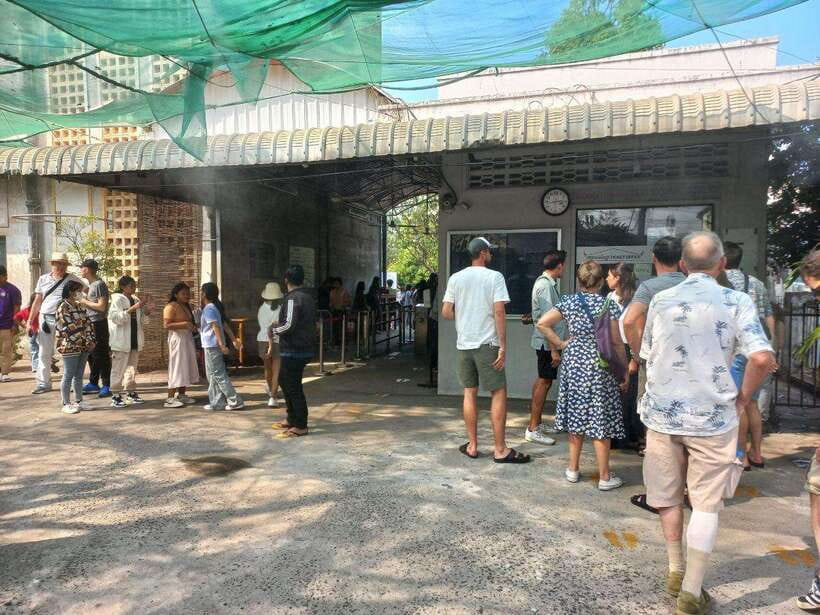
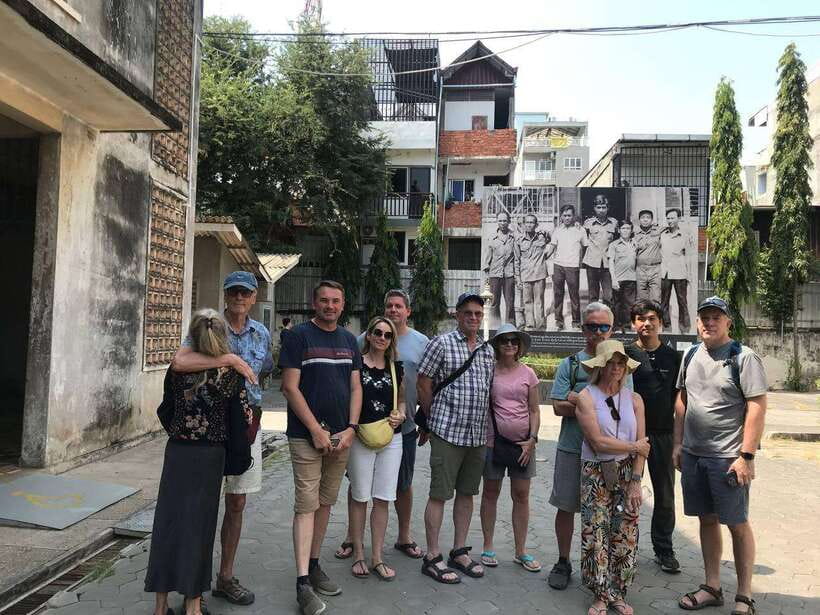
Tuol Sleng (S21) is the first stop, and it sets the emotional tone fast. This was a school that was turned into a detention and interrogation site, and the exhibits are arranged to help you understand the process rather than just point at horror. The experience is hard-hitting, but with a guide, it becomes clearer: you don’t just see rooms and photographs—you learn how the Khmer Rouge system worked, how it expanded, and why so many people were trapped in it.
I like that the visit is guided for about 1.5 hours. That’s long enough for your brain to catch up. You can ask questions when something feels confusing, and your guide can place details into a bigger picture—who was targeted, how people were processed, and how daily life became a mechanism of control. One strong thread from multiple guides is that they don’t treat the topic like a history lecture. Many of them share personal context from growing up in the aftermath, and that changes the tone from distant tragedy to lived reality.
You’ll also notice how the museum handles presentation. It’s organized, and there are facilities like toilets plus drinks and food to buy on-site (handy in Phnom Penh heat). But the content itself stays unsettling. For this reason, I’d plan this as an early priority in your mental calendar—go in with enough time afterward to decompress.
One more detail to keep in mind: figures and scale come up. For example, your guide may share statistics such as the huge number of people processed at S21 and the fact that only a very small number survived. Those numbers hit harder when explained in context, which is exactly where a live guide earns their keep.
You can also read our reviews of more museum experiences in Phnom Penh

Choeung Ek Killing Fields: The memorial and the scale
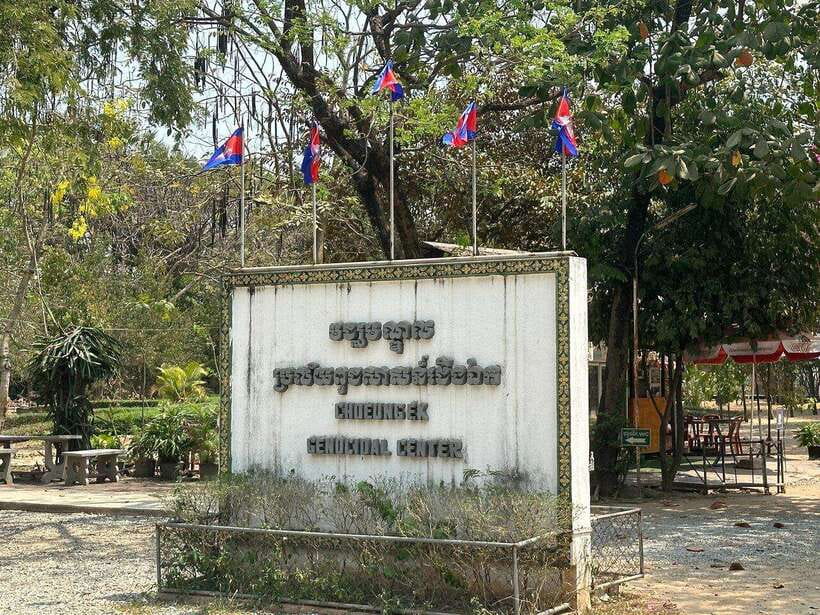
After S21, you head to Choeung Ek, often described as the Killing Fields. This is about 15 km from Phnom Penh, and the distance matters because it marks a shift—from the prison system to where detainees were taken. The guided visit is again about 1.5 hours, which is a good length for the way this place is designed: you need time to look, read, and absorb the memorial sections without rushing your thoughts.
At Choeung Ek, the exhibits focus on the mass graves and the memorial area. You’ll see how the site remembers victims and how the story is told through physical remnants, documentation, and remembrance structures. It can feel surreal because the setting is so real—trees, paths, and open air—yet the history is almost unimaginable. A guide helps you keep your footing. Instead of just feeling overwhelmed, you learn what each section is trying to communicate.
I also appreciate that this stop isn’t treated as a quick photo stop. Your guide’s job is to slow you down where you need it—what to pay attention to, what to understand, and what questions you might want to ask. Several guides include sensitive cultural and historical context, including how Cambodia has dealt with the aftermath and the continuing impact on families and communities.
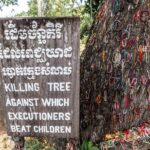
If you want something optional but meaningful, one visitor mentioned a small ritual idea at the memorial area: tying or hanging something symbolic at a feature referred to as the Killing Tree for lost children. If your guide brings up similar details, you’ll have the chance to participate thoughtfully—or simply observe.
One practical note: because this is still outdoors for parts of the experience, the earlier comfort choices help. You’ll be glad you brought the right clothing and planned for heat and walking.
Timing a 4-hour day without feeling rushed
This is a half-day tour of around 4 hours, and the structure is simple: hotel pickup, guided S21, guided Choeung Ek, then back to Phnom Penh. That tight format is the trade-off with any two-site day. You get the full arc—from prison to killing fields—but you don’t get hours to wander.
For me, the schedule makes sense because both sites reward guided interpretation. You’re not losing time to guesswork. Your guide is there to translate exhibits and explain what they mean. Still, if you’re the type who wants to read every plaque slowly and stay in one room for longer, you may feel that time at each venue is capped.
The day starts with an easy logistics rhythm. You’ll be picked up from your hotel, and the organizer asks you to wait in the lobby about 10 minutes before the scheduled time. The transfer uses an air-conditioned private vehicle (and the tour includes cool water). That’s not just comfort—it’s also energy management. When you’re going to sit with heavy material, you don’t want your morning to be a travel stress test.
The tour order matters too. Visiting S21 first gives you the mechanics of the regime. Then Choeung Ek lands with more clarity because you understand what the prison was connected to. It’s the kind of sequencing that a self-guided route often misses, especially if you don’t already know the background.
Price and what you’re paying for (tour vs entrance fees)
The tour price is USD 19 per person, and that’s for the core experience: hotel pickup/drop-off, an English-speaking licensed guide, a driver, an air-conditioned vehicle, and cool water. On paper, entrance fees might feel like a surprise later, but here they’re clearly separate.
You must budget cash for admission:
- Tuol Sleng (Toul Sleng / S21) entrance: USD 5 per person
- Choeung Ek (Killing Fields) entrance: USD 3 per person
That totals USD 8 per person in entrance fees, and you’re advised to bring USD 8 in cash. Since the tour price doesn’t include tickets, your all-in cost is usually the tour fee plus these admissions. Tipping isn’t included, and personal travel insurance is not included.
So is the tour good value? I think it is, if you care about context. Entrance tickets alone buy access, but they don’t provide the human interpretation that makes the exhibits understandable. Many guides include personal family stories—one tour guide is described as having first-hand experience of the genocide period, not just second-hand explanation. That’s the value you’re paying for: a trained guide who can answer questions, pace the experience, and help you process what you’re seeing.
Also, the transport quality gets real emphasis. Multiple comments highlight smooth, clean, comfortable vehicles and drivers who handle traffic well. In Phnom Penh, that matters. You don’t want to spend the day thinking about logistics when the subject is already heavy.
Dress code, shoes, and the practical rules that catch people
This is where you’ll want to prepare before you leave your hotel. The sites require:
- Cover your shoulders and knees
- Shoes are not allowed
Those rules aren’t optional. If you show up dressed in a way that exposes shoulders or knees, you may have trouble getting in. If you didn’t plan ahead, you might find solutions on-site like cover-ups, and one visitor noted you can hire cover-ups. Still, the cleanest approach is to wear something that meets the rules from the start.
Because shoes aren’t allowed, consider wearing footwear that you can remove easily. Even if you’re not told a specific sock policy, it’s smart to bring something that keeps you comfortable once shoes are out of the picture. Think: long pants or a skirt that reaches the knees, a breathable top that covers shoulders, and a plan for your feet.
This tour also isn’t suitable for everyone. The activity specifically notes it’s not suitable for people over 95 years. If you’re in that range, I’d look for a gentler option with fewer walking demands and less time at outdoor memorial areas.
Finally, keep in mind that the emotional content can be intense. You don’t need to be weak to feel it. You just need to be ready.

English guides like Chanrouen, Net, Ran, and Dara make the difference
An English-speaking guide is the heart of this tour. And the guide experience isn’t just about translating language. It’s about translating meaning.
Across recent departures, names like Chanrouen, Net, Ran, Niki, Sum, and Makara come up repeatedly in feedback, and several people mention guides with direct family experience of the Khmer Rouge era. That kind of connection matters because you hear history told with care, not just facts recited. One guide described personal experiences from living through the period as a child, and another explained how their father and siblings were affected. Even when the story is personal, the explanations stay tied to what you’re seeing in each room or memorial section.
Then there’s the driver. Dara shows up a lot in comments as a helpful, steady presence in the car—plus the fact that you’re in a smaller group setup in practice. For you, that often means less stress during transfers and fewer distractions on the way to the sites.
The best guides also give you space for questions. Several people explicitly praised the ability to ask questions and get time and attention. If you’re the type who wants to clarify dates, political context, or how Cambodia moved forward afterward, you’ll benefit from a live guide who can answer without brushing you off.
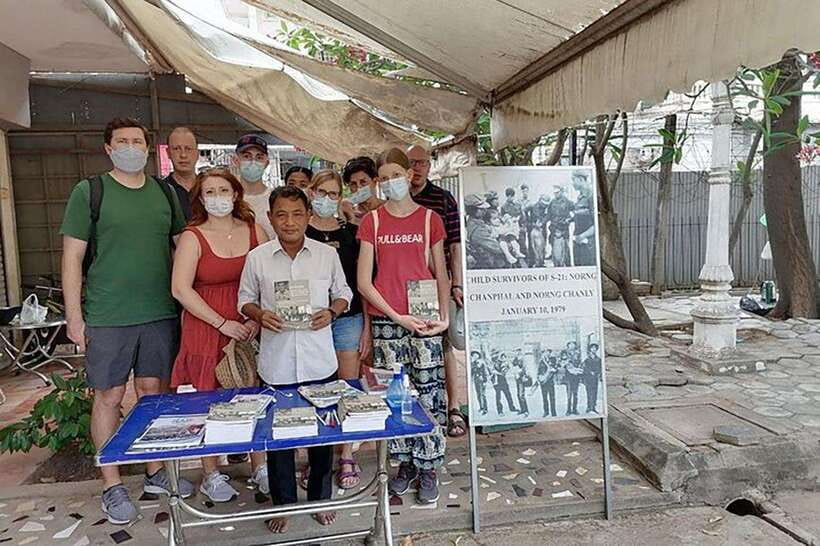
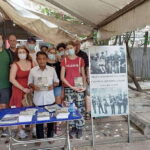
There’s also an optional human connection some departures include at the end: one account says the tour may encourage you to meet one of the still-living survivors and buy a book for USD 10. That isn’t guaranteed in every situation, but if it’s offered on your day, it can be a respectful way to go beyond the museum walls and support the people who keep memory alive.
A quick note on tone: the content is graphic in places. One visitor noted the images aren’t the absolute worst kind of explicit, but they’re still disturbing. If you’re sensitive to that, tell your guide how you’re feeling so they can help you focus on the parts you can handle.
Who should book this Phnom Penh genocide museum tour
This is a strong fit if you:
- Want to learn about the Khmer Rouge period in a structured way
- Prefer a guide over audio, especially for context and questions
- Can handle an emotionally intense visit without shutting down
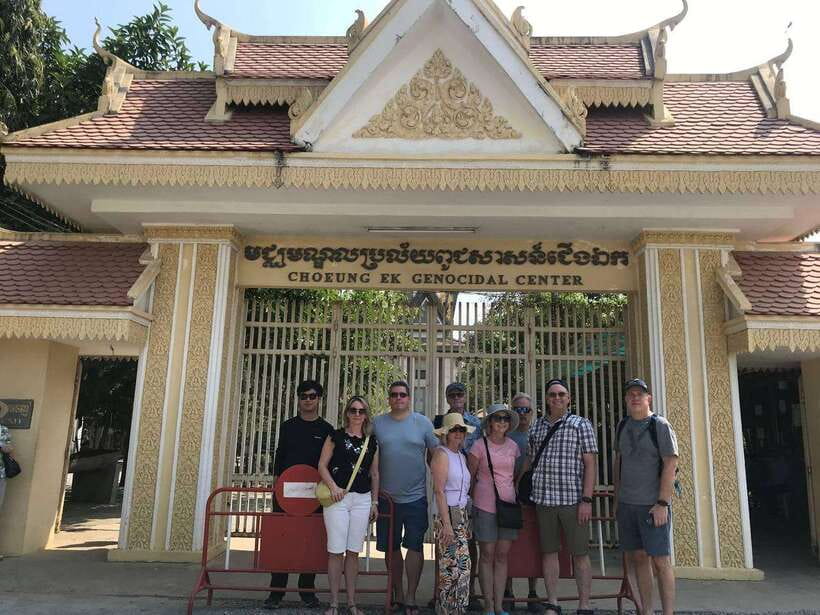
You might also like it if you’re short on time in Phnom Penh but still want both sides of the story: detention at Tuol Sleng (S21) and the memorial at Choeung Ek.
This is likely not a good fit if:
- You don’t want to engage with genocide history in a direct way
- You need a very light, carefree half-day
- You’re traveling with someone over 95 years (the tour is not suitable)
- You’re not prepared for the dress code and no-shoes rule
And here’s the balanced truth: you will leave shaken. That’s normal. The goal isn’t to feel good; it’s to understand and remember.
Should you book this Phnom Penh Killing Fields and S21 tour?
Yes—if you’re ready for a serious, guided day and you want the most value from your time in Phnom Penh. I’d book it when you know you’ll benefit from an English explanation, especially if you don’t already have deep background on the Khmer Rouge era. The hotel pickup, air-conditioned comfort, cool water, and licensed guide make it practical, not just meaningful.
Book with your eyes open about two things: bring cash for USD 8 in entrance fees, and wear clothing that fits the site rules (shoulders and knees covered, no shoes). Do that, and you’ll be able to focus on what matters most—understanding this period with clarity and respect.
FAQ
How long is the tour?
The total duration is about 4 hours, including guided time at both sites and hotel transfers.
Does the tour include hotel pickup and drop-off?
Yes. Pickup and drop-off in Phnom Penh are included, and you should wait in the hotel lobby about 10 minutes before your pickup time.
Is there an English-speaking guide?
Yes. The tour includes an English-speaking licensed guide during the museum and memorial visits.
Are entrance fees included in the tour price?
No. Entrance tickets are not included and must be paid separately at USD 5 per person for Tuol Sleng (S21) and USD 3 per person for the Killing Fields (Choeung Ek).
How much cash should I bring for entrance fees?
Bring cash USD 8 per person for the entrance fees.
What’s included with the tour besides the guide?
The tour includes a professional English-speaking guide and driver, an air-conditioned vehicle, and cool water.
What’s the transport like?
You travel in a comfortable air-conditioned private vehicle with clean, safe transportation.
What should I wear (and are there rules about shoes)?
You must dress cover your shoulders and knees. Shoes are not allowed. You should plan your outfit around these rules.
Is cancellation free?
Yes. There is free cancellation up to 24 hours in advance for a full refund.
Is the tour suitable for elderly travelers?
The activity notes it is not suitable for people over 95 years.