REVIEW · CAMBODIA
Angkor Wat: Sunrise: Ta Prohm and Bayon Temple Tour
Book on GetYourGuide →Operated by Tourme ANGKOR · Bookable on GetYourGuide
Dawn at Angkor changes everything. This guided morning tour gets you at Angkor Wat for sunrise, then pushes deeper into the complex before moving through Ta Prohm and Angkor Thom to Bayon.
I really like the sunrise timing and the practical way the day is paced, with stops that keep you fueled for temple walking. I also love that the guide turns the carved walls into clear stories, plus you get bottled water and cool towels throughout the day.
One thing to plan for: the $16 tour fee does not include the $37 temple entrance ticket, so your real day budget is tour cost plus that ticket.
In This Review
- Key highlights worth waking up for
- How this early-start route makes Angkor Wat feel different
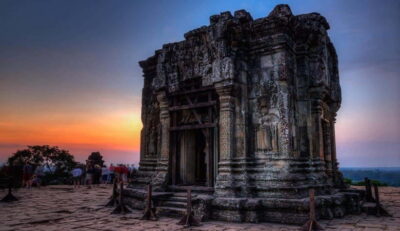
- Sunrise at Angkor Wat: timing, light, and the photo advantage
- Inside Angkor Wat: corridors, carvings, and upper terraces
- The Srah Srang break: fuel up at the pools area
- Ta Prohm: the jungle-temple mood you came for
- Angkor Thom and Bayon: the faces, the fortifications, and the big symbolism
- Tonle Om Gate and the southern gate sculpture walk
- Skip-the-line and comfortable logistics: what you get for the $16
- What to bring for an 8-hour Angkor morning (and what to avoid)
- Who this tour is best for
- Should you book this Angkor Wat Sunrise: Ta Prohm and Bayon tour?
- FAQ
- How long is the Angkor Wat sunrise and temples tour?
- What’s included in the tour price?
- Is the temple entrance fee included?
- Is breakfast included?
- What time does the tour end?
- What should I wear or bring for the early morning start?
- Is this tour suitable for children or wheelchair users?
- Can I cancel and get a refund?
Key highlights worth waking up for
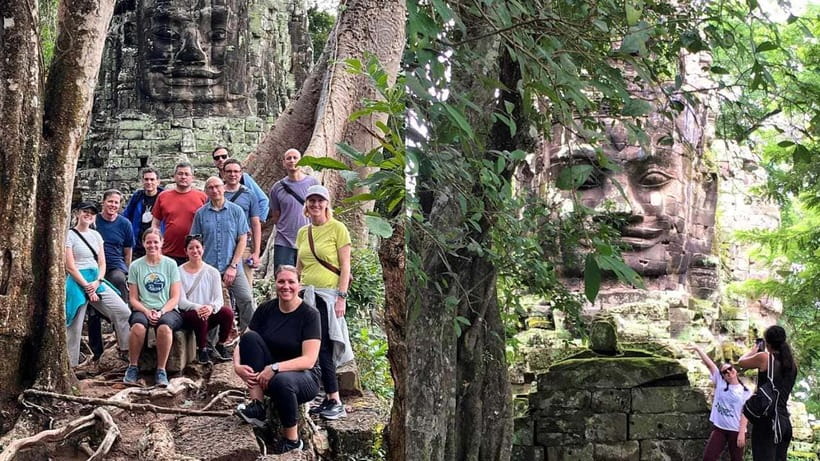
- Sunrise viewing built around the pre-dawn entry plan: you arrive early enough to get good light and a less frantic start
- Angkor Wat in depth (about two hours inside): corridors, central chambers, and upper terraces, not just a quick photo stop
- Ta Prohm’s jungle atmosphere: a temple that once housed 2,740 monks and still feels like it’s being reclaimed by trees
- Angkor Thom and Bayon faces: Bayon’s 200+ tower faces, plus the southern gate walk with gods and demons
- Comfort details that matter at 4 a.m.: air-conditioned transport, water bottles, and cool towels at stops
- You’re back by midday: the tour typically ends between 12:30 and 1:30, leaving the rest of the day for you
How this early-start route makes Angkor Wat feel different
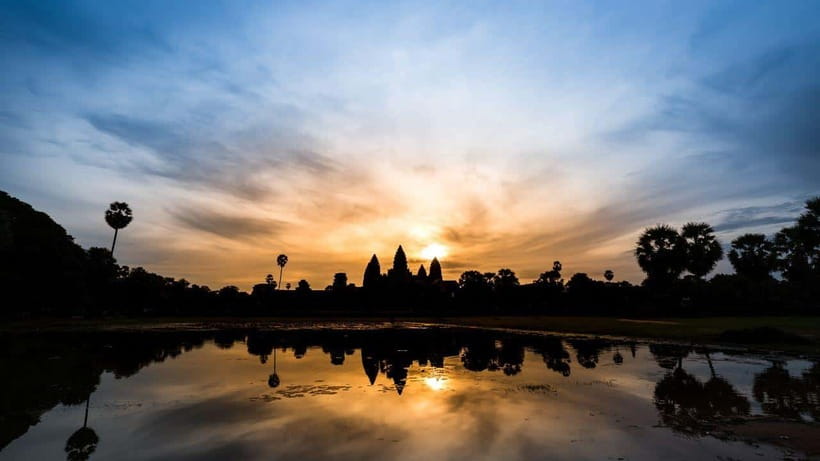
Angkor Wat at sunrise is famous for a reason. But what makes this experience more than a standard morning scramble is the structure: you’re out early from Krong Siem Reap, then you spend real time inside afterward instead of rushing through everything for the sake of speed.
I like that the day is set up to give you a rhythm. Dawn gives you the big wow moment, then the quieter interior hours help you slow down and actually notice the carvings and layout. And because the tour ends around lunch, you avoid wasting your best daylight on back-and-forth.
You can also read our reviews of more tours and experiences in Cambodia

Sunrise at Angkor Wat: timing, light, and the photo advantage
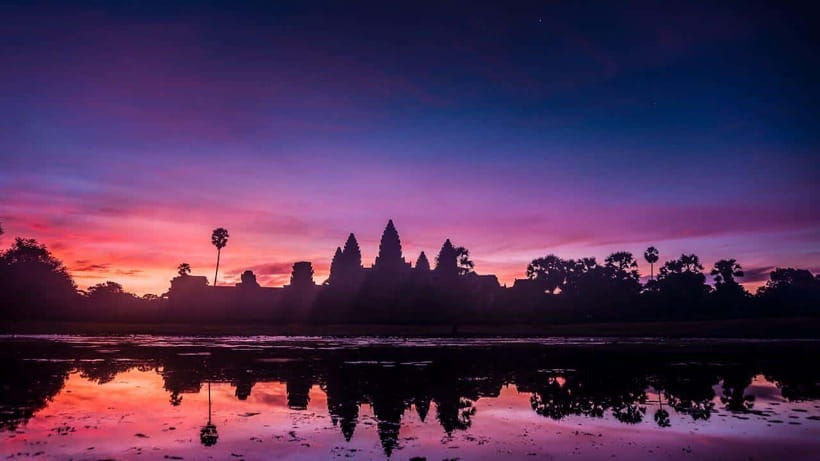
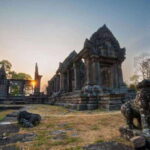
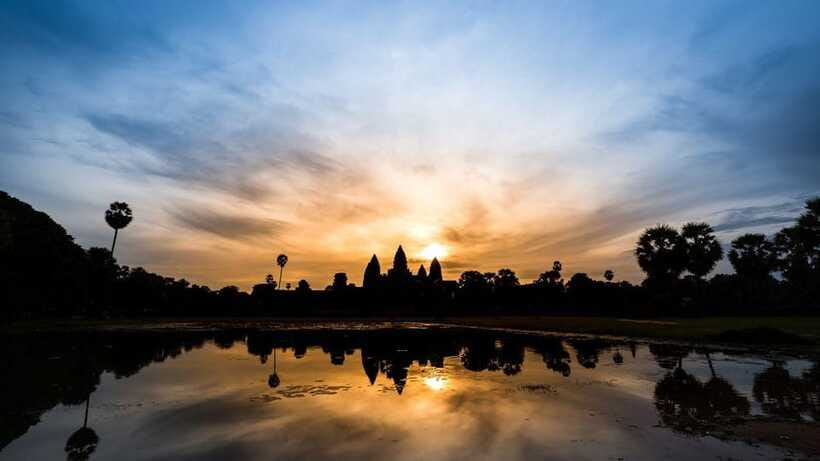
Watching sunrise over Angkor Wat is the main reason people book. The tour plan is designed for an early arrival and a viewing position where you can see the temple silhouette and the reflections in the surrounding water.
You’re also not just standing there with your camera and guessing. The tour includes a live English-speaking guide, and the guides are known for guiding people to good spots for both viewing and photos. In practice, that means you spend less time wandering and more time capturing the moment without blocking anyone else.
One practical note: sunrise starts before you feel fully human. Bring a torch as recommended, wear comfortable shoes, and expect it to be cool and dark at the start. Even if you’re traveling light, you’ll be glad you packed for the early conditions.
Inside Angkor Wat: corridors, carvings, and upper terraces
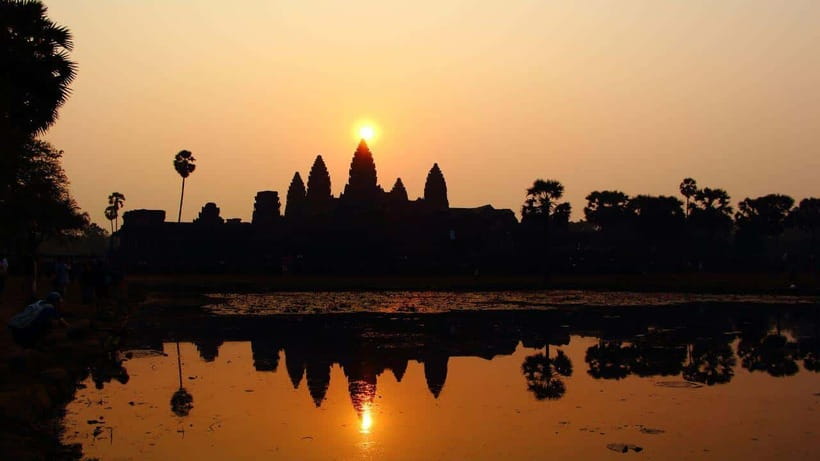
After sunrise, you enter the great temple in darkness from a less-expected access point, which helps you avoid arriving too late. Then the tour gives you about two hours inside Angkor Wat, enough time to move beyond the headline views and actually understand the temple’s design.
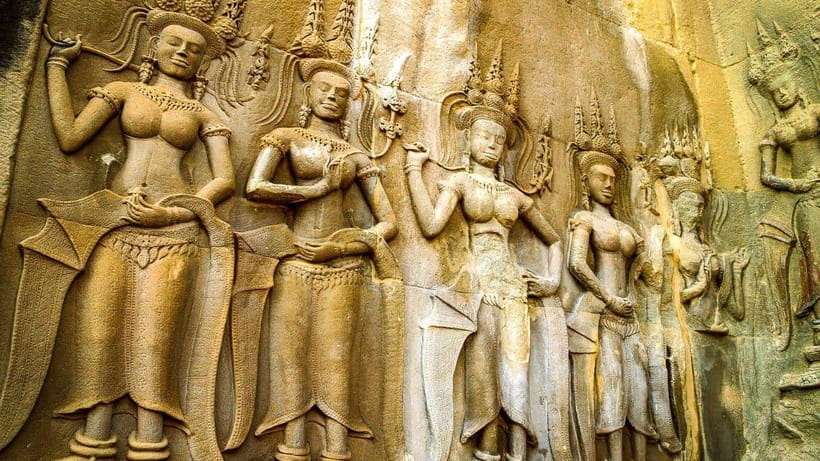
This is where you’ll appreciate the guide. The carved bas-reliefs tell layered stories about the Khmer Empire, and the guide’s job is to connect what you’re seeing to what it meant. Angkor Wat’s carving coverage is especially impressive, and the tour highlights a long continuous run of bas-relief work that’s often described as the longest stretch in the world. When your guide points out key panels and explains their themes, the temple starts to feel like a readable timeline rather than just stonework.
You’ll also get time on the upper terraces. That’s important because from up top you can see how the levels stack and how courtyards and corridors relate to each other. Lower corridors can feel like an art gallery; upper terraces feel more like architecture you can map in your head.
The Srah Srang break: fuel up at the pools area
Between the big temple blocks, there’s a break at Srah Srang. This is your time to regroup, use the facilities if needed, and decide about breakfast.
Breakfast is not included in the tour price, but the tour gives you time to eat at a local restaurant. If you prefer a simpler setup, you can also bring your own breakfast from your hotel and eat during the break. Either way, this hour works well because it prevents the classic mistake of skipping food and then moving through Ta Prohm and Angkor Thom on low energy.
This stop is also handy for cooling down a bit before you continue into more walking and more open-air sections.
Ta Prohm: the jungle-temple mood you came for
Ta Prohm is one of the most atmospheric temples in Angkor, and the tour schedules a full morning visit so you can experience that mood without rushing. Ta Prohm is famous for its trees wrapped through stone, giving it a sense of time caught mid-sentence.
What I like here is the connection between the visual and the story. The tour doesn’t treat Ta Prohm like scenery only. It explains that this temple once housed 2,740 monks, and you’ll hear about how French explorer Henri Mouhot is often credited with the site’s early European rediscovery in the 1850s.
As you walk through, keep an eye on how the root-and-stone visuals change as you move. The way the light hits the stone and the way the paths narrow make Ta Prohm feel more intimate than some of the larger, more formal areas. You get about an hour here, which is a good length: long enough to appreciate the texture and the framing, not so long that you cook in the midday heat.





Angkor Thom and Bayon: the faces, the fortifications, and the big symbolism
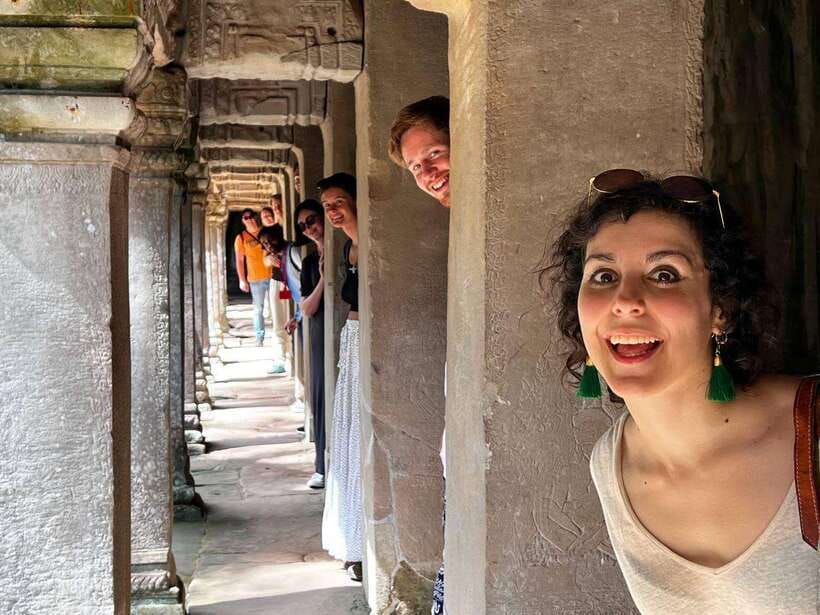
After Ta Prohm, you head to Angkor Thom, the fortified city at the heart of the Angkor complex. This is one of the most rewarding shifts of the day because you go from jungle tension to organized stone power.
Along the way, you pass major viewpoints like the Terrace of the Leper King and the Terrace of Elephants. These terraces are more than photo stops. They give you context for how ceremonial space, processions, and storytelling were designed into the city’s layout.
Then comes Bayon Temple. The tour centers on Bayon’s central towers, which are covered with more than 200 enormous faces. If you’ve seen images before, the scale still surprises you in person. You’ll notice the faces from different angles as you move, so the experience isn’t just one view—it’s a sequence of expressions and perspective changes.
The guide is key again here. The temple’s design is packed with meaning, and a clear explanation helps you understand why Bayon’s faces feel so emotionally direct. Without that context, Bayon can turn into a strong photo moment and little else.
Tonle Om Gate and the southern gate sculpture walk
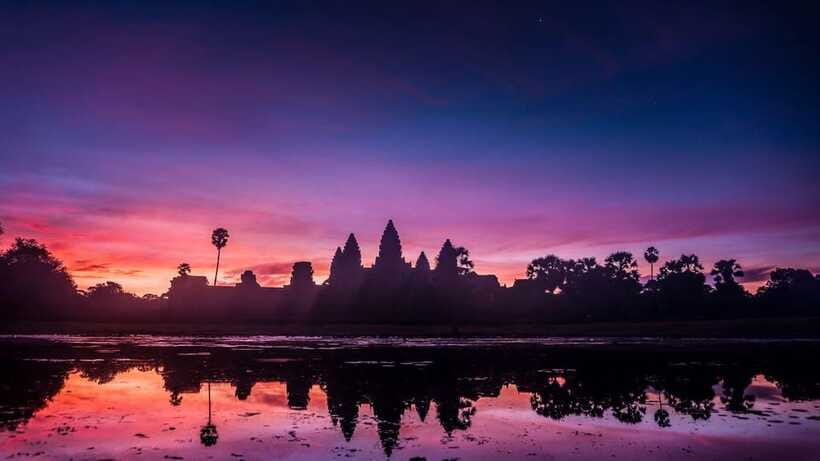
To wrap up the Angkor Thom circuit, you visit the southern Gate (Tonle Om Gate). This segment is shorter, but it adds a final piece to the city picture.
You’ll walk through the area flanked by 54 stone figures on each side, with gods on the left and demons on the right. Even if you’re not memorizing the symbolism, you’ll feel the “order and drama” of the city walls. It’s a good chance to look back on everything you’ve seen earlier that morning and notice how the gates connect the temples into one grand plan.
After this, the tour shifts toward a calmer ending at the Angkor Archaeological Park area before heading back to your hotel.
Skip-the-line and comfortable logistics: what you get for the $16
Let’s talk money and value, because this is where people get tripped up.
The tour price is listed at $16 per person, but the temple entrance fee is separate. You’ll need to budget an additional $37 for temple access covering all temples in one day. That means your total spend is basically tour fee plus temple ticket.
So is the $16 worth it? In my view, it is when you care about three things:
- You get an English-speaking guide who helps you make sense of what you’re looking at
- You get transportation plus hotel pickup and drop-off, which saves time and hassle
- You skip the ticket line, which matters when you’re already up very early
Also, the included comfort details are not just fluff. Air-conditioned vehicle time, plus bottled water and cool towels, makes the long early day feel manageable. That’s a real value piece in Siem Reap, especially when your schedule starts in pre-dawn hours.
What to bring for an 8-hour Angkor morning (and what to avoid)
This tour moves through temples and open paths, so your packing should focus on comfort and rules.
Bring:
- Comfortable shoes for uneven stone and long walking
- A camera (obvious, but you’ll use it)
- Biodegradable sunscreen
- Comfortable clothes
- Cash
You should also bring a torch since the start is early and you’ll be navigating in low light.
Dress code matters. Casual is fine, but shoulders and knees must be covered inside temples. Shorts are not allowed. This is one of those rules where being slightly underdressed turns into stress, so plan ahead.
Who this tour is best for
This is a strong fit if you want the classic Angkor sights with guidance that actually explains what you’re seeing. It’s also a good match for first-timers who want a “most important hits” morning: Angkor Wat sunrise plus interior time, then Ta Prohm, and finally Angkor Thom and Bayon.
I’d think twice if you’re very sensitive to early wake-ups. The day begins before sunrise and keeps you moving through multiple temples. And if you’re traveling with a child under 8, this tour is not suitable. Wheelchair users are also not supported.
If you’re traveling solo, the schedule still works well because the guide keeps the flow tight and helps with timing and practical orientation.
Should you book this Angkor Wat Sunrise: Ta Prohm and Bayon tour?
Book it if you want a structured, sunrise-centered Angkor morning that balances the big photo moment with actual guided temple time. The combination of Angkor Wat sunrise plus about two hours inside, then Ta Prohm’s jungle atmosphere, then Angkor Thom and Bayon’s faces is a smart use of limited daylight.
Don’t book it if you’re trying to keep your total cost minimal. Between the tour fee and the separate $37 temple entrance ticket, you’ll want to budget for both. And if you’re hoping for a slow, relaxed day with no early start, this schedule won’t match that mood.
If sunrise is your priority, and you want a guide who helps you see more than silhouettes, this is a solid choice.
FAQ
How long is the Angkor Wat sunrise and temples tour?
The tour duration is 8 hours, with a return to Krong Siem Reap by around 12:30 to 1:30.
What’s included in the tour price?
It includes the sunrise experience at Angkor Wat, guided visits to Angkor Wat, Ta Prohm, Angkor Thom City, and Bayon Temple, an English-speaking tour guide, bottled water and cool towels, air-conditioned vehicle transport, and hotel pickup and drop-off. It also includes skipping the ticket line.
Is the temple entrance fee included?
No. Temple entrance is US$37.00 and covers all temples in one day.
Is breakfast included?
Breakfast is not included. There is a break with time for breakfast at Srah Srang, where you can purchase food locally.
What time does the tour end?
The tour ends between 12:30 and 1:30 pm.
What should I wear or bring for the early morning start?
Wear comfortable shoes. Inside temples, shoulders and knees must be covered and shorts are not allowed. It’s recommended to bring a torch, plus sunscreen, a camera, and cash.
Is this tour suitable for children or wheelchair users?
It is not suitable for children under 8 years old. It is also not suitable for wheelchair users.
Can I cancel and get a refund?
Yes. Free cancellation is available up to 24 hours in advance for a full refund.