REVIEW · CAMBODIA
Phnom Penh’s Hands-On Khmer Cooking Class in the Countryside
Book on Viator →Operated by Meet the Province · Bookable on Viator
Phnom Penh to the countryside feels like a time switch: you start with a short Mekong ferry and end with Khmer cooking at a real village table. This private class takes you out to Arey Ksat, where you ride in a tuk-tuk, shop at a local market, and then cook dinner with your guide and family-style hosts.
I especially liked the market-to-stove flow—you learn what you’re buying and why it matters before you ever touch a knife. And you’re not in a big group. It’s just you and your private party, with Sophors as the friendly guide who shares village life as you cook.
One thing to plan for: you’ll spend time getting there and back on the ferry, plus the class starts late afternoon. Also, ferry tickets and any drinks (like beer) cost extra, so don’t assume the $35 covers everything.
In This Review
- Key things you’ll remember
- Phnom Penh to Arey Ksat: why this cooking class is such a good value
- Getting there on your schedule: ferry timing and meeting point
- Arey Ksat market and organic garden: where the lesson actually starts
- The tuk-tuk ride: short, local, and part of the charm
- Cooking Chicken Amok step-by-step: what you’ll be doing
- The other dishes (and why three matters)
- Allergies and pacing
- Eating together: food tastes better when the story comes with it
- Optional homestay night: when to add the extra day
- Price and logistics: what $35 really buys (and what costs extra)
- Who this tour suits best (and who should think twice)
- Should you book it?
- FAQ
- What time does the class start?
- How long is the experience?
- Is this a private tour?
- What will I cook?
- Do we visit the market?
- Is there an organic garden visit?
- What’s included in the price?
- What costs extra?
- FAQ
- Can I stay overnight?
- What happens at the end of the tour?
Key things you’ll remember
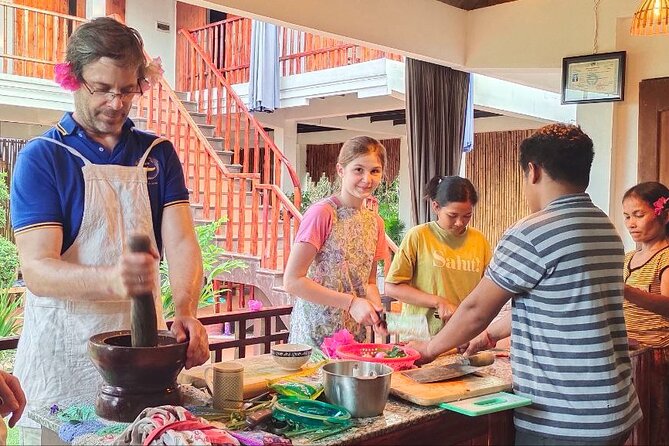
- Private group cooking with Sophors and her family, not a crowded demo
- Arey Ksat market tour to pick ingredients before class cooking starts
- Chicken amok taught step-by-step as the main dish
- Tuk-tuk ride through the local area between ferry, market, and kitchen
- Optional homestay night if you want to slow down after Phnom Penh
Phnom Penh to Arey Ksat: why this cooking class is such a good value
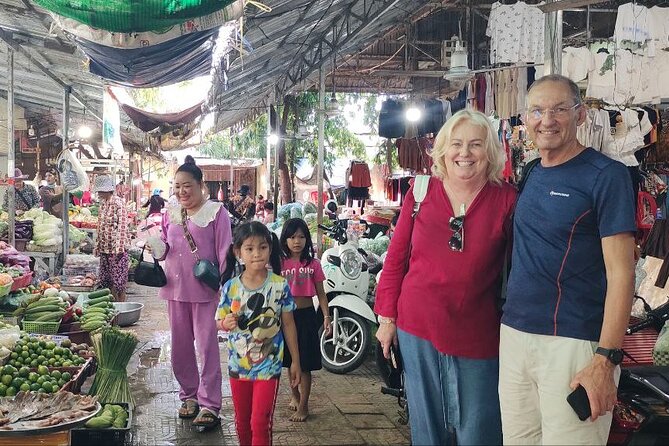
For $35, this is one of those Cambodia activities that feels like you’re paying for access, not just food. You’re getting a ferry ride, local transport in a provided tuk-tuk, a market stop, an organic garden component, and hands-on cooking—then you eat what you make. That’s a lot packed into about 4 hours.
What makes it feel worthwhile is the structure. Instead of learning recipes in a classroom, you start with the ingredients in the place they come from: the market in Arey Ksat. That changes how you taste and how you cook later. When you know what something is and how fresh it is, the dish stops being mysterious and starts being repeatable.
And yes, it’s hands-on. You’ll be cooking (not just watching). The hosts are friendly and you’ll have time to ask questions, including about village life. Several people point out that the family welcome is warm, and that the teaching is clear—even when you’re working on traditional methods that take time.
You can also read our reviews of more cooking classes in Cambodia
Getting there on your schedule: ferry timing and meeting point
This runs in the late afternoon. Your tour start is around 4:15 PM, with ferry pickup to Arey Ksat around 4:00 PM. If you’re arriving from central Phnom Penh, you’ll want to time your day so you don’t rush breakfast/lunch. Then treat the ferry as part of the experience, not annoying transportation.
Here’s the simple map in words:
- You take a ferry to Arey Ksat (about 15 minutes).
- Meet the group at Areyksat Ferry Dock.
- After arrival, you’ll be welcomed and transferred to the market in a provided tuk-tuk.
- At the end, you’ll return and be dropped back at the Arey Ksat ferry point.
The ferry itself costs extra. The data lists more than 500 riel per person each way. That’s not expensive, but it’s important for budgeting. Also, plan to go with cash or whatever payment method you can rely on. One past experience mentioned a situation where card payment wasn’t possible and there was no nearby ATM by a sand path—so I’d keep it conservative and bring cash for anything you might need on the far side.
If you get turned around finding the ferry point, you can text for help. That kind of reassurance matters on a half-day activity where missing the meeting time would cut your day short.
Arey Ksat market and organic garden: where the lesson actually starts
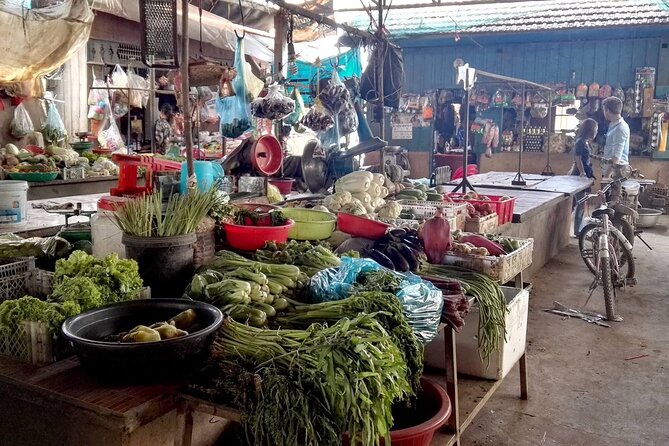
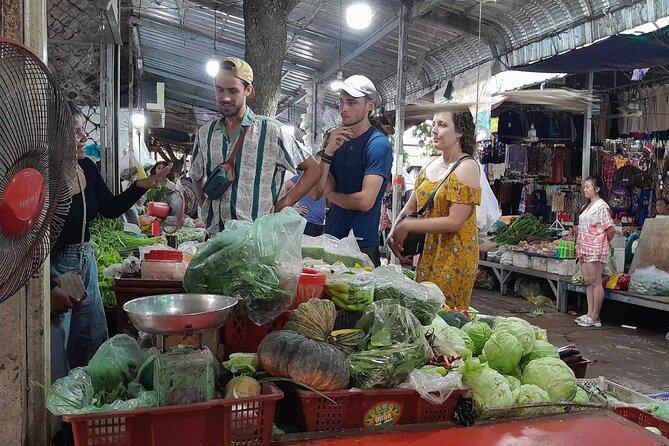
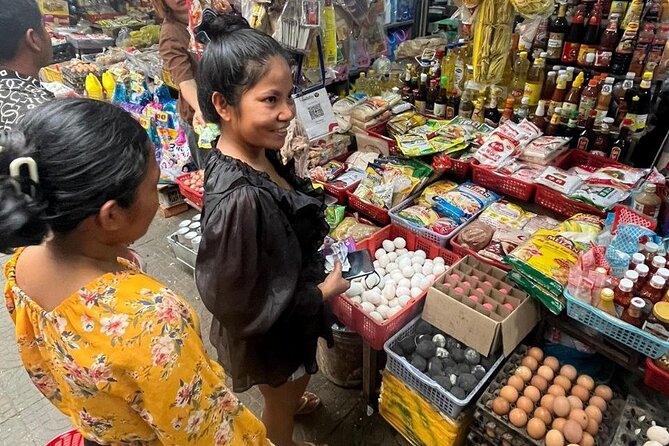
The market tour is more than shopping. It’s where you learn how Cambodian cooking begins: with produce that’s fresh, seasonal, and local. You’ll walk the market with your guide and hear explanations about local ingredients. Then you buy what you’ll use in class.
In practical terms, this helps you later in two ways:
- You learn what to look for in a market, so cooking doesn’t depend on guessing.
- You understand flavor foundations—how herbs and aromatics show up in Khmer dishes.
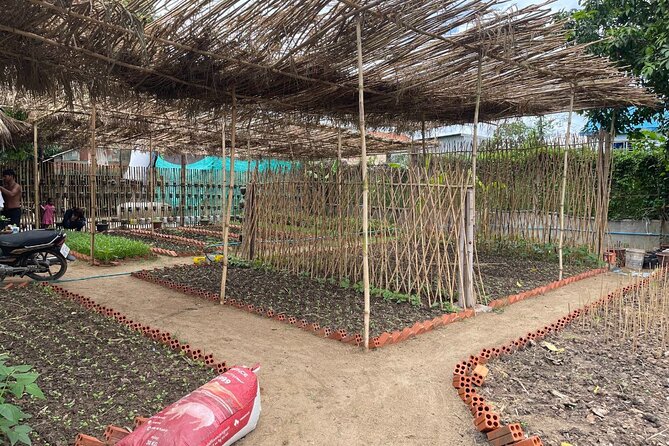
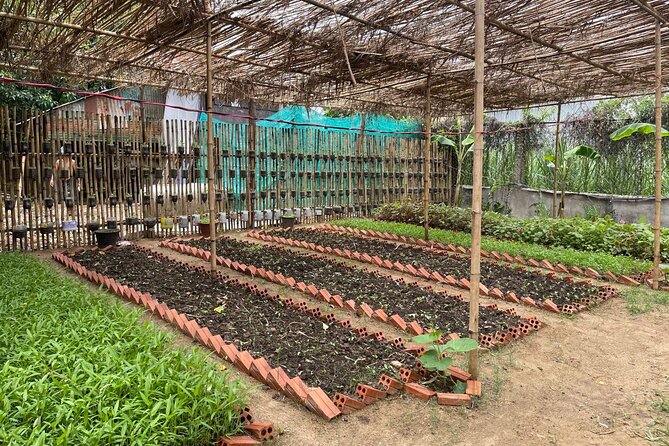
You’ll also include an organic garden tour. People highlight the garden setting as a highlight, and it gives the class a grounded feel. Instead of “ingredients appear magically,” you see how food connects to the land.
One extra detail worth knowing: the hosts talk about limiting plastic waste and choosing organic produce without chemical additives. Even if you don’t care about sustainability as a topic, it changes the tone. It makes the cooking feel intentional, not just a product you buy.
The tuk-tuk ride: short, local, and part of the charm
The tuk-tuk transfer doesn’t take long, but it’s a smart inclusion. It breaks the afternoon and keeps you in local rhythm. You’re moving between the ferry, the market, and the cooking location without having to coordinate your own transportation.
Also, it gives you that instant “you’re not in Phnom Penh anymore” feeling. It’s a quick reset: sound changes, scenery changes, and the schedule shifts from city pace to village pace.
Cooking Chicken Amok step-by-step: what you’ll be doing

The star dish is chicken amok, taught step-by-step. This is the centerpiece of the class, and it’s the dish most people mention when they talk about why the experience is memorable.
You should expect real cooking work, not just assembly. One person noted how aromatics like red peppers and lemongrass were ground into a paste using traditional methods, which can take longer than you might expect. That’s not a flaw. It’s the point. If you want the quickest possible version of a recipe, a village-style class may feel slow.
Still, that time is part of the skill you’re buying. When you understand why ingredients are prepared a certain way, your results improve later. Traditional methods also give you a better sense of texture—especially in sauces and paste bases that amok relies on.
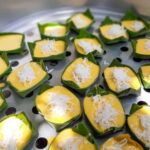
You may also form components of the dish using banana leaf (someone specifically mentioned preparing the banana leaf cup for the amok). Banana leaf changes aroma and the way a dish holds together during cooking. So even if you’ve never cooked with banana leaf before, you’ll get hands-on practice here.




The other dishes (and why three matters)
The class includes 3 unforgettable Khmer dishes total. The main dish is chicken amok, but you’ll also prepare additional Khmer dishes as part of the cooking session. On some menus, dessert may include things like purple sweet potato, which has shown up for at least one group.
Why three dishes is a big deal: you’re not learning one trick. You’re learning a couple of techniques and flavor approaches that help you cook more than one meal back home.
Allergies and pacing
One highlight from a positive experience: the host was mindful of a fish/shellfish allergy and communicated carefully. That’s a good sign for anyone with dietary needs—just be sure to tell them your constraints clearly when booking.
Pacing is another factor. A less-satisfying experience mentioned the host spent time talking about family and health issues, and that the group felt they didn’t get as much technique time as they hoped. So if you’re the type who needs a super tight, instruction-only class, you might want to set expectations ahead of time and ask for a focus on cooking technique during the session.
Eating together: food tastes better when the story comes with it
After shopping and prep, you eat what you make. That matters. In a hands-on class, you’re not just consuming. You’re collecting a set of flavors tied to a place and people.
In several accounts, the atmosphere is described as family-friendly, welcoming, and relaxed. Families have brought kids and found it works well—there’s a social element, but you’re still busy learning and cooking. If you’re traveling with children, this kind of structured meal is often easier than wandering a market and trying to decode food menus on the fly.
Also, you’ll likely have plenty of conversation time. Your host’s stories about village life are part of the deal here, and it’s a big reason people say they felt like family.
Optional homestay night: when to add the extra day
You can optionally book a night at the homestay with a serene environment. The pitch is simple: after Phnom Penh energy, you get quiet time to digest and relax.
This is a good idea if:
- You want to slow your trip pace for a day.
- You like the idea of sleeping in a village setting rather than always returning to the city.
- You prefer a calm evening after cooking, instead of racing back across the ferry.
If you don’t add the homestay, the tour ends after you enjoy the food, and you’ll be dropped back at the ferry point.
Price and logistics: what $35 really buys (and what costs extra)
Let’s talk value in plain terms.
Included:
- 3 Khmer dishes cooked during the class
- Local market & organic garden tour
- Pick-up at Areyksat Ferry Station
- Drop-off at Arey Ksat ferry at the end
- Drinking water
Not included:
- Alcoholic beverages (like beers and soft drinks)
- Ferry costs: more than 500 riel per person each way
So your hard total depends on whether you stay overnight and whether you add drinks. But even with ferry costs, you’re typically paying for a full block of local transport, ingredient buying, and guided cooking instruction.
Is it worth it if you’re a strong “I want to cook myself” person? Yes—because the market start and local ingredient shopping make the class more transferable. Is it worth it if you just want a meal? Maybe not. The experience is the lesson, the market, and the family setting.
Who this tour suits best (and who should think twice)
This class fits best if you want:
- A private, smaller-feeling experience outside Phnom Penh
- Hands-on cooking with a clear focus on Khmer dishes like chicken amok
- A cultural window into village life, not just a recipe worksheet
- A late-afternoon outing that still gets you dinner
Think twice if:
- You hate traditional prep that takes time (like grinding pastes by hand or doing banana leaf prep)
- You need a very schedule-tight, no-story cooking session
- You’re not comfortable budgeting for the extra ferry fare
Should you book it?
I’d book it if you’re in Phnom Penh and you want one of your days to feel grounded and practical. The combination is hard to beat: ferry ride, market tour, organic garden stop, tuk-tuk transport, and then a hands-on dinner you can replicate. People also consistently mention the welcome from Sophors and family, plus the fresh ingredients—some even coming straight from fields.
If you’re on the fence, the deciding question is simple: do you want to learn a dish the way it’s actually built in a Cambodian setting? If yes, this is a strong choice.
If you want a very fast, purely technical cooking class with minimal conversation, look for something that matches that style better. And if you book, bring cash for extras like ferry tickets and drinks, and plan your day so the 4:00 PM ferry lines up smoothly.
FAQ
What time does the class start?
The tour start time is 4:15 PM. Ferry pickup to Arey Ksat is around 4:00 PM.
How long is the experience?
It lasts about 4 hours (approx.).
Is this a private tour?
Yes. It’s a private tour/activity, so only your group participates.
What will I cook?
You’ll cook 3 Khmer dishes, with chicken amok as the step-by-step signature dish.
Do we visit the market?
Yes. The itinerary includes a local market tour where you learn about produce and buy ingredients.
Is there an organic garden visit?
Yes. There’s a local market & Organic garden tour as part of the experience.
What’s included in the price?
Included are the 3 dishes, the market and organic garden tour, pickup at Areyksat Ferry Station, drop-off at Arey Ksat ferry, and drinking water.
What costs extra?
You’ll pay for the ferry tickets (more than 500 riel per person each way) and alcoholic beverages are not included.
FAQ
Can I stay overnight?
Yes, there’s an optional homestay night available if you want to relax after Phnom Penh.
What happens at the end of the tour?
If you’re not staying overnight, the tour ends after you eat, and you’re dropped off at the Arey Ksat ferry point.