REVIEW · CAMBODIA
Kayaking & Floating Village in Siem Reap
Book on GetYourGuide →Operated by Cambodia Adventure Tour · Bookable on GetYourGuide
Floating villages beat the usual Siem Reap circuit. I love the up-close view of daily life on the floating village and the calm paddling through the mangroves with real chances to spot birds. One thing to plan for: the main kayaking window can feel short, so the briefing and pacing matter more than you might expect.
You get picked up from Krong Siem Reap and moved around by boat and air-conditioned vehicle, then back again the same day. When your guide is on form, like Sovandy or Daral, the talk about village life and local customs turns the stops from tourist steps into a more human story, not just checkboxes.
In This Review
- Key Things to Know Before You Go
- Kayaking Past Floating Homes on Tonle Sap
- Price and What You Actually Get for $88
- Getting There: From Siem Reap to the Lake Dock
- Floating Village Context: Rice Paddies and Daily Life
- Powered Boats, Canal Overgrowth, and What It Means
- Kayaking Through Mechrey: Slow Pace, Real Smiles, Great Photos
- The Kayak Station Break: Snacks, Drinks, and a Floating Bathroom Stop
- Mangrove Forest Kayaking: Bird Watching in the Quiet
- Seasonal note: March to June changes the plan
- Tonle Sap Morning Views and the Photo Spots You Can’t Reach Any Other Way
- Sunset Included: When Timing Works, It’s Worth It
- How Challenging Is the Paddling?
- Guides Make or Break the Experience
- What to Bring (and What Helps)
- Who Should Book This Tour (and Who Should Skip It)
- Should You Book the Kayaking and Floating Village Tour?
- FAQ
- How long is the Siem Reap kayaking and floating village experience?
- How much does it cost?
- What’s included in the $88 price?
- What should I bring for the tour?
- Where will I kayak during the trip?
- Is the tour suitable for pregnant women or babies?
Key Things to Know Before You Go
- Floating life first, then quiet paddling: You’ll see how people live before you start kayaking.
- Mangroves (or open lake birds): In low-water season (March to June), kayaking shifts to open lake for water-bird watching.
- Photography-friendly Tonle Sap light: Expect excellent morning views and photo stops, with sunset included later in the day.
- You’ll stop on a floating station: Snacks, drinks, and bathroom time are built into the route.
- Bring your basics for sun and comfort: Sunscreen and sunglasses are not optional in the glare.
- Kayak time may be shorter than you hope: If you want maximum time on the water, manage expectations.
Kayaking Past Floating Homes on Tonle Sap
This is one of those Siem Reap day trips that quietly makes sense: you start on Tonle Sap Lake, you glide through floating communities, and you finish with nature time that feels far from the temple crowds. The tone stays relaxed. Even though you’re on a kayak, the pace is geared toward observation, photos, and listening to what your guide points out.
The day’s most valuable part is the sequence. You don’t jump straight into a kayak with no context. First, you’re guided through how people live on the lake—rice paddies, everyday routines, and the way work and trade connect to the water. Then you get on the boats and finally paddle your own slow line through the canal and floating village.
If you’re the type who likes to move gently and look longer, you’ll probably come away happiest.
You can also read our reviews of more tours and experiences in Cambodia.

Price and What You Actually Get for $88
At $88 per person for about 6 hours, the price is less about “just a kayak” and more about transportation + guided access + gear. You’re paying for:
- hotel pickup and drop-off by air-conditioned vehicle
- entrance fees
- multiple boat transfers (including a powered boat leg to reach the kayak area)
- kayaking plus safety equipment and a safety guard
- drinks and snacks
That bundle matters in Cambodia’s lake geography. The route depends on boats for basic access, and the floating areas aren’t something you can easily replicate on your own without local know-how. So while the kayaking time may not be all-day, the logistics are handled.
Value also depends on your guide. Some guides make the explanations lively and clear (I’ve seen examples like Daral and Sovandy), which can turn this from a scenic outing into a real learning experience about lake customs and routines.
Getting There: From Siem Reap to the Lake Dock
Pickup happens from Krong Siem Reap, and you’re collected about 30 minutes before departure time. The ride is by air-conditioned vehicle, which is a big plus in Cambodia heat. Then you move toward the water and take a powered boat transfer.
Expect the day to switch gears quickly. You go from city streets to open water visuals, and you’ll get your first feel for Tonle Sap’s scale. The water route is also where the day’s “real-life Cambodia” vibes show up: canals, overgrowth, and the sense that the lake is a working landscape, not just scenery.
One practical tip: keep your sunglasses on early. Bright reflection off the water is immediate, and you’ll want your eyes ready before you start snapping photos.
Floating Village Context: Rice Paddies and Daily Life
Before you even touch a kayak, you get a look around the floating village area and surrounding farmland. You’ll observe rice paddies and the daily lifestyle of local people before arriving at the boat dock.
This is a smart setup. If you start kayaking right away with no explanation, floating villages can feel like “floating houses” and photos. With the context, you start noticing the patterns—where daily work happens, how people organize around the water, and why the floating structures make practical sense.
You’ll also get guided cultural explanations while you’re on the water. Your guide should explain local customs and how people live, work, and trade. That part is what makes the trip feel more authentic and less like a sightseeing shortcut.
Powered Boats, Canal Overgrowth, and What It Means
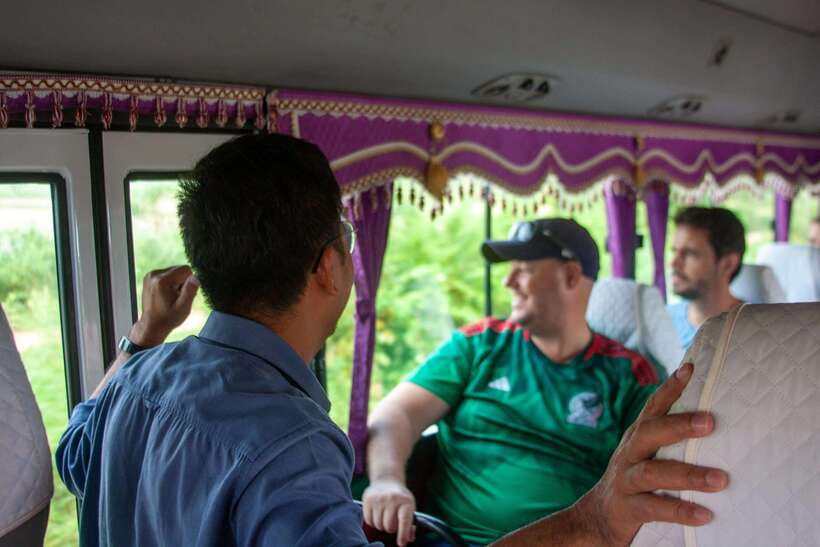
Your route includes a powered boat passage through the canal’s heavy overgrowth on the way to the Mechrey floating village. This sounds technical, but it’s actually key to understanding the lake environment.
The lake changes—seasonally and by water level. When the canals are choked with vegetation, you can’t kayak the whole way there; a motor boat does the messy clearing and brings you to the kayaking zone safely. It’s also why the kayaking plan changes by season.
So if you’re thinking, “Why not just paddle the whole thing?”—the answer is that the boat part helps you reach the right spots and avoids turning the trip into a slog.

Kayaking Through Mechrey: Slow Pace, Real Smiles, Great Photos
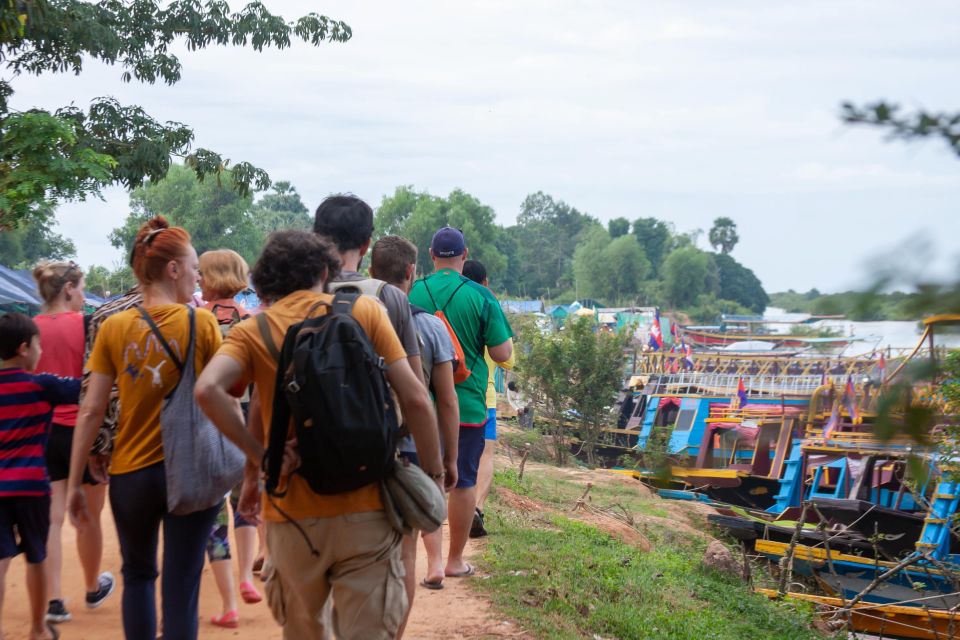
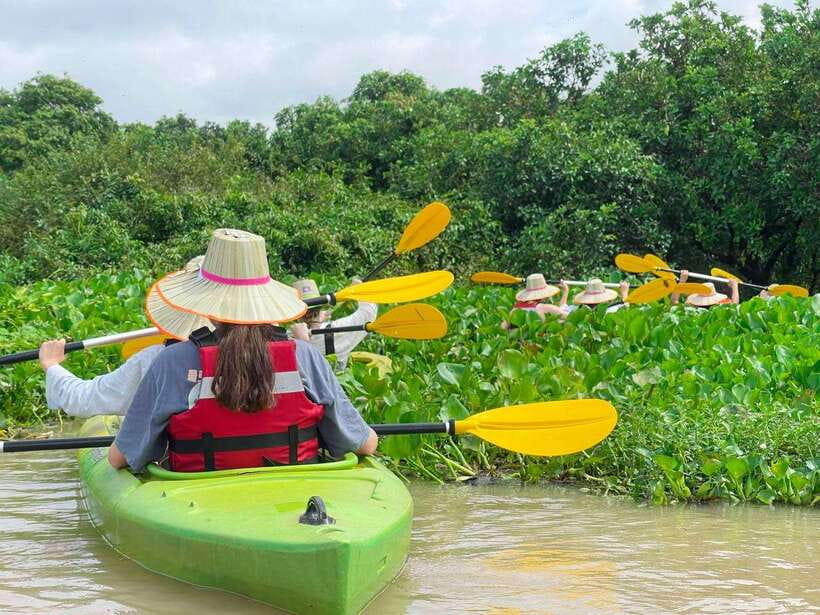
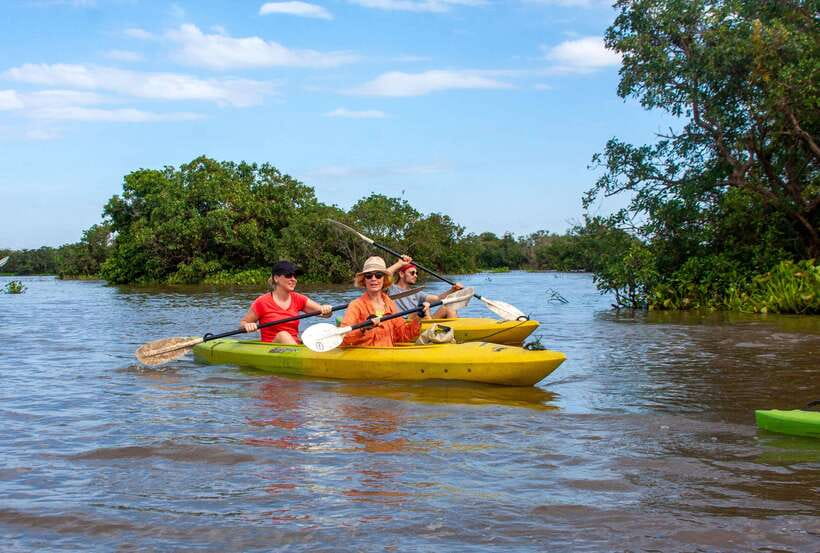
Now the best part: fiberglass kayaks, life on your sides, and that gentle motion that makes you look slower and see more.
You’ll put on safety gear, then paddle through the floating village. This is where the trip earns its reputation. You move quietly enough to catch details other visitors miss—how people arrange space around their homes and how the floating community functions at everyday times.
And yes, you’ll see people. You’ll get warm smiles, which sounds simple, but it changes the atmosphere. The vibe isn’t “pass through and leave.” It feels more like you’re visiting a place that’s still living.
Photo-wise, this is a strong segment. With the right timing and a steady paddle, you can frame shots with floating homes, water textures, and calm reflections. The floating angle also helps you avoid the “everyone photographed from the same land viewpoint” look.
The Kayak Station Break: Snacks, Drinks, and a Floating Bathroom Stop
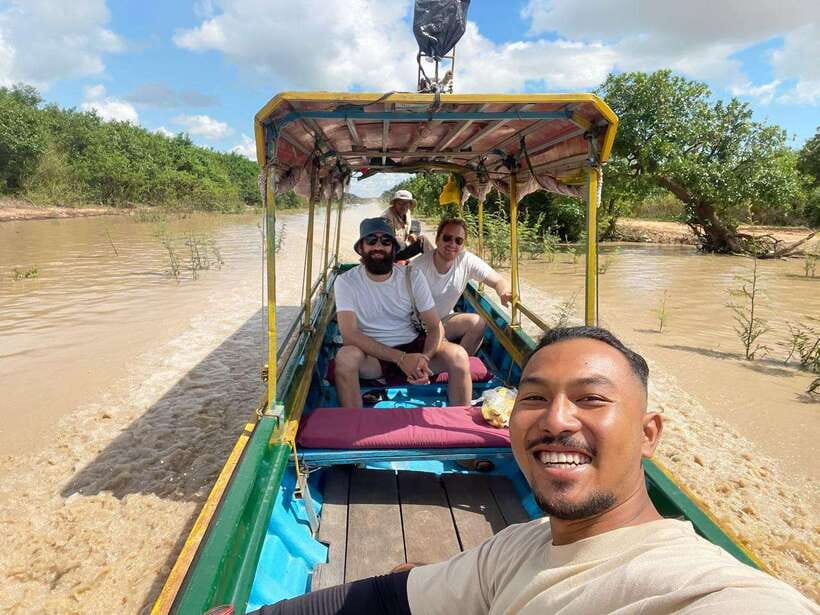
After the kayaking segment, you return to the kayak station, which is one of the floating houses in the Mechrey floating village. This stop is more than a break—it’s where the tour becomes comfortable and doable for non-experienced paddlers.
You’ll have snacks and drinks, and you’ll have time to use the bathroom before the next boat transfer. That matters more than you might think. If you’re out in the sun for hours, a planned reset keeps the day from feeling like one long grind.
A small comfort note: shoes can get tricky around wet surfaces. One practical suggestion I’ve seen is to wear sandals that are easy to remove if needed, especially if you expect to hop on and off small dock areas.
Mangrove Forest Kayaking: Bird Watching in the Quiet
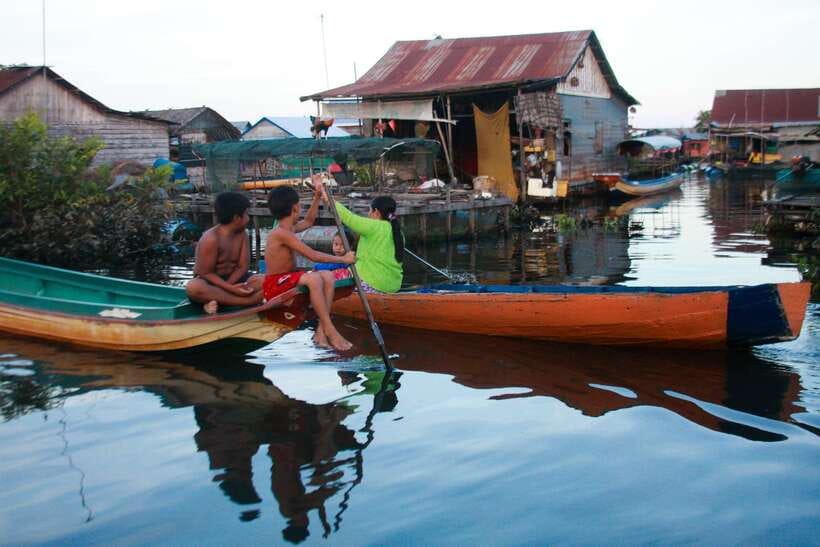
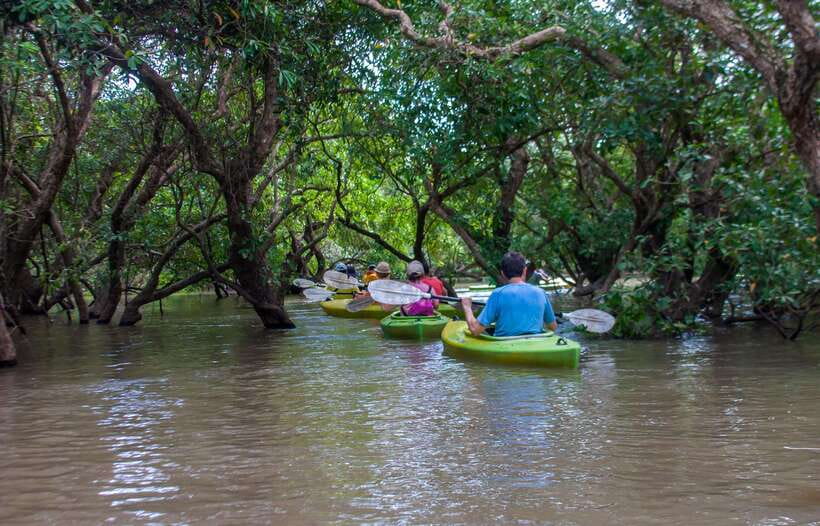
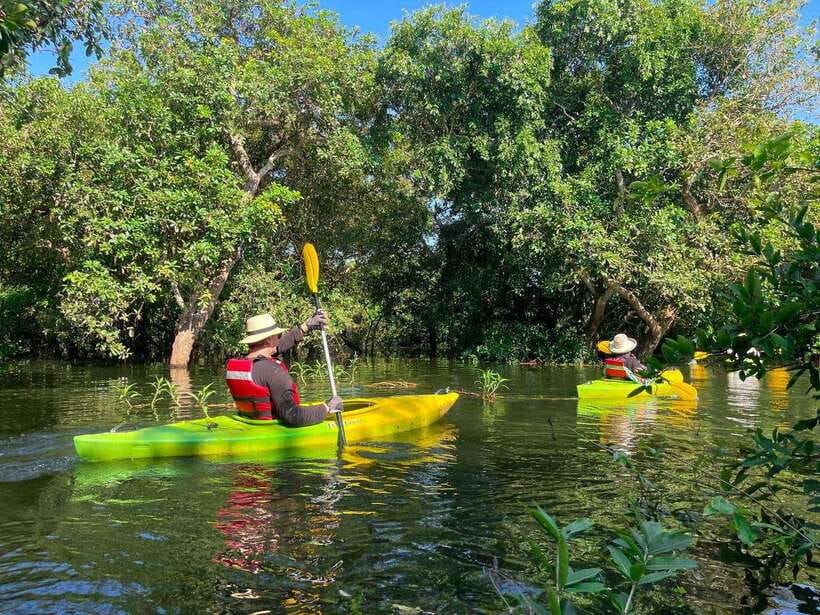
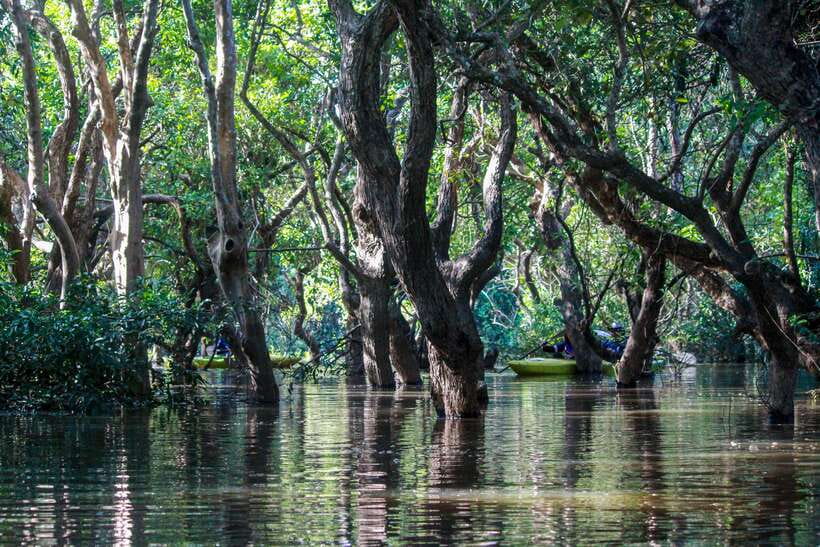
This is the segment many people come for. You transfer by powered boat again, then kayak through the mangrove forest, watching birds as you go.
The reason mangroves are so special here is that you’re not just moving through water—you’re moving through a living system. Kayaking is quiet by nature, so you increase your chance of noticing birds and small wildlife without the loud disturbance that motorboats bring.
Your guide should point out where to look. It’s not just about looking forward; it’s about scanning branches, checking water edges, and reading the rhythm of the forest.
Seasonal note: March to June changes the plan
During the low water season from March to June, the kayaking shifts to open lake waters, with water-bird watching instead of mangrove paddling. If you’re traveling in those months, don’t assume you’ll get the exact same “mangrove branches overhead” look. You may get a different type of bird-focused nature time that still fits the route’s goal.
Tonle Sap Morning Views and the Photo Spots You Can’t Reach Any Other Way
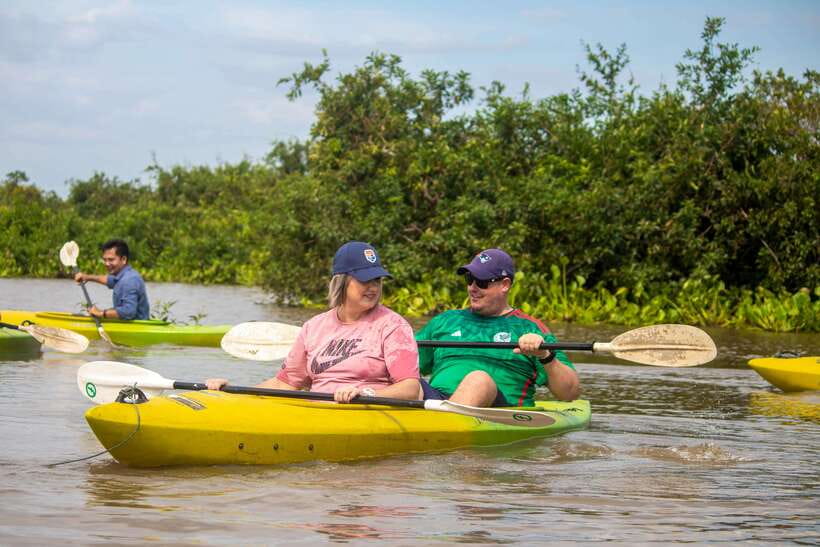
One of the most compelling parts of this tour is the idea that certain mangrove viewpoints are only reachable by kayak. That’s not marketing fluff; it’s about access. The best angles and calmer viewing points often aren’t accessible from land paths or larger boats.
This is why the morning-style photo stop is so useful. The light on Tonle Sap tends to look best when the day is still fresh—so you get those smooth reflections and the softer colors that make photos feel worth keeping.
And your guide is there to help you find the spots. If your guide gives clear pointers on where to paddle and when to pause for photos, the whole kayak segment feels more rewarding.
Sunset Included: When Timing Works, It’s Worth It
The tour schedule includes sightseeing and kayaking with sunset timing later in the day. If timing stays smooth, you’ll get that end-of-lake-day color that makes Tonle Sap feel cinematic without a lot of effort.
That said, this is where you should keep your expectations grounded. If the day runs long in transfers or if kayak time is adjusted, the sunset window might feel tighter. The best way to protect your chances is to listen closely when your guide gives instructions and to keep moving smoothly during transitions.
If you’re the type who wants sunset photos, bring your camera and plan to use it even during the earlier stops. You can get great light before sunset too, and it helps you avoid that frantic, late-day scramble.
How Challenging Is the Paddling?
This isn’t extreme kayaking. The tour is designed so that typical travelers can participate without needing advanced skills. Still, you are paddling, and the sun and humidity do the real work.
You’ll want:
- sunscreen (seriously)
- sunglasses
- a camera ready for quick pauses
- a calm, patient mindset
Also, don’t fight the pace. Kayaking here is about gliding quietly through villages and forest edges. If you paddle too hard or too fast, you’ll miss the nature moments and you’ll tire out earlier than planned.
If you’re prone to knee or back discomfort, the best move is to keep your strokes smooth and steady, and sit tall. The goal is comfort, not a workout race.
Guides Make or Break the Experience
The tour includes an English-speaking guide. That said, the quality of interpretation can vary. What’s consistent is that a strong guide turns the day into a story: how customs work, what daily work looks like, and why the lake matters to everyday life.
I’ve seen examples where guides like Daral offered more generous explanations than expected, even connecting the area’s context to local sites. I’ve also encountered guides like Sovandy who made snack and rest stops feel thoughtful and friendly, not just a pause for logistics.
Your best move is simple: ask your guide to explain what you’re seeing as you go. If you’re unsure where the conversation is heading, ask about how life changes with seasons on the lake. That’s a question your guide should be able to answer directly.
What to Bring (and What Helps)
Based on what you’ll actually do, pack for sun, water contact, and lots of looking:
- sunscreen
- sunglasses
- camera
- water-friendly footwear (sandals are often easier for quick on-off situations)
For comfort, wear clothes that can handle being splashed. You’ll be on boats, near water, and moving between floating docks and kayaks. Even if the water stays calm, you’ll still get that humid lake-air feeling that makes lighter clothing a win.
One more practical idea: keep your phone or camera protected from mist and spray. That mangrove segment can involve branches and sudden movements that send a little water your way.
Who Should Book This Tour (and Who Should Skip It)
This tour is a great fit if you:
- want an authentic-feeling look at floating village life
- enjoy kayaking at a gentle pace
- care about birds and nature, not just photos of boats
- like guided explanations and cultural context
It may not be the right fit if you:
- are pregnant (not suitable)
- are traveling with babies under 1 year (not suitable)
- don’t handle water travel well, since the day includes multiple boat transfers
Pets aren’t allowed, so plan for that if you’re bringing any animals.
If you’re okay with moderate physical effort and a day that mixes boats, kayaking, and still-largely-outdoors time, you’ll probably feel happy with the balance.
Should You Book the Kayaking and Floating Village Tour?
Yes, if your idea of a great day in Siem Reap includes nature time and you want a real look at lake life beyond the temple headlines. The combination of floating village context, kayaking through canals, and mangrove birdwatching is exactly the kind of experience that makes Cambodia feel like Cambodia, not a checklist.
Book with a small expectation adjustment: the kayaking segment can feel shorter than your dream version of kayak time. If you accept that and focus on quiet paddling, photos, and listening to the guide, the value adds up.
I’d skip it only if you’re set on long nonstop paddling or if you’re not comfortable with sun-heavy, water-based movement. Otherwise, this is a smart choice for a memorable half-day that feels away from the busiest tourist routes.
FAQ
How long is the Siem Reap kayaking and floating village experience?
It’s listed as a 6-hour tour.
How much does it cost?
The price is $88 per person.
What’s included in the $88 price?
It includes an English speaking guide, all transfers by AC vehicle, entrance fees, boat ride(s), kayaking, drinks, snacks, safety guard, and safety gear.
What should I bring for the tour?
Bring sunglasses, a camera, and sunscreen.
Where will I kayak during the trip?
You’ll kayak through the floating village, and you’ll also kayak through the mangrove forest. In the low water season (March to June), the mangrove kayaking is replaced with open lake waters and water-bird watching.
Is the tour suitable for pregnant women or babies?
No. It’s not suitable for pregnant women, and it’s not suitable for babies under 1 year.