REVIEW · PHNOM PENH
From Phnom Penh: Angkor Wat, Bayon, and Ta Prohm Day Trip
Book on GetYourGuide →Operated by Cambodia Taxi Driver · Bookable on GetYourGuide
One day, three Angkor icons, big payoff. This Phnom Penh to Angkor day trip is intense in a good way: you start early, get an English-speaking guide on-site, and cover Angkor Wat, Bayon, and Ta Prohm without the stress of arranging transport yourself.
I love how the temple guide explains what you’re looking at, from Angkor Wat’s five-tower design to Bayon’s famous face towers. I also like the practical comfort touches—air-conditioned private transport, cold water, and drivers who plan for bathroom and stretch stops during the long road.
Just be aware this is a 14-hour commitment with a 5.5-hour drive each way, plus entrance fees and lunch cost extra on the day.
In This Review
- Key highlights worth your attention
- The Phnom Penh to Angkor drive: why the timing matters
- Angkor Wat: seeing the five towers and the Hindu-to-Buddhist story
- Bayon’s smiling faces: corridors, staircases, and what the faces mean
- Ta Prohm: the Tomb Raider temple where the jungle does the restoring
- The middle of the day: lunch breaks and managing energy
- Outer temples and grounds: the bonus time that keeps it from feeling rushed
- Private transport and the guide team: why the experience feels tailored
- Price and value: $179 plus what to budget for at Angkor
- Who should book this day trip (and who shouldn’t)
- Should you book the Phnom Penh Angkor Wat Bayon Ta Prohm day trip?
- FAQ
- How long is the trip from Phnom Penh?
- How long is the drive each way?
- Which temples are included?
- What’s included in the price?
- What entrance fees should I budget for?
- Is lunch included?
- What language is the guide?
- Is flash photography allowed?
- What should I bring?
- Who is the trip not suitable for?
- FAQ
- Can I cancel for a full refund?
- What’s the benefit of starting early?
Key highlights worth your attention
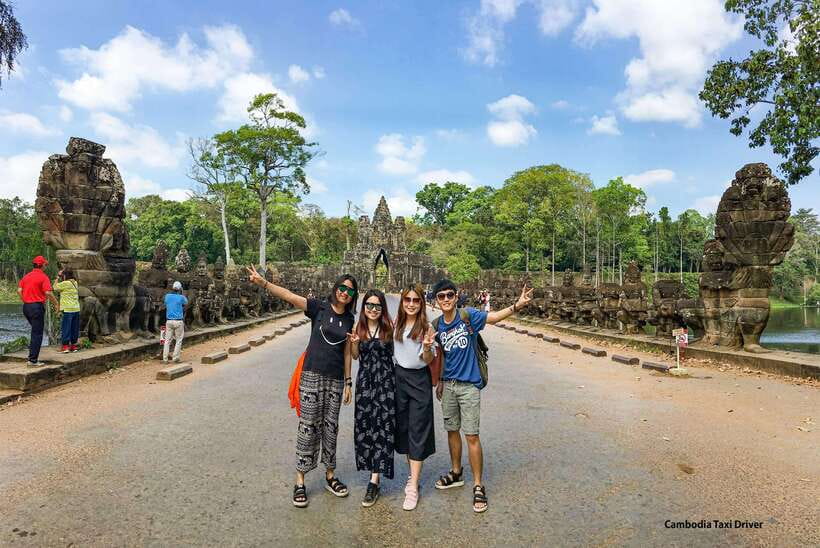
- Private driver, hotel pickup and drop-off in Phnom Penh, with an air-conditioned vehicle
- Three major Angkor temples in one day: Angkor Wat, Bayon, and Ta Prohm
- Live English guide on-site to connect the architecture to Khmer history and temple purpose
- Ta Prohm’s jungle takeover—often photographed as the Tomb Raider temple
- Photo help from the guide: many groups note excellent photo timing and angles
- A long day, done intelligently: start early to beat heat and crowds
The Phnom Penh to Angkor drive: why the timing matters
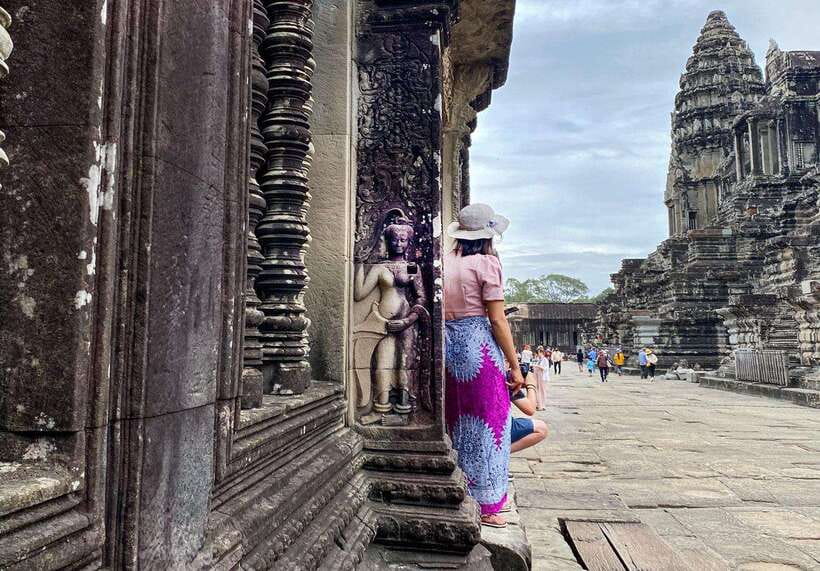
This day trip works because you’re not “winging it.” You leave Phnom Penh early for the roughly 5.5-hour drive to the Angkor Archaeological Park area, then you get temple time before turning around and heading back. Total duration is listed as 14 hours, so yes, it’s long—but it’s also efficient.
When the departure is early enough, you can often reduce the worst of the heat. Some past groups even described early departures around 4am, with a sunrise moment depending on timing and where the driver stops. If you hate crowds and glare, that early start is one of the biggest quality-of-life wins.
On the road, the best part is that your driver isn’t just driving. Many guests praised drivers for being alert and considerate, including helpful English conversation, safe driving, and comfort upgrades in the car. You’ll also have cold water included, which sounds small until you’re walking temple steps in the sun.
You can also read our reviews of more tours and experiences in Phnom Penh


Angkor Wat: seeing the five towers and the Hindu-to-Buddhist story
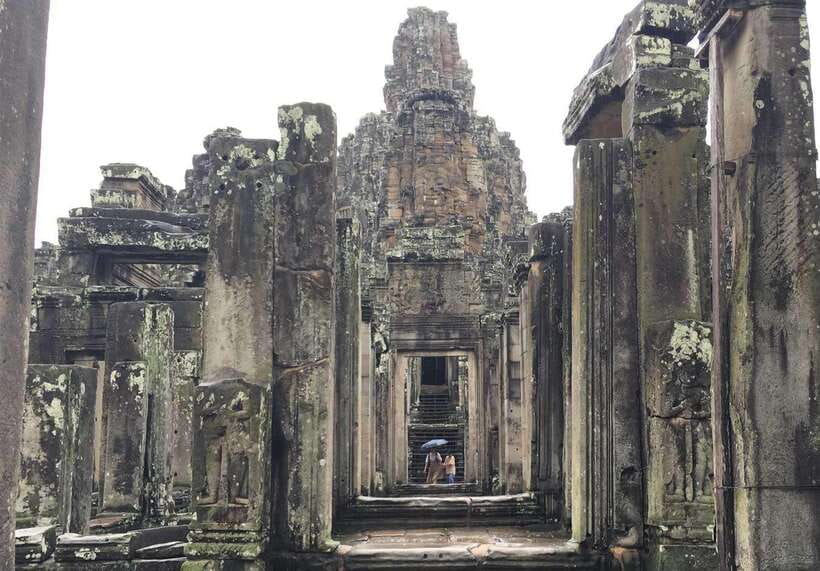
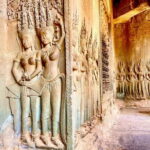
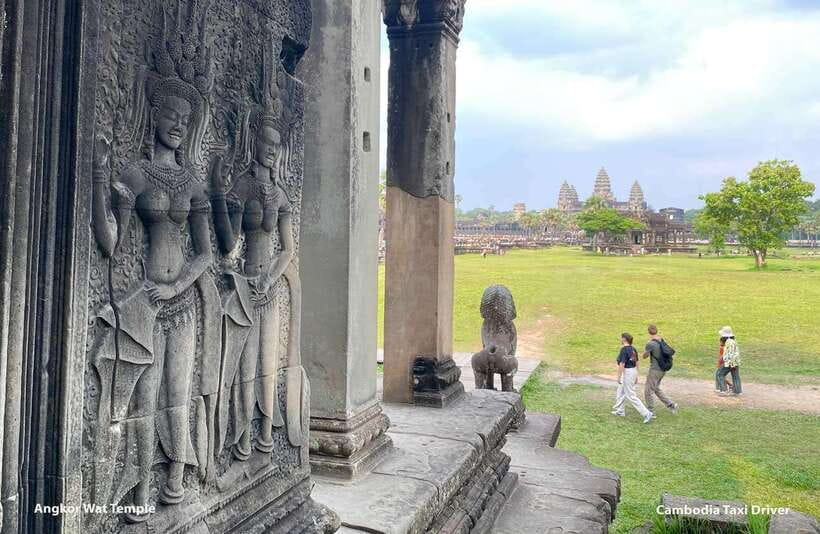
Angkor Wat is the big one. It’s described as the largest religious monument in Cambodia, and it shows you why people obsess over Angkor. You start your day at Angkor Wat, where the architecture feels both monumental and strangely precise.
Here’s the story your guide will help you read: Angkor Wat began in the 12th century as a Hindu temple, then later became a Buddhist temple. One key detail is the five towers, which represent the Hindu cosmic mountain. That symbolism matters because it changes how you look at the whole structure—less like a random set of stones, more like a map of belief.
Practical note: Angkor Wat can feel crowded and bright depending on when you arrive. The itinerary’s plan to start early helps. Wear comfortable shoes because you’ll spend real time moving and climbing, not just taking pictures from one spot. And bring sunscreen and a hat—temples don’t care if you planned ahead.
Also, photography rules apply: flash photography isn’t allowed. That’s common at Angkor, so plan for natural light and use your camera settings rather than flash.
Bayon’s smiling faces: corridors, staircases, and what the faces mean
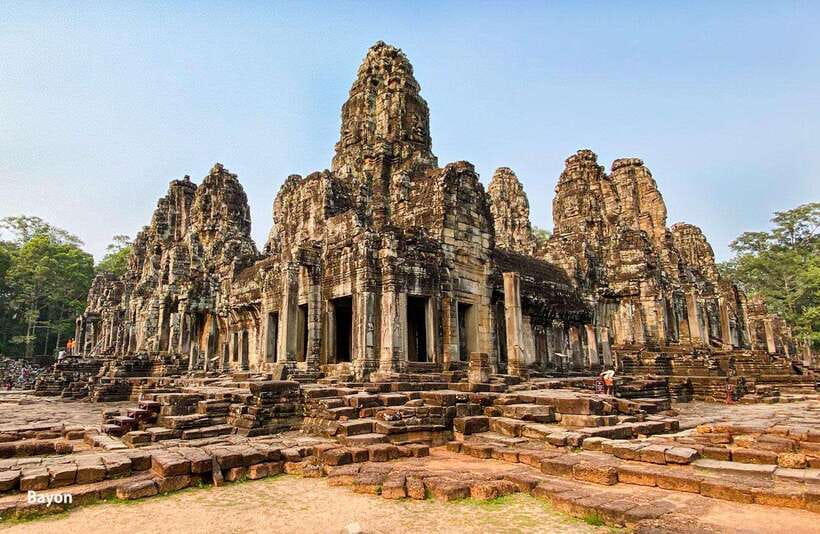
Next up is Bayon, famous for its stone faces. The temple is described as serene in tone, even though it can feel busy as you move through corridors and up/down stairways.
A standout detail is the 216 faces. They’re thought to represent either the bodhisattva Avalokiteshvara or the king himself. Your guide’s job here is to make that not feel like trivia. When you understand who the faces are meant to be, the expression stops being just “creepy-cool” and starts feeling like part of a living royal-and-religious system.
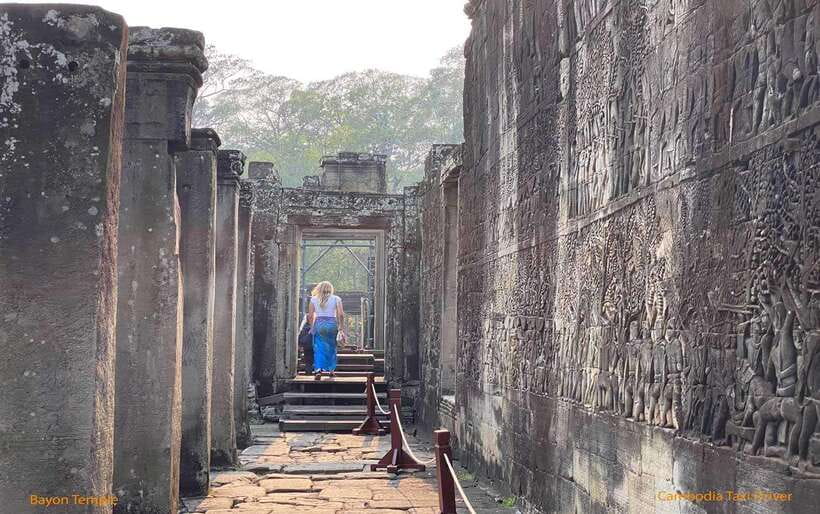
Bayon is also a reminder that Angkor isn’t only about big courtyards. You’ll spend time in narrow corridors and staircases, which means you experience the place at human scale. If you like architecture you can walk through, Bayon usually clicks fast.
One consideration: stairways and tight passages can be tiring, especially in the heat. If you take your time, you’ll enjoy it more. The best pace is the one where you’re still curious halfway up the stairs, not counting minutes at the top.
Ta Prohm: the Tomb Raider temple where the jungle does the restoring
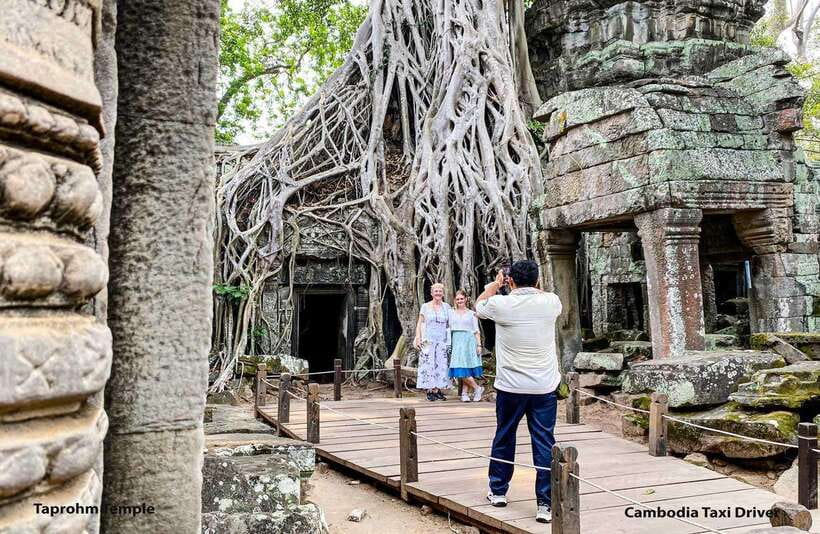
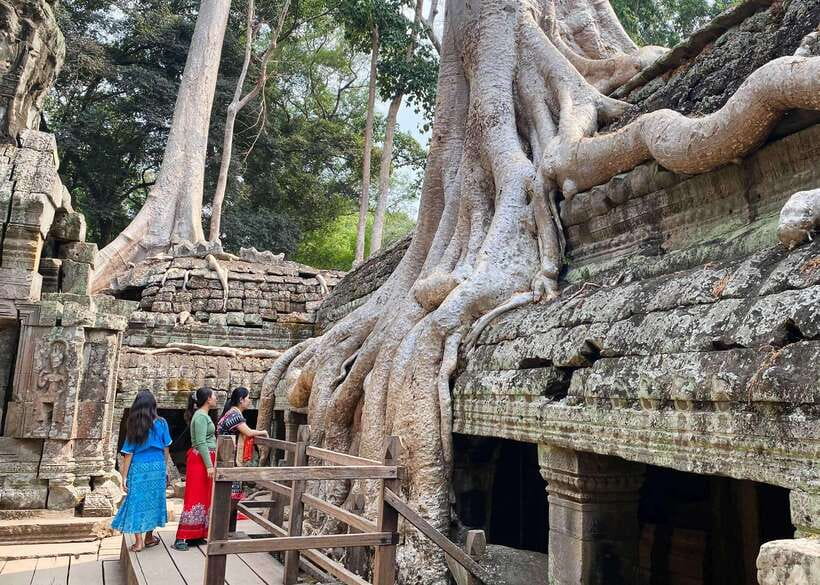
Then comes Ta Prohm, often called the Tomb Raider temple. This is the one that most people remember after they leave Cambodia—not because it’s the biggest, but because it’s atmospheric in a very physical way.
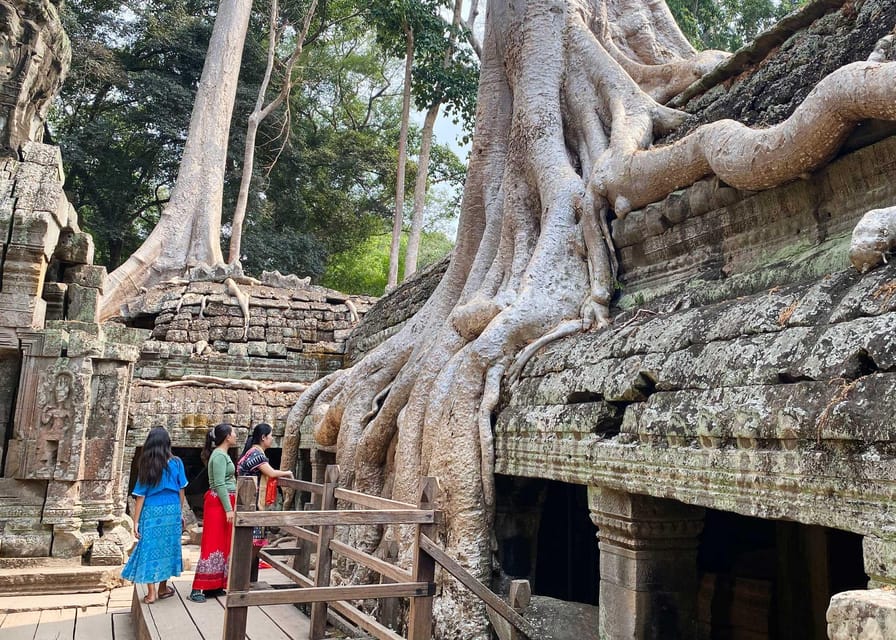
You’ll hear it described as a Buddhist monastery and university from the late 12th century. What makes Ta Prohm special is that it’s been left largely unrestored, with jungle reclaiming parts of the ruins. That means you don’t just look at carved stone—you look at the collision between human work and plant life.
If you’re wondering what makes it feel cinematic, it’s the way the trees and roots frame doorways and towers. Many groups also mention seeing monkeys in the forest area. That’s part of the Ta Prohm experience whether you seek it out or not—so don’t be shocked if the jungle is a bit too alive for a postcard.
Practical tip: you’ll want to keep your camera ready but your balance even more ready. The ground around roots can be uneven. Wear shoes that grip. And remember: no flash.
The middle of the day: lunch breaks and managing energy

Lunch is scheduled after Bayon, but it’s not included in the price. That matters because it’s part of your total cost and part of how the day feels. If you’re sensitive to long waits, plan to eat where the tour guide directs you, then keep moving.
What I like about this style of day trip is that you’re not stuck. You’re walking between major sites, then you’re fed, then you’re back at it. The guide can also help you decide what’s worth ordering based on what’s available nearby.
Hydration is your real priority here. You’ll have bottled water in the car, but don’t treat that as a “problem solved” item. Use your breaks to rehydrate and cool down. When you’re ready, don’t rush your lunch so hard that you feel wrecked during Ta Prohm.





Outer temples and grounds: the bonus time that keeps it from feeling rushed
After Ta Prohm, the itinerary includes time to explore outer temples and grounds of the Angkor Archaeological Park before heading back toward Phnom Penh. This is a smart buffer. It gives you room to absorb the scale of Angkor beyond the three headline sites.
This is also where you can adjust your own pace. If you’re temple-obsessed, you can linger longer around quieter corners. If you’re tired, you can focus on a smaller set of areas and still feel like you used the day well.
In my view, this “extra ground time” is what makes a day trip feel less like a checklist. It turns the day into something you remember visually, not just a timeline of stops.
Private transport and the guide team: why the experience feels tailored
A lot of day trips fail because they treat you like cargo. This one tries not to. You’re traveling in an air-conditioned vehicle with a private driver who picks you up from your hotel lobby with a nameplate. That removes the early-morning confusion factor.
The quality of the driver shows up in small things: arriving on time, driving smoothly, making comfort stops, and keeping you supplied with cold water. Many guests also described cars with extra comfort touches—one review even mentioned massage-style seating—so if you’re booking for comfort, this is the kind of operator that invests in the ride.
Then you have the guide component. The tour includes a live tour guide in English, plus a local guide at the Angkor temples. In past groups, guides such as Siyan were repeatedly praised for connecting history to what you’re seeing, answering questions, and even helping with photography. Other guides named include Woo and Samnang, and multiple guests noted their enthusiasm and clear explanations.
There’s also a practical advantage here: when you don’t know your way around, having someone who can point out the best photo spots and the right sequencing saves time and frustration. You’re still walking a lot, but you’re walking with a plan.
Price and value: $179 plus what to budget for at Angkor
The price listed is $179 per person, for a private day trip with roundtrip transport from Phnom Penh and live guiding. On paper, Angkor day trips can look pricey because they include a long driver commitment. In return, you get a door-to-door day without flight-hopping or booking separate transport in Siem Reap.
But don’t forget the costs that hit on the day:
- Angkor Archaeological Park entrance fees: $37 per person (not included)
- Lunch: not included
- Personal expenses: not included
So the realistic budget is the $179 tour cost plus that entrance fee, then whatever you spend for lunch and snacks. If you compare that to flying + getting cars in Siem Reap + hiring guides separately, this format can still be good value—especially if you only have one or two days in Phnom Penh and don’t want to lose time on logistics.
If you’re traveling solo, the private format can also be the difference between “I’ll figure it out” and “everything runs on time.” The reviews repeatedly stress how smooth and well organized the day felt with the driver and guide team—exactly the thing that’s hard to self-arrange at 4am.
Who should book this day trip (and who shouldn’t)
This works best if:
- You’re short on time in Cambodia and want Angkor Wat + Bayon + Ta Prohm without relocating overnight
- You like a guide to tell you what you’re seeing, not just where to stand
- You’re comfortable with a long day and early departure
It may not be ideal if:
- You need a wheelchair-friendly plan (wheelchair use isn’t listed as suitable)
- You have heart problems (not suitable per the information)
- You’re traveling with kids under 8 years (not suitable)
- You hate heat and long walks, especially with staircases at Bayon and rooty paths at Ta Prohm
The day is long, and the temples are not “optional activity” terrain. This is a walking-and-thinking day. If you can handle that, you’ll likely feel proud at the end because you’ll have seen three of Angkor’s core personalities in one sweep.
Should you book the Phnom Penh Angkor Wat Bayon Ta Prohm day trip?
If you’re deciding between a self-guided approach and a guided day, I’d book this if you value time, organization, and story. The big reason is the combination: a private driver to handle the Phnom Penh–Siem Reap distance, plus English guidance that explains symbolism and history as you move from Angkor Wat to Bayon to Ta Prohm.
The one “don’t ignore this” factor is stamina. It’s early, it’s hot, and you’re on your feet a lot. If you plan for that—good shoes, hat, sunscreen, and a calm pace—you’ll turn a long commute into an actually satisfying day.
FAQ
How long is the trip from Phnom Penh?
The full day trip is listed as 14 hours, including travel time to and from Siem Reap and the Angkor sites.
How long is the drive each way?
The drive time is described as about 5.5 hours each way.
Which temples are included?
You’ll visit Angkor Wat, Bayon, and Ta Prohm, plus time at outer temples and grounds in the Angkor Archaeological Park area.
What’s included in the price?
Included are a private driver from Phnom Penh, transportation to and from Phnom Penh, a cold bottle of water, and a live English tour guide (including a local guide at the Angkor temples).
What entrance fees should I budget for?
Angkor Archaeological Park entrance fees are not included and are listed as $37 per person.
Is lunch included?
Lunch at a local restaurant is not included.
What language is the guide?
The live tour guide is listed as English.
Is flash photography allowed?
Flash photography is not allowed.
What should I bring?
Bring comfortable shoes, a hat, camera, sunscreen, and water.
Who is the trip not suitable for?
It’s not suitable for children under 8, people with heart problems, or wheelchair users.
FAQ
Can I cancel for a full refund?
Yes—free cancellation is available up to 24 hours in advance for a full refund.
What’s the benefit of starting early?
The important guidance is to start early to avoid heat and crowds, which makes temple walking more comfortable and lets you enjoy the sites better.