REVIEW · PHNOM PENH
Phnom Penh & Kirirom National Park Birds Tour
Book on Viator →Operated by Vana Adventure Travel · Bookable on Viator
Chasing birds in Cambodia starts before sunrise. This Phnom Penh & Kirirom National Park Birds Tour focuses on real habitat variety and a serious bird list, from lotus fields to lowland forest, with Thong leading the way. I like that you’re not just ticking birds; you’re learning where to find them and how to read calls and movement in the field.
Two things I especially like: first, the chance to see a big spread of species (listed as 50 to 80) across rice fields, cultivation, woodland, and tropical forest; second, the tour is built for photography, with good photographic opportunities and a pace that keeps you in position. The main drawback to consider is timing and effort: you’ll start around 5:30am, and the birding is rated moderate with some tricky species.
If you want a calm, skills-first birding trip that doesn’t waste time on tourist stops, this one makes sense. If you’re looking for a relaxed late start, you may feel rushed on day one.
In This Review
- Key highlights to know before you go
- From Phnom Penh at 5:30am: what the timing really does for birding
- Chambok Home Stay day: lotus and rice fields before the forest starts
- What to watch for on day one
- Kirirom National Park sunrise: the forest species phase
- Photography reality check
- Species targets you’ll actually think about (not just memorize)
- Homestay in Chambok: what’s included (and what you should plan for)
- Weather and comfort: humid lowlands, occasional rain, and a moderate challenge
- Value check: $350 for two days of real birding
- Who should book this Phnom Penh to Kirirom birds tour?
- Should you book it? My practical take
- FAQ
- FAQ
- What is the price for the Phnom Penh & Kirirom National Park Birds Tour?
- How long is the tour?
- When does the tour start?
- Is pickup included?
- What is the group size?
- What meals are included?
- Do I need to pay an entrance fee at Chambok?
- How difficult is the birding?
- What happens if weather is poor?
- Is dinner included?
Key highlights to know before you go
- Early Mekong start (5:30am) with a ferry crossing that sets the tone for a full birding day
- Species count you can actually aim for (50–80), across lotus fields, rice fields, woodland, and forest
- Thong’s field skill: he’s known for finding birds by following calls and having strong English
- Homestay in Chambok: one night at Chambok Community Based Ecotourism, with breakfast and lunch included
- Sunrise walk in Kirirom National Park: an easy-pace forest birdwatching session for singers and specials
- Photography-friendly: good chances for getting photos when birds are active at dawn
From Phnom Penh at 5:30am: what the timing really does for birding
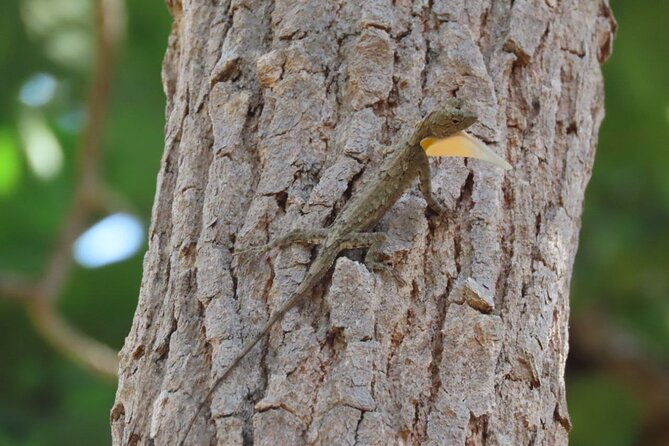
This tour’s clock is the first clue about its focus. The day starts at 5:30am, and that early push matters because many birds feed, call, and move most actively at low light. You’re trading sleep for bird behavior. That’s not romance; it’s practical birding logic.
The other timing bonus: it reduces your “dead time.” Instead of drifting through the city, you’re moving fast from Phnom Penh toward the countryside. The tour also keeps the group small, with a maximum of 8 travelers, which usually means you’re not stuck behind a crowd when a bird starts calling in the vegetation.
One more detail worth noting: the tour includes pickup (and it’s near public transportation). That lowers the friction of arranging your own ride at dawn, which is a big deal when you’re up before most places in Phnom Penh are even awake.
You can also read our reviews of more tours and experiences in Phnom Penh.
Chambok Home Stay day: lotus and rice fields before the forest starts
Day one centers on Chambok Home Stay with a long field day (listed as about 9 hours at this stop). The rhythm looks like this: you get picked up around 5:30am, take a ferry crossing on the Mekong River, then drive to a natural lakeside area where local farmers grow lotus, paddy rice, and vegetables.
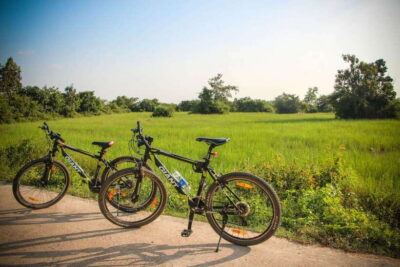
Why this matters for birding: lotus and rice landscapes pull in birds that use open water edges, tall grasses, and cultivation edges. Those “in-between” habitats often host birds you won’t see deep in the forest, and they can be easier to approach than dense woodland. It’s also the kind of landscape that encourages you to scan both the ground and the water line.
You should also expect a tone of country quiet rather than sightseeing traffic. One of the strongest themes in the feedback is that this tour doesn’t waste your morning on market stops or tourist areas. Instead, it aims you at actual birds and real farmland edges.
What you’ll likely notice if you’re new to birding: birds may be there even when they look invisible. That’s where a good guide earns their keep. In this case, Thong is repeatedly described as professional and able to locate birds by following their calls. That skill helps you stop staring randomly and start listening on purpose.
What to watch for on day one
The tour’s bird list is broad, and day one habitats line up well with certain groups. Expect to have a shot at birds like Oriental Pratincole (often tied to open wet areas), Collared kingfisher (water edges), Green bee-eater and Blue bearded bee-eater (more open, insect-rich zones), and smaller passerines that use cultivation margins. Even if you don’t nail every target, the fieldwork approach is the point.
Kirirom National Park sunrise: the forest species phase
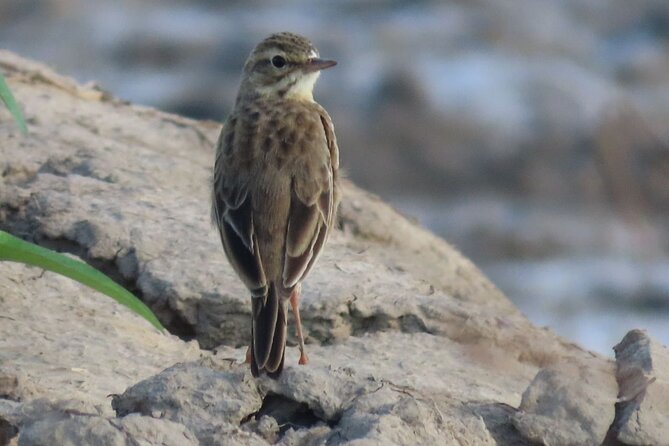
Day two begins again with sunrise birdwatching and then shifts into Kirirom National Park, with about 9 hours listed for the park day. The walk is described as an easy pace, which is good news if you want to bird without feeling like you’re hiking for fitness. Still, it’s sunrise—so you’ll want comfortable shoes and a light plan for insects and humidity.
Kirirom is where the tour leans more into forest birds. The species list includes several you’ll associate with woodland and forest edges, such as Greater Racket Tailed, Forest wagtail, White rumped Shama, Red-whiskered Bulbul, and Puff-throated Babbler. The list also mentions birds like Grey headed canary flycatcher and Black-naped Oriole, which tend to show up through calling and movement rather than sitting out in the open.
This is also where you feel the tour’s stated difficulty level. Birding here is rated moderate, with “some very tricky species.” That doesn’t mean it’s miserable; it means your guide’s method matters. In reviews, Thong’s call-following skill stands out as a big reason people feel successful, especially as beginners.
Photography reality check
The tour says photographic opportunities are good, and that tracks with dawn forest birding: many birds are active and visible when conditions are cooler and light is better. But forest photography still means you’ll often shoot through branches or in quick bursts when a bird relocates. If you’re serious about photos, treat the walk like a position game: stop when your guide stops, and be ready to change angles fast.



Species targets you’ll actually think about (not just memorize)
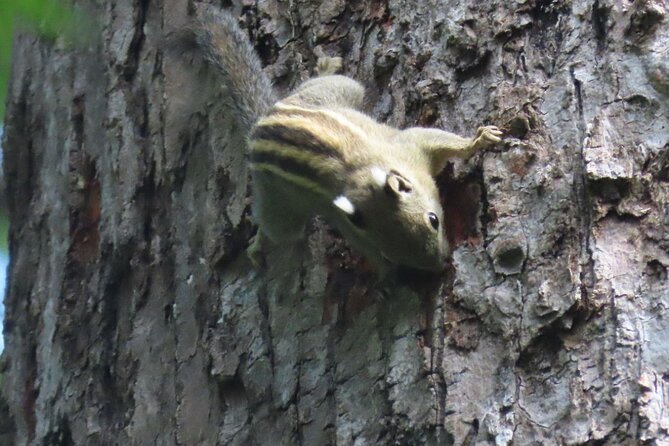
The tour advertises a list of standout birds, ranging from colorful bee-eaters to more subtle songsters. The big takeaway for you: the tour is designed to cover multiple habitats, so you’re not stuck with only one “birding look.”
Some of the birds mentioned in the tour’s overview include:
- Cambodian Tailorbird and Dark-necked Tailorbird (small, often heard before seen)
- Collared kingfisher and Mountain imperial-pigeon (more specialized sightings)
- Green bee-eater and Blue bearded bee-eater (photogenic, fast-moving)
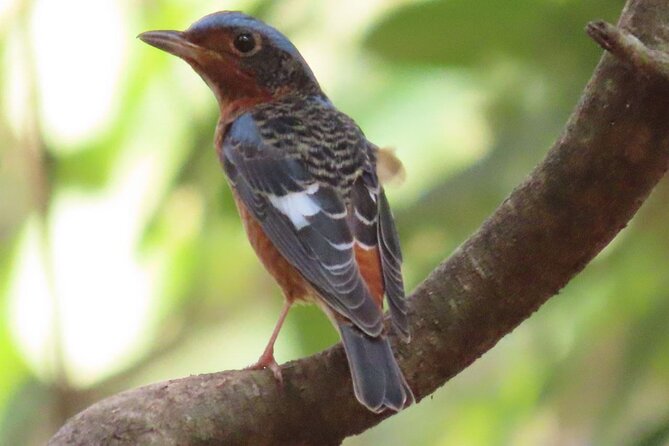
- White-throated Rock Thrush (a classic target-type bird name on the list)
- Black-naped Oriole and Ashy Drongo (mid-story movement and calls)
- Chinese Francolin and Common Flameback (different styles of spotting, more about behavior and sound)
- White-crested Laughingthrush and Forest wagtail (often linked to forest edge activity)
Even if some of these remain elusive, you’re still getting the value of learning how to read the habitat. That’s what turns birding from random searching into a skill you build.
Homestay in Chambok: what’s included (and what you should plan for)
You spend one night at the Chambok Community Based Ecotourism homestay. Inclusions cover breakfast (2) and lunch (2), and the tour includes admission ticket coverage is not included here (the entrance ticket fee at Chambok Ecotourism Community is listed as 7 USD, and dinner isn’t included).
Why this matters: your meals aren’t an afterthought. Early mornings and long walks can drain you, and having lunch and breakfast handled helps you stay focused on birding instead of hunting for food.
The dinner gap is the one cost you should budget for. If you’re trying to keep costs predictable, set aside the listed 7 USD entrance ticket amount and expect dinner to be additional.
Weather and comfort: humid lowlands, occasional rain, and a moderate challenge
The tour describes the expected climate as humid in the lowlands with occasional rain showers. It also notes the experience requires good weather. Practically, that means you should pack for damp conditions, not just sun—something light that you can wear during sudden showers.
Birding difficulty is listed as moderate, with some tricky species. If you’re new, don’t mistake that for a warning sign. It’s more like: you’ll need a bit of patience, and you’ll rely on the guide. The best part is that Thong is described as professional and experienced, able to locate birds by calls, which is exactly what beginners need when birds refuse to cooperate visually.
Physical fitness is described as moderate. The park walk is easy pace, which helps. Still, two long days means you should plan for tired legs and early starts. Comfortable shoes are not optional if you want to enjoy the morning.
Value check: $350 for two days of real birding
At $350 per person for roughly two days, this isn’t a budget activity. But birding tours that get you into multiple habitats—plus guided field time, an air-conditioned vehicle, and a homestay—usually cost what they cost.
Here’s the value logic I see in the structure:
- You get guided birding with local birding and local guides, plus transportation by air-conditioned vehicle.
- You get meals mostly covered (breakfast and lunch twice).
- You get homestay for one night in Chambok rather than only day trips.
- You get a small group cap of 8 travelers, which often translates to better guide attention when birds are calling.
- You’re aiming at a target range of 50 to 80 species across distinct environments, not one single patch of habitat.
If you’re the type who values learning and seeing birds in the right place, the price can feel fair. If you only want casual sightseeing and don’t care about species identification or listening skills, you might find the cost heavier than the payoff.
Who should book this Phnom Penh to Kirirom birds tour?
This is a great fit if:
- You want a beginner-friendly introduction that still goes after real species (the tour is described as an amazing introduction by at least one beginner).
- You like early starts and can handle humid conditions.
- You want a guide who uses call-following and not just sweeping the woods with binoculars.
- You care about countryside birding and not only city attractions.
It might not be for you if:
- You want late mornings.
- You dislike walking or don’t like sunrise starts.
- You’re expecting a guaranteed checklist. Birding is never that kind of sport.
Should you book it? My practical take
Book this tour if you’re serious about birds but also want a guide-driven experience that helps you find them. The biggest selling points here are the small group size, the habitat variety, and Thong’s ability to locate birds by following their calls. That’s the combo that turns “I hope we see something” into “I can actually track what’s happening.”
Skip it (or think hard) if you’re paying $350 expecting a laid-back cultural stopover. This trip is built around sunrise birding and long field time, and it shines when you lean into that rhythm.
If you match the vibe—early birding, listening, and patience—you’ll likely leave feeling like you learned something you can use again next time you travel.
FAQ
FAQ
What is the price for the Phnom Penh & Kirirom National Park Birds Tour?
The price is $350.00 per person.
How long is the tour?
It runs for 2 days (approximately).
When does the tour start?
The start time is listed as 5:30am.
Is pickup included?
Pickup is offered.
What is the group size?
The tour has a maximum of 8 travelers.
What meals are included?
The tour includes breakfast (2) and lunch (2).
Do I need to pay an entrance fee at Chambok?
Yes. The entrance ticket fee at Chambok Ecotourism Community is 7 USD.
How difficult is the birding?
Birding is rated moderate, with some very tricky species.
What happens if weather is poor?
The experience requires good weather. If it’s canceled due to poor weather, you’ll be offered a different date or a full refund.
Is dinner included?
No. Diner isn’t included.