REVIEW · PHNOM PENH
10 Stop Phnom Penh Tour by Tuk-Tuk, includes S21 & Killing Fields
Book on Viator →Operated by Visal Tuk-Tuk Tours in Phnom Penh · Bookable on Viator
10 stops in one day.
This Phnom Penh tuk-tuk tour pairs the heavy sites of S21 and the Killing Fields with temples and city landmarks, so you get a full sense of the capital in one long day. I like that the route is built for moving fast through traffic while still giving you time to actually look, ask questions, and take photos.
I love the private, on-demand feel: the driver-guide talks at every stop and you’re not stuck watching a fixed script with a crowd. I also really appreciate the practical comforts—round-trip hotel pickup, a cold bottled water included, and guides who keep the day manageable in Phnom Penh heat.
The one drawback to flag up front: this is not a light sightseeing day. The genocide sites are emotionally intense, and the temple and monument stops can feel hot and long if you’re sensitive to heat.
In This Review
- Key things that make this tour work
- Price and what it really covers
- How the day is paced: 8–9 hours, 10 stops, and smart timing
- Tuol Sleng Genocide Museum (S21): the emotional first punch
- Killing Fields at Choeung Ek: seeing the scale and the story
- Independence Monument and a lunch window: regroup before the temples
- Royal Palace: architecture and photos, with a practical catch
- National Museum and Wat Ounalom: Cambodian culture in calmer pacing
- Wat Phnom: the hill climb and the city origin story
- Wat Phnom Daun Penh: Lady Penh wraps up the story
- The tuk-tuk experience: why it feels different from a bus tour
- Who this tour is best for (and who should think twice)
- Practical tips to make the day smoother
- Should you book it?
- FAQ
- FAQ
- What’s the duration of the 10 Stop Phnom Penh Tour?
- Does the tour include hotel pickup and drop-off?
- Is transportation included?
- Is this tour private?
- What language are the explanations in?
- Are entrance fees included?
- How much are the entrance fees for S21 and the Killing Fields?
- Is lunch included?
- Is there an audio guide at the Royal Palace?
- Can I cancel for a full refund?
Key things that make this tour work
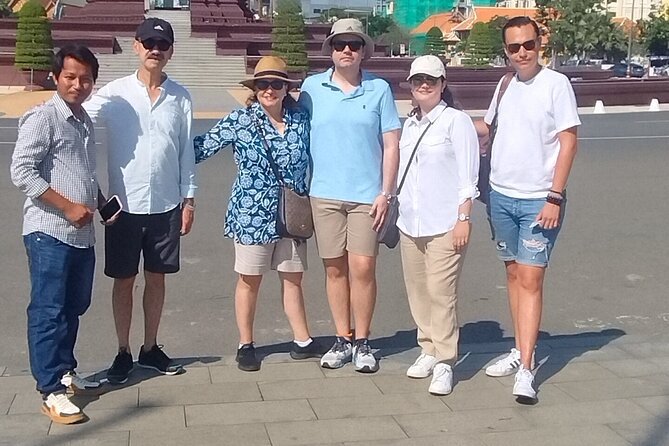
- A traditional Khmer tuk-tuk gets you across Phnom Penh with less fuss than trying to self-navigate.
- S21 (Tuol Sleng) and Choeung Ek are the emotional centerpiece, with time to process what you’re seeing.
- A personal English-speaking driver-guide explains each stop as you go, and can adjust pacing for your group.
- Most cultural stops are free, so your extra costs mostly come from the big museums and the optional Royal Palace site guide.
- Comfort in the heat: cold water is included, and many guides also keep beverages and wipes/towels on hand.
Price and what it really covers
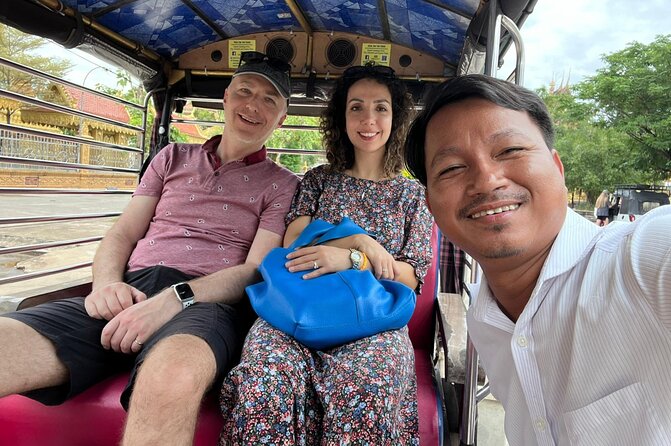
At $32.50 per person, the headline price looks fair—especially because it includes hotel pickup and drop-off plus private transportation in a traditional tuk-tuk. The better deal, though, is that the big work of the day is done for you: you spend less energy planning routes, arranging tickets, and trying to time the museums around traffic.
Your main extra costs are entrance fees and lunch. From the tour details, budget the following per person:
- Tuol Sleng Genocide Museum (S21): $10
- Choeung Ek Genocidal Center (Killing Fields): $6
- Wat Phnom: $1
- Royal Palace: $10 entry, plus an optional $10 for a site guide (there is no audio guide)
So you’re usually thinking about roughly $27 in entrances if you skip the optional Royal Palace site guide. Add lunch and you’ve got the real total.
You can also read our reviews of more tours and experiences in Phnom Penh.
How the day is paced: 8–9 hours, 10 stops, and smart timing

This is an all-day format, roughly 8 to 9 hours, built around about ten different stops. That long stretch is the point: you can cover major historical sites plus key temples without hopping between half-day tours.
A practical tip from the way this day is experienced by real visitors: start earlier if you can. One traveler suggested around 8:30 AM as ideal to fit everything in and avoid the worst of the heat. Even with a tuk-tuk, sitting in sun during temple climbs and waiting for guided moments can wear you down.
Also, expect the day to feel like two modes:
1) heavy, serious history with museums and memorials
2) lighter city structure with monuments and temple architecture
You’ll want water, comfortable shoes, and a mindset shift between modes.
Tuol Sleng Genocide Museum (S21): the emotional first punch
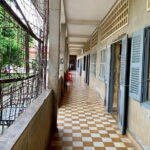
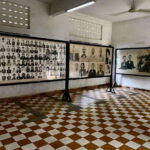
Your day begins at Tuol Sleng Genocide Museum, also known as S21. The museum site used to be a girls school and was later turned into a place of imprisonment and torture, with holding enclosures. Walking through there is not about quick photos. It’s about understanding what happened in Cambodia during the Khmer Rouge period.
Why this stop matters: it gives context for what you’ll later see at the Killing Fields. If you do only one genocide-related site in Phnom Penh, S21 is the place that anchors your understanding first—because it’s structured as a memorial museum with lots of information to absorb.
What to consider: it can be mentally exhausting. Plan to take breaks where you can, and don’t rush the rooms. If you’re traveling with kids or you prefer a lighter day, be honest with yourself about whether you can handle this kind of history in one go.
Killing Fields at Choeung Ek: seeing the scale and the story
After S21, you head to Choeung Ek Genocidal Center, commonly called the Killing Fields. The tour notes this is the second significant historical site of the Khmer Rouge genocide in Phnom Penh.
This part hits differently than a museum. Even when you’re not reading every sign, the setting tells you the story. The tour format gives you time—about 2 hours 30 minutes at that stage in the schedule—so you’re not just passing through.
The best approach here is slow attention. Ask questions if your driver-guide offers them, and take time to stand back and absorb what the memorial layout is communicating. If S21 was about records and confinement, Choeung Ek is about place and aftermath.
A note on practical comfort: this area and the drive between sites can feel long in Phnom Penh humidity. The included water helps, and you’ll thank yourself for wearing something breathable.
Independence Monument and a lunch window: regroup before the temples
Once you finish the Killing Fields, the plan is to return toward the city and include a lunch break. The tour description ties this part to the stop at the Independence Monument, with a block of time that allows lunch either at the area after the drive or back in the city.
This is your recovery moment. Use it to reset your mood before Royal Palace and temple time. If you’re traveling with family, this is where you can manage energy levels and keep the day from feeling like one long sprint.


Royal Palace: architecture and photos, with a practical catch
Next up is the Royal Palace. This stop is built for seeing architecture and taking photos. The tour description also states there is no audio guide available, so you rely on the live explanations from your driver-guide or an optional site guide.
Time on this stop is about 1 hour 5 minutes, which is enough for a slow walk if you’re not trying to do it like a checklist. If you care a lot about details, consider the optional $10 site guide option mentioned in the tour notes. If you’re more interested in atmosphere and views, you can often do just fine with your driver-guide and the signage.
What to consider: palace visiting often includes some walking under sun. Bring something light for cover, especially if you start late.
National Museum and Wat Ounalom: Cambodian culture in calmer pacing
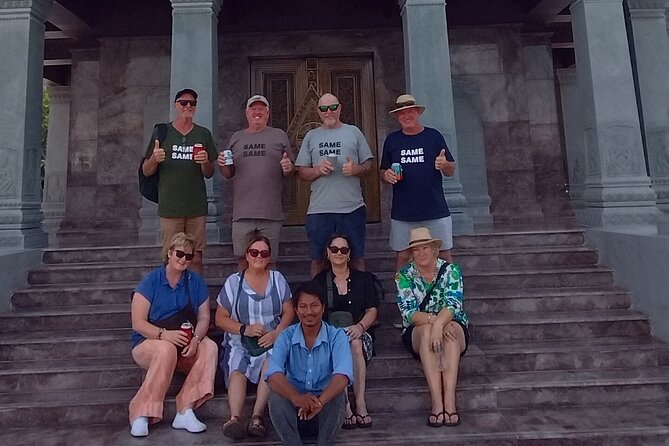
You then reach the National Museum of Cambodia, where the visit is described as outside only and free. The emphasis here is on architecture and photo opportunities rather than indoor exhibits. This can be a nice breather after the palace and genocide sites because it gives you visual richness without the same kind of intensity.
After that comes Wat Ounalom, an important temple originally built in 1442. Entry is free, and the tour schedule allows about 30 minutes. The best way to enjoy temple stops is to watch how locals move through them. Even when you’re not sure what every detail means, your driver-guide can translate the significance as you look.
Wat Phnom: the hill climb and the city origin story
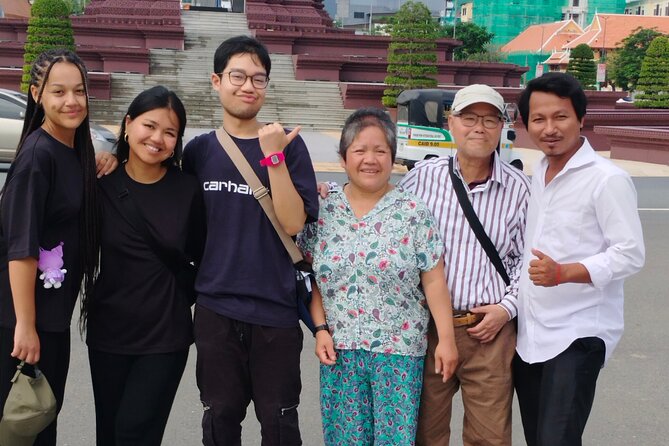
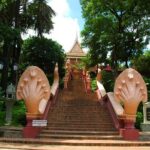
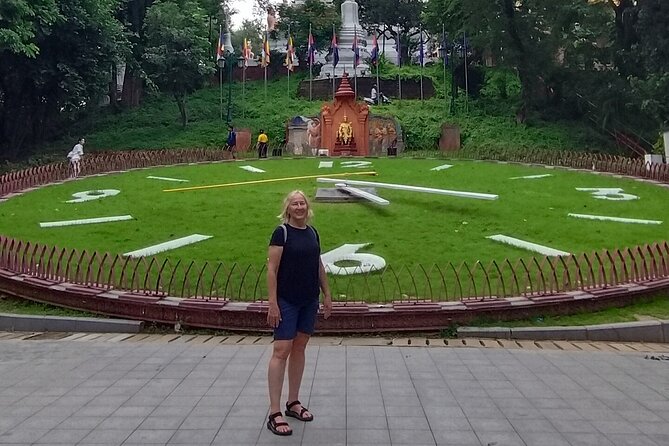
You’ll finish the middle-late part of the day at Wat Phnom. The description is specific about what to look for: it sits elevated on a hill, you’ll see an interesting clock garden, and you’ll learn who Phnom Penh is named after and why, before climbing the steps to the temple.
This is a stop where the “view from above” payoff matters. Plan for stairs, and plan for sun. Your tuk-tuk can drop you near the base, but you’ll still do the climb.
Also note: Wat Phnom has an entrance fee of $1 per person according to the tour details.
Wat Phnom Daun Penh: Lady Penh wraps up the story
Your final stop is Wat Phnom Daun Penh, near Wat Phnom Temple, commonly known as the Lady Penh statue. The tour description says your guide shares the story of who Lady Penh was and what she discovered.
This ending is smart. After the formal history of the genocide sites, and the royal and temple architecture in between, the Lady Penh story returns you to Phnom Penh as a living legend and identity. It’s a gentle narrative close compared to the museum intensity.
Time here is short—about 15 minutes—so you get a conclusion without losing your energy for the ride back.
The tuk-tuk experience: why it feels different from a bus tour
A tuk-tuk isn’t just a cute transport choice. In Phnom Penh, it helps you move with agility. In the reviews that shaped my expectations, guides like Elvis, Nick, Visal, and Cows are praised for smooth driving through traffic, fast routing between stops, and frequent check-ins like offering water.
A few practical comfort details show up again and again:
- cold bottled water included
- guides who offer additional beverages (some mention coke, even beer)
- cold towels or wipes for refresh
- lots of patience for photos and timing
That matters because this day includes sites where you might suddenly want more time, more questions, or an extra pause to recover.
Who this tour is best for (and who should think twice)
This tour fits you if:
- you have limited time and want the major Phnom Penh anchors in one day
- you want S21 and the Killing Fields without the stress of organizing transport and timing
- you like a guide who explains as you go and can adjust pacing for your group
- you’re comfortable with an emotionally serious history day, followed by temples and monuments
You might think twice if:
- you want a purely upbeat city tour
- you get overwhelmed by heavy historical content in a single day
- you’re highly heat-sensitive and need frequent breaks
For families, it can still work, but you’ll want to be honest about how kids handle the genocide museum and memorial settings. The lunch window and the end-of-day temple pacing help, but the first part is not light.
Practical tips to make the day smoother
These are the small choices that tend to make a big difference on a schedule like this.
- Wear comfortable shoes with grip. Wat Phnom is a climb, and you don’t want to slip on steps.
- Bring a hat and stay hydrated. Even with included water, Phnom Penh heat adds up fast.
- Manage your expectations at the genocide sites. They are not places to rush through for stamps.
- Budget for entrances. The tour price is only part of the spend once you add S21, Killing Fields, and Royal Palace.
- If Royal Palace details matter to you, consider the optional site guide since there’s no audio guide offered.
Should you book it?
If you’re coming to Phnom Penh for a short stay, I think this tuk-tuk highlights tour with S21 and the Killing Fields is a strong choice. It’s good value because you’re paying for private transport plus a guided day that hits major sites without the usual day-management headache.
Book it if you want structure, comfort, and context—especially if you appreciate a guide who can explain what you’re seeing rather than leaving you to figure it out alone. Skip it if you want a relaxed, feel-good city stroll or if you know you’re not up for the emotional weight of S21 and Choeung Ek.
FAQ
FAQ
What’s the duration of the 10 Stop Phnom Penh Tour?
The tour runs about 8 to 9 hours.
Does the tour include hotel pickup and drop-off?
Yes. Round-trip hotel transfers are included.
Is transportation included?
Yes. You travel in private transportation using a traditional Khmer tuk-tuk.
Is this tour private?
Yes. It’s private, and only your group participates.
What language are the explanations in?
The driver is English speaking and provides explanations at each stop.
Are entrance fees included?
No. Entrance fees are not included for Tuol Sleng Genocide Museum, Choeung Ek Genocidal Center, and Royal Palace. Wat Phnom also has a $1 entrance fee.
How much are the entrance fees for S21 and the Killing Fields?
Tuol Sleng Genocide Museum (S21) is $10 per person, and Choeung Ek Genocidal Center (Killing Fields) is $6 per person.
Is lunch included?
Lunch is not included. There is a lunch break during the day, and you pay for lunch separately.
Is there an audio guide at the Royal Palace?
No audio guide is available for the Royal Palace in this tour.
Can I cancel for a full refund?
Yes. You can cancel up to 24 hours in advance for a full refund. If you cancel within 24 hours of the start time, the amount paid is not refunded.