REVIEW · SIEM REAP
Private Angkor Wat Sunrise Tour
Book on Viator →Operated by Angkor Focus Travel · Bookable on Viator
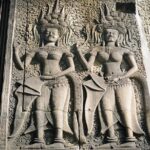
Dawn at Angkor Wat is a moving target. This private tour gets you out early so you can experience the complex in low light, then spend the morning temple-hopping with an English-speaking guide. I especially like the plan to enter Angkor Wat in the dark from a less busy approach, which changes how the carvings and courtyards feel.
I also like the practical comfort: hotel pickup and drop-off, an air-conditioned vehicle, and bottled water plus a cold towel after the long pre-dawn hours. On a tour like this, those small things matter more than you think. If your guide is someone like Davannsuon, you’ll likely appreciate the clear English and the cultural context that helps the stones make sense.
One thing to keep in mind: the early wake-up is real, and the base price does not include the temple entrance fees (plan on $37 per person for the temples). Add in the 6–8 hour time block and you should be ready for a full morning of walking and standing.
In This Review
- Key things to know before you go
- The real hook: sunrise timing that beats the crowds
- Hotel pickup and a simple, private rhythm
- Angkor Wat in the dark: what early entry changes
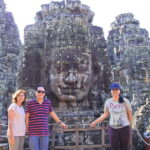
- Bayon Temple: the face-to-face moment inside Angkor Thom
- Ta Prohm: the temple of crumbling trees and monks
- Price and the real cost check: $23 plus temples
- How your guide changes the whole day
- Timing, weather, and why “good weather” is part of the deal
- Packing and comfort: small choices that matter at Angkor
- Who this tour suits best (and who should skip it)
- Should you book this Private Angkor Wat Sunrise Tour?
- FAQ
- How early is pickup for Angkor Wat sunrise?
- How long does the tour last?
- Are temple entrance fees included in the $23 price?
- Which temples are included on the itinerary?
- What’s included in the tour price?
- What happens if the tour can’t run because of weather?
Key things to know before you go
- Pre-dawn departure: pickup typically starts around 4:30 to 4:45am depending on the season
- Private by default: only your group participates, so the pace can be more tailored
- Temple circuit in a tight window: Angkor Wat first, then Bayon and Ta Prohm
- Entrance fees are separate: $23 covers the tour, while temple entry is extra (listed as $37/person)
- Mobile ticket included: bring a charged phone so you’re not scrambling at check-in
- Cold towel and water included: small comfort that helps when you’re up before sunrise
The real hook: sunrise timing that beats the crowds
An Angkor sunrise tour lives or dies on timing. If you roll in after the peak wave, you get temples and people. If you get there before the light turns on, you get atmosphere.
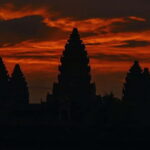
This tour’s departure window—about 4.30 to 4.45am—puts you in the Angkor Wat area while the world is still mostly quiet. That means you can walk through early spaces and let the scale land before it gets packed. You’re also entering in darkness rather than at full morning brightness, which makes stone details harder to see at first—and then gradually appear as the sky lightens. For me, that shift is the point. It turns a famous sight into an unfolding experience.
And because it’s set up as a full morning circuit, you’re not just chasing one photo. After sunrise outside Angkor Wat, you keep moving through the complex and then go on to the next temples while the morning is still fresh.
You can also read our reviews of more private tours in Siem Reap

Hotel pickup and a simple, private rhythm
You start from the Tara Angkor Hotel area, and pickup is offered for your hotel. The tour ends back at the same meeting point, which is a small but real convenience in a place where you don’t want to burn time figuring out transport.
The vehicle is air-conditioned, and you’ll get bottled water and a cold towel as part of the included package. On paper, that sounds like basic logistics. In practice, it helps you stay steady through a long pre-dawn-to-midmorning stretch—especially in Siem Reap heat.
Because it’s private, you also avoid the tug-of-war that can happen on shared group tours. You can ask your guide to slow down for a specific viewpoint or spend a few extra minutes in a carved corridor. You won’t have to scan for the next big marker while someone else’s group is still catching up.
If you’re traveling with friends or family and want control over pacing and photo stops, this structure fits well. If you just want the cheapest possible box-checking itinerary, the private setup might feel like more than you need.
Angkor Wat in the dark: what early entry changes
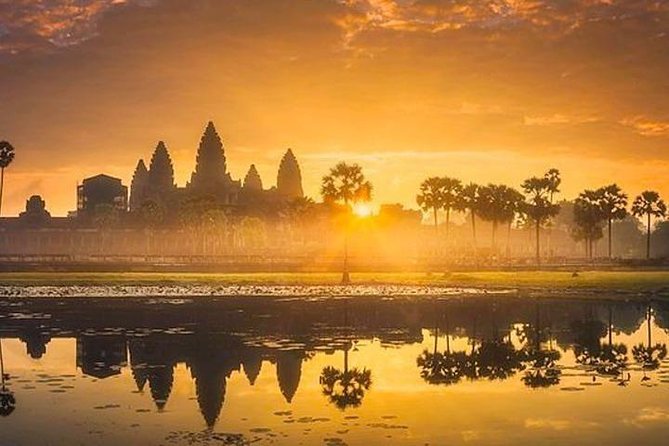
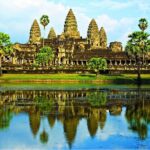
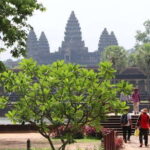
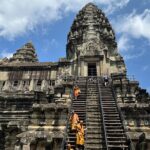
The first stop is Angkor Wat, with sunrise outside the temple as the centerpiece. You begin pre-dawn, and then you enter in darkness from the little-visited eastern side (as this route is set up). That matters because it keeps you away from the most congested approaches and helps you get your bearings fast.
Here’s how this usually plays out once you’re there:
- You arrive when the temple edges are still mostly silhouette.
- You move through internal spaces while the light is low.
- As dawn grows, carvings, door frames, and courtyard lines start to show up more clearly.
- You then settle into the atmosphere and take in the sunrise moment with space to breathe.
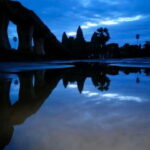
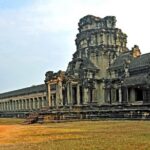
Another detail I like from this plan is where the tour positions you after the early entry. The schedule is designed so you can soak in dawn at the edge of one of the ancient library pools. Those pools aren’t just scenic. They help you understand how the complex was arranged for reflection, ritual, and water-based design—things you’d miss if you rushed straight to the most famous vantage.
Possible drawback: Angkor Wat is big, and the early light doesn’t mean you’ll avoid walking. If you’re not used to uneven stone surfaces and long stretches on your feet, plan for slower movement and comfortable shoes.
Bayon Temple: the face-to-face moment inside Angkor Thom
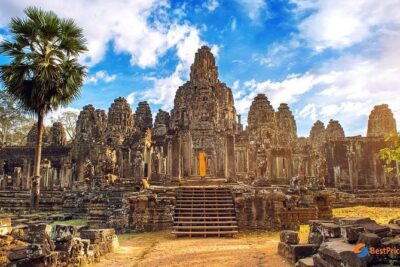
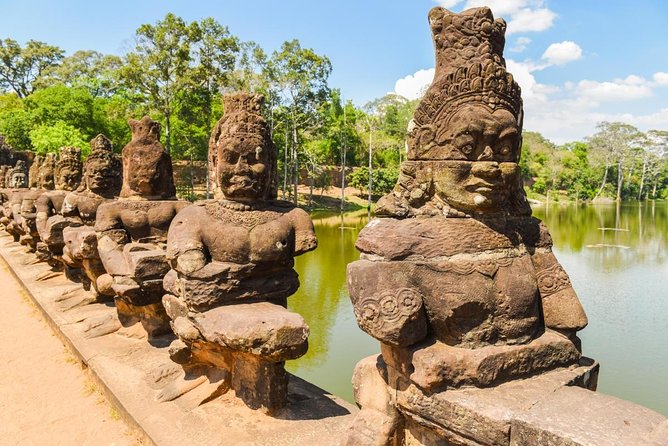
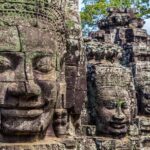
After Angkor Wat, the route shifts to Bayon Temple, which sits within Angkor Thom, the Khmer capital city. The big value here is contrast: Angkor Wat can feel orderly and iconic; Bayon feels like you’re inside a moving maze of stone.
You’ll arrive, take in the grandiosity of the city walls and gateways, and then step into Bayon itself. In a guided format, this stop works best when you treat it like more than a quick photo stop. The guide can point out how the temple’s layout directs your movement—where to pause so you understand the geometry, and how the faces relate to different angles.
This part of the day also benefits from being timed after sunrise. By the time you’re at Bayon, you’ve already had your early-day moment. That makes it easier to slow down and let Bayon’s details take over.
Watch-outs to plan for:
- Expect more foot traffic as the morning progresses.
- Some sections can feel crowded even on private tours, because the site itself is popular.
- It’s easy to feel rushed if you’re trying to cover everything at maximum speed. Ask your guide for pacing that matches your energy level.
Ta Prohm: the temple of crumbling trees and monks
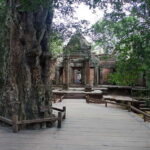
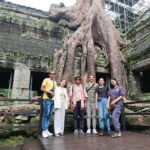
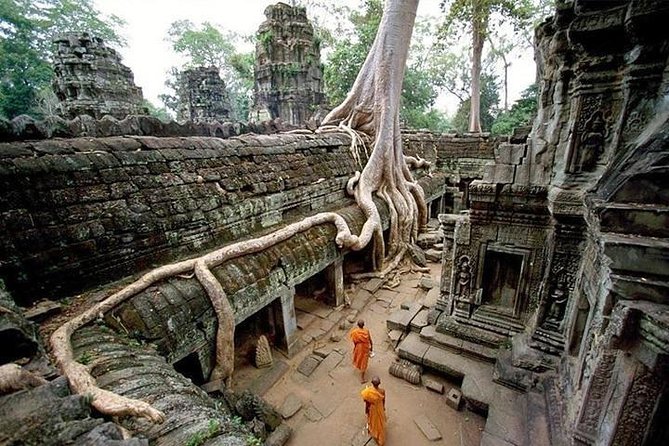
The final major stop is Ta Prohm, one of the most atmospheric temples in the Angkor complex. This is the stop where many people feel like they’ve stepped into a film set—because the intertwining trees and broken stone structures are genuinely dramatic.
The tour frames Ta Prohm with a helpful historical anchor: it was once home to 2,740 monks, and it looks much the way it did after French explorer Henri Mouhot helped bring it back to wider attention in the early 1850s. Even if you’ve read about Ta Prohm before, having those facts attached to what you’re seeing gives your brain something to hold onto while you walk.
It also helps to know what you’re looking at. Ta Prohm isn’t just ruins. It’s ruins with a story written into the structure: how nature took hold, how stone held on, and how a temple complex can feel both sacred and fragile at the same time.
You’ll typically spend about 2 hours here, which is enough time to:
- walk the main paths without feeling frantic,
- stop for the big tree-stone moments,
- and still have time for a guided explanation that ties the shapes together.
Possible drawback: Ta Prohm can be visually busy. If you’re the type who takes a lot of photos, you might lose time trying to capture every angle. Build in a plan: pick a few must-see views, then let the rest be part of the walk.
You can also read our reviews of more tours and experiences in Siem Reap

Price and the real cost check: $23 plus temples
The headline price is $23 per person, and that’s for the guided tour package, not the temple admissions. The schedule also lists admission tickets for major stops as not included, and separately notes a temples entrance fee of $37/person.
So what’s the real value? You’re paying for:
- licensed English-speaking guidance,
- an air-conditioned vehicle,
- hotel pickup and drop-off,
- bottled water and a cold towel,
- and a structured route that gets you moving efficiently in a limited morning window.
Then you pay separately for temple entry and you plan for food and beverages not included.
If you’re comparing this to buying tickets on your own and hiring a random driver for the route, this package tends to win when you care about interpretation. You’re not only walking through famous sites—you’re trying to understand what you’re looking at, and the guide is a big part of that.
If you’re a very independent traveler who doesn’t want anyone timing your day, this tour’s value drops. In that case, you might prefer a self-guided approach. But if you want your morning to feel smooth and meaningful, the math starts to make sense quickly.
Bottom line: treat the $23 as the “guided experience” portion, and budget the $37 for temple entry. Then add whatever you want for breakfast or lunch since food isn’t included.
How your guide changes the whole day
A sunrise tour can become a simple checklist: arrive, take photos, move on. The better version is when the guide helps you understand why each stop matters and what to notice.
The reviews strongly point to guide quality. One name that comes up is Davannsuon, praised for excellent English and for sharing how Cambodia’s culture connects to what you’re seeing at Angkor. Even if you’re not guaranteed a specific guide, the tour is built around the promise of an experienced and licensed English-speaking tour guide, which is the difference between collecting images and collecting meaning.
Here’s what you can do to get more out of the day once you’re with your guide:
- Ask what to notice at each temple before you start walking.
- Pay attention to explanations about layout and purpose, not just dates.
- Let them suggest where to pause for the best light and least crowd pressure.
Also, because you enter Angkor Wat in the dark, a guide can help you avoid that early confusion. When you can’t see everything yet, you need orientation fast. That’s where guidance turns a scramble into a calm start.
Timing, weather, and why “good weather” is part of the deal
This experience requires good weather. That’s not just boilerplate. Sunrise tours depend on visibility, and clouds can reduce the payoff even if the temples are still there.
The good news: if the tour is canceled due to poor weather, you’ll be offered a different date or a full refund. That means you’re not locked into a single sunrise gamble with no exit.
Practical tip: plan your rest of the day around this tour. If you schedule a heavy afternoon activity, you’ll feel it more if the sunrise timing runs late or if you need to recover after an early pickup.
Packing and comfort: small choices that matter at Angkor
You’re out early, walking on stone, and moving through several temples. So don’t overthink it—just cover the basics well.
Bring:
- comfortable walking shoes with good grip,
- a light layer for the early hours (pre-dawn can feel cooler than midday),
- sun protection for the later part of the circuit,
- and a phone that’s ready for a mobile ticket.
Since bottled water and a cold towel are included, you don’t need to carry those items. But you do want to stay comfortable for your own body, since you’ll spend hours on foot.
If you get overheated easily, treat the air-conditioned van as a recovery tool. Between stops, use that time to cool down and rehydrate before heading back into the temple.
Who this tour suits best (and who should skip it)
This is a strong fit if you:
- want the Angkor Wat sunrise experience without doing the logistics yourself,
- prefer a guided route through Angkor Thom highlights,
- like cultural context as you walk,
- and want private pacing for a group of your choosing.
It may be less ideal if you:
- hate early mornings (this tour is a pre-dawn commitment),
- only care about one temple and want the shortest possible outing,
- or you’re highly budget-focused and would rather handle admissions and route planning on your own.
If you’re traveling as a couple, this setup is often ideal because private pacing can reduce stress. If you’re with older kids or multi-generational family groups, the guided explanations and vehicle breaks can make the morning feel more manageable.
Should you book this Private Angkor Wat Sunrise Tour?
I’d book it if sunrise is a priority and you want the day to feel organized from pickup to temple sequence. The mix of pre-dawn timing, a guided circuit through Bayon and Ta Prohm, and the comfort extras (water, cold towel, air-conditioned transport) makes this feel like a smart way to get the most from a single day in Siem Reap.
I’d pause before booking if you’re tight on budget once you add temple entry, or if you want total independence. The $23 rate is only part of the story; the temples fee is the big add-on, and food isn’t included.
If you can handle an early start and you’d rather understand what you’re seeing than just see it, this tour is a good match.
FAQ
How early is pickup for Angkor Wat sunrise?
Pickup is typically around 4:30 to 4:45am, depending on the time of year.
How long does the tour last?
Expect about 6 to 8 hours total.
Are temple entrance fees included in the $23 price?
No. The tour price does not include temple admissions. A temples entrance fee is listed as $37 per person, and stop admissions are also listed as not included.
Which temples are included on the itinerary?
You visit Angkor Wat, Bayon Temple, and Ta Prohm.
What’s included in the tour price?
You get an air-conditioned vehicle, an experienced licensed English-speaking tour guide, bottled water and a cold towel, plus hotel pickup and drop-off.
What happens if the tour can’t run because of weather?
The experience requires good weather. If it’s canceled due to poor weather, you’ll be offered a different date or a full refund.
If you tell me your travel dates and whether you’re most excited about photos or explanations, I can help you decide if the 6–8 hour temple circuit fits your style.