REVIEW · PHNOM PENH
A Full Day Tour for Royal Palace, S21, Killing Fields & More
Book on Viator →Operated by Sina's Tuk-Tuk or Van Driver & Guide Service · Bookable on Viator
Phnom Penh hits hard and beautiful. I like the way this tour layers palace sights with Khmer Rouge truth, and I also love the smooth AC mini-van pickup that keeps you moving in the heat. The best part is a guided walkthrough of each stop, with audio options for the hardest chapters. The main drawback to plan for: you’ll pay extra entrance fees at several sites (and audio costs at S21 and Choeung Ek).
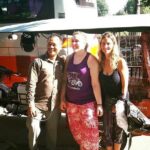
You’re out from 8:00am for about 8 to 9 hours, with hotel pickup and drop-off, bottled water, and a cold drink after midday. The group is kept small, up to 7 people, so questions don’t get lost in a loud crowd. And the guide may be Sina (the provider named for this tour), with other guides from the same service roster showing up on some departures, such as Jum Reap or Channy.
This is also not a one-note tour. You’ll see Buddhist landmarks and royal architecture in the morning, then switch gears to Tuol Sleng (S21) and Choeung Ek. If you prefer lighter sightseeing only, you’ll want to be honest with yourself before booking. If you want context for why Phnom Penh looks the way it does, this day has a lot to offer.
In This Review
- Key things I’d note before you go
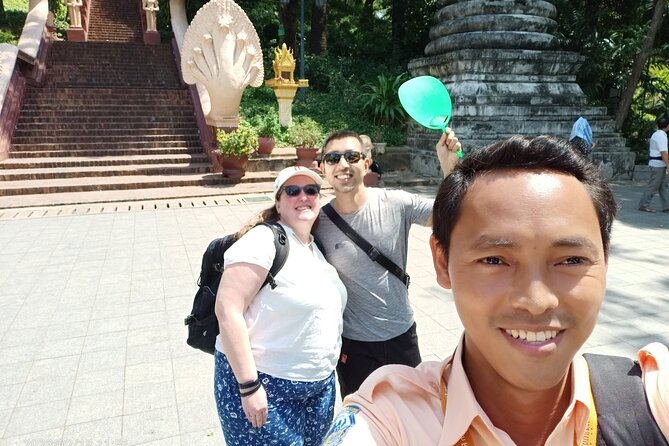
- Wat Phnom: the pagoda that gave Phnom Penh its name
- Royal Palace: where Phnom Penh shows off its official face
- Quick monuments: friendship, independence, and a newer Wat Langka
- Tuol Sleng (S21) and Choeung Ek: the Khmer Rouge story, explained as you walk
- Tuol Sleng Genocide Museum (S21)
- Choeung Ek Genocidal Center (Killing Fields)
- Central Market: 30 minutes to shop, not browse
- Price and costs: what that $35 really covers
- Timing and heat: an 8–9 hour route that needs patience
- Who this tour suits best (and who might rethink it)
- Should you book this Phnom Penh full-day tour?
- FAQ
- How long is the full-day tour?
- What time does the tour start?
- Does the tour include hotel pickup and drop-off?
- What’s included in the price?
- Is the Royal Palace entrance fee included?
- Are the S21 and Killing Fields audio players included?
- What are the entrance fees for Wat Phnom and the Killing Fields?
- How many people are in a group?
- Is the tour operating only in good weather?
- Can I cancel for a full refund?
Key things I’d note before you go
- Small group size (max 7): easier pacing and more room to ask questions.
- Hotel pickup + air-conditioning: real value in Phnom Penh’s heat.
- Audio add-ons at S21 and Choeung Ek: they cost extra, but they help you follow what you’re seeing.
- Entrance fees are not included at several major stops, so budget for them up front.
- Free short monument stops between bigger sites keep the day from feeling nonstop.
- Central Market time is tight (30 minutes), so plan what you want to shop for before you arrive.
Wat Phnom: the pagoda that gave Phnom Penh its name
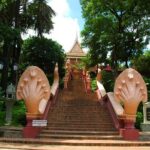
Most days start with Wat Phnom, a short drive away from central hotel zones. You’ll spend about 30 minutes here, and you’ll pay a small entrance fee (Wat Phnom $1 per person). What I like about starting here is simple: it gives you an anchor point for the city.
This temple is tied to the origin story of Phnom Penh itself, and the guide’s job is to connect the legend and the place. Expect to see the mountainous pagoda form that sparked the capital’s identity. Even if you’ve seen other temples in Cambodia, this one helps you get Phnom Penh’s specific “how did this city become this city?” answer.
Practical tip: temples can be hot and uneven underfoot. Wear something you can walk in comfortably and bring a light layer if you’re sensitive to strong air-conditioning later in the van.
You can also read our reviews of more tours and experiences in Phnom Penh

Royal Palace: where Phnom Penh shows off its official face
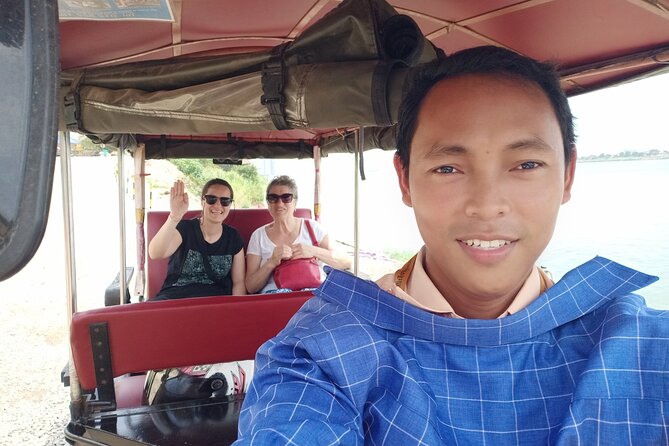
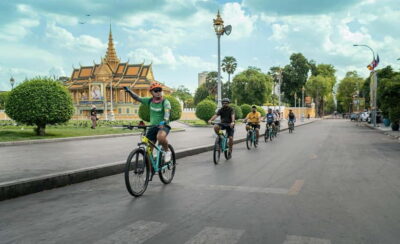
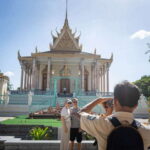
Next you head to the Royal Palace, with around 1 hour 30 minutes on site. The Royal Palace is the official residence of the king and queen, and the complex is meant to feel structured, ceremonial, and very Khmer in its layout.
You’ll pay a larger entrance fee here (Royal Palace $10 per person). The payoff is that you’re not just walking through pretty buildings. A good guide connects the placement and design of the structures to how power and ceremony were expressed over time—so the palace doesn’t feel like random photo spots.
A thing to watch: the palace ticket is separate from the tour price. If you forget this, it can feel like a surprise cost later. Plan to bring cash or be ready to pay on the day.
Clothing note: even if you don’t know temple rules by heart, dress modestly. Cover shoulders and wear clothing that’s comfortable for walking. The palace areas are also where you’ll likely spend time looking up and moving between courtyards—so shoes that grip are useful.
Quick monuments: friendship, independence, and a newer Wat Langka
Between the big hitters, the tour adds a handful of shorter stops. Each one is quick—about 10 minutes for the monuments—and they help stitch Phnom Penh into the national story.
You’ll see the Cambodia–Vietnam Friendship Monument, a free stop built after liberation from the Khmer Rouge in 1979. It’s brief, but it’s a useful reminder that Cambodia’s 1970s trauma didn’t end with 1975. It continued, changed, and reshaped the country.
Then comes a free statue honoring King Father Norodom Sihanouk. The bronze statue is placed in his park and was created and positioned in 2013, with the guide explaining why his role mattered for prosperity in the 1960s.
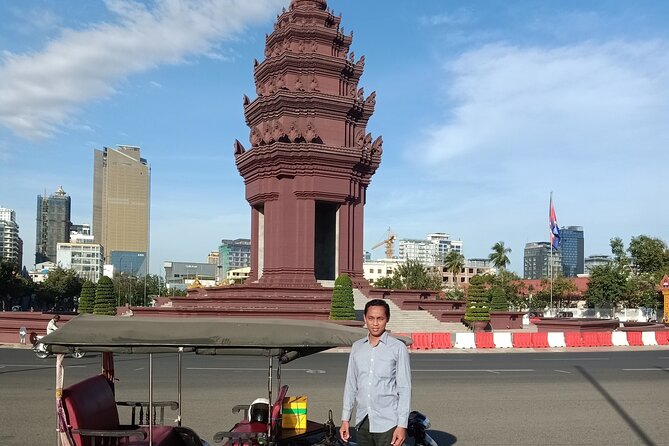
After that, you’ll stop at the Independence Monument (free). It was built in 1962 after Cambodia gained independence from French colonization that lasted from 1863 to 1953. This stop is short, but it gives you the “modern nationhood” timeline that’s easy to miss if you only focus on temples.
A newer addition is Wat Langka, also free, described as built and opened to the public on September 24, 2024. You’ll have around 30 minutes here. I like that it’s included because it adds a “present-tense” Phnom Penh note: the city doesn’t freeze in 1975. It keeps building, renovating, and marking time.
Tuol Sleng (S21) and Choeung Ek: the Khmer Rouge story, explained as you walk
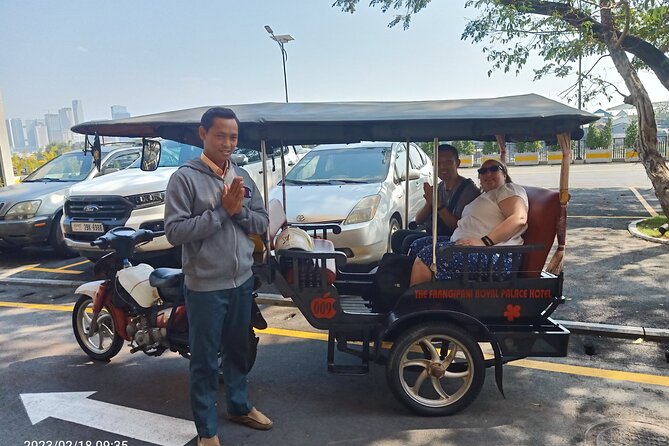
Now we get to the part of the day that most people remember for a long time.
Tuol Sleng Genocide Museum (S21)
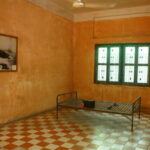
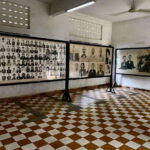
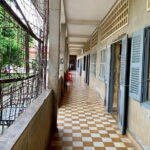
You’ll visit Tuol Sleng Genocide Museum for about 1 hour 30 minutes. It’s a former high school turned prison during the Khmer Rouge regime. The tour frames it with context and numbers that help you grasp scale: the museum states that 12,000 victims were imprisoned there.
Entrance is $5 per person, and the audio player is an additional $5 per person. I strongly recommend budgeting for the audio if you can. The museum is emotionally heavy and information-dense, and audio helps you keep up with what you’re seeing rather than guessing.
Practical note: this is not a “wander and browse” museum. It’s better when you slow down, stand still when the guide signals key areas, and let the story land.


Choeung Ek Genocidal Center (Killing Fields)
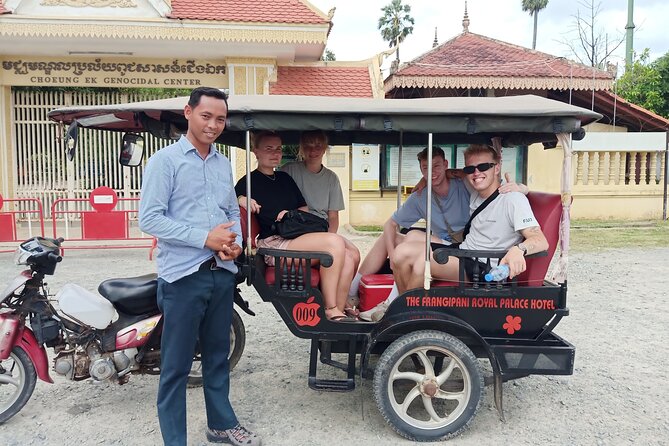
After S21, you continue to Choeung Ek for about 1 hour 30 minutes. This is where a former local Chinese cemetery became the killing fields, with about 20,000 victims executed.
Here the entrance fee is $3 per person, plus $3 more for the audio player. The audio matters again because the grounds are spread out and the signs and displays can be emotionally intense. Audio also gives you a running narrative so you’re not constantly trying to read everything at once.
This is the “barbaric genocide” portion of the day in plain terms. Expect it to feel grim. That’s the point. The value isn’t comfort—it’s understanding.
Simple self-check before you go: if you’re prone to getting overwhelmed by tragedy-themed sites, it helps to have a strategy. Wear sunglasses, take water breaks when your guide allows it, and don’t force yourself to “power through” without pause.
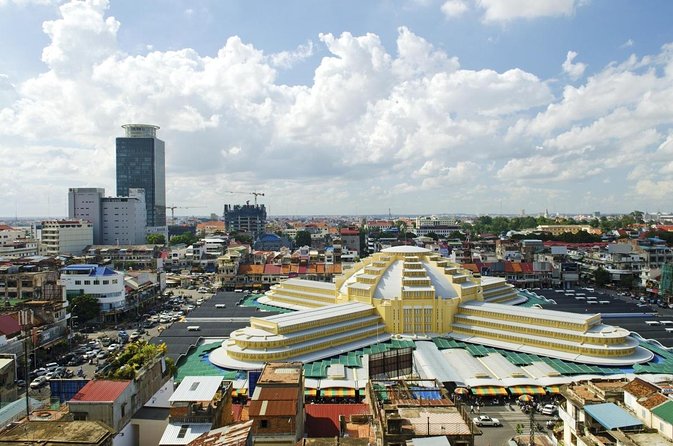
Central Market: 30 minutes to shop, not browse
To finish, you’ll hit Central Market for about 30 minutes. It’s a colonial-era landmark and a common place to pick up Phnom Penh souvenirs—local products, jewelry, dried fruit, and more.
You won’t pay an entrance fee for this stop. It’s listed as free, and the main goal is a quick walk-and-buy window at the end of a long day.
This short timing matters. If you want bigger purchases, you might need a longer market visit outside the tour. But if you just want a handful of gifts (or to grab snacks like dried fruit), 30 minutes can work well.
Shopping tip: decide what you’re looking for before you arrive. When you’re tired, it’s easy to buy random stuff you didn’t plan to carry home.
Price and costs: what that $35 really covers
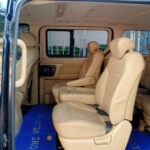
The tour price is $35 per person. That includes the guided day, hotel pickup and drop-off, bottled water, and an AC mini-van (a Hyundai Starex). It also includes a cold drink after 12 o’clock—either Coke or local beer, depending on what’s available.
The big “value” part is that the tour price pays for transport and a guide across multiple key areas—temples, palace grounds, national monuments, and two major Khmer Rouge sites.
The part you should budget separately is entrance fees and audio:
- Wat Phnom: $1 per person
- Royal Palace: $10 per person
- Tuol Sleng (S21): $5 per person, plus $5 for the audio player
- Choeung Ek: $3 per person, plus $3 for the audio player
Those add up fast. If you plan to use the audio at both S21 and Choeung Ek, you’re adding $16 in audio fees alone (since $5 + $3 = $8, wait—both sites list separate audio fees: $5 for S21 audio and $3 for Choeung Ek audio, so $8 total for audio players across the two). Add entrances, and you’re paying for multiple venues even though the tour price looks low.
My advice: bring small bills and count your expected totals before you start. It makes the day smoother and avoids that late-afternoon scramble.
Also note: you can choose group or private options, and the tour includes group discounts. If you’re traveling with someone and want control over pace, a private format can make sense—especially for a day that includes emotional sites.
Timing and heat: an 8–9 hour route that needs patience
The day begins at 8:00am and typically runs 8 to 9 hours. That early start is smart. Phnom Penh temperatures can be intense, and the van’s air-conditioning plus bottled water helps you stay functional.
The route also mixes short stops (10 minutes at the monument/photo breaks) with longer ones (1.5 hours at Wat Phnom’s neighbor palace, 1.5 hours at S21, 1.5 hours at Choeung Ek). That pacing is good for variety, but it also means you’ll be mentally shifting gears a lot.
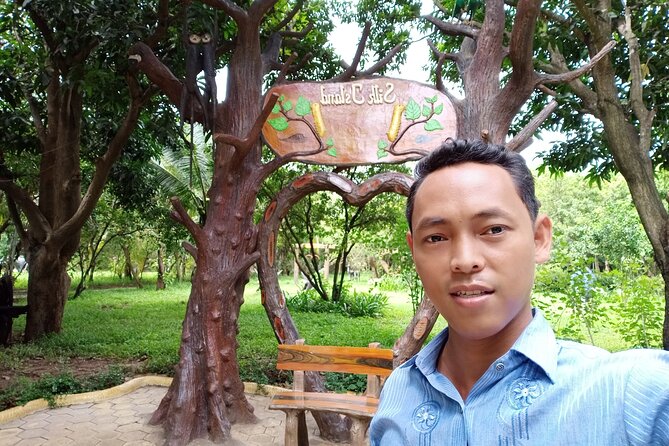
From the guide side, this tour often works best when you ask questions. People doing the day with guides like Sina have praised the way explanations get tailored and how the guide stays patient while you process a lot of information. In a small group—max 7—there’s room for those questions.
One more practical consideration: after a heavy museum day, your focus can dip. If you know you’ll want a calmer ending, the Central Market 30-minute stop is a good buffer—quick, practical, and less emotionally intense than the genocide sites.
Who this tour suits best (and who might rethink it)
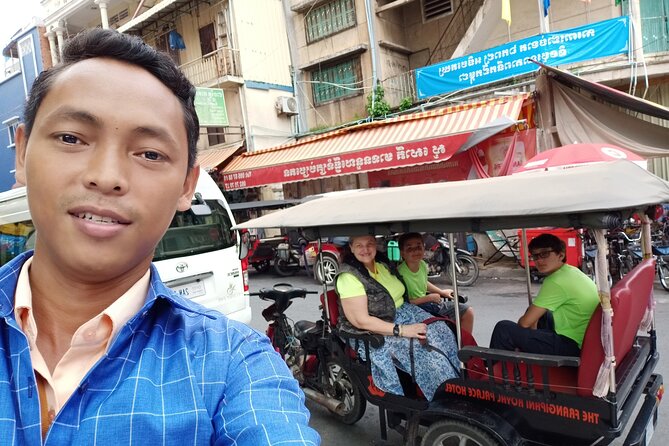
This tour is a strong fit if you:
- want a first-day orientation to Phnom Penh that includes both royal landmarks and the city’s modern historical scars
- like guided storytelling that explains why each place matters, not just where it is
- want air-conditioned transport with hotel pickup and drop-off
- can handle emotionally serious sites with respect and patience
You might rethink booking if you:
- want only light sightseeing or short, upbeat stops
- dislike paying extra entrance and audio fees at major venues
- get overwhelmed easily by genocide-related museums and memorials (in that case, you could consider doing only one of the two sites on a separate day—if you have the time)
Should you book this Phnom Penh full-day tour?
If you’re looking for one day that covers the city’s visual highlights and its most important historical context, I’d say book it. The combination works: Wat Phnom gives you origins, the Royal Palace explains ceremonial power, and the monuments add national timeline pieces before you reach the truth at Tuol Sleng and Choeung Ek.
Just go in with open eyes. Bring cash for entrances and decide in advance whether you want the audio players. If you do that, the day becomes clear, focused, and genuinely useful.
Given it holds a 4.9 rating out of 115 with 98% recommending it, this seems like a well-liked way to pack a lot of meaning into one long day.
FAQ
How long is the full-day tour?
The tour runs about 8 to 9 hours.
What time does the tour start?
Start time is 8:00 am.
Does the tour include hotel pickup and drop-off?
Yes, hotel pickup and drop-off are included.
What’s included in the price?
Included items are the tour by Sina, an air-conditioned mini-van, hotel pickup and drop-off, bottled water, and Coke or local beer after 12 o’clock.
Is the Royal Palace entrance fee included?
No. The Royal Palace entrance fee is $10 per person.
Are the S21 and Killing Fields audio players included?
No. Tuol Sleng audio players cost an extra $5 per person, and Choeung Ek audio players cost an extra $3 per person.
What are the entrance fees for Wat Phnom and the Killing Fields?
Wat Phnom entrance is $1 per person. Choeung Ek entrance is $3 per person.
How many people are in a group?
The tour has a maximum of 7 travelers.
Is the tour operating only in good weather?
Yes, the experience requires good weather. If it’s canceled due to poor weather, you’ll be offered a different date or a full refund.
Can I cancel for a full refund?
Yes. You can cancel up to 24 hours in advance for a full refund. If you cancel less than 24 hours before the start time, it’s not refunded.