REVIEW · BATTAMBANG
Battambang: Tuk-Tuk, Bamboo Train, Killing/Bat Caves, Sunset
Book on GetYourGuide →Operated by Battambag full day city and countryside Tuk Tuk tour · Bookable on GetYourGuide
Bats at sunset. Then history hits hard.
This Battambang full-day tour strings together tuk-tuk city sights with the bamboo train ride and Phnom Sampou’s Killing and Bat caves, ending with a dramatic bat-flight spectacle. Your guide keeps the day moving with stories about Cambodia, Battambang’s role in the wider national story, and what everyday rural life looks like outside town.
I love the way the guide ties together details you’d otherwise miss: city landmarks, farming rhythms, and the meaning behind the caves. I also love the variety packed into one route—market and temples in Battambang, rice fields and viewpoints in the countryside, and that payoff moment when the bats pour out at dusk.
One thing to think about: it’s a long day and it includes climbing, walking, and a bit of uneven terrain, plus a heavier stop at the Killing Cave. If you’re short on energy or you dislike dark historical content, plan accordingly.
In This Review
- Key Highlights Worth Your Time
- Battambang’s Tuk-Tuk Loop: City Landmarks With Real Context
- Out to the Countryside: Villages, Fruit Plantations, Rice Fields, and Farmers
- Bamboo Train Time: A $5 Ticket Worth the Noise and Earplugs
- Phnom Sampou and Rat Barbecue: A Local Dish With Optional Pressure
- Killing Cave: Heavy History You Shouldn’t Skip, but Should Prepare For
- Sunset at Phnom Sampou: Temples, Monkeys, Viewpoints, and the Bat Exit
- Food, Drinks, and What to Pack for a Bumpy, Mixed Day
- Price and Value: What You Pay, What Costs Extra, and Why It Feels Like a Steal
- Who This Tour Suits Best (and Who Might Feel Strained)
- Should You Book This Battambang Full-Day Tuk-Tuk, Bamboo Train, Caves, and Sunset Tour?
Key Highlights Worth Your Time
- Guides who explain the why, not just the what, from Battambang city life to Khmer Rouge-era context
- Original bamboo train ride with big countryside views and a ride that feels both old-school and genuinely practical
- Phnom Sampou experience in two moods: somber Killing Cave history, then the bright chaos of the Bat Cave
- Optional rat barbecue tasting at Phnom Sampou if you’re curious (it’s not forced)
- Sunset on the mountain with viewpoints and monkeys along the way
- Fruit salad, cold water, and photo stops that keep you fueled without slowing the route too much
Battambang’s Tuk-Tuk Loop: City Landmarks With Real Context
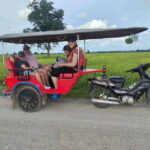
Battambang doesn’t feel like a one-stop museum town. It’s more like a working city where history lives next to daily routines, and that’s exactly how this tour starts. You begin by hopping into a tuk-tuk and rolling through central sights while your English guide puts names and places into context.
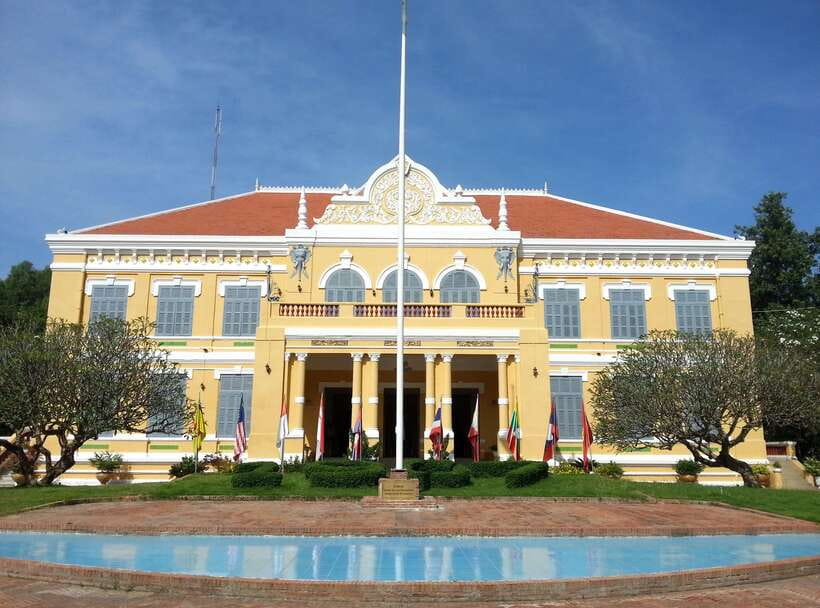
Early stops are the kind of basics that help you get your bearings fast: the central market area, the provincial hall, and a symbol statue of Battambang. You’ll also see historical buildings around town and hear how Battambang’s story fits into the larger Cambodia picture—politics, religion, and folk tales are all part of the mix. The guide’s style matters here. Many tours list stops. This one explains them.
A practical note: you’ll want comfortable shoes right away. Even if you’re not walking all day in town, there are enough short stretches, photo moments, and quick crossings to make good footing worth it.
You can also read our reviews of more evening experiences in Battambang
Out to the Countryside: Villages, Fruit Plantations, Rice Fields, and Farmers
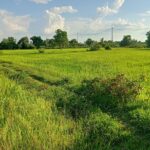
Next comes the part that makes Battambang feel different from Phnom Penh or Siem Reap. You’re not just looking at sights—you’re watching agriculture and village life in motion. The route heads toward villages, fruit plantations, and rice fields, with time built in so you can talk with farmers and see how the land supports the people.
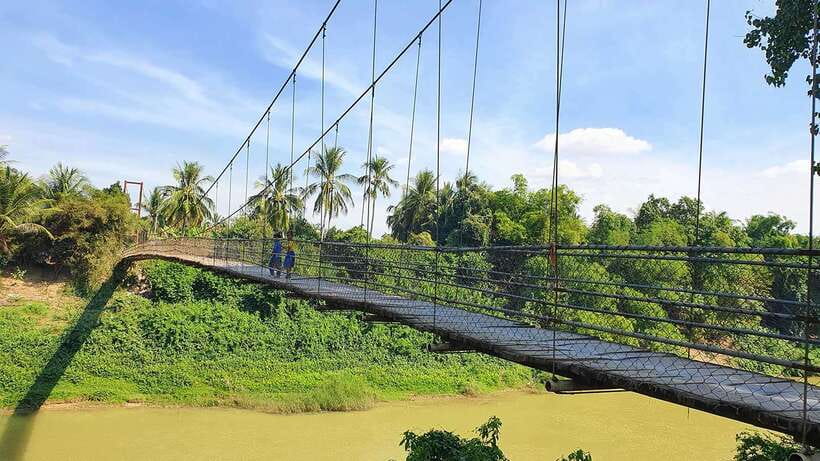
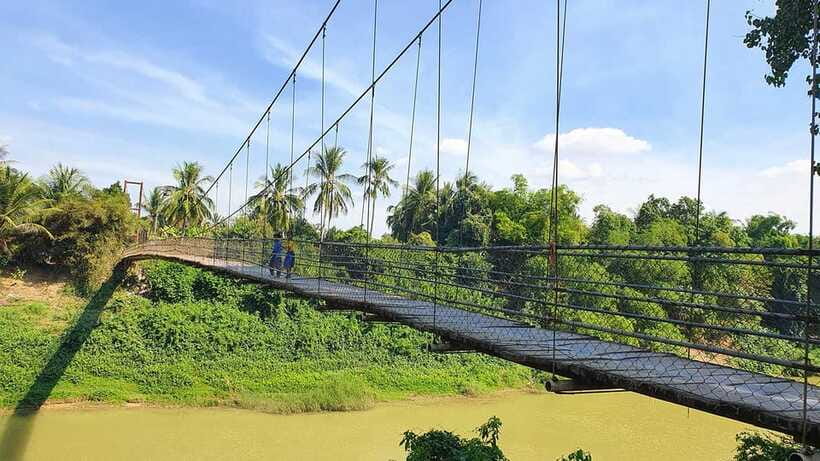
You’ll also cross a suspension bridge. It’s one of those spots where you get photos, but you also feel the geography—how water, fields, and small roads shape where people live and move. And yes, the bridge can feel a little wobbly depending on conditions, so keep a steady stance and don’t rush your photos.
This countryside stretch is valuable even if you think you’ve seen farms before. In Battambang, the pace is different. It’s less about tourist scenery and more about how farming seasons shape daily schedules. If you like understanding how places work—not only how they look—this section is the backbone of the day.
Bamboo Train Time: A $5 Ticket Worth the Noise and Earplugs
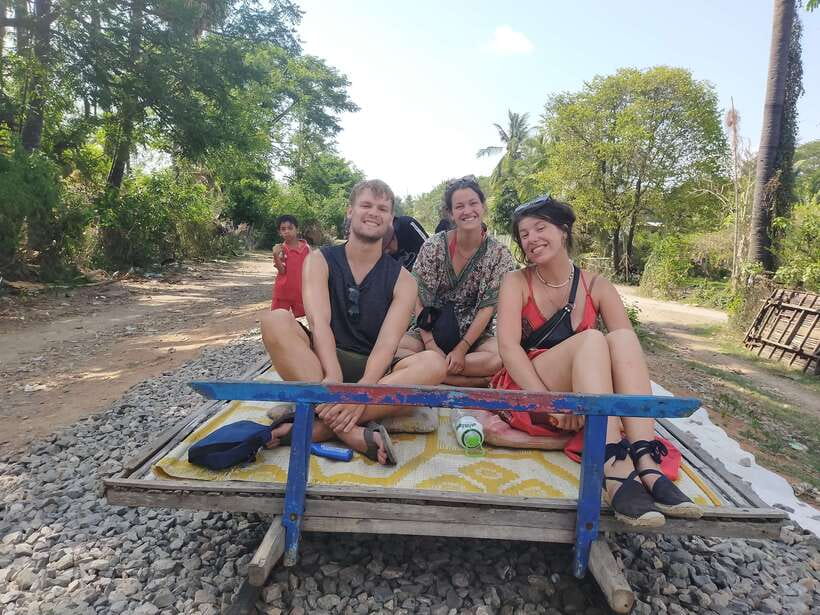
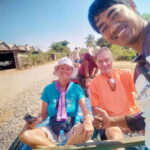
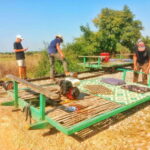
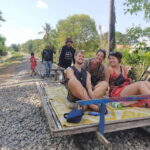
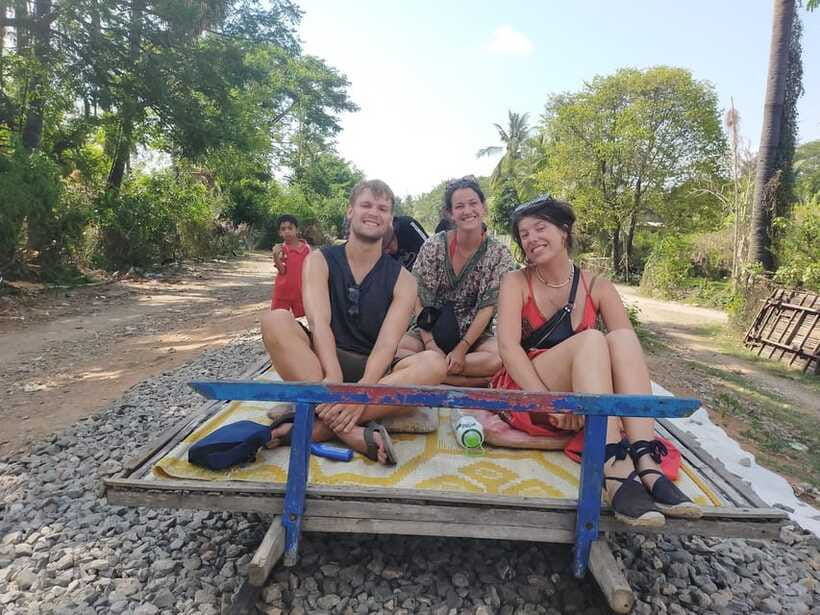
Then it’s onto the ride that most people come for: the bamboo train. This tour includes the ride experience, but not the ticket—expect to pay about $5 per person for the bamboo train admission/ticket.
Here’s the deal: the bamboo train is fun, but it’s not a smooth theme-park ride. It’s bouncy, you’ll feel the track, and the sound can get loud. One simple tip I’d follow: bring earplugs if you’re sensitive to noise. You’ll thank yourself later, especially if you have plans the same evening.
What makes this part worth it isn’t only the “wow, bamboo!” factor. It’s what you see from the line: stretches of paddy fields and open countryside as the train moves through the area. The guide’s commentary helps too—your stops earlier in town make these views make more sense, because you’re seeing the region that feeds and connects Battambang.
If you’re worried about comfort, don’t overthink it. It’s short enough that you can tolerate the rough edges. Think of it as a living local transport oddity—one that’s still doing its job.
Phnom Sampou and Rat Barbecue: A Local Dish With Optional Pressure
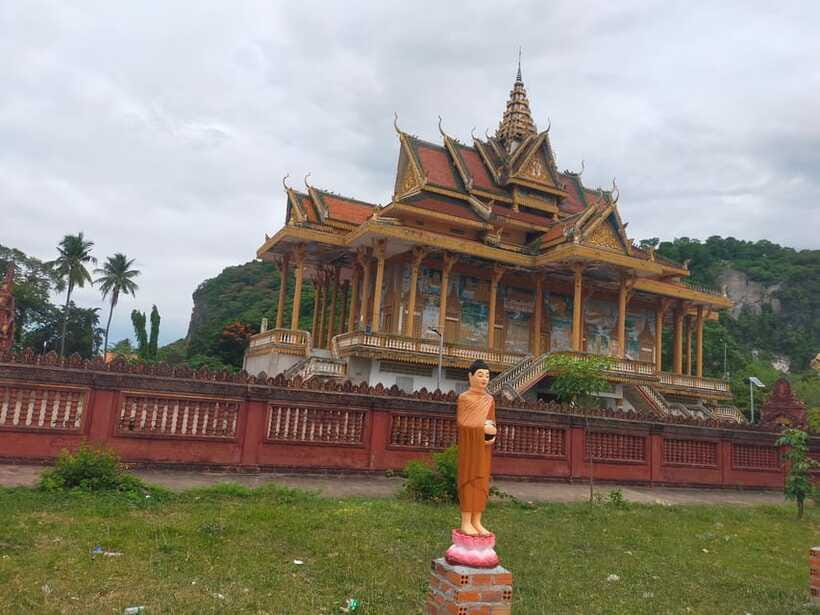
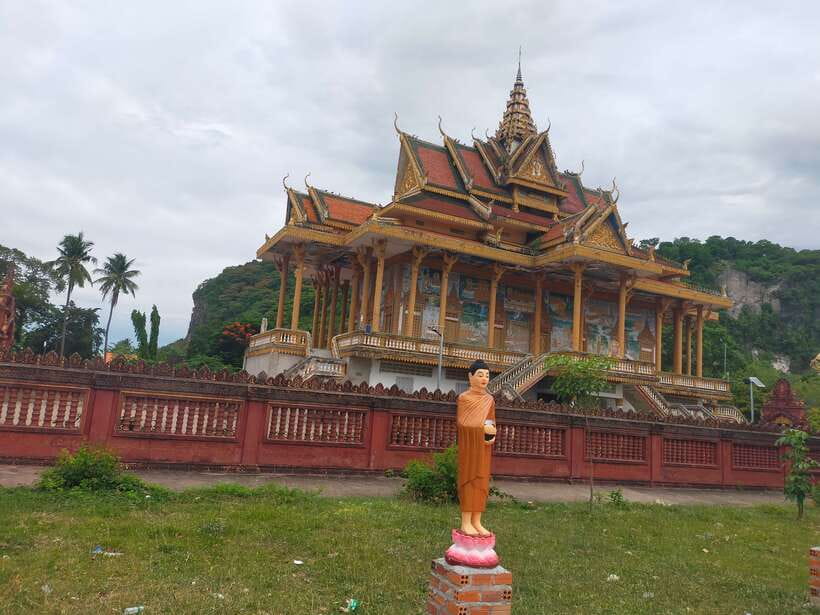
After the bamboo train, the day turns toward food and hilltop culture. You’ll have a late lunch at a local restaurant in the village area. Lunch isn’t included in the tour price, so budget extra accordingly, but the stops are built to keep you fed without dragging the day out.
Then comes Phnom Sampou, where you may get the chance to taste rat barbecue. This is listed as optional, but it’s also a big part of what people talk about from this area. If you want to try it, you’ll get a chance to taste a dish that’s widely known locally in this region.
If you’d rather not eat it, you can still enjoy the rest of the Phnom Sampou experience. The tour doesn’t hinge on you saying yes to everything. You’re there for the caves, viewpoints, and the cultural context the guide provides around Khmer Rouge history and daily life in Battambang Province.
Killing Cave: Heavy History You Shouldn’t Skip, but Should Prepare For
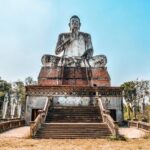
Now we’re in the part of the day that’s emotionally heavy: the Killing Cave. You’ll head up by motorbike or pickup truck to the hill area. From there, you learn about the Khmer Rouge period (1975–1979), when more than ten thousand victims were killed.
This stop can feel intense because it’s historical, real, and personal. Even with a guide who explains clearly, you’ll want to pace yourself. If you’re the type who needs a moment to process before you keep moving, build that in mentally now—this isn’t a quick photo-and-go stop.
The value of including Killing Cave in a day like this is that you see it in context. After tuk-tuk city landmarks and rural fields, you come to understand that history wasn’t an abstract headline. It affected real communities and real lives.
A simple tip: wear sleeves you’re comfortable in. Sleeveless shirts aren’t allowed. You’ll likely be walking and sitting in spots where decent coverage helps.


Sunset at Phnom Sampou: Temples, Monkeys, Viewpoints, and the Bat Exit
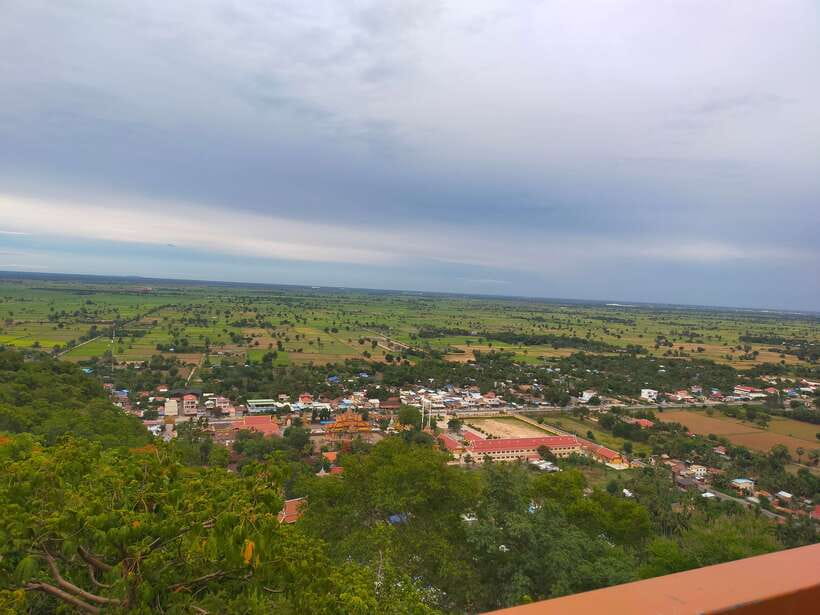
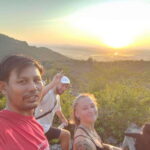
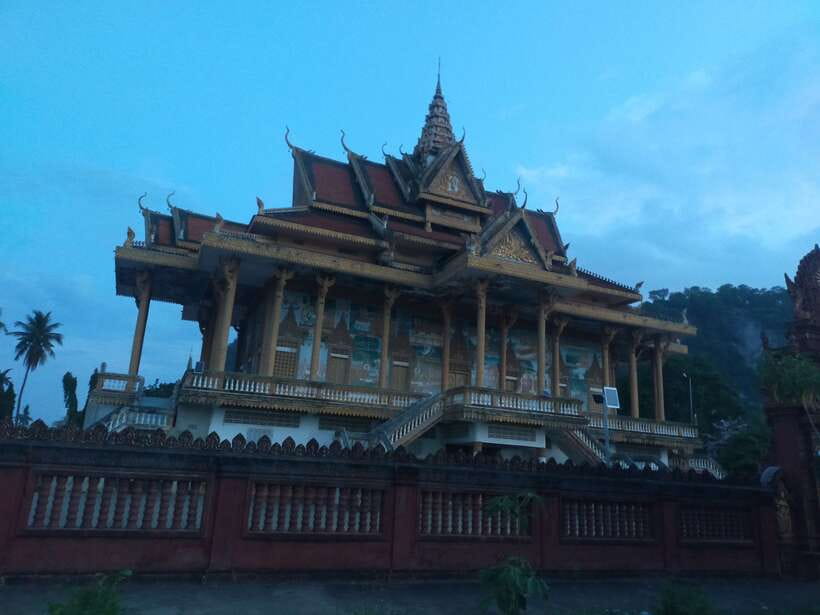
After Phnom Sampou’s history, the tour shifts into a very different mood—temples, monkeys, and viewpoints, then sunset on the summit. This section is a reminder that life continues around these sites. You’re higher up, you’re looking out across the countryside, and the guide helps you spot what’s around you instead of leaving you with only a view.
And then comes the main event: the Bat Cave. You go down afterward to witness the wrinkle-leap bats as they fly out. The timing matters because the bats exit the cave around dusk, so you’ll want to arrive prepared to wait and watch.
This is the kind of natural phenomenon that makes you forget your phone battery. It’s not just a few bats either—this is a visible, moving event that becomes its own kind of story. It’s also why the day has a clever arc: you start with city orientation, move through countryside and bamboo, then hit Phnom Sampou in two layers—history first, then spectacle.
If you’re sensitive to crowds, keep this in mind: bat cave moments draw attention, but the focus stays on the natural event. Just follow your guide’s timing so you don’t miss the peak moment.
Food, Drinks, and What to Pack for a Bumpy, Mixed Day
This is a tour with several moving parts, so small planning choices make the day feel smoother.
You’re provided with cold bottled water, plus fruit salad. That’s a real help between stops. You’ll likely also have chances for snacks or bathroom breaks at various points during the day. One review even noted it felt like there were plenty of stops for food and restroom needs, which is exactly what you want on a 5–12 hour route.
For packing, stick to the basics the tour requests:
- Comfortable shoes (you’ll thank yourself at Phnom Sampou)
- A camera
- Rain gear (Cambodia weather can change fast)
- Cash (for optional purchases like the bamboo train ticket and any extra food)
- Sunscreen
One more clothing note: sleeveless shirts aren’t allowed. Pack something light but covered. It’ll also help you feel more comfortable if you’re in and out of sun and shade near the caves.
Price and Value: What You Pay, What Costs Extra, and Why It Feels Like a Steal
The headline price is about $9 per person, and that low number is why this tour gets attention. But here’s how to judge value the right way: you’re not paying $9 for one attraction. You’re paying for a full day’s worth of transport, a live English guide, water, fruit salad, cave admissions, and entry fees tied to Phnom Sampou, the Killing Cave, and the Bat Cave.
The main extra costs listed are:
- Bamboo train ticket: about $5 per person
- Lunch: not included
- Rat barbecue tasting: optional (not required)
So, in practical terms, you’re likely spending around the base tour price plus a small bamboo ticket amount, and then paying for lunch. For most travelers, that still works out to strong value considering you get both guided city touring and countryside highlights in one shot.
Who benefits most? If you want a structured way to see Battambang without building your own day of tuk-tuks, tickets, cave logistics, and route planning, this is a smart fit. If you hate long seat time and prefer slow wandering with no schedule, you might feel this tour is a little packed.
Who This Tour Suits Best (and Who Might Feel Strained)
This day is best for active, curious travelers who like variety: city, countryside, hands-on local flavor, and historical stops. It’s especially good if you want a guide to explain what you’re seeing—because some key spots (market layout, farming rhythms, and the meaning of Khmer Rouge-era places) become much more rewarding with context.
It may not suit:
- Wheelchair users or people with mobility impairments
- People over 80 years
- Anyone who struggles with stairs and uneven ground
- Anyone who strongly dislikes graphic or grim historical content
If you fall into the “I’m okay with a heavy stop as long as it’s explained well” category, this tour hits a strong balance. You end with a dramatic, joyful natural moment, which helps the day land in a memorable way.
Should You Book This Battambang Full-Day Tuk-Tuk, Bamboo Train, Caves, and Sunset Tour?
If you want one day in Battambang that actually feels like Battambang—city life, rural views, a historic transport ride, and Phnom Sampou’s two-faced story—this is worth booking.
I’d especially recommend it if you’re aiming for value and you like the idea of ending with the bats rather than finishing on another random viewpoint. The guide-driven explanations are a big part of why the day works, and the final Bat Cave moment is the kind of experience that tends to stick for years.
On the other hand, if long days, climbing, and hard history aren’t your thing, you might prefer a lighter half-day option instead.