REVIEW · BATTAMBANG
Battambang City and Country side Full day Tour
Book on Viator →Operated by Cambo Tours · Bookable on Viator
Battambang has a way of grabbing you fast. This full-day countryside circuit mixes French-colonial city walking with temples tied to the Khmer Rouge era, then tops it off with the bat show at Phnom Sampeau and Battambang Bat Caves. You cover a lot of ground in a relaxed way, without needing to plan transportation, tickets, or routing.
Two things I especially liked: the guide (Han) was genuinely tuned in to what you care about—history, daily life, farming, and local points of view—and he’ll even help you line up the right timing for bat viewing if your day starts a little behind. I also liked the stop at the city market, where you don’t just look—you get to taste what’s going on in real Battambang food culture.
One thing to consider: lunch and the bamboo train ticket aren’t included, and the Phnom Sampeau portion can involve some uphill time. If you hate heat or you’re tight on snack breaks, you’ll want to plan your energy and bring extra cash for food and the bamboo ride.
In This Review
- Key highlights at a glance
- A Full-Day Battambang Tuk-Tuk Circuit: How the $35 Value Adds Up
- Morning Pickup and Battambang’s French-Colonial Side (Plus a Real Market)
- Wat Samrong Knong: A 300-Year-Old Temple with Khmer Rouge History
- Prasat Ek Phnom Ruins: Ancient Stones and an Old Buddha Nearby
- Odambang Bamboo Train: The Ride People Come for (Ticket Costs Extra)
- Phnom Sampeau Mountain: Killing Cave, Bat Cave, and the Best Timing Lessons
- Battambang Bat Caves: When Millions of Bats Turn the Sky Loud
- Getting the Most Out of a 6–7 Hour Day (Without Burning Out)
- Price Breakdown: What’s Included, What’s Not, and What You Should Budget
- Who This Tour Fits Best (And Who Might Prefer Something Else)
- Should You Book This Battambang City and Countryside Full-Day Tour?
- FAQ
- FAQ
- What time does pickup start?
- How long is the tour?
- What’s included in the tour price?
- Is lunch included?
- Do I need to buy the bamboo train ticket separately?
- What should I expect at Wat Samrong Knong?
- Are the bat cave activities weather-dependent?
- Is this a group tour with strangers?
Key highlights at a glance
- Han’s on-the-ground context: city life, farming, religion, and what you’re actually seeing, not just names on a sign
- Battambang city morning + local market: colonial-era buildings paired with everyday shopping and food
- Pol Pot-era sites: Wat Samrong Knong and Phnom Sampeau are heavy stops, handled in a guided way
- Odambang bamboo train time: a ride on the original-style track before the government plans to close it
- Millions of bats in flight: the Battambang Bat Caves spectacle lasts long enough to feel like an event
- Pickup and drop-off included: saves time and keeps the day moving
A Full-Day Battambang Tuk-Tuk Circuit: How the $35 Value Adds Up

At $35 per person, this tour feels like a solid value because you’re paying for more than transportation. You’re getting a local guide on a tuk-tuk, pickup and drop-off, bottled water, and paid entry for the two biggest ticketed moments: the killing cave area and the bat caves. For Battambang, that combination often costs you more if you try to stitch it together yourself.
Timing is built around the day’s best moments. The morning starts with city sights, then you work outward into the countryside, and you return back toward the bats late in the tour. It’s the right shape for a first visit, especially if you want both “town Battambang” and “country Battambang” in one pass.
That said, you should budget for the two extras not covered: lunch and the bamboo train ticket. If you only budget the base price, you’ll feel it at Odambang and when hunger hits after a few hours of driving and walking.
You can also read our reviews of more city tours in Battambang



Morning Pickup and Battambang’s French-Colonial Side (Plus a Real Market)
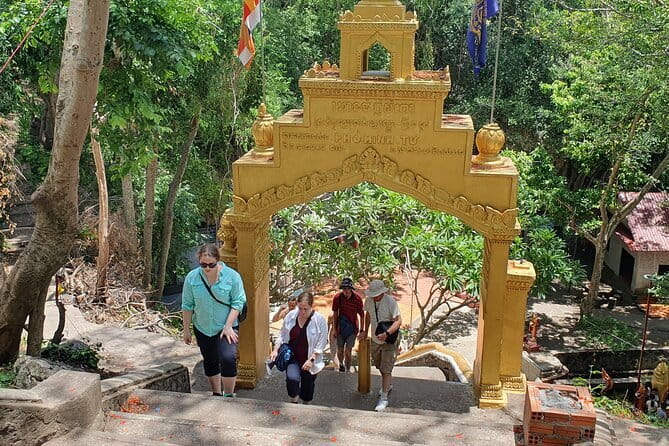
Your day begins with pickup from your hotel around 9:00am (I’ve seen this run as early as 8:00am on some schedules), then you get a quick briefing before rolling into Battambang city. This part of the tour is about orientation: streets, key buildings, and the visual mix of old and new Battambang.
The city stop is designed to show you French colonial architecture without making it feel like a textbook. You also visit the real local market. This is one of those stops that pays off because it’s not just a photo op. With Han, the market time can include small food and ingredient tastings, so you get a feel for local flavors and daily shopping rhythms—how people actually eat and buy.
Practical note: markets are lively and you’ll likely be walking on uneven ground. If you want comfortable photos, wear shoes you don’t mind getting a little dusty.
Wat Samrong Knong: A 300-Year-Old Temple with Khmer Rouge History
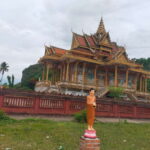
Next up is Wat Samrong Knong, an old Buddhist temple built over 300 years ago. The tour frames this site in a way that connects architecture and meaning with what happened here during the Pol Pot era, when it was used as a prison.
This is one of the most important stops on the route because it turns history into something you can stand in. The visit is only about 30 minutes, which means you’ll want to listen closely when your guide explains the connection between the temple’s long timeline and its more brutal chapter.
A drawback here is emotional, not physical: you should expect the subject matter to feel heavy. If you prefer lighter sightseeing only, consider whether you’re ready for Pol Pot-era sites in one day with multiple bat-and-temple moments afterward.
Prasat Ek Phnom Ruins: Ancient Stones and an Old Buddha Nearby
Then you move to Prasat Ek Phnom, described as one of the oldest ruined temples in Battambang. The guide highlights that it dates to the early 11th century, and notes it predates Angkor Wat. Either way, you’re looking at a very early temple footprint and a sense of how old the region’s spiritual sites run.
The stop is short—around 30 minutes—so this isn’t a slow archaeological stroll. What you get is a concentrated overview: the ruin’s significance, a quick pass at nearby features (including a big Buddha statue), and then onward to the countryside.
If you’re the type who loves ruins with a lot of time and shade, you might wish the stop lasted longer. But as part of a full day that still needs bamboo train and bats, this brevity makes sense.
Odambang Bamboo Train: The Ride People Come for (Ticket Costs Extra)

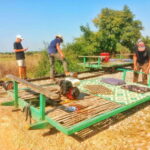
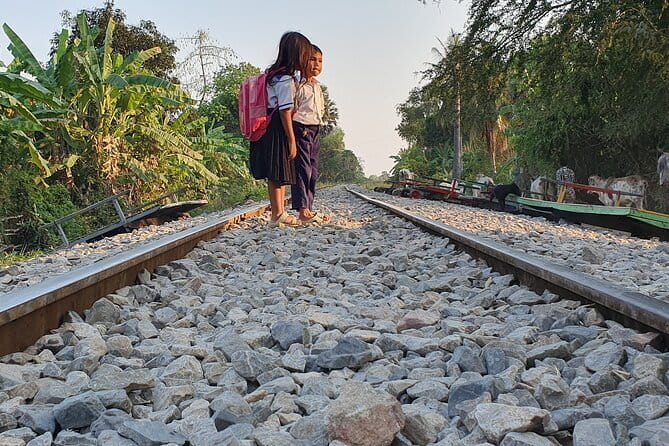
The big “fun” break arrives with Odambang and the bamboo train ride. The tour takes you to ride on an original bamboo train setup. The timing is roughly 1 hour 30 minutes at this stop, but the ride itself depends on how operations are running that day.
A key detail: the bamboo train ticket is not included, so you’ll pay separately. Also, the tour notes that this may be one of your last chances to ride the original bamboo train because the government plans to close it. That’s the kind of line that makes people rush to the ride—and it’s exactly why I think this stop matters.
If you’re going, come ready for it to be more than a ride. It’s also a window into local transport traditions, a quick lesson in how ordinary people move around using what’s available.
What to bring: if it’s hot, wear breathable clothing and use the included water early. Bamboo train time can be a little bumpy, so avoid anything you can’t afford to drop.
You can also read our reviews of more tours and experiences in Battambang





Phnom Sampeau Mountain: Killing Cave, Bat Cave, and the Best Timing Lessons

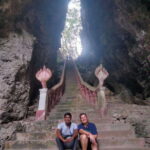
Now you head to Phnom Sampeau—a mountain known as both the killing cave and bat cave. This stop mixes two very different moods, which is why it’s such a memorable part of the day.
Here’s what you’re there to see: the cave area where victims were killed during the Pol Pot regime. The tour description notes that victims were killed and then pushed down into the cave. You’ll also get the view from higher up looking toward the cave areas.
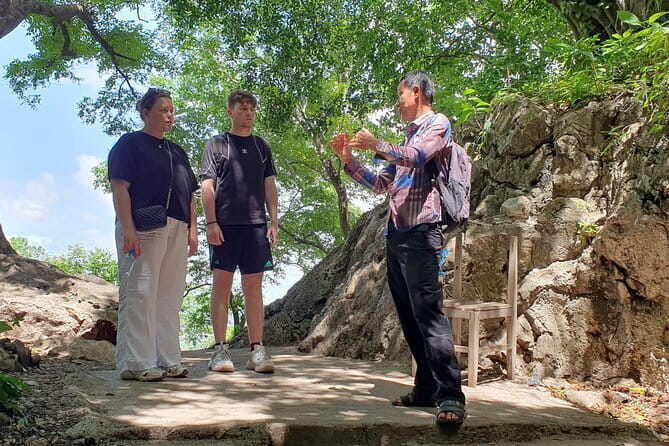
This portion takes about 1 hour 30 minutes, and admission is included. It’s also the point where your guide’s timing sense becomes useful. In at least one case, Han helped a late-arriving schedule catch the bat viewing window. That’s not just good planning—it’s the difference between seeing bats do their thing versus missing the peak.
Practical consideration: you’ll likely be walking on uneven or stepped areas. Take your time. Bring water (you get bottled water, but it can go fast in heat).
Battambang Bat Caves: When Millions of Bats Turn the Sky Loud

The final stop is the Battambang Bat Caves, where bats fly out in huge numbers. The tour notes that bats take 30 to 40 minutes to make their full exit, and it can feel like a moving swarm. The bats are often described as looking like a long dragon, and that imagery isn’t far off once you see the motion.
Admission is included, and this is the kind of experience you can’t really “skip” after committing to the day. It’s timed enough that you’ll feel like you’re attending something. You’ll also get a sense of why this site is a major attraction in Battambang—nature isn’t background here; it’s the main event.
If you want the best experience, don’t try to overthink it. Arrive ready to stand, watch the line of the cave entrance, and let the sound and motion build. The bats don’t fly out instantly; it’s a gradual release, and watching that progression is part of the payoff.
Getting the Most Out of a 6–7 Hour Day (Without Burning Out)

This tour runs about 6 to 7 hours. With multiple stops and one big nature event, you’ll want to pace yourself the way your guide likely does.
A simple strategy:
- Use the morning city market stop to slow down and refuel.
- Treat temples/ruins as listening time, not photo-chasing time.
- Save your snack-and-water focus for the mountain and caves, when walking and waiting add up.
Also, this is described as a private tour where only your group participates. That matters more than it sounds. You’re not stuck in a giant shuffle. You can ask the guide questions, adjust walking pace, and keep moving without constant crowd friction.
Price Breakdown: What’s Included, What’s Not, and What You Should Budget
Here’s the money reality. Your base price includes:
- Tuk-tuk driver as local guide
- Pick up and drop off
- Entrance fees for the killing cave and bat cave areas
- Private transportation
- Bottled water
Not included:
- Lunch
- Bamboo train ticket
- Personal expenses and insurance
So you’re really paying for paid entries and guided routing, and then you add your own food and the bamboo train ride. If you’re comparing to a DIY plan, the big advantage is time. A day like this needs transport, timing, and tickets. This tour solves that for you.
And the guide portion matters too. Han’s background shows in the way he explains farming and local crops, and in how he can adjust the day when timing matters for the bats.
Who This Tour Fits Best (And Who Might Prefer Something Else)
This is a great match if you want:
- A first-timer day in Battambang that mixes city and countryside
- Guided context on Pol Pot-era sites, not just sightseeing
- A nature highlight that’s genuinely different from temples and ruins
- Convenience: hotel pickup, return transport, bottled water
It may be less ideal if you:
- Are avoiding heavy historical content in your sightseeing
- Hate walking on steps/uneven paths
- Prefer a day with no extra ticket purchases beyond the main tour
The one sweet spot: you’re curious, you’re okay with some serious history, and you want that bat-cave finish without worrying about logistics.
Should You Book This Battambang City and Countryside Full-Day Tour?
I’d book it if you want one day that covers the highlights without turning Battambang into a spreadsheet. The combination of city colonial sights and market time, then Pol Pot-related sites, then the bamboo train, and then the bat caves gives you a full sense of the region’s contrasts.
Skip this one only if the Pol Pot-era stops feel too heavy for you in the same day as the bats, or if you strongly prefer lunch and the bamboo train ride to be fully included in one price. Otherwise, this tour’s structure is practical, the value is fair, and the guide’s local storytelling (Han) is a big part of why the day works.
FAQ
FAQ
What time does pickup start?
Pickup is scheduled for the morning at around 9:00am in the itinerary. One review also notes a schedule that runs from about 8am to 3pm.
How long is the tour?
The tour lasts about 6 to 7 hours.
What’s included in the tour price?
You get tuk-tuk driver as a local guide, pickup and drop-off, entrance fees for the killing cave and bat cave, private transportation, and bottled water.
Is lunch included?
No, lunch is not included.
Do I need to buy the bamboo train ticket separately?
Yes. The bamboo train ticket is not included in the tour price.
What should I expect at Wat Samrong Knong?
Wat Samrong Knong is an older Buddhist temple (over 300 years old) that was used as a prison during the Pol Pot regime. Admission is included.
Are the bat cave activities weather-dependent?
Yes. The experience requires good weather, and if it’s canceled due to poor weather, you’ll be offered a different date or a full refund.
Is this a group tour with strangers?
It’s described as a private tour/activity for your group only.