REVIEW · PHNOM PENH
Phnom penh full day Tour
Book on GetYourGuide →Operated by cambodia tour minivan · Bookable on GetYourGuide
Five sites, one hard-earned story. This Phnom Penh full-day tour links the monarchy and Khmer art with two of the Cambodian genocide’s most significant sites, Tuol Sleng and Choeung Ek. I love how the English-speaking guide gives clear context at each stop, so you’re not just walking through rooms.
The second thing I like is the pacing: 6 hours in a comfortable minivan, with cool water and soft drinks between longer visits, then a calmer finish at Wat Phnom. One drawback to plan for: entrance tickets aren’t included, so the day can cost more than the $35 base price once you add museum fees.
In This Review
- Key points at a glance
- A six-hour circuit of Phnom Penh’s royal, museum, and temple faces
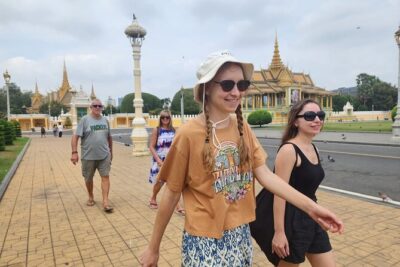
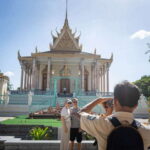
- Royal Palace of Cambodia: a royal residence shaped by an older fortress
- Tuol Sleng Genocide Museum (S-21): why a former school hits differently
- Choeung Ek Killing Field: pairing place with story
- National Museum of Cambodia: Khmer culture after the hard stuff
- Wat Phnom’s 46-meter pagoda: a peaceful capstone
- Price and logistics: what you’re actually paying for
- Guides make the difference: Sovann and Ned’s approach
- Timing, comfort, and what to bring in Cambodia heat
- Should you book this Phnom Penh full day tour?
- FAQ
- How long is the Phnom Penh full day tour?
- Are entrance fees included in the $35 price?
- What sites does the tour include?
- Do you pick up travelers from hotels in Phnom Penh?
- What should I bring, and what’s not allowed?
- Can I cancel and get a full refund?
Key points at a glance
- A single route through royal Phnom Penh, Khmer culture, and the Khmer Rouge era
- Tuol Sleng (S-21) explained by an English guide, not just signage
- Choeung Ek paired with Tuol Sleng for a more complete story
- National Museum of Cambodia for artifacts and architecture, with a cultural reset
- Wat Phnom as a peaceful 46-meter finale after heavy history
- Private or small-group options, with hotel pickup inside Phnom Penh
A six-hour circuit of Phnom Penh’s royal, museum, and temple faces
This is the kind of day trip that works well when you want big ideas in a short time. Phnom Penh can feel like several cities stacked on top of each other—palaces and pagodas, then museums built from painful history, then Khmer culture on display. This tour threads those parts together in a logical sequence, with an English guide keeping the timeline straight.
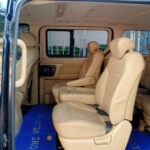
I also like that it’s built around practical comfort. You get a minivan, an English-speaking driver and guide, and the day isn’t just endless walking with no breaks. Even with emotionally intense stops, you still end up with a sense of arrival and closure by the time you reach Wat Phnom.
That said, you should be honest with yourself about energy levels. The day includes two major sites connected to the Cambodian genocide, so go in prepared for heavy material and a slower pace.
You can also read our reviews of more tours and experiences in Phnom Penh

Royal Palace of Cambodia: a royal residence shaped by an older fortress
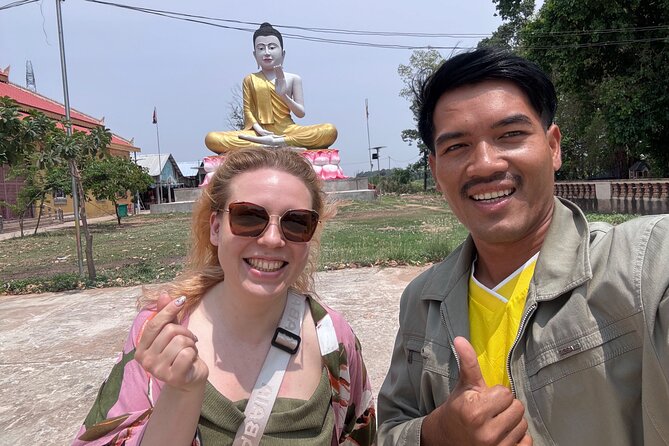
The Royal Palace visit is more than a photo stop. The complex serves as the official royal residence, built between 1866 and 1870 after King Norodom relocated the royal capital from Oudong to Phnom Penh. The setting matters: it was constructed on top of an older citadel known as Banteay Keo.
You’ll also notice how the palace sits with intent. It faces approximately East, and it’s located in the western bank area near Chaktomuk, the meeting point symbolism for the Tonle Sap River and the Mekong River. Chaktomuk is an allusion to Brahma, so even the “where” connects to Khmer cosmology, not just geography.
The practical timing helps here. You’re typically given about 1.5 hours at the palace, enough time to take in the scale and ask questions without feeling rushed. If you’re the type who likes architecture details, this stop pays off.
One consideration: palace hours can change. In one real-life example, the palace was closed for a visitor, yet the day still delivered strong value through the other major sites. The lesson for you is simple—don’t judge the whole tour by one building’s open/closed status.
Tuol Sleng Genocide Museum (S-21): why a former school hits differently
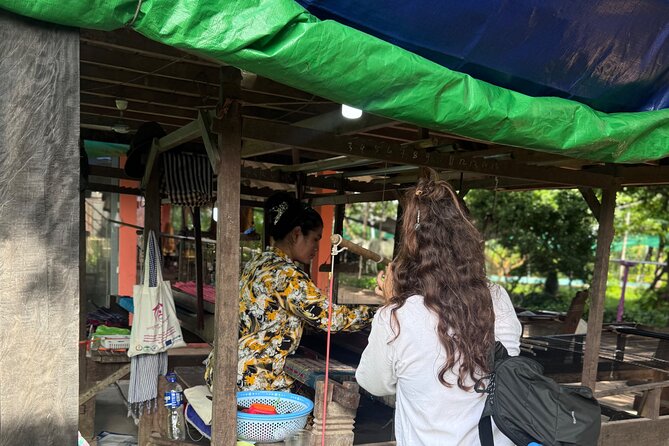
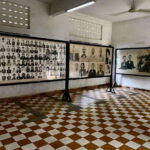
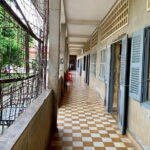
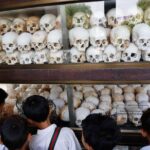
Tuol Sleng is one of the hardest places to visit in Cambodia, and it’s also one of the most important to understand. The site began life as a former secondary school, then became Security Prison 21, known as S-21, used by the Khmer Rouge from 1975 until 1979.
What makes a guided visit so worthwhile is context. An estimated 20,000 people were imprisoned there, and Tuol Sleng was one among roughly 150 to 196 torture and execution centers established by the Khmer Rouge. Those numbers are heavy, but when an English guide connects them to what you’re seeing, the experience stops being random and turns into meaning.
Plan on about 1.5 hours here. That’s not just enough time to move through the exhibits; it’s also enough time for your brain to catch up. I like that the tour doesn’t treat this as a quick walk-through. Instead, a good guide helps you slow down in the right places and focus on what the site is trying to communicate.
There’s also a “tone” element. The best guides keep explanations factual and careful. Based on what you’ll hear from English-speaking guides on this route—names like Sovann and Ned come up often—their strength is tying history to the reality of daily life, then moving forward without sensationalism.
Choeung Ek Killing Field: pairing place with story
Choeung Ek is about 17 kilometers south of the city center, in Dangkao. It used to be an orchard, and during the Khmer Rouge period it functioned as a Killing Field used between 1975 and 1979. It was attached to the Tuol Sleng detention center, which means you get a deeper understanding when you visit these sites close together.
That pairing is one of the smartest parts of this full-day tour. When you go to Tuol Sleng first, you’ve already seen the machinery of detention and coercion. Then, stepping into Choeung Ek helps you understand the next step in the system—how the violence extended beyond prison walls into execution and burial sites.
You’ll typically have about 1 hour at Choeung Ek. The duration is meaningful: it’s long enough to grasp the scale of the place, but not so long that you feel mentally overloaded in a single continuous stretch. If you want to keep your day manageable, that hour is a good balance.
Also, think about comfort. This is history on the ground. Wear shoes that can handle uneven outdoor paths, and take water even if you don’t feel thirsty—Phnom Penh weather can make your pace slower.
National Museum of Cambodia: Khmer culture after the hard stuff
After two heavy stops, the National Museum feels like a reset—still historical, but focused on culture and craft instead of tragedy. The National Museum of Cambodia is the country’s largest museum of cultural history, and it’s also described as the leading historical and archaeological museum.
You’ll have about 1 hour here, which is enough time to see why the museum matters even if you’re not a dedicated art historian. The standout value is how it shows Khmer identity through objects and design, with architecture that’s a treat in its own right.
One reason this stop lands well on this tour: it gives your day a second theme. You can’t fully understand Phnom Penh’s past only through the Khmer Rouge era. You need the longer Khmer story too—how people built, worshiped, and expressed identity across time. The guide helps connect what you’re seeing to broader cultural patterns, and that makes the museum feel less like a collection, more like a narrative.

Wat Phnom’s 46-meter pagoda: a peaceful capstone
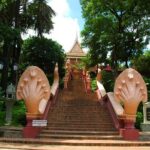
Wat Phnom is a Buddhist temple in Doun Penh, and it’s tied to the name of Phnom Penh itself. The pagoda is a symbol of the city, rooted in Khmer national identity. It’s also tall—Wat Phnom reaches 46 meters.
You’ll usually have about 1 hour here, which is just right for a calmer ending. The tone shifts from museums and prison history to atmosphere and viewpoint. In one example, the day ended at Wat Phnom and the visitor specifically mentioned it felt serene, with a lovely view over the city.
This is a great stop if you want to walk out of Phnom Penh carrying something soft and human at the end. It doesn’t erase the earlier sites. It just helps your senses reset so the day doesn’t stay stuck on one emotional note.
Price and logistics: what you’re actually paying for
The base price is $35 per person for a 6-hour tour. That includes the essentials that make the day smoother: an English-speaking tour guide, the driver, pickup within Phnom Penh, transportation in a minivan, plus cool water and soft drinks.
Entrance fees are separate. Based on the listed per-person costs, you’ll likely budget:
- Royal Palace: $10
- Tuol Sleng Genocide Museum: $5
- Choeung Ek (Killing Field): $3
- National Museum of Cambodia: $10
- Wat Phnom: $1
If you add those up, the full day entrance total comes to $29, putting a realistic all-in estimate around $64 per person (for the five paid sites).
I think this is fair value for the experience type. Two reasons: first, the guide matters most at Tuol Sleng and Choeung Ek, where context changes everything. Second, you’re getting an efficient route with minivan transport instead of piecing together taxis for five separate stops.
One useful practical note from a real guide example: if you arrive without cash for an entrance fee, a guide named Sovann handled the payment and accepted repayment afterward. That doesn’t mean you should show up unprepared, but it does suggest the guides are flexible when something small goes wrong.
Guides make the difference: Sovann and Ned’s approach
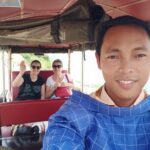
The most praised aspect of this tour is the quality and care of the guide. I’d especially watch for two traits: historical grasp and pacing under pressure.
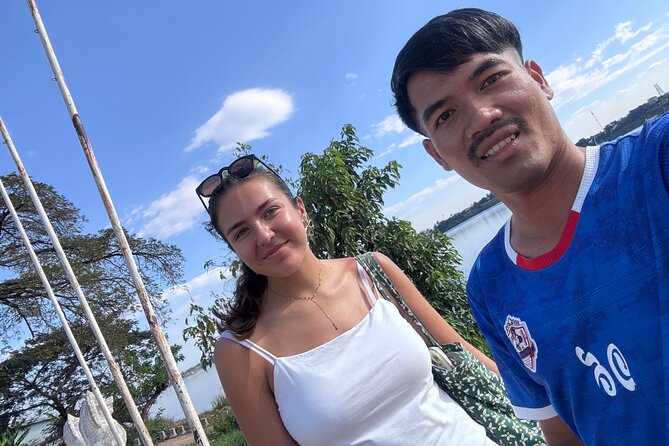
Sovann is highlighted for being well versed and patient, with the confidence to talk politics and Cambodian history with a steady, grounded tone. In one case, Sovann was also flexible enough to wait calmly during visits and even cover an entrance fee temporarily when a visitor didn’t have cash.
Ned is another guide name you’ll hear associated with this route. The big theme with Ned is strong information across both the Pol Pot era sites and the lighter cultural stops like the Royal Palace and Wat Phnom. That combination matters because it keeps the day from feeling like disconnected stops.
If you book this tour, bring questions. Ask how the pieces connect—why Tuol Sleng was used, what Choeung Ek tells you after prison, or how Khmer identity fits around all this history. A good guide like these can turn a checklist day into a coherent story.
Timing, comfort, and what to bring in Cambodia heat
The tour runs for about 6 hours. The visit blocks are usually around:
- Royal Palace: about 1.5 hours
- Tuol Sleng: about 1.5 hours
- Choeung Ek: about 1 hour
- National Museum: about 1 hour
- Wat Phnom: about 1 hour
That structure helps your body plan. You’ll have enough time to see each place without feeling like you’re constantly sprinting between stops.
What’s included makes comfort easier. You’ll get cool water and soft drinks, plus minivan transport. Still, you’ll want to dress for long days in Phnom Penh—comfortable shoes and breathable clothes go a long way.
Bring a camera if you want photos. Alcohol and drugs aren’t allowed, so keep the day clean and respectful. Also note suitability limits: the tour isn’t set for babies under 1 year, and it’s not suitable for people over 95 years.
Should you book this Phnom Penh full day tour?
If it’s your first time in Phnom Penh and you want the major hits—Royal Palace, Tuol Sleng, Choeung Ek, the National Museum, and Wat Phnom—this is a strong way to do it. It’s efficient without feeling like a squeeze, and the English guide makes the history easier to follow and harder to forget in the right way.
Book it if:
- You want context, not just “here’s a building”
- You’re okay with emotional weight at Tuol Sleng and Choeung Ek
- You like a day that ends with a calmer temple visit
Skip it (or adjust your expectations) if:
- You’re not mentally ready for genocide-related sites
- You’d rather focus only on temples and architecture
- You hate the idea of adding entrance fees on top of the base price
My final take: this tour earns its value through guidance and pacing. You come away with a Phnom Penh story that actually holds together—royal roots, cultural identity, and the dark chapter that still shapes the city today.
FAQ
How long is the Phnom Penh full day tour?
The tour duration is 6 hours.
Are entrance fees included in the $35 price?
No. Entrance fees are not included. You’ll pay separately for each site listed: Royal Palace ($10), Tuol Sleng Genocide Museum ($5), Choeung Ek Killing Field ($3), National Museum of Cambodia ($10), and Wat Phnom ($1).
What sites does the tour include?
The tour includes the Royal Palace of Cambodia, Tuol Sleng Genocide Museum (S-21), Choeung Ek (Killing Field), the National Museum of Cambodia, and Wat Phnom.
Do you pick up travelers from hotels in Phnom Penh?
Yes. Pickup is optional, and the guide looks for travelers in Phnom Penh. Drop-off is provided at Phnom Penh 51 Hotel, Phnom Penh (as listed).
What should I bring, and what’s not allowed?
Bring a camera. Alcohol and drugs are not allowed.
Can I cancel and get a full refund?
Yes. You can cancel up to 24 hours in advance for a full refund.