REVIEW · SIEM REAP
2-Day Angkor Wat Sunrise tour, Banteay Srei & Tonle Sap lake
Book on Viator →Operated by Ta Prohm Temple Tour · Bookable on Viator
Sunrise at Angkor changes your whole day. This 2-day circuit pairs the big icons like Angkor Wat with calmer temple stops in Angkor Thom, then swaps stone carvings for real village life on Tonle Sap Lake.
I like how it’s built for seeing a lot without feeling like you’re doing it alone: you get hotel pickup and an English-speaking guide for part of the program, plus bottled water and air-conditioned comfort between ruins.
The main thing to plan for: admission tickets and the boat ride are not included, and the schedule starts extremely early (around 4:40 AM for sunrise), so you’ll want your energy set.
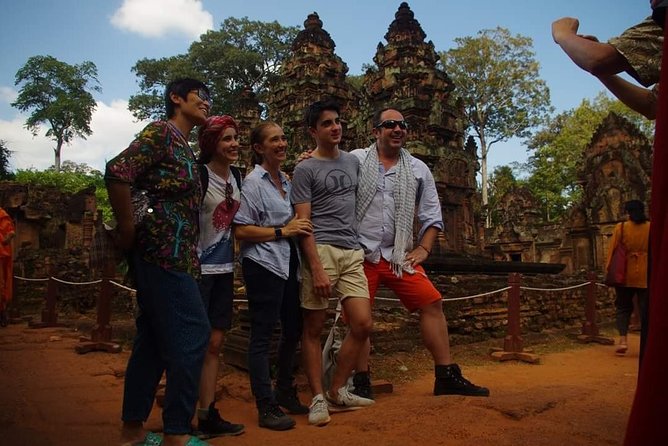
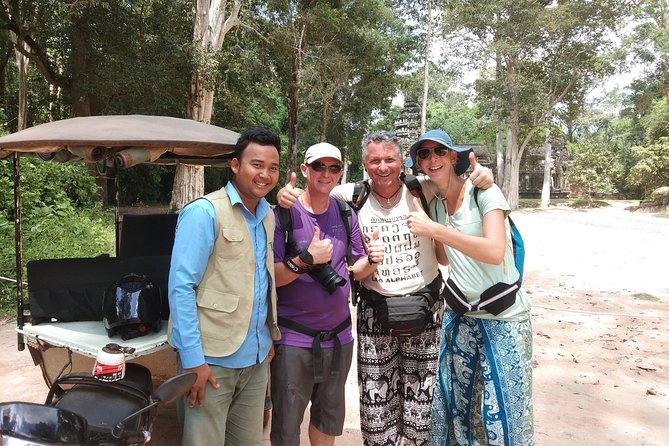
A quick note from one standout experience: Dy is specifically mentioned as a top-notch guide, and even handled transport smoothly. That kind of hands-on guidance matters here, because the temple grounds are huge and the details can blur if you don’t have someone to point them out.
Also, lunch time is mostly on your own—one break is listed around 45 to 60 minutes in the Angkor Archaeological Park area, and another lunch break comes later—so budget for meals and keep water handy.
In This Review
- Key things I’d circle before you book
- Getting oriented: how this 2-day plan works from Siem Reap
- Day 1: Angkor Thom South Gate, Bayon faces, and the elephant terraces
- Angkor Archaeological Park lunch break (and paying your own way)
- Angkor Wat on Day 1 (plus the Bakheng sunset option)
- Day 2 dawn: Angkor Wat pickup at 4:40 AM and the sunrise approach
- Ta Prohm: the jungle temple moment you’ll remember
- Pre Rup and the temple circuit (Eastern Mebon, Ta Som, Neak Pean, Preah Khan)
- Lunch around Srah Srang, then Kompong Phluk on Tonle Sap Lake
- Where Banteay Srei fits into this experience
- The real price: $85 tour plus Angkor Pass and boat ticket
- Pacing, transport, and the comfort you actually feel
- Who this tour suits best
- My booking verdict: should you sign up?
- FAQ
- What is the total duration of this tour?
- What time is pickup for Angkor Wat sunrise?
- What does the $85 price include?
- What is not included in the tour price?
- How long is the Tonle Sap portion, and is a boat ride included?
- Where does the tour start and end?
Key things I’d circle before you book
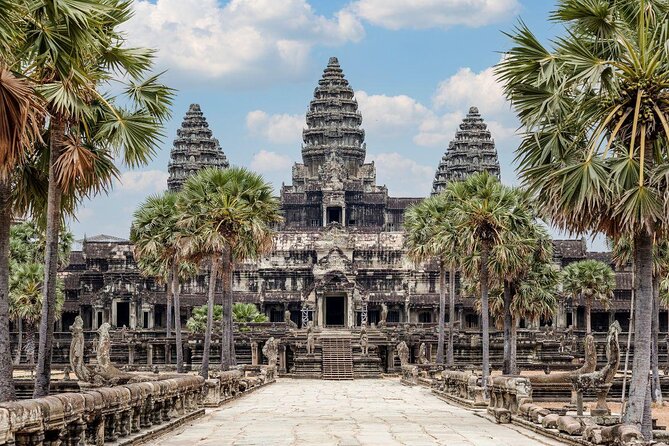
- Angkor Wat sunrise with a very early pickup that beats the toughest crowd hours
- A smart mix of temples: Angkor Thom highlights plus jungle-set Ta Prohm
- Tonle Sap at Kompong Phluk by boat, with a look at flooded fishing village life
- Comfort between stops: air-conditioned vehicle and mineral water during touring
- Optional timing depends on weather for viewpoints like Phnom Bakheng
Getting oriented: how this 2-day plan works from Siem Reap
This tour is designed around two different kinds of “wow.” Day 1 leans hard into Angkor’s major complexes, starting with Angkor Thom’s stone-faced spirit and ending with Angkor Wat plus a possible Phnom Bakheng sunset. Day 2 starts before dawn for Angkor Wat sunrise, then shifts to a temple circuit that includes Ta Prohm and several other sites around the main Angkor zones.
What I like for first-timers is that you’re not guessing your route. The itinerary also gives you time at each stop (often around 20 to 60 minutes), which is enough to see the key features without feeling rushed every five minutes.
One thing to be realistic about: Angkor is spread out. Even with an air-conditioned vehicle, you’ll spend time traveling between the temple clusters. This is normal. Your best move is to bring sunscreen, a hat, and shoes you can walk in for long stretches.
You can also read our reviews of more tours and experiences in Siem Reap

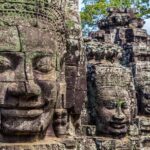
Day 1: Angkor Thom South Gate, Bayon faces, and the elephant terraces
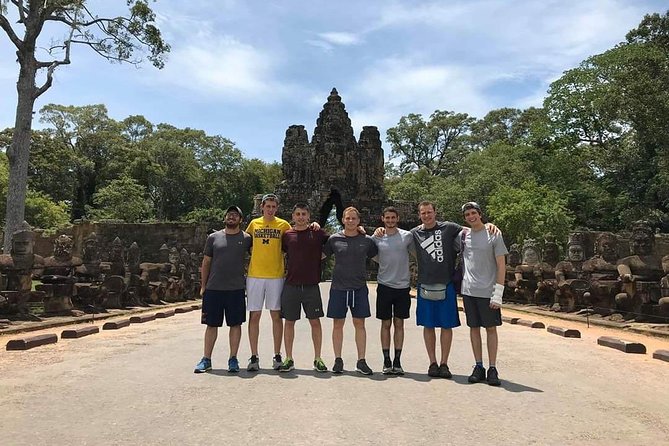
Day 1 begins at Angkor Thom South Gate. This is a great start point because Angkor Thom was the capital city of King Jayavarman VII’s empire. Standing at one of the major gates, you get a sense of how massive the planning was—this wasn’t a small religious site. The tour notes a poetic reference found in an inscription: Jayavarman is described as the groom, and the city as his bride. I love that kind of detail because it turns the stones into a story you can picture.
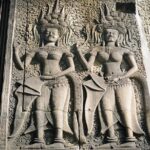
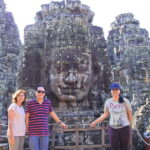
From there you move to Bayon Temple, famous for its many faces. The Bayon is described as a richly decorated Mahayana Buddhist state temple built in the late 12th or early 13th century under Jayavarman VII. The face towers are the headline, but what you’ll notice if you slow down is the density of carving and the sense that the temple is meant to be watched from different angles. A full hour here is a good amount of time.
Next is Baphuon Temple, set in Angkor Thom northwest of Bayon. It’s listed as a mid-11th century, three-tiered temple mountain. I find these “middle stops” like Baphuon helpful on a long day because they’re visually dramatic but less frantic than the most crowded viewpoints.
Then come the terraces:
- Terrace of the Elephants: described as a platform used by Jayavarman VII to view victories (and, yes, that makes the space feel strangely practical for a temple).
- Terrace of the Leper King: named by a later 15th-century reference, built in the Bayon style.
These terrace stops are short—around 20 minutes each—but that’s enough to catch the big sculptural ideas. If you love reading meaning in carvings, take your time anyway; the space rewards slow looking.
Angkor Archaeological Park lunch break (and paying your own way)
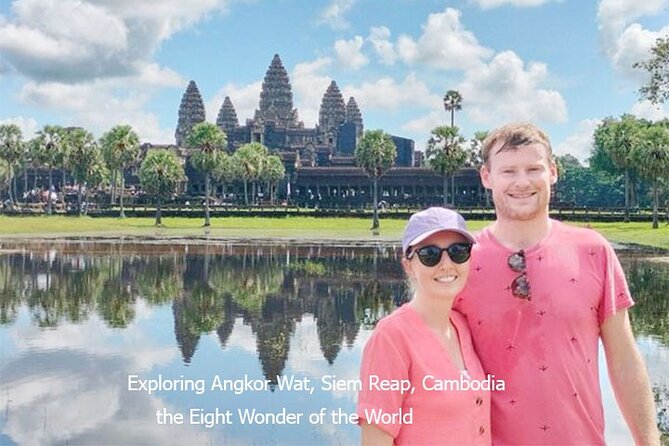
Midday you reach Angkor Archaeological Park, with a listed lunch break of about 45 to 60 minutes. Food and drinks are not included here, so you’ll want to treat this as your chance to eat, rehydrate, and reset before Angkor Wat.
This is also where I recommend a simple strategy: use the break to refuel like a human, not like a tourist. Grab water, consider something easy on the stomach, and then don’t waste the next temple window searching for shade.
Angkor Wat on Day 1 (plus the Bakheng sunset option)
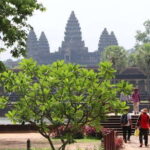
Day 1’s schedule includes Angkor Wat for about an hour. Even though you’ll also do Angkor Wat at sunrise on Day 2, visiting again makes sense here: Day 1 lets you absorb the overall layout during daylight, and sunrise day lets you focus on light and atmosphere. Angkor Wat is described as the largest religious monument in the world, and originally constructed as a Hindu temple dedicated to Vishnu. That Hindu-to-Buddhist layered story is part of why it still feels so alive visually.
If weather allows and you’re not too tired, there’s an optional stop: Phnom Bakheng for sunset. That’s listed as one hour and depends on conditions. I’d treat this as a bonus rather than a guarantee. If it’s foggy or too hot, you may be glad the plan keeps the rest moving.
Day 2 dawn: Angkor Wat pickup at 4:40 AM and the sunrise approach
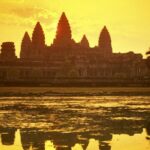
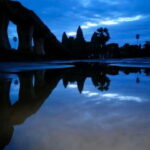
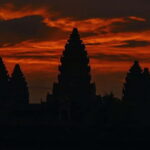
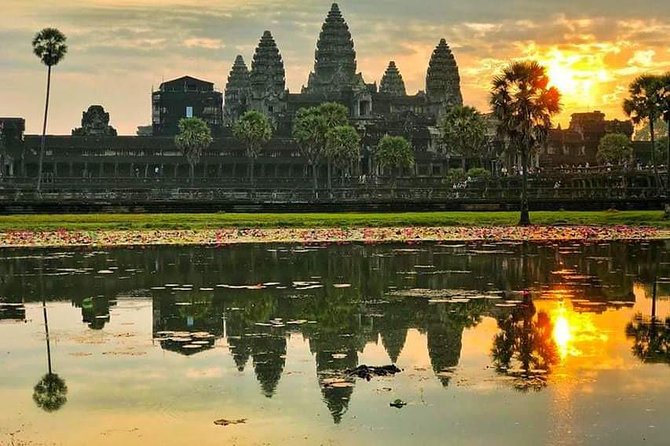
Day 2 is built around the early start: you’re picked up from your hotel lobby before sunrise at 4:40 AM and taken to watch sunrise at Angkor Wat. The timing here is everything. Even if you’ve seen photos, the real value is how the temple silhouettes and the sky line up as the light changes.
You get about an hour for sunrise viewing. That includes time to find a spot, settle your nerves, and actually watch the colors shift without sprinting from one photo spot to the next.
One practical point: early mornings at Angkor can feel colder than you expect before the sun climbs. Bring a light layer you can drop into your bag once things warm up.
You can also read our reviews of more tours and experiences in Siem Reap
Ta Prohm: the jungle temple moment you’ll remember
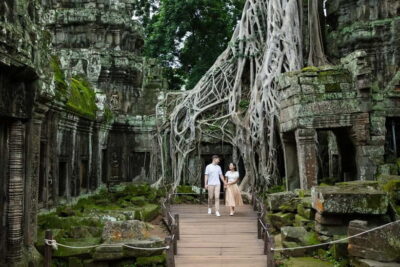
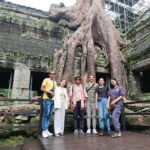
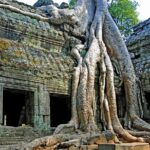
After sunrise and breakfast, the tour heads to Ta Prohm, the jungle temple left in its original state with huge roots. It’s described as partly overgrown, and that is the point. This is the temple where Angkor feels less like a museum and more like a place nature is reclaiming.
The listed time is about an hour. With that much time, you can look at the famous root scenes and still step back to see the bigger structure. If you only glance quickly, you miss how the carvings and the plant growth tell different timelines.
Pre Rup and the temple circuit (Eastern Mebon, Ta Som, Neak Pean, Preah Khan)
The rest of Day 2 follows a chain of temples, most with shorter visits:
- Pre Rup: listed twice (with times shown around 2 hours on the first mention and about 1 hour 30 minutes later). It’s described as a Hindu temple built as the state temple of Khmer king Rajendravarman, dedicated around 961 or early 962. This is one of those sites where height and sightlines matter, so don’t rush it if your legs still have energy.
- Eastern Mebon: a 10th-century temple on an artificial island in what was once the East Baray reservoir. Even if the reservoir is dry now, the original concept helps you understand how Khmer builders used water as part of sacred design.
- Ta Som: a late 12th-century temple built during Jayavarman VII’s reign, described as Mahayana Buddhist, dedicated to Lord Svara.
- Neak Pean: built in Jayavarman VII’s reign in 1191, described as a dedication to Maha… (the description cuts off in your outline, but the key is that it’s another Jayavarman VII-era spiritual stop).
- Preah Khan: a 12th-century temple built to honor Jayavarman VII’s father. You get about an hour here, and it’s listed before lunch.
These temple stops are spaced with brief transport breaks, so the day feels full but not chaotic. I also like that the itinerary includes less-famous-feeling names around the main clusters, so you’re not only chasing the headline sites.
Lunch around Srah Srang, then Kompong Phluk on Tonle Sap Lake
After Preah Khan, you have Srah Srang as the next stop, and the outline says this is where you stop for lunch at a local restaurant. Again, food and drinks are not included, and the lunch timing is listed as about one hour. Use that hour to refuel and take a quick break from the heat.
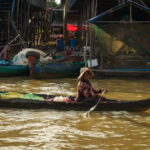
Then the tour heads to Kampong Phluk, the flooded and fishing village on Tonle Sap Lake, about 21 kilometers from Siem Reap town. The listing gives you about three hours for this part, including the lake-side activities.
At the lake port, you take a local boat ride to the flooded village. The outline lists a boat ticket fee of $20 per person not included in the package cost. That boat segment is why Tonle Sap belongs on an Angkor tour: you’re seeing the living relationship between water and daily life, not just stone monuments.
Where Banteay Srei fits into this experience
The tour description says it includes Banteay Srei, which is often praised because it feels more delicate and detailed than the bigger, heavier temple blocks. In the stop-by-stop outline you provided, Banteay Srei isn’t explicitly listed by name, so I can’t confirm where it lands in the day-by-day schedule.
If Banteay Srei is a must for you, I’d treat that as a quick check before booking: ask when it happens and whether the day plan matches what you’re expecting.
The real price: $85 tour plus Angkor Pass and boat ticket
The base price is $85 per person for two days. That includes air-conditioned vehicle, hotel pickup and drop-off, and mineral water during touring. It also includes the temple-focused guided experience for the major sites it lists.
The part that matters most for budgeting: the Angkor Pass is not included and is listed as $62 per person. The boat ticket fee for the Tonle Sap ride is not included and is listed as $20 per person. Food and drinks are also not included.
So your typical “all-in” cost for the core entrances and boat ride is about:
- $85 tour
- + $62 Angkor Pass
- + $20 boat ticket
That totals $167 per person, before meals, drinks, and any tips.
Is it good value? I think it can be, especially if you’re first-timing Angkor and want an efficient route with early sunrise timing. You’re paying for time saved, transport organized, and someone to explain what you’re looking at while you move between major zones.
Pacing, transport, and the comfort you actually feel
The tour uses an air-conditioned vehicle, which is a big deal in Siem Reap heat. Between temple clusters, that cooling is what keeps a 2-day plan from turning into survival mode. You also get mineral water during touring, which helps you pace your day.
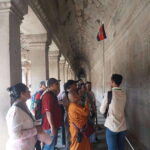
In terms of walking, plan for it. Even when the listed stop times are short, Angkor sites involve stairs, uneven stone, and long stretches between photo points. Your best prep is simple: supportive shoes, a hat, and a small day bag that’s not too bulky.
As for the sunrise/sunset pieces: sunrise is scheduled with a fixed early pickup. Phnom Bakheng is explicitly conditional on weather and your energy level, so don’t build your dream photos around it. Do build your schedule around Angkor Wat sunrise—that part is the anchor.
Who this tour suits best
This is a good fit if you:
- want a guided overview of Angkor without mapping everything yourself
- care about seeing Angkor Wat at sunrise with an early start
- like mixing famous temples with a few lesser-visited names around Angkor Thom and beyond
- want a Tonle Sap boat visit as a meaningful second chapter of your trip
It may be less ideal if you want a super relaxed pace with long independent downtime. The schedule is packed by design, so you’ll be moving a lot over two days.
Also, the format is listed as private for your group, which often helps with timing and photo stops.
My booking verdict: should you sign up?
If Angkor Wat sunrise is on your must-do list, I’d strongly consider booking this. The early pickup at 4:40 AM and the structured temple circuit make it easier to see a lot while keeping the day organized. Add the Tonle Sap boat ride at Kompong Phluk, and you get a broader slice of Cambodia than temples alone.
I’d only hesitate if your budget can’t handle the extra entrances. With the Angkor Pass and boat ticket on top of the $85 tour price, your total spend climbs quickly. If you’re okay with that—and you’re ready for an early morning—this is a solid, efficient way to do Angkor and Tonle Sap in just two days.
FAQ
What is the total duration of this tour?
It’s listed as 2 days. The itinerary includes both sunrise and day-time temple visits, plus the Tonle Sap lake boat trip.
What time is pickup for Angkor Wat sunrise?
You’ll be picked up from your hotel lobby before sunrise at 4:40 AM for the Angkor Wat sunrise stop.
What does the $85 price include?
The included items are 2 days exploring major temples (including Banteay Srei per the tour overview), air-conditioned vehicle, hotel pickup and drop-off, a professional English-speaking tour guide for 1 day (as listed), and mineral water during touring.
What is not included in the tour price?
Not included are the Angkor Pass ($62 per person), food and drinks, the boat ticket fee ($20 per person), and any appreciation tip.
How long is the Tonle Sap portion, and is a boat ride included?
The Kompong Phluk visit is listed for about 3 hours and includes a local boat ride. The boat ticket fee is not included and is listed as $20 per person.
Where does the tour start and end?
It starts in Krong Siem Reap, Cambodia and ends back at the meeting point.