REVIEW · PHNOM PENH
Phnom Penh Private Tour: Royal Palace, Silver Pagoda, S-21
Book on GetYourGuide →Operated by GREEN ERA TRAVEL · Bookable on GetYourGuide
Royal palaces and prisons, side by side. This private Phnom Penh circuit is a sharp contrast: Royal Palace beauty plus the very human weight of Tuol Sleng, all tied together with an English guide who explains what you’re seeing. I especially love the Silver Pagoda for its exacting details, like the floor made from 5,329 silver tiles.
I also like how the route is built around location, not just checkboxes. From the palace grounds, you get strong river views over the Tonle Sap and Mekong, which helps the whole city feel real, not staged. One possible drawback: the scheduled time can feel tighter than you expect, so if you like to read slowly or ask lots of questions, plan to pace yourself or ask for more time upfront.
In This Review
- Key highlights worth planning around
- Royal Palace to S-21: Why this Phnom Penh private tour works
- Royal Palace compound: Khmer architecture plus French-era timing
- Silver Pagoda: 5,329 tiles, plus gold Buddha and a famous bell tower
- Khmer kings and the 1975 break: how your guide makes the story click
- Tuol Sleng (S-21): A former high school turned Security Prison 21
- Timing, transport, and how private pacing changes everything
- Price and value: why $65 can make sense in Phnom Penh
- What to wear and what to pack for a smooth day
- Who should book this private tour, and who should skip it
- Should you book? My take on Royal Palace, Silver Pagoda, and S-21
- FAQ
- How long is the Phnom Penh private tour?
- What sights does the tour include?
- Is hotel pickup and drop-off included?
- What transportation is used during the tour?
- Is the tour guided, and what language is offered?
- Are entrance fees included?
- Are meals included?
- What should I bring?
- Are there any clothing restrictions?
- Is the tour refundable if my plans change?
Key highlights worth planning around
- Royal Palace complex in four main compounds on the west bank of the Tonle Sap and Mekong
- Silver Pagoda’s 5,329 silver tiles plus gold and jeweled Buddha statues
- Khmer kings and what changed in 1975, explained in the context of the sites you’re walking
- Tuol Sleng Museum (S-21) inside a former high school used as Security Prison 21
- Sundown-friendly drop-off options back in the city, with river-café or bar time if you want it
Royal Palace to S-21: Why this Phnom Penh private tour works
This is one of those Phnom Penh tours that makes sense as a sequence. You start with royal Cambodia—palaces, pagodas, kings—then you move into the story of the Khmer Rouge years at Tuol Sleng. The contrast is intense, but it’s also clarifying. You leave understanding that Cambodian history isn’t only about what was built. It’s also about what was taken away.
I like the private format for one practical reason: your guide can shape the pace. If you want more context at the palace, you can get it. If you need a slower walk through Tuol Sleng, the guide can help you manage it without rushing.
The tour is also value-packed for a short stay. You get hotel pickup and drop-off, transport, an English-speaking local guide, entrance fees, and even mineral water with a cold towel. That combo matters in Phnom Penh, where moving around efficiently can make or break a day.
You can also read our reviews of more private tours in Phnom Penh

Royal Palace compound: Khmer architecture plus French-era timing
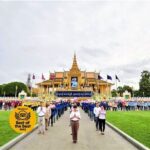
The Royal Palace complex in Phnom Penh sits in a powerful spot—on the western banks of the Tonle Sap River and the Mekong River. The palace itself was built in 1866 by the French after King Norodom relocated the royal capital from Oudong. That date and that political shift help you read what you’re seeing. You’re not just looking at old stone; you’re seeing a kingdom reposition itself.
Inside the complex, the grounds are divided into four main compounds. Walking between them is a good way to avoid museum burnout. Each area tends to feel different in scale and layout, so your brain stays engaged instead of getting stuck on one long loop.
What to look for on-site:
- Khmer-style architectural details that feel patterned and intentional, not random decoration
- The way the grounds are organized for royal movement and ceremonial space
- The sense of place created by the rivers nearby—especially when the light shifts
Dress rules are also real here. You’ll want comfortable shoes, and you’ll need to skip shorts and sleeveless shirts. Hats and sunglasses are not allowed either, so plan for the sun. If you wear the right outfit from the start, you spend less time negotiating at the entrance and more time actually enjoying the palace.
Silver Pagoda: 5,329 tiles, plus gold Buddha and a famous bell tower
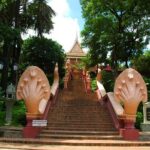
The Silver Pagoda sits within the palace grounds, and the name isn’t a marketing nickname. The floor is made of 5,329 silver tiles, and that precision is part of the charm. Even if you don’t count every tile (and you shouldn’t), the idea is clear: this is a place where detail matters.
Beyond the floor, you’ll see gold and jeweled Buddha statues. That mix of materials makes the space feel ceremonial rather than decorative. You’re meant to slow down and notice. It’s also a great contrast to the palace buildings themselves—same complex, different mood.
One more highlight for architecture fans: the bell tower style is Angkor Wat-like. Even if you’re not an architecture expert, you’ll likely spot the resemblance because the design language is familiar to anyone who’s seen Angkor’s visual grammar.
A practical tip: bring your best “quiet attention” energy here. Silver Pagoda is visually striking, but the real payoff comes from paying attention to what looks intentional—like how statues are positioned and how the space channels your line of sight.
If you’re worried about timing, don’t. This stop is one of the best uses of your time in Phnom Penh because the payoff is immediate. You look up, you look down, you notice symbols, you move on feeling like you actually saw something specific.
Khmer kings and the 1975 break: how your guide makes the story click
This tour includes explanation about the Khmer kings who were resident at the palace, with an important interruption: the Khmer Rouge took control in 1975. That detail matters because it connects the palace and pagoda world to the genocide museum that follows.
I like it when a guide does this job well, because the sites alone can stay disconnected in your head. Your guide’s role is to connect symbols to events: what the palace represents, what changed, and why certain buildings and spaces carry weight beyond their beauty.
In good hands, the explanation isn’t just facts. It helps you understand what you’re looking at. When your guide frames the shift from royal continuity to political violence, the day stops being a random list of stops. It becomes a timeline you can actually track.
The difference shows in real guide experiences. For example, I’ve seen guides like Tom and Siphat praised for tying together the significance of each sight. Other names that come up—Syphat, Sophy, and Mr. Sing—are repeatedly linked with long, patient walkthroughs and a strong ability to answer questions. The strongest guides don’t just point. They connect.
Tuol Sleng (S-21): A former high school turned Security Prison 21
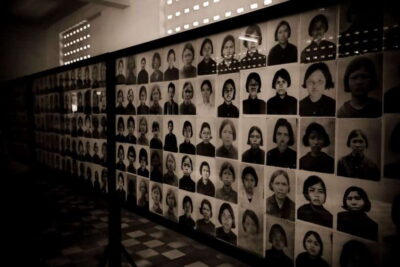
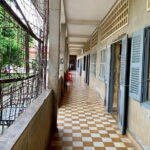
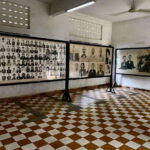
Tuol Sleng Museum is the hardest stop on the tour, and it’s also the most important for understanding Cambodia’s modern history. The museum is in a former high school that the Khmer Rouge used as Security Prison 21, also called S-21.
Here’s what you should expect: the museum traces the story of the Killing Fields and describes torture and executions that took place from 1975 to 1979. You’ll see exhibits that tell stories tied to an estimated 20,000 prisoners who were killed. That scale can feel abstract until you’re standing in the rooms and reading what’s been preserved.
A few practical notes so you can handle the emotional load:
- Go in prepared for a serious, heavy atmosphere.
- Keep an eye on your pace. If you need to move slower, your guide can help you get through without feeling rushed.
- If you’re sensitive to graphic themes, know that this is exactly the kind of place where the content is the point.
This stop is difficult, but it’s not only about suffering. It’s also about memory, accountability, and how history lives in spaces. A careful guide helps you notice the difference between shock value and documented reality.
If you leave Tuol Sleng feeling unsettled, that’s normal. The best you can do is give it time, let it land, and then use the rest of the day to ground yourself back in normal Phnom Penh life.


Timing, transport, and how private pacing changes everything
On paper, you’re looking at a roughly 5-hour experience. In practice, pacing can vary depending on how your guide reads the group and how quickly you move through each compound. One detail worth knowing: the communication around time can sometimes feel shorter than expected, especially if you’re focused on the highlights and your guide feels the core visits are enough.
That’s why I treat this tour as a half-day with room for adjustment. If you want more time for questions or extra time to read displays—especially at Tuol Sleng—say so early. A private guide can usually adapt, but you’ll get the best outcome by setting expectations at pickup.
Transport is also part of the experience. With 1 to 3 people, you’ll travel by tuk tuk. If you’re 3 people or more, you’ll use a minivan. Either way, you’re not dealing with the stress of figuring out transfers on your own, and that’s a real win when you’re balancing heat, time, and emotion.
Pickup and drop-off are included, which means you start with less friction. You can also plan for a flexible ending: the tour returns to the city center, and you can get dropped at a riverside café or bar if you want to catch the sunset mood over the water.
Price and value: why $65 can make sense in Phnom Penh
At $65 per person for a private tour, the big question is what you’re actually paying for. Here, a lot is bundled in: hotel pickup and drop-off, transport, local English-speaking guide, entrance fees, and mineral water plus a cold towel.
That matters because, in places like Phnom Penh, the hidden costs are often time and logistics. A taxi-only day can add up fast once you factor in guide time, entry fees, and the cost of hopping between sites efficiently.
You’re also paying for interpretation. Royal Palace and Silver Pagoda can be stunning even without a guide, but your understanding jumps when your guide connects Khmer kings, the Khmer Rouge era, and the meaning behind the spaces. Tuol Sleng is especially dependent on explanation to make the exhibits readable and coherent.
What’s not included: food and drinks, plus travel insurance and Cambodia visa. So budget for a meal. If you’re the type who forgets to eat until late, plan a simple lunch or snack before you start, then let the tour carry you through.
What to wear and what to pack for a smooth day
The dress rules are strict enough that you’ll want to prepare. You can’t wear shorts or sleeveless shirts. Hats are also not allowed, and sunglasses are not allowed either. If you’ve got a daypack, you can bring sunscreen, but you should expect to keep your face uncovered.
Your essentials list is simple:
- Comfortable shoes for walking across palace grounds and through museum areas
- Sunscreen because the outdoor parts can be sun-heavy
Also, because Tuol Sleng is indoor and emotionally intense, it helps to have a calm mindset and not treat it like a quick photo stop. The tour works best when you give each site the attention it deserves.
Who should book this private tour, and who should skip it
This is a strong fit if you want a one-day Phnom Penh experience that covers both culture and history in a way that’s organized and guided. It’s also ideal if you only have a limited window and you’d rather not stitch together separate tours for the palace sights and Tuol Sleng.
The tour isn’t suitable for children under 12. That restriction makes sense given the museum’s serious subject matter. If you’re traveling with kids 12 and up, you’ll still want to consider how your child handles heavy history, but the tour is at least designated as appropriate starting at that age.
If you hate emotional intensity, this may not be your best match. But if you want real context for Cambodia’s past—without skipping the uncomfortable parts—this tour is built for that.
Should you book? My take on Royal Palace, Silver Pagoda, and S-21
I’d book this private tour if you want a well-paced route through Phnom Penh that doesn’t leave you guessing what things mean. The Royal Palace and Silver Pagoda give you the elegance of royal Cambodia. Tuol Sleng gives you the truth of what happened during the Khmer Rouge years. Together, they explain Cambodia in a way that a single museum or a single palace stop can’t.
I’d think twice if you’re expecting a slow, reading-heavy experience with lots of extra time. The schedule can feel tighter than advertised, and Tuol Sleng is the kind of place where rushing is the wrong instinct. If you’re that type, ask your guide to set aside more time early.
If you’re open to a moving, sometimes heavy day and you want interpretation that turns sights into meaning, this private route is a solid choice—and for the price, it’s a practical one.
FAQ
How long is the Phnom Penh private tour?
The tour duration is listed as 5 hours.
What sights does the tour include?
It includes the Royal Palace complex, the Silver Pagoda, and the Tuol Sleng Museum (S-21), plus time for history and explanations during the visits.
Is hotel pickup and drop-off included?
Yes. Pickup and drop-off from hotels in Phnom Penh are included.
What transportation is used during the tour?
For 1–3 people, transportation is by tuk tuk. For 3 people or more, it’s by minivan.
Is the tour guided, and what language is offered?
Yes. The tour includes a local English speaking guide.
Are entrance fees included?
Yes. Entrance fees are included.
Are meals included?
No. Food and drinks are not included.
What should I bring?
Bring comfortable shoes and sunscreen.
Are there any clothing restrictions?
Yes. Shorts, sleeveless shirts, hats, and sunglasses are not allowed.
Is the tour refundable if my plans change?
Free cancellation is available up to 24 hours in advance for a full refund.