REVIEW · PHNOM PENH
2-Day Phnom Penh to Siem Reap and Angkor Wat Temples
Book on Viator →Operated by Cambodia Taxi Services · Bookable on Viator
This is the kind of trip that starts early and hits hard. You get road time across Cambodia’s countryside, then finish with the big guns of Angkor. The pacing also includes real-life stops before you ever see temple stone.
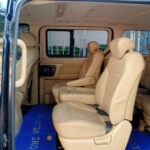
I especially like the private, air-conditioned car with a professional English-speaking driver, which makes a long route feel manageable. I also like the mix of stops: fried insects at Skun, a major Tonlé Sap lake village by boat, then a sunrise plan for Angkor Wat. One thing to watch is that temple entrance fees are not included, so your final spend will depend on what you choose at the sites.
In This Review
- Key highlights I’d plan around
- Price and logistics: what $125 really covers
- Day 1: Skun Spider Sanctuary, Kampong Kdei, and Tonlé Sap village life
- Skun Spider Sanctuary (Spiderville)
- Kampong Kdei and Spean Praptos (Dragon Bridge)
- Tonlé Sap Lake: Kompong Khleang by wooden boat
- Day 2: 4:45am Angkor Wat sunrise that’s worth the early wake-up
- A simple breakfast reset
- Ta Prohm, Angkor Thom, and Bayon: three temples, three moods
- Ta Prohm: the jungle temple look
- Angkor Thom: the square city walls
- Bayon: the four-faced towers
- Comfort, timing, and the kind of group this fits
- How to budget and pack for this route
- Should you book this Phnom Penh to Siem Reap Angkor tour?
- FAQ
- What does the $125 price include?
- Are Angkor Wat and other temple entrance fees included?
- Is pickup offered?
- What time do you start for Angkor Wat sunrise?
- Is this tour private?
- Is there a mobile ticket?
- Are there any stops with admission ticket free?
- Do I need to hire a temple guide?
- What is the cancellation rule?
Key highlights I’d plan around
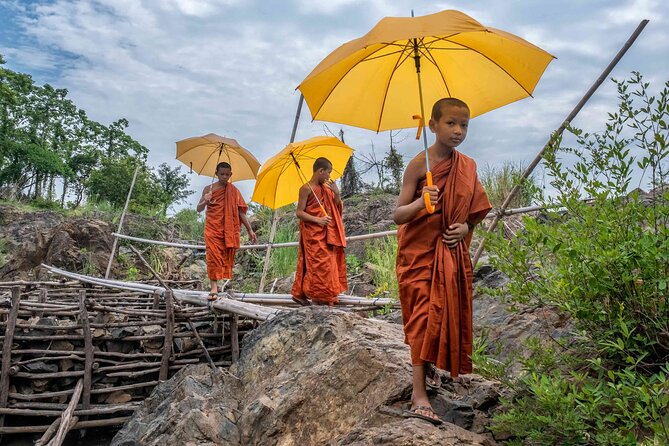
- 4:45am Angkor Wat sunrise so you’re not starting when the crowds fully arrive
- Skun Spider Sanctuary with fried tarantula and other fried insects (admission ticket free, short stop)
- Kampong Kdei and Spean Praptos (Dragon Bridge) with its 20+ arches from the 12th century
- Tonlé Sap at Kompong Khleang by wooden boat, with daily village life and lake livelihoods
- Ta Prohm, Angkor Thom, and Bayon in a classic route that keeps changing the scenery
Price and logistics: what $125 really covers
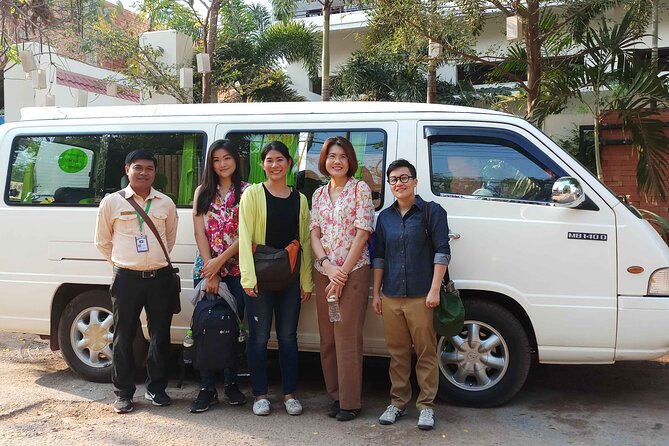
At $125 for about two days, the headline value is not just the temples. You’re paying for transport, time, and a driver who handles the route. This includes a private air-conditioned car, gasoline, tolls and parking, and airport/ferry port pickup and drop-off. You also get pure drinking water, plus the driver’s expenses for the trip.
What isn’t included matters for budgeting. Entrance fees for the temples and the paid parts of the itinerary are extra. Accommodation and meals are also on you. If you’re expecting a turnkey package price, you’ll want to plan for those add-ons early so there are no surprises.
Also, because it’s private, you’re not stuck doing the “everybody stop when the last person catches up” routine. Your group moves as a unit, which makes a tight Angkor schedule easier to respect.
You can also read our reviews of more tours and experiences in Phnom Penh
Day 1: Skun Spider Sanctuary, Kampong Kdei, and Tonlé Sap village life
Day 1 is built like a human-scale Cambodia sampler. You’ll get a fast cultural jolt at the start, then slow down as you move toward the lake.
Skun Spider Sanctuary (Spiderville)
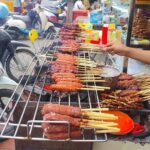
Skun is famous for an over-the-counter kind of tradition: fried insects, including tarantula. Your stop here is short (about 15 minutes) and the admission ticket is listed as free, so you’re not paying just to “look around.”
This is one of those places where the experience is mostly about choice. If you want to taste, you can. If you don’t, you still get a sense of how the town has made its niche for both locals and visitors. I’d treat it like a quick, low-stakes stop: try something small if you’re curious, but don’t feel pressured to turn it into a challenge.
Practical note: you’ll want to keep an open mind about what you’re seeing. Some people love this kind of food culture stop; others just prefer to watch and move on. Either way, the timing keeps it from dragging the day down.
Kampong Kdei and Spean Praptos (Dragon Bridge)
Next is Kampong Kdei, an ancient Angkor route area with a standout structure: Spean Praptos, also known locally as Dragon Bridge. It’s described as having over 20 arches and dating back to the 12th century.
This is a nice contrast after Skun. Instead of food and spectacle, you get stonework and scale. The stop is also short (around 15 minutes) and admission is listed as free. That makes it a good way to break up the long drive without feeling like you’re spending your day in paperwork lines.
If you like “how did they build this” details, this bridge is where your brain starts working again. Even if you’re not a hardcore history person, you’ll appreciate how the arches create rhythm and how the structure fits into a wider ancient travel network.
Tonlé Sap Lake: Kompong Khleang by wooden boat
Then the trip shifts to one of the most meaningful parts of the itinerary: Tonlé Sap Lake and a typical Khmer village at Kompong Khleang. Here you take a wooden boat (about 1 hour total at the lake stop, and the admission ticket is not included).
This is the stop where the day stops being about checklists and starts being about livelihoods. You’ll see daily life tied to the water level and the rhythms of the lake. It’s one of the most “real Cambodia” moments on the route because you’re not just standing at ruins. You’re watching how people live with the landscape.
The boat component is also the reason to do it on a guided schedule: getting the timing right is everything here. You’ll want to dress for sun and for sitting on a boat surface. Light layers help, since the air can change quickly.


Day 2: 4:45am Angkor Wat sunrise that’s worth the early wake-up
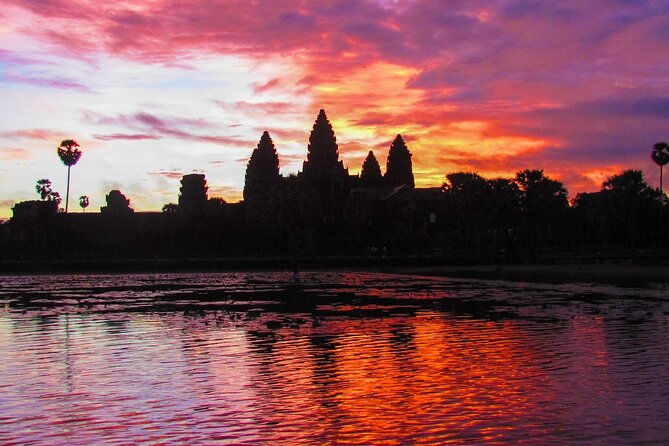
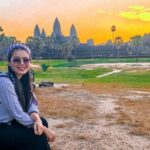
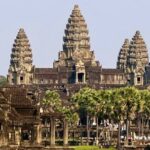
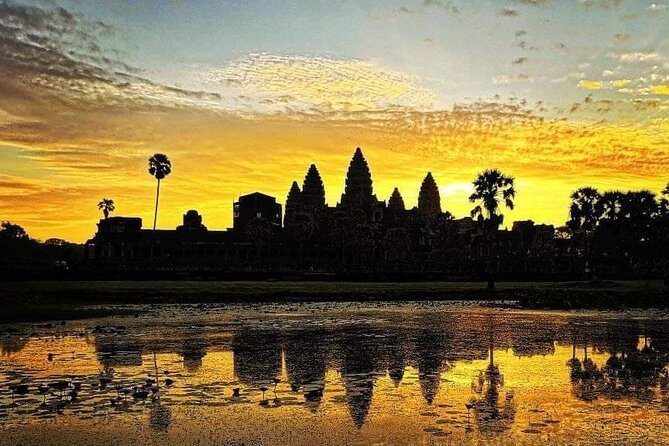
Day 2 is all about Angkor’s most dramatic time window. You meet in the hotel lobby at 4:45am to travel out and catch Angkor Wat at sunrise. Your temple visit is listed at about 2 hours.
Angkor Wat is described as the largest religious building in the world, and that size matters when you’re there. It’s not just big for big’s sake; the design is built to be read from different angles as light shifts. Sunrise is the simplest way to make those changes visible without spending hours indoors or battling late-day crowds.
Also, sunrise changes your experience emotionally. The place feels more spacious because the light is softer and the early light reduces the harshness you get later. Even if you’ve seen photos, seeing the temple start to glow in the morning makes the whole site feel less like a monument and more like a living space in time.
A good planning tip: wear comfortable shoes that handle uneven stone. You’ll walk more than you think, and your energy budget is best spent on the ruins, not on recovery.
A simple breakfast reset
After Angkor Wat, you return to the hotel for breakfast and a rest window. That’s not just convenience. It keeps you from trying to power through a second temple day on fumes, which is how people end up cranky or slow. You’ll be happier if you treat this as a reset, not a snack break.
Ta Prohm, Angkor Thom, and Bayon: three temples, three moods
After breakfast, the route keeps moving through major stops that each feel different.
Ta Prohm: the jungle temple look
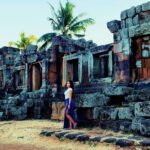
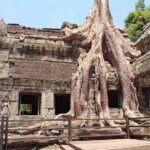
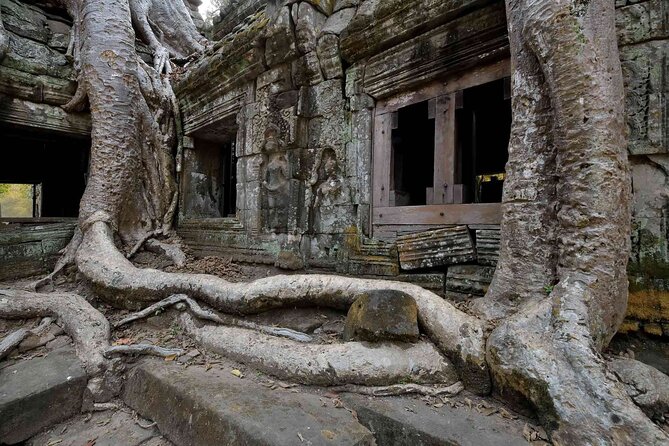
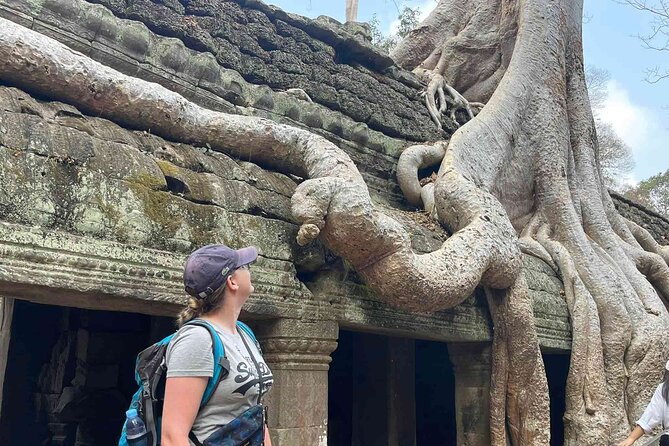
First up is Ta Prohm, often called the jungle temple. The signature detail here is that it’s overgrown with jungle trees and vines, with parts crumbling into the ground.
This is where you get a different kind of wonder than Angkor Wat. Angkor Wat feels planned and monumental. Ta Prohm feels reclaimed. You’re seeing a site where nature is part of the visual story, not just background scenery.
If you’re the kind of person who likes watching how different materials age, Ta Prohm gives you plenty to notice: the way vines wrap stone edges, and the way light falls through gaps in the structure.
Angkor Thom: the square city walls
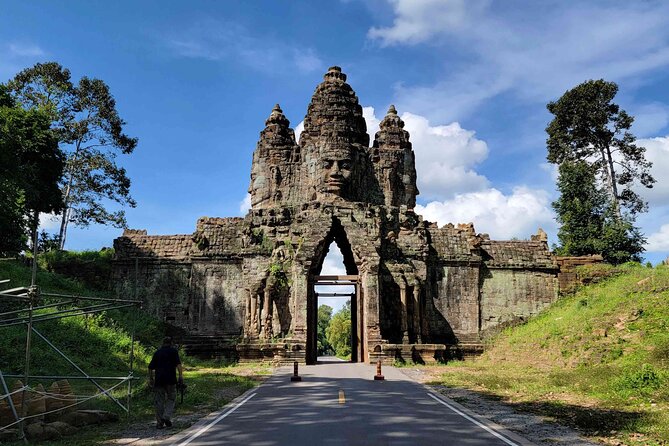
Then you head to Angkor Thom, described as the last capital of the Great Khmer Empire under Jayavarman VII. The city is surrounded by an 8 m high wall, forming a perfect square.
What I like about this stop is how the walls give you scale fast. Even in a short time window (about 15 minutes), you get that “we’re inside an entire city” feeling. It’s not only temples; it’s the layout and the protective boundary that tells you how power was organized here.
This is also a good breathing moment before Bayon, because it gives your eyes a wider view and lets you orient yourself.
Bayon: the four-faced towers
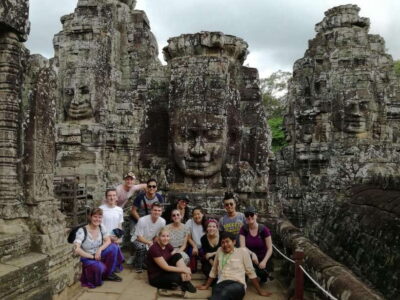
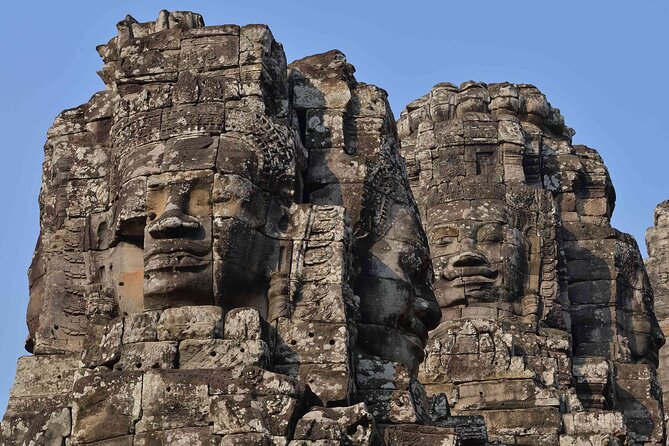
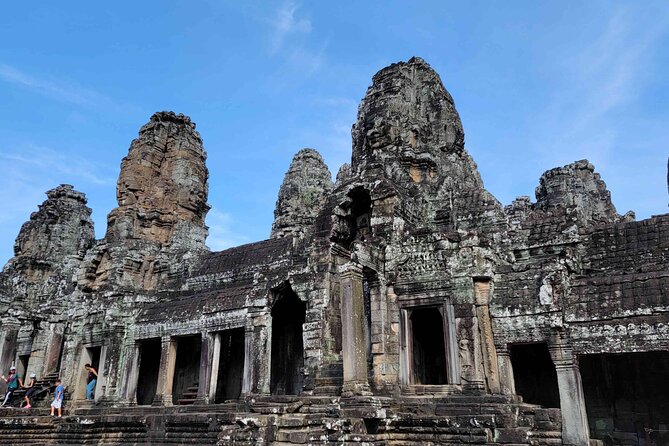
Your highlight on Day 2 is Bayon Temple. It’s described as having 54 towers, each crowned with four faces of Avalokiteshvara, the Buddha of Compassion, bearing a resemblance to the king.
Bayon is the kind of temple where you keep noticing new angles. Your brain can’t decide which face to focus on because the view changes as you walk. Even when you’re tired, Bayon tends to pull you back into attention.
This is also where the itinerary pays off: you end with the most iconic imagery. If you go the other way around, it’s easier to feel temples blur together. Ending here helps you remember the day as a set of distinct moments rather than a long march.
Comfort, timing, and the kind of group this fits
This is a private tour with only your group participating, which is great if you want control over the pace. Your driver is English-speaking and handles navigation, parking, and the driving logistics. That’s not a luxury detail in Cambodia; it’s a big deal when you’re trying to hit sunrise and then keep moving through multiple temple zones.
The itinerary also has a sensible tempo:
- Short stops on the road so you don’t burn the whole day waiting
- A major sunrise day that starts early and then includes a rest break
- A temple sequence that goes from nature-overgrown (Ta Prohm) to city-scale (Angkor Thom) to face towers (Bayon)
Who this suits best
- People who want a private plan without getting lost in logistics
- Anyone who wants Angkor highlights without trying to “wing it” on tight timing
- Food-curious folks who are open to a quirky stop like Skun
Who should think twice
- If you hate early mornings, the 4:45am pickup is the big commitment.
- If you’re trying to keep costs ultra-predictable, you’ll need to budget for temple entrance fees since they’re not included.
How to budget and pack for this route
Even though the price looks simple, budget-wise you should assume two additional buckets: temple entrance fees and your own meals and lodging. The wood-boat portion on Tonlé Sap also has admission listed as not included, so that’s another line item.
For packing, focus on comfort and sun:
- Comfortable walking shoes (stone surfaces at Angkor)
- Sun protection and a light layer (morning starts can feel different from midday)
- Water and basic wipes. The tour includes pure drinking water, but you’ll still want to manage your own comfort.
One more smart move: bring cash and small bills for any optional purchases at stops like Skun. The tour includes water and professional driving, but you’ll still want to be ready for personal choices.
Should you book this Phnom Penh to Siem Reap Angkor tour?
I think it’s a strong choice if you want the Angkor highlights with less stress and a road-trip day that feels like more than just temple hopping. The value is in the private transport, the English-speaking driver support, and the fact that the itinerary is structured so you can realistically do sunrise at Angkor Wat and still see multiple major sites afterward.
If you’re the type who plans around time windows, the 4:45am sunrise and the clear temple sequence are exactly what you want. If you’re cost-sensitive, just remember entrance fees and meals aren’t included, so do a quick budget check before you commit.
FAQ
What does the $125 price include?
It includes a private air-conditioned car, a professional English-speaking driver, gasoline, tolls, and parking fees. You also get airport and ferry port pickup and drop-off, driver’s expenses (meals and accommodation), and pure drinking water.
Are Angkor Wat and other temple entrance fees included?
No. Entrance fees are not included and are listed as being as detailed in the itinerary.
Is pickup offered?
Yes. Pickup is offered, including airport and ferry port pickup and drop-off.
What time do you start for Angkor Wat sunrise?
You meet in the hotel lobby at 4:45am to travel to Angkor Wat for sunrise.
Is this tour private?
Yes. It’s private, meaning only your group participates.
Is there a mobile ticket?
Yes. A mobile ticket is mentioned as a tour feature.
Are there any stops with admission ticket free?
Yes. The Skun Spider Sanctuary and Kampong Kdei stops list admission ticket free.
Do I need to hire a temple guide?
A professional temple tour guide is optional, not included. You can choose to add one if you want.
What is the cancellation rule?
Free cancellation is available. You can cancel up to 24 hours in advance of the experience start time for a full refund, based on local time.
If you want, tell me your travel month and whether you prefer food stops or temple-only days, and I can suggest how to adjust your pace within this same structure.