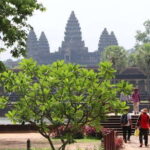
Angkor Wat, minus the crush. This premium Angkor experience is built for less waiting and more time noticing details, with a personal driver and a tight route through the big hits. It also adds in countryside moments, not just stones.
Two things I really like: the off-the-beaten-track feel once you’re out among the forests and quiet paths, and the way the day is paced so you’re not stuck behind a wall of tour buses. Another plus is the guide attention—people call out guides like Benoît and Kim, and that they explain what you’re seeing in plain, practical ways.
One consideration: you still need to plan for the temple admission separately. The day pass is extra, so your final cost is more than the headline price.
In This Review
- Key highlights worth your time
- Why Angkor Wat Feels Different When You Skip the Crowd Rush
- Getting Your Day Right: Pickup, Start Time, and How Long It Really Takes
- Price and Temple Ticket Math: What $94 Covers (and What It Doesn’t)
- Route Walkthrough: Angkor Wat to Angkor Thom Without the Chaos
- Stop 1: Angkor Wat (about 2.5 hours)
- Stop 2: Angkor Thom South Gate (about 15 minutes)
- Stop 3: Bayon Temple (about 1 hour)
- Stop 4: Terrace of the Elephants (about 30 minutes)
- Stop 5: Ta Prohm (about 2 hours)
- Stop 6: Srah Srang (about 30 minutes)
- Stop 7: Gate of the Dead (about 15 minutes)
- Food, Drinks, and Those Small Comforts You’ll Actually Notice
- Guides, Stories, and the Difference Between Looking and Understanding
- So, Is This Premium Ride Worth It for Your Style of Travel?
- Final Value Check: $94 plus the Pass, But You’re Buying Time and Ease
- Should You Book the Angkor Wat Premium Tour?
- FAQ
- What is the price of the Angkor Wat Premium Tour?
- How long is the tour?
- What time does the tour start?
- Does the tour include pickup?
- Is the temple entrance ticket included?
- Is Srah Srang admission included?
- What is included in the tour price besides the guide and transport?
- Is there a limit on group size?
- Do I get a mobile ticket?
- What is the cancellation policy?
Key highlights worth your time
- Small group size (max 8): You get a calmer rhythm and easier photo stops.
- Personal driver + premium transport options: The day is designed for quick movement between temples.
- Food and drinks included: Fewer decisions mid-day, especially in the heat.
- Big temples plus quieter breaks: Angkor Wat, Angkor Thom sights, Ta Prohm, then Srah Srang’s peaceful reservoir area.
- Srah Srang admission included: One less ticket to worry about on the day.
Why Angkor Wat Feels Different When You Skip the Crowd Rush
Angkor Wat is famous for a reason. But that fame brings crowds, bus schedules, and the same bottleneck photo spots. This premium format is designed to keep you moving, so you spend more of the day walking and looking—and less time waiting for groups to shuffle by.
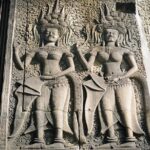
The “local pace” part matters. Instead of treating each temple like a stop on a conveyor belt, the route is set up with short drives and structured viewing windows. That helps you actually absorb what you’re seeing: the stone faces, the carved storytelling, and the way different temples feel like different moods of Khmer design.
There’s also a subtle theme running through the day: you don’t only see monument power. You also get a side of daily life and surrounding countryside, which makes the whole Angkor area feel less like a museum and more like a living landscape of communities.
You can also read our reviews of more tours and experiences in Siem Reap.


Getting Your Day Right: Pickup, Start Time, and How Long It Really Takes
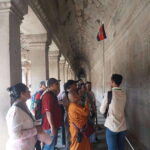
The tour starts at 8:00 am, and it runs about 7.5 hours. That timing is a big deal. You’ll be better positioned to see the sites before the heaviest crush, and you’ll avoid baking in the late-afternoon sun.
You’ll also have pickup offered, which is one of those “small” details that saves real energy. In Siem Reap, that can be the difference between a smooth start and a stressful scramble.
For tickets, the tour uses a mobile ticket. That helps if you’re juggling phones, photos, and the usual trip chaos. Just make sure you keep your phone charged and accessible.
Group size is kept to a maximum of 8 travelers, which changes the experience. With smaller groups, it’s easier to pause for a view, adjust for timing, and get through areas without feeling like you’re part of a stampede.
Price and Temple Ticket Math: What $94 Covers (and What It Doesn’t)
The price is $94 per person, and the tour includes food and drinks. That inclusion matters more in Cambodia than in many places, because meals on a temple day can turn into both an extra cost and extra time.
The main cost you need to plan for is temple admission. Temple entrance isn’t included, and the day pass is listed as $37 per person (covers all the temples). So your likely all-in temple cost is about $37 extra on top of the $94 tour price.
One small bright spot: Srah Srang’s admission is included for the stop there. So you’re not paying separately for every single ticket moment.
If you like value thinking, here’s the simple way to look at it:
- You’re paying for a structured, small-group day with a driver.
- You’re also paying for included meals/drinks, which offsets some of the extra temple-day spending.
- Your final total will still depend on the temple pass.
Route Walkthrough: Angkor Wat to Angkor Thom Without the Chaos
This is the kind of day where timing is the product. You start at Angkor Wat first, then move into Angkor Thom highlights, and later shift to Ta Prohm and the quieter village-reservoir break.
Stop 1: Angkor Wat (about 2.5 hours)
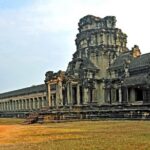
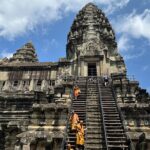
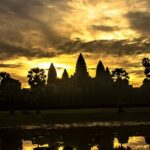
You’ll spend about 2 hours 30 minutes at Angkor Wat. That’s long enough to see more than the obvious photo angles. The focus here is not just staring at carvings from the edge—you get time to walk the grounds and connect the visual dots across the complex.
The day’s description also points to additional temples you’ll cover during the early part of the route, including Bayon and Ta Prohm, and it notes paths through forests or jungle for the more off-track feeling. Translation: you’re meant to go beyond the easiest route lines.
Drawback to keep in mind: with only 2.5 hours at Angkor Wat, you need to be realistic. If you want to linger for hours in one spot, you’ll likely want a different style of tour.
Stop 2: Angkor Thom South Gate (about 15 minutes)
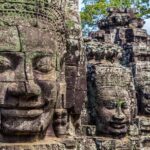
The South Gate of Angkor Thom is a gateway moment: massive stone faces, Khmer power made physical. With a 15-minute viewing window, it’s designed as a quick arrival point that sets the tone for the rest of Angkor Thom.
If you’re the type who loves architecture transitions—gate to city to courtyard—this short stop works well.
Stop 3: Bayon Temple (about 1 hour)
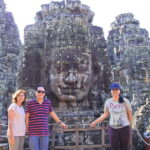
Bayon is the centerpiece of Angkor Thom, and it’s famous for the 216 serene stone faces. You get about 1 hour, which is a sweet spot: enough time to notice the recurring facial angles and the bas-reliefs, not just pass through.
Here’s what to watch for: Bayon’s faces feel like they’re watching you from different levels and perspectives. Even when you know the legend, the effect is still physical. Take a few minutes to step back from the crowd points so you can see how the faces relate to the temple geometry.
Stop 4: Terrace of the Elephants (about 30 minutes)
This is a carving-heavy stop with a clear purpose in the Khmer story. Kings watched processions here, and the terrace reflects that ceremonial role. You get about 30 minutes, which is good because it lets you slow down for the details.
If you’re tempted to sprint through because it’s “just another temple,” don’t. This one rewards that extra minute of looking.
Stop 5: Ta Prohm (about 2 hours)
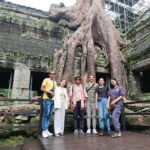
Ta Prohm is the temple most people recognize thanks to the trees growing among the ruins—often tied to the Tomb Raider nickname. You get about 2 hours, which is the right amount of time to catch both the structure and the surreal plant-ruin mix.
Practical tip: go slow here. Many people speed up because it feels like a photo set. But the best views come from positioning yourself differently as the light shifts and the crowd thins between spurts.
Stop 6: Srah Srang (about 30 minutes)
After the heavy monument day, you shift to a calmer moment: Srah Srang, a peaceful area near a reservoir. You get about 30 minutes, and this stop includes its admission ticket.
This is the kind of break that helps your brain reset. You’re no longer decoding carved story panels. Instead you’re watching daily-life pace near the water—something that makes the surrounding region feel real, not staged.
Stop 7: Gate of the Dead (about 15 minutes)
You end with the Gate of the Dead, part of the larger Angkor Thom complex. It’s known for stone carvings of divine beings, and you get about 15 minutes.
It works as a “bookend” to the day: short and meaningful, without turning into a rushed last scramble.
Food, Drinks, and Those Small Comforts You’ll Actually Notice
Food and drinks are included, which makes the day easier to manage. On a temple circuit, dehydration and hunger sneak up fast, and having meals built in means fewer stops, fewer price surprises, and more time focused on the temples.
From the premium side, there are also small comforts mentioned in feedback for this company’s style—things like refreshing wipes scented with jasmine water. Those are the kinds of details that sound minor until you’re sweating, tired, and still need to walk.
Also, the day is described as including a chance to understand Khmer food as part of the overall experience. That’s valuable because it turns the day from seeing stones into understanding culture—how people eat, how they live around the sights, and what daily rhythms look like.
Guides, Stories, and the Difference Between Looking and Understanding
The strongest praise in the feedback centers on guides and the way the route feels purposeful. Names that come up include Benoît, Kim, and Benedict (different spellings, same idea), with comments that the guides are kind, attentive, and good at explaining the temples clearly.
What that means for you: you’ll get help noticing things you’d otherwise miss. Carvings, face angles, and temple layout can feel random if you don’t know what you’re looking for. A good guide turns those details into meaning—without turning the day into a lecture.
You’ll also benefit from the “off the beaten track” emphasis. If your day mostly stays on the busiest walkways, you can feel stuck inside other people’s itineraries. When your driver and guide find quieter routes through forests or less obvious paths, the temples feel more personal—and less like a theme park.
So, Is This Premium Ride Worth It for Your Style of Travel?
This kind of tour is a great match if you:
- want less crowd time and more looking time
- like a structured plan but still want some freedom of movement
- enjoy countryside and daily-life moments alongside the famous temples
- appreciate small-group attention (max 8)
It may not be your best fit if you:
- want long, unbroken exploration at just one site
- prefer fully independent driving and self-paced wandering
- hate early starts (8:00 am is the day’s rhythm)
Also, the tour notes that most travelers can participate, which suggests the overall setup is designed for a range of visitors. Still, this is a temple day with walking, so bring comfortable shoes and expect some time on your feet.
Final Value Check: $94 plus the Pass, But You’re Buying Time and Ease
The $94 price tag might feel steep at first—until you price out what you’re getting.
You’re paying for:
- pickup offered
- a personal driver
- structured timing across multiple major sites
- food and drinks included
- a maximum of 8 to keep things calm
Then you add the necessary temple pass (about $37). That brings you to roughly $131 per person all-in for the core temple experience.
If you were to do this yourself, you’d still pay for transport, you’d still likely hire someone to help you move efficiently, and you’d still have to figure out meal timing. This tour compresses those tasks into one day with fewer decisions.
In short: this is value if you want your Angkor day to feel managed and human, not chaotic.
Should You Book the Angkor Wat Premium Tour?
Book it if your top priority is a smoother Angkor day with small-group comfort, a personal driver, and a route that includes both the headline temples and calmer countryside-style moments. It’s also a strong choice if you want the sites explained in a way that helps you connect what you’re seeing to Khmer meaning.
Skip it (or choose a different style) if you’re the type who wants unlimited time per temple, or if extra spending on the temple pass will feel annoying rather than expected.
If you want the smart middle ground—famous temples, less crowd pressure, and included meals—this premium format is a solid bet.
FAQ
What is the price of the Angkor Wat Premium Tour?
The tour costs $94.00 per person.
How long is the tour?
The duration is about 7 hours 30 minutes.
What time does the tour start?
The start time is 8:00 am.
Does the tour include pickup?
Yes, pickup is offered.
Is the temple entrance ticket included?
No. Temple entrance is not included. A 1-day pass is listed at $37 per person for all temples.
Is Srah Srang admission included?
Yes. The Srah Srang stop lists admission ticket included.
What is included in the tour price besides the guide and transport?
The tour includes food and drinks.
Is there a limit on group size?
Yes. The tour has a maximum of 8 travelers.
Do I get a mobile ticket?
Yes. The experience includes a mobile ticket.
What is the cancellation policy?
Cancellation is free if you cancel up to 24 hours in advance for a full refund.