REVIEW · SIEM REAP
Private Tuk Tuk Tour to Angkor Wat and Small Circle with Two Extras
Book on Viator →Operated by Angkor-Travel Tours · Bookable on Viator
Angkor Wat at two different times of day feels like cheating. This private tuk tuk tour strings together a smart mix of big-name sights and quieter temples, with an English-speaking driver and lots of time to actually look instead of rush.
I especially like the photo logic: you get Angkor Wat from the East Gate in the morning light, then you return later for reflections in the ponds and moats. I also appreciate the balance of art and context, including a stop at Wat Thmey, the Khmer Rouge memorial and killing field.
The main drawback is simple: it’s a long day (about 9 to 10 hours) and you’re on the move for much of it, so you’ll want decent stamina and comfortable shoes.
In This Review
- Key things I’d plan around
- What a 7:00am Private Tuk Tuk Changes at Angkor
- Angkor Wat Twice: East Gate Morning Light to Pond Reflections
- Small Circle Temples: Brick Carvings, Steep Pyramids, and Jungle Stone
- Prasat Kravan and Prasat Bat Chum: Tiny but specific
- Srah Srang: Animal sculptures and the water-story
- Banteay Kdei to Ta Prohm: Labyrinth layout, then jungle drama
- Ta Nei and Ta Keo: the off-road feeling and the steep climb
- Spean Thma, Chau Say Tevoda, and Thommanon: the “connect-the-dots” group
- Angkor Thom South Gate and Victory Gate Views
- Wat Thmey Khmer Rouge Memorial: How to Visit with Respect
- Pace, Comfort, and That Private-Tour Freedom
- Price and Value: $15 Tuk Tuk Plus the $37 Angkor Ticket
- Who This Tour Fits Best (and Who Might Skip It)
- Should You Book This Private Tuk Tuk Tour?
- FAQ
- FAQ
- Do I need to buy an Angkor ticket for this tour?
- What time does the tour start?
- How long is the tour?
- Is this tour private?
- Is pickup included?
- What’s included in the tour price besides transport?
- Is lunch included?
- Which parts of Angkor Wat do you see?
- Do I have to enter every temple inside the time limit?
- Does the tour include Wat Thmey?
Key things I’d plan around
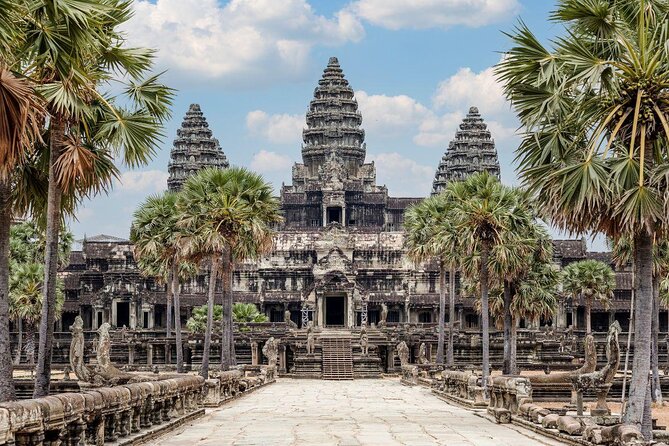
- Morning East Gate entry sets up Angkor Wat in softer light before crowds fully arrive.
- Angkor Wat twice means you’re not stuck with one angle or one lighting mood.
- Small Circle temples that tourists skip (like Ta Nei) help the day feel less repetitive.
- A respectful Khmer Rouge stop at Wat Thmey adds real weight to the Angkor experience.
- Private tuk tuk pacing lets you move at a human speed and adjust on the fly.
What a 7:00am Private Tuk Tuk Changes at Angkor
Starting around 7:00am is the difference between seeing Angkor and experiencing it. At that hour, the air is usually calmer, the light is gentler, and you can take in the scale without fighting for your spot at every viewpoint.
The tour is private, so it’s just you in the tuk tuk with an English-speaking driver. That matters because you can ask practical questions as you go, and you’re not stuck with a rigid group rhythm. I also like that the day isn’t only about temples on a checklist. The route is built to include both major landmarks and smaller, more specific sites—so your photos and memories don’t all look the same.
One more practical note: the driver may not be able to go inside temple areas with you. In the same way, you still get a helpful guide-in-the-car style experience: friendly, attentive driving plus explanations along the route. People in this kind of setup often give the driver credit for keeping things organized and moving at your pace.
You can also read our reviews of more private tours in Siem Reap

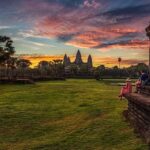
Angkor Wat Twice: East Gate Morning Light to Pond Reflections
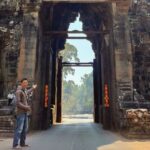
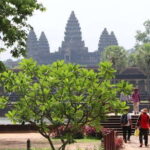
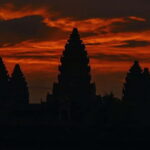
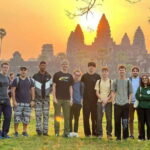
Angkor Wat is already a wow. Doing it twice turns that wow into a range. You start with an approach that’s less common than the classic entry: you drive to the East Gate for that early light.
Morning at East Gate gives you angles that feel more open and quiet. You’re also likely to have an easier time walking in, orienting yourself, and noticing details before it gets crowded around the main choke points. Even if you know the famous West Gate images, the East Gate entry helps you see how the whole temple complex sits in relation to the causeways, ponds, and pathways.
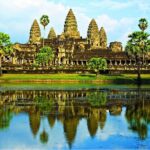
You’re not left out on the famous view logic either. The plan includes seeing Angkor Wat again later in the day, when the towers look great against the sky and when reflections become part of the fun.
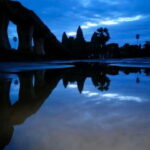
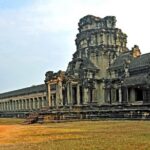
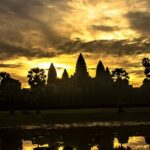
Then comes the late-afternoon return. This is where your camera setup finally makes sense: towers mirrored in the temple ponds and moats can give you those “how is this real?” shots. The schedule gives you another half hour at Angkor Wat in this timing window, so you’re not just stopping for five minutes and sprinting away.
If you’ve ever felt like you can only see Angkor Wat from one moment and one angle, this is the fix. Two visits let you compare: morning vs late day, crisp stone vs softer light, wide views vs details.
Small Circle Temples: Brick Carvings, Steep Pyramids, and Jungle Stone
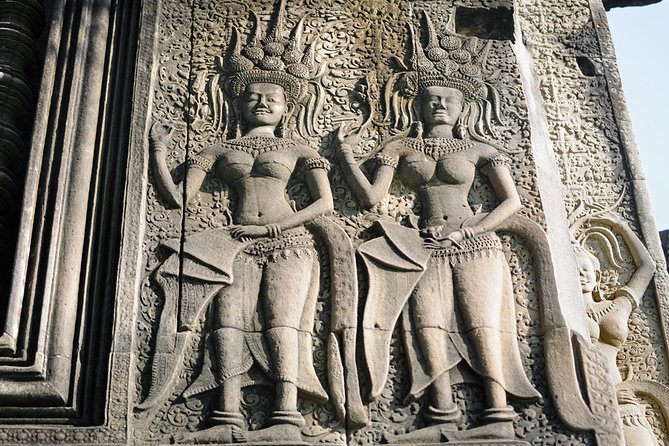
After your first Angkor Wat morning, the route shifts into the Small Circle style of sightseeing—temples that help you understand Khmer architecture as a whole, not just one superstar complex.
Prasat Kravan and Prasat Bat Chum: Tiny but specific
You begin with Prasat Kravan, a small temple with five towers lined up. What stands out here is the brickwork: the carvings are large and easy to notice, which is a nice break after the huge stone scale of Angkor Wat.
Next is Prasat Bat Chum, which has three towers on a shared platform. This stop has an extra layer: the large inscriptions suggest Buddhism had taken route in Angkor. Even if you can’t read the inscriptions yourself, you’ll be able to see that this wasn’t a single-style temple world. It was changing over time.
Srah Srang: Animal sculptures and the water-story
At Srah Srang, you get a pretty terrace with animal sculptures and a large artificial basin. This stop is small on paper, but it helps explain how these temple landscapes functioned: water wasn’t just decoration. It shaped the grounds, the approach, and the mood.
You’ll also get a quick lesson on terminology: a srah is not a baray. The tour frames srah as a basin deepened artificially, while baray is more of a reservoir idea. If you’ve ever wondered why every water feature gets a different name, this is the kind of stop that clears that up.
Banteay Kdei to Ta Prohm: Labyrinth layout, then jungle drama
Banteay Kdei is often described as the smaller sister of Ta Prohm, and the vibe is similar: it’s large enough to matter, but it doesn’t dominate every minute of your attention. The layout can feel labyrinth-like, but you won’t be totally on your own wandering. The route gives you a focused visit window.
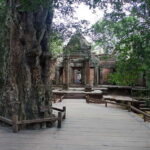
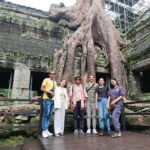
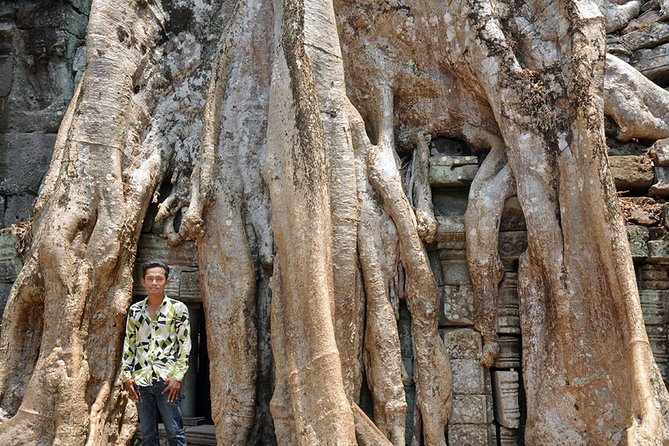
Then you hit Ta Prohm, the famous jungle temple where enormous strangler figs wrap around the stone. This is your “slow down” moment. The temple compound is big, and it’s worth taking your time because the details only show up when you pause. Yes, it’s also where people pull off fun Tomb Raider-style photo poses. Still, I’d aim to look first, then play with photos second.
Ta Nei and Ta Keo: the off-road feeling and the steep climb
Next is Ta Nei, where the key experience is that it’s harder to reach—on gravel roads. That’s exactly why it feels different from the temples that everyone funnels through. It’s also a good “Indiana Jones feeling” kind of stop: broken stone, jungle context, and a sense that you’re going somewhere most people don’t.
Then comes Ta Keo, a former state temple built as an artificial mountain with a stepped pyramid design. The stairs to the upper platform are extraordinarily steep, and that’s the whole point: you can feel the effort. On top, five prasats sit in a layout that makes the structure’s geometry easy to appreciate.
If you like temples that test you a little—physically and visually—this is a great pairing after the more relaxed Ta Nei approach.
Spean Thma, Chau Say Tevoda, and Thommanon: the “connect-the-dots” group
Spean Thma gives you a stone bridge from the late Angkor period. A neat detail here: the construction used carved stones taken from earlier temples. Also, the riverbed has shifted east over time. So as you look at the bridge, you’re also looking at how the landscape changed after the temple was built.
Chau Say Tevoda is a medium-sized temple with an impressive processional route from the east. The pediment carvings add mythological themes, so it’s more story-forward than you might expect from a “medium size” stop.
Thommanon is the sister temple to Chau Say Tevoda, and it ties the style thread together. It’s from the Angkor Wat period, and its towers have the same style as at Angkor Wat. If you’re starting to see patterns in Khmer design, this pairing helps you confirm what you’re noticing.
Angkor Thom South Gate and Victory Gate Views
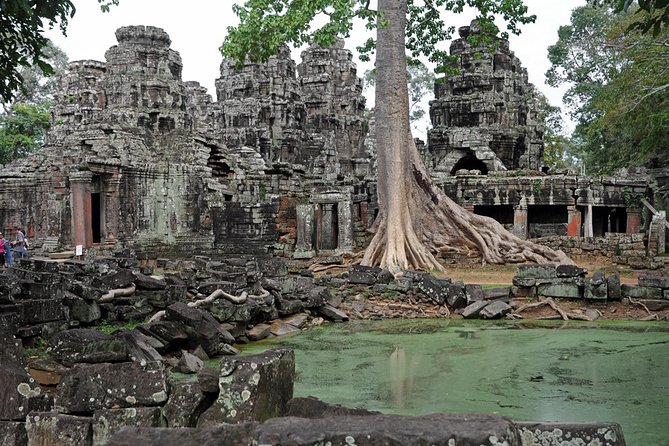
The tour then shifts into Angkor Thom territory, and it keeps the structure easy: city gates, big faces, and viewpoints.
You climb into the best preserved of the major city gate experiences: the Victory Gate. It’s the second eastern gate of Angkor Thom. Here you’re not just looking from ground level. The route includes climbing the wall for views toward the southern giant face gate. It’s one of those moments where the higher perspective makes the whole city feel more intentional.
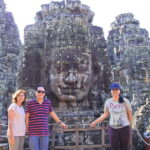
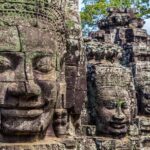
Then you spend time at Angkor Thom South Gate. This is the iconic one: the face tower and the railings with rows of giant statues depicting demons and gods. The statues are dramatic, and the gate composition is the kind of thing you can photograph from multiple distances without getting bored.
One smart move here: take a few minutes to look without taking a photo first. The gate reads more clearly when your eyes adjust to the repeating patterns of the faces and the demon-god figures.
Finally, the plan includes a short photo stop at Bayon—just enough time for a snapshot on the “Small Tour” style visit, not a full deep exploration. If Bayon is your top priority, you may want extra time later, but as a stop within a full-day circuit, it still works.
Wat Thmey Khmer Rouge Memorial: How to Visit with Respect
Not every Angkor day includes a moment like Wat Thmey. This stop shifts the experience from stone art to human story.
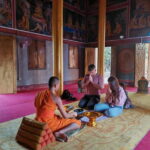
Wat Thmey has a small memorial stupa for victims of the Khmer Rouge and photo boards with images of people killed here. The open grounds also include a large prayer hall. The tour keeps the time focused—around 10 minutes—which can feel short emotionally, but it does give you a respectful intro without turning it into a spectacle.
If this topic affects you, it’s okay to pause longer in your own way. I’d also remind you that photos aren’t the goal here. Your goal is attention. Even if you’re here because you love ancient temples, you leave with a clearer understanding of the region’s modern grief.
Plan a quiet moment at the end of the stop to reset. The next big impression can be emotionally hard to balance.
Pace, Comfort, and That Private-Tour Freedom
A full circuit like this can feel intense even when it’s private. The upside of a private tuk tuk is that you can set a comfortable walking rhythm. The driver can allow you to proceed at your own pace, as long as you agree on meeting points and time.
This is also why people who like structured sightseeing but dislike rigid group schedules often prefer tours like this. You still get the order and timing that helps with light and route flow, but you’re not forced to sprint from site to site.
The included comfort pieces are practical: bottled water is provided during the tour, and there’s a focus on keeping you hydrated in the daytime heat. You’ll still want sun protection, and you’ll want shoes that work on temple surfaces that can be uneven or dusty. But the tour gives you a baseline of water support, which you’ll appreciate when you’re out all morning and into late afternoon.
You’ll also notice that the stops are short and purposeful for many temples. That’s not a failure of the plan—it’s how you fit this many different sites into one day without making any single stop feel rushed in the wrong way. Your longer “time-rich” stops are typically the ones that need it most, like Ta Prohm.
Price and Value: $15 Tuk Tuk Plus the $37 Angkor Ticket
The headline price here is $15.00 per person, but Angkor temple entry is separate. You’ll need the Angkor Ticket (valid for all temples), listed as $37.00 for 1 day.
So the real math for your day is closer to:
- $15 tuk tuk + driver service
- plus $37 for the Angkor ticket
That ticket is the big cost lever. Once you pay it, the value comes from how much you cover with that one-day access: Angkor Wat, multiple Small Circle temples, Angkor Thom gates, and Wat Thmey. In other words, the tuk tuk portion isn’t competing with other tuk tuk tours on “how many temples”—it’s competing on how efficiently the day is timed and how well the route connects major and lesser-known sites.
The tour includes private transportation, an English-speaking driver, and bottled water. Lunch isn’t included, so you should budget extra for food. If you’re the type who likes a proper sit-down meal, build that into your expectations before you get hungry in the middle of temple time.
One more value point: mobile tickets are mentioned, and that can make check-in smoother when you’re tired and ready to move.
Who This Tour Fits Best (and Who Might Skip It)
This is a strong fit if you want:
- Two Angkor Wat photo windows instead of one quick stop
- A balance of famous temples and less-frequented ruins
- An all-day circuit without the stress of driving yourself or negotiating tuk tuk prices
- A private pace, with the option to move at your own walking rhythm
It’s also a good choice if you care about context, not just views. The route includes places that make the architectural story clearer, from brick carving details at Prasat Kravan to the symbolism and changes implied at Prasat Bat Chum and the Buddhist route framing.
You might consider another format if:
- You don’t want a long 9–10 hour day
- You only care about Angkor Wat and would rather spend extra time there (and skip other stops)
- You prefer totally independent sightseeing with no structured photo timing
Should You Book This Private Tuk Tuk Tour?
I’d book it if your ideal Angkor day includes both photography timing and variety. The standout idea is Angkor Wat at the beginning and end of daylight: East Gate morning light, then that late-day reflection window. That alone makes the tour feel efficient and thoughtful.
I’d also call the Wat Thmey stop a “worth it” add-on. It changes the tone of the day in a way that makes the ancient setting feel more real and more human.
If you’re flexible on pace and okay with a long day, this tour is a solid value once you factor in that you’re using a one-day Angkor ticket across a packed route. For first-timers who want structure without getting trapped in a group, it’s an excellent starting point.
FAQ
FAQ
Do I need to buy an Angkor ticket for this tour?
Yes. The Angkor Ticket is not included, and it’s listed as valid for all temples for one day at $37 per person.
What time does the tour start?
The tour starts at 7:00am.
How long is the tour?
It’s listed as about 9 to 10 hours.
Is this tour private?
Yes. This is a private tour/activity, so only your group participates.
Is pickup included?
Pickup is offered, and the tour starts in Krong Siem Reap. Drop-off is back to your hotel or another point in Siem Reap town center.
What’s included in the tour price besides transport?
The tour includes private transportation, an English-speaking driver, and bottled water (free drinking water during the tour).
Is lunch included?
No. Lunch is not included.
Which parts of Angkor Wat do you see?
You visit Angkor Wat at the start of the day from the East Gate for morning light, and again in the late afternoon for tower photos with pond and moat reflections.
Do I have to enter every temple inside the time limit?
You’ll have set time at each stop, but you can move at your own pace. The driver may not be able to go onto temple sites with you.
Does the tour include Wat Thmey?
Yes. It includes Wat Thmey (Killing Fields) with a memorial stupa for victims of the Khmer Rouge, photo boards, and a prayer hall.