REVIEW · SIEM REAP
Angkor Wat Highlights and Sunrise Guided Tour from Siem Reap
Book on Viator →Operated by Journey Cambodia · Bookable on Viator
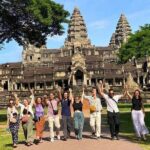
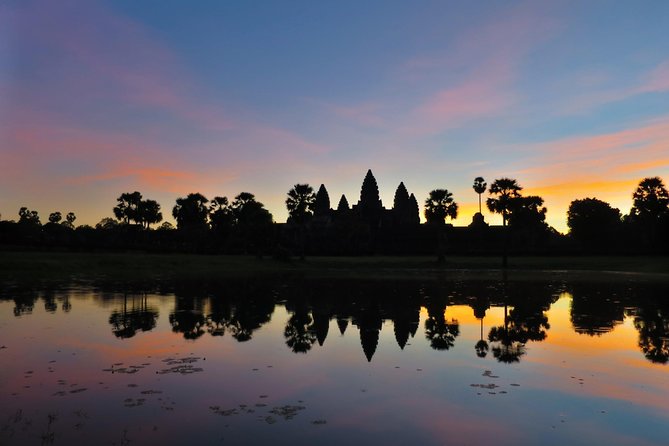
Sunrise at Angkor Wat is a time machine. This full-day small-group tour starts before dawn, so you can watch the light change over the temple while a licensed English-speaking guide brings the carvings and layout to life. Guides such as Sopheaprath (and others from the team) are the reason this feels less like a rush-and-photos day and more like a guided history walk at the speed of your feet. Sunrise plus licensed guidance is the winning combo.
I love two practical details that make an early start easier: you get bottled water and cool towels during the day, and the itinerary is paced to help you avoid the worst crowd moments while still hitting the big names. The group stays small (up to 15 people), so it’s easier to hear explanations and move without feeling glued to the back of a conga line.
One thing to plan for: the main temple ticket ($37 per person) is not included, so your budget should account for that on top of the tour price.
In This Review
- Key things I’d circle before you go
- Why Angkor Wat at sunrise beats the daytime plan
- Price and what you get for the money (and what’s extra)
- 4:30 am pickup: logistics that can make or break your morning
- Entering Angkor Wat before the crowds: what the sunrise moment is really like
- Srah Srang: a calm reset inside a big temple day
- Ta Prohm: the Tomb Raider temple effect, minus the confusion
- Bayon and Angkor Thom: faces, geometry, and city-scale thinking
- How the guide shapes your day (and what to look for)
- Who should book this sunrise tour, and who should skip it
- Should you book this Angkor Wat highlights and sunrise tour?
- FAQ
- What time does this Angkor Wat sunrise tour start?
- Does the tour include hotel pickup and drop-off?
- Is the temple pass included in the tour price?
- How much is the temple pass?
- Which temples are visited during the tour?
- Is breakfast included?
- What should I wear to enter the temples?
- What’s the group size?
- Are bottled water and towels provided?
- Can I buy the temple tickets on the day of the tour?
Key things I’d circle before you go
- 4:30 am start depending on the season, with hotel pickup so you’re not coordinating yourself in the dark
- Up to 15 travelers, keeping the day manageable for photos, timing, and questions
- Air-conditioned minivan plus cold towels and water, which matters once the humidity ramps up
- UNESCO temples, not just Angkor Wat, including Ta Prohm, Bayon, and the Angkor Thom complex
- Dress rules (shoulders and knees covered)—scarf use is accepted, and it saves you hassles at the gates
Why Angkor Wat at sunrise beats the daytime plan
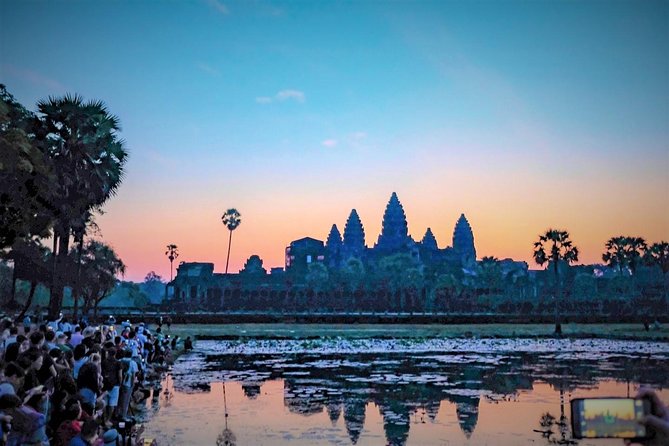
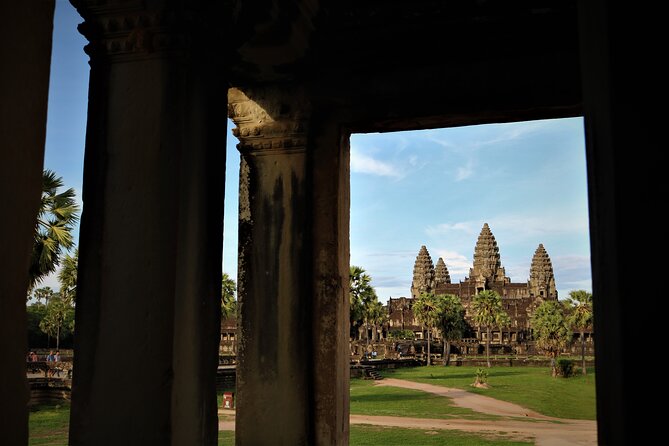
Angkor Wat looks iconic in postcards. It looks different when the air is cool, people are still waking up, and the first light hits the towers like a slow reveal. That’s the main reason to do this as an early guided sunrise: you see the temple before it turns into a wall of faces.
The guide component is what upgrades the experience. At sunrise, there’s motion—camera shutters, quiet awe, and the soft shuffle of groups. A good guide (you’ll meet pros like Pal, Sak, or Yot on different departures) helps you understand what you’re looking at, so the carvings aren’t just decoration. They’re symbols, stories, and craftsmanship.
Also, the early timing helps you move through the complex with less friction. You’ll still see crowds later in the day, but this tour is built around catching the calmer edges first.
You can also read our reviews of more guided tours in Siem Reap

Price and what you get for the money (and what’s extra)
The tour price is $23 per person, which is low by Angkor standards for a guided day with pickup and a vehicle. The big catch is the temple admission: the $37 temple pass is not included, and you pay it directly at the site. One helpful detail: the pass can be purchased with Visa, and it’s available on the day of the tour just before sunrise.
So the real value question is simple: do you want a guided day that hits multiple major temples, with transport and small-group pacing? If yes, the base price is a strong deal, and your total cost is mostly just the necessary admission fee.
You’ll also want to think about breakfast. The day includes a breakfast stop, but breakfast itself is not included. If your hotel can prepare a breakfast pack, you’ll likely save time and avoid hunger during that pre-dawn stretch.
4:30 am pickup: logistics that can make or break your morning
This starts around 4:30 am from your hotel (the exact pickup window shifts a bit with the season). That’s not a “tourist detail”—it’s the whole point. You’re trading sleep for light, space, and a better flow through Angkor.
The transport is an air-conditioned minivan, and you’ll travel in comfort even if it’s early enough to feel like you just fell out of bed. You’re also supplied with bottled water and cool towels, and that small comfort shows up again later when the day gets warmer.
Dress matters at Angkor. You need shoulders and knees covered. A scarf that covers your shoulders is accepted, and it’s smart to bring one that’s easy to put on quickly. Comfortable walking shoes help too—Angkor’s surfaces can be uneven, and you’ll be walking enough that trainers beat sandals.
Entering Angkor Wat before the crowds: what the sunrise moment is really like
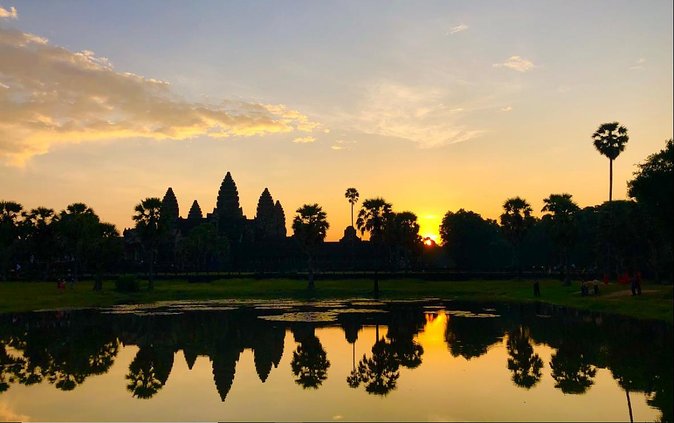
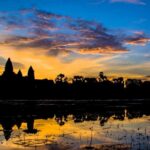
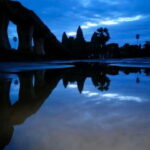
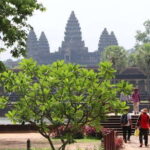
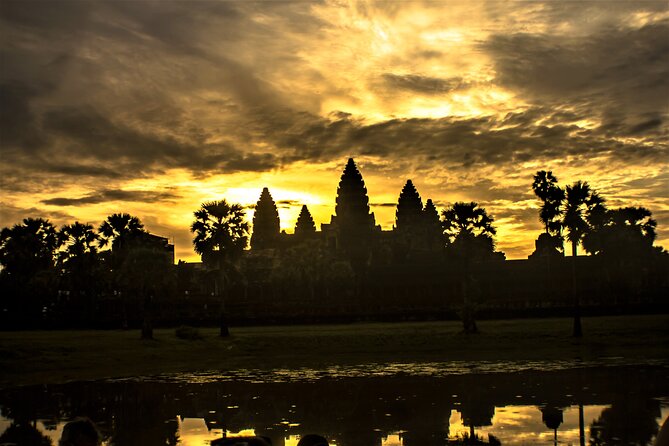
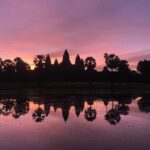
You’ll arrive at Angkor Wat ahead of full daylight and get a chance to experience it in that in-between state: dark stone, soft sky, and the first glow forming over the towers. A guide will bring you in from a less obvious side early on, which helps you get situated before the heaviest waves move in.
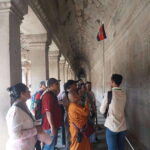
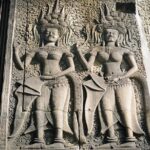
Once the sun rises, the focus shifts from scenery to meaning. You’ll walk through highlights with narration on Angkor Wat’s bas-reliefs—the carved scenes that wrap the temple like a visual storybook. The best part of a guided sunrise is that you don’t have to guess what you’re seeing. Instead, the guide points out details and explains how they fit into Khmer beliefs and the temple’s design.
You’ll also learn about the library pools, which people often speed past when they’re busy taking photos. On this tour, that’s exactly the kind of stop your guide uses to slow you down in a good way.
Photo tip: guides are actively managing timing so you have moments to shoot without feeling like you’re constantly waiting for a group lead. In real-world tours with guides like Sopheaprath and Pal, guests often get help finding solid spots for sunrise views by the water, plus guidance on when to move so you’re not stuck in the busiest paths.
Srah Srang: a calm reset inside a big temple day
After sunrise at Angkor Wat, the tour keeps moving—but it also builds in breathing room. One highlight is Srah Srang, a ceremonial water area within the Angkor complex. Water features can feel like a side quest if you’re chasing only the loudest statues, but Srah Srang gives you a different angle on how the Khmer city used space and ritual.
This stop also connects with the day’s biggest practical need: food. You’ll end touring at Angkor with breakfast at a Khmer local restaurant. Breakfast is not included, so you’ll either pay when you arrive or plan a breakfast pack from your hotel the night before (a smart move that shows up repeatedly in positive feedback).
The advantage here is timing. You’re not breaking for lunch at 2 pm like some half-day tours. You eat earlier, you rest briefly, and then you’re free to keep exploring while your energy still holds up.
You can also read our reviews of more tours and experiences in Siem Reap
Ta Prohm: the Tomb Raider temple effect, minus the confusion
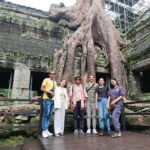
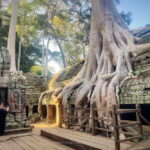
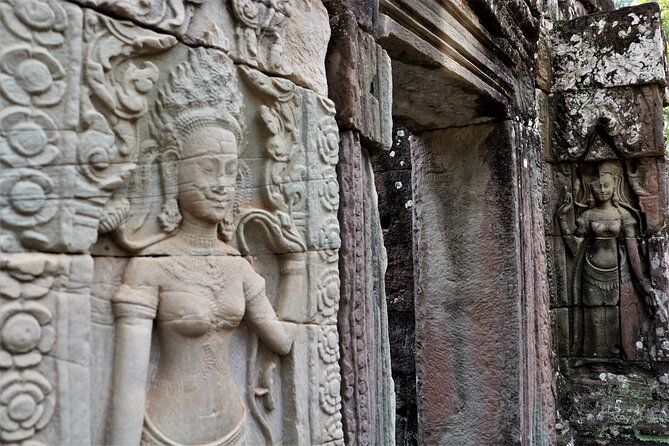
Ta Prohm is famous for a reason. It’s dramatic: stone galleries wrapped in roots, a temple that looks half-solved by time and jungle growth. On this tour, you spend enough time to walk key areas and understand what you’re seeing.
One real value of having a guide at Ta Prohm is translation. Roots and ruins can look cool in photos, but the story behind the site is what makes it stick. The guide narration connects it to its past—there’s even a mention of the site’s later European rediscovery in the 1800s, which helps you place it in a larger Angkor timeline.
You’ll also pass major photo landmarks on the way, including the Terrace of the Leper King and the Terrace of Elephants. These terraces are easy to skim if you’re wandering alone. With a guide, you get context for the carvings and the scale, so you’re not just collecting images—you’re building an understanding of how the temple complex was meant to impress visitors.
Bayon and Angkor Thom: faces, geometry, and city-scale thinking
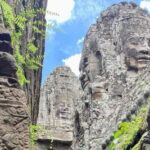
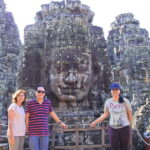
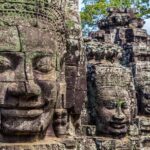
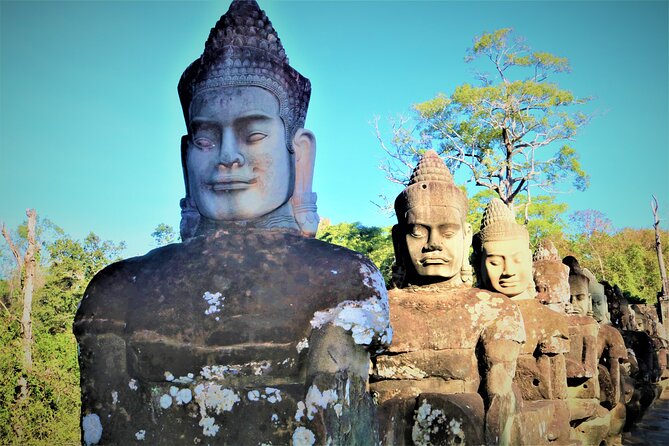
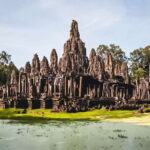
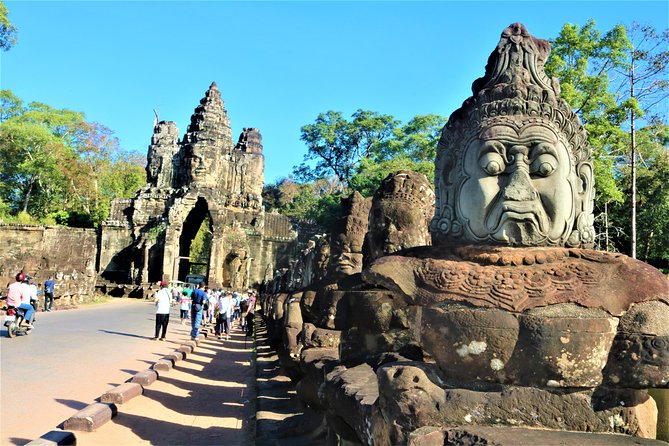
By the time you reach Bayon, you feel the shift from temple “wow” to city “wow.” Bayon sits inside Angkor Thom, once the Khmer Empire’s capital. The centerpiece is the tower faces—over 200 enormous faces—staring outward from the central towers.
This is where guided narration matters most. The site is visually overwhelming, but it’s also highly structured. A good guide helps you notice the patterns: where you are in the complex, how the layout guides movement, and what those repeating carvings and face motifs are communicating.
You’ll also spend time at the Angkor Thom South Gate, one of the more dramatic entry points into the capital area. That stop is short but useful because it frames the rest of the city scale you’re walking through.
Expect to feel the day in your legs here. You’re still on your feet during the hottest part of the morning shift toward midday. That’s where the tour’s water and cool-towel rhythm helps you keep going without feeling wrecked.
How the guide shapes your day (and what to look for)
This tour’s reputation is strongly tied to guide quality. In the feedback patterns, certain names pop up again and again—Sak, Sopheaprath, Pal, Yot, Bun, Chhay, and Saruon Pal—and the praise isn’t just generic. People mention specific behaviors like:
- Clear English explanations that connect carvings to meaning
- Photo strategy during sunrise so you’re not fighting the crowd
- Time management that keeps you moving but not frantic
- Small support details like water, cold towels, and help with questions
- Even problem-solving, like assistance recovering a lost camera lens
If you’re choosing between tours in Siem Reap, this is the differentiator: Angkor is the same for everyone. The guide’s ability to explain what you’re seeing, while still respecting your time for photos, is what makes this feel worth waking up for.
Who should book this sunrise tour, and who should skip it
This tour is a great fit if you want the major hits—Angkor Wat, Ta Prohm, Srah Srang, Bayon, and Angkor Thom—without turning your day into a self-guided puzzle. If you value morning timing, like having a real sunrise experience instead of a late photo session, this is exactly that.
It’s also a solid choice for people who like a plan. The pacing is built around structured stops, transport, and guide narration, so you’re not relying on your own interpretation for the big carvings and terraces.
You might want to think twice if you hate early mornings. You’re up before the world fully starts. The tour begins around 4:30 am, and even with comfortable transport, it’s still a serious wake-up.
Should you book this Angkor Wat highlights and sunrise tour?
If your goal is to see Angkor Wat at sunrise and also hit the other headline temples in one day, I think this is a very sensible booking. The value is strong when you factor in hotel pickup, air-conditioned transport, small-group size, and guide narration that makes the carvings and layout make sense.
Book it if you’re comfortable with early start discipline, and if you’re ready to add the $37 temple pass to your budget. If you have kids older than 8, the tour has a minimum age cutoff at 8, so it’s set up for families who can manage long morning walking.
If you’re mainly chasing photos and you don’t care about explanations, you could try a cheaper entry-only day. But for most people, this tour hits the sweet spot: you get the sunrise moment, then you walk through the sites like they have stories, not just scenery.
One last small check before you go: pack a scarf for the dress code and wear shoes you can trust on uneven ground. That’s the kind of prep that turns a good day into a smooth one.
FAQ
What time does this Angkor Wat sunrise tour start?
It starts at 4:30 am, with the exact pickup timing window adjusting from 4:30 to 4:40 am depending on the season.
Does the tour include hotel pickup and drop-off?
Yes. Hotel pickup and drop-off are included.
Is the temple pass included in the tour price?
No. The temple pass is not included and must be paid directly to the site.
How much is the temple pass?
The temple pass is listed as $37 per person.
Which temples are visited during the tour?
You’ll see Angkor Wat at sunrise and then visit Srah Srang, Ta Prohm, Bayon Temple, and Angkor Thom (including the South Gate). You also pass the Terrace of the Leper King and the Terrace of Elephants.
Is breakfast included?
No. Breakfast is not included, though there is a breakfast stop at a Khmer local restaurant.
What should I wear to enter the temples?
You’ll need respectful dress with shoulders and knees covered. A scarf can cover your shoulders, and shoulders covered by scarf is accepted.
What’s the group size?
The tour has a maximum of 15 travelers.
Are bottled water and towels provided?
Yes. Bottled water and cool towels are included.
Can I buy the temple tickets on the day of the tour?
Yes. Temple entrance fees can be purchased on the day of the tour just before sunrise, and Visa cards are accepted.