REVIEW · SIEM REAP
Angkor Wat Sunrise Tour
Book on Viator →Operated by Siem Reap Car Rental · Bookable on Viator
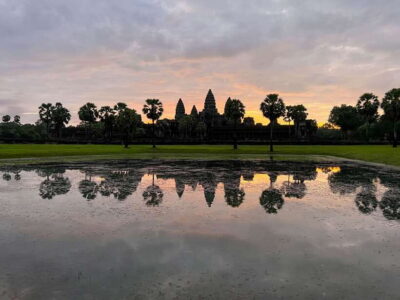
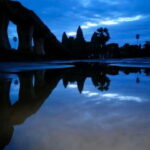
Sunrise at Angkor feels like time travel. The big draw here is the very early pickup (around 4:20am–4:50am), which sets you up for the Angkor Wat morning mood, plus a guided path through the main sights with an APSARA-authorized approach and an official English-speaking tour guide. I like that the day is structured so you’re not just wandering—you’re stopping at specific temples and learning what to notice.
My favorite part is the focus on the famous circuit: Angkor Wat first, then Bayon and its surrounding temple complex, and later Ta Prohm (the Tomb Raider temple). The one drawback to plan around: the headline price is only $10, but you’ll still need to buy the Angkor Pass (listed as $37 per person) and handle lunch on your own.
In This Review
- Key Things I’d Look For Before You Go
- Why the Sunrise-Style Start Matters in Siem Reap
- Getting to the Park: Tuk Tuk (1–2) or Minivan (3+) and What That Means
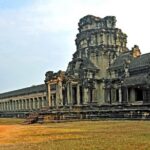
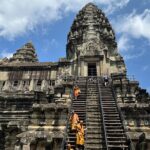
- Angkor Wat First: How the Morning Circuit Sets You Up
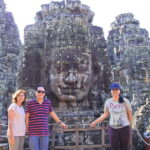
- Bayon and the Surrounding Temples: Where the Stops Feel More Specific
- Srah Srang and Lunch: A Realistic Break Inside the Angkor Area
- Ta Prohm and the Tomb Raider Temple: The Afternoon’s Best Payoff
- Price and Value: The $10 Tour Fee vs the Real Day Cost
- The Guide Factor: When English and Humor Actually Help
- Practical Tips to Get the Most From This 7-Hour Circuit
- Should You Book This Angkor Wat Sunrise Tour?
- FAQ
- How much does the Angkor Wat Sunrise Tour cost?
- How long is the tour?
- Is hotel pickup included?
- Do I need to buy an Angkor Pass?
- What’s included in the tour?
- Is food and drinks included?
- What temples are visited during the tour?
- What is the maximum group size?
- Can I cancel for a full refund?
Key Things I’d Look For Before You Go
- Early pickup timing that matches the sunrise-style schedule so you’re not fighting crowds later
- Official English-speaking guide who helps you make sense of Angkor’s art and architecture
- Max 15 travelers, which keeps the experience more human than big-bus sightseeing
- Cool bottle of water and towels included, a practical touch for the morning heat
- Angkor Pass ($37) and food are not included, so your true budget is higher than $10
Why the Sunrise-Style Start Matters in Siem Reap
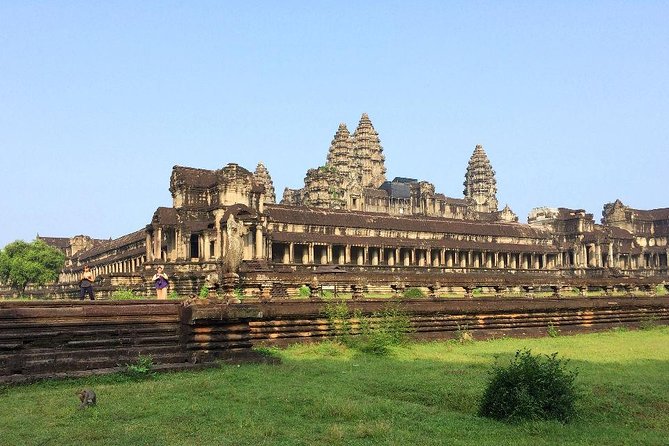
This tour is built around a dawn start, and that changes the whole feel of Angkor. You’re heading out while most people are still half-asleep, and you get to arrive at Angkor Wat early rather than late in the day when the sun turns the stones into a real workout.
The other reason this timing works: your day stays packed but not chaotic. You’re picked up from your hotel, taken into the Angkor Park area, then guided through the most important stops in a logical order. It’s a shared format, so you’re not getting total freedom to linger all day—but for a first visit, that structure saves you from decision fatigue.
You do pay for the Angkor Pass separately. The price you see ($10 per person) is the tour fee, but the entry ticket is not included. If you forget that part, you’ll get surprised at the gate or during the day when they ask you to cover admission.
Also note the timing details you should confirm: hotel pickup is listed between 4:20am and 4:50am, and hotel drop-off is listed as 12:30pm. The temple flow includes an afternoon segment (after lunch, toward Ta Prohm), so if you care about being back later, it’s worth asking the operator what the return timing looks like on your exact day.
You can also read our reviews of more tours and experiences in Siem Reap

Getting to the Park: Tuk Tuk (1–2) or Minivan (3+) and What That Means
Transportation is included, and the type depends on your group size: 1–2 people get a tuk tuk, while 3+ people ride in a minivan. That’s a useful detail because it affects comfort, shade, and how bumpy the ride feels on the way out.
The tour is capped at 15 travelers, so you’re not stuck in a giant herd. In practice, this usually means the guide can keep the group together at the big photo moments without shouting nonstop.
You’ll also get practical extras: a cool bottle of water and towels. That matters early morning because even before the heat peaks, you’ll still feel the effort of climbing temple steps and walking uneven paths.
One more small but real point: the tour is near public transportation and allows service animals. That’s helpful information if you’re planning around mobility needs or if your hotel pickup isn’t exactly where you expected it.
Angkor Wat First: How the Morning Circuit Sets You Up
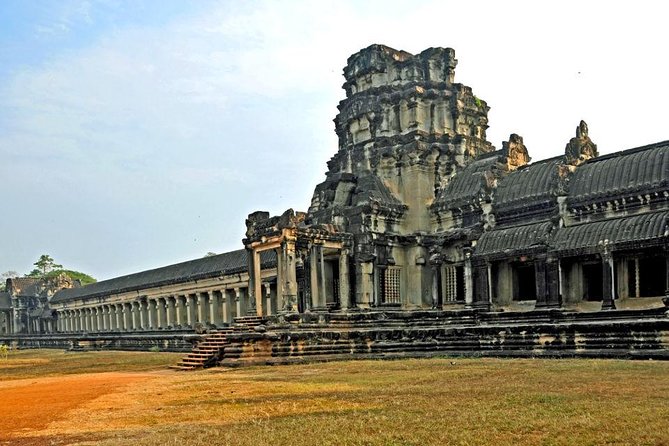
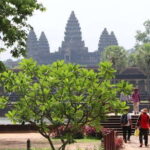
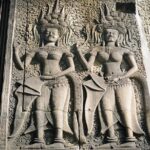
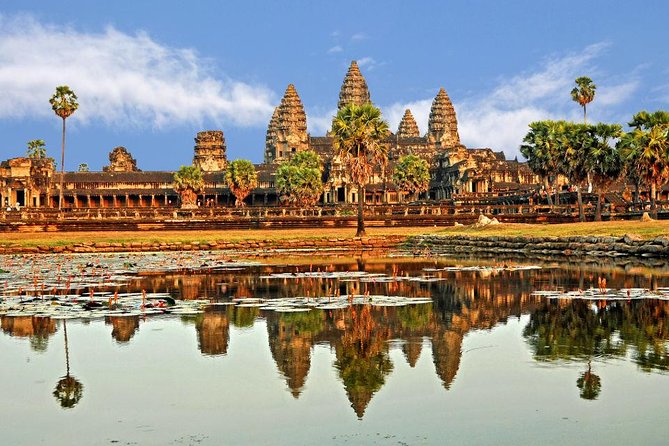
The day begins at Angkor Wat, and you’ll see the vast temple first right after pickup. This is the right opening move. Starting here gives you context before you bounce to the different temple zones, so you’re not constantly asking yourself, What am I looking at? The guide helps you focus on the art and architecture rather than treating every stone as the same.
Expect a guided pace that balances viewpoints and walking. You’ll spend about 3 hours in this first segment, which is long enough to enjoy the big impressions and not just snap a few photos and rush out.
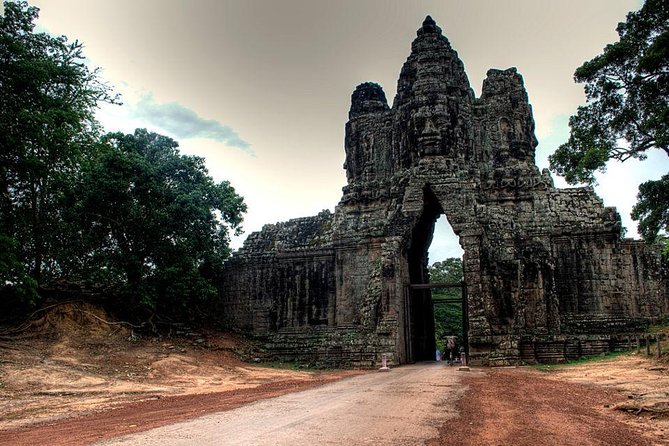
Then comes the next step: after Angkor Wat, you head toward Angkor Thom and on to Bayon. That flow is smart because Bayon’s style feels different, and it’s easier to appreciate that contrast when you already have Angkor Wat fresh in your mind.
The practical downside of starting with the headline temple: you need to be ready for early light, early crowds, and early patience. If you’re the type who wants to wake up slowly and stroll without structure, the dawn schedule can feel intense. But if you’re okay with getting moving early, it’s the kind of intensity that pays off.
Bayon and the Surrounding Temples: Where the Stops Feel More Specific
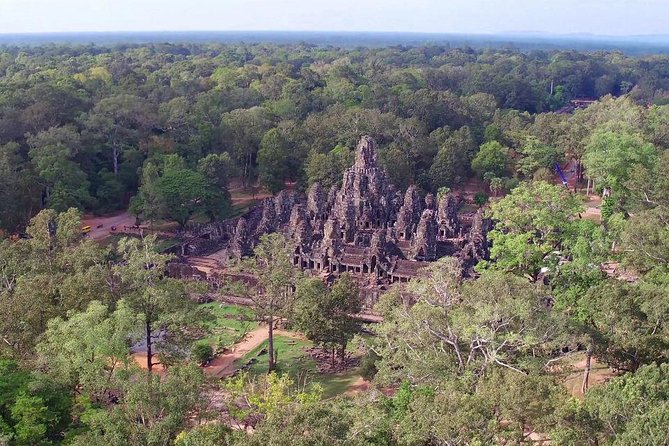
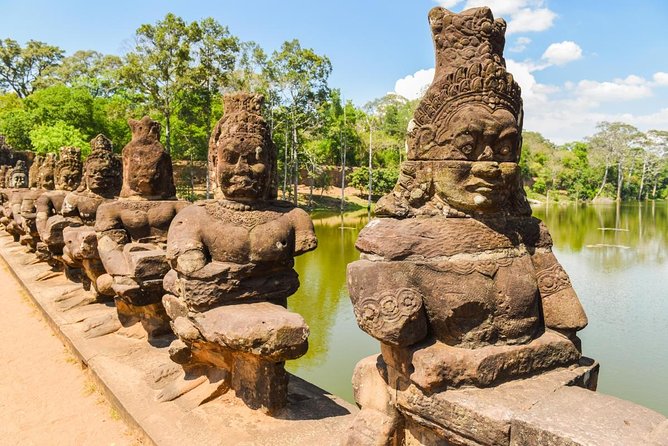
The next major stop is Bayon, and from there the tour branches through several named highlights. You’ll also visit Baphuon and Phimeanakas, plus the Terrace of the Elephants and the Leper King Terrace. After that, you finish the morning with shorter visits to Preah Palilay, the Preah Pithu Group, and Prasat Suor Prat.
What I like about bundling these in one stretch is that you get variety without losing the thread. One temple gives you one kind of visual rhythm; another adds a different layout and mood. Even if you don’t remember every name later, you come away with a mental map of the main “clusters” in this area of Angkor.
This section is also about learning how Khmer temple design tells stories through space—where you stand, what you notice first, and why the layout matters for the way you move. The guide’s English is an actual part of the value here. You’re not just being herded; you’re being coached on what to look for.
One consideration: admission tickets aren’t included. The tour mentions that you’ll pay for the Angkor Pass at your own account, so keep some cash or payment options handy in case the process feels tight at the start of the day.
Srah Srang and Lunch: A Realistic Break Inside the Angkor Area
After the busy temple push, you’ll move to Srah Srang. There’s about an hour allocated here, which makes the timing feel more human. You get a chance to reset your legs and recharge before the afternoon circuit.
Then the tour includes time to eat: you’ll find something at a local restaurant or food stall inside the Angkor Park area. Food and drinks for lunch are explicitly your own cost. I like that this is honest up front. It means you can choose what fits your appetite, your budget, and your tolerance for hot weather.
For a sunrise-style day, this meal break is important. Even if you’re good at walking, you’re still climbing and standing around in sun and shade. A short plan (drink first, eat second, then move) helps you keep energy for Ta Prohm later.
If you’re the kind of person who gets hangry when schedules slip, build in a small buffer. You’re on a shared tour, so you’ll be waiting at the group pace.

Ta Prohm and the Tomb Raider Temple: The Afternoon’s Best Payoff
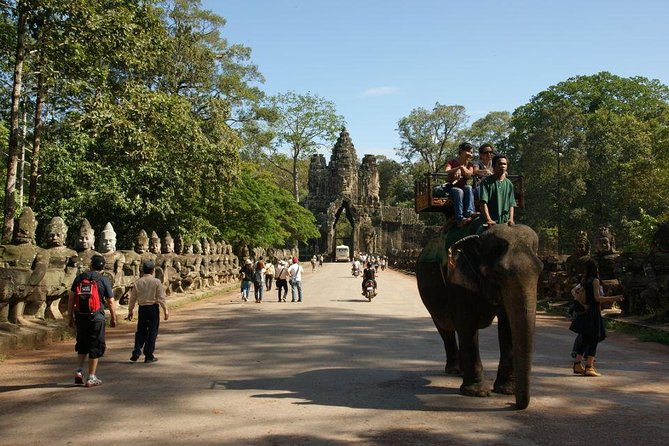
After lunch, the tour heads into the afternoon segment with several stops before the big one: Ta Prohm, known from the Tomb Raider film as the famous backdrop temple.
Before Ta Prohm, you’ll pass through Thommanon, Chau Say Tevoda, and Spean Thma, plus a stop at Ta Keo. This is a good set of “warm-up” temples because Ta Prohm can feel overwhelming in the best way—lots to look at, lots of iconic angles, lots of people trying to get the same shots. Visiting other sites first makes Ta Prohm feel like a payoff rather than the starting line.
Ta Prohm is the anchor of this portion. The tour format helps because you’re not just rushing in for a photo; you’re moving through the sequence with guidance. That turns the area into more than a movie set. You’ll also feel the difference in scale and atmosphere between the temples you saw earlier and the one everyone recognizes.
Keep expectations realistic: Ta Prohm can be visually intense, and you may not get every angle you want. If you hate waiting for your turn at popular spots, you might feel the crowds. But the upside is that the guide’s role helps you find the best places to stand within the time you have.
Price and Value: The $10 Tour Fee vs the Real Day Cost
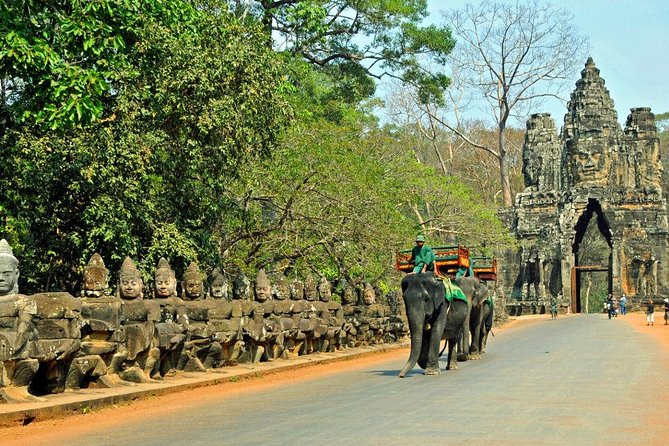
Let’s talk money like grown-ups. The tour price is $10 per person, and that’s genuinely low for what’s included: hotel pickup and drop-off, an official English-speaking guide, transportation (tuk tuk or minivan), and essentials like water and towels. For a first-day Angkor experience, that can feel like a bargain.
But here’s the catch that changes the budget: the Angkor Pass is $37 per person and is not included. So the likely baseline cost becomes about $47 per person before lunch and any personal expenses.
Is it still good value? For many people, yes, because you’re paying for guidance and transport, not just entry into a park. A guide saves time and reduces the risk of wandering in the wrong direction. You also get a structured route across multiple key temple areas in one day.
It becomes less of a bargain if you already know exactly how you want to self-guide the circuit or if you hate shared pacing. In that case, a private plan might make more sense—even if it costs more—because your time becomes yours.
The Guide Factor: When English and Humor Actually Help
The difference between a good tour and a forgettable tour is often the guide. Here, the tour includes an official English-speaking guide, and the quality shows up in how the information lands.
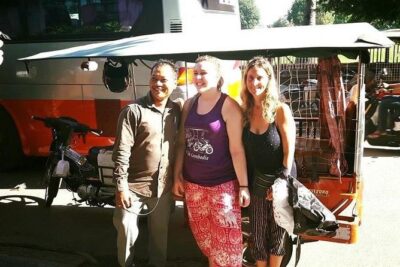
One name that came up in feedback is Mr. Thy. He’s described as having excellent English and strong driving, and he was quick to laugh and easy to chat with. That matters because Angkor can feel like information overload. When the guide can explain Khmer art and architecture in a way that’s clear, and still keep the day light, you remember more and stress less.
There’s also a pattern: the guide supports foreigners at the temples, so you’re less likely to feel lost or unsure where to look next. That’s a big deal on a sunrise-style schedule. You’re awake early; you don’t want to spend the day playing map games.
The transport part matters too. Reliable driving reduces fatigue, and you can stay focused on your surroundings instead of worrying about safety or comfort.
Practical Tips to Get the Most From This 7-Hour Circuit
This tour runs about 7 hours, and it’s a morning-heavy day built around early pickup. You’ll be walking between temple areas, likely on uneven ground and steps, so pack for movement, not comfort theater.
A few practical moves:
- Wear shoes you trust for stone steps and dust.
- Bring a layer for early morning wind, since sunrise starts can feel cooler than you expect.
- Plan for heat later even if you start in the dark. The day builds.
- Budget for lunch and the Angkor Pass upfront so you don’t get stuck deciding mid-day.
- If you care about timing, double-check the return time because the tour’s segments include both morning and afternoon-style stops, while the listed drop-off time is 12:30pm.
Also, keep your expectations aligned with a shared format. You’ll move as a group. That’s the trade: less personal time for maximum value and less planning stress.
Should You Book This Angkor Wat Sunrise Tour?
Book it if you want a guided, cost-effective first Angkor circuit with an early start, a clear route across the main sights, and practical support like hotel pickup, transport, water, and towels. With a maximum group size around 15, it’s often easier to manage than the huge tour buses.
Skip it or modify your plan if you hate shared pacing, or if you’re the type who prefers to spend extra time slowly at your own favorite temple without being pulled to the next stop. Also factor in the real day cost: the Angkor Pass (listed $37) and lunch are on you, so the $10 headline is only part of the story.
If you’re balancing budget with quality guidance, this is a solid way to do Angkor in one day—and the dawn start is a big reason it feels special.
FAQ
How much does the Angkor Wat Sunrise Tour cost?
The price is $10.00 per person.
How long is the tour?
The duration is listed as about 7 hours.
Is hotel pickup included?
Yes. Pickup is included, with pickup scheduled from 4:20am to 4:50am, and hotel drop-off is listed at 12:30pm.
Do I need to buy an Angkor Pass?
Yes. The Angkor Pass is listed as $37.00 per person and is not included in the tour price.
What’s included in the tour?
Included features are an official English-speaking tour guide, transportation (tuk tuk for 1–2 pax or minivan for 3+), hotel pickup and drop-off, and a cool bottle of water and towels.
Is food and drinks included?
No. Food and drinks (lunch) are not included, and you’ll pay your own account.
What temples are visited during the tour?
The tour includes stops at Angkor Wat, Bayon, Srah Srang, and Ta Prohm, plus additional temple stops such as Baphuon, Phimeanakas, the Terrace of the Elephants, the Leper King Terrace, Preah Palilay, Preah Pithu Group, Prasat Suor Prat, Thommanon, Chau Say Tevoda, Spean Thma, and Ta Keo.
What is the maximum group size?
The tour has a maximum of 15 travelers.
Can I cancel for a full refund?
Yes. Free cancellation is available up to 24 hours in advance for a full refund.