REVIEW · SIEM REAP
Banteay Srei, Kulen Waterfall & Beng Mealea Small-Group Tour
Book on GetYourGuide →Operated by Angkor Day Trip · Bookable on GetYourGuide
One day in Siem Reap can feel like two worlds. You get red-sandstone temple craft at Banteay Srei, then jungle temple adventure at Beng Mealea, plus panoramic views from Kulen. The itinerary moves fast, but the payoff is a wide hit of Cambodia rather than one “same-same” monument day.
I especially love the variety: cliff viewpoints, a sacred reclining Buddha, and a riverbed carved with thousands of lingas. The best part for me is how the day keeps turning corners—climbing views, then cooling off in the waterfall. One consideration: you’ll spend a lot of the day on the road and you may need a bit of stamina for temple paths.
You’ll also notice this trip is built for comfort where it counts. You start early from your hotel, ride in an air-conditioned vehicle, and you get bottled water, a towel, and seasonal fruit tasting along the way. The one drawback to plan around is that entry costs are split: Angkor Pass is required for Banteay Srei and Beng Mealea, and Kulen National Park has a cash-only entrance fee.
Small-group route (max 12): easier pacing and more room at stops
Banteay Srei carvings: red sandstone temple art with serious detail
Peng Takhu / Amazing Cliff: big skyline views without the usual crowd vibe
Kulen waterfall swim option: bring a swimsuit; changing rooms are on-site
Beng Mealea jungle temple: mostly unrestored, with collapsed galleries and roots
Photo help from the guide: guidance on where to stand and, in some departures, extra shooting plus sharing
In This Review
- Getting a Head Start: Siem Reap Pickup and the Road to Kulen
- Banteay Srei: Red Sandstone Carvings That Reward Slow Looking
- Peng Takhu (Amazing Cliff): A Panoramic View Break from Temples
- Preah Ang Thom: The Reclining Buddha Carved in Natural Sandstone
- Kulen Waterfall Time: Swim If It’s Hot and Bring the Right Gear
- River of 1000 Lingas (Anlong Pong Phkay): Carvings You Notice Only When You Stop
- Lunch on the Route: Fuel Without Breaking the Flow
- Beng Mealea: The 12th-Century Jungle Temple Where Nature Does the Restoration
- How the Day Paces: Crowd Control, Photo Stops, and the Realistic Time Budget
- Price and Temple Entry Costs to Budget For (So You Don’t Get Surprised)
- Who This Tour Fits Best (and Who Might Prefer Private)
- Should You Book This Banteay Srei, Kulen, and Beng Mealea Day Trip?
- FAQ
- How long is the Banteay Srei, Kulen Waterfall & Beng Mealea tour?
- What time is hotel pickup in Siem Reap?
- How big is the small group?
- What’s included in the price?
- Is an Angkor Pass required?
- How much is the Kulen Mountain National Park fee, and how do you pay?
- Can I swim at Kulen Waterfall?
- Is there a cancellation window?
Getting a Head Start: Siem Reap Pickup and the Road to Kulen
This is a true day-trip sprint—about 10 hours from hotel pickup to return—so the schedule matters. Pickup runs between 7:30 and 8:00 AM, and the exact time is confirmed the day before. That early start is practical. It helps you reach Kulen while the light is good and before the biggest waves of tour groups fully settle in.
You’ll ride in an air-conditioned vehicle, which is a big deal in Cambodia’s heat. The drive is long enough that it really changes the feel of the day: you’re not just stepping between nearby sites—you’re shifting geography. That makes the temples feel like part of a journey instead of a checklist.
Also, this group is kept intentionally small (up to 12 participants). In practice, that usually means less bottlenecking at entrances and a calmer experience at the stops where people tend to cluster for photos.
Banteay Srei: Red Sandstone Carvings That Reward Slow Looking
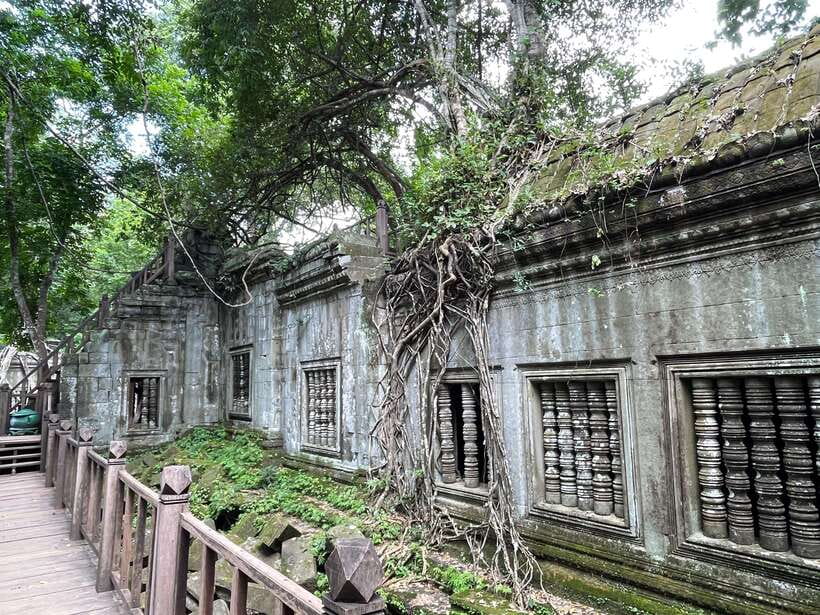
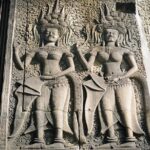
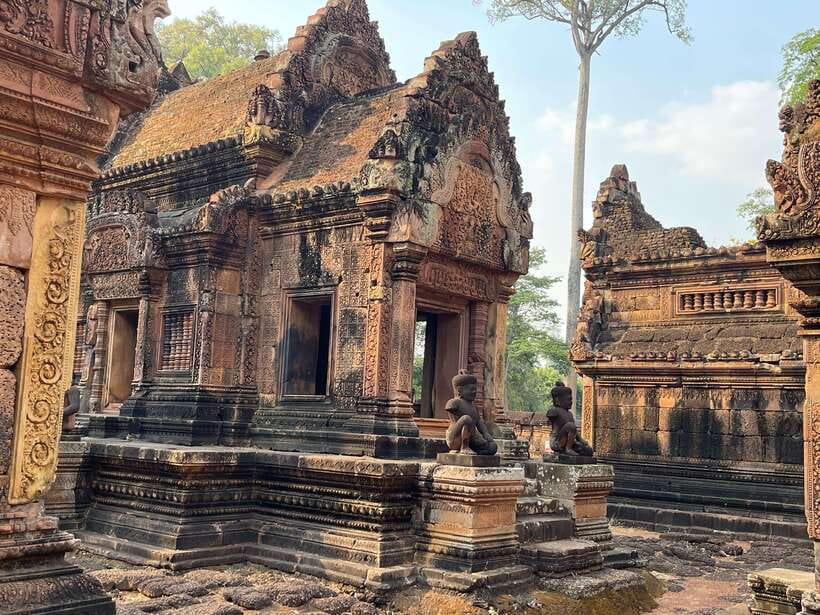
Banteay Srei is one of those temples where you can’t rush. It’s a 10th-century temple dedicated to Shiva, about 25 kilometers north of Angkor Wat, known for its intricate red-sandstone carvings. The stone is the star: red sandstone lets the details stay crisp and visually sharp, so you get more than generic “temple decoration.” You get scenes carved with real care.
At a glance, it looks like the kind of place you either love or ignore. But if you like reading temple art—tiny figures, Hindu story scenes, and stonework that feels almost architectural—you’ll get a lot out of it. Spend time here. It’s one of the best stops on the day for “stand there and look closer” tourism.
What to watch for:
- Carvings are easier to appreciate when you stop moving for a minute. Let the guide point out themes if they mention Shiva-related symbolism.
- Expect the usual temple-day behavior: people taking photos, walking in loops, and locals passing through.
Possible drawback:
You’ll likely feel slightly rushed at the start of the day. If you want maximum time for carving close-ups, arrive mentally ready to slow down inside the allowed visit window.
You can also read our reviews of more tours and experiences in Siem Reap.
Peng Takhu (Amazing Cliff): A Panoramic View Break from Temples
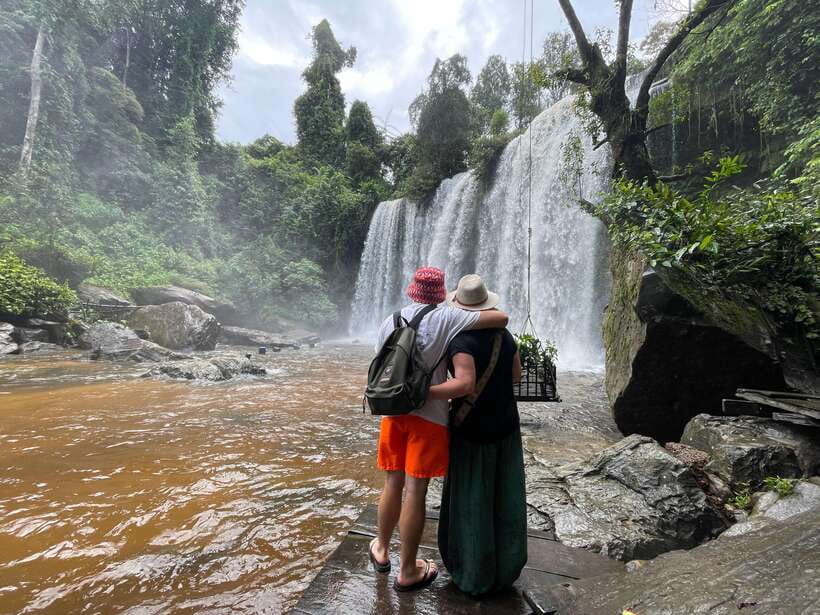
After Banteay Srei, you shift gears to a viewpoint on Kulen Mountain: Peng Takhu, also called the Amazing Cliff. This is where the day stops being purely stone-and-roots and becomes sky-and-geometry.
It’s described as a hidden tourist spot on the ridge of Kulen Mountain. The practical detail I’d take seriously is navigation. Before you reach the foot of the mountain, you’ll see a signpost for Peng Takhu on the right-hand side, and it’s about 50 meters from that signpost. A guide helps here because “hidden” can also mean “easy to miss.”
The time window is short (around 20 minutes), so go with a clear plan: put your phone away for a moment, scan the view, then take photos once you decide on your angle. Ridge viewpoints are one of those places where the “best photo” is rarely the first one you snap.
Why this stop is worth it:
- You get a panoramic moment that resets your eyes after dense temple carvings.
- It gives you a sense of place—you’re on Kulen, not just visiting temples that could exist anywhere.
Possible drawback:
It’s quick. If you hate rushed viewpoints, treat it like a taste, not a full hiking experience.
Preah Ang Thom: The Reclining Buddha Carved in Natural Sandstone
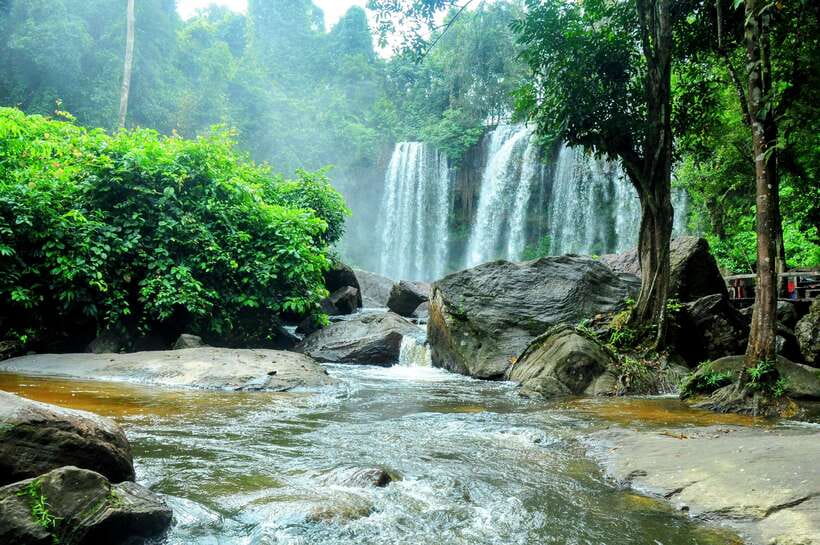
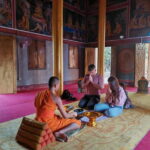
Then comes a very sacred site: Preah Ang Thom, also referred to as the Great Buddha. This reclining Buddha is about 8 meters tall and carved into a huge natural sandstone boulder. There’s a modern staircase and a shelter around the statue, which makes the site feel both reverent and practical.
The sacred part isn’t just the statue. It’s the people. There are always patrons visiting, sometimes making the site busy. You’ll see souvenir stalls around the area, and you’ll likely pass a grand naga balustrade and an entrance arch flanked by elephants (these are described as contemporary). The approach is designed to guide you up into a more prayer-focused space.
Here’s what you should expect in behavior and etiquette:
- You can take off your shoes at the pagoda entrance.
- You’re meant to say blessings before heading up the stairs.
- There are Buddha’s foot imprint areas (Buddhapada) near where you remove shoes.
This stop is one of the calmer spiritual moments on the day, even when it’s busy. You can stand, look up, and just let the scale land. The reclining Buddha reaching nirvana is not a “look at it and move on” kind of sight.
Possible drawback:
The site can get crowded. If you need quiet time, go slow and don’t fight the flow—wait for a gap around the stairs.
Kulen Waterfall Time: Swim If It’s Hot and Bring the Right Gear
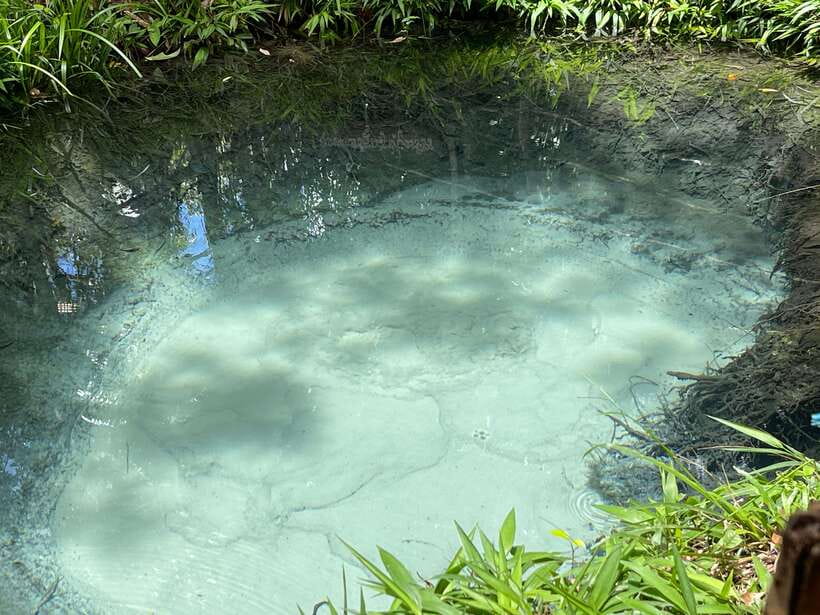
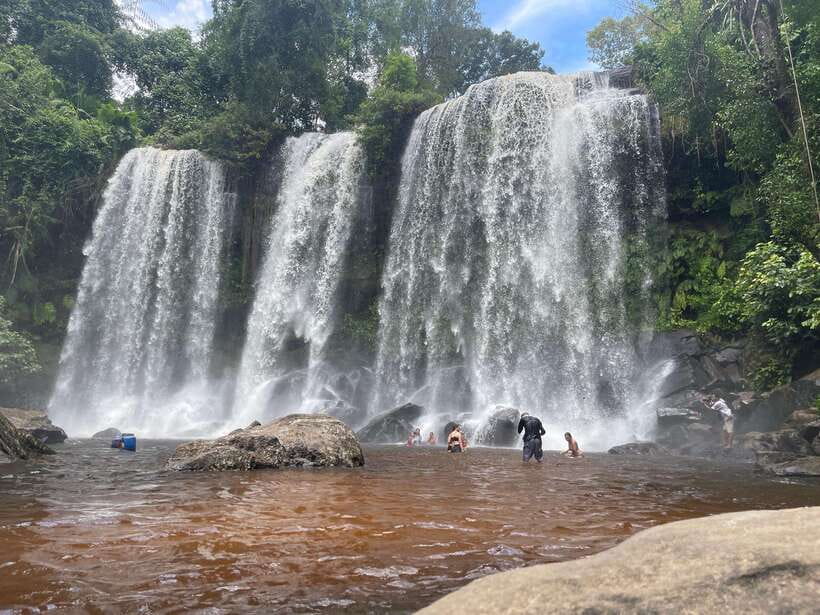
Kulen Mountain National Park is where you get your cooling break: Kulen Waterfall. There are two main waterfalls. During rainy season, the first is about 4–5 meters tall and around 25 meters wide, and the second is bigger—15–20 meters tall and roughly 15 meters wide. Since the size changes with the season and rainfall, your experience can vary a lot year to year (and even month to month).
The day includes about one hour here, which is enough time to see the water, take photos, and—if conditions allow—get into it. Swimming is explicitly part of the plan. If you want that, bring a swimsuit and a towel. Changing rooms are available on-site, which makes it less of a hassle than you might expect.
Why the waterfall matters in this itinerary:
Temples can be hot, dusty, and mentally intense. The waterfall gives you a sensory reset—sound, mist, and a break from stonework. It also adds variety in the body-use department: less walking through carvings, more time moving around paths near the water.
Possible drawback:
Water conditions depend on season. If you visit when water flow is lower, it may feel more like a strong waterfall than a roaring spectacle. Still worth it for the setting, but don’t lock yourself into a single expectation.
River of 1000 Lingas (Anlong Pong Phkay): Carvings You Notice Only When You Stop
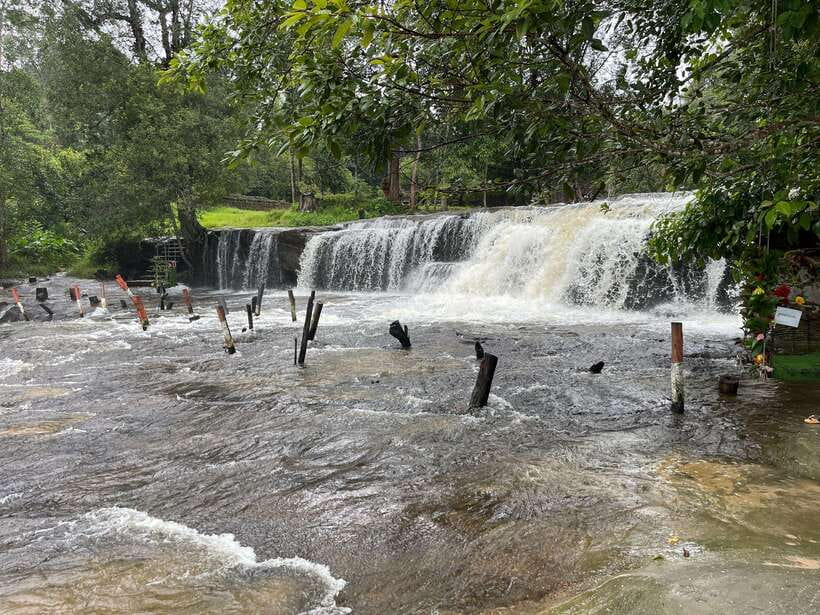
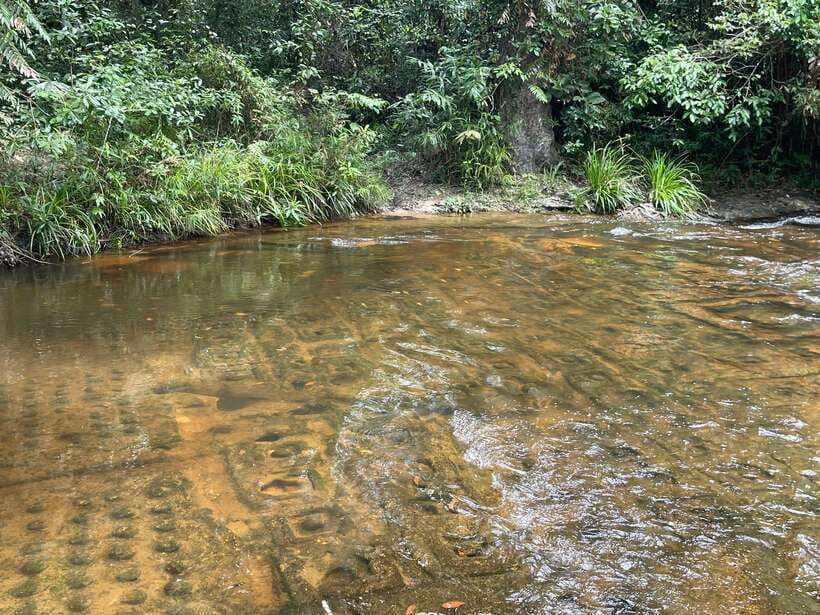
Next up is a carved riverbed: Anlong Pong Phkay, known as the River of 1000 Lingas. Along a stretch of about 500 meters, you’ll find carvings of lingas, large and small yoni, plus a large carving of Vishnu. There are also smaller carvings along the walls of the riverbed in the bedrock.
This stop rewards attention. If you treat it like another “walk-through,” you’ll miss why it’s special. The carvings are part of a sacred landscape where art and belief overlap in a very physical way—literally in the stone you’re standing near.
What makes it feel different from the temples:
- You’re not inside an ornate building.
- You’re reading carvings in a natural setting, with the riverbed acting like an open-air canvas.
The allotted time is short (about 20 minutes), so ask the guide what to focus on: where the densest carvings are and which figures are easiest to spot. If you can slow your pace for a few minutes, you’ll come away with more than just “I saw lingas.”
Possible drawback:
Short visit time can feel tight if you’re the kind of person who reads everything slowly.
Lunch on the Route: Fuel Without Breaking the Flow
Lunch is included and happens at a local restaurant, with about one hour set aside. It’s a good setup because it protects the rhythm of the day. You’re not stuck hunting for food between stops while the guide and driver are waiting.
What you’ll likely notice is that the day doesn’t treat meals as just meals. Along the way, fruit tasting is included, and you may be offered local snacks that reflect regional flavors. (In past departures, the day has included banana-based treats and palm cakes.) That kind of roadside-to-table connection is part of why this itinerary feels more local than a “temples only” circuit.
Practical note:
Even with lunch included, I’d still keep an eye on what you drink. Bottled water is provided, but Cambodia heat can still sneak up on you.
Beng Mealea: The 12th-Century Jungle Temple Where Nature Does the Restoration
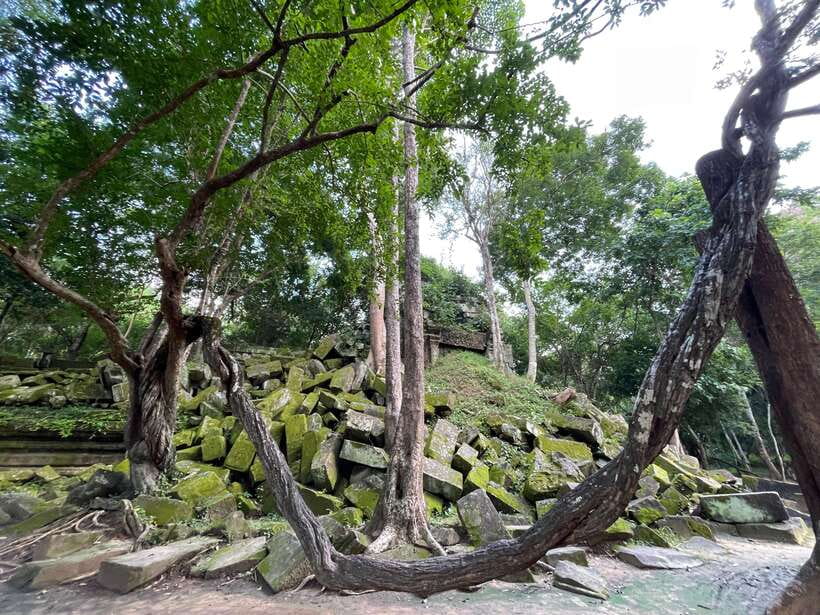
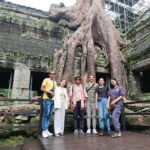
Finally, you reach Beng Mealea, about 40 kilometers east of Angkor Wat. Built in the early 12th century, it’s largely unrestored, which changes the whole vibe. Instead of polished paths and rebuilt stonework, you get collapsed galleries, vine-covered walls, and a sense of discovery as you navigate the temple’s scale.
The jungle surrounds it—trees and roots intertwined with stone. That’s the point. Beng Mealea feels like the temple is still negotiating with the forest. It’s not “comfortable archaeology.” It’s adventure.
You’ll visit for about one hour. In that time, you can do two things well:
- Walk enough to understand the layout and the scale of what’s fallen.
- Pause enough to take in how vines, roots, and broken walls interact.
Why this stop is a major value-add:
Many Angkor-area days focus on restored showpieces. Beng Mealea gives you the opposite: a temple that looks closer to a living ruin. It makes you think about time differently—less postcard, more atmosphere.
Possible drawbacks to be aware of:
- This is not a smooth, flat stroll. The paths can be uneven and you’ll probably do more “step, navigate, repeat” walking than at a fully restored site.
- The day mentions that for guests with lower physical fitness, a group tour might be demanding. If you know you struggle with uneven ground, consider a private option.
How the Day Paces: Crowd Control, Photo Stops, and the Realistic Time Budget
This tour is structured to hit five major experiences without letting you drown in logistics. The total pace is brisk: there are road segments (for example, a 1-hour coach ride early on, then shorter transfers between stops, and a longer 80-minute drive back to Siem Reap). That’s why pickup timing matters and why you should pack smart.
Two things make the pace more pleasant:
- The group cap (max 12) helps prevent the usual “everyone arrives at once” chaos.
- Your guide is set up to manage the day with photo timing and site navigation, so you spend less mental energy figuring out where to go next.
Photo culture is real at Angkor-area sites, but the best use of your time is listening for simple guidance: where the best angles are, what part of a temple is worth framing, and when to step aside so you’re not stuck behind the loudest crowd.
Small comfort touches matter on long days:
Bottled water and towels help. And along some departures, guides have been extra about photography—helping with picture spots and sometimes even taking photos with their own camera and sharing them afterward via AirDrop. That’s not something to count on as a guarantee, but it fits the overall service style you can expect.
Price and Temple Entry Costs to Budget For (So You Don’t Get Surprised)
The advertised price is $51 per person for a 10-hour small-group day. That’s solid value when you consider what’s included: hotel pickup/drop-off, an English-speaking guide, air-conditioned transportation, bottled water and towel, seasonal fruit tasting, and lunch.
But the real budgeting question is entry fees, because they’re split:
- Angkor Pass is required for Banteay Srei and Beng Mealea.
- Kulen Mountain National Park entrance fee is $20 per person (cash only). Credit cards aren’t accepted.
So your “all-in” cost depends on whether you already have the pass and whether you have cash available for Kulen.
Tip that will save you stress:
Bring the right cash amount for the Kulen entrance fee before you arrive at the park. Cash-only fees are easy to trip on when you’re sightseeing.
Also remember that tipping the guide and driver is not included. In a day like this, tips are often part of how you show appreciation for real work—keeping timing, logistics, and crowd flow under control.
Who This Tour Fits Best (and Who Might Prefer Private)
This is a great fit if you want a day that mixes:
- Temple precision (Banteay Srei)
- Scenic viewpoint energy (Peng Takhu cliff)
- Spiritual centerpiece time (Preah Ang Thom reclining Buddha)
- Nature break (Kulen waterfall, with swim option)
- Jungle ruin exploration (Beng Mealea)
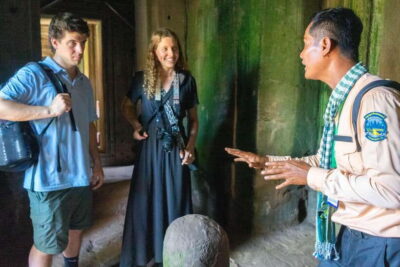
It’s also a good match for people who like conversation and guidance. A professional English-speaking guide adds value when the sites have symbolism and when routes are easy to get wrong.
Two groups should consider a private alternative:
- If you’re sensitive to uneven ground and longer walking, Beng Mealea may feel too physical for a group pace.
- If you prefer longer time at a single site (instead of compressed visit windows), private can rebalance the day.
Should You Book This Banteay Srei, Kulen, and Beng Mealea Day Trip?
Book it if you want a high-variety day that doesn’t force you to choose between temples and nature. The combination makes sense: carvings, cliff views, sacred Buddha imagery, swimming at the waterfall, and then the jungle ruin of Beng Mealea.
Think twice if you’re working with limited stamina or you hate short stops with frequent transitions. The day is busy by design, and Beng Mealea in particular asks you to move through a more rugged setting.
If you do book, go prepared:
- Carry the right cash for the Kulen entry fee.
- Bring a swimsuit and towel if you want to swim.
- Wear shoes you trust on uneven ground, especially for Beng Mealea.
FAQ
How long is the Banteay Srei, Kulen Waterfall & Beng Mealea tour?
The tour lasts about 10 hours.
What time is hotel pickup in Siem Reap?
Pickup is scheduled between 7:30 and 8:00 AM, and the exact timing is confirmed the day before the tour.
How big is the small group?
The small-group tour is limited to a maximum of 12 participants.
What’s included in the price?
You get hotel pickup and drop-off, an English-speaking professional guide, air-conditioned transportation, bottled water and a towel, seasonal fruit tasting, and lunch at a local restaurant. Temple entry fees and park fees are not included.
Is an Angkor Pass required?
Yes. An Angkor Pass is required for Banteay Srei and Beng Mealea.
How much is the Kulen Mountain National Park fee, and how do you pay?
The Kulen National Park entrance fee is $20 per person, and it is cash only. Credit cards are not accepted.
Can I swim at Kulen Waterfall?
Swimming is possible, and if you plan to swim you should bring a swimsuit and towel. Changing rooms are available on-site.
Is there a cancellation window?
You can cancel up to 24 hours in advance for a full refund.