REVIEW · SIEM REAP
From Siem Reap: Banteay Srei Temple & Grand 5 Temple Tour
Book on GetYourGuide →Operated by Siem Reap Shuttle · Bookable on GetYourGuide
Banteay Srei is small, but it hits hard. This one-day tour connects you to the old Khmer Empire capital and gives you five major Grand Circuit temples in a single route, with an English-speaking guide who explains the rituals and symbolism behind the stones. I especially love how the day balances big-figure Angkor sights with the finer, more delicate work you notice at Banteay Srei.
What I like most is the pace: you get time to walk, look closely at carvings, and understand what you’re seeing without feeling rushed. Guides such as Ry-Cheng and Narath are often praised for calm, respectful guiding and clear explanations, and that makes a long day feel manageable.
One consideration: it’s a hot, walking-heavy circuit. If you’re not steady on uneven ground—or you use a wheelchair—this tour is not recommended, and temple dress rules (no shorts, shoulders covered) can catch people off guard.
In This Review
- Key Things You’ll Notice on This Grand Circuit Day
- Getting to the Old Heart of the Khmer Empire (Without Wasting the Morning)
- First Temple Stop: Pre Rup Temple and the Feeling of Scale
- Banteay Srei: The Citadel of Women and Why the Details Matter
- Lunch Break: Keep It Simple, Then Get Back to Temples
- East Mebon: A Temple Shaped by Water Stories
- Neak Poan: Quiet Walls, Mythic Healing Waters
- Ta Som: The Stone Gate and the Giant Roots Effect
- Preah Khan: A Vast Monastic Complex to Close the Day
- Beyond the Temples: Preah Dak Village for Real-Day Life
- What’s Included vs. What You’ll Pay for Yourself
- Dress Code, Heat, and Walking Reality Checks
- Who This Tour Suits Best (And Who Might Want a Different Plan)
- Should You Book This Banteay Srei and Grand Circuit Tour?
- FAQ
- What time do I need to be ready for pickup?
- Is lunch included in the price?
- What’s included in the tour cost?
- Do I need to buy the Angkor entrance pass?
- What should I wear to visit the temples?
- What should I bring with me?
- Is the tour suitable for wheelchairs or limited mobility?
- Is the shared tour okay for young children?
Key Things You’ll Notice on This Grand Circuit Day
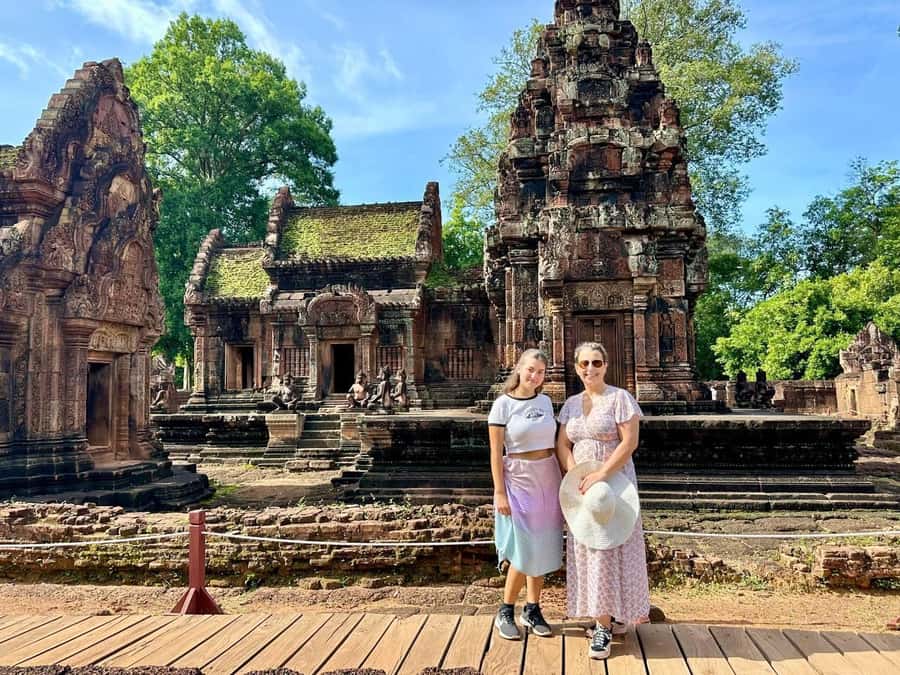
- Banteay Srei’s pink sandstone carvings up close, earned after a long ride out from Siem Reap
- A full Grand Circuit hit: Pre Rup, Banteay Srei, East Mebon, Neak Poan, Ta Som, and Preah Khan
- Cold towels and bottled water that actually help on a hot day
- Pickup timing and smooth organization, including hotel pickup and clear morning flow
- Preah Dak village life outside the temples, so you don’t leave Angkor as a museum-only trip
- Temple context for Hindu rituals and Khmer beliefs, explained in plain English
Getting to the Old Heart of the Khmer Empire (Without Wasting the Morning)
Your day starts with hotel pickup from Siem Reap. Be ready at 7:50 AM so you don’t miss the first leg. From there, you ride in a comfortable vehicle toward the Angkor temple complex. This matters more than it sounds: getting out early helps you deal with the heat and gives you daylight for the smaller, intricate carvings later.
One small but smart touch is how the morning logistics feel set up. People commonly mention punctual pickup, and the tour flow tends to be organized: you might first be moved to a meeting point, then placed on a proper bus for the day. Some groups also find there are drinks and snacks available before you roll.
A quick reality check: you’re heading into a large archaeological area, and the day works best if you pack light (no luggage or large bags) and keep your energy steady. Wear hiking shoes, because temple ground is uneven and dusty, and you’ll be on your feet more than you might expect for a “one-day” tour.
You can also read our reviews of more tours and experiences in Siem Reap.

First Temple Stop: Pre Rup Temple and the Feeling of Scale
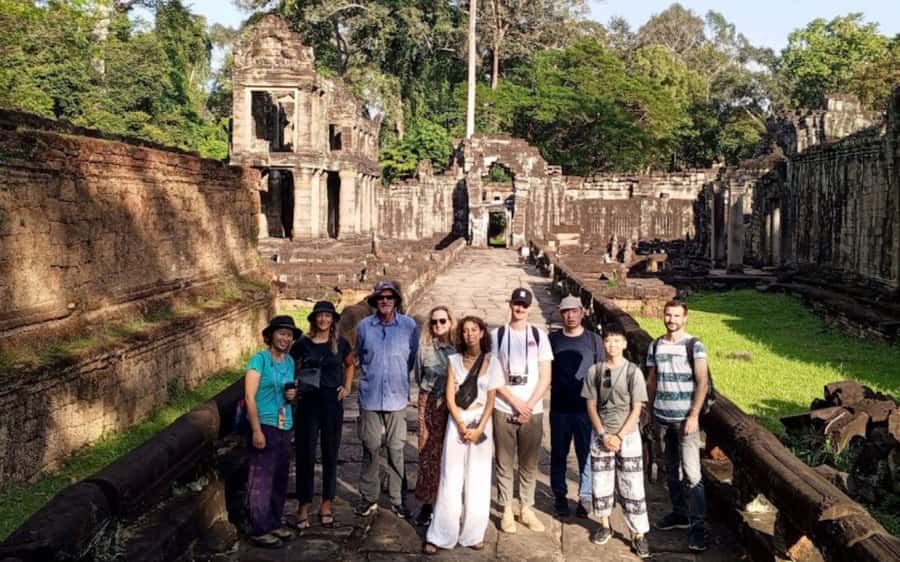
The itinerary begins at Pre Rup Temple, a smaller but meaningful stop because it’s one of the few structures that remains fairly intact. It’s a good opener. You start learning the visual language of Angkor—stone placement, levels, and how the layout directs your movement and your attention.
Here’s why this first stop helps: when you see one temple clearly early on, later sites don’t feel like random ruins. You start to recognize repeated ideas—how water is referenced, how sanctuaries are positioned, and how religious space is built.
Practical note: you’ll likely deal with sun and heat. Start with sunscreen and take it slowly on the stone steps. If you’re the type who hates being rushed, you’re in the right format. Many guides are praised for not sprinting through stops and for letting you look closely.
Banteay Srei: The Citadel of Women and Why the Details Matter
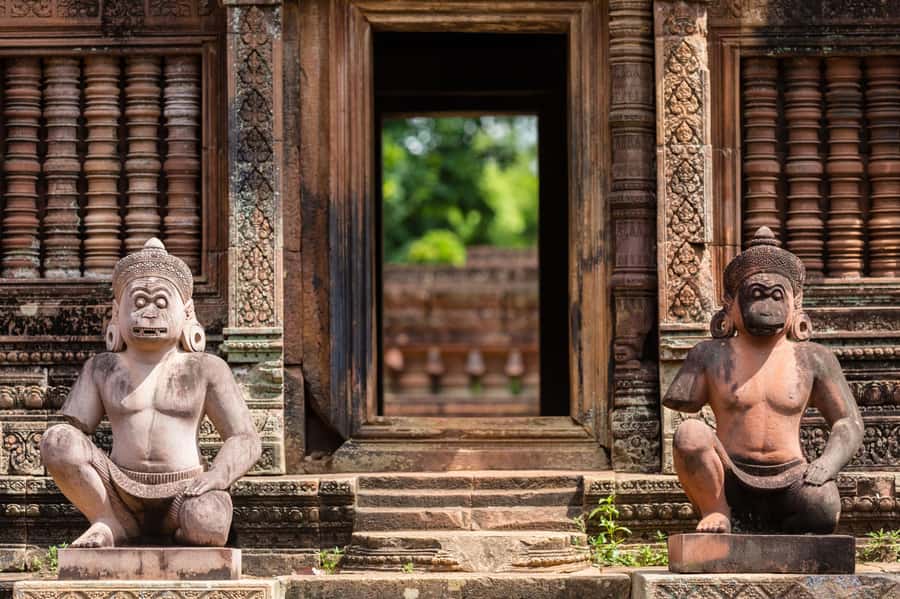
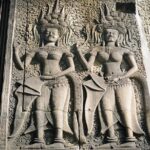
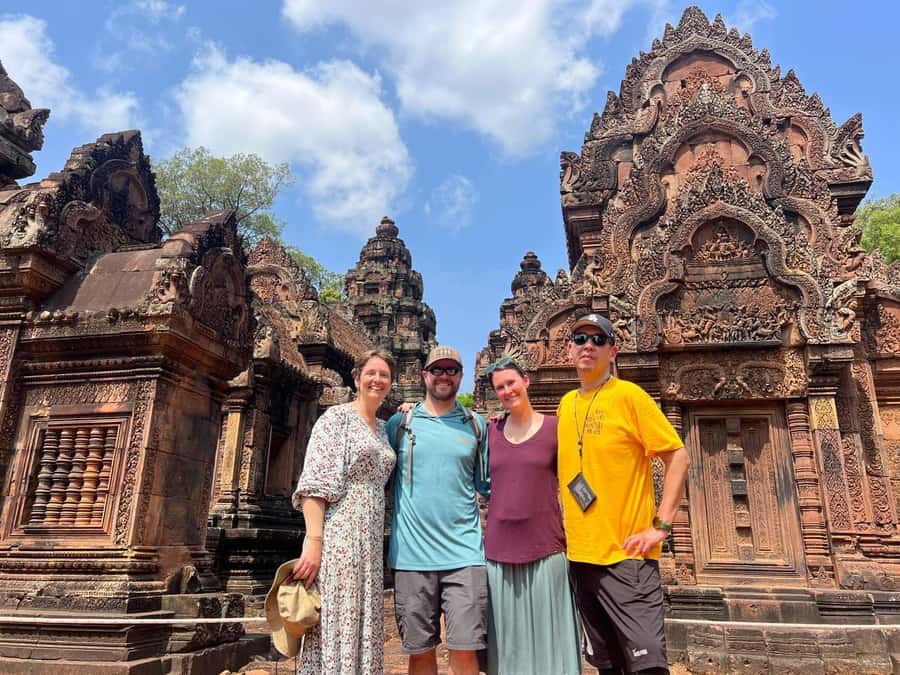
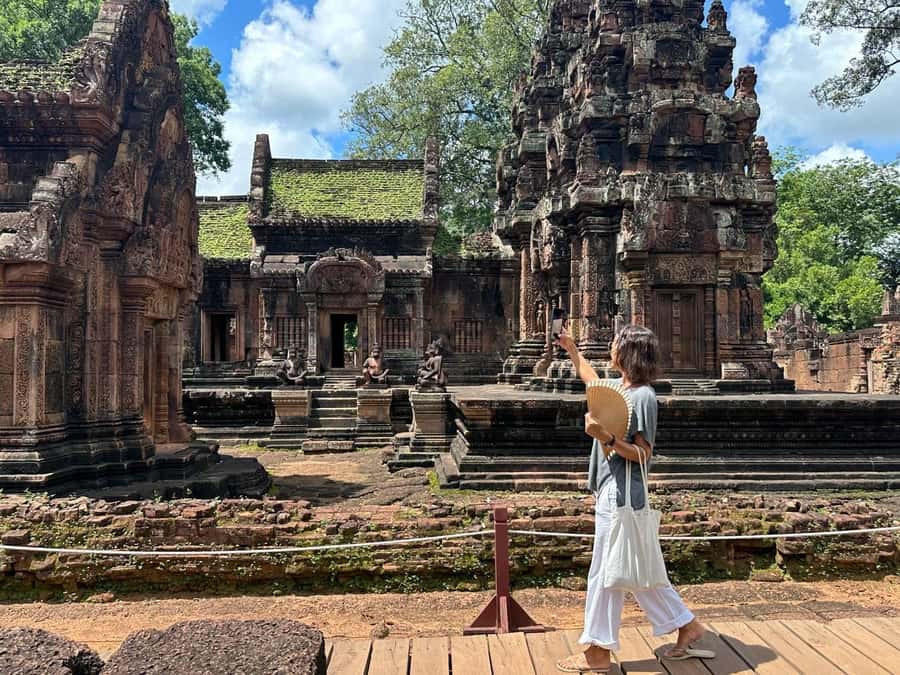
Then you reach the highlight for most people: Banteay Srei, often called the Citadel of Women. The big draw is its pink sandstone and the extremely fine carving work. It’s not just that the temple is beautiful—it’s that it rewards slowing down. At Banteay Srei, you’ll see patterns, faces, and story elements that don’t land the same way at larger, heavier sites.
You’ll also hear the common interpretation tied to the site’s reputation: many people believe its refined details reflect Khmer-era craftsmanship associated with women. Whether you take that as literal history or cultural storytelling, it’s still a useful lens. It encourages you to look at workmanship, not only architecture.
How to make it worth your time:
- Bring your attention to carving depth and symmetry. Small differences are where the artistry lives.
- Take a few minutes at quieter angles. If your group moves as one, you might miss the best close-up view.
- Ask your guide what specific figures or motifs mean. The best tours don’t just point; they explain how Hindu rituals and Khmer beliefs show up in the stone.
This is also one of those temples where the guide’s style really affects your experience. Names like Phyrom and Lok show up repeatedly for their ability to explain Khmer history and symbolism in ways that feel easy to follow, and that’s a huge deal when you’re standing in front of thousands of carvings and trying to make sense of it all.
Lunch Break: Keep It Simple, Then Get Back to Temples
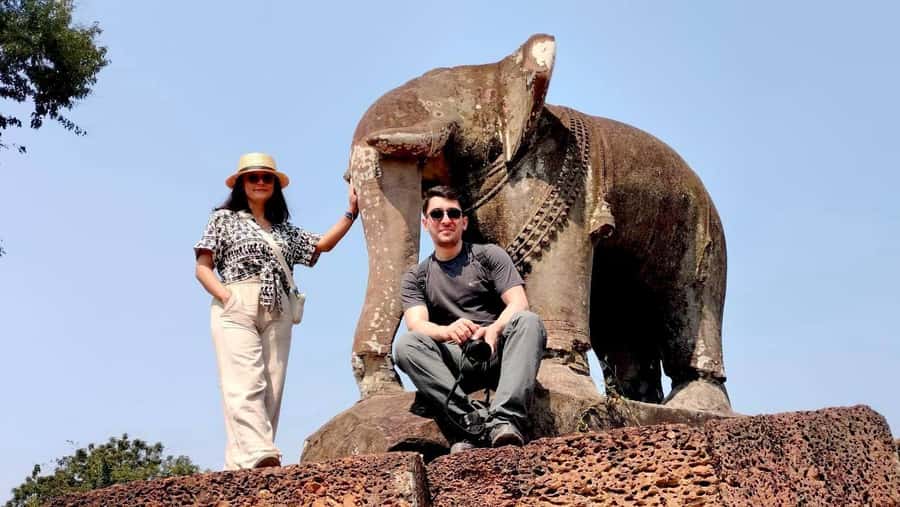
After Banteay Srei, there’s typically a break at a nearby restaurant. Lunch is not included, so you’ll pay for your own meal. The good news is the food options are usually straightforward Cambodian choices like curries, soups, and stir-fries.
I like this break structure because it protects the rest of your day. When you’re going from one temple to another, you need a reset for your legs and your stomach. Just remember to hydrate before you eat—temperatures can be intense.
If you’re sensitive to heat, consider this: order something familiar and stick to a pace you can handle. You don’t want a big, heavy meal to slow you down for the afternoon temples.
East Mebon: A Temple Shaped by Water Stories
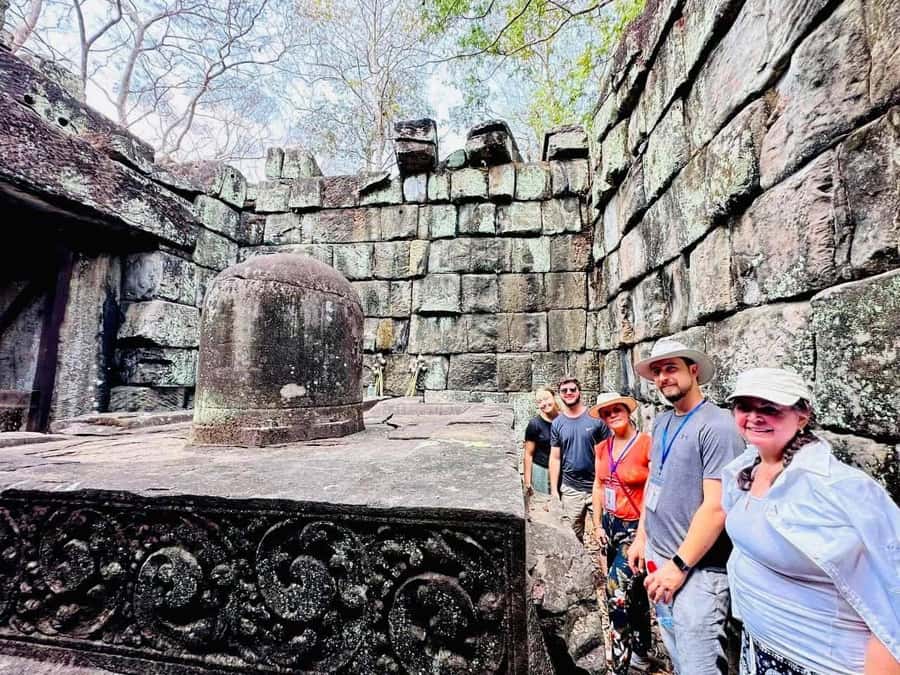
Next up is East Mebon, a temple that once stood on an island in a reservoir. That “surrounded by water” idea matters. It’s one of the reasons Angkor temples feel so symbolic rather than only decorative—water isn’t just scenery, it’s part of how sacred space was imagined.
Even if you don’t see the original setting perfectly today, you can still read the layout with that water-in-mind context. Your guide should help you connect the symbolism to Khmer worldview and religious practice.
This stop is usually a lighter mental lift than Banteay Srei, but it’s still important. It teaches you how Angkor uses geography—water basins, barays, and reservoirs—to mirror belief systems.
Neak Poan: Quiet Walls, Mythic Healing Waters
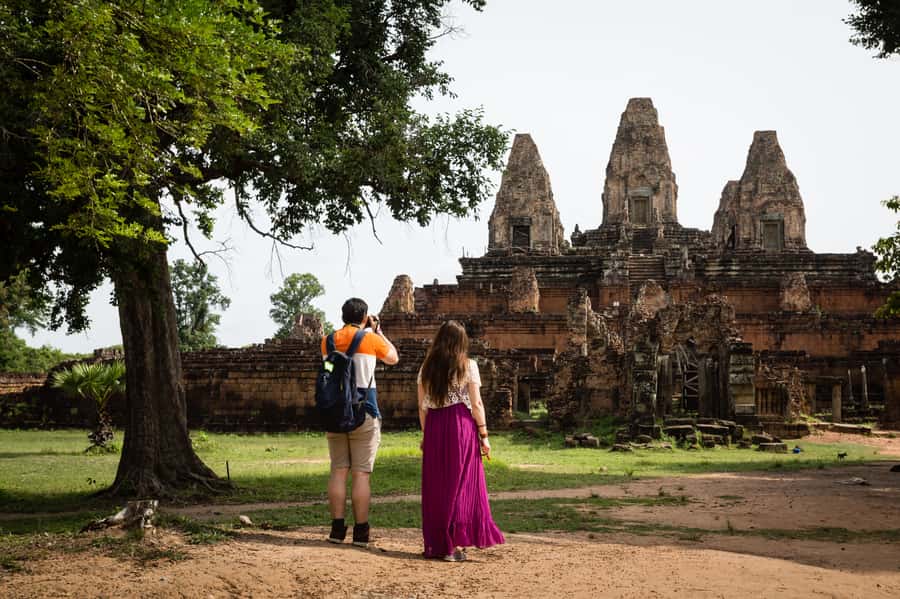
Then comes Neak Poan, a smaller temple set on an island in Jayatataka Baray. It’s known for a theme that lots of visitors enjoy: the belief that this place represents a mythical Himalayan lake with healing waters.
Neak Poan is a good counterbalance after the earlier emphasis on detail. You go from carving-heavy visuals to a calmer setting where the atmosphere does some of the work. It also helps you understand the broader Khmer habit of connecting myth and physical place.
If you like “spiritual geography” style sightseeing—where you’re thinking about why a location was chosen—this is the stop that clicks.
Ta Som: The Stone Gate and the Giant Roots Effect
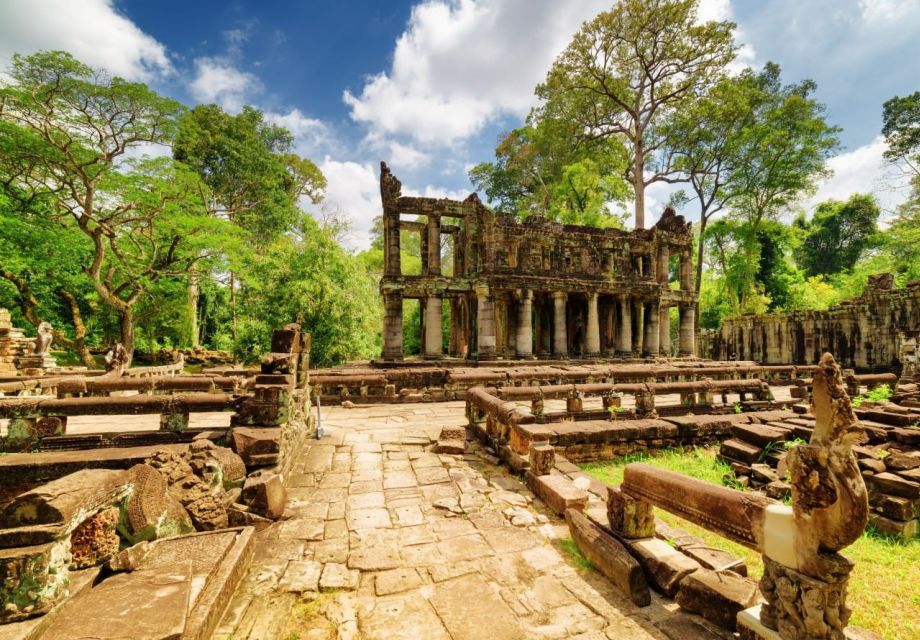
After that, you’ll visit Ta Som, famous for its iconic stone gate being hugged by giant tree roots. This one works even if you don’t read a single label. It’s simply dramatic: architecture framed by living growth.
Still, the real win is context. Good guiding turns this from a photo opportunity into an understanding of how long-term nature and human construction interact over centuries. You get to see how Angkor feels alive, not sealed behind glass.
For photography, aim for a few angles:
- One from straight on (gate symmetry)
- One slightly off to catch the root texture
- One from lower down if you can without blocking others
And yes, you’ll probably want insect repellent here, especially if the air is warm and humid.
Preah Khan: A Vast Monastic Complex to Close the Day
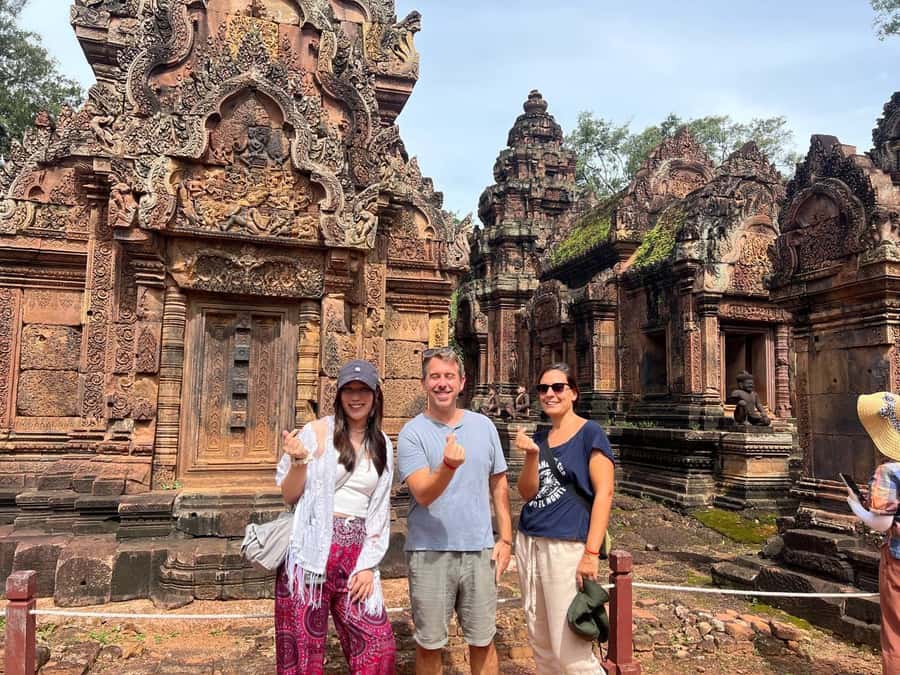
Your final temple stop is Preah Khan, a vast monastic complex rich in carvings. Compared to the refined focus of Banteay Srei, this feels more sprawling and layered. It’s the kind of place where the mind expands: you look at stonework and you also start noticing how the complex is organized like a functioning religious space.
Carvings are a major focus here, and this is where a good guide earns their keep. When someone explains how different parts relate—paths, structures, and the logic of space—you stop feeling like you’re wandering and start feeling like you’re reading.
By late day, your legs may be tired. That’s normal. This is still a valuable finale because it brings you back to the big-picture religious and historical role of Angkor beyond the postcards.
Beyond the Temples: Preah Dak Village for Real-Day Life
Not all of your time is consumed by ruins. The tour includes a stop at Preah Dak Village, where you can observe everyday local life outside the temple circuit.
This part is worth it because it reminds you that Angkor isn’t the whole story. The landscape holds living culture around it, and your trip feels less like a theme park of ancient stone.
As with any village stop, keep the tone respectful and low-key. Watch, take in how people work, and don’t assume you’re entitled to more than simple viewing unless your guide facilitates it.
What’s Included vs. What You’ll Pay for Yourself
At $20 per person, the value is mostly in what you get bundled: hotel pickup and drop-off, transportation by high-quality vehicle, cold towels, bottled water, and an English-speaking guide, plus local taxes.
That matters because Angkor days are hard to DIY efficiently. The cost isn’t only money—it’s time, planning stress, and the risk of missing the “how to read this place” element that a good guide provides.
Not included:
- Angkor Temple Pass entrance fee
- Lunch (you choose and pay)
- A guide for the private option is listed separately as an add-on (if you go private)
Also be ready for a specific moment: you’ll stop at the Apsara Authority Ticket Office to purchase your Angkor entrance pass. This is one of those practical steps that can slow things down if you’re unprepared, so have your cash ready and follow your guide’s timing.
Dress Code, Heat, and Walking Reality Checks
Angkor is beautiful, but rules are rules. You’ll need temple-appropriate clothing: no shorts or sleeveless tops, and you must cover knees and shoulders. If you don’t comply, entry may be refused.
You also should plan for heat and sun:
- Use sunscreen
- Bring insect repellent
- Wear hiking shoes
- Bring cash
- Move at a steady pace instead of trying to “power through” every stop
You’ll likely notice the practical comforts built into the tour: cold towels and bottled water show up during key moments. That’s not a luxury detail—it’s what helps you keep your energy for later carvings when you’d otherwise feel cooked.
Who This Tour Suits Best (And Who Might Want a Different Plan)
This works best for you if:
- You want five iconic Grand Circuit temples in one day
- You love explanations tied to Hindu rituals and Khmer beliefs, not just sightseeing
- You want a route that includes Banteay Srei, the delicacy temple people talk about after the trip
I’d think twice if:
- You have walking disabilities or use a wheelchair, because the tour is not recommended for mobility issues
- You travel with infants or children under 12 on a shared tour (it’s not suitable)
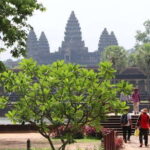
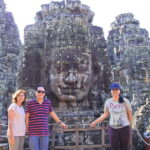
If you already did the big headline temples like Angkor Wat or Bayon and want a different Angkor flavor—older, less crowded, more detailed—this route is a strong next step.
Should You Book This Banteay Srei and Grand Circuit Tour?
If your goal is a day that mixes Banteay Srei’s pink-sandstone craft with the broader Grand Circuit story, I think this is a smart booking. The big value is the combination of guided context, efficient transport, and survival tools like cold towels and water, all for a price that’s easy to justify.
I’d book it especially if you want to understand what you’re seeing and you don’t mind the heat and stairs. If you’re more comfortable with shorter walks, or you can’t manage uneven temple ground, look for a gentler alternative.
FAQ
What time do I need to be ready for pickup?
You should be ready in your hotel lobby at 7:50 AM.
Is lunch included in the price?
No. Lunch is not included, so you’ll eat at the stop on your own expense.
What’s included in the tour cost?
The tour includes hotel pickup and drop-off, high-quality vehicle transportation, local taxes, cold towels, bottled water, and an English-speaking guide.
Do I need to buy the Angkor entrance pass?
Yes. You’ll make a stop at the Apsara Authority Ticket Office to purchase your Angkor Temple Pass.
What should I wear to visit the temples?
Temple dress rules require no shorts and no sleeveless tops. You must cover knees and shoulders, or entry may be refused.
What should I bring with me?
Bring hiking shoes, sunscreen, insect repellent, and cash.
Is the tour suitable for wheelchairs or limited mobility?
No. This tour is not recommended for people with walking disabilities or those in a wheelchair.
Is the shared tour okay for young children?
The shared tour option is not suitable for infants or children under 12 years old.