REVIEW · PHNOM PENH
Phnom Penh: City (no genocide) half day Tour
Book on GetYourGuide →Operated by Visal Tuk-Tuk Tours in Phnom Penh · Bookable on GetYourGuide
Phnom Penh can feel big fast, but this half-day loop keeps it manageable. You’ll ride in an open-air tuk-tuk through the city center, then slow down at standout Khmer monuments and temple sites. Two things I’d prioritize: the photo stops (Independence Monument and Royal Palace areas) and the chance to wander Cambodian temple architecture at Wat Ounalom and Wat Phnom without racing.
The main trade-off is cost on top of the $25 tour price. Some sites have entry fees, and the Royal Palace requires an extra paid guide option (and there’s no audio guide).
If you like seeing a city’s “shape” and meaning in one afternoon, this is a smart format. You’ll also want to dress for sun and wear shoes you trust, because Phnom Penh is warm, and parts of the day involve steps and walking.
Key things I’d bet on from this tour
- A tight 5-hour city-center route that hits major landmarks without eating your whole day
- Open-air tuk-tuk transport with a live Cambodian/English guide for context as you go
- Iconic photo stops: Independence Monument, Royal Palace viewpoints, and temple architecture
- Temple time that’s easy to respect: Wat Ounalom (free) and Wat Phnom (small fee)
- Diamond Island + river confluence views, plus monuments for regional history
- Finish at Central Market so you can grab crafts and snacks before heading back
In This Review
- The $25 half-day format that actually fits real life in Phnom Penh
- Independence Monument, King Norodom Sihanouk Statue, and the Park Strip story
- Chuon Nath Monument and Diamond Island: the day turns scenic and meaningful
- Friendship Monument and the Royal Palace area: plan for paid access
- National Museum exterior (free) and Wat Ounalom (free): Khmer architecture with less hassle
- Wat Phnom for $1 plus Lady Penh: the hilltop feeling you can’t fake
- Central Market at the end: souvenirs, snacks, and a real taste of daily life
- Price and value: what your $25 covers, and what to budget on top
- Who should book this Phnom Penh city-center tour
- Should you book it or skip it?
- FAQ
- How long is the Phnom Penh city half-day tour?
- What is the tour cost?
- Is this a private group tour?
- What’s included in the price?
- Which entry fees should I expect?
- Do I get to visit inside the Royal Palace?
- Is there an audio guide?
- What language is the live guide?
- Where does pickup happen?
- Is Central Market included in the tour?
- What should I bring?
The $25 half-day format that actually fits real life in Phnom Penh
For $25 per person, you’re buying a guided orientation in a compact chunk of time: about 5 hours, private group, with pickup from your hotel lobby and cold drinking water included. That’s good value if you’re trying to get your bearings quickly and still enjoy the places, not just pass them from a car window.
The reason this kind of tour works in Phnom Penh is simple: distances between key sights are manageable, but traffic and heat can drain your energy. A tuk-tuk keeps the day moving and lets you stop where it matters. You’re not stuck debating routes or juggling multiple tickets alone.
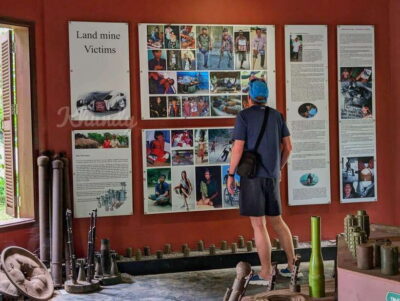
One caution: this is a city highlights route labeled as the no-genocide half-day option, so the focus stays on monuments, temples, and everyday Phnom Penh rather than the heavy, museum-style genocide sites. If that’s what you want, great. If you’re specifically looking for that topic, you’ll need a different itinerary.
Independence Monument, King Norodom Sihanouk Statue, and the Park Strip story
Your day starts with pickup and a short ride to Independence Monument, a symbol of Cambodia’s liberation from French rule. I like this stop because it’s not just a postcard object. The Khmer-style detailing gives you something visual to hold onto while your guide explains what the monument represents. It’s the kind of place where you can look up at the design and suddenly the city’s symbolism clicks into place.
Next is the King Norodom Sihanouk Statue on Phnom Penh’s Park Strip area. This one adds a modern layer: the statue was built in 2013 after his death, which helps you see that Cambodia’s “story” isn’t frozen in the past. It’s still being told in public spaces.
What to watch for here:
- You’ll likely be stopping on busy roads. Keep your phone/camera ready, but don’t block traffic with slow photo sessions.
- The Park Strip area can be lively. If it feels crowded, step to the side to frame the monument cleanly.
A minor practical point: these are mostly exterior experiences. That’s not a drawback if you want variety fast, but it helps set expectations.
You can also read our reviews of more city tours in Phnom Penh
Chuon Nath Monument and Diamond Island: the day turns scenic and meaningful
After the Park Strip, the tour heads to the Chuon Nath Monument, named for one of Cambodia’s most noble monks known for literature and learning. The guide’s explanation matters here. You’re not just looking at a statue—you’re connecting a person’s work to the building blocks of education, including curriculum ideas, a first Khmer dictionary, and even a national song.
That kind of context is what transforms a monument into a real teaching moment. Even if you only remember one detail, it makes later stops easier to place in your head.
Then you reach Diamond Island, described as the place where four faces of rivers connect. This is your scenery breather. In Phnom Penh, water and waterways are part of the geography and the city’s daily rhythm. The island stop helps you understand why the city looks the way it does and why certain monuments and districts feel tied to the river system.
Photo tip: if you’re aiming for clear shots, watch the light and the crowd. Move a few steps to get a cleaner background—river views can look messy if you aim straight into traffic and buildings.
Friendship Monument and the Royal Palace area: plan for paid access
Next comes the Cambodian Vietnam Friendship Monument, commemorating the former alliance between the two countries. This is a straightforward stop, but it’s valuable because it broadens the timeline beyond one nation’s story. Cambodia’s modern landmarks often reference relationships that shaped politics and recovery in the region.
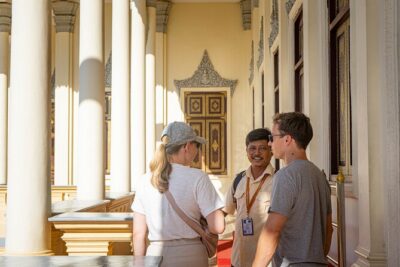
From there, you’ll move to the Royal Palace area. This is one of the biggest “value for your camera” stops on the day. You’ll have the chance to visit inside and admire the architecture, and you’ll also get multiple photo opportunities just by being in the palace complex.
Here’s the part you should plan for:
- Royal Palace entry is $10, and there’s an additional $10 for a guide if you choose that option.
- There’s no audio guide available.
So if you want the most out of the interior visit, it makes sense to budget for the guide option. If you’re on a tighter budget, you can still appreciate exterior views nearby—but the tour data explicitly calls out paid access for the Royal Palace visit and guide option.
Also, set expectations: this stop is where the tour can feel more structured. If you hate waiting in ticket lines or slow pacing, you might feel it more here than at the temple stops.
National Museum exterior (free) and Wat Ounalom (free): Khmer architecture with less hassle
Right after the palace area, you’ll see the National Museum. Important detail: the visit is outside only, and it’s free. That’s a win if you want the look of the building and the photo angles without spending more time inside.
I like this “outside first” approach because it gives you a visual bridge. You’ve just seen the Royal Palace architecture style and symbolism. Now the museum exterior helps you keep track of how Khmer design language shows up across different institutions.
Then it’s on to Wat Ounalom, originally built in 1442, and one of Phnom Penh’s most important temples. Entry is free. This is where the day’s tone shifts from monuments and government landmarks to spiritual space and older craftsmanship.
The tour highlights the magnificent Cambodian-style buildings at the largest Buddhist center area, and you’ll get time to wander, look around, and photograph in a temple setting. Just remember standard temple etiquette: dress comfortably but modestly, keep your phone usage respectful, and avoid blocking entrances or paths.
Wat Phnom for $1 plus Lady Penh: the hilltop feeling you can’t fake
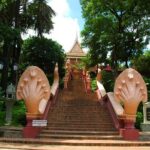
Next up is Wat Phnom, one of the most famous sites in the city. The entry fee is $1, and you’ll also see the Lady Penh Statue. Even with the small cost, this stop feels worth it because Wat Phnom is one of those places where the setting does a lot of work for you.
The tour also mentions an impressive view of the surrounding area for photos. In this part of Phnom Penh, you often get the “hilltop temple” feeling—an open sightline compared with the streets below. It’s a good place to reset your brain after monuments and palace walls.
What might catch you:
- Stairs and uneven areas. Wear shoes you can move in quickly.
- Sun exposure. The tour strongly suggests a sun hat, and I agree. This is one of those afternoons where shade can feel like a rare resource.
Wat Phnom is also a good moment to slow down. You’re not just ticking boxes—you’re seeing how Phnom Penh builds its landmark energy around temples.



Central Market at the end: souvenirs, snacks, and a real taste of daily life
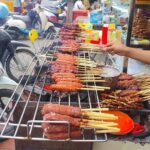
After temples and monuments, the tour wraps up at Phnom Penh’s Central Market, where you’ll get time in the city center’s busiest shopping zone. The idea isn’t to turn it into a shopping spree. It’s to experience a place Cambodians use every day—stalls selling everything from clothing to handmade crafts.
This ending works well for two reasons:
- You’re already in the middle of town, so it feels natural as a final stop.
- With no lunch included, you can use market time to pick up something small if you get hungry before or after the tour.
Practical tip: markets are busy and crowded, and prices can vary by stall. If you enjoy bargaining, keep your tone friendly and don’t make quick decisions just because it’s your first stall.
Then you’re dropped back at your hotel.
Price and value: what your $25 covers, and what to budget on top
The base tour cost is $25 per person for about 5 hours. What’s included is the big value driver: transport (tuk-tuk) and cold drinking water, plus a live guide in English and Cambodian. For a first time in Phnom Penh, that alone saves you planning stress and helps you understand what you’re seeing as you go.
But you should expect some extra site spending, because entry fees are not bundled in:
- Wat Phnom: $1
- Royal Palace: $10 entry, plus $10 for a guide option (if you choose it)
- Wat Ounalom: free
- National Museum: outside only, free
So a realistic budget example (if you add Royal Palace interior + guide option) looks like:
$25 + $1 + $10 + $10 = $46 total, not counting any extra purchases like snacks or drinks.
Is it still good value? Usually yes—because the Royal Palace architecture and the temple time are hard to replicate on a self-guided day without spending more on transport or getting lost.
Who should book this Phnom Penh city-center tour
This tour fits best if you:
- want a half-day orientation with major monuments and temples
- prefer a private group and a live guide rather than a self-paced route
- enjoy learning the meaning behind Khmer monuments (not just taking photos)
- want a tour that stays city-focused and avoids genocide-site content
It may not be ideal if you:
- want an all-museum, all-day deep dive into one specific history topic
- dislike paying additional site fees—especially for the Royal Palace interior guide option
- struggle with walking stairs or sun exposure
Should you book it or skip it?
I’d book this if you’re in Phnom Penh for a short visit and you want the “greatest hits” version, done with a guide and a comfortable pace. The guide experience comes through in the best way: people consistently highlight that the driver/guide is friendly and shares useful information, including a mention of a guide named Nick sharing insights.
Skip it if your priority is only one theme—because this itinerary is deliberately broad: Independence-era symbolism, river geography at Diamond Island, modern memorials, palace architecture, and two major temple experiences plus Central Market.
If you book, go in with a simple plan: wear solid shoes, bring a sun hat, and budget a bit extra for the Royal Palace. Do that, and you’ll leave with a clear sense of how Phnom Penh looks and what its landmarks mean.
FAQ
How long is the Phnom Penh city half-day tour?
The tour duration is 5 hours.
What is the tour cost?
The price is $25 per person.
Is this a private group tour?
Yes, it’s a private group.
What’s included in the price?
Transport and cold drinking water are included.
Which entry fees should I expect?
Wat Phnom costs $1. The Royal Palace has a $10 entry fee, and there’s an additional $10 for a guide if you choose that option. Wat Ounalom is free, and the National Museum visit is outside only and is free.
Do I get to visit inside the Royal Palace?
Yes, you can visit inside the Royal Palace, and the tour notes that a guide is an extra $10 option.
Is there an audio guide?
No audio guide is available.
What language is the live guide?
The live tour guide speaks Cambodian and English.
Where does pickup happen?
You wait inside the lobby or reception area of your accommodation for pickup.
Is Central Market included in the tour?
Yes, you’ll end with time at Phnom Penh’s Central Market, then be dropped back at your hotel.
What should I bring?
Bring comfortable shoes, a sun hat, a camera, comfortable clothes, and a charged smartphone.