REVIEW · PHNOM PENH
Phnom Penh to Silk Island By Tuk-Tuk with local Expert
Book on GetYourGuide →Operated by Siem Reaper Travel · Bookable on GetYourGuide
Silk and tofu in one half-day in Phnom Penh. This tour strings together tuk-tuk countryside views, a ferry crossing, and hands-on village craft stops, so you get a fast but real look at life just outside the city.
I especially love the family-run silk weaving visit, where the work is explained in plain, human terms, not museum-speak. I also love the dried tofu skin stop, because it turns a snack you know into a process you can actually picture with your own eyes.
One drawback to plan for: the schedule can feel packed for 4 to 4.5 hours, and some craft demonstrations happen in quieter voices, so you may want to lean in and ask questions early.
In This Review
- Key points to know before you go
- A Half-Day Countryside Escape From Phnom Penh
- Tuk-Tuk Pickup, River Crossing, and the First Rural Views
- Koh Oknha Tei Market Stop: Where You Learn the Day’s Real Priorities
- The Secondary School Photo Stop: A Small Moment With Big Meaning
- Silk Island: Seeing Weaving as a Living Skill
- Akreiy Ksatr Village: Passing Through the Farming Side of Cambodia
- Dried Tofu Skin Craft: The Process Behind a Familiar Food
- Buddhist Temple Visit: How Religion Shows Up in Real Life
- Market Snacks, Water, and Small Foods That Make the Trip Click
- How the Timing Works (And When It Can Feel Tight)
- $29 Value: What You’re Actually Paying For
- Best For: Who Will Love This Trip
- Things to Watch Out For on the Road
- Should You Book the Phnom Penh Tuk-Tuk to Silk Island Tour?
- FAQ
- How long is the Phnom Penh to Silk Island tuk-tuk tour?
- Where does the pickup happen?
- Is the ferry included?
- What’s included in the price?
- What about rain?
- Is there anything you need to pay for separately?
- Who should avoid this tour?
Key points to know before you go
- Tuk-tuk + ferry combo: you’re not just driving around town; you cross by boat and see the river route up close.
- Real village stops: Koh Oknha Tei market and the secondary school area help you connect Cambodia’s daily rhythm to what you’re seeing.
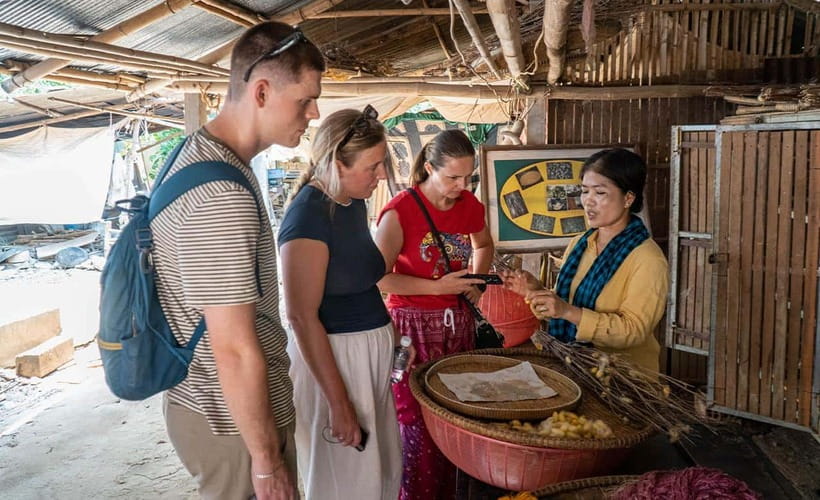
- Silk isn’t just a product: the visit focuses on how silk weaving is carried through generations from parents to children.
- Tofu skin is the other star: the family-run business specialty is dried tofu skin, and it’s fascinating to watch how it’s made.
- Temple time with context: you visit a Buddhist temple and get simple explanations about Buddhism in Cambodia.
- Good guide culture: names that show up often include Lee, Kim, Sok, and Tintin, with English that’s usually clear enough to ask real questions.
A Half-Day Countryside Escape From Phnom Penh
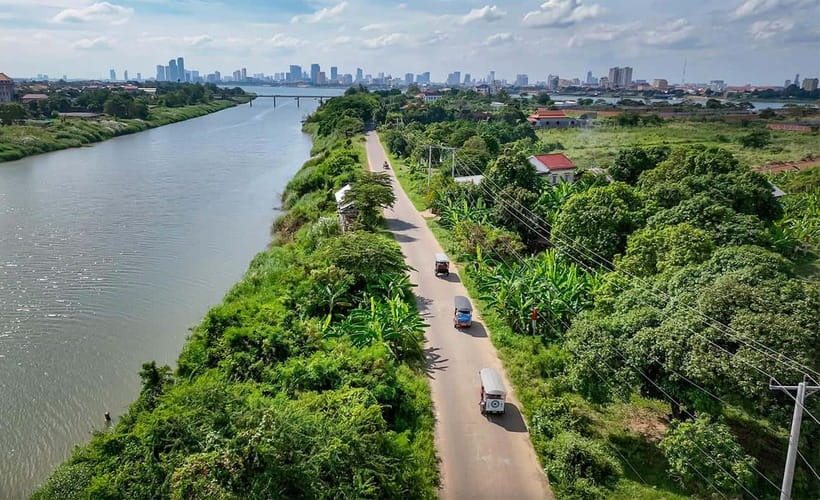
If your Phnom Penh plan feels too city-heavy, this is a smart antidote. You leave by tuk-tuk, cross by ferry, and spend your morning moving through market life, village craftwork, and a Buddhist temple setting. It’s the kind of tour that helps you understand the area beyond the main sights.
The value is also strong for the price point. At $29 per person for a roughly 4 to 4.5 hour morning experience, you’re paying for more than a ride—you’re getting transport, ferry access, entrance fees, and basic refreshment support (water and snack).
You can also read our reviews of more tours and experiences in Phnom Penh.
Tuk-Tuk Pickup, River Crossing, and the First Rural Views
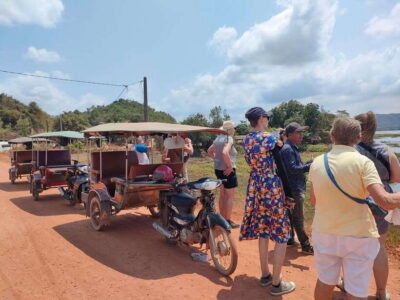
You’ll start in Phnom Penh with pickup from your hotel, with timing guidance to wait about 10 minutes early. Then it’s straight into that tuk-tuk rhythm: quick conversations, photo pauses, and views that gradually shift from city edges to countryside farming life.
After you’re out of central Phnom Penh, you board a ferry to reach the island area. This matters more than it sounds. The ferry creates a pause in the action where you can actually look around—riverbanks, boats, and that slow rural pace you don’t get when you’re stuck in traffic.
Practical note: because it runs rain or shine, plan for damp paths and changeable weather. The guide will keep things moving, but you’ll be happier with shoes you don’t mind getting a little dirty.
Koh Oknha Tei Market Stop: Where You Learn the Day’s Real Priorities

One of the best uses of limited time is starting with a market. Koh Oknha Tei Market is where you see what people buy, what they snack on, and what daily logistics look like when you’re not watching a performance for tourists.
This stop is also where your guide earns their keep. Across many departures, guides like Lee, Kim, Sok, and Tintin are praised for clear explanations and an easy back-and-forth style. That’s what turns a quick photo stop into something you can actually remember: you learn how Khmer daily life ties together with religion, agriculture, and family work.
What to do here: don’t just scan stalls. Ask what something is used for, or what time people usually come to buy. Even basic questions help you feel the place instead of just passing through it.
The Secondary School Photo Stop: A Small Moment With Big Meaning
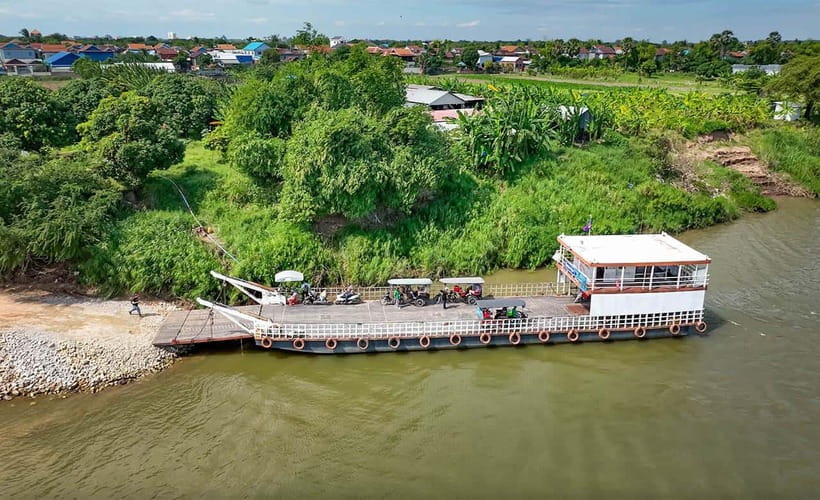
Next is a Koh Oknha Tei Secondary School photo stop plus a walk. It’s typically about an hour, which gives the group a chance to stretch legs after the earlier driving and ferry time.
This stop can be emotionally surprising in the best way. Schools represent the future, and in rural areas they also show what families prioritize and how communities support learning. If you’re the type who likes seeing ordinary Cambodia rather than just landmarks, this is a strong anchor point in the day.
A small consideration: school access can vary. On some days (especially around weekends), the market and school may be quieter or closed, and the guide can switch to an alternate craft experience like extra tofu-making time. So if you’re traveling on a weekend afternoon, keep an open mind.
Silk Island: Seeing Weaving as a Living Skill
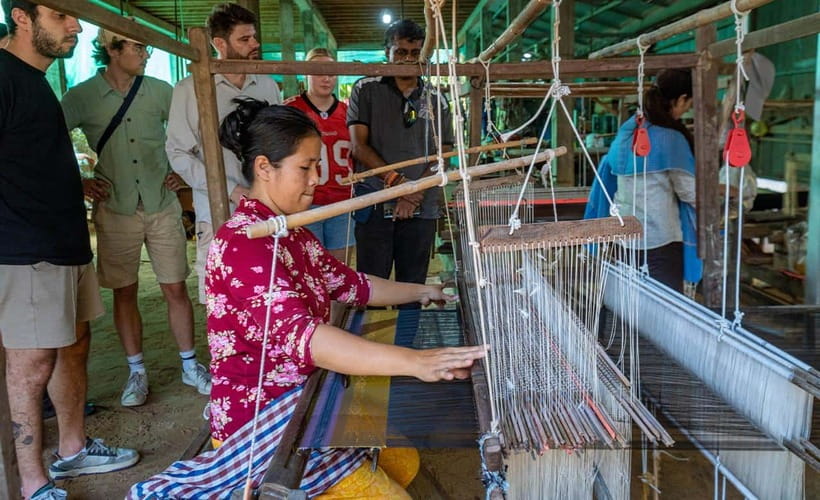
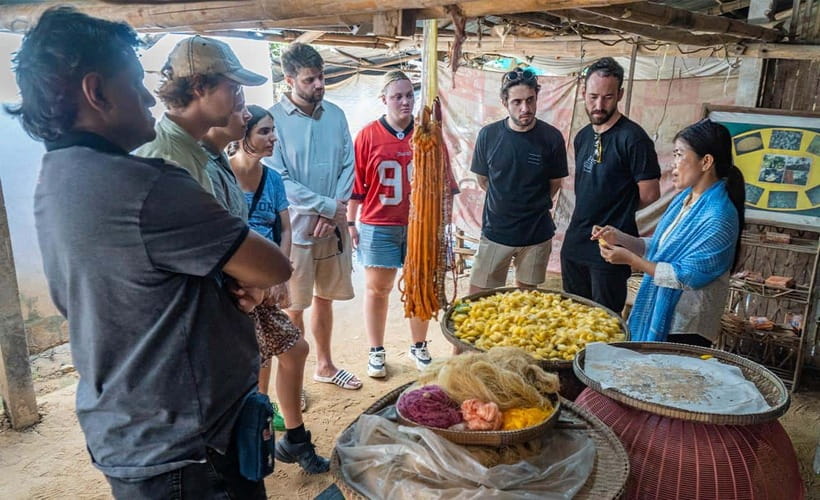
Silk Island is the headline stop, and it’s set up to feel hands-on. You’ll get break time, then a guided visit and time for sightseeing—about an hour dedicated to the craft.
This isn’t a generic silk shop pitch. The focus is on how silk weaving has been passed down for generations, from parent to child. When you watch the steps and hear the story behind them, silk stops being an abstract luxury and becomes plain work—time, skill, and patience.
How to make the most of the silk stop:
- Ask how the process differs from one grade to another (many guides explain the differences clearly).
- If the person explaining the weaving is softer spoken, don’t wait for perfect hearing—lean in and ask for repeat explanations.
- If you like shopping for souvenirs, this is often where you can buy directly, without feeling like you’re trapped in a sales pitch.
Some days include special circumstances. For example, on a village day tied to a family wedding, you might see fewer people at the silk work area, and the person explaining may be the owner and family. The experience can still be excellent—just remember it may feel quieter and more intimate.



Akreiy Ksatr Village: Passing Through the Farming Side of Cambodia
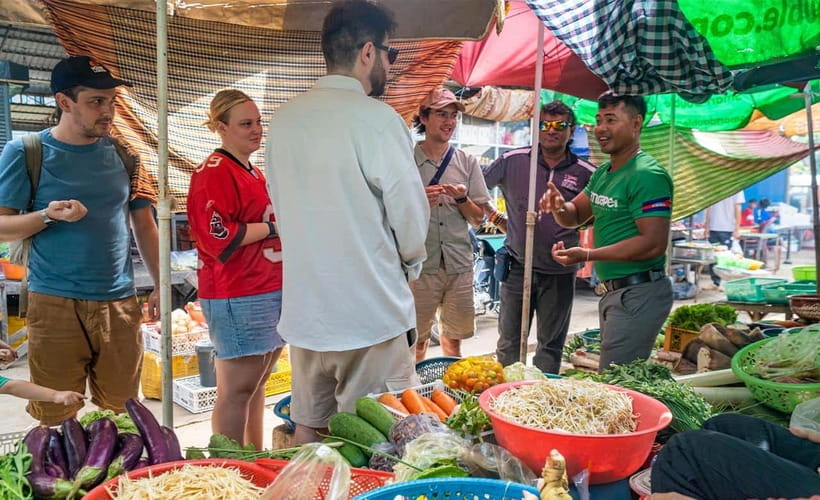
You’ll also pass through Akreiy Ksatr Village during about an hour of guided time and sightseeing. This part is less about a single building and more about letting your brain recalibrate to rural scale.
Think of it as the tour’s breathing space. After market energy and craft intensity, you’re reminded that villages run on farms, routines, and shared labor. If you like seeing countryside movement—roads, crossings, and fields—this stretch helps everything else click.
You may spot small surprises on the road too, like animals on the way (some guides have mentioned seeing calves and other farm life). It’s a reminder that this is a real working area, not a staged set.
Dried Tofu Skin Craft: The Process Behind a Familiar Food
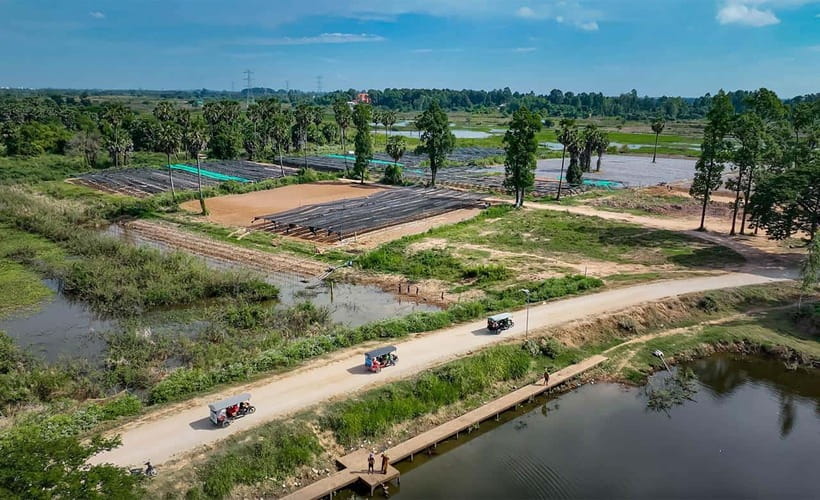
The tour’s craft side has two big stars: silk weaving and the family-run dried tofu skin business. The tofu stop is often the one people walk away talking about, because it’s vivid. You see how something you recognize as food is actually produced through careful steps.
Your guide typically frames tofu skin as part of daily work and local food culture, then you watch the process. Even if you’re not a food person, it’s visual learning at its best: you connect ingredients to hands-on methods.
One useful tip: this is where you’ll want to ask questions about how families organize the work and why they’ve kept the method. Guides often explain the context with simple language, and if you’ve got a curious streak, you’ll get a lot out of it.
Buddhist Temple Visit: How Religion Shows Up in Real Life
A Buddhist temple stop is built into the day, with time for a guided look and explanations about Buddhism in Cambodia. This isn’t about memorizing dates. It’s about understanding what you’re seeing: the role of faith in daily routines, respectful behavior, and the meaning behind religious spaces.
If you’re not sure how to act inside a temple environment, follow your guide’s lead. In most cases, that means dressing modestly, moving quietly, and asking before taking photos. The temple stop helps you connect the craftwork and market life to values and traditions you might otherwise miss.
In short: it adds depth. Not heavy depth, just enough to make the day feel grounded.
Market Snacks, Water, and Small Foods That Make the Trip Click
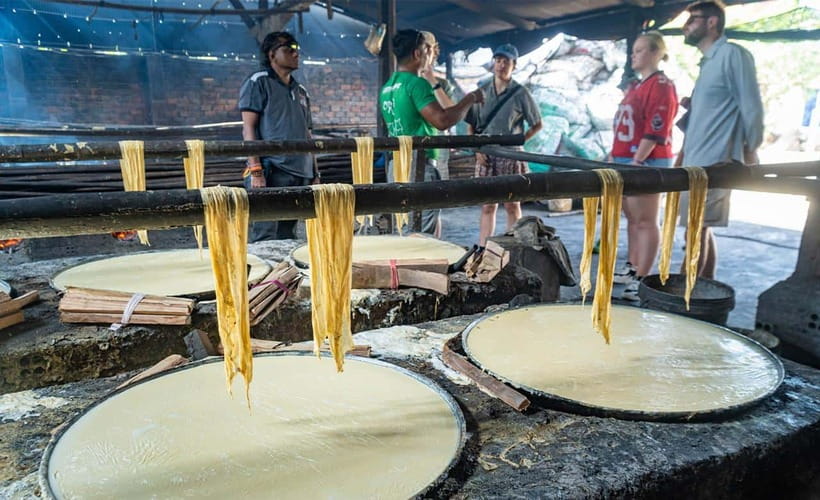
You’ll have water and snack included, and many mornings go further with fruit and local treats around market and craft stops. In past experiences, people have mentioned fresh fruit like coconuts, jasmine tea, and other simple snacks that make the day feel cared for.
These are worth paying attention to. Food and drink stops are often the moments when you get casual conversation with the guide or artisans. You can ask what something tastes like, what it’s used for, or when people eat it.
Also, don’t underestimate the refreshment factor. 4 to 4.5 hours in the sun and humidity can wear you down. The included water helps you stay present instead of grumpy.
How the Timing Works (And When It Can Feel Tight)
The whole experience is 4 to 4.5 hours. You’ll get back to Phnom Penh around 12:30 pm, depending on starting time.
That means you’re moving at a steady clip. This is great if you want a morning activity and a fast cultural snapshot. If you prefer slow travel with long sits and lingering photos, this might feel a bit rushed.
One detail to keep in mind: getting onto or off the ferry can feel slightly chaotic at the peak moment. Guides handle it, but you’ll want to keep your camera accessible and your group awareness switched on.
$29 Value: What You’re Actually Paying For
At $29 per person, this tour feels like good value because most of the cost drivers are included:
- Hotel pickup and drop-off
- Tuk-tuk transportation
- Ferry trip
- Entrance fees
- Water and snack
- (If selected) an English-speaking guide
In other words, you’re not paying just for a guide. You’re paying for the transport logistics to reach the island and for entry into key stops where you’d otherwise need local coordination.
When this tour is especially worth it:
- You want a countryside look without doing complicated DIY transport.
- You enjoy craft and food processes more than big-ticket monuments.
- You want a guided cultural thread tying together temple, market, and village work.
Best For: Who Will Love This Trip
This is a strong fit if you:
- Want a countryside feel near a city, without committing a full day.
- Like hands-on craft visits such as silk weaving and dried tofu skin production.
- Enjoy asking questions and learning a few Khmer phrases during the ride (many guides encourage conversation and teach basic words).
It’s also a great choice for couples and solo travelers who want structure but not formality. Families can enjoy it too, since the pacing is flexible and the stops are varied.
Not suitable for pregnant women, due to the nature of transport and the day’s physical movement.
Things to Watch Out For on the Road
A few realistic considerations can help your morning go smoothly:
- Rain or shine means you should bring a light rain layer if weather turns.
- Tuk-tuk roads can mean bumps. If you’re sensitive to motion, sit comfortably and keep hydrated.
- Craft demonstrations can be quiet, so be ready to ask for repeats or clearer explanations.
- Weekend timing can change what’s open. If the school or market is quieter, your guide may adjust with alternative craft focus.
If you approach it with curiosity and flexibility, the day tends to feel rewarding rather than hurried.
Should You Book the Phnom Penh Tuk-Tuk to Silk Island Tour?
I’d book it if you want a morning that mixes city convenience with real village life. The combination of ferry crossing, market culture, Buddhist temple context, and the two craft focuses—silk weaving and dried tofu skin—is a smart use of time.
Skip it (or at least think twice) if you hate compact schedules or want deep, slow exploring at every stop. This is a fast, guided sampler of rural Cambodia, not a day-long retreat.
If you do book, pick a morning slot when you can. You’ll usually get more activity around market and craft areas, and your guide will have an easier time keeping the flow balanced.
FAQ
How long is the Phnom Penh to Silk Island tuk-tuk tour?
The duration is about 4 to 4.5 hours, and you’re expected to return to Phnom Penh around 12:30 pm.
Where does the pickup happen?
You’ll be picked up from your hotel in Phnom Penh, with instructions to wait in the hotel lobby about 10 minutes before the scheduled pickup time.
Is the ferry included?
Yes. The tour includes a ferry trip to reach Silk Island.
What’s included in the price?
Hotel pickup and drop-off, an English-speaking guide if you select that option, tuk-tuk transportation, entrance fees, the ferry trip, plus water and a snack.
What about rain?
The tour runs rain or shine.
Is there anything you need to pay for separately?
Personal expenses are not included.
Who should avoid this tour?
It’s not suitable for pregnant women.