REVIEW · SIEM REAP
Angkor Wat & Banteay Srey Tour
Book on Viator →Operated by Easy Angkor Trip · Bookable on Viator
Five temples. One big, guided Siem Reap day. This Angkor Wat and Banteay Srey tour brings hotel pickup and an A/C ride so you can focus on the temples, not logistics. I love how the day is structured around standout monuments with real explanations, and I love that most stops are listed with free admission while you only plan for Angkor Wat’s entry.
One thing to plan for: entrance fees aren’t included, so Angkor Wat’s admission is an add-on. If you want the sunrise version of Angkor Wat, that comes with an extra charge too, so do that only if it’s your priority.
In This Review
- Key highlights you’ll feel on the day
- Getting to Angkor without stress: pickup, A/C, and temple-pass handling
- Price and value: what $50 covers and what it doesn’t
- Stop 1: Angkor Wat’s 12th-century scale, moat, and bas-reliefs (about 3 hours)
- Practical note on timing and movement
- What you’ll pay for here
- Stop 2: Bayon Temple and the 54 towers of smiling faces (about 2 hours)
- Stop 3: Ta Prohm’s spung trees and the Buddhist-to-Hindu transformation (about 2 hours)
- A realism check for your shoes
- Stop 4: Banteay Srei, the Lady Temple, plus sugar palm treats (about 2 hours)
- The optional sugar palm mid-way stop
- Stop 5: Banteay Samre, an Angkor Wat-style Hindu temple (about 1 hour)
- Why the guides matter here (Mr Oun Kosorl, Sinann, and the flexible style)
- What a full day feels like: pacing from Angkor to Banteay Srei
- Practical tips before you go (so the day stays fun)
- Should you book this Angkor Wat & Banteay Srei tour?
- FAQ
- Which temples are included on this Angkor Wat & Banteay Srei tour?
- How long is the tour?
- What time will I be picked up?
- Is the entrance fee included?
- Are meals included?
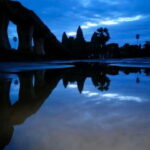
- Is there an extra charge for sunrise?
- What’s included in the tour price?
- Is the tour private?
- What’s the cancellation policy?
- Who is the experience provider?
Key highlights you’ll feel on the day
- Hotel lobby pickup plus cool comfort: A/C transport, cool towels, and cool drinking water keep the day manageable.
- Angkor Wat first, with enough time: You get about 3 hours at the 12th-century centerpiece.
- Bayon’s 54 towers and smiling faces: A late-12th/early-13th century Buddhist temple with Jayavarman VII symbolism.
- Ta Prohm’s spung trees over the sandstone: Famous roots-and-ruins atmosphere, plus the Buddhist-to-Hindu shift story.
- Banteay Srei pink sandstone and carving detail: The Lady Temple tone change makes the itinerary feel balanced.
- A side stop mid-way for sugar palm products (optional): A small moment of local life that breaks up temple time.
Getting to Angkor without stress: pickup, A/C, and temple-pass handling
Your day starts with pickup from your hotel lobby at the time you select when booking. From there, you head to the ticket office to get your temples pass, then it’s off to the temple circuit with the guide and driver.
This is the kind of setup that helps on first-timer days. You’re not trying to figure out transport, ticket timing, and the right route while you’re tired. You also have practical onboard perks: A/C transportation, cool towels, and cool drinking water. That matters in Siem Reap, especially when you’re outdoors for long stretches.
The tour is listed as private, meaning only your group participates. At the same time, it notes group discounts, which is a nice angle if you’re traveling with friends or family and can split the cost.
You can also read our reviews of more tours and experiences in Siem Reap.

Price and value: what $50 covers and what it doesn’t
The price is $50 per person, for a day that runs about 7 to 10 hours. In that number, you’re paying for the guided experience and the full on-the-road support: A/C transport, cool towels and water, and a speaking guide plus driver.
What’s not included is the part you should budget for right away: entrance fees. The itinerary specifies that Angkor Wat’s admission is not included, while the other temple stops are listed as free admission.
Meals are also not included (breakfast/lunch/dinner), so plan to either bring snacks or eat during breaks. And if sunrise is on your wishlist, it’s listed as an extra charge—so you’ll want to book that version separately instead of assuming it’s part of the base price.
If you’re comparing options, this tour tends to be good value when you want: hotel pickup, transport comfort, and a guide who can explain what you’re seeing while you move between sites.
Stop 1: Angkor Wat’s 12th-century scale, moat, and bas-reliefs (about 3 hours)
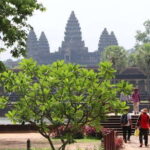
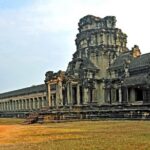
Angkor Wat is the big start: the largest and most famous Khmer temple, built between 1113 and 1150 during King Suryavarman II. It rises about 65 meters high and sits within a large moat.
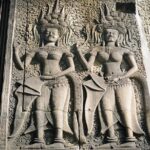
You’ll see why it’s a signature site. The exterior and interior walls are covered with base-reliefs—stone storytelling that’s a lot easier to appreciate when someone points out what you’re looking at. This tour gives you about 3 hours, which is enough to do the main viewing areas without feeling like you’re rushing through everything.
Practical note on timing and movement
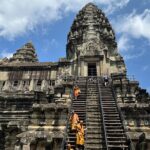
Angkor Wat involves stairs and uneven stone surfaces, and your comfort level will matter. In the feedback I drew inspiration from, guides were willing to help guests pace themselves and manage steep steps. If you have knee or mobility limits, tell the guide early. You’ll get the best day if your pace is set from the start rather than halfway up a staircase.
What you’ll pay for here
Angkor Wat’s admission ticket is not included in the tour price. The pass is handled at the ticket office during your pickup-to-temples flow, so you won’t be hunting for the right place on your own.
Stop 2: Bayon Temple and the 54 towers of smiling faces (about 2 hours)
Next up is Bayon Temple, also known as Prasat Bayon or Angkor Thom. It’s a Buddhist-style temple built in the late 12th or early 13th century by Jayavarman VII.
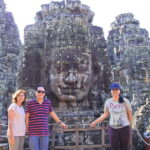
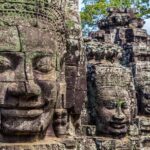
Bayon is famous for its 54 towers, each representing provinces before and during the Khmer empire. There are also over 200 carved smiling faces on the towers. It’s the kind of detail that can feel overwhelming if you’re just walking by, but that’s exactly where a guide adds value—helping you connect the symbolism to what you’re physically seeing.
You also get a history thread that makes the stone feel less frozen. Bayon was damaged in 1811 by Cham invaders, and knowing that gives the site more emotional weight than a simple photo stop.
This stop is listed with free admission and gets about 2 hours, which is a strong pace for a temple that’s visually busy.
Stop 3: Ta Prohm’s spung trees and the Buddhist-to-Hindu transformation (about 2 hours)
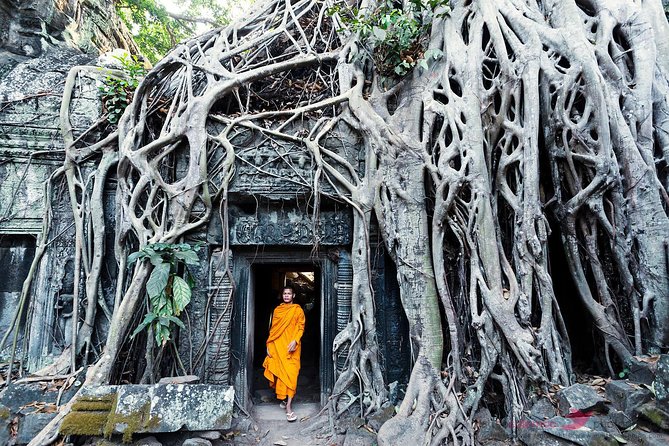
Ta Prohm, Prasat Ta Promh, was built in the late 12th century by Jayavarman VII. It was dedicated in 1186 to his mother.
Here’s where the guide story often matters as much as the views. Ta Prohm began with a Buddhist background, but later it was converted to Hindu worship. Some Buddhist galleries were destroyed or replaced, and you’ll see Hindu symbols such as yoni and lingam referenced in the itinerary description. That shift helps you understand why the carvings don’t always match what you might expect from a single religious style.
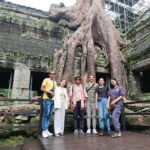
Then there’s the visual signature: Ta Prohm’s trees, called spung, growing strongly up, on, and over the sandstone block walls. The result is the iconic “ruins swallowed by roots” look that makes Ta Prohm feel different from Angkor Wat and Bayon.
You spend about 2 hours here, and admission is listed as free.
A realism check for your shoes
Even without inventing anything, Ta Prohm is physically rough: stone, roots, and uneven ground. Wear shoes you trust for traction and be ready to slow down for steps and dangling roots. The cool water and towels help, but they don’t replace good footwear.
Stop 4: Banteay Srei, the Lady Temple, plus sugar palm treats (about 2 hours)
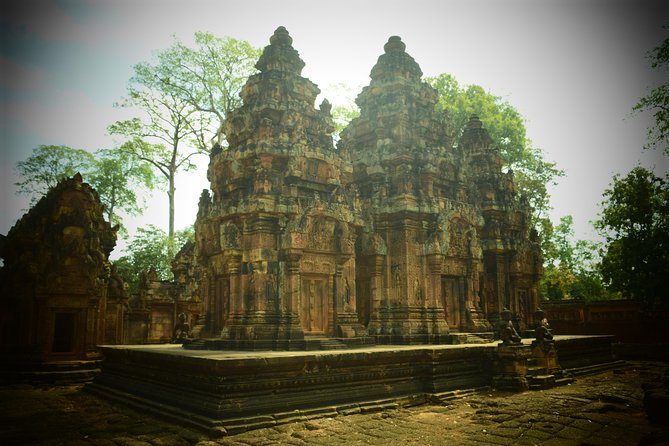
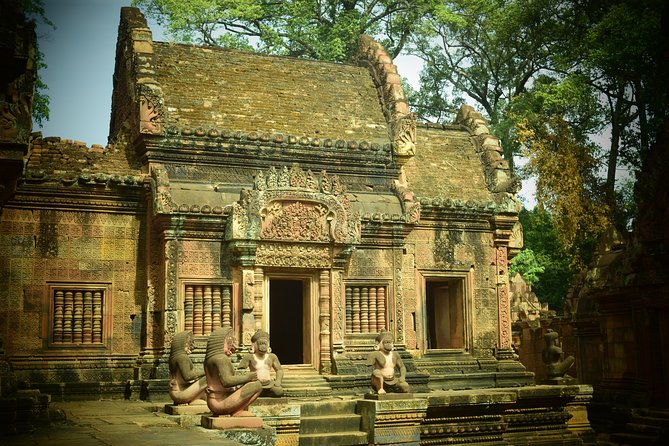
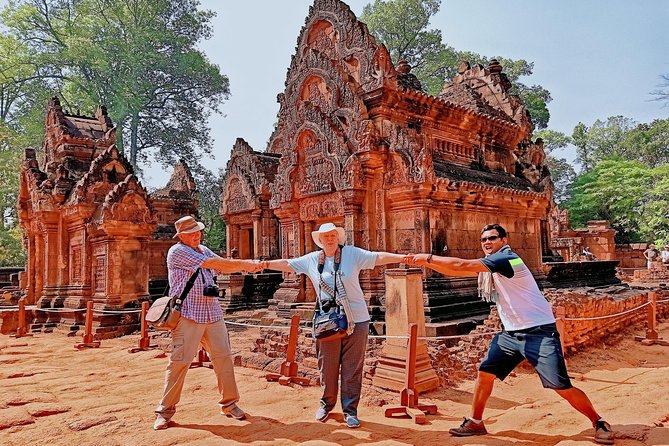
Banteay Srei is the palette change in the day. It’s described as a pink sandstone temple with very detailed carving work, earning the nickname Lady Temple.
You also get a sense of distance: it’s 35 kilometers away from the main Angkor sites. That’s not just geography trivia—it helps the day feel like a circuit rather than five quick stops on top of each other.
Why it’s worth the trip: Banteay Srei’s carvings are delicate. When you get the right angle and explanation, you start to see how much fine detail went into the stone.
This stop is about 2 hours and listed as free admission.
The optional sugar palm mid-way stop
The itinerary includes an option mid-way: you can stop to see locals making natural sugar products from the sugar palm. The wording is flexible, so don’t treat it like a guarantee, but it’s exactly the kind of break that keeps the day from becoming wall-to-wall temple time. If that kind of local detail interests you, ask the guide when you’re on the road.
Stop 5: Banteay Samre, an Angkor Wat-style Hindu temple (about 1 hour)
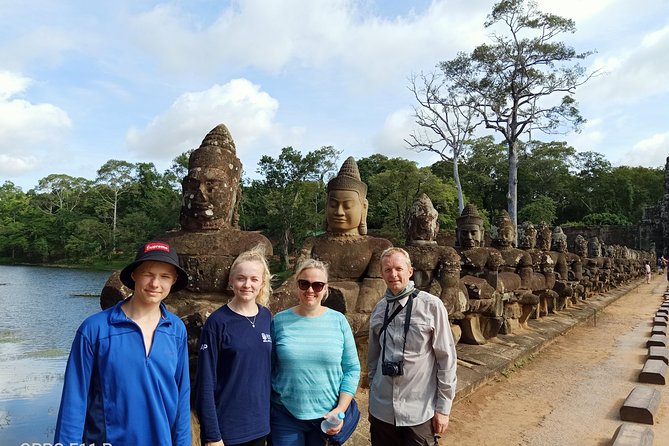
The final stop is Banteay Samré, a Hindu temple in the Angkor Wat style. It’s located about 400 meters to the east of the East Baray and was built in the early 12th century during the reigns of Suryavarman II and Yasovarman II.
This one is shorter—about 1 hour—and admission is listed as free. It works well as a closer because it gives you one more architectural style to compare against everything you’ve already seen, without stretching the day too far.
Why the guides matter here (Mr Oun Kosorl, Sinann, and the flexible style)
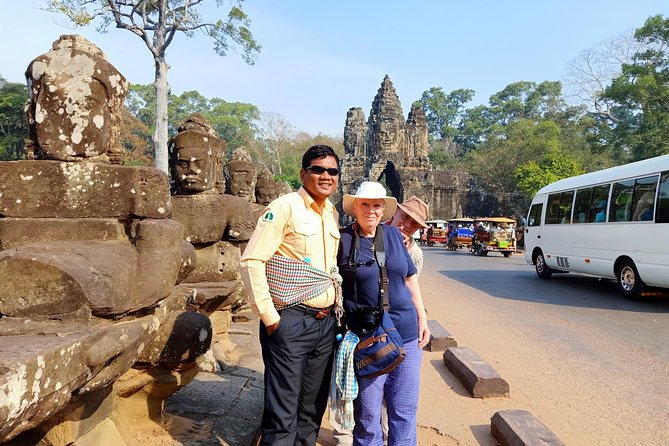
Temple day tours live or die by the guide. This one is designed around a speaking guide and driver, and the praised guides in the experience you shared show a consistent pattern: they explain while staying friendly, and they adapt when plans need adjustment.
Names that show up include Mr Oun Kosorl and Sinann (who stepped in when another guide was too ill). There’s also mention of Mr K and guides who share Khmer Rouge context in addition to temple art.
Two practical ways this usually helps you:
- You get better photos and better angles. Some guides are noted for creative photography help, which can make a big difference when you’re standing in front of stone that’s easy to over- or underexpose.
- You get pacing help when bodies slow down. There’s at least one story about concerns with arthritic knees, and the guide approach was to be determined and helpful rather than hand you a rigid route.
If you care about understanding what you’re looking at—not just collecting images—this style of guide is a major reason to book.
What a full day feels like: pacing from Angkor to Banteay Srei
One reason this itinerary works for many people is the balance of major sites and a “detail” site. You start with Angkor Wat, then move into Bayon and Ta Prohm, which are visually intense in different ways. Then you end with Banteay Srei’s focused carving detail and finish with Banteay Samré as a calmer architectural wrap-up.
You’re also getting set pieces rather than random hopping. Each stop has a clear identity: Angkor Wat for scale and bas-reliefs, Bayon for icon towers and faces, Ta Prohm for spung trees and religious layering, Banteay Srei for pink sandstone delicacy, and Banteay Samré for Hindu Angkor Wat-style design.
The day is long enough that comfort planning becomes part of your success. Use the cool towels, sip the water, and don’t treat every staircase like a race.
Practical tips before you go (so the day stays fun)
Bring a hat and something light you can cover up with during breaks. Even if you’re not thinking about heat in advance, temple stops tend to keep you outside more than you expect.
Bring a small day bag for water and any personal essentials. The tour includes cool drinking water, but you’ll still want your own items for bathroom breaks and quick access.
If you’re sensitive to steps, talk to the guide early about your pace. The itinerary includes steep temple movement, and the guide support described in the feedback suggests they can help you manage the climb without turning it into a stressful ordeal.
Finally, plan your meals. Since meals are not included, either eat before pickup or plan a lunch stop during the day on your own schedule.
Should you book this Angkor Wat & Banteay Srei tour?
Book it if you want a guided, well-paced temple day that takes care of pickup, transport, and the temple-pass process for you. I’d especially recommend it for first-timers who don’t want to wrestle with tickets and timing, and who still want variety—major Angkor icons plus Banteay Srei’s pink carving detail.
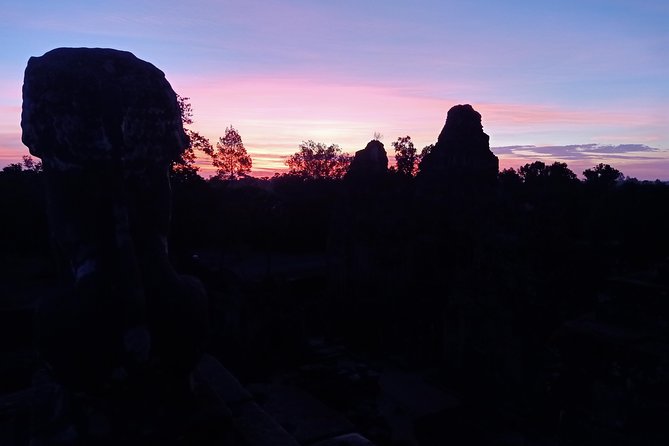
Skip it or book a sunrise-focused add-on if your top goal is the silhouette sunrise at Angkor Wat, because sunrise is listed as an extra charge here. Also consider budgeting for entrance fees since Angkor Wat’s admission is not included.
If you like clear guidance, comfort touches, and a route that mixes famous sights with a more delicate temple finish, this is a strong Siem Reap choice.
FAQ
Which temples are included on this Angkor Wat & Banteay Srei tour?
You’ll visit Angkor Wat, Bayon Temple (Angkor Thom), Ta Prohm, Banteay Srei, and Banteay Samré.
How long is the tour?
The duration is listed as approximately 7 to 10 hours.
What time will I be picked up?
Pickup happens from your hotel lobby at the time you select when booking.
Is the entrance fee included?
No. Entrance fees are not included. Angkor Wat’s admission is specifically listed as not included, while the other included temple stops are listed as free admission.
Are meals included?
Meals are not included (breakfast/lunch/dinner).
Is there an extra charge for sunrise?
Yes. Sunrise is listed as an extra charge and is not included in the base experience.
What’s included in the tour price?
Included features are A/C transportation, cool towels, cool drinking water, and a speaking guide & driver.
Is the tour private?
Yes. It’s listed as private, meaning only your group will participate.
What’s the cancellation policy?
Free cancellation is available up to 24 hours in advance for a full refund. If you cancel less than 24 hours before the experience starts, the amount paid is not refunded.
Who is the experience provider?
The experience provider is Easy Angkor Trip.