REVIEW · KAMPOT
Kampot: Cultural Bike Experience – Local Life & Countryside
Book on GetYourGuide →Operated by Jason's Tour · Bookable on GetYourGuide
Pedal past temples and farms in real Kampot. I liked how easy the cycling feels and how the day connects countryside sights to real Cambodian life, not just photos. The homecooked lunch with a local family is the kind of meal you remember. The main drawback: this is for people who can ride a bike comfortably, because you’ll be on two wheels for most of the day.
Your English guide, Jason, keeps the route moving but never rushes the stories. In my experience, the best parts were the small stops where Vin and the local families explain how daily routines work, from Buddhism to farming. You should also expect a rural pace, with fewer tourist conveniences than Kampot’s center.
In This Review
- Key highlights at a glance
- Kampot by Bike: Why This Rural Route Feels Different
- Starting at the Kampot Pepper Shop: Getting Oriented Fast
- Flat Country Roads and a 15 km Day: The Ride Comfort Check
- Three Buddhist Monasteries: How Faith Shows Up in Daily Life
- Village Pagoda Walks at វត្តជុំគ្រៀល
- Wat Ang Prey Serey Meanchey: Guided Time Plus Free Space
- Wat Prey Tom: Finishing the Temple Arc
- Palm Sugar Farm and Rice Fields: Farming You Can Understand
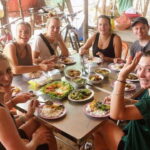
- The Wooden House Lunch: Cambodian Home Cooking with a Local Family
- Riding, Breaks, and Timing: How the 6.5 Hours Actually Feels
- Price and Value: Is $35 Worth a Half-Day of Real Culture?
- Who This Tour Suits Best (and Who Should Skip It)
- Should You Book This Kampot Bike + Culture Day?
- FAQ
- What’s included in the tour?
- Where does the tour start and end?
- How long is the tour?
- How far do you cycle?
- Is the tour guided in English?
- What will I see during the day?
- Is the bike ride difficult?
- Who shouldn’t take this tour?
Key highlights at a glance
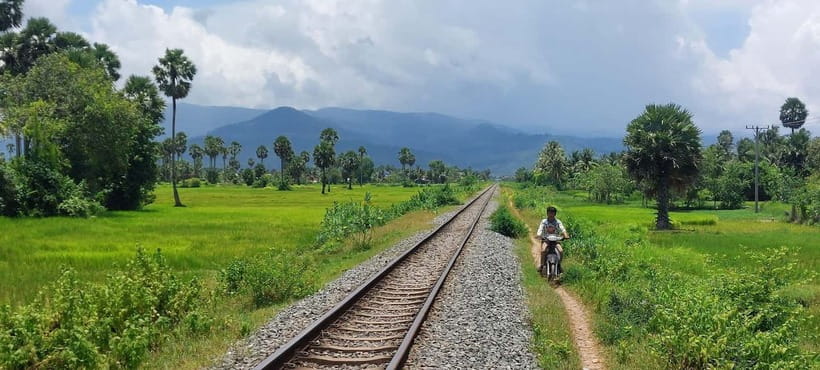
- 15 km of flat, low-traffic biking between villages and fields
- Three Buddhist monasteries with guided explanations of belief and practice
- Palm sugar farm visit with hands-on context for how it’s made
- Rice cultivation in a working community, not a staged demo
- Lunch at a traditional wooden house, home style and family-centered
- English-speaking local guidance with history, culture, and economy in plain language
Kampot by Bike: Why This Rural Route Feels Different
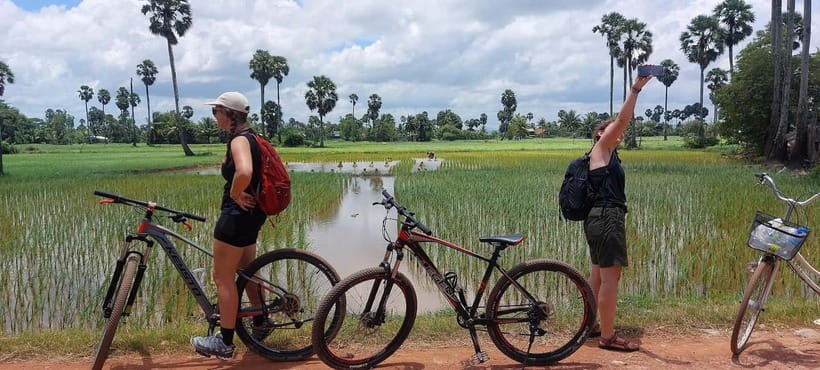
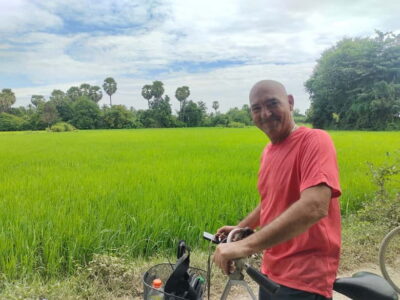
Kampot is easy to visit on a scooter or on foot, but it’s also easy to stay stuck in the same tourist loop. This tour takes you out to the villages and fields where most people actually live and work. You trade sightseeing traffic for quiet roads and the kind of views that only show up when you leave town.
I especially liked that the day is paced like a conversation. You cycle for stretches, then stop for photo breaks and guided walks. The result is less hurry, more learning, and plenty of time to notice details you’d miss if you drove straight through.
If you want Kampot to feel like a lived-in place, this is the format that does it.
You can also read our reviews of more tours and experiences in Kampot.
Starting at the Kampot Pepper Shop: Getting Oriented Fast
The day begins at the Kampot Pepper Shop near the Old Market. That location is handy because it’s simple to find, and you’re close to where most people are already orienting themselves. After a short bike start, you’ll be on the countryside route quickly.
You’ll also get the practical side out of the way early: bike rental is included, and you’ll have the chance to get comfortable before you hit the longer stretches. The ride is designed to be steady and slow, so you’re not sprinting between stops.
A smart tip: wear something breathable and bring a small water backup if you tend to get thirsty, even though drinks are included on the tour.
Flat Country Roads and a 15 km Day: The Ride Comfort Check
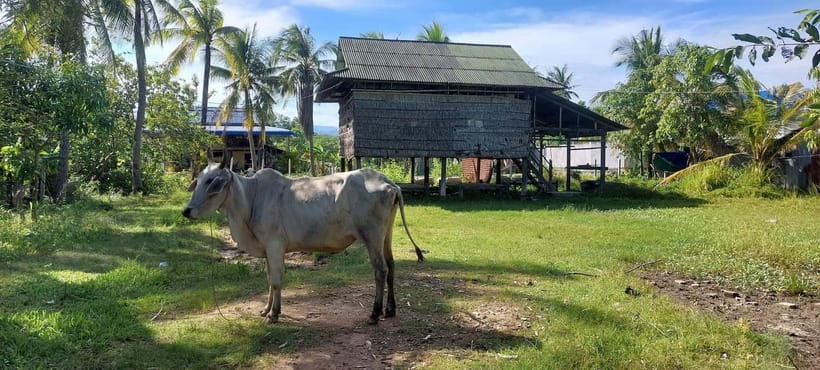
The tour covers about 15 km, and the route is entirely flat with no hills. That matters more than it sounds. When your ride is flat, you can actually look at what’s around you instead of managing your legs the whole time.
The cycling is planned to be unhurried, with breaks where you might stop for 30–45 minutes to enjoy scenery and then get moving again. Traffic is described as very light, which helps a lot if you’re not a fearless rider.
So yes, it’s a bike tour, but it’s also a walking tour day in disguise. Expect to hop off regularly for village walks, temple visits, and farm-related stops.
Three Buddhist Monasteries: How Faith Shows Up in Daily Life
One of the strongest reasons to pick this tour is the focus on monasteries, done in a way that explains what you’re seeing. You’re not just taking photos of ornate buildings. You’re learning how Buddhism is practiced locally, and why these places matter to the rhythm of village life.
This matters in Cambodia because many visitors see temples as monuments. Here, the emphasis is on temples as community centers—places tied to teaching, ceremonies, and everyday routines.
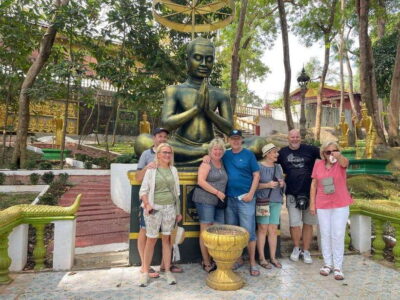
You’ll visit three different Buddhist monastic sites across the day, each with a guided walkthrough and time to take in the grounds at your own pace.
Village Pagoda Walks at វត្តជុំគ្រៀល
The first monastery stop is at វត្តជុំគ្រៀល. This is where the tour starts to shift from “riding through countryside” to “understanding the place behind the scenery.”
You’ll have a break time, then a guided visit and sightseeing around the temple area. What makes this stop valuable is the structure: you arrive, you listen to the context, and then you have time to look around without being rushed.
A consideration: temple grounds can feel hot and bright, especially midday. If you burn easily, bring sun protection even if you think you’ll be mostly in the shade.

Wat Ang Prey Serey Meanchey: Guided Time Plus Free Space
Next up is Wat Ang Prey Serey Meanchey. Like the earlier temple, this stop mixes guided explanation with time to absorb what you see yourself. The itinerary includes break time and photo time, and you’ll also get guided content plus some free time.
This balance is practical. A guide can help you understand the symbols and the setting, but you’ll also want a few minutes alone to notice smaller details—how people move through the space, how the grounds are organized, and how the temple fits into the wider village.
If you like history and religion as lived experience rather than textbook facts, this part of the day is a win.
Wat Prey Tom: Finishing the Temple Arc
The last monastery stop is Wat Prey Tom. By this point, you’ve already heard how the tour frames Buddhism, so you’re primed to see patterns rather than isolated facts.
You’ll get a guided visit, sightseeing, and another break-like pause. It’s a good way to wrap the temple focus while the rest of the day is building toward farming and lunch.
If you’re the type who remembers travel better through stories than through monuments, the temple sequence will help you hold onto what you learned.
Palm Sugar Farm and Rice Fields: Farming You Can Understand
After temples, the tour shifts into food and farming—two things that explain Cambodia more than many people realize. You’ll visit a local, family-run palm sugar farm and also stop in a rice farming community to learn about rice cultivation.
This is where the countryside stops being scenery and becomes education. When you learn how palm sugar and rice connect to daily work and local economies, you start seeing why villages are built the way they are and why seasons matter so much.
Even if you don’t remember every detail, you’ll come away with a clearer sense of what people do from morning to late afternoon, and how that shapes village life.
Practical note: farm areas can be dusty. Closed-toe shoes and basic sun protection are your best friends.
The Wooden House Lunch: Cambodian Home Cooking with a Local Family
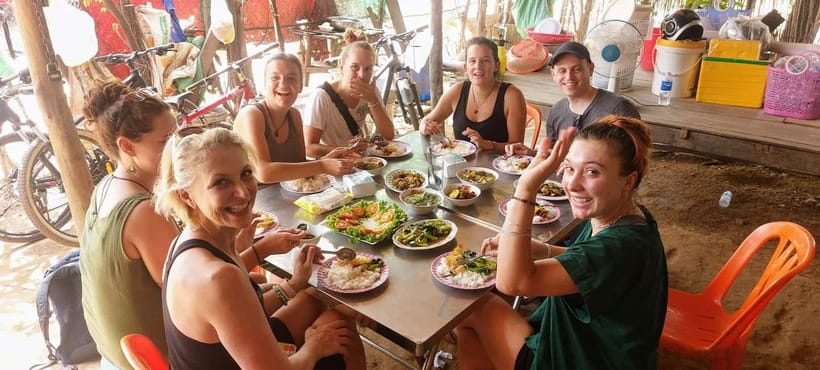
The highlight in the schedule is lunch at a traditional wooden house with a local family. This is not a quick restaurant stop. It’s a sit-down meal that’s part of the tour’s story about real daily life.
The tour emphasizes that the meal is authentic Cambodian home-cooked food, served in the family setting. It’s also the moment where the day turns from learning about culture to experiencing it through something everyone shares: food.
This stop tends to stick with people because it’s not just eating. It’s listening—how families talk, how routines work, and how hospitality shows up naturally.
If you have dietary restrictions, you should check with the operator before you go, since the meal is described as home style rather than a menu you can customize.
Riding, Breaks, and Timing: How the 6.5 Hours Actually Feels
The whole experience runs about 6.5 hours. The ride segments are short enough that you’re never stuck grinding a long distance in one go, and you’re given breaks for sightseeing and photos.
Cycling is typically around 30 minutes at different points in the route, with scenic views stops in between. The final portion brings you back toward the starting area after additional riding and sightseeing.
That timing structure helps in two ways. First, you’re less likely to feel fatigued. Second, you see more than just temples and farms—you also get that gentle “passing through villages” feeling that makes the day feel like a local route, not a checklist.
Price and Value: Is $35 Worth a Half-Day of Real Culture?
At $35 per person for about 6.5 hours, this tour sits in the range where you have to ask what you’re buying besides transportation. In this case, you’re paying for several things bundled together:
- A bicycle rental
- All drinks
- Lunch with a local family
- Guided visits across multiple monasteries
- Stops at a palm sugar farm and a rice farming community
- An English-speaking guide explaining history and culture
When you break it down like that, the value comes from the fact that you’re not just paying for a ride. You’re paying for access: to family-run places, to guided context, and to a structured route that reaches areas most people skip.
In other words, you’re buying fewer “separate tickets” and more sustained guidance across the day.
My take: if you’re the type who likes meaningful stops and good pacing, this price feels fair.
Who This Tour Suits Best (and Who Should Skip It)
This bike experience is ideal for adults and older teens who can ride comfortably and want a countryside day that’s more than scenery. It’s also a strong fit if you like cultural context—Buddhism, local legends, and everyday economic life—explained in a way that connects to what you’re seeing.
It’s not a fit if you can’t ride a bike, and it’s not suitable for people with mobility impairments or wheelchair users. The tour is also listed as not suitable for children under 12 and for people over 95.
If you’re sensitive to heat or prefer fully sheltered attractions, plan for sun exposure during village walks. You’ll be outdoors enough that basic preparation really matters.
Should You Book This Kampot Bike + Culture Day?
If you want Kampot to feel like a real place you could have walked into even if you weren’t on a tour, I’d book it. The combination of easy flat cycling, three guided monastery visits, and family-based lunch makes it more memorable than the typical sightseeing day.
Book it when:
- You can ride a bike comfortably
- You want local farming and faith explained through guided stops
- You value home-cooked food with a real family setting
Skip it when:
- You want a low-effort, no-walking day (this includes walking tours)
- You can’t comfortably ride a bike for multiple segments
- You’re looking for only big-name attractions and quick photo stops
FAQ
What’s included in the tour?
The tour includes bicycle rental, all drinks, and lunch.
Where does the tour start and end?
It starts at the Kampot Pepper Shop near the Old Market and returns to the same meeting point.
How long is the tour?
The duration is 6.5 hours.
How far do you cycle?
The route covers about 15 km, and it’s designed to be flat with no hills.
Is the tour guided in English?
Yes, there is a live tour guide in English.
What will I see during the day?
You’ll visit three Buddhist monastaries, a palm sugar farm, a rice farming community, and you’ll enjoy a homecooked Cambodian meal with a local family.
Is the bike ride difficult?
The cycling is described as slow and easy, with country roads and very little traffic, but you still need to be able to ride a bike.
Who shouldn’t take this tour?
It’s listed as not suitable for children under 12, people with mobility impairments, people who can’t ride a bike, wheelchair users, and people over 95.