REVIEW · SIEM REAP
Koh Ker, Kulen Waterfall and Beng Mealea from Siem Reap
Book on GetYourGuide →Operated by Angkor Day Trip · Bookable on GetYourGuide
That early-morning start changes everything. I love how this day links sacred mountain carvings, a remote pyramid capital, and a jungle temple maze without rushing. The main drawback is that it’s a long 10–12 hour day with some walking and climbing, and you’ll still need to pay several entrance fees on top of the $77 tour price.
What really elevates it is the human touch: guides like Tann and So are praised for clear history (including current political context) and for taking lots of photos, plus the van stays comfortable with cold water and towels. If you’re hoping for a super laid-back day, you’ll want to be realistic about the pace and plan for heat, uneven paths, and budget extra for sites that aren’t included.
In This Review
- Key things I’d circle before you go
- How this day trip feels: three worlds in one loop
- Phnom Kulen: thousand lingas and the Reclining Buddha
- Kulen Waterfall: when the forest turns into a swim break
- Koh Ker: the forgotten capital and Prasat Thom’s seven tiers
- Prasat Pram and Prasat Neang Khmau: roots and black sandstone
- Lunch near Koh Ker: a real taste of Khmer food
- Palm cake tasting and snack culture on the road
- Beng Mealea: the jungle temple maze that feels more alive
- Walking it smart: comfort tips for temple-and-jungle routes
- Transport and timing: why the day doesn’t feel like a cattle drive
- Price and entrance fees: what $77 really turns into
- The guide makes it smoother: Tann, So, Pan, and Sopheaprath
- Who this tour suits best (and who should think twice)
- Should you book this Koh Ker, Kulen and Beng Mealea day trip?
- FAQ
- How long is the tour from Siem Reap?
- Is hotel pickup and drop-off included?
- What’s included in the $77 price?
- What entrance fees are not included?
- Do I need to bring money for food and drinks?
- Is the guide available in English?
- Is a private group available?
Key things I’d circle before you go
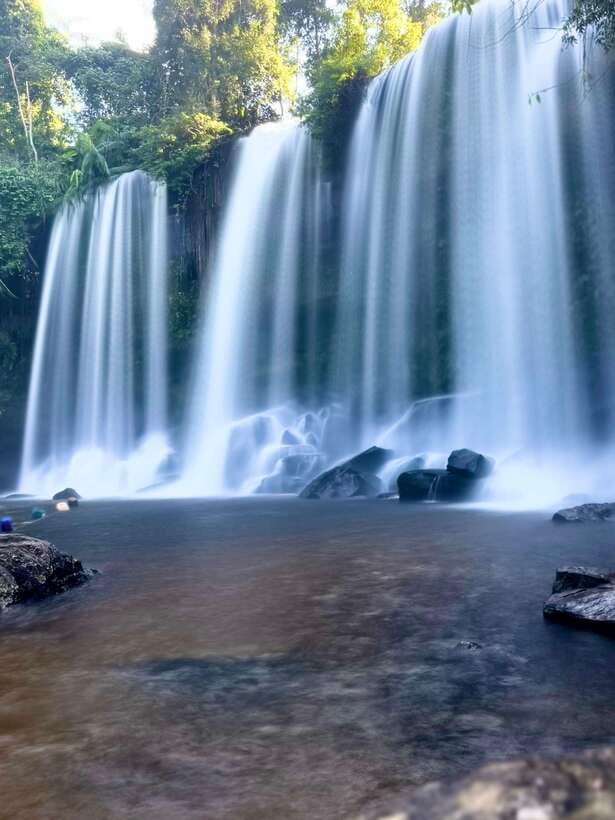
- Early entrance energy at Phnom Kulen: you’re aiming to arrive before the worst crowds and get calmer time at the sacred spots.
- Koh Ker’s climb to Prasat Thom: seven tiers, big views, and a temple town that feels far from the main tourist loop.
- Beng Mealea’s nature-over-ruins mood: thick vegetation, crumbled galleries, and hidden sanctuaries that feel more wild than restored.
- Guides who do more than talk: people mention Tann and So for strong temple explanations and photo help.
- Comfort details that matter on long drive days: cold water, wet towels, A/C transport, and even palm cake tasting.
How this day trip feels: three worlds in one loop
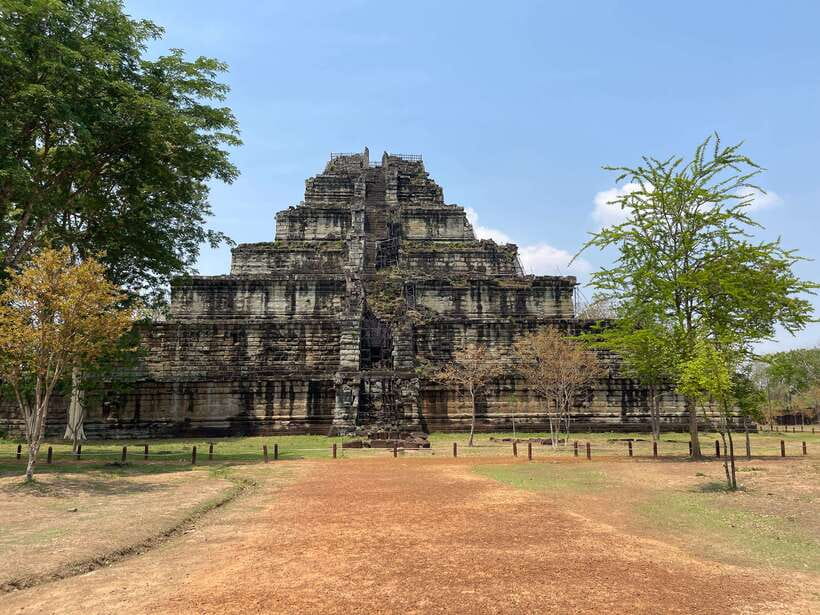
This tour is basically a triangle: Phnom Kulen in the forested north, Koh Ker further out in the countryside, then Beng Mealea where the jungle quietly takes over stone. You get a mix of sacred sites, landscape-in-the-literal-sense greenery, temple architecture, and photo-friendly textures like riverbed carvings and root-wrapped towers.
You’ll also feel the effort. The day is built around long hours and several different kinds of walking, from forest paths to uneven temple routes. If you love variety, it’s a great fit. If you prefer to stick to one zone and linger, you might feel rushed by the time you’re back in Siem Reap.
You can also read our reviews of more tours and experiences in Siem Reap.
Phnom Kulen: thousand lingas and the Reclining Buddha
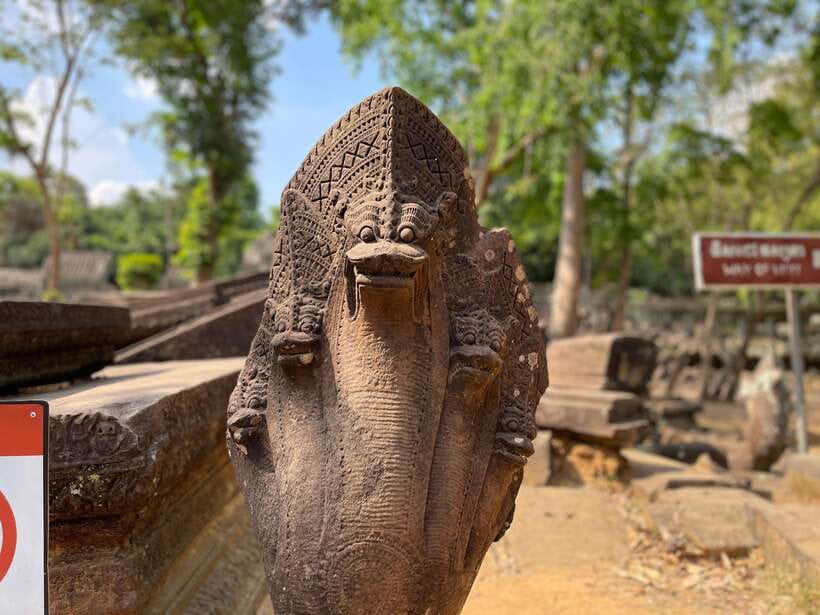
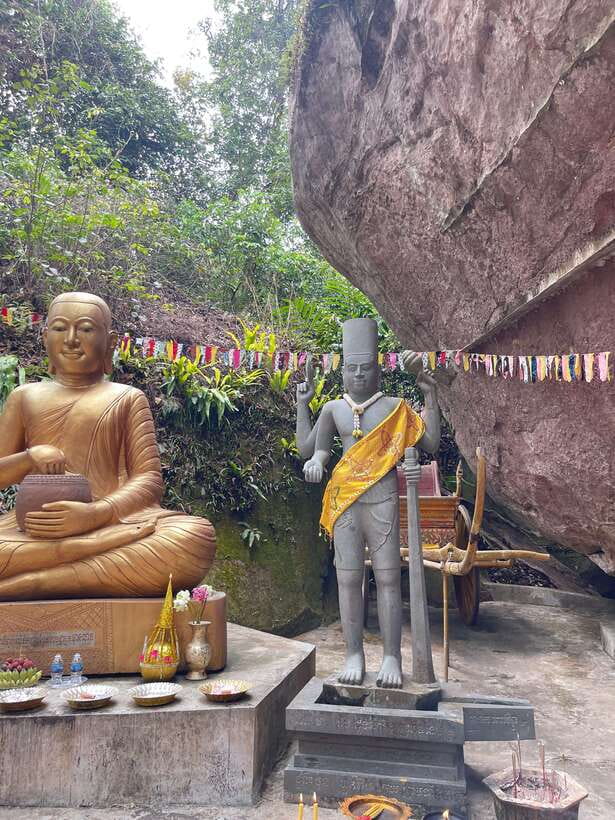
You start at Phnom Kulen National Park, Cambodia’s sacred mountain, and the morning is where the whole vibe begins. The trek runs through dense forest, and the goal is the River of a Thousand Lingas, with carved stone symbols and Hindu deity imagery etched into the riverbed.
That stop is worth your attention because it’s not just a temple photo moment. You’re seeing how a religious tradition connects to the land and water in a very direct way—stone carvings you can read with your eyes close up, not from a far-off viewpoint.
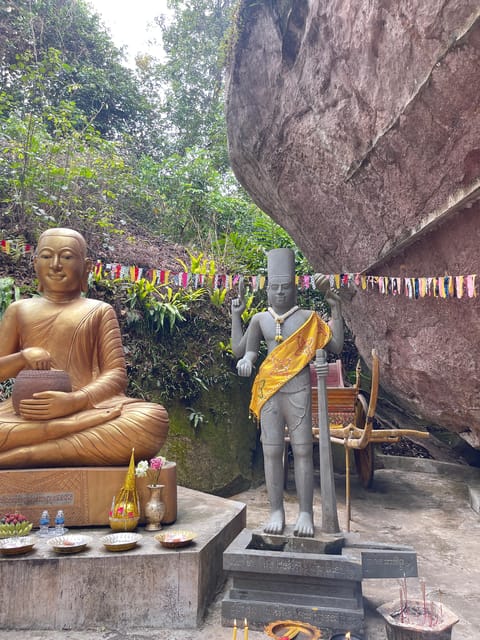
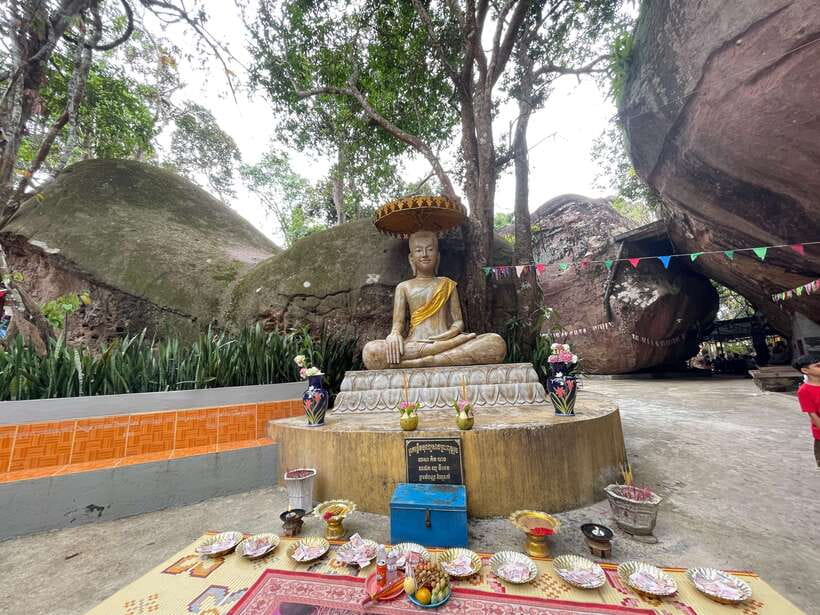
Then you head to the massive Reclining Buddha statue, perched high on sandstone. People consistently describe it as an important pilgrimage landmark, and you also get panoramic views from the top that make the climb feel like more than steps and sweat.
A small practical note: this area is sacred, so dress and behavior matter. Bring covered shoulders and a respectful attitude, especially if you plan to linger for photos near statues.
Kulen Waterfall: when the forest turns into a swim break
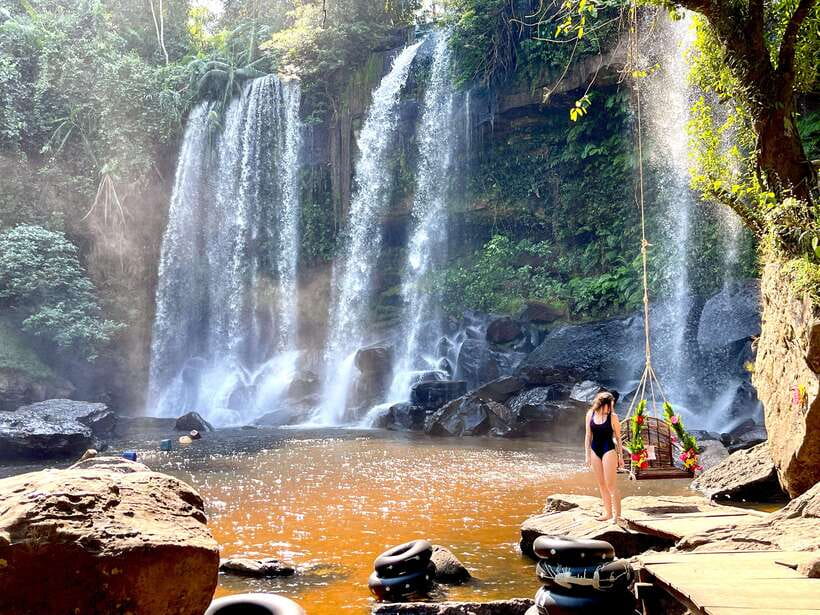
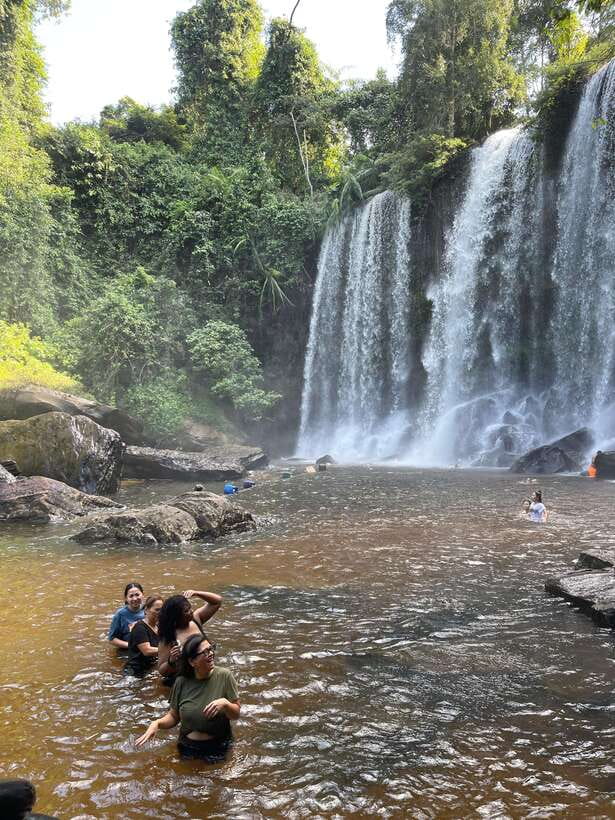
After the carvings and the statue, you reach Kulen Waterfall, described as a two-tier cascade surrounded by lush greenery. The best part here is the option to swim in the cool pools or simply relax near the water and watch the surroundings change as the morning warms up.
Even if you don’t swim, this is a major reset from temples. It’s one of those places where you can catch photos that don’t look like tourist shots because the setting is so natural and the light is often softer early in the day.
If you do plan to swim, go practical: quick-dry clothes, water shoes if the ground feels slippery, and something for your phone/camera. The tour includes bottled water and a towel, but it doesn’t say you’ll have dedicated swim gear, so you’ll want to handle that yourself.
Koh Ker: the forgotten capital and Prasat Thom’s seven tiers
Next comes Koh Ker, a 10th-century Khmer capital that feels more rural and less polished than the more famous Angkor sites. This is a big part of the appeal: the temples sit in a wider countryside setting, so the whole place feels quieter, more open, and more “this is out there” in a good way.
Your main anchor is Prasat Thom, a towering seven-tier pyramid temple. The climb to the top is a key moment because it gives you sweeping views of the countryside—exactly the kind of panorama you can’t get from ground level.
That climb also helps you understand the architecture. When you’re up high, you start to see how the layers and angles were designed for scale and sight lines, not just decoration.
The tradeoff is physical effort. You’ll want good footing and patience with stairs and uneven surfaces. If you have knee trouble, this is the part of the day most likely to test you.
Prasat Pram and Prasat Neang Khmau: roots and black sandstone
After Prasat Thom, the tour keeps moving with lesser-known temples that are easier to miss on your own. One highlight is Prasat Pram, famous for towers with tree roots wrapped around them. It’s the kind of scene that gives you texture-rich photos—architecture blending into growth—without feeling like a staged set.
Then you visit Prasat Neang Khmau, featuring unique black sandstone structures. That contrast—bright forest light, then dark stone—creates dramatic photo angles and a more varied sense of Khmer style than you’d get from just one temple stop.
These smaller temples matter because they make the day feel less like a checklist. You’re seeing how Koh Ker isn’t one monument; it’s a cluster of sacred spaces with different shapes and materials.
Lunch near Koh Ker: a real taste of Khmer food
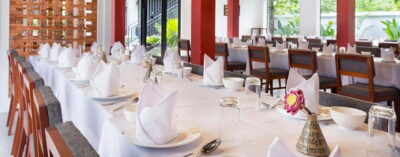
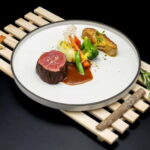
You’ll have traditional Khmer lunch at a local restaurant near Koh Ker. The big value here is location. This isn’t a restaurant built to satisfy tour buses; it’s positioned where the locals live and eat.
From the feedback I’ve got here, the lunch can be surprisingly delicious, especially given how far you’re traveling from Siem Reap. It’s also a mental reset before Beng Mealea, where you’ll be walking again through thick vegetation.
Plan to eat at a normal pace. When the day is long, the best move is not to skip lunch and then rush through the next two sites on low energy.
Palm cake tasting and snack culture on the road
Two sweetness moments show up: the tour includes local palm cake tasting, and in at least some cases, guides also bring small extras like red bananas (mentioned as a snack/souvenir-style treat). It’s not the same as a full candy break, but it’s a fun way to taste something local without hunting for it.
This matters because you’ll be in and out of vehicles and temples, often far from convenient food stops. Small snacks and simple treats help you keep the day comfortable rather than cranky.
Beng Mealea: the jungle temple maze that feels more alive
Then you head to Beng Mealea, a sprawling early 12th-century temple complex that’s largely unrestored. The result is a mystical atmosphere: thick vegetation, crumbled stones, and carved galleries you reach through paths that feel more like exploration than museum touring.
This is where the comparison to Ta Prohm comes up often, because both have that jungle-temple feel. The difference is that Beng Mealea can feel even more overtaken by nature, which many people love for the raw, layered look of ruins.
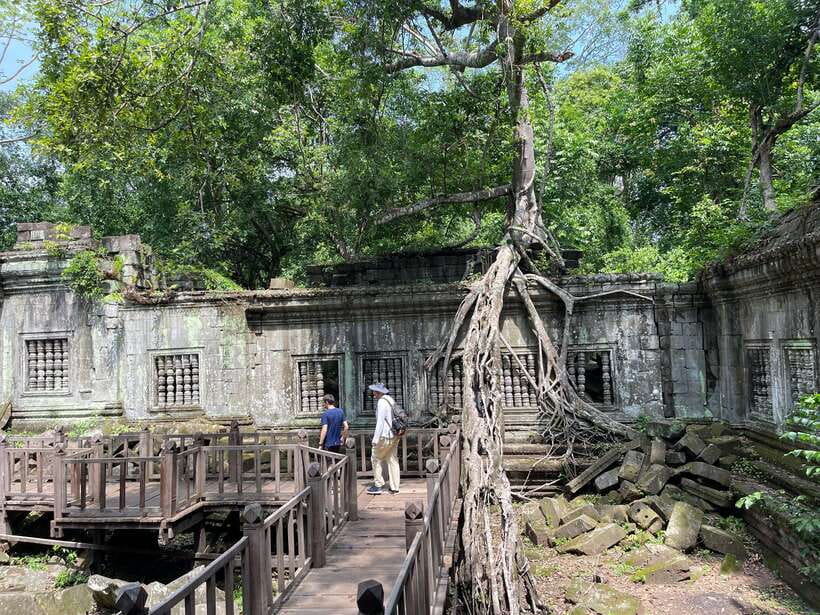
You’ll walk on wooden pathways and move through fallen stones to explore intricately carved galleries and hidden sanctuaries. That route is why the experience works: you’re not just looking at what’s left, you’re moving through it in a way that shows how the jungle reclaimed the space over time.
Walking it smart: comfort tips for temple-and-jungle routes
Beng Mealea is not a flat stroll. Wooden walkways help, but there are still rougher, uneven areas where you’re stepping around stones. Comfortable shoes matter more than good-looking shoes today.
Also, keep your phone ready but protected. The setting can be humid, and you’ll want to avoid constant handling while climbing over uneven ground.
If you’re into photography, this is one of your best windows. You’re likely to get photos of towering trees, crumbled ruins, and carved edges wrapped into the vegetation—scenes that look different at every angle.
Transport and timing: why the day doesn’t feel like a cattle drive
Your transportation is by air-conditioned vehicle with free pickup and drop-off at city hotels. The itinerary is structured as a long day, but several details reduce the stress: bottled water, towels, and punctual, comfortable transit.
People also mention the value of starting early enough to see places before the larger waves of tourists. Even if you’re not chasing empty temples, arriving early helps the light and makes the first stops more enjoyable.
Still, it’s important to be realistic: 10–12 hours means you’ll want a strong breakfast, a good attitude about some walking, and a willingness to move from site to site without long sitting breaks.
Price and entrance fees: what $77 really turns into
The tour price is $77 per person, and it includes bottled water and towel, air-conditioned transport, an English-speaking professional guide, pickup/drop-off from Siem Reap hotels, sightseeing as described, and palm cake tasting.
What’s not included is where you’ll need to do quick math:
- Kulen Mountain National Park entrance: $20/pax
- Beng Mealea entrance: $10/pax, or use a valid Angkor Pass
- Koh Ker Temple entrance: $15/pax
- Meals/drinks (lunch is included, but food and drinks beyond that aren’t listed as included)
- Guide and driver tipping
If you pay all three temple/national park fees without an Angkor Pass covering Beng Mealea, that’s an extra $45 on top of $77, putting the day around $122 total per person, not counting drinks/snacks and tips. That still can be good value if you want three major stops in one shot, especially Koh Ker and Beng Mealea, which many travelers skip due to distance.
The guide makes it smoother: Tann, So, Pan, and Sopheaprath
This tour seems to run well partly because the guides focus on more than facts. Names that come up in feedback include Tann and So, praised for temple knowledge and for explaining Cambodia history in a way that feels connected to real life.
Some guides also help with photos. That sounds small, but it changes the experience: instead of you constantly trying to pose between crowds, your guide can take pictures and help you get better angles, especially at Koh Ker’s pyramid views and Beng Mealea’s dense ruins.
There’s also mention of extra care like cold towels and cold drinks during the ride, plus the sense that the guide takes notice of your needs. If you’re a person who gets tired easily, this kind of attention matters.
Who this tour suits best (and who should think twice)
I’d say this is a strong fit if you:
- want to see Cambodia beyond Angkor in one day
- like temples that feel remote or partly swallowed by nature
- care about photography and want good photo opportunities
- enjoy a guide who explains both sacred meaning and context
It might be less ideal if you:
- hate climbing stairs (Prasat Thom is the big one)
- don’t want a long 10–12 hour schedule
- expect all costs to be included (several entrance fees are separate)
Should you book this Koh Ker, Kulen and Beng Mealea day trip?
Yes, I think you should book it if you want a full day that mixes sacred art, temple scale, and jungle ruin atmosphere, all while staying comfortable in an A/C vehicle with cold water and towels. It’s also a smart choice for value because it bundles remote stops (Koh Ker and Beng Mealea) that can be harder to organize efficiently on your own.
Skip it or choose another style if you want a slower pace, minimal walking, or a day where every cost is bundled and predictable. Here, the tradeoff is effort and extra fees for entrances in exchange for three very different “wow” moments.
If you do book, pack for movement: comfortable shoes, light layers for humidity, and a realistic plan for a full day outdoors.
FAQ
How long is the tour from Siem Reap?
The duration is listed as 10–12 hours, depending on the starting time. You’ll also have hotel pickup as part of the schedule.
Is hotel pickup and drop-off included?
Yes. The tour includes free pickup and drop-off at city hotels, with pickup at the hotel lobby.
What’s included in the $77 price?
Included items are bottled water and a towel, air-conditioned transportation, a professional English-speaking tour guide, the specified sightseeing stops, palm cake tasting, and hotel pickup/drop-off.
What entrance fees are not included?
Entrance fees listed as not included are Kulen Mountain National Park ($20 per pax), Beng Mealea ($10 per pax, or valid Angkor Pass), and Koh Ker Temple ($15 per pax).
Do I need to bring money for food and drinks?
Yes. Food and drinks are not included, so you’ll want to budget for what you eat and drink during the day (lunch is listed as part of the schedule, but extra drinks/other meals aren’t described as included).
Is the guide available in English?
Yes. The tour includes a live English-speaking guide.
Is a private group available?
Yes. Private group options are available, in addition to non-private group formats.