REVIEW · SIEM REAP
Full-Day Angkor Wat Sunrise Private Tour with Guide from Siem Reap
Book on Viator →Operated by Angkor Wat Travel Tour · Bookable on Viator
Sunrise at Angkor Wat is pure magic. This private sunrise tour runs from Siem Reap with hotel pickup, and guides such as Sa and Sopha help you spot what matters in the carvings before the crowds thicken. You’re up early, but the payoff is an organized, guided route through the best-known (and a few underrated) Angkor sights.
I love the private feel. Your guide can slow down for your pace, help with stairs, and point out photo spots so you do not waste time guessing. I also like the four-stop flow: Angkor Wat, Bayon, Ta Prohm, and Banteay Kdei, all in one long morning/early afternoon.
One key consideration: entrance tickets and meals are not included, so you will want to plan extra budget for temple entry fees and food.
In This Review
- Key highlights that make this tour work
- Why Angkor Wat at sunrise beats daytime wandering
- Pickup at 4:30am: the logistics that decide your experience
- Angkor Wat: climb the main entrance and time your photos
- Bayon Temple and Angkor Thom: the 216 faces moment
- Ta Prohm with fig trees: when ruins look alive
- Banteay Kdei: a calmer, less-restored 12th–13th century stop
- The English guide factor: what you gain beyond a checklist
- Air-conditioned transport, cold towels, and time management
- Price and value: is $60 a fair deal?
- Practical tips to make the sunrise day feel smooth
- Should you book this Angkor Wat sunrise private tour?
- FAQ
- What time does the tour start?
- How long is the tour?
- Is hotel pickup and drop-off included?
- What’s included in the price?
- Are Angkor entrance tickets included?
- Are meals included?
- Is this a private tour?
- Does it use a mobile ticket?
- What is the cancellation policy?
Key highlights that make this tour work
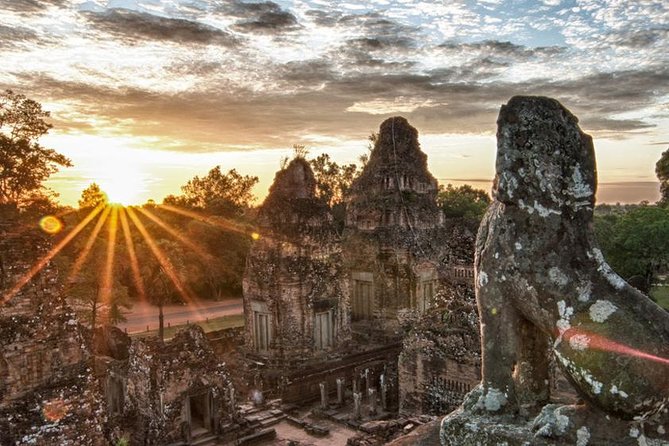
- Sunrise timing built in so you arrive before the light show starts changing the temple surfaces
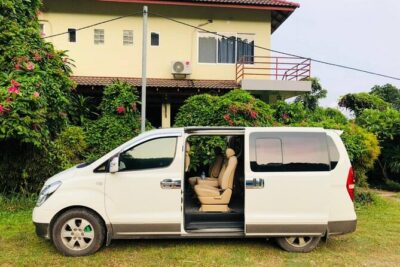
- Hotel pickup and drop-off in Siem Reap with an air-conditioned car and private transport
- English guide + cold towel and cold water to keep the day comfortable after an early start
- Angkor Thom focus at Bayon with its 54 towers and 216 Buddha-face carvings
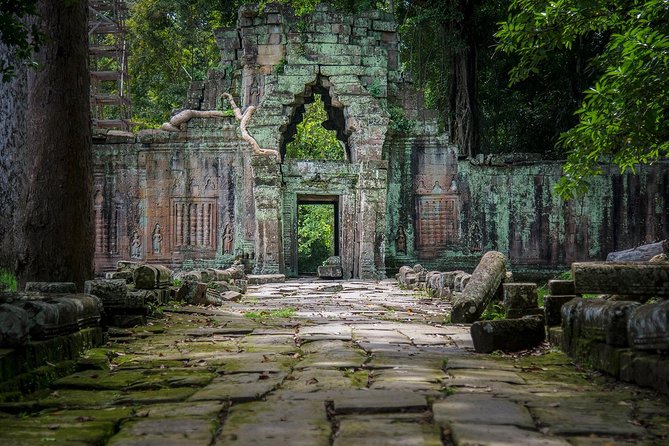
- Ta Prohm exactly as you pictured with the fig trees still wrapping the ruins
- Photo-friendly pacing with guides who actively help you frame shots (not just point and rush)
Why Angkor Wat at sunrise beats daytime wandering
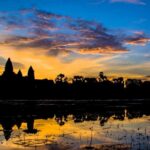
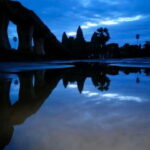
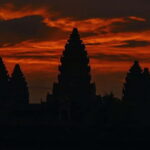
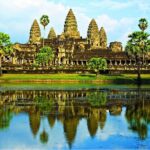
If you only do Angkor Wat once, sunrise is the move. The temple changes fast as the sky brightens, and you get that early-morning quiet before the daytime bustle locks in. On a private tour, you also avoid the feeling of being stuck behind a wall of people while you try to take a few decent photos.
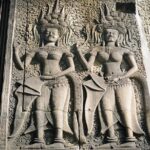
The other win is interpretation. A good guide does not just list facts, they help you see what the carvings are showing, how the site was planned, and why certain viewpoints feel more dramatic. Guides mentioned on this tour include Sa, Sen, Curly, Se, and Sopha, and they’re repeatedly praised for English clarity and for giving context you will not pick up as quickly on your own.
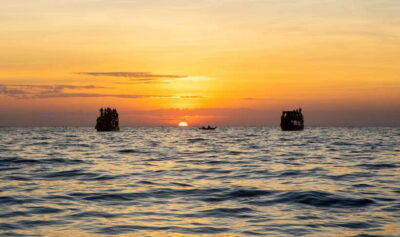
Weather is the only real wild card. If skies are cloudy, the sunrise may be muted, and you might not get that crisp sun flare. Still, even a gray morning can be unforgettable when you’re watching Angkor Wat wake up in real time.
You can also read our reviews of more guided tours in Siem Reap
Pickup at 4:30am: the logistics that decide your experience
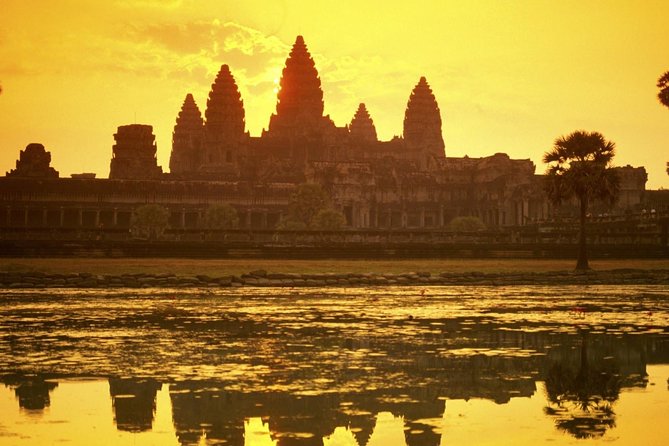
Start time is 4:30am, and that is early for a reason. You want to be at Angkor Wat while it still feels like a dawn ritual, not an attraction line. You’ll be picked up from your hotel in Siem Reap and whisked to the temples in an air-conditioned vehicle.
What helps most at this hour is having your day already organized. Your guide and driver handle routing, crowd positioning, and timing between sites, so you’re not spending your morning trying to solve tickets, maps, or transportation. It is also a private tour, meaning you are not waiting on other groups to finish photos or move between staircases.
Bring practical stuff: comfortable shoes for uneven stone, and a light layer for the early chill (then you can shed it as the day warms up). One review tip also flagged mosquitoes around the water area at sunrise, so bug spray is a smart idea.
Angkor Wat: climb the main entrance and time your photos
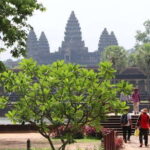
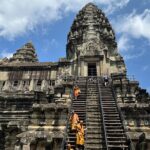
Angkor Wat is the main event, and the plan gives it room. Stop 1 lasts about 3 hours. You’ll explore the temple, including climbing the main entrance, then experience the sunrise view over Angkor Wat and the surrounding temple zone.
This is where a guide pays off. From ground level, it’s easy to think you’re seeing the whole picture, but from the right angle you understand the geometry of the walkways and the symbolism built into the temple layout. Guides often steer you toward strong vantage points and help you frame shots with fewer interruptions.
A small heads-up: admission tickets are not included. So when you plan your budget and timing, treat this stop as the one place where you cannot forget to have your temple entry sorted out.
Bayon Temple and Angkor Thom: the 216 faces moment
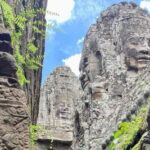
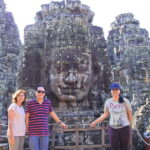
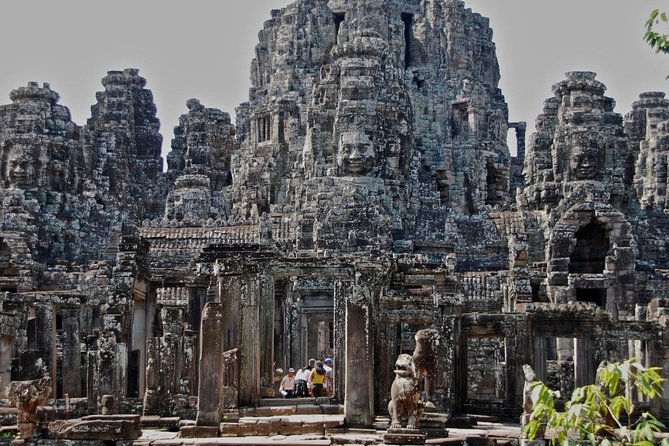
After Angkor Wat, you head to Angkor Thom for Bayon Temple. Stop 2 runs about 2 hours. Bayon is famous for its 54 towers and 216 faces of Avalokesvara, and this part of the circuit is where Angkor shifts from wide ceremonial views to something more eerie and human at the same time.
Your guide’s job here is to translate the carvings into meaning. With the number of faces, angles matter. Tiny changes in where you stand can make a different expression feel like it’s following you. A good guide also helps you understand why this was built at the end of the 12th century under King Jayavaraman VII, and what that tells you about the era.
This stop can be physically tricky for some people because there are stairs and uneven stone. The good news: guides on this tour are repeatedly described as attentive to comfort and stair pace, and they’ll help you slow down when needed.
Again, admission tickets are not included for the stops, so you will want to handle those directly and avoid last-minute stress.
Ta Prohm with fig trees: when ruins look alive
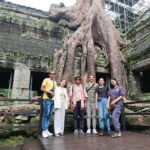
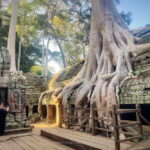
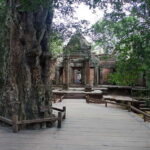
Ta Prohm is where Angkor feels cinematic. Stop 3 lasts about 2 hours, and the core experience is the temple wrapped by enormous fig trees. You are seeing ruins that have been left in much the same condition they were found, which is part of what makes the place feel so real.
Instead of the clean, symmetrical feeling of some other temples, Ta Prohm brings in a tangled “nature vs. stone” contrast. The fig roots and branches create natural frames for photos, and if you give yourself enough time, you can walk around the best viewpoints without rushing.
A guide makes this smoother. They can show you where the roots meet the carvings, how to move for better sightlines, and which spots give the most dramatic scale. If you care about photography, many guides on this tour are praised not just for history talk but also for helping people capture better angles.
No tickets included here either, so plan to pay entrance separately and stay flexible if lines form.
You can also read our reviews of more private tours in Siem Reap

Banteay Kdei: a calmer, less-restored 12th–13th century stop
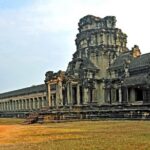
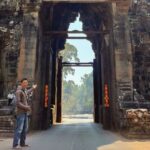
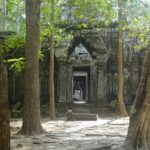
Stop 4 is Banteay Kdei, about 1 hour. It was built by King Jayavarman VII in the late 12th century into the early 13th century. What makes it especially worthwhile on this route is that it’s described as largely non-restored and sprawling, built in a monastic style.
This is a good “change of pace” before the day wraps. Angkor Wat and Bayon can feel like huge set pieces. Banteay Kdei gives your eyes a different texture: more worn stone, more quiet corners, and fewer people than the headline stops (even if it is still popular).
If you only like visiting the most famous temples, you might wonder why this short stop exists. I like it because it helps balance your day. You still get major Angkor names, but you also see how the complex looks outside the most restored, most photographed scenes.
The English guide factor: what you gain beyond a checklist
This tour’s real value is the guide. You’re not just moving from one temple to the next; you’re getting cultural and historical context that helps the sites click. Reviews repeatedly mention guides like Sa, Sopha, Se, Curly, Sen, David, Mare, and Chen for English clarity, practical explanations, and the ability to answer questions on the spot.
What that feels like in real life:
- You understand what you’re looking at while you’re looking at it.
- You spend less time decoding signage and more time watching details.
- The tour becomes more personal when your guide adapts to your pace.
There’s also a “photo coaching” vibe that shows up a lot in the feedback. Some guides are described as taking great photos for couples and families, and others help people find the best spots and lighting angles. If you’re traveling with a camera, this matters.
One review even called out an extra comfort touch: scented towels in the van after temple stops. That is not something you should assume every time, but cold towels and cold water are explicitly included, and it’s a nice reminder that this is designed for a long day in the heat.
Air-conditioned transport, cold towels, and time management
You get an air-conditioned vehicle and private transportation throughout. That is a big deal when you’re doing a long temple morning with early start stress. You’ll be moving between sites at dawn and then shifting into warmer daylight. The cold water and cold towel help you reset between stops instead of just pushing onward.
Time management is another silent advantage. The itinerary is structured with generous blocks: roughly 3 hours at Angkor Wat, 2 at Bayon, 2 at Ta Prohm, and 1 at Banteay Kdei. With that, you can actually explore rather than sprint. And since it’s private, you are less likely to feel stuck waiting for others to climb, photograph, and move on.
Meals are not included, but you will have time in the schedule for breaks. Reviews mention breakfast stops around late morning, so if you’re prone to getting hungry while you wait, bring a small snack to tide you over before food.
Price and value: is $60 a fair deal?
At $60 per person, you’re mostly paying for three things: the sunrise timing, the English guide, and the convenience of pickup and private transport. The fact that this is a private tour matters because your guide can adjust to your group, your questions, and your pace.
You do pay extra for temple entrance tickets and meals, since nothing in the itinerary includes those fees. That’s the trade-off for paying less up front. When you do the math, the price still often feels reasonable because you’re not doing a DIY scramble for dawn logistics or hiring multiple guides.
You should also look at the group discount note. If you’re booking with friends or family, the per-person cost can improve depending on the booking setup.
Practical tips to make the sunrise day feel smooth
Here are the small choices that help you enjoy the full circuit:
- Wear shoes you can trust on stone steps and uneven pathways.
- Bring a layer for the early hours, then plan to shed it as the sun rises.
- Pack bug spray for the sunrise area; mosquitoes are a real factor near water at dawn.
- If you get hungry easily, bring a small snack for the wait and plan for breakfast later since meals are not included.
- If you care about photography, ask your guide where they like to stand. Many guides here actively help with photo spots, not just temple talk.
If your group includes kids, they must be accompanied by an adult, and there will be stairs. The upside is that guides on this tour are described as helpful with stair pacing and comfort needs.
Should you book this Angkor Wat sunrise private tour?
Book it if:
- You want your first Angkor Wat visit to start with the best light and a calm arrival.
- You prefer a guide who explains what you’re seeing, in English, without rushing.
- You like photo opportunities and want help finding viewpoints.
- You value convenience: hotel pickup and drop-off plus air-conditioned transport.
Skip it (or adjust expectations) if:
- You’re trying to travel with the lowest possible budget, since you’ll add temple tickets and meals on top.
- You cannot do an early start at 4:30am.
- You dislike long mornings. The schedule is about 8 hours total, and it wraps after the main Angkor circuit.
If you fall into the first group, this is a solid way to see the “greatest hits” without turning the day into a stressful self-guided scavenger hunt.
FAQ
What time does the tour start?
It starts at 4:30am.
How long is the tour?
The duration is about 8 hours.
Is hotel pickup and drop-off included?
Yes, pickup and drop-off in Siem Reap are included.
What’s included in the price?
You get an air-conditioned vehicle, an English tour guide, cold towel and cold water, and private transportation.
Are Angkor entrance tickets included?
No. Admission ticket fees are not included for the stops.
Are meals included?
No. Meals such as breakfast, lunch, and dinner are not included.
Is this a private tour?
Yes. It’s a private tour/activity, and only your group participates.
Does it use a mobile ticket?
Yes, the tour offers a mobile ticket.
What is the cancellation policy?
Free cancellation is available up to 24 hours in advance for a full refund.
If you want, tell me your travel dates and how many people are in your group, and I’ll help you think through how early you should arrive, plus how to budget for tickets and meals around this route.