REVIEW · SIEM REAP
Siem Reap: Angkor Temples Off-Track Bicycle Tour
Book on GetYourGuide →Operated by OFF TRACK Tours · Bookable on GetYourGuide
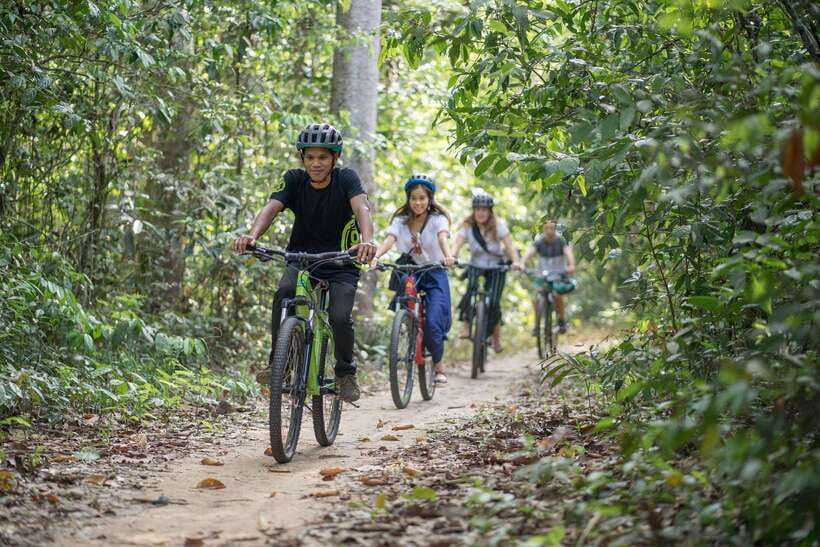
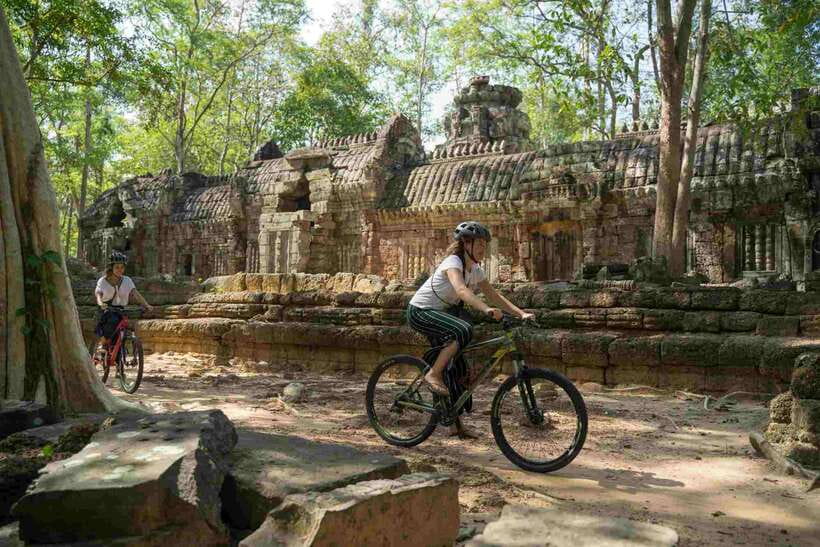
If you like temples without the crowds, this is your bike day. You’ll pedal through jungle paths to reach Angkor’s quieter shrines, then learn Khmer temple stories from a local guide who keeps the pace realistic.
I especially like the off-the-main-route feel—Angkor Thom and the forest temples won’t feel like a highlight-sticker tour. And the tour’s built-in support for education at KKO makes the day feel purposeful, not just scenic.
My only caution is simple: the tour is for people who can ride a bike comfortably, and the wrong clothing can become a problem at temple entrances.
In This Review
- Key Things You’ll Actually Notice
- Siem Reap by Bike: Why This Tour Feels Different
- The Non-Profit Piece: Your $65 Doesn’t Just Buy Temples
- Meeting at Bayon Pastry School: Get Your Day Started Cleanly
- Cycling Into Angkor Park: The Wall of Angkor Wat First
- Angkor Thom: South Gate + Bayon Temple (The Big Names, Done Smarter)
- A small drawback to consider
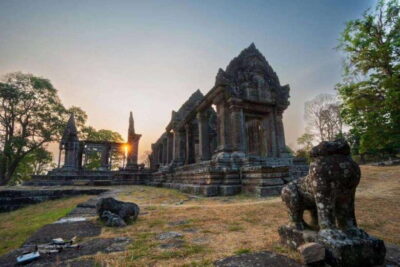
- The Quiet Temple Detour: Preah Palilay When You Have Time
- Lunch in the Jungle: Fuel Without Breaking the Day
- Preah Khan: History Meets a Quieter Rhythm
- Ta Nei (Ghost Temple): The Temple You’d Miss on a Straight Route
- Ta Keo: A Final Temple Stop Before Angkor Wat
- Angkor Wat Again: Wrap Up at the Main Stage
- Group Size, Guide Style, and Bike Comfort
- Dress Code and Practical Rules: Don’t Lose Time at the Door
- Who This Tour Is Best For (And Who Should Skip It)
- Should You Book Siem Reap: Angkor Temples Off-Track Bicycle Tour?
- FAQ
- Is the Angkor Pass included in the tour price?
- Where do I meet for the tour?
- What time does the tour start and how long is it?
- What languages is the guide speaking?
- Do they accommodate food needs like vegan meals?
- What should I wear and bring?
- Can I cancel and get a refund?
Key Things You’ll Actually Notice

- Off-track routing that trades traffic noise for small paths and shade
- Small group size (max 7) so the guide can adjust the pace to you
- Hidden-temple focus: Preah Palilay and Ta Nei (often called Ghost Temple) for quieter moments
- Lunch in the jungle that keeps you moving instead of dragging out the day
- Non-profit impact through KKO, with profits supporting free education and vocational training
Siem Reap by Bike: Why This Tour Feels Different
Angkor can turn into a conveyor belt. This tour goes the opposite direction: you start in Siem Reap and ride into the park on smaller paths, then you spend time at temples that many standard routes rush past or skip. The result is a day that feels more like field time than ticking boxes.
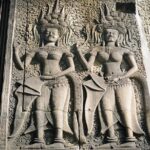
I like that the emphasis is not only on big-name stops like Bayon and Angkor Wat, but on understanding how the Angkorian Empire shaped Khmer culture. With a local guide who explains what you’re seeing, the carvings stop being random decoration and start being clues.
You should also know this tour is built for a certain kind of traveler: someone who wants movement, not just sightseeing. If you’re hoping for a stroller-friendly day or a fully flat, easy ride for non-cyclists, this isn’t the right fit.
You can also read our reviews of more tours and experiences in Siem Reap.
The Non-Profit Piece: Your $65 Doesn’t Just Buy Temples
At $65 per person for an 8-hour outing, you’re paying for more than a guide and a bike. The tour includes lunch, a quality bicycle, temple visits, and interpretation of the Angkorian Empire and Khmer culture. It also includes support for children’s education and vocational training through KKO (Khmer for Khmer Organisation).
That matters because your ticket helps keep the project running locally. One review specifically highlighted visiting the KKO school and described the staff as kind and committed. Another pointed out that the tour’s profits support the English-focused side of the education program, and that you can even see the work as part of the larger mission.
The practical trade-off: you still need to arrange your own Angkor Pass (not included here) and plan on paying for any insurance separately. So treat this as a value-rich experience package, then add the pass on top.
Meeting at Bayon Pastry School: Get Your Day Started Cleanly
You meet at Bayon Pastry School in Siem Reap. The planned start is 8:30 am, with a short introduction and an overview so you know what to expect and how the ride will flow.
This matters because the day is active and the pacing is part of the quality. You’re not just jumping off a bus at each stop; you’re transitioning from biking into walking and photo pauses, so getting the rhythm right early helps a lot.
If you’re thinking about comfort, bring sunscreen and insect repellent. Also, bring a camera—you’ll have multiple photo stops, not just one quick snap at the gates.
Cycling Into Angkor Park: The Wall of Angkor Wat First
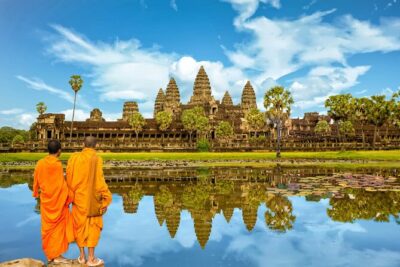
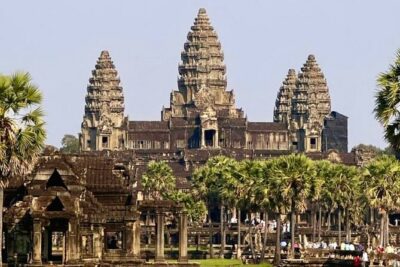
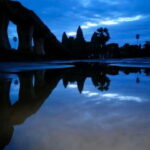
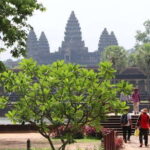
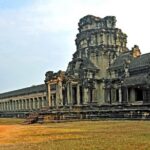
After the intro, you ride toward Angkor Park. Early on, you’ll explore the wall of Angkor Wat, which sets the tone for what’s coming: massive scale, tight detailing, and the sense that you’re approaching something older than your whole travel itinerary.
This first segment isn’t about sprinting through famous structures. It’s about orientation. You get bearings fast, then your guide uses the moment to frame the day—what to look for, why the layout matters, and how the Khmer temple world connects to broader history.
The off-road part is key. You’ll move along paths away from the busiest areas, which usually means less stopping, more shade, and a ride that feels like it belongs in Cambodia rather than in a theme park.
Angkor Thom: South Gate + Bayon Temple (The Big Names, Done Smarter)
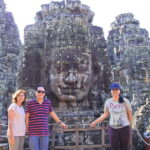
Next up is Angkor Thom, including the South Gate of Angkor Thom and time at Bayon Temple. This is where you’ll see the famous faces and feel why Bayon gets so much attention—up close, not from across a crowd.
The smart piece here is how you approach it. Instead of arriving like everyone else, you’re coming through the day’s rhythm—bike in, then guided sightseeing. That typically means you spend more time looking and listening, and less time waiting for the next group to pass.
There’s also time for a guided tour approach that connects what you see to Khmer culture. If you like understanding what you’re photographing, this is where the guide’s explanations start paying off.
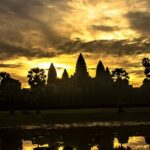
A small drawback to consider
Bayon is still one of the popular temples, even when you’re aiming to reduce crowds. Expect a more active atmosphere than the deeper jungle stops later in the day.
The Quiet Temple Detour: Preah Palilay When You Have Time
If timing allows, you’ll also visit a smaller temple within Angkor Thom, such as Preah Palilay Temple. This is the kind of stop that can make a day feel special, because you’re not only collecting famous ruins—you’re getting texture.
Smaller temples often mean fewer people, quieter walking, and more time for the guide to point out details you might miss at a bigger site. It’s also a nice break if you want a pause between major landmarks.
The only catch is “if you have time.” Your exact sequence can flex based on the day’s flow, your group’s pace, and how the route feels after lunch and jungle segments.
Lunch in the Jungle: Fuel Without Breaking the Day

After the Bayon portion, you’ll take lunch at a local restaurant in the jungle. This is a practical win. Instead of turning the trip into long waits and road backtracking, the meal fits the plan and keeps the day moving.
If you’re picky about food, know that you can request vegan food. The operator specifically says you can talk through needs and adjust the tour length too, which is a big deal for travelers whose energy or dietary needs don’t match a rigid schedule.
Preah Khan: History Meets a Quieter Rhythm
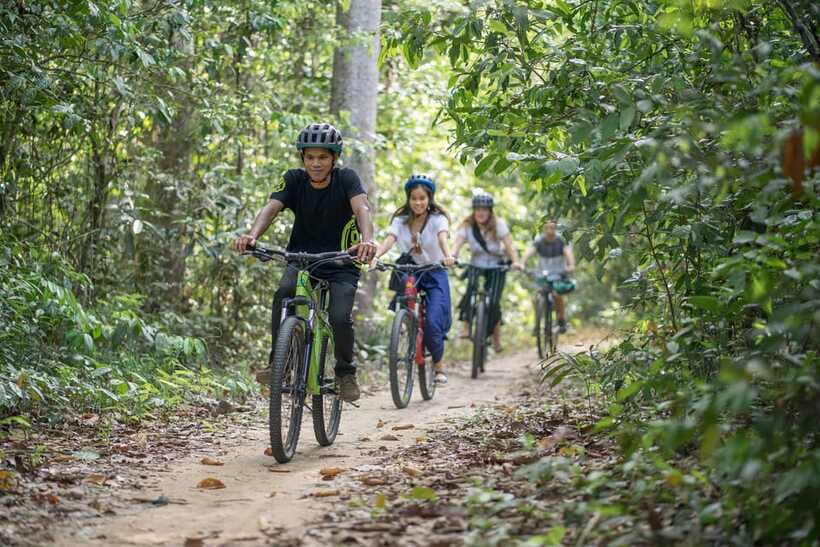
Then you continue through the jungle to Preah Khan. According to the tour description, there may be other visitors, but it’s generally less crowded than the Bayon area.
This is where biking helps. When you arrive by bike and not by a fast group transit pattern, you often feel like you’re traveling through the site’s edges rather than just reaching a viewpoint. That shift makes the ruins feel part of the landscape and the day’s story.
The guide’s role matters here again. You’re not just moving from one set of stones to another—you’re hearing how these temple spaces relate to the Khmer world and the Angkorian era.
Ta Nei (Ghost Temple): The Temple You’d Miss on a Straight Route
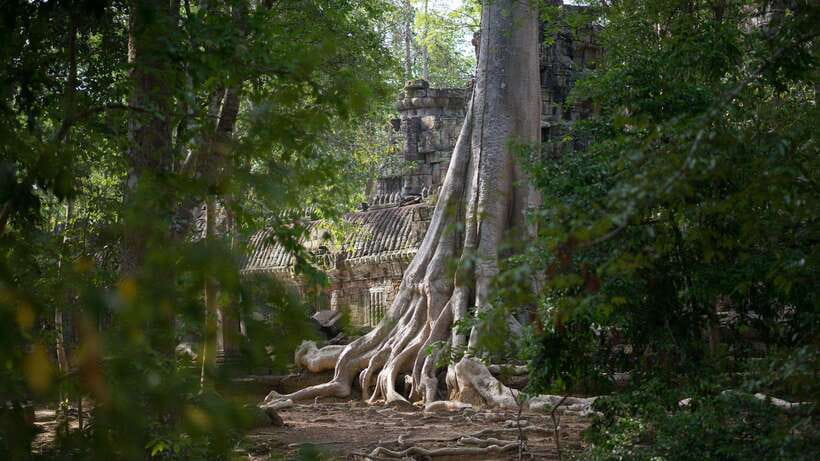
Next stop is Ta Nei Temple, nicknamed the Ghost Temple because it’s very hidden and quiet in the middle of the jungle. That name alone gives you a clue about what you’ll experience: fewer people, more stillness, and a stronger sense of being in a quieter pocket of Angkor.
This is the stop I’d aim for if you want atmosphere. It’s also the place where your guide’s pacing and route choices start to make the day feel worth it. You’re there because someone planned to go beyond the obvious path.
The value here is simple: you get variety. Your day won’t feel repetitive because the environment changes as the temples get quieter and more secluded.
Ta Keo: A Final Temple Stop Before Angkor Wat
After Ta Nei, the tour moves to Ta Keo Temple. Even though it’s not described with the same nickname style as Ta Nei, it serves an important role: it’s a strong closing temple moment before the final Angkor Wat stop and the ride back.
This part of the day is also where you’ll likely feel your legs. If you pace yourself during the morning ride and save some energy, Ta Keo works as a satisfying end-of-temple stretch rather than a rushed finish.
Angkor Wat Again: Wrap Up at the Main Stage
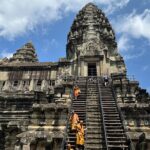
You’ll end with a stop at Angkor Wat, with photo time and guided sightseeing. Since you explore the wall of Angkor Wat earlier, the final stop feels like revisiting the main stage with better context.
By the time you reach the later Angkor Wat segment, you’ve already seen Angkor Thom, Bayon, Preah Khan, Ta Nei, and Ta Keo. That sequence helps you notice patterns in the way temples are designed and how different structures fit into the larger Angkor story.
Then you ride back to Bayon Pastry School, completing the loop without making your day feel like a complicated logistics puzzle.
Group Size, Guide Style, and Bike Comfort
This is a small group tour limited to 7 participants. In a place like Angkor, where crowds can be overwhelming, a smaller group can mean less friction: more space to pause for photos, more control over when you stop, and a guide who can actually adjust.
The tour also says your guide is English and Cambodian, and that the guides are well educated about Cambodian culture and history. One review praised a guide as patient and attentive, adjusting to individual needs, and another highlighted professional guidance and kindness within the whole team.
You’ll be given quality bicycles, and there’s a safety plan plus a first aid kit with the group. If you’re worried about the ride turning stressful, that safety mindset is reassuring.
Dress Code and Practical Rules: Don’t Lose Time at the Door
Temple visits come with rules. You should avoid shorts, short skirts, and sleeveless shirts. Plan to wear something that covers you appropriately, even in the heat.
Also pack for the environment. Sunscreen and insect repellent are practical must-haves. Cambodia’s sun is no joke, and the jungle route means you’ll feel the bug factor more than you would in a fully paved city segment.
Who This Tour Is Best For (And Who Should Skip It)
This tour is best for you if you:
- want less crowded Angkor and more time in quieter ruins
- like active days and can ride a bike comfortably
- prefer a guided explanation rather than just a checklist of sights
- care about supporting education and local community projects
Skip it if you:
- can’t ride a bicycle confidently
- want a fully relaxed, low-movement sightseeing day
- need a rigid schedule with zero flexibility (the operator says they can adjust, but the day still depends on ride flow and pacing)
Should You Book Siem Reap: Angkor Temples Off-Track Bicycle Tour?
Book it if you want an Angkor day that feels like you’re traveling through Cambodia, not marching through it. The combination of off-road jungle paths, smaller temples like Preah Palilay and Ta Nei, and a guided approach that connects the ruins to Khmer culture makes this a strong value use of your time.
I’d especially recommend it if you care about the non-profit impact tied to KKO. That mission adds meaning to the day, and the practical support—local restaurants, farms, and street vendors—helps keep money circulating locally.
The main reason to hesitate is the bike requirement plus the temple dress code. If you’re good on both, you’re set for a day that mixes iconic Angkor stops with quieter moments you’ll remember long after the photos.
FAQ
Is the Angkor Pass included in the tour price?
No. The Angkor Pass is not included, so you’ll need to arrange it separately.
Where do I meet for the tour?
You meet at Bayon Pastry School in Siem Reap.
What time does the tour start and how long is it?
The tour meets at 8:30 am and lasts about 8 hours.
What languages is the guide speaking?
The live guide speaks English and Cambodian.
Do they accommodate food needs like vegan meals?
Yes. If you want vegan food, you can tell them your needs and they’ll take care of it. You can also request to shorten or extend the tour.
What should I wear and bring?
Bring camera, sunscreen, and insect repellent. For temple rules, avoid shorts, short skirts, and sleeveless shirts.
Can I cancel and get a refund?
Yes. There’s free cancellation up to 24 hours in advance for a full refund.