REVIEW · SIEM REAP
Angkor Wat Small Circuit & Sunset Tour
Book on Viator →Operated by Angkor Doors · Bookable on Viator
Angkor’s temples are easier when someone maps your day. This Angkor Wat Small Circuit & Sunset tour strings together the big hits—Angkor Wat, Ta Prohm, and a payoff sunset at Angkor Thom—without needing an early-morning sunrise push.
What I like most is the combo of an English-speaking guide plus air-conditioned transport, so you spend less time guessing and more time understanding what you’re looking at. The day also includes cold bottled water, which sounds basic until you’re walking under full sun.
One thing to plan for: the $54 tour price does not include the temple entrance pass (an Angkor one-day pass is extra). And because you’ll be in temple ruins, you’ll need to follow the dress rule for shoulders and knees.
In This Review
- Key things to know before you go
- Why the Small Circuit + Sunset layout makes sense
- Price and value: what the $54 really buys
- Getting around: pickup, AC comfort, and how the day flows
- Stop 1: Angkor Wat, the centerpiece you’ll understand more after your guide talks
- Stop 2: Banteay Kdei for a calmer temple rhythm
- Stop 3: Ta Prohm, the Tomb Raider temple moment that’s actually worth slowing down for
- Stop 4: Ta Keo, a short climb for big “where am I?” views
- Stop 5: Angkor Thom and the sunset payoff inside the ancient city walls
- Guides drive the quality: what you can learn from Vanna and Pal Chen
- What to wear and bring for a temple day in Siem Reap
- Is this tour for you? Best fit and who should skip
- Should you book this Angkor Wat Small Circuit & Sunset tour?
Key things to know before you go
- AC car/minivan/minibus keeps the travel part less punishing in the heat
- English-speaking guide with commentary on Khmer sites and carvings
- Cold bottled water included to pace yourself during walking breaks
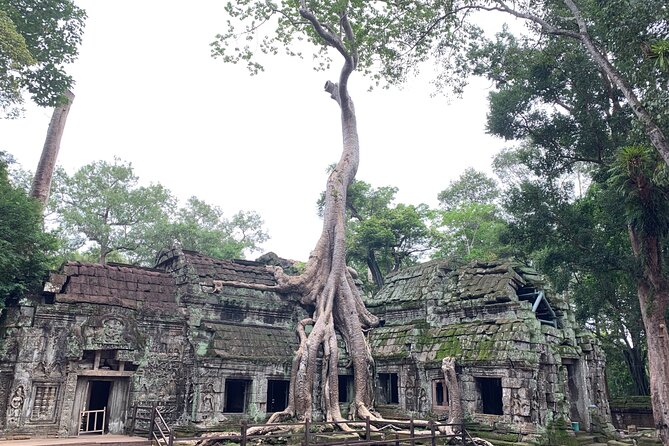
- Ta Prohm + tomb-raider feel with trees growing through the temple structure
- Sunset is the finish at Angkor Thom, with great viewing chances from inside the complex
- Entrance pass not included means you’ll want to budget for the Angkor one-day pass
Why the Small Circuit + Sunset layout makes sense
This tour is built for people who want the highlights without burning an entire day just getting oriented. You start at 9:00 am, then work your way through famous temples, with time to actually look instead of rushing from photo spot to photo spot.
The best part is how the day is shaped. You get a morning of major Angkor temples—Angkor Wat, Ta Prohm, plus stops in between—then the timing naturally sets you up for the late-day atmosphere at Angkor Thom. Instead of chasing sunrise crowds, you arrive for sunset with your legs already warmed up and your brain already “tuned” to the temple layout.
If you’re visiting Siem Reap for the first time, this kind of route helps you understand the logic of the UNESCO complex: gates, causeways, walls, courtyards, and how different temples fit together across the city plan.
You can also read our reviews of more evening experiences in Siem Reap

Price and value: what the $54 really buys
At $54 per person, you’re paying for a guided, organized day—not the temple entry. In practical terms, that means:
- a guide who handles the story and the navigation
- air-conditioned transportation between key stops
- cold bottled water
- a route that ends where the light gets good: Angkor Thom at sunset
The catch is the entrance fee. You’ll need an Angkor one-day pass, listed at $37 per person. So your all-in temple budget is about $91 per person before any lunch (your food cost is separate).
Is it “worth it”? For most first-timers, yes—because the main value here is not just seeing temples, it’s making sense of them. When a guide explains what you’re looking at, the day feels less like a checklist and more like understanding Khmer design choices: layout, symbolism, and how carvings connect to the site’s purpose.
The other value point: you don’t have to coordinate transport or figure out timing for sunset. That matters because Angkor is huge, and a small schedule mistake can cost you the best light at the end.
Getting around: pickup, AC comfort, and how the day flows
The tour includes transportation in an AC car or minivan or minibus, which is a big quality-of-life upgrade. Angkor’s roads and heat can wear you down fast, and AC helps you arrive fresher instead of arriving sweaty and exhausted.
Pickup is offered, which is a simple win if you’re staying in Siem Reap and don’t want to deal with meeting points on your own. After that, the route is structured so you have a steady rhythm of:
- temple walking time
- short breaks between sites
- transit time with AC comfort
It’s also a “small circuit” style day, which generally means less backtracking. Your feet still get a workout, but you’re not constantly crisscrossing the whole region.
One practical note: the tour uses a mobile ticket, so keep your phone charged. If you’re traveling with a power bank, bring it—Angkor days eat batteries.
Stop 1: Angkor Wat, the centerpiece you’ll understand more after your guide talks
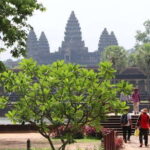
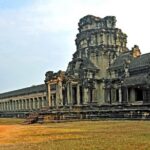
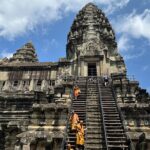
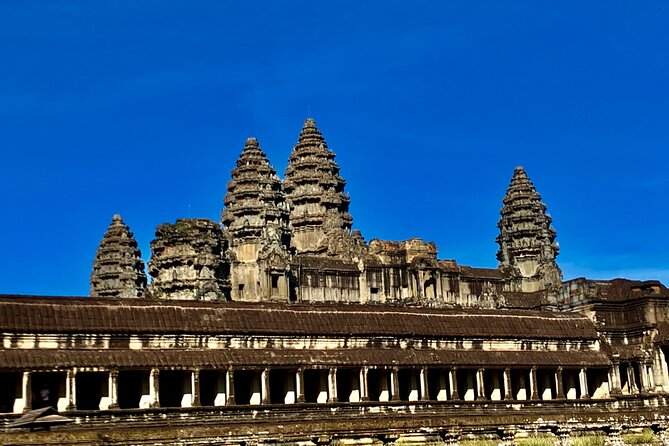
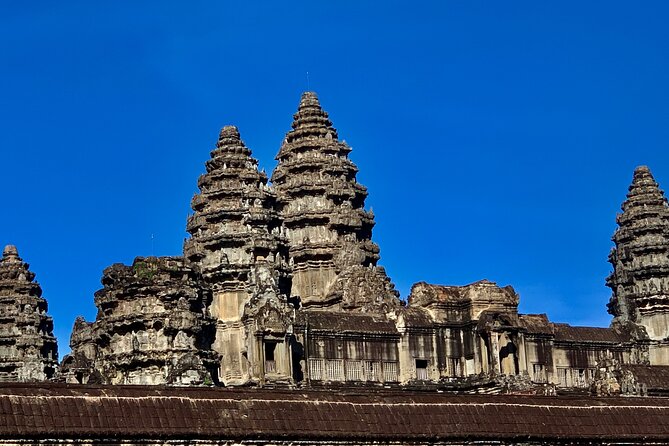
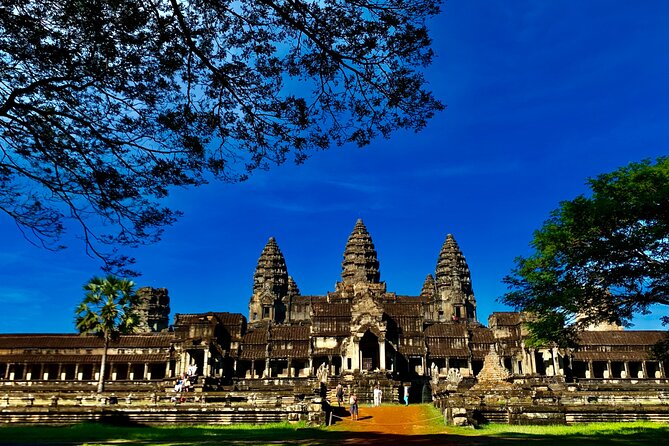
You’ll start with Angkor Wat, and you get about 2 hours there. This is the world-famous temple, but it’s also the one that benefits the most from having someone explain the layout before you start wandering.
Angkor Wat’s grounds are vast, and time disappears quickly if you don’t know where to focus. With a guide, you can move with purpose: see the main elements, understand why the temple is arranged the way it is, and notice details you might otherwise skip.
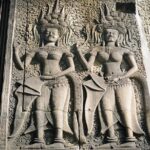
Even if you’ve seen Angkor Wat before, a good guide makes the visit feel new. In particular, the most positive feedback on this tour style comes from guides who connect visible carvings and architectural choices to meaning, not just dates.
Practical drawback: Angkor Wat is a “big space” temple. If you’re expecting a quick stamp-and-go, this won’t feel that way. You’ll be walking around and looking for long enough that comfortable shoes matter.
Stop 2: Banteay Kdei for a calmer temple rhythm
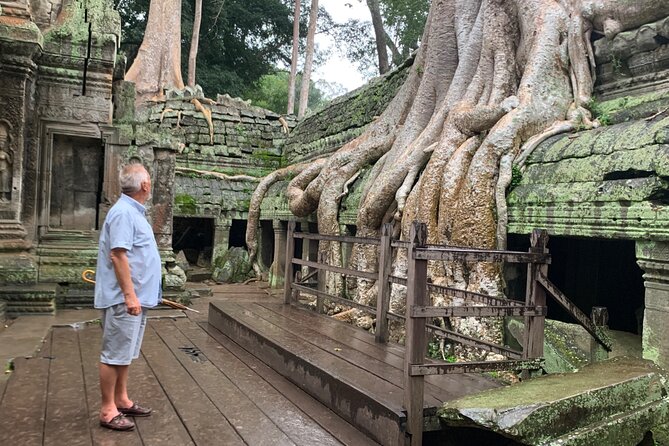
Next is Banteay Kdei, a Buddhist temple built in the reign of King Jayavarman VII in the late 12th century. You’ll spend about 30 minutes here.
This stop works as a palate cleanser. After the scale and attention-grabbing grandeur of Angkor Wat, Banteay Kdei gives you a more relaxed pace. It’s described as peaceful and quiet, and that quality matters because your mind can actually register what different temple styles feel like.
It’s also a useful contrast stop before you move into the more dramatic, film-famous look of Ta Prohm. You’ll notice differences in structure, mood, and how the stonework frames vegetation and space.
If you hate short stops, you might wish it were longer. But for many people, 30 minutes is the perfect amount—enough to experience it without turning the whole day into a marathon of ruins.

Stop 3: Ta Prohm, the Tomb Raider temple moment that’s actually worth slowing down for
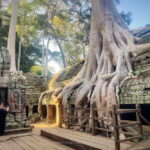
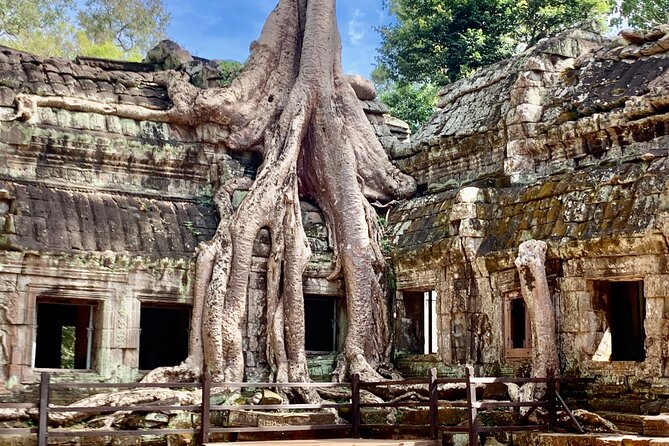
Ta Prohm is next, and you’ll get about 2 hours here. This is the temple most associated with the Tomb Raider vibe, mainly because of the trees growing through the structure.
The iconic visual isn’t just a movie-style effect—it changes how you see the architecture. The vegetation feels like it’s “holding” the stones in place, and the shadows shift in a way that makes the carvings and edges easier to notice.
A guide helps here too. When someone explains what you’re seeing—how the temple was used, how the carvings function, and why the place looks the way it does—you end up spending less time thinking what am I looking at? and more time thinking why is it like this?
Practical note: Ta Prohm can feel crowded in certain moments. If you want the best photos, you’ll likely have to wait for your guide to position you and for foot traffic to move. Two hours helps because you can catch a couple different “moods” of the temple as light changes.
Stop 4: Ta Keo, a short climb for big “where am I?” views
You’ll also stop at Ta Keo for about 20 minutes. This is a quick hit, but it includes the one thing that makes Ta Keo fun: it’s nice to climb up to view the surroundings.
That climb is more than just exercise. It helps you understand Angkor’s scale. From above, the ruins read differently—walls, levels, and the temple’s place in its surroundings become clearer.
The main consideration is physical effort. If you have mobility limits, a climb like this can feel like the hardest part of the day. If you’re comfortable with stairs and uneven stone, you’ll likely find it a worthwhile break.
Stop 5: Angkor Thom and the sunset payoff inside the ancient city walls
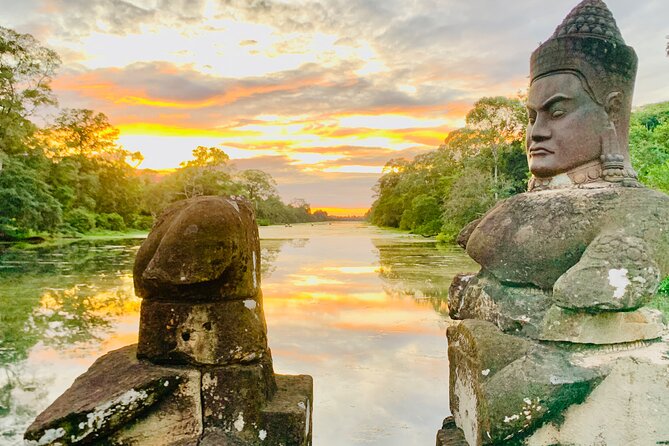
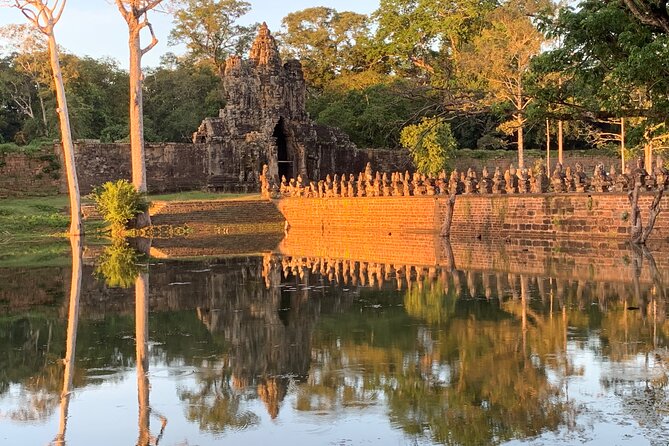
The final stretch is Angkor Thom, and you’ll have about 2 hours there. You enter via the Victory Gate, and from there your guide can set optional stops such as Spean Thmor, Chau Say Tevoda, Thommanon, and key ruins like the Terrace of the Leper and Sourprat (listed among the points of interest on this tour).
This is where the day shifts from “temples you visit” to “a city you navigate.” Angkor Thom has a layered feel—gates, terraces, and courtyards that make you think beyond one building and start reading the whole space as a planned urban-religious complex.
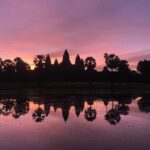
And yes, the sunset here is the big deal. The tour is designed to end with sunset views from Angkor Thom, so you’re not rushing back before the light changes. Sunset changes everything at Angkor: contrast softens, shadows lengthen, and the textures in the stone start looking more dimensional.
One small drawback: Angkor Thom’s best moments can be timing-sensitive. If your pace is slow or you get stuck taking photos early, you might feel like you’re late to your favorite viewpoint. The solution is simple: trust the guide’s timing and plan to keep moving so you don’t miss the best light.
Guides drive the quality: what you can learn from Vanna and Pal Chen
The most praised part of this kind of tour is the guide. Two names come up with strong impact: Vanna and Pal Chen.
With Vanna, the feedback highlights solid English and a real depth of knowledge about temples, ruins, and the meanings of engravings on the walls. What I’d call the “secret sauce” is not only facts—it’s stories. You get both personal stories and historical ones, which helps the sites feel less like random monuments and more like lived places in the Khmer world.
Pal Chen is noted as an ex-Buddhist monk, and that shows up in the way he can frame the temples and the carvings. When someone has lived perspective like that, the commentary often lands differently: less like a lecture, more like a guide to what matters and why.
You don’t need a guide to see temples. But you do need one to leave feeling like you understood what you saw. On this tour, that’s the core value.
What to wear and bring for a temple day in Siem Reap
Temple rules are simple but strict. You’ll need clothing that covers your shoulders and knees, or you won’t be allowed access.
That’s easy if you pack smart. Wear lightweight tops that cover your shoulders and pants/skirts that cover your knees. If your wardrobe is more open than that, bring a light layer you can put on quickly. It’s better than getting turned away.
Also, plan for long periods outdoors. Even with AC rides in between, you’ll still walk in sun and heat. Comfortable shoes are a must. And since the tour provides cold bottled water, you can focus on sipping regularly rather than hunting for drinks.
One more practical tip: keep your phone protected. Mobile ticket use plus Khmer humidity means you want a case or pouch, plus a charged battery.
Is this tour for you? Best fit and who should skip
This is a great fit if you want:
- a guided day that hits major Angkor highlights
- a structured route that ends with sunset views at Angkor Thom
- less planning stress, more time looking
- someone explaining Khmer sites instead of just dropping you at the entrance
You might want to think twice if:
- you don’t handle climbs well (Ta Keo includes a short climb)
- you’re hoping for a very short day (this is still around 8 to 9 hours)
- you’re trying to keep costs super low, because the entrance pass is an extra line item
If you already love reading about architecture, you’ll get a lot from the guide’s attention to carvings and meaning. If you’d rather just take photos, you can still enjoy it, but you’ll benefit most when you accept the guide’s pacing and let commentary shape your route.
Should you book this Angkor Wat Small Circuit & Sunset tour?
Book it if you want a well-paced Angkor day where the payoff is real: major temples in one outing, AC comfort, and a sunset finish at Angkor Thom. The guides—especially ones like Vanna and Pal Chen—sound like the difference between seeing ruins and actually understanding them.
Skip it or compare alternatives if entrance fees push your budget too far, or if you strongly dislike guided group timing. This tour isn’t free-form; it’s organized for a reason.
If you’re making one choice for your Siem Reap trip and you don’t want to do sunrise, this one is a solid bet.