REVIEW · SIEM REAP
Authentic Siem Reap: Tuk Tuk Countryside and Sunset Tour
Book on GetYourGuide →Operated by CWE Travel · Bookable on GetYourGuide
Want real Siem Reap, not just temples? This tuk tuk countryside and sunset tour shows daily life through a local market and rice wine distillation, then slows down with Phnom Krom sunset and lotus dishes. I liked how the guide turns farming and food into clear stories you can picture. I also loved the lotus farm stop because it links a meaningful work project for local women with a gentle, educational visit. One drawback: it’s only 4 hours, so you won’t have time to linger forever at every photo spot and snack table.
The temples are part of the ride, but the real value is what happens after you roll out of town. You’ll travel with a female guide, sample local snacks and drinks, and move from hands-on workshops to viewpoint time without feeling like you’re sprinting across the province. It’s the kind of tour where you learn by watching, tasting, and asking practical questions.
Come with comfortable shoes and a camera, because you’ll do a mix of walking, photo stops, and short guided segments. Also note the tour isn’t suitable for wheelchair users, and it’s not listed for people over 95.
In This Review
- Key reasons this tour feels worth your time
- Why a tuk tuk countryside loop beats temple-only days
- Market first: where everyday food culture becomes visible
- Basket-making, rotan tools, and the spiritual houses you spot at home
- Rice wine distillation: the farming loop you can taste
- Wat Athwear Road and Wat Po Banteaychey: the cultural stops that anchor the ride
- Lotus farm workshop: women’s work, lotus symbolism, and a real 360 view
- Phnom Krom sunset: rice fields, a mat, and lotus dishes
- Price and comfort: is $69 good value for 4 hours?
- Guides make this tour: Sarah, Ben, and Hong Ho in action
- What to bring so the afternoon feels easy
- Who should book this Siem Reap countryside and sunset tour
- Should you book this tour
- FAQ
- How long is the tour?
- Is hotel pickup and drop-off included?
- What’s included in the price?
- Do I need to bring anything?
- Is the tour in English?
- Who can’t join?
- Is it flexible to book, and can I cancel?
Key reasons this tour feels worth your time

- Market shopping with culture context: you’ll see how food, diet, and daily buying habits shape village life
- Rice wine distillation with a full food chain: farm rice becomes wine, and leftover rice feeds pigs
- Basket-making and tiny spiritual houses: practical tools plus the spiritual touches people build at home
- Lotus silk workshop tied to local women: the lotus story connects craft, symbolism, and sustainability
- Phnom Krom sunset with lotus food: calm fields, a traditional mat, and a simple countryside meal
Why a tuk tuk countryside loop beats temple-only days
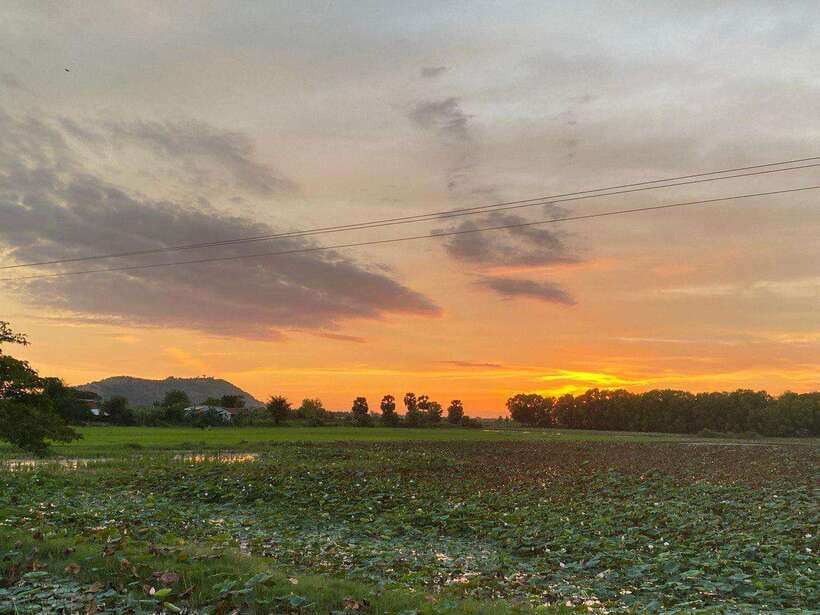
Siem Reap gets crowded fast with the big temple names. Totally worth it, but if you only do stone and carvings, Cambodia can start to feel like a museum with heat. This tour gives you the other half of the story: the countryside routine behind the tourist postcards.
You’ll get picked up from your hotel in Krong Siem Reap and hop into a tuk tuk for an afternoon run through rural areas outside town. That matters more than it sounds. Tuk tuks are slow enough for conversation and quick enough to keep the schedule moving. You’re not just traveling; you’re watching how the road changes from city bustle to working fields.
I also like the pacing here. The stops are short, but they’re the right kind of short. You get guided time, a little wandering, and then a practical reason to be there—market life, farming process, workshop tools. The final sunset part at Phnom Krom gives you a breather instead of ending with more running around.
You can also read our reviews of more evening experiences in Siem Reap

Market first: where everyday food culture becomes visible
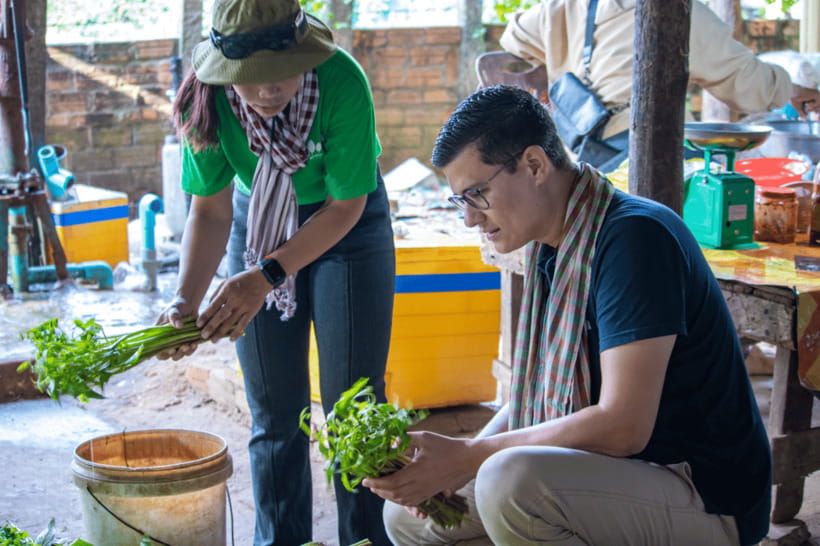
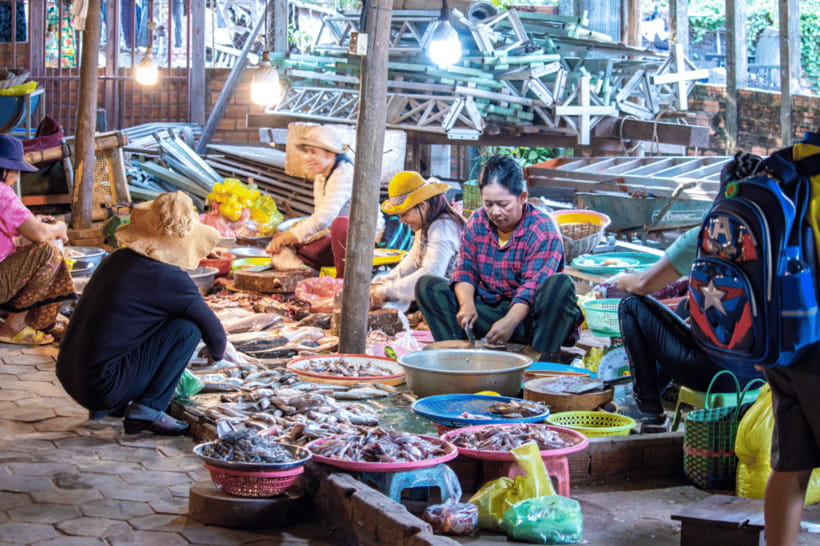
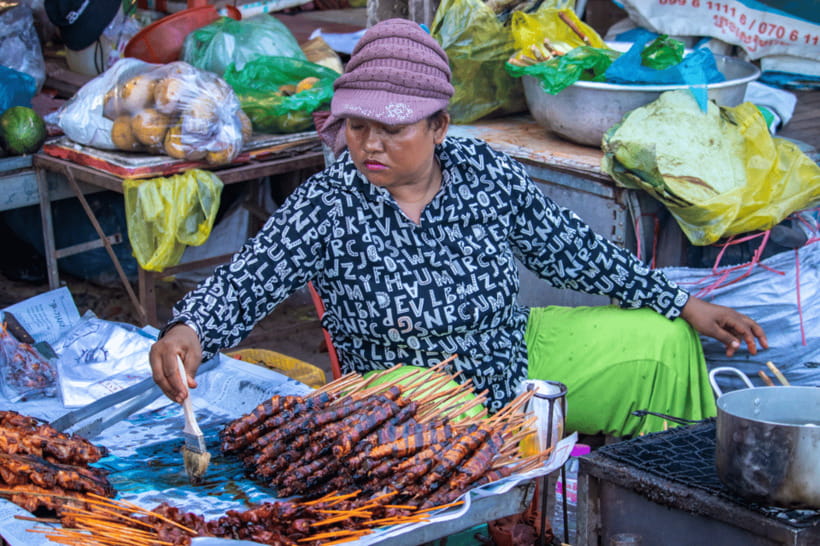
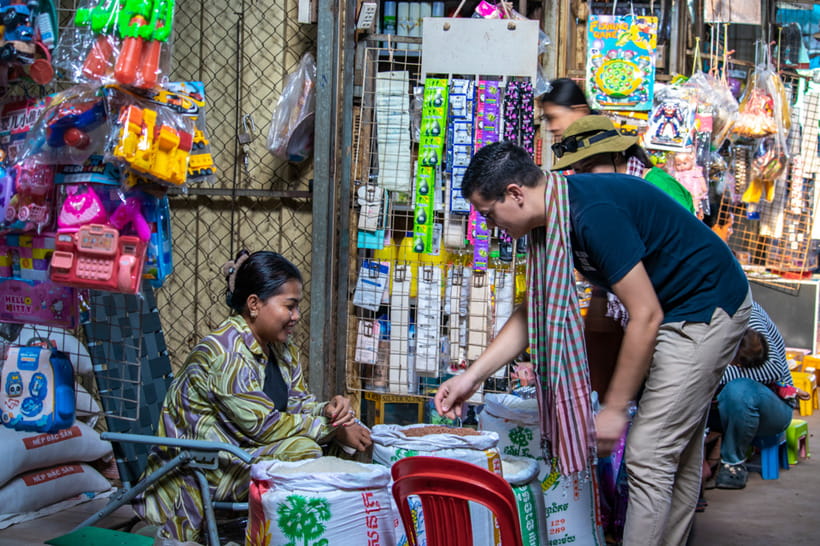
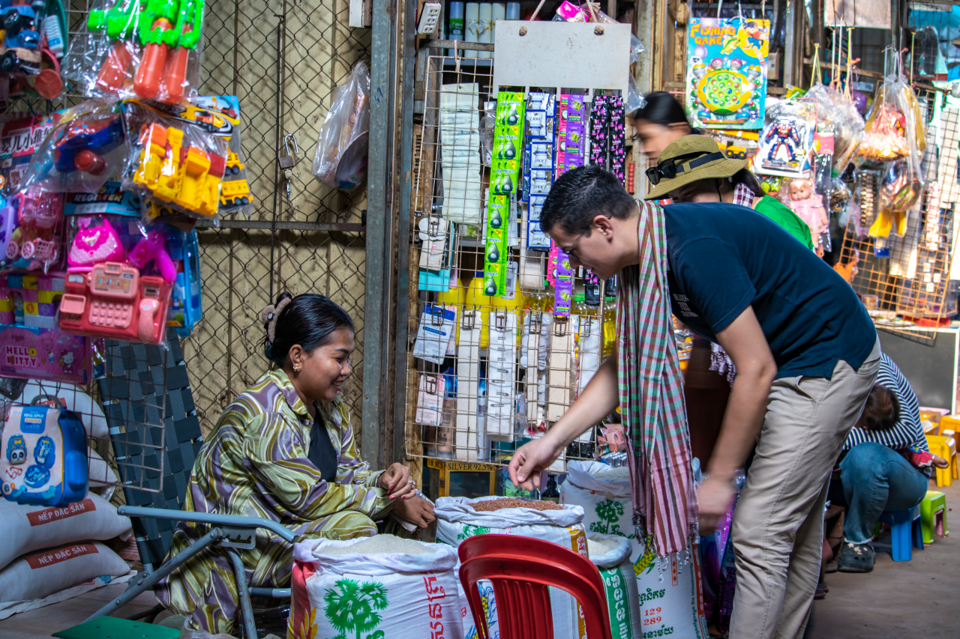
The tour starts with a local market visit for about 30 minutes. This is one of those stops that sounds simple until you slow down and notice what markets actually do. They aren’t just for buying ingredients. They show how people eat, what they grow nearby, and what trading looks like in real life.
This stop is also a great place to connect diet to place. You’ll learn why markets matter, where local produce comes from, and how everyday choices link back to cultivation. And there’s a useful angle on modern change: you’ll hear how supermarkets have affected local customs around eating a healthier diet.
What to do with this time: don’t treat it like a photo safari. Ask questions about ingredients and how people use them at home. Even if you’re not buying much, watching how vendors package, weigh, and arrange goods gives you a “how it works” feeling you won’t get from temple photos.
Basket-making, rotan tools, and the spiritual houses you spot at home
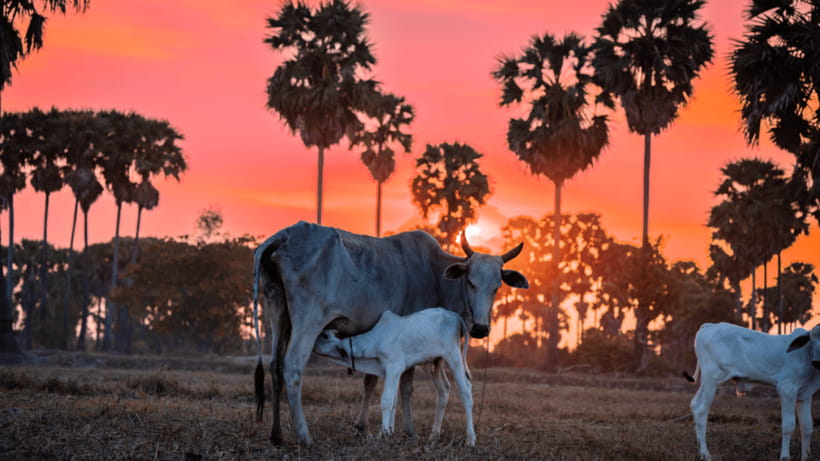
Next is the Local Basket Shop stop (about 20 minutes is referenced for a nearby segment, with shopping built into the tour flow). Here you’ll see how wood, bamboo, and what’s described as rotting wine are used for everyday tools and supplies—plus religious items and household décor.
It’s not fancy. That’s the point. This is Cambodia at the household scale. You’ll also notice how many styles of baskets and containers exist, and you’ll learn that options can vary depending on where things are made locally. It’s the kind of detail that makes you realize how local craft is shaped by geography and materials.
One more thing I appreciated from this stop: the tiny spiritual houses. You’ll learn about them because you’ll see them at the front of many residences. So when you later notice one at the edge of a home, it won’t look random. You’ll already know what it’s for and why it’s there.
Rice wine distillation: the farming loop you can taste
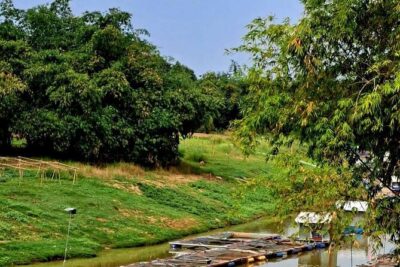
The rice wine distillation stop is the heart of this experience. After the basket shop, the tour continues to the countryside with a visit to a local rice farm where rice is grown and then fermented into rice wine. You’re there to watch the process and hear how it fits into daily life.
What I find genuinely useful is the resource loop. You learn that the household uses farm rice for rice wine production, and the leftover rice after fermentation gets used to feed pigs. It’s not a throwaway detail. It’s a lesson in efficiency—how households reduce waste and keep the farm running.
You’ll also get stories about raising cows and buffalos tied to the farm rhythm. And yes, you’ll have tastings: local snacks and freshly distilled local rice wine.
A practical note: rice wine is strong for many people. If you’re sensitive to alcohol, pace yourself. Take small tastes, drink water between sips, and keep your curiosity focused on the process rather than trying to “power through” the alcohol. Your camera won’t thank you for overdoing it.
Wat Athwear Road and Wat Po Banteaychey: the cultural stops that anchor the ride
Even with the countryside focus, the tour includes temple time. There are two guided segments tied to Wat Athwear Road and Wat Po Banteaychey. One is paired with shopping time, and the other is paired with wine and guided viewing.
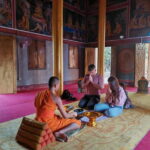
These stops are more than “walk in, see building, walk out.” In particular, one of the experiences highlighted from the guides’ storytelling includes a water blessing moment at one temple segment. If that happens on your day, it gives you a clear window into how spiritual practice shows up in everyday culture, not just on postcards.
You’ll likely notice how these temple stops connect the rest of the tour. Rice, craft, and village routines all sit alongside religious life. It’s why the basket shop’s spiritual houses make sense afterward: Cambodia’s daily world isn’t separate from belief. It’s woven through it.
If you want to get value here, dress respectfully, take your time looking for details, and ask your guide what you should notice. Even short guided segments can add meaning if you let the guide point out what matters.
Lotus farm workshop: women’s work, lotus symbolism, and a real 360 view
The lotus farm stop is a “must” for a reason. This is where your tour shifts from food and tools to craft, symbolism, and social impact.
You’ll learn how the lotus plant can become a textile—framed as an environmentally friendly option—and you’ll hear about the lotus flower as a symbol tied to Buddhist teaching and belief in Cambodia. The flower isn’t just pretty here. It’s part of how people interpret values like purity and growth.
Then there’s the workshop angle: the visit supports a social enterprise that provides good work for local women. That gives the stop weight. You’re not only seeing something interesting—you’re supporting a functioning local project.
After the guided visit, you’ll enjoy tasty local cake and freshly brewed lotus tea in the tea lounge on the top floor. The best part for me is the 360-degree view over the surrounding countryside. This is one of those moments where you can breathe, look out, and connect the dots between what you learned earlier—market life, farming, tools—and the bigger rural setting around you.
Phnom Krom sunset: rice fields, a mat, and lotus dishes
The last third of the tour slows things down. The group arrives at Phnom Krom for around 1.5 hours with free time, photo stops, sightseeing, and guided time built in.
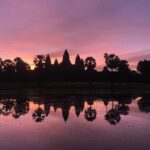
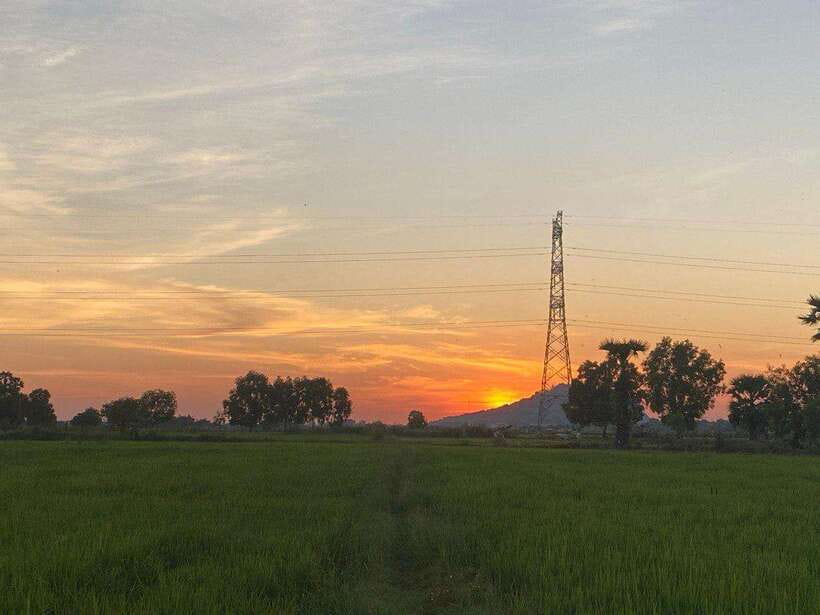
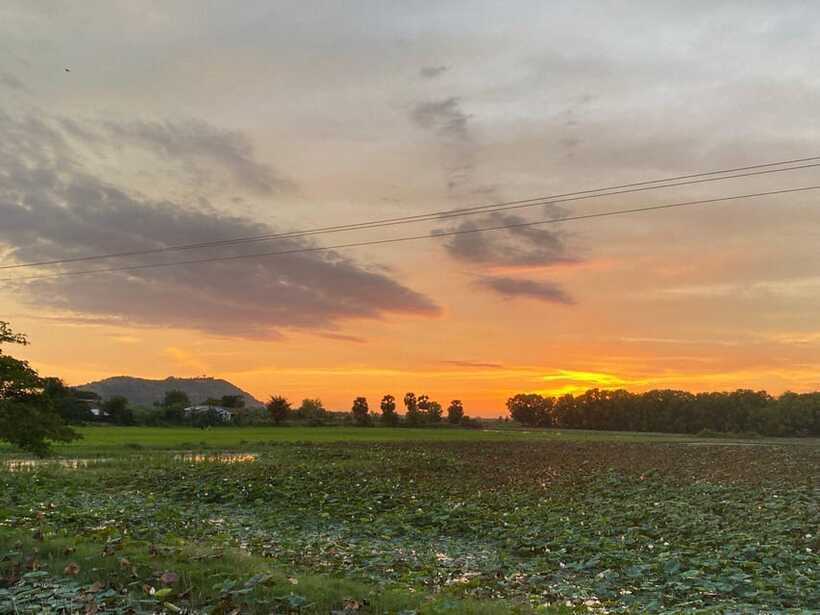
This is where you’ll sit near the rice fields on a traditional mat and watch the sunset. It’s calm and not rushed, even though your day has been full of movement. The countryside quiet hits harder because you’ve already learned what makes the fields matter.
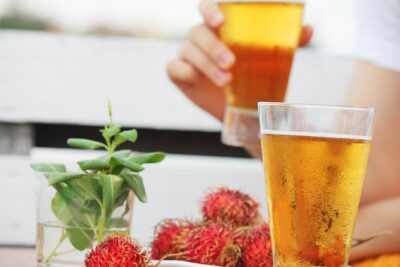
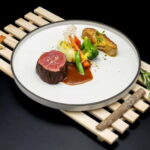
You’ll also eat here. The tour includes fresh and healthy cuisine in the countryside and tasting of delicious lotus dishes from a local restaurant nearby. This is a smart pairing: earlier you learn about lotus at the farm workshop; now you taste lotus in food. You get the concept first, then you get the flavor.
A small, real-life planning tip: sunsets can be dramatic, and weather can shift. One reported day saw sunset just before a thunderstorm. So bring camera patience and a light layer just in case the air gets moody.
Price and comfort: is $69 good value for 4 hours?
At $69 per person for a 4-hour tour, you’re paying for more than a vehicle. You get hotel pickup and drop-off, tuk tuk transport, a professional English-speaking guide, and guided time at multiple stops. You also get local snacks and drinks plus local foods for tasting, along with all fees and taxes.
So where is the value coming from? It’s in the “included learning.” You’re not paying separately for entrance-style moments or for all the tasting. The rice wine, the lotus tea and cake, and the lotus dishes are part of the package, and they connect to the themes of farming and craft that many Siem Reap tours skip.
Comfort-wise, the biggest variable is the walking and the heat. This isn’t a couch tour. Wear comfortable clothes and insect repellent, and plan to stay hydrated.
Also, you’ll likely appreciate the pickup/drop-off because it keeps you from juggling tuk tuk haggling while trying to meet a schedule. You just show up ready to go.
Guides make this tour: Sarah, Ben, and Hong Ho in action
This tour’s quality comes through your guide’s storytelling. When you get it right, you stop thinking of stops as checkboxes and start thinking of them as parts of one rural system.
One guide named Sarah (CWE) is praised for being fun and informative, with rice wine and lotus stops described as especially memorable. Another guide named Ben is credited with English that’s way above average and with a clear focus on life outside the temple circuit—exactly what this tour is built for.
A guide named Hong Ho is also highlighted, with warmth and lots of land-and-life context. In one example, the day included perfect pairing with a driver named Mrs. Mom, and the experience even featured a short visit connected to Hong Ho’s sister’s food stand. That kind of local connection is what turns a countryside tour into a personal experience rather than just a route.
If your guide asks what you want to learn, say it early. Tell them you’re here for rice culture, lotus craft, and rural food. It helps them steer the conversation to your interests.
What to bring so the afternoon feels easy
The tour provides snacks, drinks, and local tasting foods, but you still need to set yourself up for comfort. Bring:
- Comfortable shoes (you’ll walk and stand for photos)
- Sunglasses and sunscreen (sun gets real fast)
- A camera (sunset and workshop moments are worth it)
- Comfortable clothes for warm weather
- Insect repellent
- Some cash for personal expenses (the guide can help you manage small purchases)
If you’re picky about timing, be ready on time for pickup. The day runs on a tight rhythm, and you’ll want to avoid rushing at the first market stop.
Who should book this Siem Reap countryside and sunset tour
This tour is best for you if you want Siem Reap to feel human. If you’re tired of only temple days, and you’d rather learn how rice, craft, and local food actually work, this fits.
It’s also a strong match if you like practical travel. You’ll see how markets function, how tools are made, how rice wine fermentation works, and how lotus becomes both symbol and textile.
It’s less ideal if you need high accessibility. The tour isn’t suitable for wheelchair users and isn’t listed for people over 95. And if you hate any alcohol at all, the rice wine tasting may not be your favorite part—though you can choose small tastes and focus on the process.
Should you book this tour
Book it if you want a 4-hour afternoon in Siem Reap that feels like it belongs to the countryside, not just to the temple checklist. The combination of a guided market, the rice farm-to-rice-wine process, and a lotus workshop with a sunset finish is a clean and satisfying arc.
Skip it only if you’re strictly temple-focused or you prefer longer stays at fewer places. This one is built for movement, short guided moments, and tastings that add up fast.
If your dream is to leave Siem Reap with more than photos—if you want a real sense of how people live—this tour is a smart use of time.
FAQ
How long is the tour?
The tour lasts 4 hours.
Is hotel pickup and drop-off included?
Yes. You’ll be picked up from your hotel in Siem Reap and dropped back afterward.
What’s included in the price?
You get a professional English-speaking guide, transportation by tuk tuk, local snacks and drinks, local foods for tasting, and all fees and taxes.
Do I need to bring anything?
Bring comfortable shoes, sunglasses, a camera, comfortable clothes, and insect repellent. It’s also recommended to bring sunscreen and a hat.
Is the tour in English?
Yes. There is a live English-speaking guide.
Who can’t join?
The tour isn’t suitable for wheelchair users, and it’s not listed for people over 95 years.
Is it flexible to book, and can I cancel?
You can reserve now and pay later. Free cancellation is available up to 24 hours in advance for a full refund.