REVIEW · PHNOM PENH
Chiso temple, Neang khmao, and Taprum temple historical site Tour
Book on Viator →Operated by The Killing Field and S21 Genocide Tour · Bookable on Viator
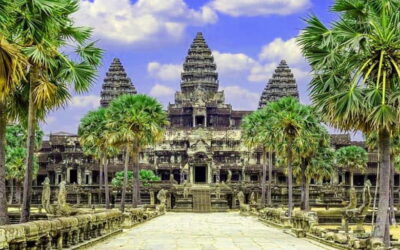
Sacred towers, rice-field views, and a local lake day. This tour strings together Phnom Chisor’s 11th-century galleries and back-view photo spot with Prasat Neang Khmau’s Angkorian-era brick towers that still sit in an active pagoda setting. The main thing to keep in mind: parts of Neang Khmao are deliberately ruinous, so this is more about atmosphere and meaning than perfect, restored stonework.
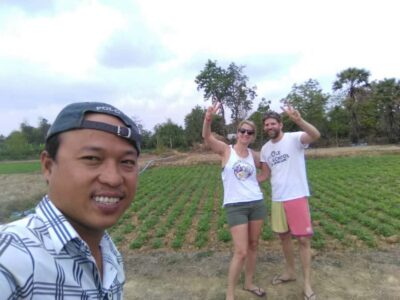
What really lifts the day is the way your English-speaking guide brings the sites to life. In particular, Soapheak stood out for his depth of knowledge about pagoda life and the surrounding structures, so you don’t just read temple facts—you understand how these places function in real Cambodian worship and community life. With a private group (up to 5), AC transport, and cool water included, the pacing feels practical rather than rushed.
In This Review
- Key Highlights You’ll Actually Feel During This Day
- Phnom Chisor: Sculpted 11th-Century Galleries and the Best Rice-Field Photos
- The Alignment Trick: Why Phnom Chisor Feels Bigger Than It Looks
- Prasat Neang Khmau: Two Brick Towers, One Active Pagoda, and a Shiva Story
- Tonle Bati: A Short Lake Stop That Breaks Up the Temple Tempo
- Ta Prohm Temple: Smaller Than Angkor, Stronger Focus on Unique Art
- Yeay Pov Temple: Ending With a Final Sacred Stop
- Price and What You Get for $190 Per Group (Up to 5)
- Logistics That Matter: Picking Up Early and Staying Comfortable
- Who This Tour Best Suits
- Should You Book This Chiso–Neang Khmao–Ta Prohm Day?
- FAQ
- How long is the tour?
- How much does the tour cost?
- What temples and sites are included?
- Is admission free for these stops?
- Is pickup offered?
- What time does the tour begin?
- Is the tour private?
- Is food included?
- Is free cancellation available?
Key Highlights You’ll Actually Feel During This Day
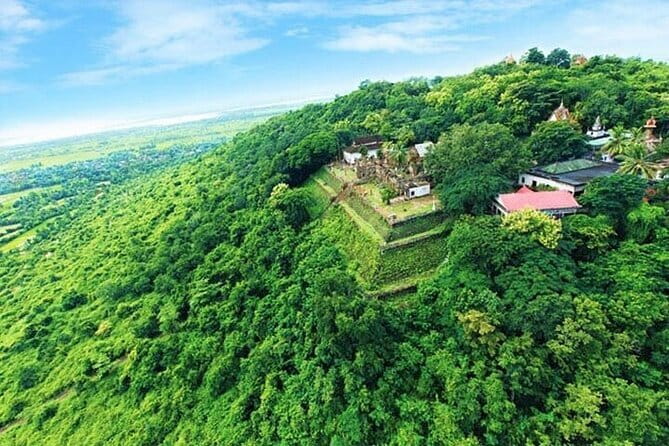
- Phnom Chisor’s back viewpoint gives you wide countryside and rice-field photos, not just temple walls.
- A straight-line visual plan at Phnom Chisor helps you “read” how ancient builders connected key features across distance.
- Neang Khmao’s Shiva dedication adds a clear religious layer to the ruins you see today.
- Two deteriorating brick prasats show Angkor-era architecture in a raw, real condition.
- Ta Prohm’s smaller scale compared with Angkor means you can focus on the unique art details up close.
- Tonle Bati break turns temple time into a more local, relaxed pause by the lake.
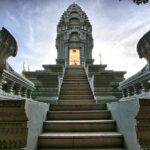
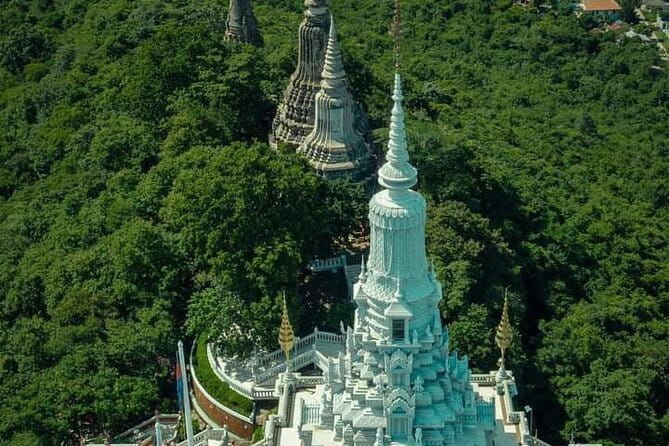
Phnom Chisor: Sculpted 11th-Century Galleries and the Best Rice-Field Photos
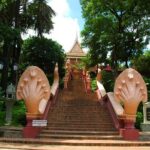
Phnom Chisor is the kind of place where you quickly get why people come early. You’ll spend about 2 hours here, and you’re not stuck at one overlook—there’s room to walk through the temple’s galleries and even enter the worship space.
The attraction isn’t just age. The site is covered with sculptures that remain visible today, which means you can keep returning to different corners as you move through. I like how this stops you from rushing. Instead of treating it as a single photo stop, you can actually spend time with the carved surfaces and the layout.
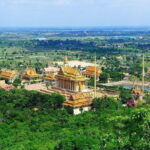
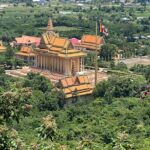
Then there’s the payoff at the back of the temple. From that prime spot, you can look out over a vast plain of surrounding rice fields and countryside. It’s an easy way to shift your brain from “museum mode” to “place mode.” You’re standing on an ancient religious site, but you’re also seeing how the region lives now—fields, roads, open air, and that long-distance quiet that temples often frame so well.
One more interesting detail: from the east-looking perspective, you can spot an avenue forming a straight line that connects three main features—two outer temples with a cruciform ground plan and a moat. Even if you’re not a medieval planning nerd, this kind of sightline helps you understand the temple as part of a larger designed landscape, not a single isolated building.
Practical tip: bring something for sun and heat. You’ll be moving around for a couple hours, and Cambodians wear light layers for a reason.
You can also read our reviews of more historical tours in Phnom Penh

The Alignment Trick: Why Phnom Chisor Feels Bigger Than It Looks
Here’s what makes Phnom Chisor especially satisfying: it rewards a little attention to geometry. You’re given the chance to look down toward the east and see how multiple pieces relate to each other across distance.
A straight avenue connecting key structures is not an accident. It suggests the builders cared about how you approach, how you perceive the temple from certain angles, and how the site ties into water and ceremonial space. Standing there, you can almost imagine the procession logic—where the eye travels, where the sacred focus lands, and how the moat and outer temples fit into the story.
If you enjoy “reading” old structures instead of just admiring them, this stop will click. It also makes your photos more interesting because they’re not only temple-in-front-of-camera. You’re capturing the sense of planning and connection.
The potential drawback is simple: if you’re expecting a heavily restored, polished Angkor-style experience, Phnom Chisor may feel more lived-in and uneven in detail. Still, that’s part of the point—these are working historical spaces in a real region.
Prasat Neang Khmau: Two Brick Towers, One Active Pagoda, and a Shiva Story
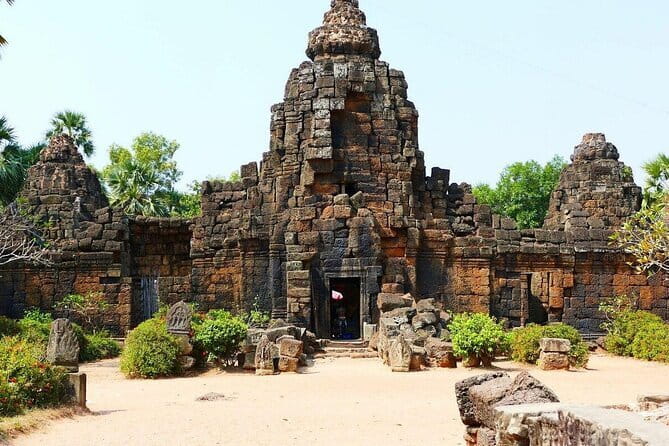
After Phnom Chisor, you head to Prasat Neang Khmau, spending about 1 hour here. This temple sits in Rovieng commune, Samrong district, off National Road 2—about 52 kilometers south of Phnom Penh. So yes, there’s travel time built in, but the payoff is that you get a distinctly different feel from the main Phnom Penh area.
Neang Khmao is described as an Angkorian-era site from the 10th century A.D., linked to King Jayavarman IV. What you see today includes two deteriorating brick prasats (towers). The key word is deteriorating. These aren’t pristine reconstructions, which means the experience is about atmosphere, scale, and religious continuity rather than sparkling stone.
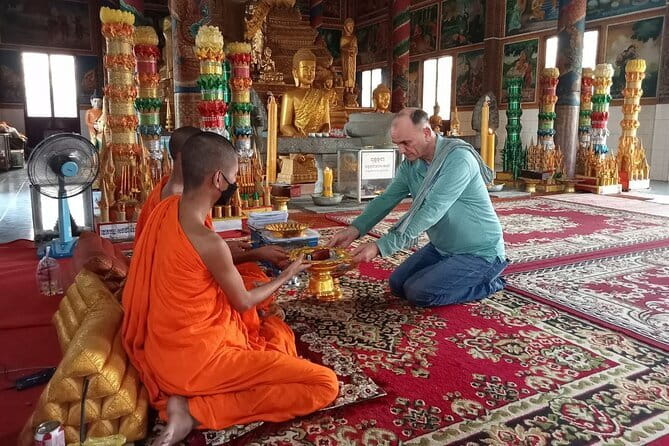
And there’s a deeper layer: it was originally dedicated to the Hindu god Shiva. Your guide should help you connect that religious origin to what’s happening around you now, because the site sits next to an active pagoda. That contrast—ancient Hindu dedication and present-day Buddhist practice in the same wider sacred area—is part of what makes Neang Khmao memorable.
One more detail I appreciate from the description: there probably were at least one more prasat, and perhaps as many as three more. So when you look at what remains, you’re not only seeing ruins. You’re seeing evidence that there was once a fuller architectural set.
Practical tip: wear shoes you trust. Historic brick and uneven ground can be slippery or unstable depending on conditions.
Tonle Bati: A Short Lake Stop That Breaks Up the Temple Tempo

Some temple tours stay temple-only. This one adds a pause at Tonle Bati, a small lake about 30 km south of Phnom Penh.
You get about 1 hour here, and it’s described as a popular weekend destination for locals, plus a fishing spot for both visitors and Cambodians. That matters because it changes your rhythm. After hours of stone and sacred architecture, Tonle Bati gives you something softer: open water, casual movement, and a look at everyday life beyond the temple gates.
This is also a helpful moment for logistics. Even if the day already includes cool water, you’ll still want a break from the heat and sun. A lake stop can feel like you’re switching gears without losing the cultural thread.
Keep expectations realistic: it’s not marketed as a grand sightseeing museum stop. It’s a local lake experience that rounds out the day.
Ta Prohm Temple: Smaller Than Angkor, Stronger Focus on Unique Art
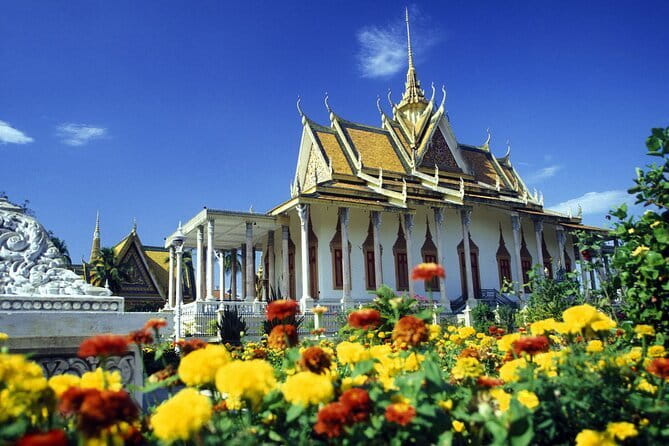
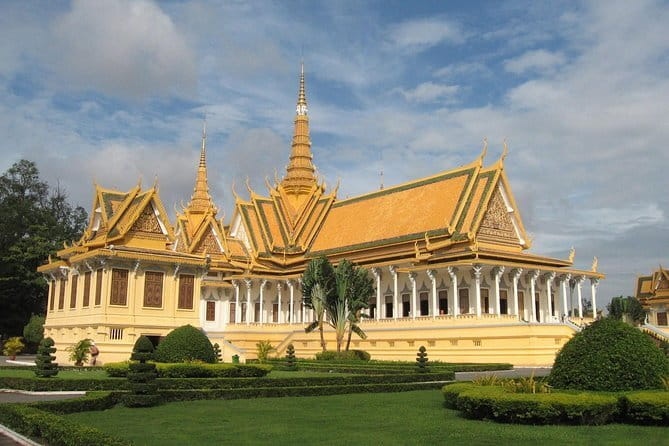
Next comes Ta Prohm Temple, built during the reign of King Jayavarman VII in the late 12th or early 13th century. This is a big name in Cambodia, but this specific Ta Prohm is described as smaller than the similar Ta Prohm of Angkor.
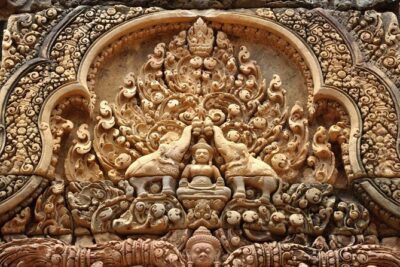
That size difference is an advantage for you. When something is smaller, you can often take more time with the details rather than spending your whole visit in a crowd-flow. The description also stresses that this Ta Prohm has unique art. So instead of assuming you’ll get the same experience as the famous Angkor version, treat this as its own art-and-design stop.
What I like most about a stop like this is the way it builds depth into your day. Phnom Chisor gives you the big view and sculpted galleries. Neang Khmao gives you the ruin-and-ritual connection. Ta Prohm shifts you again—more artwork, more craftsmanship, and more “read the carvings and forms” energy.
Possible drawback: if you only want huge iconic temples, this could feel quieter than the famous Angkor Ta Prohm. But if you’re here to see variation and pay attention, that’s exactly why it can be satisfying.
You can also read our reviews of more museum experiences in Phnom Penh

Yeay Pov Temple: Ending With a Final Sacred Stop
Your last destination is Yeay Pov Temple. The description doesn’t offer a long breakdown of its architecture in the information you provided, but it still serves an important role: it gives the day a clear closing rhythm.
By the time you reach the final temple, you’ve already seen enough different styles—11th-century sculpted design at Phnom Chisor, 10th-century brick prasats in Neang Khmao, and Ta Prohm’s King Jayavarman VII-era artistic focus. A final stop like Yeay Pov is where you slow down and let the day settle into memory.
In tours like this, the end matters. You don’t just leave with photos; you leave with that last feeling of sacred calm that temples often provide, especially after a long day of moving between sites.
Price and What You Get for $190 Per Group (Up to 5)
The cost is $190.00 per group, for up to 5 people. That structure is where the value comes from.
If you’re traveling as a small group, you’re not paying per person like you might on larger bus tours. You’re paying for a day that includes:
- an English-speaking tour guide
- air-conditioned transportation that’s described as clean and hygienic
- a friendly driver
- cool water
- all fees and taxes
- mobile ticket
Food isn’t included, so you’ll need to plan your meals separately. Tipping your guide and driver isn’t listed as included either, so keep that in your budget.
When I look at a price like this, I weigh it against two things: time and access. You’re getting almost a full day (about 8 hours) of guided temple time plus inter-site transport. That’s the part that costs money in real life—private logistics and a guide who can explain what you’re seeing. With that, the $190 group price can feel reasonable, especially if you split it.
Also, note the booking lead time: it’s often reserved about 87 days in advance on average. That usually means people know it’s a good day outing, not an impulsive add-on.
Logistics That Matter: Picking Up Early and Staying Comfortable
This tour starts at 8:00 am, with pickup near the River Crown Restaurant at 357, St. 178, Prehsisovath Quay, Phnom Penh 12206, Cambodia. You return back to that same meeting point at the end.
That early start helps. You’re going to spend meaningful time walking and viewing across multiple sites, and starting in the morning lets you use daylight before the heat turns sharper.
You’ll also want to plan for a long day of movement. Even with AC transport, your actual time outside temples will add up. Comfortable shoes and a hat are worth it. The good news is cool water is provided, and the transport is specifically described as air-conditioned and clean.
Who This Tour Best Suits
This is a great fit if you:
- want a temple-and-landscape day rather than only one big site
- like guided context (and especially enjoy hearing about religious layers, like Shiva origins next to an active pagoda)
- travel in a small group and want the day to feel private rather than crowded
- prefer variety: sculpted galleries, brick ruins, unique art, and a local lake break
It may not be the best match if you want:
- only fully restored, photo-perfect ruins
- minimal driving and only short walks
- a food-focused outing (since meals and drinks aren’t included)
Should You Book This Chiso–Neang Khmao–Ta Prohm Day?
If you’re choosing between doing a quick temple loop on your own and spending a day with interpretation, I’d book it.
The strongest reason: the guide impact. The reviews specifically highlight Soapheak and his depth about pagoda life and the surrounding structures. In practice, that kind of guiding can turn “I saw temples” into “I understand what I saw.”
Second reason: balance. You don’t just get stone. You get a viewpoint over rice fields at Phnom Chisor, a Shiva-to-pagoda contrast at Neang Khmao, unique-art focus at Ta Prohm, and a local-feeling Tonle Bati stop to reset your day.
Only hesitate if your priority is pristine restoration or you strongly dislike longer driving days. Otherwise, this tour is a solid way to experience Cambodia’s sacred layers without getting lost in guesswork.
FAQ
How long is the tour?
It’s about 8 hours (approx.).
How much does the tour cost?
The price is $190.00 per group (up to 5).
What temples and sites are included?
The day features Phnom Chisor, Prasat Neang Khmau, Ta Prohm Temple, Yeay Pov Temple, and a stop at Tonle Bati.
Is admission free for these stops?
The information provided says admission is free for the Phnom Chisor stop, and the other stops listed also show admission ticket free.
Is pickup offered?
Yes. Pickup starts near River Crown Restaurant, and the tour returns there at the end.
What time does the tour begin?
Start time is 8:00 am.
Is the tour private?
Yes. It’s described as private, with only your group participating.
Is food included?
No. Food and beverages are not included.
Is free cancellation available?
Yes. Free cancellation is offered, and you can cancel up to 24 hours in advance for a full refund.
If you want, tell me how many people are in your group and what month you’re going—I can suggest the best way to plan your day around heat and timing.