REVIEW · PHNOM PENH
Guided Phnom Penh Heritage Tour
Book on Viator →Operated by Phnom Penh Heritage · Bookable on Viator
Phnom Penh’s past plays on a tablet. This guided Heritage Tour uses a digital tablet with headphones and video-style stories to connect 19 stops to 22 historic sites from the French protectorate era. I especially liked the vintage-photo video guides and the fact that my guide (Oliver) was quick to spot questions and steer me toward what’s worth revisiting later. One catch: several major sights are only viewed from outside, so Royal Palace and National Museum visits aren’t included (and Wat Phnom’s hill temple isn’t part of the stop).
You also get a very workable pace: the whole loop is about 2 hours 30 minutes, there’s bottled water, and the group stays small (max 10), so it feels like a guided ride rather than a cattle push. The vehicle makes it a smart pick on a hot day, and you’ll have time for photos from the bus without turning it into a long walking day.
Logistics are friendly too: it starts near Street 13 and ends on Oknha Chhun St. (Street 240) by the Royal Palace/Wot Botum area, which makes it easy to tack on more exploring right after.
In This Review
- Key Things I’d Prioritize
- A Tablet-Based Ride Through Phnom Penh’s French-Era Stories
- Value and Timing: 2.5 Hours for 22 Historic Touchpoints
- Meet Oliver and Use the Audio Like a Pro
- Stop-by-Stop: The Post Office, Bank, and Colonial “Power Buildings”
- Chinese House, Hokkien Temple, and a Naga Bridge Moment
- Wat Phnom, the National Library, and Where You’ll Want to Stop Again
- Art Deco and Elite Life: Raffles, Central Market, and No Problem Villa
- Royal University of Fine Arts and the Art of Watching Students Practice
- FCC Phnom Penh, UNESCO House, and What You Don’t Enter
- Ending at Street 240: Royal-Square Vicinity and a Clean Finish
- Who This Tour Fits Best (and Who Should Rethink It)
- Should You Book the Phnom Penh Heritage Tour?
- FAQ
- How long is the Phnom Penh Heritage Tour?
- How many languages are available on the audio guide?
- What’s included with the tour besides the guide?
- Are entry fees included for places like the National Museum or Royal Palace?
- Can I go inside any buildings during the tour?
- Will I be walking a lot?
- How big is the group?
- Where do the tour start and end?
- Is there free cancellation?
Key Things I’d Prioritize
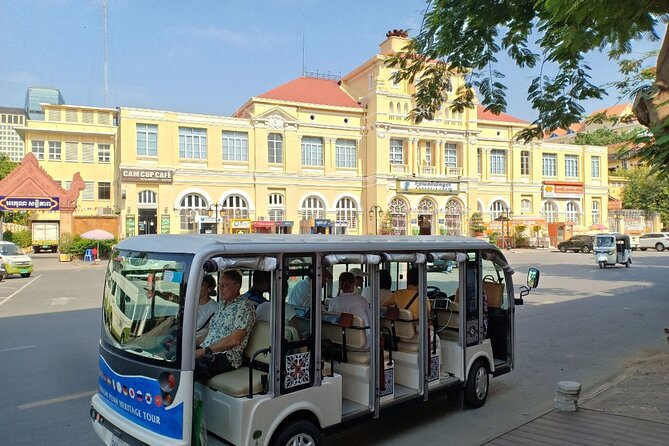
- Tablet + headphones in 10 languages means the stories match what you’re seeing outside your window
- Oliver-style guidance helps you get oriented fast and ask questions without the crowd noise winning
- Lots of outside views with photo time so you’re not stuck sprinting between stops
- Some interiors only if open (like the old bank, Hokkien temple, National Library, Royal University of Fine Arts)
- Major sites are not included inside (Royal Palace, National Museum, and Wat Phnom hill), so plan a follow-up if those matter to you
A Tablet-Based Ride Through Phnom Penh’s French-Era Stories
This tour is built for people who want context without spending a whole day reading plaques. You’re riding through Phnom Penh and watching short, story-focused videos on a tablet while headphones handle the audio. The content ties together the city’s transformation—how it grew into a capital, how French-style urban planning shaped neighborhoods, why Art Deco shows up in the mix, and how the royal family and early-20th-century elite lived.
What makes it work is that it’s not just “here’s a building.” The guide material includes film clips and vintage photos, plus historical anecdotes that help you understand why a place looks the way it does. And at select stops, you even get a virtual look into buildings that aren’t always open to the public.
You can also read our reviews of more guided tours in Phnom Penh


Value and Timing: 2.5 Hours for 22 Historic Touchpoints
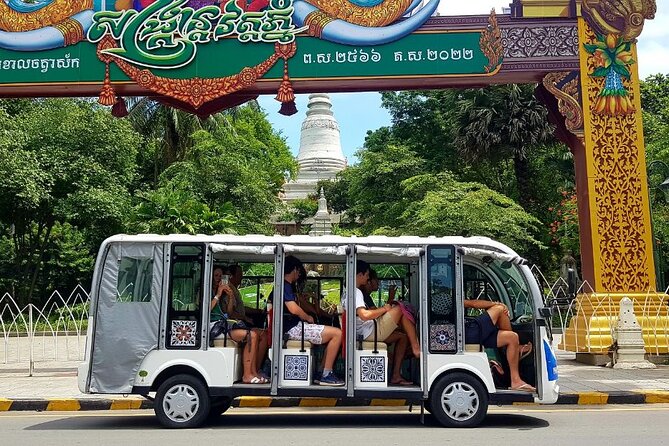
At about $24.36 per person for roughly 2 hours 30 minutes, this isn’t trying to be cheap sightseeing—it’s trying to be efficient. You’re paying for guided interpretation plus the tablet-based multimedia layer, and that combo saves time when you’re new to Phnom Penh.
It also helps that it’s structured around photo-friendly stops. The tour description notes you’ll have time to enjoy spots and take pictures from the bus, which matters in real life because Phnom Penh heat can hit hard. One review-style takeaway I’d borrow: doing it early in your trip gives you a map of what’s worth coming back to later.
Meet Oliver and Use the Audio Like a Pro
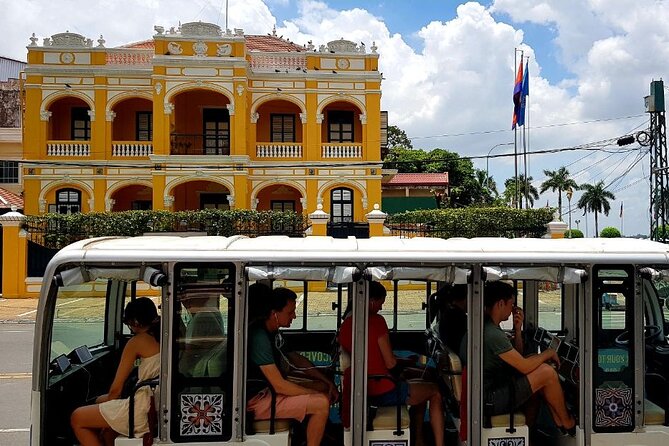
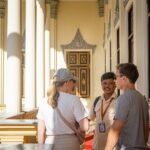
The experience is led by an in-guide person, and in practice that guide role can be handled by Oliver. He’ll welcome you, and when the square is busy, it’s the kind of service that keeps your brain from freezing on arrival. You’ll start at the meeting point near Corner Street 102 and Street 13, then board for the route.
Here’s how you’ll get the most from the tablet system:
- Keep the headphones on so the video timing matches the stop
- If you’re deciding what to re-visit later, jot a few names during the ride
- Use the moment after a stop to ask Oliver questions, especially if you want the best next move for cafes or longer visits
Your group is capped at 10 travelers, so you’re more likely to get real answers instead of quick nods.
Stop-by-Stop: The Post Office, Bank, and Colonial “Power Buildings”
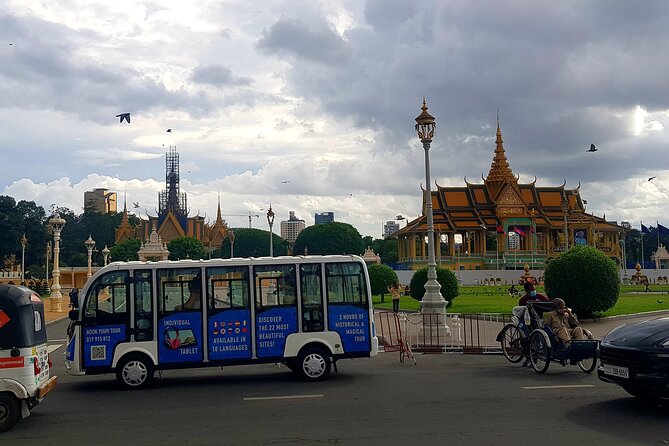
This loop gives you a strong “French protectorate” spine. It starts with Phnom Penh itself as the theme—how the city shifted from something smaller and working-class into an administrative capital. Then the tour quickly leans into architecture and institutions.
Cambodia Post Office (and the old Indochina Bank area) is one of the first big story anchors. You’ll get audio that links the buildings to the banking and postal presence of the colonial era. The tour also notes a possible interior visit if the old bank is open—so if you care about the original spaces, this is one stop to keep flexible.
Right after that, you’ll move into Palais de la Poste, with a separate audiovisual track that focuses on the building’s older identity as a bank site. That split matters: it keeps you from getting “the same story twice” and instead builds a bigger picture as you move.
Next, the route swings into hospitality and public life with Le Manolis, described as the first hotel of Phnom Penh. It’s a quick stop, but it’s one of those places where the audio gives you the why behind the look—how elite comfort and the city’s early modern era showed up in the built environment.
Old police and government spaces follow, including the former police station (Commissariat of Phnom Penh Municipal Police) and the Governor-General’s house area (Council for the Development of Cambodia). These are the kind of buildings that most walking tours skip because they’re not “photo-famous.” The tablet stories make them make sense: you start seeing how authority was physically organized around the city.
Chinese House, Hokkien Temple, and a Naga Bridge Moment
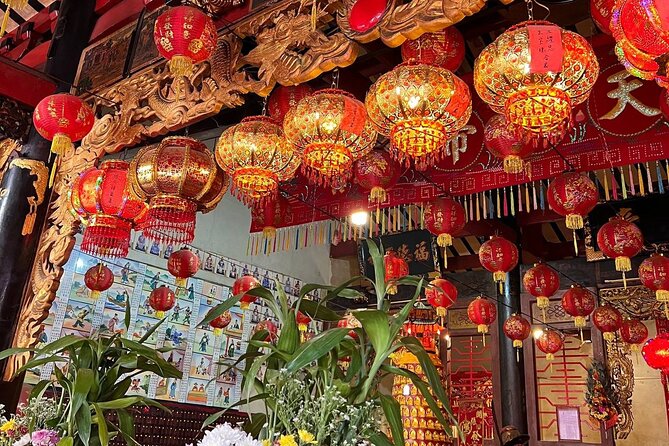
This stop is a neat reminder that Phnom Penh isn’t just one era layered on top of another. The tour includes the Chinese house tied to Minsheng Middle School (listed alongside the 關帝古廟) and the Hokkien Temple. Audio tracks cover both, and the tour mentions a chance to visit inside the Hokkien temple if it’s open.
If you like cultural details, this is where you get it without doing extra planning. And if you’re short on time, the multimedia approach helps you spot patterns: how different communities built places of worship and how those communities fit into the city’s growth.
Then comes Naeggas (Naga) Bridge, with a short audio segment about the bridge itself. Even if it’s brief, it’s a useful “myth meets infrastructure” moment—one of those details you might miss if you were only chasing the Royal Palace photo.
You can also read our reviews of more historical tours in Phnom Penh
Wat Phnom, the National Library, and Where You’ll Want to Stop Again
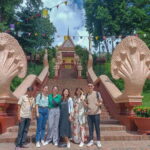
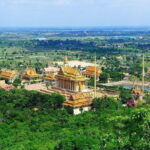
Wat Phnom appears next. The tour notes you can take pictures, but the temple visit on the hill isn’t included in this city tour. That’s a key planning point. If you came to Phnom Penh mainly for Wat Phnom’s top views, you’ll need to plan that as a separate activity.
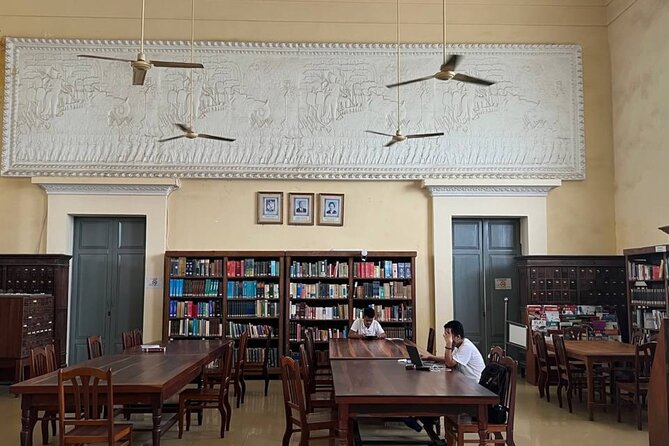
After that, the route heads toward the National Library, where the audio track focuses on the building and history. The description includes the possibility to visit inside if it’s open, which is a great perk if you like architecture or want a calmer, indoor break from the heat.
Then you’ll get a stop at Raffles Hotel Le Royal. This is one of those “you know the name” landmarks, and the tour uses the audiovisual track to connect the place to the larger story of early 20th-century Phnom Penh.
The day keeps moving through other central points such as the railway station area (listed as a “Home” stop) and the Central Market. The audio stays in character: it’s explaining how commerce and city planning fit into the colonial-era layout and how those functions still shape where people go today.
Art Deco and Elite Life: Raffles, Central Market, and No Problem Villa
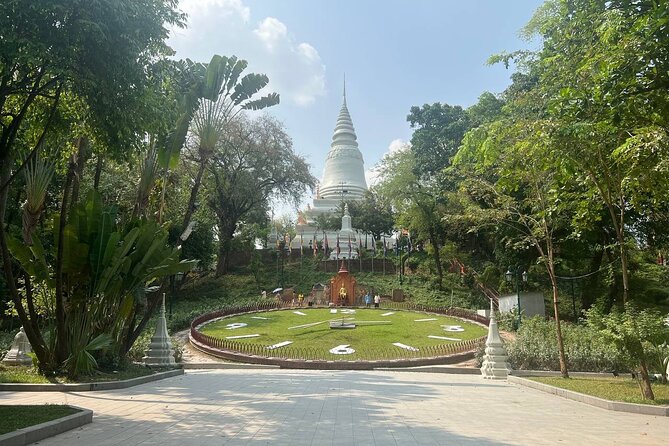
I like how the tour doesn’t just chase palaces. It gives you everyday anchors that still carry meaning.
One stop highlights the country club where the U.S. Embassy is currently located, and it’s noted that pictures aren’t allowed there. That’s not a “nice to know” detail—you should treat it as a rule so you don’t feel awkward or stuck mid-photo. Use your camera energy elsewhere on the route.
You’ll also pass the No Problem Villa through the audio track (connected to the Hyatt Regency area in the tour listing). This is the kind of stop that feels quick from the outside, but the story helps you understand how places change roles over time.
At this point, the tour’s tone becomes especially practical for first-timers. You start learning which areas are “story-dense” and which ones are better for a longer self-guided walk the next day.
Royal University of Fine Arts and the Art of Watching Students Practice
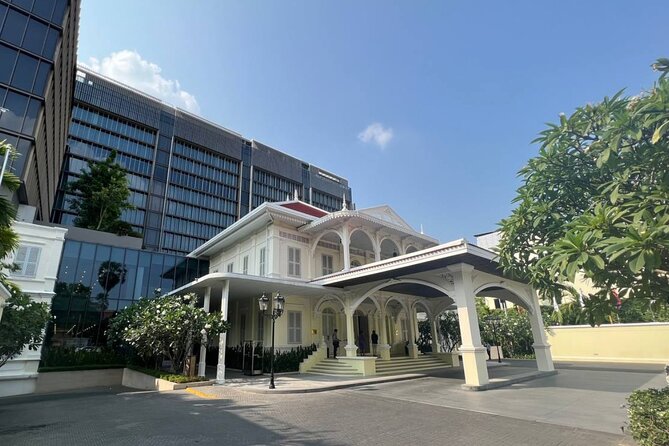
A standout in the route is the Royal University of Fine Arts. The audio track includes guided visit-style stories, and the description notes that you can often see students practicing their art. That turns the stop from passive sightseeing into something more human.
The tour also says you may be able to visit inside if it’s open. Even if access is limited at your specific time, the stop still works because the audio explains the significance, and you’re watching the living side of the institution.
This is also a good example of how the tour balances “heritage” with present-day Phnom Penh. It’s not frozen in the colonial past; it shows how cultural education continues.
FCC Phnom Penh, UNESCO House, and What You Don’t Enter
The middle-to-late part of the route is where the stakes feel higher. You’ll see the National Museum area, but the actual museum visit isn’t included in this city tour. Same idea with the Royal Palace: you’ll view the exterior from the route, but the visit isn’t part of this option.
So, if you’re the type who loves interior collections or wants the full palace experience, think of this tour as your “outside overview” and then plan a separate ticketed visit.
One place I found useful to know beforehand is the FCC Phnom Penh mansion. The listing notes it’s under renovation (2024/2025) and likely covered, which can affect photo angles. Still, it’s valuable for understanding the area’s older identity and how heritage buildings are being repurposed today.
Then comes UNESCO Cambodia (UNESCO house), with an audiovisual segment that gives the backstory for that presence in the city. Again, it’s a “short-but-meaningful” stop: you don’t need more time there to get something out of it.
Ending at Street 240: Royal-Square Vicinity and a Clean Finish
The tour wraps at the Residence of the British Ambassador to Cambodia area on Oknha Chhun St. (240), with an audio epilogue that ties the stories together. The meeting/end pairing is smart: you finish near Wat Botum Square and the Royal Palace zone, so you can pivot immediately if you already planned to see those areas after.
This makes the tour feel like a route with an intentional endpoint, not just a drop-off. It also means you can keep the momentum going while the city is still fresh in your head.
Who This Tour Fits Best (and Who Should Rethink It)
I’d book this if:
- You want a structured first-time introduction to Phnom Penh with story context
- You like architecture and want the “why” behind buildings, not just the date
- You’re on a time budget and want a lot of stops without doing a long walking day
I’d reconsider if:
- You’re mainly interested in interior visits and you don’t want to pay for additional entrances later
- You strongly prefer temple-hill experiences at Wat Phnom (because that specific visit isn’t included here)
- You know you’ll want a full Royal Palace circuit on the same day (since that visit isn’t part of the tour)
Should You Book the Phnom Penh Heritage Tour?
Yes—if you want orientation with real historical framing and you like the idea of learning through short video segments while you ride. The value works because you’re not just buying transportation; you’re buying guided interpretation in 10 languages, plus a stop-by-stop map of what matters.
If the Royal Palace, National Museum, or Wat Phnom hill are your top priorities, treat this as your setup tour. Do it early, let the stories point you to the best follow-ups, and then spend your remaining time where you actually want to linger.
FAQ
How long is the Phnom Penh Heritage Tour?
It runs for about 2 hours 30 minutes.
How many languages are available on the audio guide?
The tablet-based audiovisual guide is available in 10 languages.
What’s included with the tour besides the guide?
You get bottled water, an in-guide person, and a tablet with the audiovisual guide (headphones are provided). The ticket is mobile.
Are entry fees included for places like the National Museum or Royal Palace?
No. The National Museum and Royal Palace visits are not included during this city tour. Wat Phnom’s hill temple visit is also not included.
Can I go inside any buildings during the tour?
You may be able to visit inside if the site is open, including the old Indochina Bank area, the Hokkien temple, the National Library, and the Royal University of Fine Arts.
Will I be walking a lot?
This is designed as a guided route with stops and photo time from the vehicle, so you’re not doing a full walking day.
How big is the group?
The maximum group size is 10 travelers.
Where do the tour start and end?
It starts at the corner of Street 102 and Street 13 in Phnom Penh. It ends on Oknha Chhun St. (Street 240), near the Royal Palace and Wat Botum Square.
Is there free cancellation?
Yes. You can cancel for a full refund up to 24 hours before the experience’s start time.