REVIEW · PHNOM PENH
Half-Day Phnom Penh City Tours
Book on Viator →Operated by Royal Phnom Penh Tours · Bookable on Viator
Phnom Penh fits into five hours, hard. The big win here is two itinerary styles, so you can aim for either the Khmer Rouge memorial sites or the city’s royal and temple heart, then end with a guided walk around a local market near Independence Monument. It’s a smart way to see a lot without wasting your time in traffic.
I also love that the tour is built like a finished package: you get private transportation, a licensed guide, and entrance fees handled. One possible drawback: the Khmer Rouge stops (S-21 and the Killing Fields) are extremely emotional, so this is not the kind of outing you do while your brain is on autopilot.
In This Review
- Key Things to Know Before You Go
- A Half-Day Plan That Actually Makes Sense
- Two Itineraries: Choosing Your Phnom Penh Mood
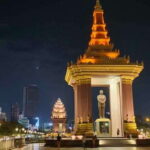
- Independence Monument: A Clean Starting Point for the Whole Story
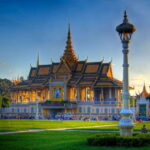
- Royal Palace: Active, Beautiful, and Still Part of Daily Cambodia
- Wat Phnom and the Silver Pagoda: Religion You Can See Up Close
- Central Market and the Independence-Area Walk: The Best Finish
- Choeung Ek Genocidal Center (Killing Fields): The Part You Can’t Forget
- Tuol Sleng Genocide Museum (S-21): From School to Security Prison
- How the Guides Change the Quality (Kakada, Channy, Sam, Sina)
- Pace and Crowd Reality: A Half-Day That Doesn’t Feel Rushed
- Price: What $75 Buys You in Real Terms
- Who This Tour Fits Best
- Should You Book This Half-Day Phnom Penh City Tour?
- FAQ
- How long is the Half-Day Phnom Penh City Tour?
- What does the tour cost?
- Is hotel pickup and drop-off included?
- Is this a private tour?
- What are the two itinerary options?
- Does the tour include entrance fees?
- Will I get cold water during the tour?
- Are meals included?
- Does the tour include a market stop?
- What if the weather is bad?
Key Things to Know Before You Go
- Two tour options: Khmer Rouge focus (S-21 + Killing Fields) or a cultural route (Royal Palace, National Museum, Wat Phnom)
- Private tour, real control: it’s only your group, so pacing feels more personal than bus tours
- All entrance fees included for the listed stops, plus hotel pickup/drop-off
- Historic “anchor points”: Independence Monument, Royal Palace complex, and Wat Phnom set the tone fast
- You’ll face the hard part at Choeung Ek and Tuol Sleng, with guided context throughout
- Crowd management tends to be better with a smaller group and good timing
A Half-Day Plan That Actually Makes Sense
A half-day tour in Phnom Penh can go two ways: either you feel like you got crammed into boxes, or you get the key scenes with time to breathe. This one aims for the second outcome. With a 4 to 5 hour window, you can cover the Royal Palace area, Buddhist landmarks, and—if you choose the Khmer Rouge version—two of the most important genocide memorials in Cambodia.
The magic ingredient isn’t just the stop list. It’s the way the route is structured: you start with iconic landmarks that help you understand the city’s story, and you end with a market walk near Independence Monument, which gives you a more everyday view of Phnom Penh life.
And yes, the emotional weight is real. If you pick the Khmer Rouge itinerary, you’re choosing to witness atrocities directly, not just to skim history from a brochure.
You can also read our reviews of more city tours in Phnom Penh
Two Itineraries: Choosing Your Phnom Penh Mood
This tour gives you a real choice, and that matters.
The Khmer Rouge-focused option centers on two sites tied to the regime’s terror system: Choeung Ek Genocidal Center (the Killing Fields) and Tuol Sleng Genocide Museum (S-21). The point is clarity: you see the places where victims were taken, held, and executed, with guided explanation that connects the dots.
The cultural option leans into Phnom Penh’s royal and spiritual landmarks. You’ll visit the Royal Palace, the National Museum, and Wat Phnom, then wrap up with a guided walk around a local market near Independence Monument. This route is better if you want the city’s artistic, religious, and architectural side without spending your whole afternoon in the darkest chapters.
If you’re torn, think about your energy level. You can handle the royal/temple circuit with a tired brain. You can’t really do the genocide sites half-heartedly.
Independence Monument: A Clean Starting Point for the Whole Story
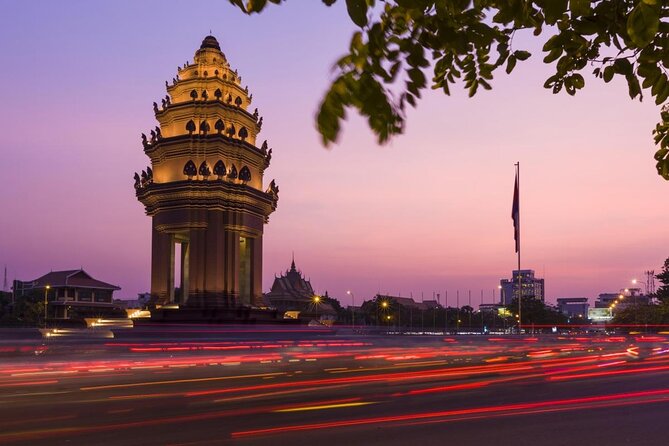
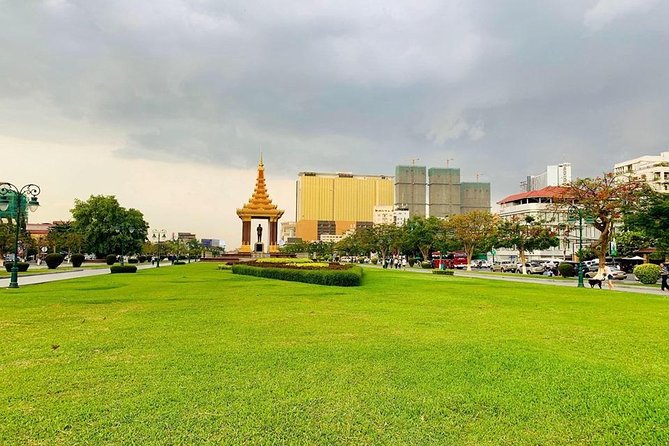
The tour begins at Independence Monument, built in 1958 to memorialize Cambodia’s independence from France in 1953. It sits at the intersection of Norodom Boulevard and Sihanou Street, which makes it a useful geographic anchor. Even if you don’t know anything about Phnom Penh yet, this gives you a clear mental map: you’re in the capital, and the city has layers—colonial history, national identity, and modern life—stacked close together.
Practical note: because this is an early stop, it helps your guide set context before you move into either the royal-temple complex or the memorial sites. When context comes first, the rest of the tour makes more sense.
Royal Palace: Active, Beautiful, and Still Part of Daily Cambodia
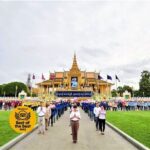
The Royal Palace is a complex of buildings that functions as the royal residence. In Khmer it’s Preah Barum Reachea Veang Chaktomuk, and the tour schedules about 1 hour here, with admission included.
What I like about this stop—especially as part of a half-day plan—is that it’s not only “old stones.” It’s still an active royal site. One review highlighted that it remains a living palace, with the king and his mother residing on the grounds. That detail changes the feel. This isn’t a theme-park version of history; it’s a place people still live and work around.
What to watch for:
- The palace grounds are designed and maintained as a complete environment, not just a single building.
- Your guide’s job is to connect what you see (architecture, ceremonial spaces, museum-like objects) to what they mean in Cambodian culture.
If you love palace grounds, you’ll likely enjoy this stop a lot. If you’re mostly interested in museum-level artifacts, you may find the next stops do more of the storytelling work.
Wat Phnom and the Silver Pagoda: Religion You Can See Up Close
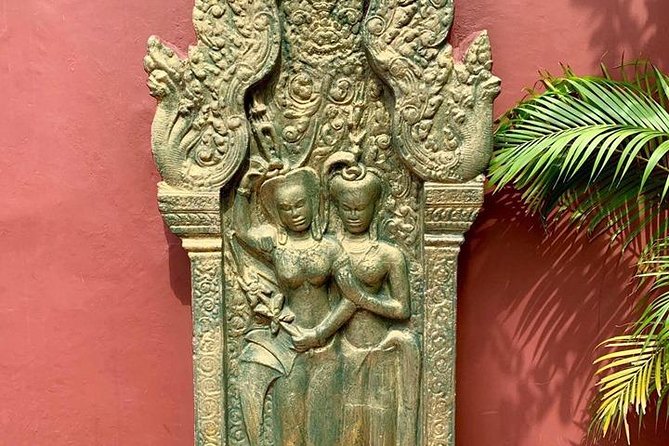
After the palace, you shift into the spiritual layer of Phnom Penh.
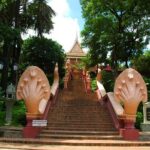
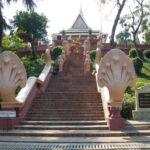
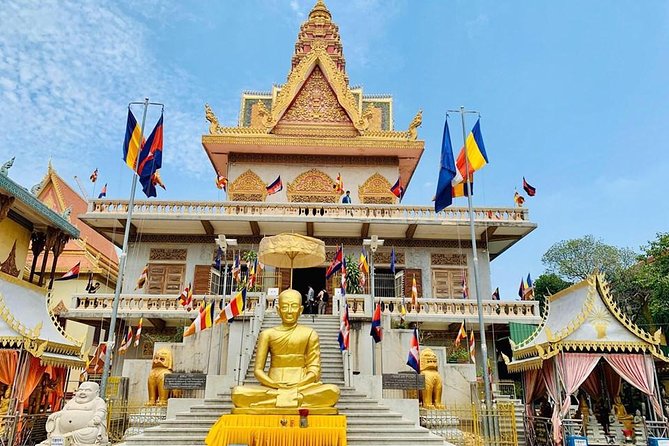
Wat Phnom is one of the city’s best-known landmarks. It was built in 1372 and rises 27 meters above the ground, making it the tallest religious structure in Phnom Penh. The tour allots about 30 minutes and includes admission. You’ll see a Buddhist temple built for long continuity, not short sightseeing.
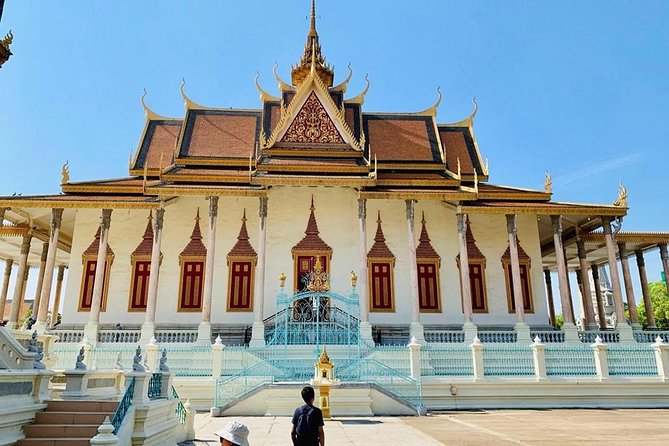
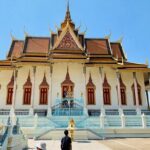
Next is the Silver Pagoda, located on the south side of the Royal Palace. The official name is Wat Ubaosoth Ratanaram, and it’s commonly shortened to Wat Preah Keo Morakot. This stop also runs about 30 minutes with admission included.
The practical value here is simple: temples give you a different kind of understanding than memorials or museums. You start seeing how religion, culture, and public space overlap in Phnom Penh—often without needing a long lecture.
You can also read our reviews of more tours and experiences in Phnom Penh

Central Market and the Independence-Area Walk: The Best Finish
The tour finishes with a guided walk around a local market near Independence Monument, and the itinerary also includes the Central Market with about 30 minutes scheduled and admission included.
Central Market is a big deal architecturally. It was built in 1937 in a dome shape with four arms branching into wide hallways and countless stalls. Construction was designed by Jean Desbois. That dome-and-spoke layout is exactly why markets here feel easier to navigate than you’d expect from a place full of chaos.
Two things to keep in mind:
- Meals aren’t included as part of the tour, so this market area is a chance to grab a drink or snack on your own if you want.
- This is also where you get a more current picture of the city—what people are buying, how stalls are organized, and what daily life looks like around your historical stops.
If your Khmer Rouge or temple stops felt heavy, this market walk is a good emotional reset.
Choeung Ek Genocidal Center (Killing Fields): The Part You Can’t Forget
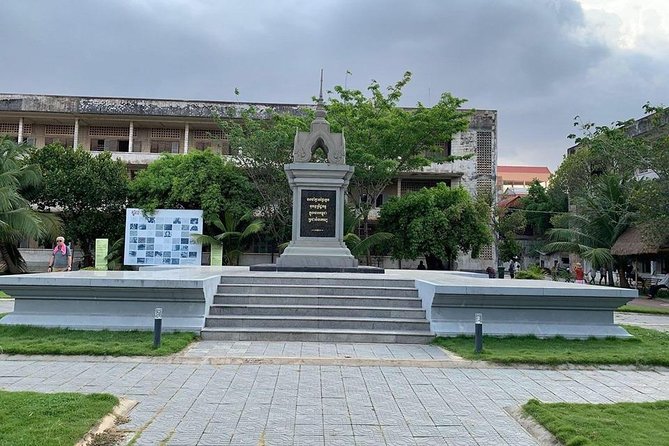
If you choose the Khmer Rouge itinerary, your schedule includes Choeung Ek Genocidal Center, with about 1 hour 30 minutes on site and admission included.
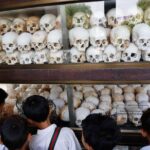
The Killing Fields refers to multiple sites in Cambodia where more than a million people were killed and buried by the Khmer Rouge regime between 1975 and 1979. That single time window matters because it shows how concentrated the violence was—history compressed into a few short years.
This is the kind of visit where you don’t want to rush. The guides play a key role by pacing you through the site’s meaning and helping you understand what you’re looking at. Expect the experience to be intense. A common sentiment from reviews was that people felt glad they did it, and also relieved when it was over—because it is hard to carry.
Practical advice: bring mental space. Don’t stack this with anything stressful right before or right after.
Tuol Sleng Genocide Museum (S-21): From School to Security Prison
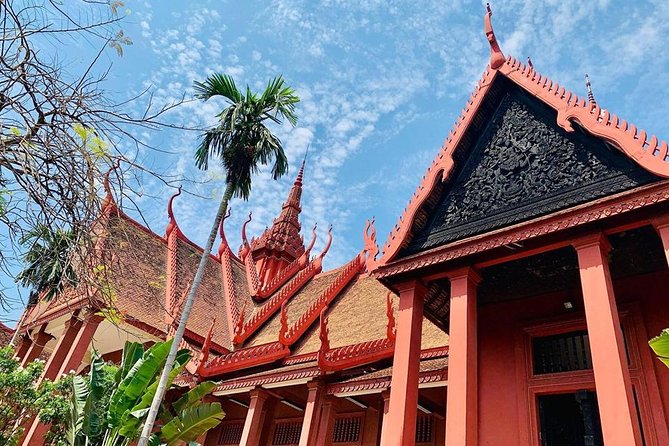
Next comes Tuol Sleng Genocide Museum, also about 1 hour 30 minutes, with admission included.
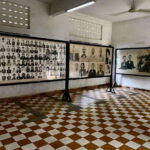
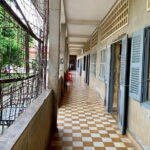
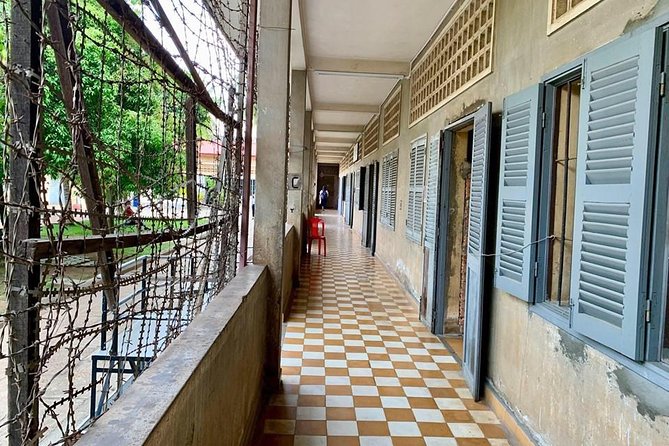
Tuol Sleng is described as a museum chronicling the Cambodian genocide. The site was once a secondary school and was used as Security Prison 21 (S-21). That detail—an everyday school turned into a security prison—helps explain the horror of how systematically normal life was replaced with terror.
Guided interpretation is especially valuable here. The museum can be overwhelming if you’re trying to read everything alone. With a guide, you get a clearer timeline and better context for what the displays represent.
If the Khmer Rouge itinerary is your choice, I’d treat these two sites (Choeung Ek and S-21) as the main event. Everything else on the half-day tour is there to support understanding—not to compete with the memorial focus.
How the Guides Change the Quality (Kakada, Channy, Sam, Sina)
The most consistently praised part of this experience is the guide. Not just friendliness—though that matters—but also the way they explain things at a pace that fits a half-day schedule.
Names that stood out in feedback include:
- Kakada, praised for excellent English, good humor, and being easy to talk to
- Channy, noted for being friendly, professional, attentive, and very informative
- Sam, who shared strong personal and compassionate context on the genocide history
- Sina, described as making sure you understood the background behind the sites
You’ll also see patterns in the praise: guides who tailor the itinerary to your preferences and who keep things moving without turning it into a sprint. One review even highlighted that the tour felt genuinely private in the sense that it was just the group, not a shared shuffle with strangers.
This matters because Phnom Penh is not a city where “see everything fast” works well. You need context. You need pacing. And you need someone to tell you what’s worth noticing.
Pace and Crowd Reality: A Half-Day That Doesn’t Feel Rushed
A 4 to 5 hour tour means every stop has to earn its time. That’s why this style works best for people who want a concentrated introduction without committing to a full day.
Your schedule includes multiple short cultural stops (Royal Palace, Wat Phnom, Silver Pagoda, Central Market) alongside one or two longer memorial blocks (Choeung Ek and Tuol Sleng). That balance is the point. You get both the “Cambodia you can photograph” and the Cambodia you need to process.
If you pick the cultural itinerary, you’ll spend more time on the palace and Wat Phnom side. If you pick the Khmer Rouge version, you’ll spend more of your time at the memorial sites and less at the softer cultural landmarks.
Either way, the private format helps. Even when you see other groups at major sites, the tour experience feels less chaotic than waiting behind a bus crowd.
Price: What $75 Buys You in Real Terms
$75 per person sounds like a lot until you break it down for Phnom Penh. For that price, you’re getting:
- hotel pickup and drop-off
- private transportation
- a local licensed tour guide
- entrance fees (listed stops are covered)
- a cold bottle of water during the trip
That combination matters. You’re not paying separately for guide + tickets + transport, and you’re not spending your afternoon bargaining with taxi drivers or figuring out entry lines.
Is it a bargain? If you’re trying to see only one or two sites on your own, it probably feels pricey. But if you want a guided route that strings together Royal Palace, Wat Phnom, and either National Museum or the Khmer Rouge memorials—with admissions handled—then the math starts looking fair.
Also, if you’re traveling as a group, you may get group discounts, and that pushes the value further.
One small consideration: drinks and other meals aren’t clearly included. So if you’re the type who plans a nice lunch, budget for it separately.
Who This Tour Fits Best
This is a great match if:
- you want a half-day introduction to Phnom Penh
- you like having a guide to translate Cambodian context into plain language
- you’re comfortable visiting serious memorials and taking time with them
- you prefer a private setup over a large bus experience
It may be less ideal if:
- you’re emotionally sensitive and you’d rather ease into history with lighter cultural stops first
- you’re mainly into museum collections and less into viewing temples and palace grounds (even though the cultural option includes the National Museum, the way it’s experienced can vary)
One review even noted that a museum stop felt less enjoyable due to repetitive displays and maintenance issues like dust. That doesn’t mean you’ll feel the same, but it’s a useful heads-up if you’re museum-first.
Should You Book This Half-Day Phnom Penh City Tour?
Book it if you want a focused, guided route that gives you both context and efficiency. The tour’s biggest strengths are the two clear itinerary paths, the private format, and the way guides like Kakada, Channy, Sam, and Sina are praised for explaining what you’re seeing without turning it into a lecture.
Choose the Khmer Rouge focus if you feel ready to witness S-21 and the Killing Fields with proper context. Choose the cultural focus if you want Phnom Penh’s royal and temple identity, capped with a market walk near Independence Monument.
If you’re still on the fence, decide based on your mood for the day: temples and palaces are easier to enjoy on a casual afternoon; the genocide sites require a quieter, more respectful pace.
FAQ
How long is the Half-Day Phnom Penh City Tour?
It runs about 4 to 5 hours.
What does the tour cost?
The price is $75.00 per person.
Is hotel pickup and drop-off included?
Yes, hotel pickup and drop-off are included.
Is this a private tour?
Yes. It’s a private tour/activity, and only your group will participate.
What are the two itinerary options?
You can choose between a Khmer Rouge-focused route (S-22 Tuol Sleng Prison and the Killing Fields) or a cultural route (Royal Palace, National Museum, and Wat Phnom).
Does the tour include entrance fees?
Yes. Entrance fees are included for the listed stops.
Will I get cold water during the tour?
Yes, you’ll receive a cold bottle of water during your trip.
Are meals included?
Drinks and other meals are not clearly mentioned as included, so you should plan to buy food separately if you want lunch or snacks.
Does the tour include a market stop?
Yes. The tour ends with a guided walk around a local market near Independence Monument, and Central Market is also part of the itinerary.
What if the weather is bad?
The experience requires good weather. If canceled due to poor weather, you’ll be offered a different date or a full refund.