REVIEW · PHNOM PENH
Learn about a dark period of Cambodian history by expert guide
Book on Viator →Operated by Phnom Penh Tours · Bookable on Viator
Phnom Penh hits hard, then tells you why. This tour moves from the Royal Palace to the Silver Pagoda, then by tuk-tuk to Choeung Ek Killing Fields to learn how the Khmer Rouge regime shaped Cambodia from 1975–1978. I love how it keeps the day structured and readable, and I love the human stories that an expert English-speaking guide brings into the history.
What also works is the size and pace. With a maximum of 15 travelers, you get more back-and-forth, and you’re not just shuffled through. The itinerary also gives you a clear order: monuments first, then the genocide sites. One thing to consider: this is emotionally heavy content, and the day is long enough that you’ll want to pace yourself.
In This Review
- Quick hits before you go
- Royal Palace to Killing Fields: a hard, well-timed route
- Price and value: what $29 becomes on the ground
- Tuk-tuk, pickup, and group size: why logistics matter today
- Stop 1 (Phnom Penh): start smart with pickup and orientation
- Stop 2: Royal Palace (1866–1870) and the power of place
- Stop 3: Silver Pagoda (Wat Ubaosoth Ratanaram) and the myth of crystal
- Stop 4: Tuol Sleng (S-21) Genocide Museum, where a school became machinery
- Stop 5: Choeung Ek Killing Fields, understanding scale without losing your footing
- The guide factor: why An’s approach changes the day
- What to wear, what to bring, and how to pace yourself
- Who this tour is best for
- Should you book this Phnom Penh Royal Palace plus Killing Fields tour?
- FAQ
- What time does the tour start?
- How long is the experience?
- How many people are in the group?
- Is hotel pickup and drop-off included?
- What transportation is included?
- Is an English-speaking guide included?
- Are the attraction entrance fees included?
- What’s included in the tour price besides transport?
- What happens if the weather is poor?
- What is the cancellation policy?
Quick hits before you go
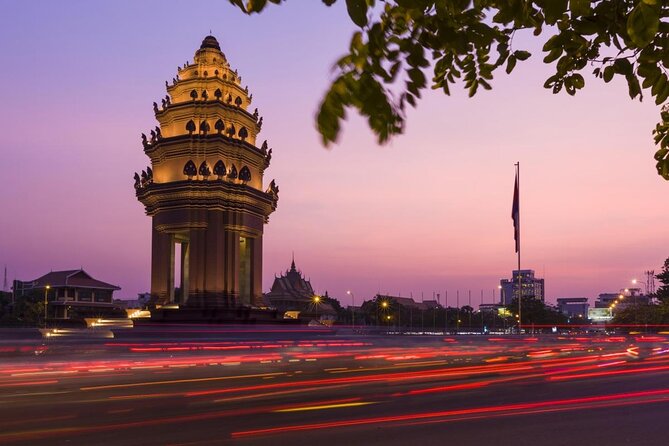
- Royal Palace history first: built after King Norodom relocated the capital to Phnom Penh, 1866–1870
- Silver Pagoda focus: Wat Ubaosoth Ratanaram, also known as Wat Preah Keo Morakot
- Tuol Sleng (S-21) context: a former school turned interrogation center for about 14,000–17,000 prisoners
- Choeung Ek scale: estimates of around 20,000 victims executed, plus the wider massacre and burial across Cambodia
- Tuk-tuk ride included: a classic way to move between key Phnom Penh stops
- Small group limit: capped at 15 for a more intimate experience
Royal Palace to Killing Fields: a hard, well-timed route
If you’re looking for Phnom Penh sightseeing that doesn’t feel like a checklist, this is a strong match. The day blends two very different sides of Cambodian history: royal-era monument culture, then the Khmer Rouge genocide period. That change in tone is exactly why the tour works. You get the setting, then you understand what happened to families, neighbors, and whole communities.
The route is also built to keep your head from spinning. You start in central Phnom Penh with hotel pickup around 8:15am, then move through the Royal Palace and Silver Pagoda in a calm, chronological flow. Only after that do you head to the sites tied to the regime’s detention and mass killing. For a first-time visit, it’s one of the clearer ways to connect the dots.
You can also read our reviews of more guided tours in Phnom Penh

Price and value: what $29 becomes on the ground
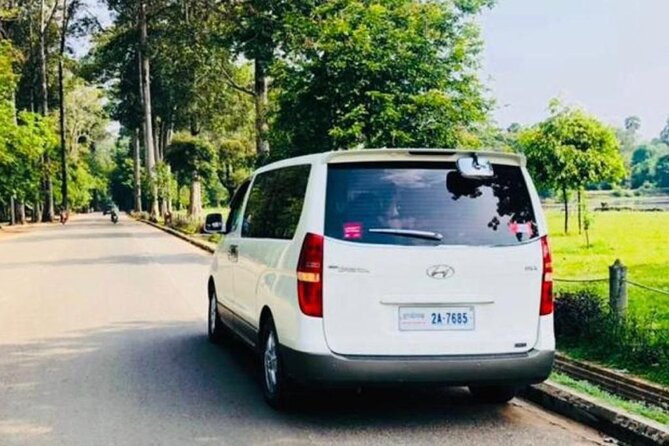
The tour price is $29 per person, and you do get real transportation value baked in: hotel pickup and drop-off, a tuk-tuk plus air-con minivan support, an English-speaking licensed guide, and cold water.
What’s not included are the site entrance fees:
- Royal Palace: $10/person
- Tuol Sleng genocide museum: $5/person
- Choeung Ek Killing Fields: $3/person
So you should plan on roughly $47 all-in for the paid admissions on top of the base tour price. Is it cheap? Not exactly. But for what you’re getting—multiple major sites in one day, guide interpretation in English, and tuk-tuk transportation—it’s fair value, especially with the 15-person maximum. You’re paying for context, not just tickets.
Tuk-tuk, pickup, and group size: why logistics matter today
This tour is scheduled for about 5 hours 15 minutes, which is long enough to absorb information but not so long that you lose the thread. Hotel pickup is included, so you’re not spending mental energy figuring out transport before you even start learning.
A key detail: you’re traveling with a maximum of 15 travelers. That small cap matters more than you might think at sites like Tuol Sleng and Choeung Ek, where you may have questions or need a moment to understand what you’re seeing. In larger groups, guides often rush to keep everyone together. Here, you’re more likely to get steadier explanations and a better pace.
The tour also notes that it works for most travelers, and you’ll be close to public transportation. If you prefer to use taxis or tuk-tuk on your own later, the day doesn’t strand you far from city access.
Stop 1 (Phnom Penh): start smart with pickup and orientation
The day begins in Phnom Penh with hotel pickup, then you head to the first major monument. Admission for this first stop is listed as free, so your paid moments start once you reach the palace complex.
This first stretch is more useful than it sounds. Having a guide from the start means you get early framing: what you’re about to see, why the Royal Palace and Silver Pagoda matter, and how they fit into Phnom Penh’s story. It’s also the time to ask practical questions, like how much time you want for photos and how the later sites may feel.
One small drawback to keep in mind: the day is scheduled to match good weather. If conditions aren’t ideal, the tour may be moved to another date or refunded.
Stop 2: Royal Palace (1866–1870) and the power of place
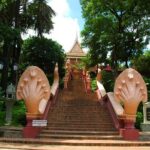
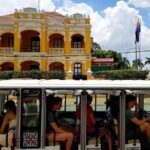
The Royal Palace is your first real “anchor” sight. It was constructed between 1866 and 1870, after King Norodom relocated the royal capital from Oudong to Phnom Penh. The palace sits atop an older citadel called Banteay Keo and faces east, near where the Tonle Sap River and the Mekong River meet at Chaktomuk.
Why this stop is worth your time: you’re not just looking at buildings. You’re seeing a visual map of political change. Phnom Penh’s importance didn’t happen by accident—it grew, and this palace reflects that shift.
Practical note: the Royal Palace admission is not included in the base tour price. The ticket cost is $10/person. Plan for it, because this is the kind of monument where you’ll want time to notice details rather than sprint through.
Potential drawback: palace visits can involve lots of standing and walking, and you’ll be doing that before the emotional weight ramps up later. If you’re traveling with limited mobility, you’ll want to think about how your energy holds up across the full day.
You can also read our reviews of more historical tours in Phnom Penh
Stop 3: Silver Pagoda (Wat Ubaosoth Ratanaram) and the myth of crystal
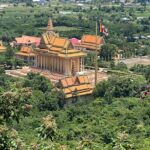
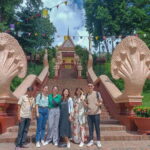
Next comes the Silver Pagoda, officially called Wat Ubaosoth Ratanaram, and also known as Wat Preah Keo Morakot. It’s located on the south side of the Royal Palace area, and it’s commonly associated with the Temple of the Emerald-Crystal Buddha, often shortened in conversation to Wat Preah Keo.
This stop gives you balance. After royal politics and architecture, you get religious and symbolic meaning. In Cambodian history, temples are often where art, belief, and power intersect. In this case, the name alone hints at how many layers visitors are meant to take in.
Like the palace, the entrance fee is not included. Budget another $5 worth of time and ticket planning here, since the museum fees are separate later.
A realistic consideration: this is a highly visited zone, and your experience will depend on how crowded it feels on the day. The good part is that your guide can usually help you focus on what’s most meaningful rather than what’s most photogenic.
Stop 4: Tuol Sleng (S-21) Genocide Museum, where a school became machinery
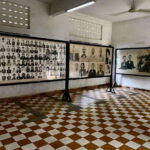
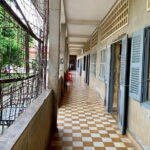
After the palace and temple stops, the day turns sharply. Tuol Sleng Genocide Museum is centered on S-21, one of Cambodia’s most notorious interrogation centers. It was housed in a former school and is now called Tuol Sleng, named for the hill the site sits on.
Here’s the core historical weight: between 14,000 and 17,000 prisoners were detained and tortured at S-21. Many were held in primitive brick cells that were built out of former classroom spaces.
The value of having a guide here can’t be overstated. Without interpretation, it’s easy to see the site as just buildings and artifacts. With context, you can connect the dots: how the regime operated, why detention and interrogation weren’t random, and how the system fed on fear. A good English-speaking guide helps you keep the facts straight while also respecting the gravity of the place.
Time-wise, you should expect about 1 hour 30 minutes across the day in the later sites, and Tuol Sleng itself is listed as 1 hour 30 minutes in the flow. That’s enough time to read what you can, take in the layout, and ask questions without feeling completely rushed.
Emotional reality check: if you’re sensitive to graphic realities, this stop may be tough. The tour format doesn’t hide the facts, so you’ll want to decide how much you can handle before booking.
Stop 5: Choeung Ek Killing Fields, understanding scale without losing your footing
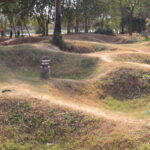
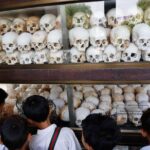
The final main stop is Choeung Ek Genocidal Center, about 9 miles south of Phnom Penh. This is where the tour’s headline message becomes unavoidable: the Khmer Rouge, led by Pol Pot, transformed the area from an orchard and a Chinese cemetery into what became known as the killing fields.
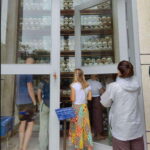
The numbers given are heavy. Estimates cite about 20,000 executed victims between 1975 and 1978, and over the broader three-year span the Khmer Rouge massacred and buried around 2.5 million people across Cambodia. It’s also noted that around 20,000 men, women, and children were killed at this kind of field site level, tying the story to real human lives rather than abstract dates.
So what makes this stop valuable in a tour setting? You leave with a clearer sense of scale. Monuments can show you power and art, but killing fields show you the outcome: what happens when ideology replaces humanity. You’ll likely understand the term genocide more viscerally here, and you’ll also understand why so many Cambodians still treat these sites as part of lived memory.
Your time on site is about 1 hour 30 minutes. That’s a reasonable window because this is not a “quick look and go” place. The center’s size can mess with your sense of time; a guide helps keep you oriented.
As with Tuol Sleng, admission is not included. Budget $3/person for Choeung Ek.
The guide factor: why An’s approach changes the day
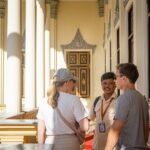
One of the strongest praised aspects of this tour is the guide experience. In particular, An stands out for having strong English and deep knowledge of Cambodian history, but the practical benefit is how he adapts to your interests. The goal is not just to recite dates; it’s to make the facts understandable and connected.
You’ll also appreciate a guide who can handle small-day logistics with you. One highlight mentioned is help with bargaining in nearby markets when timing allows, which can be useful when you want water, snacks, or basic items without getting lost in price confusion.
Even if you’re not someone who asks many questions, having a guide like this helps you avoid the common trap at genocide sites: seeing everything at once and remembering little afterward. With a good structure, you remember what matters—what this system was, how it worked, and why it’s still part of how Cambodia remembers the past.
What to wear, what to bring, and how to pace yourself
This is a temple-and-memorial day, so plan like you’re walking a lot, standing at points, and taking in information that may feel uncomfortable. The tour includes cold water, but I still recommend packing a small personal water top-up if you run hot or sweat easily.
For clothing: you’ll be visiting the Royal Palace and Silver Pagoda before later moving to memorial sites, so choose something respectful and light. If you bring layers, you’ll handle indoor/outdoor temperature shifts more easily.
For your mindset: it’s smart to know that the day doesn’t lighten up after the killing fields. The content stays serious because the story requires it. If you want to end your day with something cheerful, schedule that for a different time—this tour is the kind of experience that deserves quiet afterward.
Who this tour is best for
This tour fits best if:
- you want a first-time Phnom Penh day that connects monuments to modern history
- you prefer small-group guiding rather than a big bus herd
- you care about explanations in English, not just self-guided signage
- you can handle emotionally intense subject matter with respect
If you’re traveling with younger kids, you might find it hard to match the content to their attention level. If you’re sensitive to the topic, consider whether you can handle detention and execution stories in one afternoon.
Should you book this Phnom Penh Royal Palace plus Killing Fields tour?
I’d book it if you want your Cambodia trip to feel grounded in real history, not just scenery. The value is strong once you factor in transportation, an English-speaking guide, cold water, and the tuk-tuk experience, and the small cap of 15 travelers is a real quality marker.
I would hesitate if you’re emotionally stretched or if you’re expecting a relaxed day. This isn’t a casual tour day out. It’s a purposeful route: palace and pagoda first, then detention and mass killing sites, with the guide helping you hold the facts carefully.
FAQ
What time does the tour start?
The tour starts at 8:15am.
How long is the experience?
It runs for about 5 hours 15 minutes.
How many people are in the group?
The tour has a maximum of 15 travelers.
Is hotel pickup and drop-off included?
Yes. Hotel pick up & drop off are included.
What transportation is included?
You’ll use tuk-tuk plus a min van with air-con.
Is an English-speaking guide included?
Yes. The tour includes an English speaking licensed tour guide.
Are the attraction entrance fees included?
No. The Royal Palace ticket ($10/person), Tuol Sleng ticket ($5/person), and Choeung Ek ticket ($3/person) are not included.
What’s included in the tour price besides transport?
Included items are hotel pickup & drop-off, tuk-tuk and minivan transport, the English-speaking guide, and cold water.
What happens if the weather is poor?
The tour requires good weather. If it’s canceled due to poor weather, you’ll be offered a different date or a full refund.
What is the cancellation policy?
Cancellation is free up to 24 hours in advance for a full refund.