REVIEW · SIEM REAP
Angkor Wat Admission Ticket
Book on Viator →Operated by Green Era Travel · Bookable on Viator
Your temple day starts the night before. Booking this Angkor Archaeological Park pass in advance means you don’t spend precious early-morning time at the ticket office, and the pass is delivered to your hotel so you can head straight to temples.
Two things I really like: first, it’s built for sunrise at Angkor Wat—the main reason people feel stressed about buying tickets last minute. Second, you’re choosing a pass length (from 1 up to 7 days) that matches how fast you want to move through the site without scrambling for entry each day.
One possible drawback: this service costs more than the official ticket office, and the pass is strict about identity—your photo is printed on it, it’s not transferable, and you must send passport photos or your ticket won’t be issued.
In This Review
- Key points you should care about
- The real win: skipping Angkor Wat ticket chaos
- What the pass options mean for how you’ll tour
- A temple day built around Angkor Wat, Angkor Thom, and Ta Prohm
- Beyond the classics: Bayon, Preah Khan, Banteay Srei, and more
- The reservoir and laterite temples: Pre Rup, Ta Keo, and Ta Som
- Roluos group, Kulen area, and the long-haul spots
- Beng Mealea: when you want Angkor off the main track
- Price and value: what you’re paying for
- Rules you should follow inside the Angkor Archaeological Park
- Do you need a guide, or can you go it alone?
- What kind of traveler this fits best
- Should you book this Angkor Wat ticket service?
- FAQ
- What pass lengths are available for Angkor?
- Will I be able to use the pass for sunrise at Angkor Wat?
- When is the ticket delivered to my hotel?
- Does this include transportation to the temples?
- Is a tour guide included?
- Do I need to send passport photos?
- Can I transfer or refund the pass?
- What if my visit date changes?
- Are drones allowed?
Key points you should care about
- Hotel delivery to your name (evening delivery noted, with the pass waiting at reception)
- Pick the right pass length: 1-Day, 2-Day, 3-Day, or 7-Day options
- Designed for sunrise-to-sunset use on your own schedule
- Pass checks happen often, and a lanyard is provided to keep it handy
- Some sites are marked free while others need your park admission
The real win: skipping Angkor Wat ticket chaos
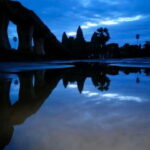
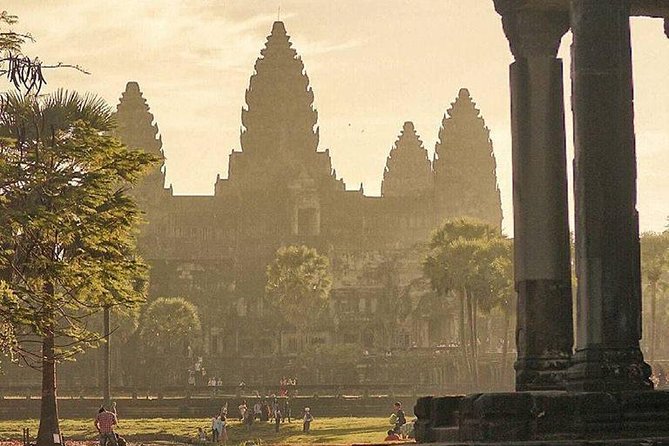
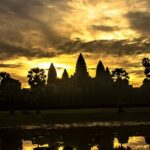
Angkor Wat is one of those places where timing affects everything. If you want that clean, early light over the moat and towers, you don’t want to be bargaining with crowds, ticket counters, and schedules. This pass service is built around that reality: you get your park ticket pass delivered to your hotel, so the morning plan stays simple.
When the pass is waiting for you, your day becomes a lot calmer. Instead of building a trip around uncertainty (“Will the line be short? Will the counter work? Will my ticket be ready?”), you can plan around temple timing—especially for sunrise. That’s the big payoff here: less admin, more temple time.
There’s also a practical detail that matters at Angkor: the pass gets checked repeatedly. That’s why the provided lanyard is more than a gimmick. It keeps you from constantly fumbling in your bag while guards do their rounds.
You can also read our reviews of more tours and experiences in Siem Reap

What the pass options mean for how you’ll tour
The pass is sold as an Angkor National Park ticket with several durations: 1-Day, 2-Day, 3-Day, or 7-Day. On paper that’s just a number. In real life, it decides whether you’ll feel rushed or you can breathe.
A 1-Day pass usually works if you’re doing a focused hit—think sunrise at Angkor Wat, then a tight set of nearby highlights. But if you want time to linger at the best photo angles, walk slower, and recover from the heat, you’ll feel the clock fast.
A 2- or 3-Day pass is the sweet spot for many people. You can cover the major sights in a logical flow and still have room for detours, restroom stops, and that inevitable moment where you stare at a carving longer than you meant to. The 7-Day option is for the patient traveler—someone who wants to revisit favorites at different light, or mix main temples with more spread-out places.
One key rule: your pass is valid only for the printed date range. Also, you’re not buying a generic ticket. The pass includes a photo, so it’s not transferable. That identity requirement is strict, which is why submitting passport photos matters.
A temple day built around Angkor Wat, Angkor Thom, and Ta Prohm
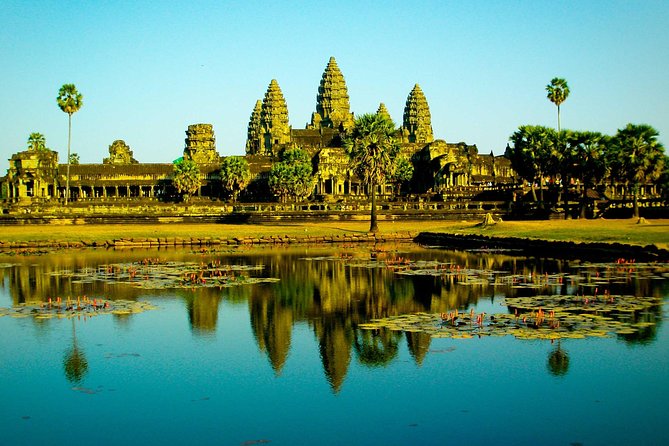
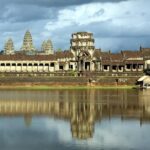
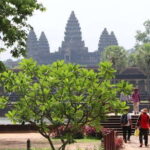
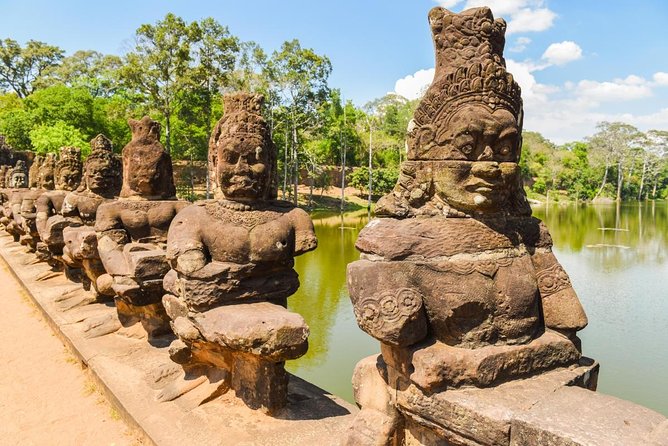
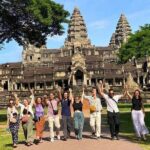
If you’re coming for Angkor Wat first, you’ll start at the big one: Angkor Wat. It’s the largest religious monument in the world on a 162.6-hectare site. It was originally constructed as a Hindu temple dedicated to Vishnu—so you’re seeing a site that has shifted religious meaning over centuries. Expect the classic layout, lots of scale, and the kind of geometry that makes you walk slower without realizing it.
Time estimate: about 2 hours for a first pass.
After Angkor Wat, many people pivot toward the former capital area: Angkor Thom. This was the last and enduring capital city of the Khmer empire, established in the late 12th century by King Jayavarman VII. The walls, gateways, and the temple-city feel are what you notice first—this is not just a “temple visit,” it’s a sense of place.
Time estimate: about 1 hour 20 minutes.
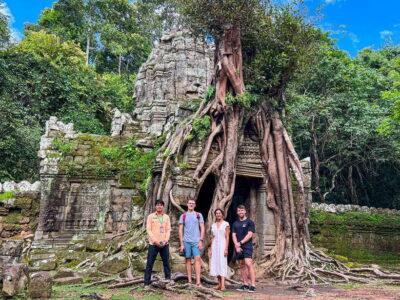
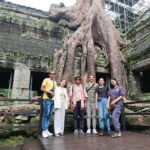
Then comes Ta Prohm, the temple many people connect with the Tomb Raider film look. It’s in the Bayon style, built largely in the late 12th and early 13th centuries, and its historical name was Rajavihara. What makes Ta Prohm special is the balance between architecture and the way trees have taken over parts of the complex. The effect is visual, but it’s also emotional: it looks alive, not staged.
Time estimate: about 1 hour.
Practical note: these three stops—Angkor Wat, Angkor Thom, Ta Prohm—are the core emotional arc for many first-timers. If you nail them early, everything else becomes easier.
Beyond the classics: Bayon, Preah Khan, Banteay Srei, and more
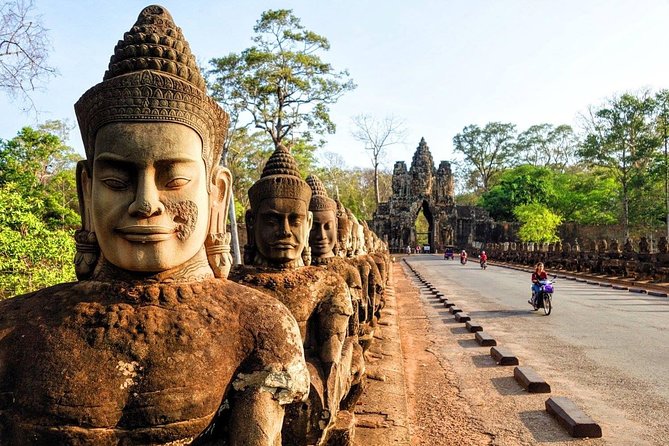
Once you’ve done the headline temples, you’ll start seeing the Khmer empire’s full range of ambition: different styles, different moods, different levels of restoration.
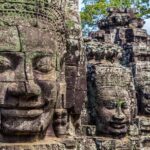
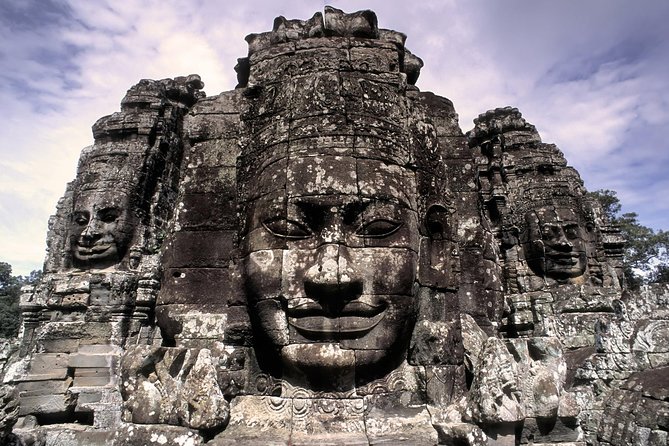
Bayon Temple is usually the next “wow” moment. It was built in the late 12th or early 13th century as the state temple of Jayavarman VII, and it’s known for its richly decorated look. This is where you’ll feel the site shifting from open courtyard grandeur to dense, detail-heavy ruins.
Time estimate: about 1 hour for a steady visit.
If you want something slightly less packed-feeling (at least in terms of how you experience it), go toward Preah Khan. Built in the 12th century for King Jayavarman VII to honor his father, it sits northeast of Angkor Thom and west of the Jayatataka baray. Preah Khan has a spread-out feel compared to some tighter temples, so it can be a nice change of pace.
Time estimate: about 1 hour 20 minutes.
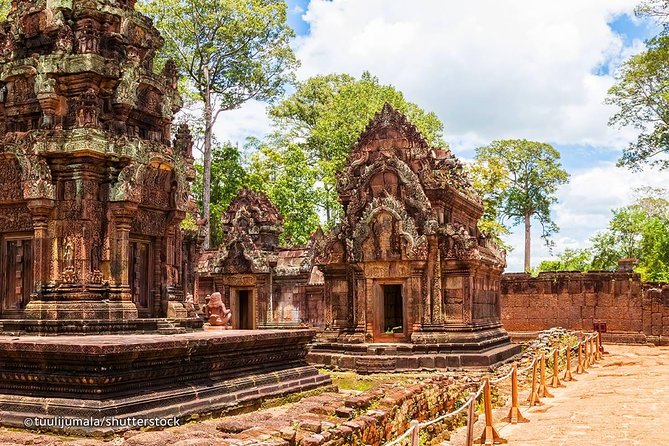
Then there’s Banteay Srei (often called the Ladies temple). Dedicated to Shiva and located near Phnom Dei, it’s a 10th-century temple area that feels more delicate and precise than some of the massive main-group structures. It’s listed as about 25 km northeast of the main group, so factor in travel time when you schedule it.
Time estimate: about 1 hour.
A few more stops you may weave in depending on your pass length:
- Neak Pean: an artificial island in Jayatataka Baray with a Buddhist temple on a circular island, associated with Preah Khan (time listed: about 1 hour).
- Baksei Chamkrong: a smaller Shiva temple next to Phnom Bakheng Hill (time listed: about 30 minutes).
- Bakong: the first sandstone temple mountain built by Khmer rulers in the 9th century (time listed: about 1 hour). This one helps you see how earlier Khmer temple-building forms influenced later sites.
If you’re tired of walking long distances between checkpoints, build your route so “dense temple time” happens back-to-back. You’ll end up feeling like you visited more—even if the total time is about the same.
The reservoir and laterite temples: Pre Rup, Ta Keo, and Ta Som
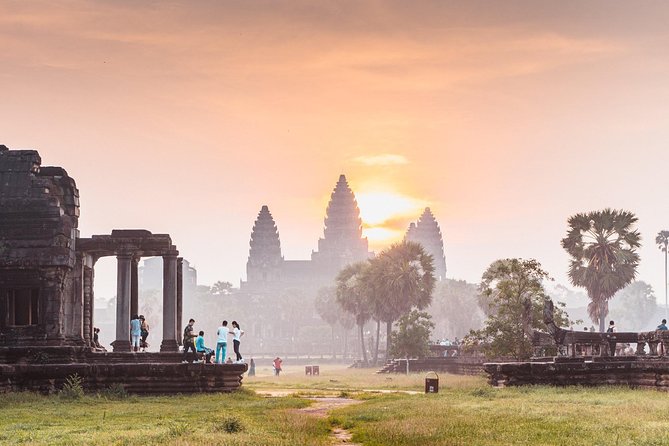
As you spread farther through the Angkor area, some temples change the visual mood. You’ll go from dramatic gateways and big courtyards into structures that feel more quiet and earthy.
Pre Rup is one of those “temple mountain” stops. Built as the state temple of Khmer king Rajendravarman, it’s dedicated to a religious theme tied to the king and era. It’s listed as about 30 minutes, which makes it a good slot even on a longer day.
Ta Keo is another temple mountain, possibly among the first to be built entirely of sandstone by the Khmers in the 11th century. Time listed: about 40 minutes. Even when you’re not climbing every level, the material and the shape give it character.
Ta Som is smaller, built in the late 12th century for Jayavarman VII and located north east of Angkor Thom near Neak Pean. Time listed: about 40 minutes. It’s the kind of stop that works best when you’ve slowed down from the biggest crowd magnets.
Add-in around this area:
- Prasat Kravan: five reddish brick towers on a common terrace near Srah Srang area (time listed: about 30 minutes).
- Srah Srang: the Royal Bath reservoir (time listed: about 20 minutes).
These are the places where a good guide can turn stone into story. Even without a guide, they’re useful because they break up the day and give your brain something different to notice.

Roluos group, Kulen area, and the long-haul spots
Not every temple visit is a quick hop from your morning start. Some sites are farther and take longer. If your pass is short, you might prioritize the main groups first. If you have time, these outlying stops are where Angkor starts to feel less like a list and more like a region.
Lolei is the northernmost temple of the Roluos group (Preah Ko and Bakong are the other two mentioned). It’s listed as about 25 minutes, and because it’s part of that older cluster, it helps you understand how Khmer architecture evolved.
Time estimate: about 25 minutes.
Prasat Phnom Krom is on a hill about 12 kilometers southwest of Siem Reap and is described as a spectacular spot for views. Time estimate: about 2 hours 20 minutes, so it’s a half-day mindset stop, not a quick add-on.
Phnom Bok is a hill in the northeast of the Eastern Baray with a prasat of the same name, and it’s described as one of the trilogies of mountains. Time estimate: about 2 hours.
Preah Ko is at Roluos, mid-way between Bakong and the road, with an entry/exit from the east. Time estimate: about 30 minutes.
And then there’s the Kulen Hills side:
- Kbal Spean is an Angkorian-era archaeological site on the southwest slopes of the Kulen Hills. It’s described as sitting along a 150m stretch of carvings. Time estimates given are long (listed up to 3 hours and up to 4 hours in one place), so plan it as a real outing.
These longer stops are also where you’ll feel the truth about transportation. Your ticket doesn’t include transport to the sites, so you’ll be hiring tuk-tuk, car, minivan, or bus on your own.
Beng Mealea: when you want Angkor off the main track
If you have a spare afternoon and you want a different kind of ruin, Prasat Beng Mealea is one to watch. It’s described as coming from the Angkor Wat period (118–119) and sits about 40 km east of the main group. The entry note here says Free for this stop, which can be a nice surprise if you’re trying to stretch a day.
Time estimate: about 2 hours.
Even if you only do it once, it’s the kind of place that makes Angkor feel bigger than the postcard circuit.
Price and value: what you’re paying for
Yes, this pass service costs more than the original price sold at the Angkor Enterprise Ticket Office. The data also explicitly flags that. One review even questioned the surcharge after seeing the lower official base rate.
So is it still worth it? Often, yes—when you treat it like you’re buying time, certainty, and stress reduction.
Here’s what’s clear from the pricing info provided:
- 1-Day ticket: $37 + service fees and promotion info to reach you
- 3-Day ticket: $62 + service fees
- 7-Day ticket: $72 + service fees
Even with that extra cost, paying for hotel delivery can beat the risk of losing an early morning to a line or a system problem. A few reviews also highlight that the service is helpful when the official process is inconvenient, and when arrival timing is tight (late flights, short stays, or only 1–2 days total).
A smart way to judge value: if you have sunrise planned or you’re time-limited, the surcharge can be cheaper than wasted hours plus the anxiety tax.
And remember: the pass isn’t refundable and it’s not transferable. If your plans are fluid, this is the moment to be extra honest with yourself about your dates.
Rules you should follow inside the Angkor Archaeological Park
When you’re entering Khmer temples and UNESCO-level sites, it’s not just about ticket checks. It’s about behavior.
The Angkor Visitor Code of Conduct listed here includes:
- respect monks
- respect all signs
- do not give money or candy to children
- wear respectful clothing (cover shoulders and knees)
- do not litter
- do not smoke
- do not touch carvings
If you’re photographing, keep it simple. Drones and professional commercial filming require a permit from the APSARA National Authority, so don’t assume your camera setup is treated the same as casual personal photos.
One more practical thing: you’re expected to keep the pass and show it when requested by ticket controllers.
Do you need a guide, or can you go it alone?
The pass itself doesn’t include a tour guide. Transportation and guides are listed as not included (though guides can be hired in most languages). That means you can self-plan and use the pass as your entry ticket only.
But here’s where my advice gets practical: a guide can save you from walking past the “why” of the carvings, the symbolism, and the layout. In reviews, several guides earn strong praise by name, including Mr Ho for English and passion, Sok Piseth for attentive communication and reminders about photo submission, Vantha for an early sunrise plan, Bob for being friendly and informative, and Bunthang Lim for helping visitors appreciate what they see.
If you’re a first-timer and you want your time to feel meaningful (not just scenic), spending on a guide can turn a long day into a memorable one.
If you’re on a tight budget and enjoy reading your surroundings, self-guided can work—just build your own pacing and start early.
What kind of traveler this fits best
This setup fits best when you:
- want a sunrise-focused Angkor Wat morning
- have limited days and don’t want to gamble with lines
- value hotel delivery and simple coordination
- are comfortable arranging transport yourself
It’s less ideal if your schedule is likely to change last minute, or if you don’t plan to handle the required passport photo submission carefully.
And if you’re traveling with kids: children under 12 don’t need a ticket to the national park, but they need a passport to prove age.
Should you book this Angkor Wat ticket service?
I’d book it if your biggest fear is losing time—especially on sunrise day—or if you’re arriving with tight timing and want the pass ready at your hotel. The hotel delivery approach is exactly what turns Angkor from a logistical problem into a temple trip.
I wouldn’t book it if your travel dates might shift or if you’re likely to forget the passport photo step. This pass is strict: it’s tied to your identity photo and the printed validity dates.
If you want my quick checklist: send the passport photos on time, plan your sunrise, and treat the pass as your entry engine while you arrange transport and (optionally) a guide for the deeper meaning.
If you do that, you’ll spend your energy on the stones and the light—where Angkor actually matters.
FAQ
What pass lengths are available for Angkor?
You can choose an Angkor National Park ticket for 1-Day, 2-Day, 3-Day, or 7-Day options.
Will I be able to use the pass for sunrise at Angkor Wat?
Yes. The pass is listed for visit from sunrise to sunset, and the service is specifically used to help you avoid waiting on the day of your temple visit.
When is the ticket delivered to my hotel?
Delivery is described as being done the evening at 6 pm for your next following days, and the ticket is delivered one day before your visit.
Does this include transportation to the temples?
No. Transportation to the sites (tuk-tuk, car, minivan, bus) is listed as not included.
Is a tour guide included?
No. A tour guide is not included, though it is noted that you can hire a guide in most languages.
Do I need to send passport photos?
Yes. You are asked to email passport photos for all travellers after booking, and if you do not send the photos, you will not be issued a ticket.
Can I transfer or refund the pass?
No. Passes are not refundable and not transferable. The pass contains a photo of you.
What if my visit date changes?
The pass cannot be changed and is not refundable, based on the rules provided.
Are drones allowed?
Drones and professional commercial filming require a permit from the APSARA National Authority, so you shouldn’t assume personal equipment is treated the same way.