REVIEW · SIEM REAP
Angkor Wat: Small-Group Tour with Balloon Ride and Lunch
Book on GetYourGuide →Operated by GREEN ERA TRAVEL · Bookable on GetYourGuide
Angkor Wat and balloon views. A good match. This is a tight small-group day in Siem Reap that mixes the big-name temples with a real bird’s-eye moment from a tethered helium balloon (weather permitting), plus a Khmer lunch that keeps you fueled. I especially like how the guide ties the stonework to Khmer meaning, and how you get a full Angkor loop instead of just grabbing the highlights.
The one thing to plan around is cost beyond the $111: you’ll need to buy your Angkor Pass entrance tickets separately, and the balloon depends on weather.
In This Review
- Key things to know before you go
- A 7-hour Angkor Wat day that stays focused
- Getting ready: tickets, pickup timing, and what to wear
- Angkor Wat: the carvings you’ll want to slow down for
- Angkor Thom and the South Gate causeway of 108 guardians
- Bayon’s faces and the terraces with strange names
- Ta Prohm: AD 1186 and the roots that take over
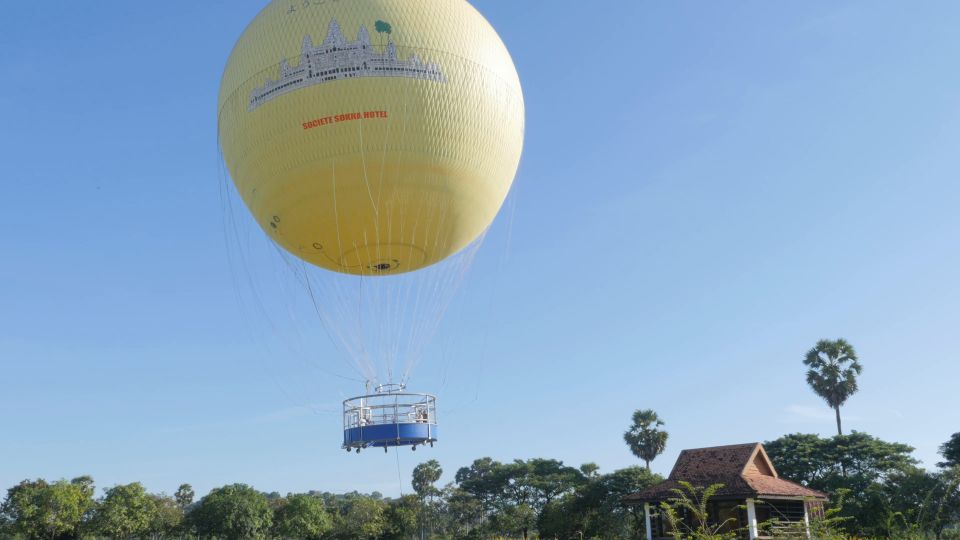
- The tethered balloon ride: your 10 minutes above the ruins
- Khmer lunch, bottled water, and staying comfortable
- Guides and drivers: why local English support matters
- Price and value: what $111 covers and what to budget for
- Practical tips that prevent day-of headaches
- Who should book this Angkor Wat + balloon tour?
- Should you book it?
- FAQ
- What time does hotel pickup happen?
- Is the Angkor Pass included in the price?
- How long is the tour?
- What temples are included?
- Is there a balloon ride, and how long is it?
- Does weather affect the balloon ride?
- What’s included for meals and drinks?
- What should I wear?
- Can children join?
- Is the tour wheelchair accessible?
- What are the cancellation options?
Key things to know before you go
- Small-group pacing that leaves room for questions and photo stops
- Khmer history, explained in plain English by a local guide
- Four major temple stops: Angkor Wat, Angkor Thom, Bayon, Ta Prohm
- 10-minute balloon ride up around 200 meters, with time windows tied to weather
- Set-menu Khmer lunch plus bottled water, with drinks not included
- Dress rules that affect balloon participation (pants or knee-length only)
A 7-hour Angkor Wat day that stays focused
Angkor is huge, so most tours either rush or skip the best context. This one is designed as a single, manageable route that keeps the day moving without feeling like a stampede. You start with hotel pickup in the city, then head straight to the ticket office before you even begin temple time.
The biggest win is structure. You go from the grand, carefully composed Angkor Wat complex to the more dramatic and story-rich Angkor Thom circuit, and then you finish with Ta Prohm. Add the balloon near the end, and your day has both ground-level detail and a rare overhead view.
You can also read our reviews of more tours and experiences in Siem Reap

Getting ready: tickets, pickup timing, and what to wear
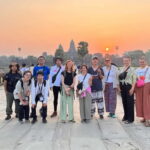
Your day usually starts with hotel pickup around 8:00 to 8:30 AM (it helps to be ready by about 7:30). After pickup, you’ll transfer to the Angkor Wat ticket office to purchase your Angkor Pass yourself, since entrance fees are not included.
A few practical rules matter more than people expect. You’ll be walking on uneven stone, so bring comfortable shoes with real grip. You also can’t wear shorts or sleeveless shirts, and balloon clothing matters too: only pants or knee-length skirts/dresses are permitted. For daytime heat, pack sunscreen, sunglasses, and a hat.
And yes, there’s a balloon condition you can’t ignore. The balloon ride is subject to weather, and it operates in a window from 6:00 AM to 5:00 PM depending on conditions.
Angkor Wat: the carvings you’ll want to slow down for
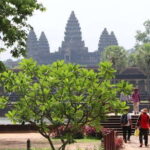
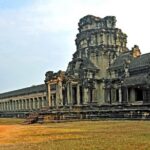
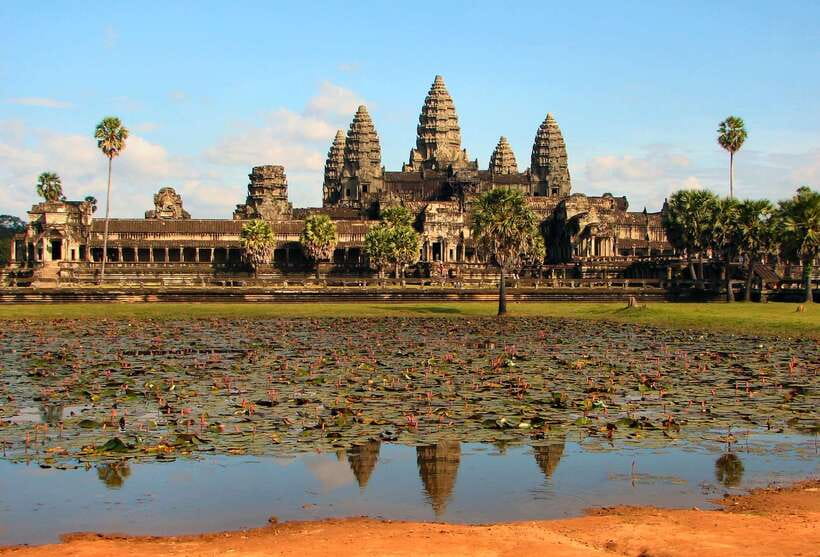
Angkor Wat is the obvious draw, but what makes it work on a guided tour is what you’re taught to notice. Your guide points out symbolism in the architecture and explains how the spaces connect to Khmer beliefs and history. That turns the experience from impressive to meaningful.
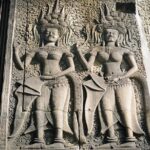
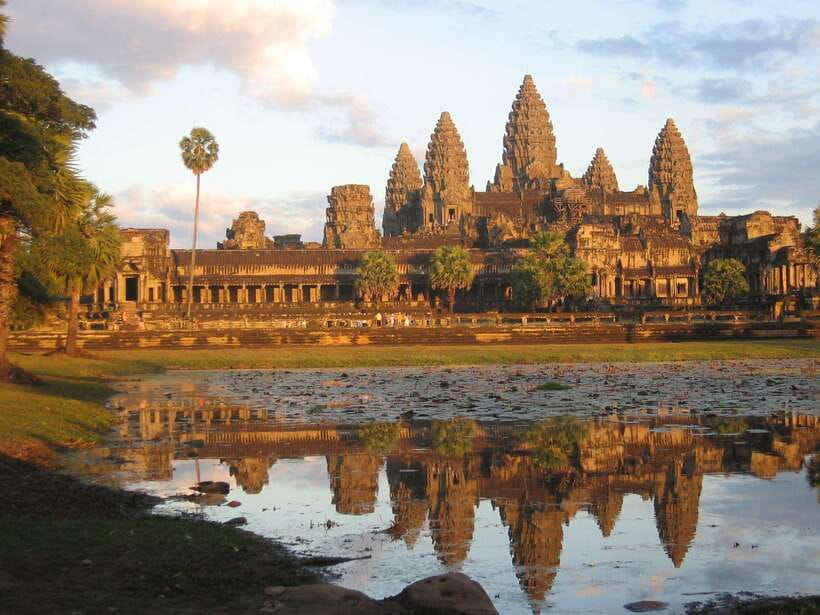
What you’ll see is the massive scale of Angkor Wat—its columns, chambers, and the walls lined with fine bas-relief carvings. If you love detail, this is where the day rewards you most. The carvings aren’t just decoration; they’re a storytelling device carved into stone at human height, meant to be read as you move.
Because it’s one of the best-preserved archaeological sites in Southeast Asia, you get a clearer sense of what the complex looked like when it was in active use. Even if you’ve seen photos before, the 3D effect is different once you’re standing close.
Angkor Thom and the South Gate causeway of 108 guardians
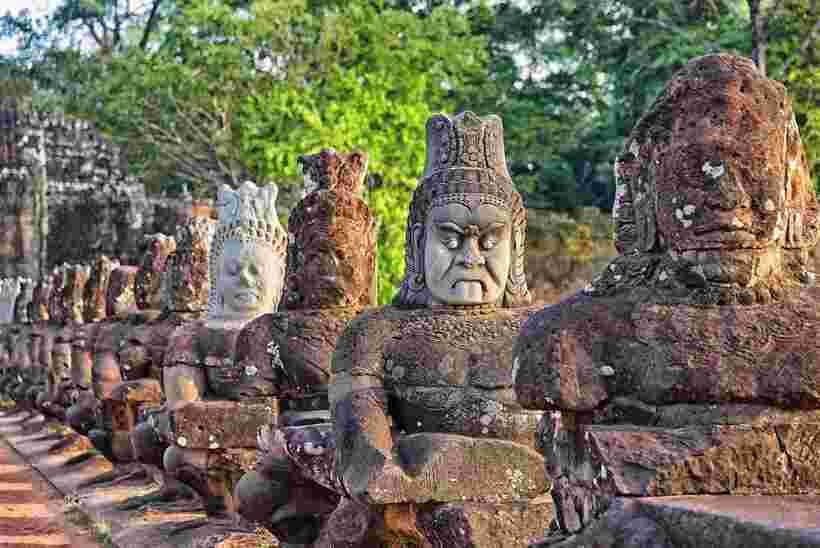
After Angkor Wat, you head to Angkor Thom, the fortified city. You’ll enter through the South Gate, walking along a causeway lined with symbolic statues of demons and gods. This stretch is cool because it feels like a threshold—less about “look at that” and more about “this is how the Khmer imagined the world.”
A detail worth remembering: the causeway contains 108 mythical creatures serving as guards to the city. It’s the kind of number that gives you a rhythm for scanning the statues as you walk. Your guide helps connect what you’re seeing to the larger story.
This part of the itinerary is also useful for pacing. By the time you reach Angkor Thom, your body is warmed up, and the route logic makes more sense than jumping randomly between temples.
Bayon’s faces and the terraces with strange names
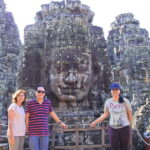
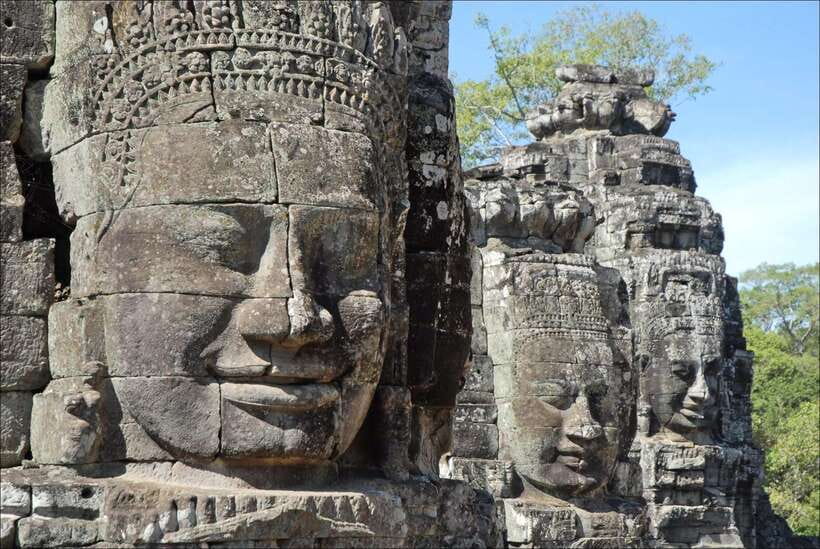
Next comes Bayon Temple, one of the most popular spots in Angkor Thom—and for good reason. You’ll see over 200 large faces carved on 54 towers, and those faces are tied to the provinces of the Khmer Empire. Standing in front of them, you get that classic Bayon effect where the expression seems to shift with your position.
Bayon is one of those temples where you can easily walk past things if you don’t know what to look for. Having your guide here matters. They help you interpret the carvings and layout so you understand why the temple is built the way it is, not just how it looks.
Then you’ll continue to the Terrace of the Elephants and the Terrace of the Leper King. These names pull you in, but the real value is in context—your guide explains what these spaces were used for and why the details matter. If you like temple “behind-the-scenes” understanding, this is a strong section of the day.

Ta Prohm: AD 1186 and the roots that take over
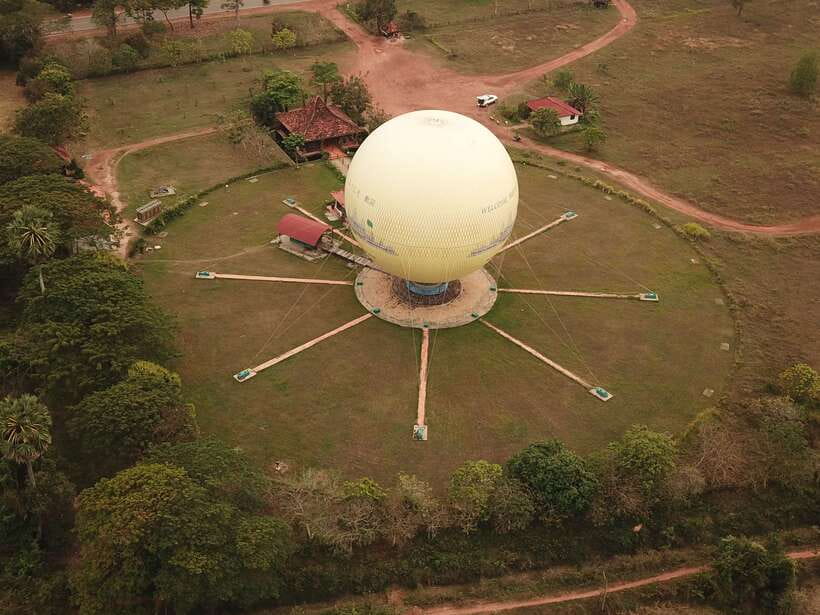
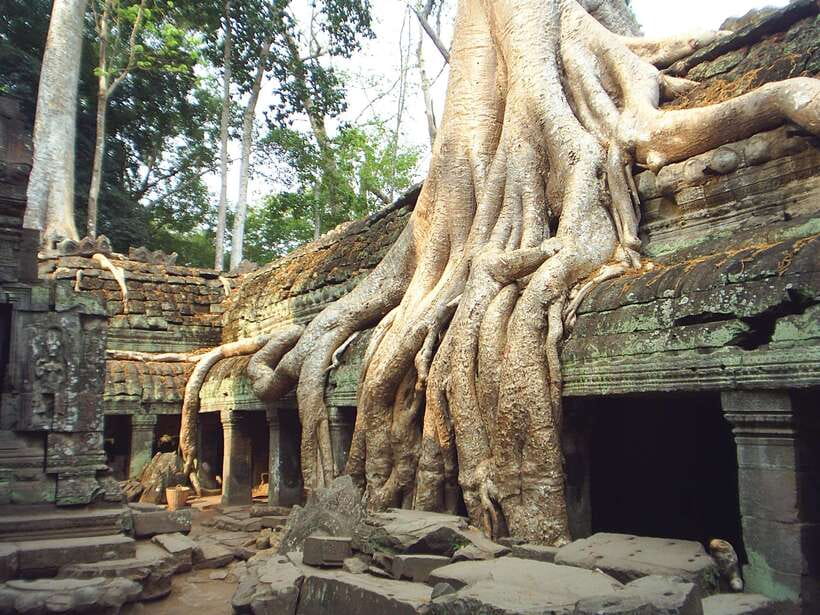
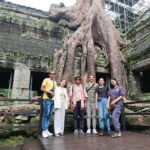
In the afternoon, you reach Ta Prohm, built in AD 1186 under King Jayavarman VII. This is the temple that looks like a movie set—tree trunks and roots wrap through stone, and you can almost feel the jungle pressing in.
The feeling here is less about perfect symmetry and more about character. Ta Prohm’s ruins have a lived-in, tangled look, and it makes the carvings feel more human—like you’re discovering them rather than viewing a polished monument. Weather can affect visibility, but when the light hits the roots, it’s the kind of scene you’ll keep picturing later.
This stop is also a good chance for photos. Some guides are known for helping you get the shot—one guide name you might hear associated with strong picture support is Phuy Phy (also styled PHUY PHY), plus an emphasis on finding good angles.
The tethered balloon ride: your 10 minutes above the ruins
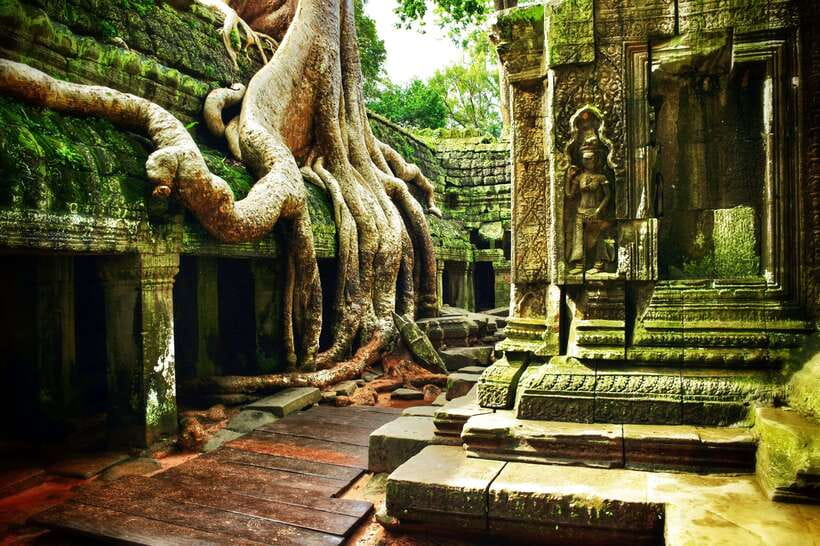
If the temples are your chapter on the ground, the balloon is your punctuation mark.
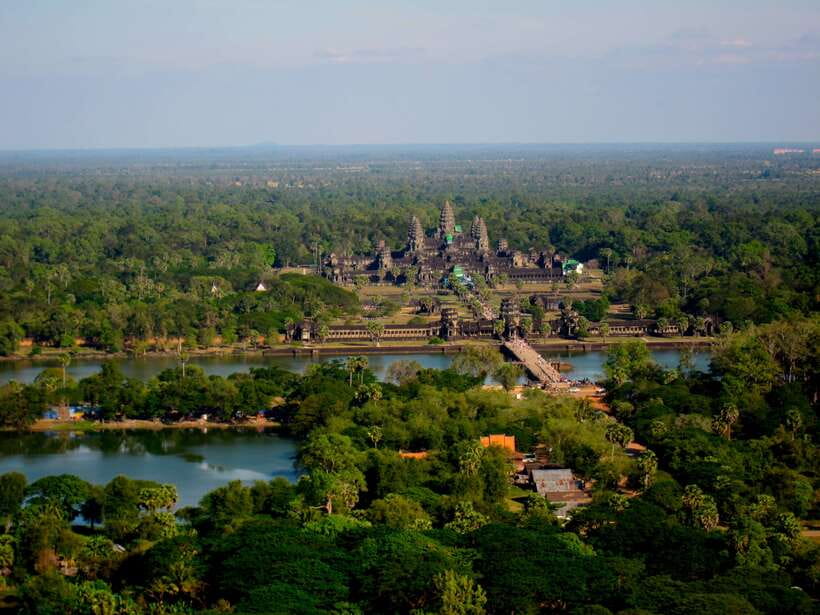
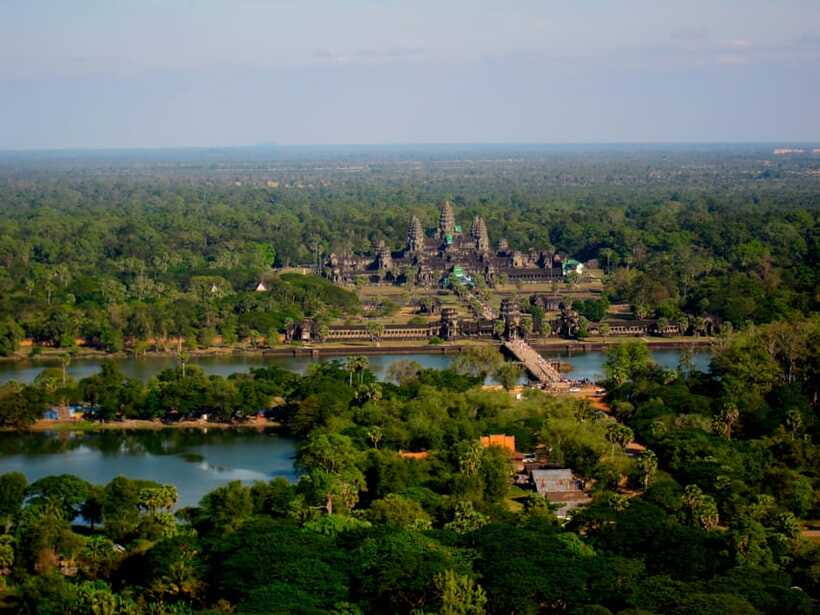
Here’s what to expect: the balloon is tethered helium, and the ride runs about 10 minutes. You rise roughly 200 meters above the site for views over Angkor Wat and the surrounding national park area. The balloon ride includes insurance coverage.
Because weather controls everything, the exact timing can shift. The good news is the operator builds this into the day, so you’re not stuck waiting forever without guidance. The day window for balloon operations is 6:00 AM to 5:00 PM, and it’s offered when conditions allow—so be ready for schedule changes.
One more practical note: since balloon clothing rules apply, don’t show up in whatever you wore to travel. Stick to pants or knee-length before you leave the hotel, and you’ll keep things easy.
Khmer lunch, bottled water, and staying comfortable
Between temples, you’ll get a Khmer lunch (set menu). Drinks during lunch are not included, but you do get cold bottled water during the tour, which is the kind of simple comfort that matters in Cambodia heat.
I like that the lunch is built into the itinerary rather than leaving you on your own to find food. You’ll spend less time deciding and more time enjoying. The set-menu style isn’t fancy by default, but it’s usually straightforward and satisfying after several hours of walking.
Guides and drivers: why local English support matters
This is where the day can feel either like sightseeing or like understanding. With this tour, you get a professional local English-speaking guide, and that shows in how the stops connect.
You’ll hear guides name specific details and meanings rather than reciting facts. In past runs, guides such as Chou, Chantorn, and NAK Chum have been praised for being informative, careful with needs, and focused on explaining what you’re seeing. There are also references to drivers like Vong and Pola—including praise for keeping you on track and for reducing unnecessary walking when it’s hot.
A small-group format can also mean you get more one-on-one time. On some days, it can be so light that it feels close to a private tour, and you get faster feedback on questions and photos. Even when it’s not that small, the guide can still slow down when something important is in front of you.
Price and value: what $111 covers and what to budget for
At $111 per person, the package cost is only part of the total. Your entrance fees (Angkor Pass) are about $37 per person and need to be purchased separately. So your realistic “all-in” budget usually lands around $148, before any drinks or personal items.
What you get inside the $111 is what makes the math work:
- Small-group transport with an air-conditioned vehicle
- A local English-speaking guide
- Hotel pickup and drop-off in the city center
- Bottled water
- Khmer lunch (set menu)
- A 10-minute tethered balloon ride (weather permitting)
For many people, the balloon is the value booster. Even if you think you don’t care about aerial views, being 200 meters up changes how you see the site and the jungle around it. It’s a short ride, but it’s memorable.
If you’re strictly price-first, you could save money by doing a temple-only route. But if you want one day that blends temples plus the balloon without extra planning, this is a solid package.
Practical tips that prevent day-of headaches
A few things will make the day smoother:
- Wear closed-toe shoes with good grip. Temple stone can be slick and uneven.
- Bring sunscreen, sunglasses, and a sun hat. Shade is limited in places.
- Don’t plan on shorts. This matters not only for temple entry rules but also for the balloon clothing requirement.
- No drones. Don’t bring one expecting to fly it over the temples.
- Don’t eat in the vehicle—also, it helps keep the day on schedule.
- If you’re bringing kids, note that children must be accompanied by an adult, and unaccompanied minors aren’t allowed.
Also, remember this isn’t wheelchair accessible and involves moderate walking. Plan your energy accordingly.
Who should book this Angkor Wat + balloon tour?
This tour fits best if you:
- Want a guided route through Angkor Wat, Angkor Thom, Bayon, and Ta Prohm without figuring it out yourself
- Like learning the meaning behind the carvings and architecture
- Want at least one “wow” moment above the ruins via the balloon
It may not fit if you:
- Use a wheelchair or need wheelchair access
- Are pregnant (this is listed as not suitable)
- Have very limited mobility, since the itinerary includes moderate walking over uneven ground
Should you book it?
Yes, if you want one well-run day in Siem Reap that covers the big temples in a logical sequence and adds the balloon without extra hassle. The $111 price makes sense when you include what’s covered—guide, transport, lunch, water, and the balloon—then add the $37 entrance fee you were already going to need.
I’d skip it only if you’re trying to minimize total cost to the lowest possible number, or if the clothing and mobility requirements don’t work for you.
If you’re aiming for a day that feels organized, explained, and genuinely memorable, this is a strong choice.
FAQ
What time does hotel pickup happen?
Pickup is included from your hotel in the city center, and it’s set for around 8:00 AM, with guidance to be ready by about 7:30 AM. Another note indicates pickup around 8:30 AM, so expect the morning to start shortly after that.
Is the Angkor Pass included in the price?
No. Entrance fees, including the Angkor Pass, are not included. You’ll buy the pass at the ticket office before you start temple sightseeing.
How long is the tour?
The duration is listed as 7 hours.
What temples are included?
You visit Angkor Wat, Angkor Thom (including the South Gate), Bayon Temple, the Terrace of the Elephants, the Terrace of the Leper King, and Ta Prohm.
Is there a balloon ride, and how long is it?
Yes. You get a tethered helium balloon ride for 10 minutes. The ride rises about 200 meters if weather conditions allow.
Does weather affect the balloon ride?
Yes. The balloon ride is subject to weather conditions, and it can operate between 6:00 AM and 5:00 PM depending on conditions.
What’s included for meals and drinks?
Lunch is included as a Khmer set menu. Drinks during lunch are not included, but bottled water is provided during the tour.
What should I wear?
Bring comfortable shoes. Shorts and sleeveless shirts are not allowed. For the balloon ride, only pants or knee-length skirts/dresses are permitted.
Can children join?
Children must be accompanied by an adult. Unaccompanied minors aren’t allowed.
Is the tour wheelchair accessible?
No. The tour is listed as not wheelchair accessible. It also isn’t suitable for pregnant women.
What are the cancellation options?
Free cancellation is offered up to 24 hours in advance for a full refund.