REVIEW · SIEM REAP
Highlight of Angkor Complex 2 Days Private Tour
Book on Viator →Operated by About Cambodia Travel & Tours · Bookable on Viator
A complex of temples can feel overwhelming. This two-day private Angkor tour keeps it organized and explains what you’re seeing at each stop. You’ll cover Angkor Thom, Ta Prohm, Angkor Wat, plus lesser-seen sites like Ta Nei, all with your own group.
I especially like the hotel pickup and comfortable transfers, plus the practical touch of drinking water and cool fresh tissue during the day. I also love how the plan mixes big-name icons with smaller targets that many people skip.
One consideration: the Angkor Pass entrance fee is not included, so budget that on top of the tour price, along with lunches that are on your own.
In This Review
- Key highlights to plan around
- Two Days, One Smooth Circuit from Siem Reap
- Price and Logistics: What You Pay For (and What You’ll Add)
- Day 1 Through Angkor Thom to Ta Prohm and Angkor Wat
- Angkor Thom South Gate: fully restored first impressions
- Bayon Temple: a century-plus after Angkor Wat
- Angkor Thom: the whole royal-city idea
- Baphuon: balancing levels and structure
- Phimeanakas: right by the palace area
- Terrace of the Elephants: a long, moving idea of power
- Terrace of the Leper King: bas-reliefs tied to Jayavarman VII
- Ta Prohm: the kingdom of the trees
- Angkor Wat: the day’s longest stop
- Ta Nei Temple: small, obscure, and harder to find
- Day 2: Banteay Srei, Banteay Samre, and the circuit of ponds and towers
- Banteay Srei: praised as a precious jewel
- Banteay Samre: complete restoration, visible wear
- Pre Rup: bold design with scale and proportion
- Eastern Mebon: stone elephants and Indra scenes
- Neak Pean: a man-made pond you can picture fast
- Preah Khan: built in the second half of the 12th century
- Banteay Prei: rarely visited and for deeper focus
- Village stop and souvenirs: Om Pich and Prashdak
- The guide experience that makes the itinerary work
- Dress code and respectful temple visits (no guesswork)
- Who should book this Angkor Complex 2-day private tour
- Should you book it?
- FAQ
- Is hotel pickup and drop-off included?
- What’s included in the private tour package?
- Are temple entrance fees included?
- Are meals included?
- What should I wear to visit the temples?
- Can I cancel and get a full refund?
Key highlights to plan around
- Private-only group: your schedule stays yours, not a cattle-cart rotation
- Major temples plus quieter stops: Ta Prohm and Angkor Wat, then Ta Nei and Banteay Prei
- Angkor Thom is the day’s spine: South Gate, Bayon, Baphuon, Phimeanakas, and the Terraces
- Your guide helps with the Angkor Pass: you buy it at the entrance of Angkor Park before touring
- Flexible add-on on request: you can ask to include the land mine museum if it fits your day
Two Days, One Smooth Circuit from Siem Reap
This is a 2-day private tour in Siem Reap built for people who want structure. On average, it’s booked about 45 days in advance, so if you’re traveling in peak season, planning early helps you lock in the dates you want. You’ll also get a mobile ticket and the experience is offered in multiple languages.
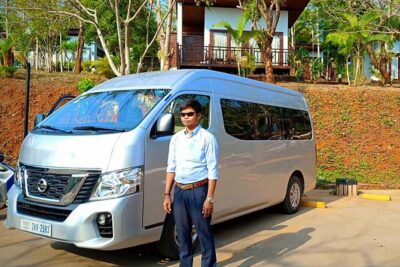
The private setup matters more than it sounds. When it’s only your group, you can move at a pace that works for your photos, questions, and energy level. Even the transfer setup is part of that: you ride in a comfortable vehicle with hotel pickup and drop-off.
You can also read our reviews of more private tours in Siem Reap

Price and Logistics: What You Pay For (and What You’ll Add)
The price is $149.46 per person for the full two days. What you get for that money is not just a guide, but the whole day-to-day running of the tour: private transfers, an English-speaking licensed tour guide, and basic comforts like water and tissues.
Here’s the key budgeting piece: the Angkor Pass entrance fee is not included. Each listed temple stop notes admission isn’t included, and the guide assists you in purchasing the Angkor Pass at the entrance of Angkor Park before you start. So your total cost depends on how many days you’re buying on the pass, but you can expect the pass to cover the temple entries on your itinerary.
Food is another cost to factor in. Lunches are available at local restaurants with vegetarian and non-vegetarian options, and menus are typically in the $3–$10 per dish range. Tipping for the guide and driver is also not included, so set aside a little cash for that part.
Day 1 Through Angkor Thom to Ta Prohm and Angkor Wat
Day 1 is the heavy-hitter day, with a strong focus on Angkor Thom before you move into Ta Prohm and then Angkor Wat. The timing is designed to keep you from bouncing randomly around the park; you’re building one story as you go, not just collecting stamps.
Angkor Thom South Gate: fully restored first impressions
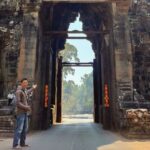
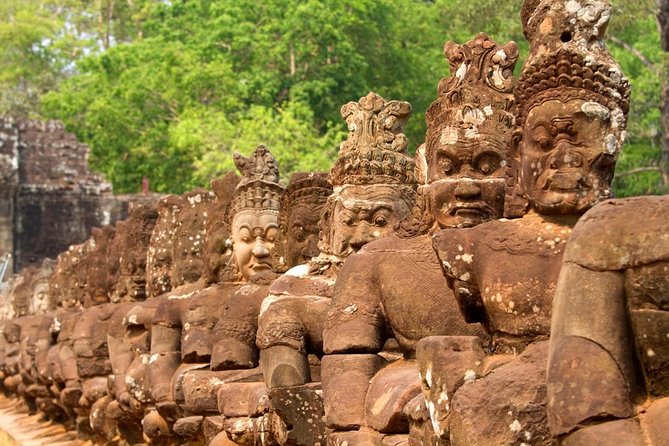
You start at Angkor Thom South Gate (about 25 minutes). This gate is popular because it’s been fully restored and many of the heads remain in place, so it’s a good place to get your bearings fast.
A practical tip here: arriving early or mid-morning helps you enjoy the restoration details without feeling rushed. If you’re sensitive to crowds, this is where your guide’s timing and pacing will matter.
Bayon Temple: a century-plus after Angkor Wat
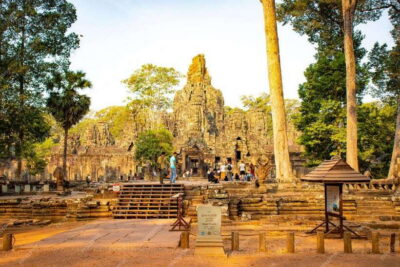
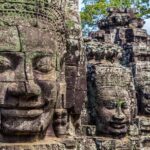
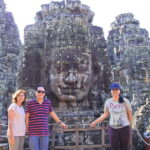
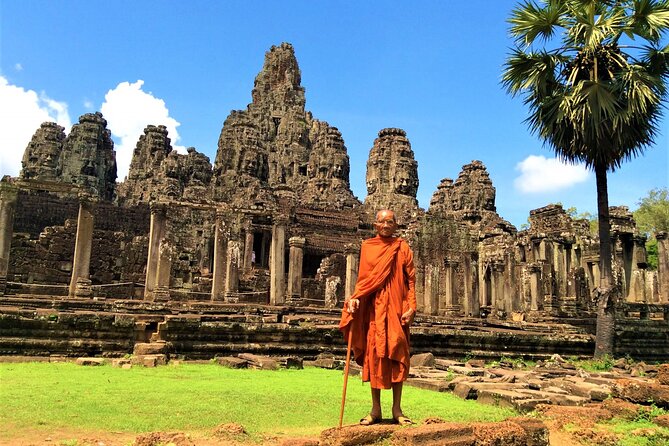
Next is Bayon Temple (about 1 hour). The temple was built nearly 100 years after Angkor Wat, and because it sits at the center of a royal city, it links the idea of architecture to how power and belief worked together.
Bayon is the kind of stop where you’ll appreciate a guide’s explanations. Without that, you can easily look at stone patterns and miss how the design is part of the message.
You can also read our reviews of more tours and experiences in Siem Reap


Angkor Thom: the whole royal-city idea
Then you step into Angkor Thom itself (about 30 minutes). The description frames it as a materialization of Buddhist cosmology in both scale and three dimensions, and it’s one of those places where the big-picture talk pays off.
The consideration: even with short stops, Angkor Thom can mean lots of walking on uneven surfaces. Wear footwear you trust, and plan your breaks during the rides, not only between temple gates.
Baphuon: balancing levels and structure
You’ll move to Baphuon Temple (about 45 minutes). It’s built on a rectangular sandstone base with five levels, described as roughly the same size rather than shrinking the way you’d expect from other temple forms.
This stop is worth it if you like architecture details, not just famous silhouettes. If you’re mostly after scenery photos, you might want to spend a little longer asking your guide what to look for here.
Phimeanakas: right by the palace area
Next comes Phimeanakas (about 30 minutes), located near the center of the area enclosed by the walls of the Royal Palace. The description notes it originally would have had a golden pinnacle.
This is a good stop for contrast. After more intricate terracing and gateways, Phimeanakas helps you understand how the palace zone worked and why certain structures were emphasized.
Terrace of the Elephants: a long, moving idea of power
At the Terrace of the Elephants (about 45 minutes), the description focuses on how elephants are ridden by servants and princes, and how the steps of even length ignore obstacles. That gives the terrace an almost choreographed feel.
The challenge is time and attention. This is a “look closely” stop, so don’t treat it as just a photo stop. Let the guide point out what the terrace is communicating.
Terrace of the Leper King: bas-reliefs tied to Jayavarman VII
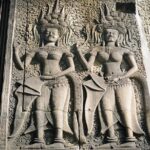
Then you reach the Terrace of the Leper King (about 30 minutes). It’s known for dramatic bas-reliefs on both the interior and exterior, and it carries the grandeur theme associated with Jayavarman VII’s reign.
This is one of the stops where your guide can turn carvings into context. If you only skim, you’ll miss why people pause here longer than the timetable suggests.
Ta Prohm: the kingdom of the trees
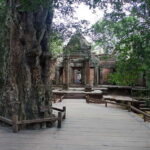
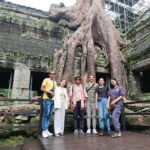
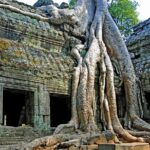
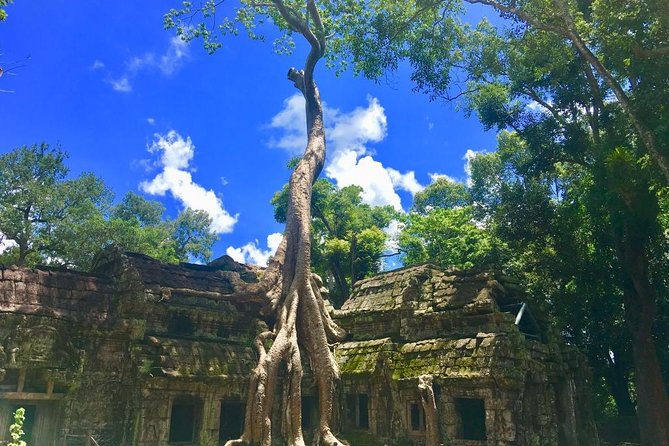
You’ll spend about 1 hour 30 minutes at Ta Prohm. The site is called the kingdom of the trees, and the story here is about preservation style: it’s been left largely untouched by archaeologists except for clearing visitor paths and structural strengthening to slow further deterioration.
Ta Prohm is one of those places that’s visually striking even before you understand the details. The practical win is that a guide can help you notice the survival and restoration choices behind the look you see today.
Angkor Wat: the day’s longest stop
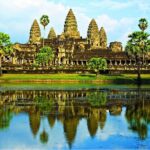
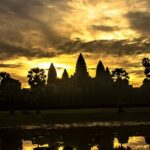
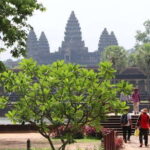
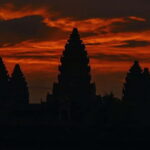
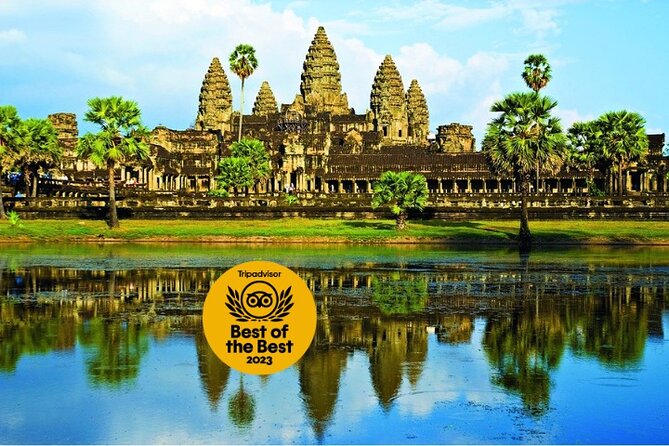
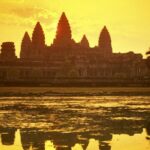
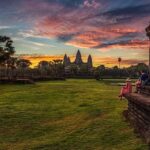
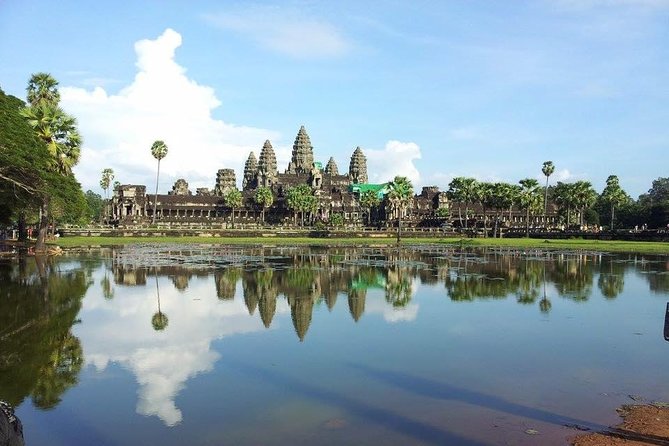
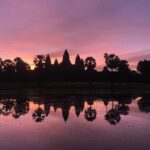
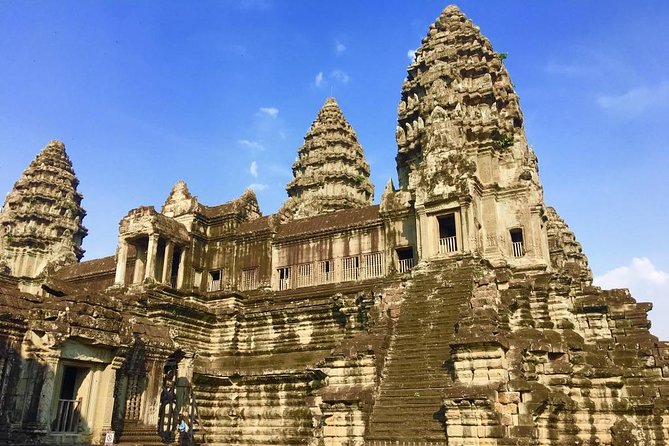
After Ta Prohm, you go to Angkor Wat (about 3 hours). It’s described as the largest monument of the Angkor group and the best preserved, and the emphasis is on architectural composition, balance, proportions, relief, and sculpture.
This is where the two-day format really helps. With three hours here, you can pace yourself, take breaks, and get multiple viewpoints without rushing. If you tend to get temple fatigue, this is still the right place to slow down, because it’s the one you’ll want to remember most clearly.
Ta Nei Temple: small, obscure, and harder to find
You finish Day 1 with Ta Nei Temple (about 45 minutes). This temple is set deep in the Cambodian jungle, about 200 meters west of the East Baray, and it’s described as difficult to find and not a popular tourist destination.
That makes it a standout for readers who want more than the photo-board classics. Just be ready for less developed paths and more of a “find the place” feel; having a guide with you is the whole point.
Day 2: Banteay Srei, Banteay Samre, and the circuit of ponds and towers
Day 2 shifts away from the biggest, busiest headline temples and into a broader mix. It’s still structured, but it feels more like a focused education in Khmer design across different kinds of sites.
Banteay Srei: praised as a precious jewel
Day 2 starts with Banteay Srei (about 1 hour 20 minutes). French archaeologists described it as a precious gem and a jewel in Khmer art, and that framing tells you to expect refinement in the details.
If you love carved surfaces and temple craft, you’ll likely enjoy this more than you expect. If you want the raw drama of large massing, you may find it subtler than Angkor Wat.
Banteay Samre: complete restoration, visible wear
Next is Banteay Samre (about 45 minutes). It’s described as one of the most complete complexes due to restoration using anastylosis, but you can also see the absence of maintenance over the past 20 years.
This stop works well if you like seeing conservation choices up close. It’s also a gentle reminder that restoration is a balance between what can be repaired and what still fades with time.
Pre Rup: bold design with scale and proportion
Then you go to Pre Rup (about 50 minutes). The emphasis here is bold architectural design and strong balance, scale, and proportion. It’s noted as almost identical in style to the East Mebon, though built several years later.
This is another place where a guide’s explanation helps you see patterns. Without that, it can be easy to treat it as a standalone structure instead of part of a family of designs.
Eastern Mebon: stone elephants and Indra scenes
Eastern Mebon takes about 30 minutes. The description highlights varied and exceptional sculpture, including two meter high free-standing stone elephants at corners of the first and second tiers, and religious scenes including Indra atop his throne.
If you like figurative sculpture, this is a good use of your camera time. Just keep expectations practical: this isn’t a long stop, so you may want to prioritize the elements your guide points out.
Neak Pean: a man-made pond you can picture fast
At Neak Pean (about 45 minutes), the focus is on it being a large square man-made pond, described as 70 meters per side, bordered by steps and surrounded by four small structures. The write-up treats it like a throwback to older luxury and beauty.
This is a “visualize the plan” temple. If you ask the guide to explain the layout, you’ll enjoy it more than simply standing on one edge.
Preah Khan: built in the second half of the 12th century
Next is Preah Khan (about 1 hour). It’s located 2 kilometers north-east of Angkor Thom on the Grand Circuit and was built in the second half of the 12th century, with an AD 1191 date mentioned, dedicating it to the king’s father.
Even with limited time, you can get value from the framing: this is a site tied to royal lineage and a specific reign. Ask your guide how this differs from what you saw the day before, so the temples connect instead of feeling like isolated stops.
Banteay Prei: rarely visited and for deeper focus
Then you visit Banteay Prei (about 45 minutes). It’s described as rarely visited and located near another small temple called Prasat Prei. Since it’s a minor temple, it’s mainly for people with time and specific interest in studying Angkor in depth.
This is the type of stop you’ll either love or skim. If you’re the kind of traveler who wants to go past the obvious list, this is a gift. If you’re short on stamina, talk to your guide and set a pace that avoids rushing.
Village stop and souvenirs: Om Pich and Prashdak
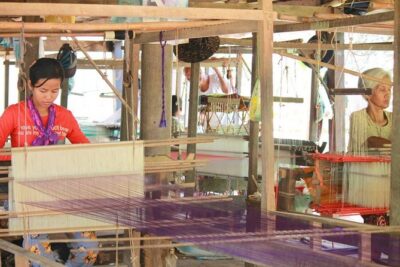
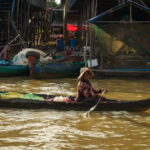
The last stop on Day 2 is Om Pich steamed Toddy Palm Cake in Prashdak Village, around 30 minutes. The description also mentions Preah Dak Market as a famous and popular place for souvenirs such as objects and arts.
This part of the day is useful in a different way. It gives you a break from temples while still feeling local, and it’s where you can pick up small keepsakes without needing another outing.
The guide experience that makes the itinerary work
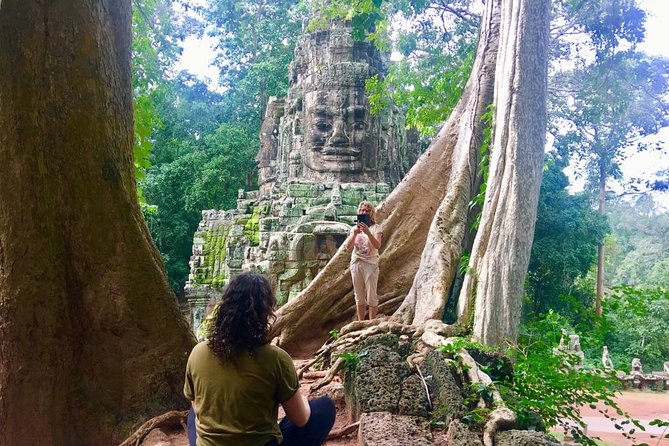
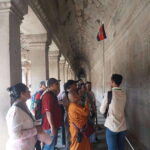
A two-day Angkor plan succeeds or fails based on how it’s explained and how it’s paced. This tour uses a professional English-speaking license tour guide, and the feel from the experience details is that the guide actively manages comfort and timing.
One guide name that stands out is Mr. Sara. The feedback connected to his guiding style points to thorough coverage of sites and Khmer history, with an on-time approach and flexibility to keep you comfortable. That kind of balance matters on a tour that spans both famous and less popular temples.
You also get little things that add up: drink water and cool fresh tissue for the whole trips, and that’s the kind of practical support that can keep the day from becoming a slog.
Finally, there’s the option of adding something extra on request. One account notes adding the land mine museum was possible if asked, which is a helpful detail if you want your visit to include more than architecture alone.
Dress code and respectful temple visits (no guesswork)
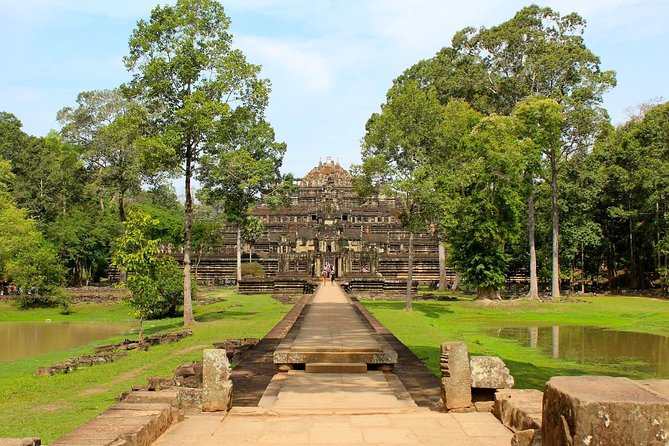
Angkor is religious space as well as historic space, so the tour’s dress guidance is straightforward. You’ll want to wear a shirt that covers your shoulders, and trousers or knee-length pants or skirts are permitted.
This isn’t just about avoiding hassle at entrances. It also signals respect, and you’ll feel more comfortable moving through sites that still function as sacred grounds.
Who should book this Angkor Complex 2-day private tour
This fits best if you want a private, guided plan and you like the idea of seeing both the headlines and the quieter corners. The itinerary includes major names like Angkor Thom, Ta Prohm, and Angkor Wat, but it also deliberately reaches for temples many people skip, like Ta Nei and Banteay Prei.
It’s also a strong match for small groups that don’t want to wait around while strangers negotiate their own pace. Since most travelers can participate and it’s private-only your group, it’s a good option for families, couples, and friends who want control.
If you’re a solo budget traveler determined to minimize everything, you might find the added costs of the Angkor Pass, lunches, and tipping push the total higher. But if you value guide-led pacing and smooth logistics, the structure can still feel like good value.
Should you book it?
If your goal is to cover the Angkor complex in two days without getting lost in ticket lines, uncertain routes, or temple-by-temple guesswork, I think this is a solid choice. The balance of stops gives you the core Angkor story and then rewards your curiosity with less crowded sites like Ta Nei.
Book it if you like the idea of a guide who keeps your day running and explains what you’re seeing, and if your group wants a true private schedule. Consider looking elsewhere if you’re trying to keep the total cost as low as possible, since the tour price does not include the Angkor Pass and you’ll be responsible for meals and tipping.
FAQ
Is hotel pickup and drop-off included?
Yes. The tour includes hotel pickup and drop-off, and you’ll need to provide your hotel name for pickup.
What’s included in the private tour package?
Included are a professional English speaking licensed tour guide, private transfer by comfortable vehicle as mentioned in the itinerary, and drink water plus cool fresh tissue during the trip.
Are temple entrance fees included?
No. Entrance fees are not included. The Angkor Pass is needed to cover the temples in the itinerary, and your tour guide will assist you in purchasing it at the entrance of Angkor Park.
Are meals included?
Meals are not included. Lunches are available at local restaurants, and you pay your own cost, with menu prices typically ranging from $3–$10 per dish.
What should I wear to visit the temples?
Dress appropriately by covering your shoulders. Trousers or knee-length pants or skirts are permitted.
Can I cancel and get a full refund?
Yes, free cancellation is available. You can cancel up to 24 hours in advance for a full refund, and cancellation timing is based on local experience start time.