REVIEW · SIEM REAP
Angkor Sunrise or Sunset Tour (includes breakfast or lunch)
Book on GetYourGuide →Operated by Siem Reap Shuttle · Bookable on GetYourGuide
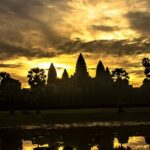
Sunrise at Angkor Wat is a gamble worth making. I like the 4:20 am start because it gives you softer light and calmer temple time, and I like that guides such as Phyrom often steer you to the best photo spots with patience. One drawback to plan for: clouds can blunt the sunrise, and the temples mean lots of uneven walking.
This tour is a solid value at $15 per person because you get hotel pickup/drop-off, a small-group guide, cold towels, and a meal tied to the Angkor area. The catch is simple: you still need to buy the Angkor temple pass separately, and the early morning plus temple dress code is non-negotiable.
In This Review
- What Makes This Angkor Sunrise Tour Worth Your Time
- Four-thirty in the Dark: How the Sunrise Part Works
- Angkor Wat at Dawn: What You Get From a Guided 3-Hour Block
- Breakfast by Royal Bath (Srah Srang): Choosing the Menu and Timing
- Srah Srang’s Quiet Pools: Where Photos Become Easier
- Angkor Thom and Bayon’s Four Faces: How to Look Like You Know
- Ta Prohm: The Jungle Temple and the Tomb Raider Factor
- The Small-Group Flow: Why Up to 10 People Matters
- Timing and Return: Why You Still Have a Midday Left
- Dress Code and Footwear: The Rules You’ll Actually Feel
- Cost, Value, and the Temple Pass Reality Check
- Who This Tour Suits Best (and Who Should Rethink It)
- Should You Book This Angkor Sunrise Tour or Skip It?
- FAQ
- FAQ
- Does the tour include breakfast?
- Is lunch included too?
- Is the Angkor temple entrance ticket included?
- What time is hotel pickup for the Sunrise tour?
- How long does the tour last?
- How big is the group?
- What should I wear to enter the temples?
- What should I bring with me?
What Makes This Angkor Sunrise Tour Worth Your Time
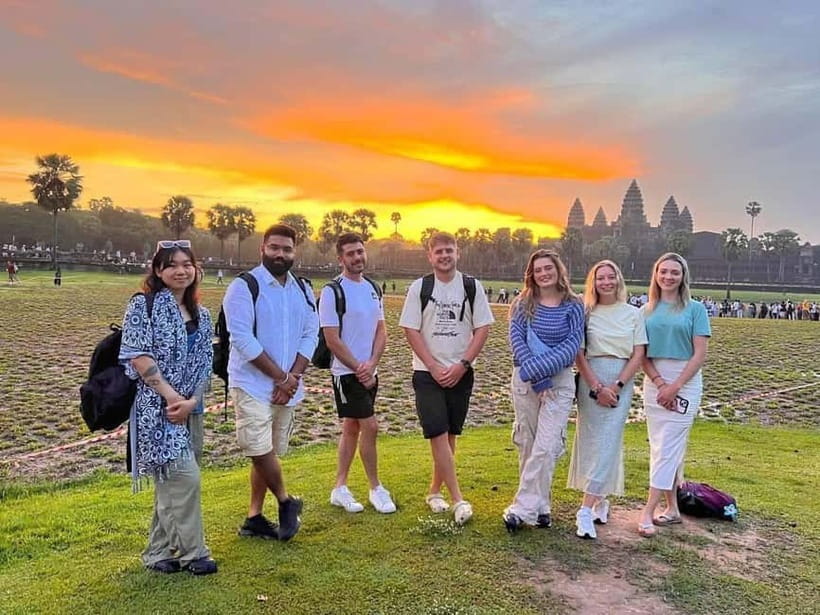
- A real sunrise run to Angkor Wat with a guided visit in soft morning light
- Small group size (up to 10) so you’re not swallowed by the crowd
- Breakfast at/near Angkor sites (menu choices include Khmer and English styles)
- Bayon’s stone faces at the heart of Angkor Thom, plus guided context
- Ta Prohm’s “Tomb Raider” setting with tree roots and iconic angles for photos
- Cold towels + bottled water to handle Cambodia’s heat before midday
Four-thirty in the Dark: How the Sunrise Part Works
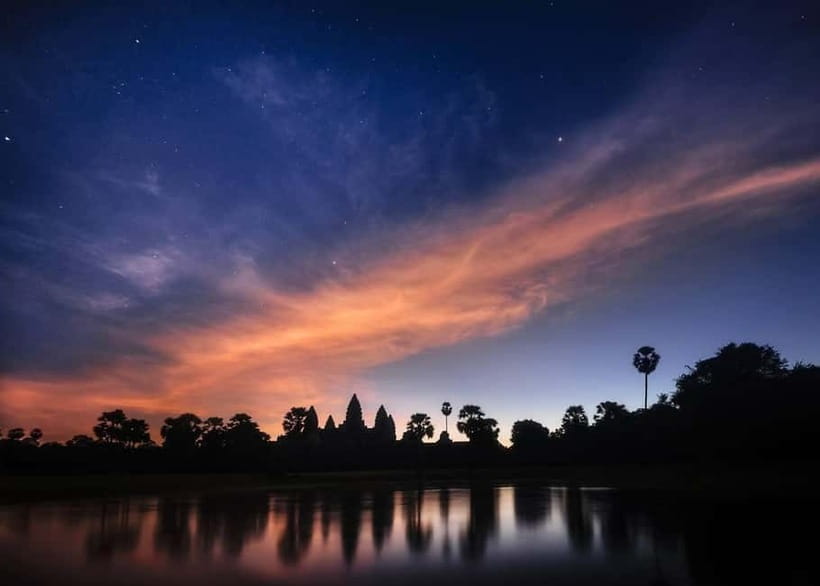
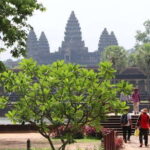
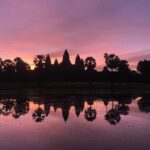
The day starts brutally early: a 4:20 am hotel pickup in an air-conditioned vehicle. Then you head straight to Angkor Wat for sunrise timing, with a guided walkthrough once you’re inside the vast Angkor Archaeological Park.
I like the structure here. You’re not spending hours wandering without context—you’re given a safety briefing and a plan, and the guide keeps the momentum so the sunrise moment actually lands. Since the park opens to daylight, getting moving early matters more than people expect.
And yes, sunrise is weather-dependent. If skies are cloudy, you may miss that full dramatic glow. Still, even on a grey morning, Angkor Wat at dawn has a distinct calm, and the tour’s pacing keeps the day from feeling wasted.
You can also read our reviews of more tours and experiences in Siem Reap
Angkor Wat at Dawn: What You Get From a Guided 3-Hour Block
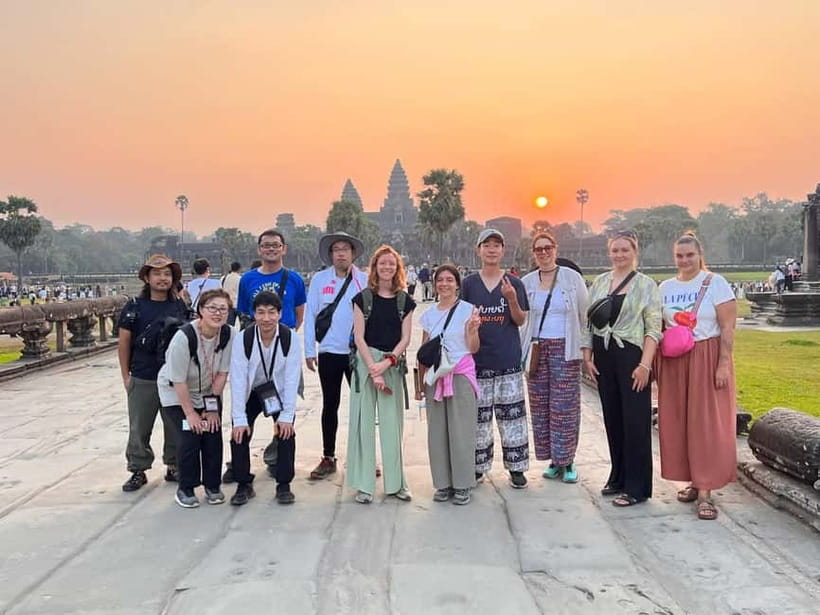
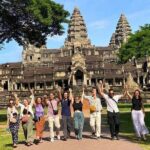
This isn’t just a quick stop for photos. You get about three hours at Angkor Wat with a guide, which is the difference between looking at stone and understanding why it’s arranged that way.
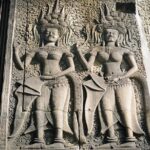
A good part of the value is how guides read the temple for you. People in the group often rave about guide storytelling styles—some are funny, some are very patient with questions—and you can see how that changes your experience. Guides you might get, like Sam, Ra, or Dara, are the type who point out details in carvings and explain what you’re actually seeing, not just where to stand for a picture.
Practical tip: sunrise crowds shift fast. If your guide offers you a spot for photos at the right time, take it. The best angles don’t last long, and you’re usually walking between viewpoints on temple surfaces that are not flat.
Breakfast by Royal Bath (Srah Srang): Choosing the Menu and Timing
After sunrise, the tour includes an on-site meal. The experience is set up so your breakfast (on the Sunrise version) happens close to the Angkor area, with the Royal Bath / Srah Srang surroundings as the vibe—those quiet water features are great for photos, too.
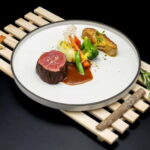
You’ll be asked to select from one of three menu options:
- Option 1 (Khmer breakfast): rice porridge, salted duck egg, dried fish, pickled radish, fresh fruit
- Option 2: fried rice with chicken, a small cup of soup, fresh fruit
- Option 3 (English breakfast): bread, baked beans, omelette, hot dog, fresh fruit
I like having choices because Angkor mornings can be too early for heavy food—or exactly right for it. If you want something light and local, the Khmer option fits well. If you need familiar flavors to start strong, the English breakfast option is an easy bet.
One reality check: the included meal is the meal. Drinks and extra snacks may cost extra once you’re moving around the complex, so bring cash and a small tolerance for “temple snack pricing.”
Srah Srang’s Quiet Pools: Where Photos Become Easier
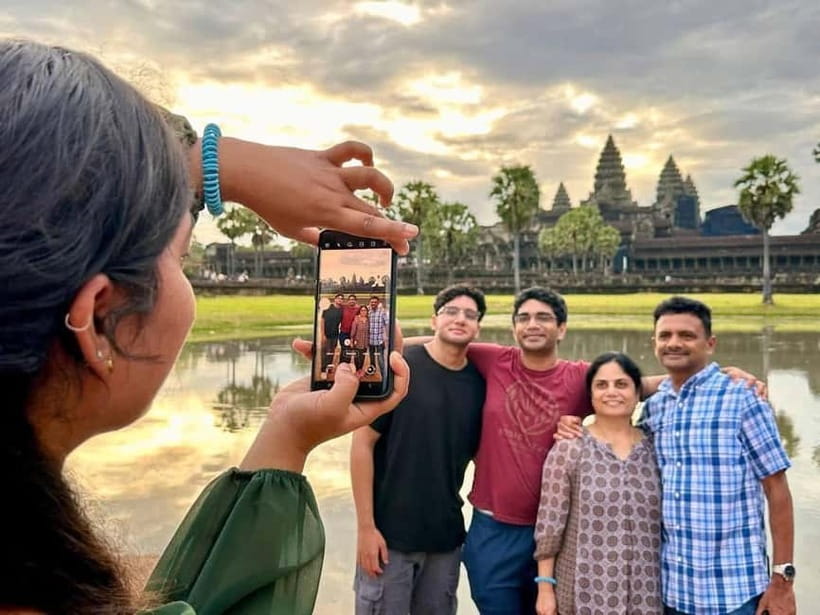
Srah Srang is where the day gets calmer. The Royal Bath area is not only part of the Angkor story; it’s also a practical pause between major temple hits.
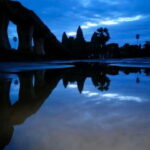
This is the part of the day where you can slow down and frame pictures with reflections. The highlight promise about mirrored shots isn’t random—still water plus temple stone gives you an easy visual contrast, and that’s exactly why your guide will sometimes suggest a specific spot rather than letting you guess.
Even if you’re not a serious photographer, take advantage of the break. Your feet will appreciate it, and you’ll reset your eyes before Bayon and Ta Prohm throw their best sights at you.
Angkor Thom and Bayon’s Four Faces: How to Look Like You Know
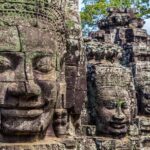
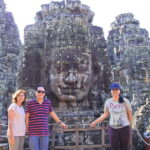
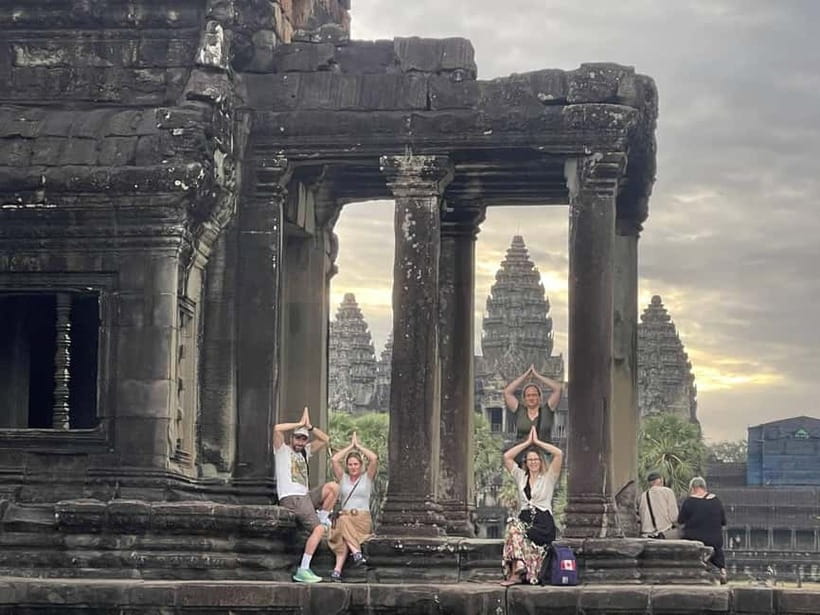
After Angkor Wat, you move into Angkor Thom, with Bayon Temple as the centerpiece. Bayon is famous for its many towers crowned with the serene four faces of Avalokiteshvara, and the guide’s job is turning that into an experience instead of a blur of stone.
What I like about the Bayon stop is that it feels cinematic once you’re in the right perspective. The four faces are the headline, but the experience is really about how the temple plays with symmetry and repetition—and why visitors get so different reactions depending on the angle they see first.
Expect guided time here (about one hour), with enough pacing to read the carvings and towers rather than sprinting. If you’re the type who loves learning what symbols mean, this portion can feel especially satisfying because it connects the site to broader Khmer religious and royal themes.
You can also read our reviews of more evening experiences in Siem Reap
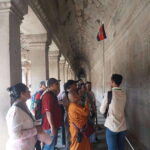

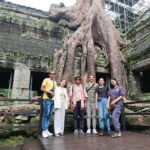
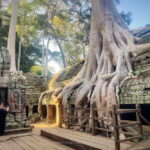
Ta Prohm: The Jungle Temple and the Tomb Raider Factor
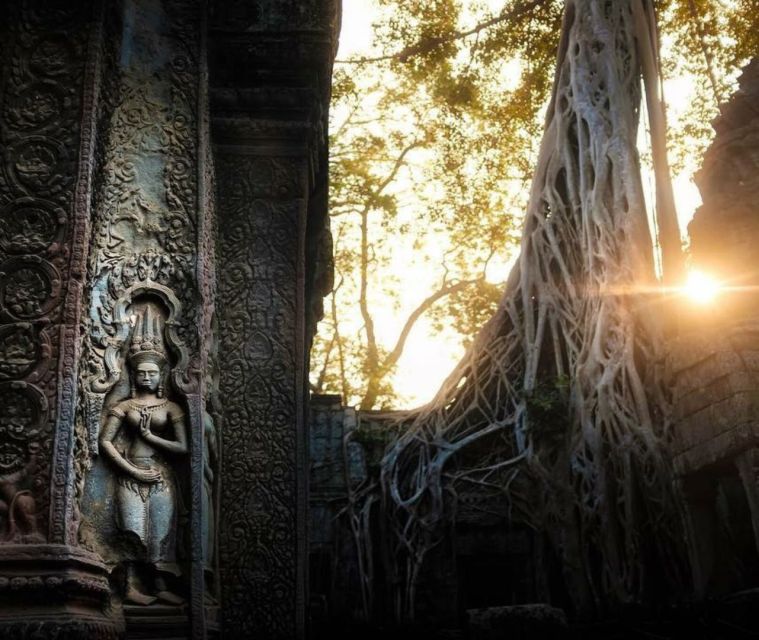
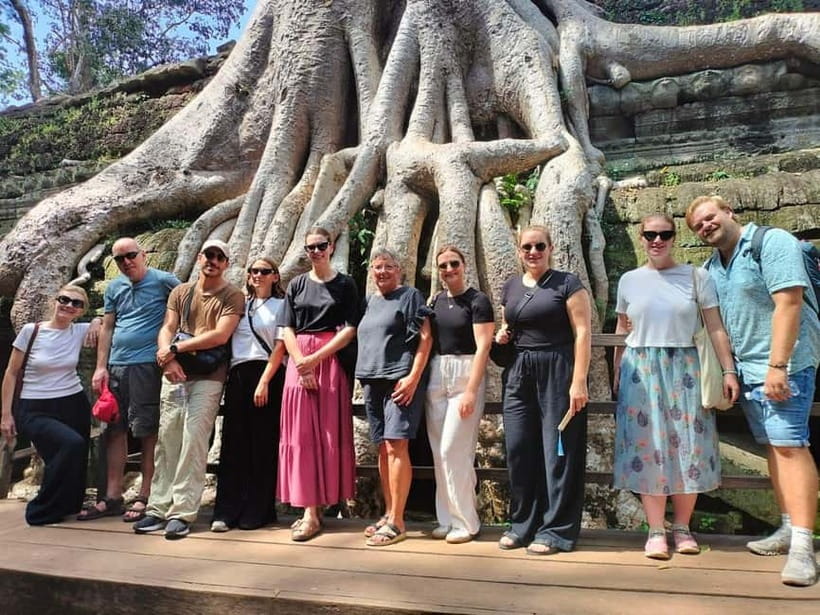
Then comes Ta Prohm, the jungle temple made famous in pop culture. The massive tree roots grabbing the ruins are the visual hook, but the tour’s timing and pacing are what make Ta Prohm work.
A strong guide helps you avoid the two common problems: standing in the wrong spot for photos, or missing how the temple’s structure guides your movement. Some guides are also very direct about photo timing—where to stand, when light hits, and how to frame around roots so you get that “movie set” look without fighting the crowd.
You’ll spend about 1.5 hours at Ta Prohm with guiding and time for exploration. It’s a temple where you’ll probably want a few different angles, and you’ll be glad the tour doesn’t treat it like a one-minute checklist.
One practical note: tree-root temples can mean more uneven footing and more surfaces that look stable but aren’t. Wear non-slip shoes.
The Small-Group Flow: Why Up to 10 People Matters
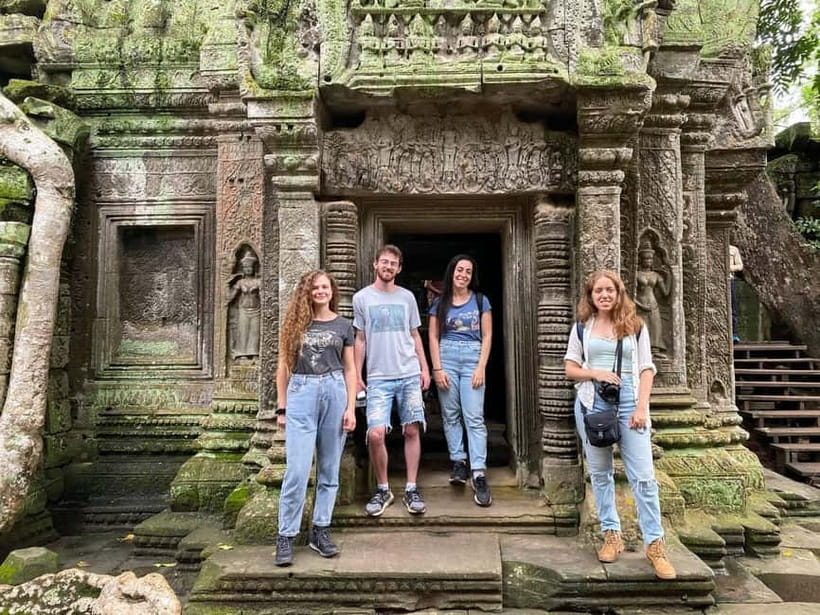
Angkor can feel like a moving river. The small-group limit—up to 10 participants—helps because the guide can adjust. You can ask questions without the group splitting, and you’re less likely to lose your meeting point.
From the guide styles described by different names (Sam, Lok, King Kong, Nara, Pip, and others), the common thread is coordination. They tend to set expectations like where you should gather, and they often help with group photo timing so you’re not all trying to pose at once.
Also, a smaller group means you get more chances to step into quieter corners. That’s where the temple detail shows up—stone joints, carvings, and the little “why is this placed here?” moments.
Timing and Return: Why You Still Have a Midday Left
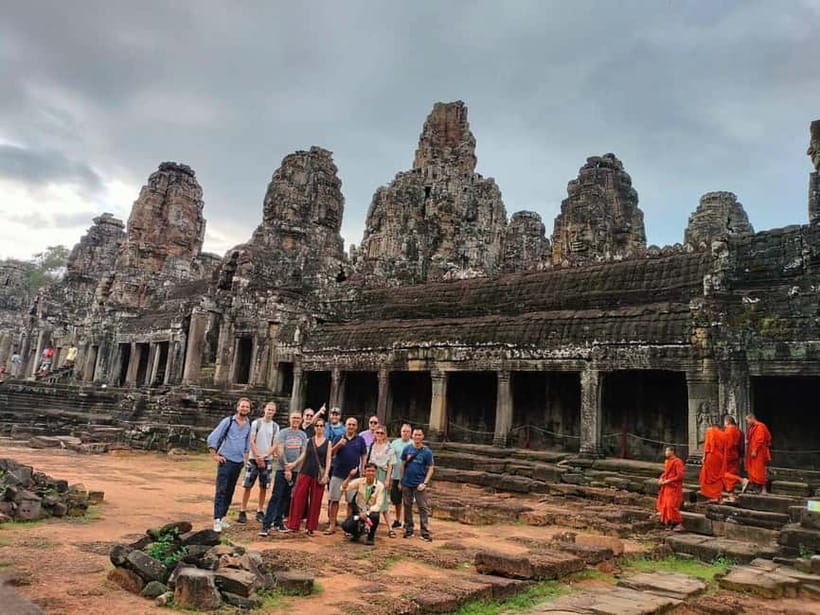
This tour runs long enough to be worth it, but short enough to keep you functional. You return to Siem Reap around 12:30 pm to 1:00 pm, which is helpful if you’ve got an afternoon plan—spa time, a cooking class, a museum stop, or just the luxury of doing nothing.
I also like that you’re out before the hottest part of the day fully flares. Sunrise timing + a morning circuit means you’re mostly in temple mode when the air is more manageable.
Dress Code and Footwear: The Rules You’ll Actually Feel
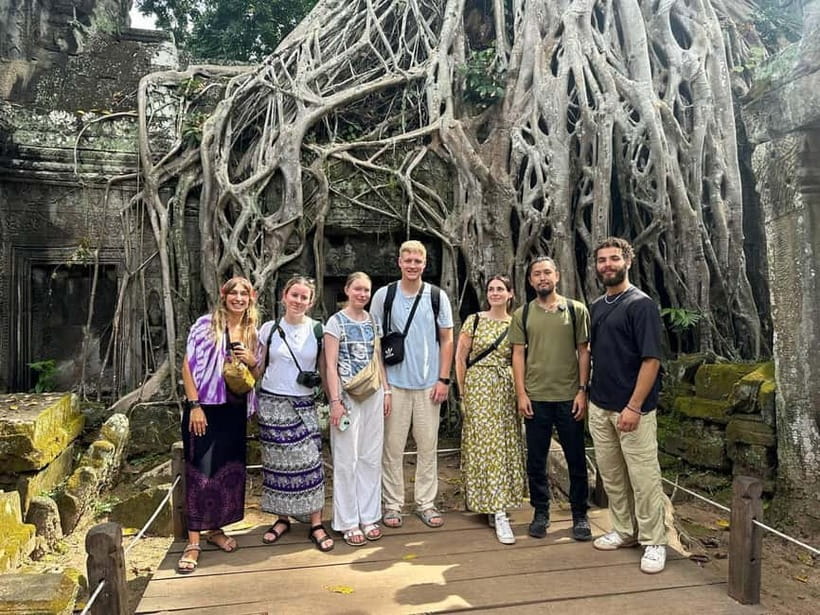
Temple entry rules are strict here, and they affect how comfortable you are. Plan on covering shoulders and wearing bottoms at least knee-length. A simple, lightweight shirt that covers your arms solves both comfort and dress code.
Footwear is just as important. The tour advises hiking shoes, and the reason is straightforward: the ground can be uneven, and you’re walking a lot. I wouldn’t rely on flip-flops, even if you see people trying it elsewhere.
Bring sunscreen and insect repellent. The morning can be cool at pickup, but the day heats up faster than you think once you’re moving through open temple grounds.
Cost, Value, and the Temple Pass Reality Check
On paper, $15 per person is excellent value for an early guided sunrise visit plus pickup/drop-off and an included meal. You also get bottled water and cold towels, which sounds small until you’re sweating on stone steps at 8 am.
The one expense that changes the math is the Angkor entrance ticket. The tour price does not include temple pass/entry fees, and you should budget extra. In at least one account, the pass was around $37 USD extra—so treat it as a separate line item and don’t let the low tour price trick you.
Still, even with a pass added, the value holds if you want:
- a guided route through the big hitters (Angkor Wat, Bayon, Ta Prohm)
- minimal wasted time on logistics
- a small group and photo help
Who This Tour Suits Best (and Who Should Rethink It)
This is a great fit if you want the main Angkor sites in one efficient morning and you like having a guide interpret what you’re seeing.
It’s also a good choice for solo travelers because many guides take time to help with photos and group coordination, so you’re not stuck asking strangers over and over.
But it’s not for everyone. The tour isn’t suitable for children under 12, and it’s not recommended for people with walking disabilities or wheelchair users due to uneven surfaces. The day is also very early and active, so if you get hit hard by long mornings, plan to adjust expectations.
If you’re sensitive to heat or have altitude sickness concerns, keep that in mind too. This is still a temple day in Cambodia—so bring what you need, pace yourself, and hydrate.
Should You Book This Angkor Sunrise Tour or Skip It?
Book it if you want guided sunrise access, an included meal, and a tight morning circuit that gets you back to town by early afternoon. The price-to-value ratio is hard to beat when you factor in hotel pickup, AC transport, cold towels, water, and a guide who knows where to point you for photos—especially if you’re not visiting with your own driver.
Skip it or choose a different format if you’re worried about early wake-ups, are traveling with someone who can’t handle uneven temple walking, or you’re going just to chase sunrise light no matter what. Clouds happen. When that happens, the sunrise moment may be muted—but you’ll still see Angkor Wat, Bayon, and Ta Prohm, and those temples usually deliver even without a perfect sky.
If you do book, pick up your temple pass plan early, pack sunscreen and insect repellent, and wear shoes you’d trust on stairs in a hurry.
FAQ
FAQ
Does the tour include breakfast?
Yes for the Sunrise option. Breakfast is served at a local restaurant in the Angkor area with menu choices like Khmer breakfast, fried rice with chicken, or an English breakfast.
Is lunch included too?
The tour includes a meal, and the schedule includes a stop at Srah Srang. The exact meal timing fits the Sunrise or Sunset version, but you can expect an included breakfast or lunch as advertised.
Is the Angkor temple entrance ticket included?
No. The Angkor entrance tickets/temple pass are not included and must be purchased separately.
What time is hotel pickup for the Sunrise tour?
Pickup is listed for 4:20 am in Krong Siem Reap.
How long does the tour last?
Plan for about 7 to 9 hours total.
How big is the group?
The tour is a small group limited to 10 participants.
What should I wear to enter the temples?
You need appropriate casual attire: shoulders covered, and shorts or skirts at least knee-length. Comfortable, non-slip walking shoes are important for uneven surfaces.
What should I bring with me?
Bring hiking shoes, sunscreen, insect repellent, and cash.