REVIEW · SIEM REAP
Angkor Wat Full-Day Sunrise & Sunset Private Tour All Interesting Major Temples
Book on Viator →Operated by Happy Angkor Tour · Bookable on Viator
Waking up before dawn in Siem Reap pays off here. This private day is built around sunrise at Angkor Wat and a late sunset climb to Phnom Bakheng, plus a full sweep of the big names you don’t want to miss. I really like the combination of an English-speaking licensed guide and an air-conditioned van that keeps you comfortable between temple zones. One thing to plan for: it’s a long day—hot, crowded in places, and you’ll do a lot of walking.
What makes this feel like good value is how efficiently the day flows. You start at 4:45am, hit the morning standouts (including Ta Prohm’s tree roots), then spend the afternoon threading through Angkor Thom’s main monuments before finishing with sunset. The guide also shapes timing and photo stops—people rave about getting great shots, not just rushing from place to place. If you want a slow, lounging kind of vacation day, this may feel a bit intense.
In This Review
- Key highlights worth getting excited about
- Sunrise to sunset at Angkor: why this route works
- 4:45am pickup and what the long day actually feels like
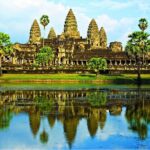
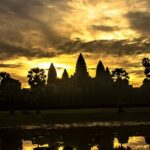
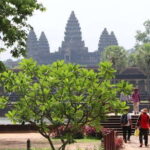
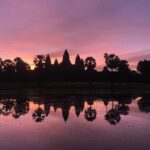
- Angkor Wat at dawn: your first temple and your first golden light
- Ta Prohm’s tree roots and Ta Nei’s quieter, greener mood
- Angkor Thom’s core: Victory Gate and Bayon’s 196 faces
- Baphuon, Phimeanakas, and the royal palace area you’ll feel in your legs
- Elephant Terrace, Leper King Terrace, and Palilay: details that reward slow looking
- Phnom Bakheng for sunset: managing crowds and the final climb
- Price and value: what $88.50 covers and what costs extra
- Pacing, comfort, and who this tour is perfect for
- Should you book this sunrise-to-sunset Angkor Wat private tour?
- FAQ
- What time does the tour start?
- How long is the tour?
- Is pickup from my hotel included?
- Is the tour private?
- What’s included in the price?
- What’s not included?
- How much are the admission fees?
- How does Phnom Bakheng handle crowd limits?
- What’s the cancellation policy?
Key highlights worth getting excited about
- Sunrise at Angkor Wat, then sunset at Phnom Bakheng for two very different temple moods
- A/C private vehicle with wet towels and cold water so the heat doesn’t run the day
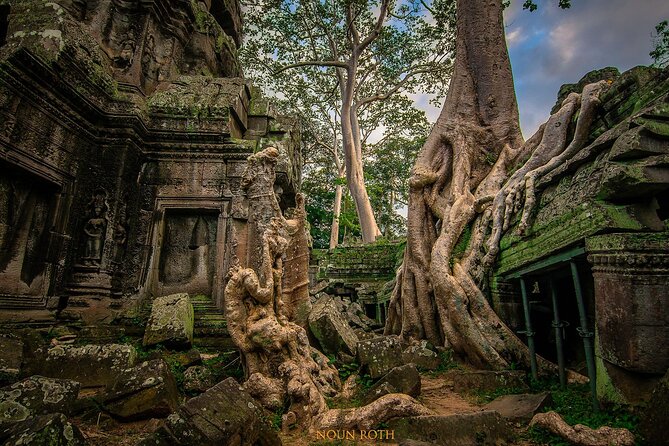
- Ta Prohm’s iconic tree roots plus quieter temple time at Ta Nei
- Angkor Thom essentials in one afternoon, including Victory Gate and Bayon’s 196 faces
- Royal-grounds stops like Baphuon, Phimeanakas, and the Elephants/Leper King terraces
- Guide-led photo spots and pacing that helps you see more without feeling scrambled
Sunrise to sunset at Angkor: why this route works
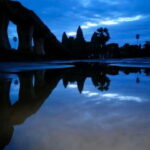
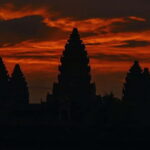
Angkor Wat is the headline. But the real magic of a day like this is the order. Starting at dawn gives you softer light, cooler air, and temple steps that don’t feel like a conveyor belt yet. Ending at Phnom Bakheng shifts the atmosphere: you’ll go from carved stone drama to a wide view that makes all those temple towers feel like they belong to one giant city.
This tour also solves a classic Siem Reap problem: you’re short on time. The route is designed to cover the major complexes you’d otherwise split over multiple days—morning highlights, Angkor Thom in the afternoon, and sunset at the end—while keeping transport tight and transitions simple. It’s private, so your schedule stays in your hands.
The other big win is your guide. Guides often steer the day toward the best angles, and they’re the difference between seeing temples as objects and understanding them as a living story of Khmer faith and royal power. People mention that guides like Luon, Chhay, Jimmy, Vanna/Vana, San, and Hi are especially good at both explanation and photography, so you’re not stuck doing a self-guided speed-run.
You can also read our reviews of more private tours in Siem Reap

4:45am pickup and what the long day actually feels like
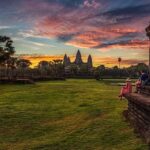
The day begins early: pickup at 4:45am from your hotel or guest house. That’s not a typo—this is a true sunrise-focused plan, and it means you’ll be on the road while most of Siem Reap is still asleep.
From there, the tour keeps you moving but not chaotic. You’ll head out first to get the right temple access, then make your first big arrival at Angkor Wat for the dawn experience. Between temple zones, you’ll ride in a private A/C vehicle. The operator also provides cool drinking water and wet towels, which matters a lot because your walking happens in stretches under bright sun.
You’re looking at about 11 to 12 hours total. It’s the kind of schedule where you’ll want to eat something light before the early start (or plan for a simple breakfast when you can). One review highlighted rain and heat during the day—so having water, towels, and an A/C car isn’t luxury; it’s practical survival support.
Angkor Wat at dawn: your first temple and your first golden light
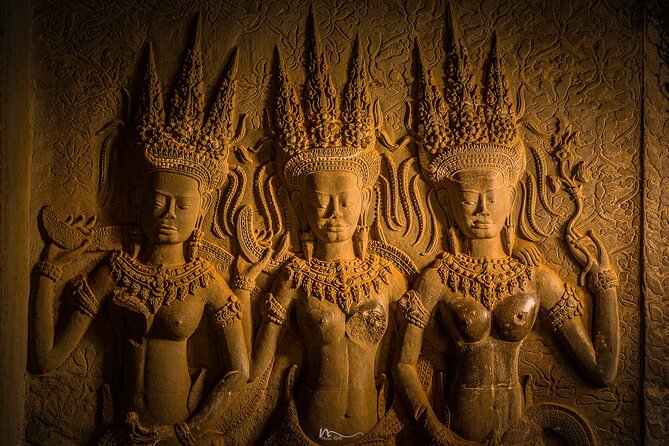
Angkor Wat is where the day earns its keep. You get around three hours here, which is long enough to take in the main spaces, get good photos, and hear the story instead of just reading labels.
A smart detail: you’ll buy the temple pass along the way before you fully enter the complex. That reduces time-wasting and keeps the morning flow smooth. The entrance fees are not included in the base price—more on that later—but the guide handles the logistics so you aren’t standing in lines trying to figure out ticket steps at sunrise.
What I like about dawn here is how your brain starts working differently. At first, you’re looking at symmetry and stone craftsmanship. Then the guide’s explanations turn it into meaning—how the Khmer built this as a statement of faith and cosmic order. And if you’re traveling with a camera or phone, sunrise angles can make your photos look like you hired a pro. People often mention guides finding strong photo positions and even helping with group shots.
One caution: there’s walking and steps. Even with pacing, one person mentioned roughly 19,000 steps across the day. That doesn’t mean you’ll hit that number, but it’s a hint that you should pack for a temple walk, not a stroll.
Ta Prohm’s tree roots and Ta Nei’s quieter, greener mood
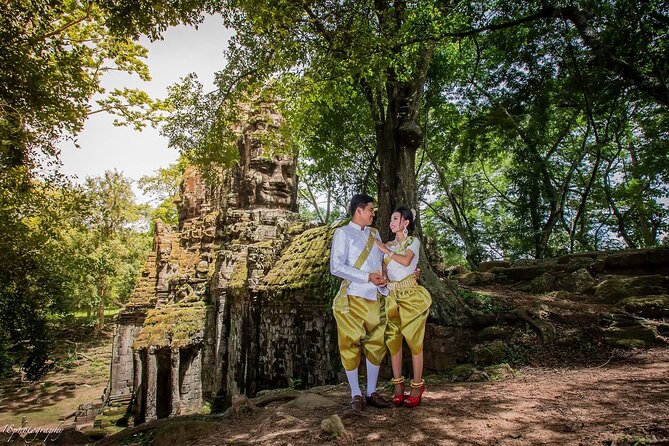
After Angkor Wat, the day heads to the morning circuit that’s famous for two contrasting vibes.
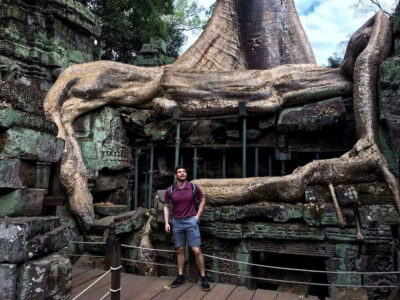
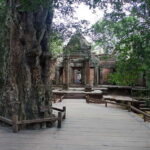
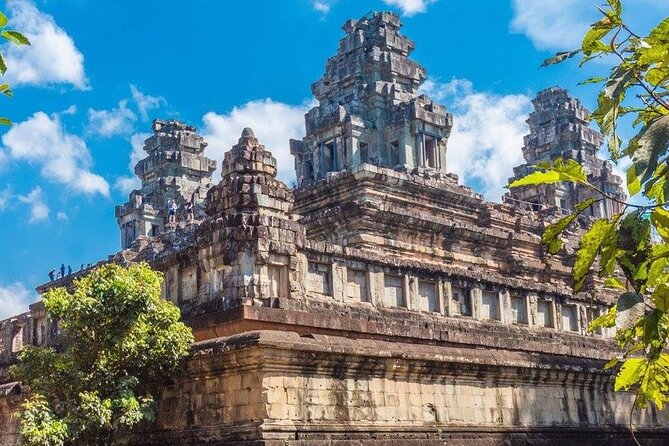
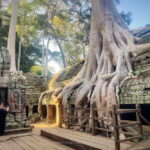
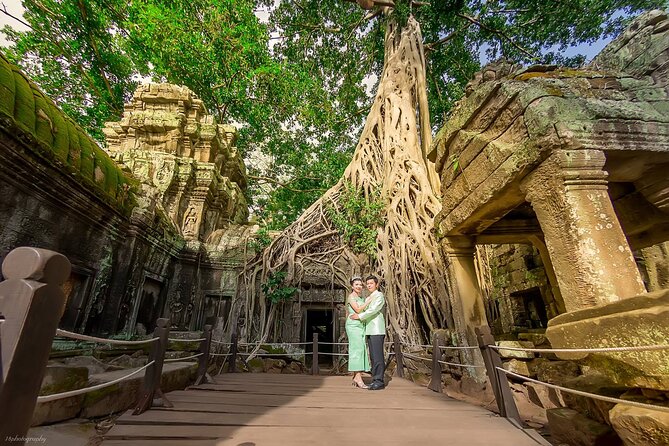
Ta Prohm gets about 1.5 hours. This is the temple where giant tree roots wrap through the architecture, making it look like the jungle is reclaiming the stone. It’s also the location people instantly recognize because it became a movie setting—so even if you’re not a film person, you’ll still feel the pop-culture familiarity. The key here is timing: coming in after sunrise means less pressure and more time to look closely at the way roots and carved surfaces interact.
Then you shift to Ta Nei for about 30 minutes. This one is smaller and more relaxed. It’s surrounded by big trees and has less restoration than the more polished monuments, which gives it a lived-in feel. If Ta Prohm is the showy act, Ta Nei is the palate cleanser. It helps you avoid temple overload where everything starts looking the same.
The practical benefit of this pairing is mental. By alternating a grand, photo-heavy temple with a quieter one, you get variety without changing gears. Your guide can also steer you toward calmer angles, which helps if you’re trying to enjoy temples instead of just documenting them.
Angkor Thom’s core: Victory Gate and Bayon’s 196 faces
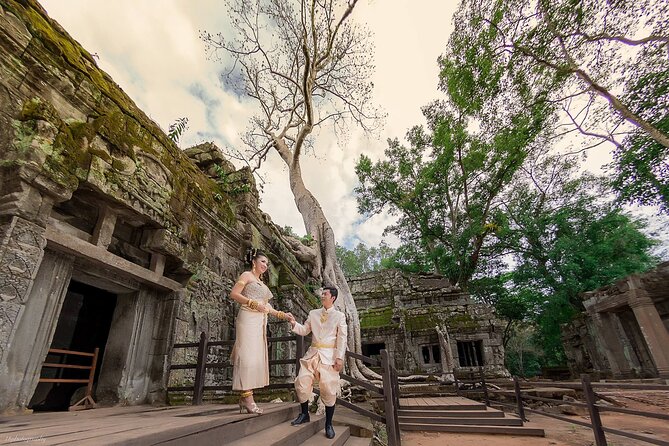
The afternoon is built around Angkor Thom, the walled city area that includes some of the most recognizable Angkor monuments.
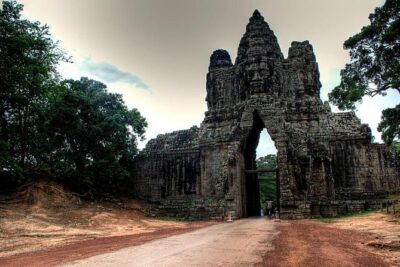
You’ll begin with the Victory Gate (around 15 minutes). This is on the east side of Angkor Thom, and it’s a strong “gateway to the city” moment. Even in a short stop, it sets the context for what’s ahead, and it’s an easy place to grab a few photos without feeling rushed.
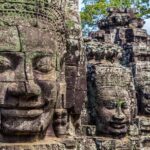
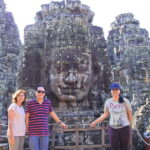
Next comes Bayon for about one hour. Bayon is the star of Angkor Thom’s center: 49 towers, each with four faces, for a total of 196 faces of Avalokiteśvara (as your guide will explain). It’s the kind of temple where your eyes keep shifting—one angle looks calm, another looks stern, and the expressions can feel different depending on where you stand.
The big value of having a guide here is focus. Without explanation, it’s still beautiful, but you might miss why Bayon’s faces feel so omnipresent and why the city plan matters. With the guide, Bayon becomes a “how the city is meant to be read” moment.
You can also read our reviews of more evening experiences in Siem Reap

Baphuon, Phimeanakas, and the royal palace area you’ll feel in your legs
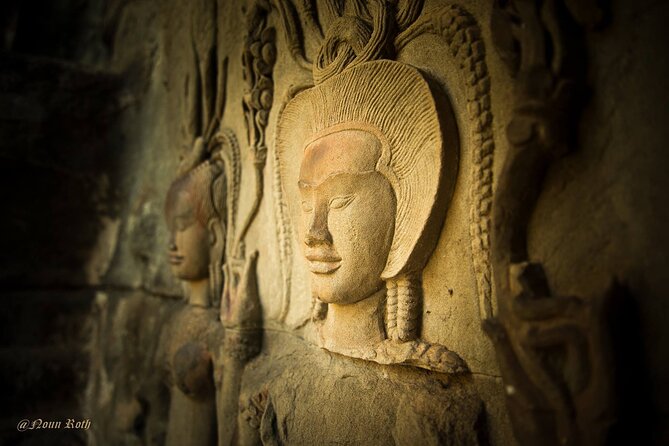
After Bayon, you’ll walk to Baphuon (about 1 hour). This Hindu temple was built before Angkor Wat in the 11th century. A later reclining Buddha (built in the 16th century) sits behind it, mixing eras and styles in one view. It’s a good reminder that Angkor didn’t stay frozen in time.
Then you’ll move to Phimeanakas for about 20 minutes. This is a pyramid temple from the 10th century, located in the center of the old Royal Palace area of Angkor Thom. Your visit also includes the ancient royal enclosure wall, which helps connect temple architecture to governance and ritual space.
Here’s what I appreciate: these are stops where you start noticing building logic—how one area connects to the next. The walking between sites can be tiring, but the payoff is that you understand the layout instead of just bouncing between landmarks.
Elephant Terrace, Leper King Terrace, and Palilay: details that reward slow looking
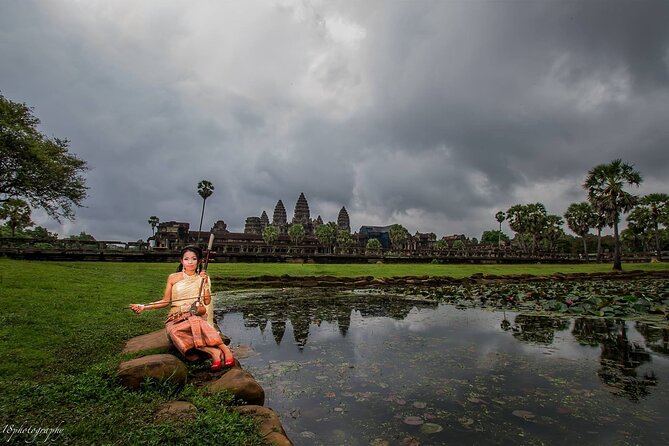
The day keeps rolling through the royal-complex terraces.
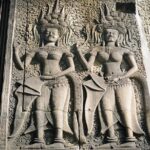
You’ll spend about 45 minutes at the Terrace of the Elephants, plus time for the Leper King Terrace and Preah Palilay area within Angkor Thom’s complex. This section is where smaller carvings start to pop—stone scenes that don’t always get the same attention as the grandest towers. If your feet are feeling it, this is a good place to let your guide pace you. People mention that guides help set a comfortable rhythm so you don’t burn out before sunset.
Then you get extra time at:
- Terrace of the Leper King (about 15 minutes) on the north side
- Preah Palilay (about 15 minutes), a quieter Buddhist temple behind the royal palace
These last Angkor Thom stops matter because they round out the story. Bayon and Baphuon grab your first attention, but terraces and smaller temples show you the everyday carvings and symbolic details that make the place feel real—not just postcard-perfect.
Phnom Bakheng for sunset: managing crowds and the final climb
All good things end with a view. The final stop is Phnom Bakheng, where you spend about two hours climbing and waiting for sunset.
There’s an important operational reality here: the peak has a limited number of tourists allowed. If it’s busy, the operator adjusts the plan—your climb may be shortened or your viewing arrangement may change so you still get a sunset moment without losing the whole time to congestion.
That’s exactly what you want on the last leg of a long day. Sunset temples are a magnet, and when you’re already tired from morning walking, the worst-case scenario is missing the view because you wasted time in queues. This tour is designed to keep the sunset within reach.
What’s great about this ending is emotional. You’ll go from detailed temple reading (Bayon faces, royal terraces, roots in stone) to a wide-angle moment where the whole Angkor landscape makes sense. It’s the kind of ending that makes the early start feel worth it.
Price and value: what $88.50 covers and what costs extra
The base price is $88.50 per person for a private, full-day tour that runs about 11 to 12 hours. For that, you get:
- A licensed English-speaking guide
- A private A/C vehicle with driver
- Cool drinking waters and wet towels
- Parking fees and road tolls
- Hotel pickup and drop-off
This is a solid deal compared to piecing together multiple guide hires and transport legs, especially because you’re covering a lot of ground. The “private” part matters too. It means your guide can set pacing, adjust photo stops, and keep your day smooth without negotiating with other groups.
Two main extras to budget for:
- Admission fees: $37 per person for Angkor Wat + all temples
- Meals: lunch (and/or other meals depending on menu) is listed as about $5 per person
So a realistic ballpark is around $125.50 per person for the core tour plus entrance fees, before any extra spending. If you want sunrise and sunset in one shot plus Angkor Thom coverage, this still tends to be strong value—because the alternative is doing multiple day tickets or giving up a key lighting window.
Pacing, comfort, and who this tour is perfect for
This tour fits best if you:
- Have limited time in Siem Reap and want the key monuments in one day
- Want both sunrise and sunset rather than choosing only one
- Like having a guide who can explain what you’re seeing and help with photos
- Appreciate comfort between temple blocks (A/C van, cold water, wet towels)
It may be less ideal if you:
- Want a relaxed, slow-moving day with lots of downtime
- Have mobility limits that make repeated walking and climbing hard (the day includes temple climbs and the Phnom Bakheng ascent)
- Prefer to wander without a schedule—this route is structured to hit the big moments at the right times
The nice thing is that guides often adjust pace. Multiple accounts mention guides setting a comfortable rhythm and even rearranging timing so you spend more time exploring rather than just waiting in crowds. That flexibility is a big part of why this tour gets such high marks.
Should you book this sunrise-to-sunset Angkor Wat private tour?
I’d book it if your priority is a high-impact Angkor day with the right light at the right time. The mix of Angkor Wat at dawn, Ta Prohm and Ta Nei for variety, Bayon and the Angkor Thom terraces for depth, and Phnom Bakheng for sunset is a smart way to see the most famous pieces without turning your trip into logistics chaos.
Skip it only if you know you’ll struggle with a very long, walking-heavy schedule. If you’re comfortable moving at a temple pace and you want guides like Jimmy, Luon, Chhay, Vanna/Vana, San, or Hi-style service (friendly, organized, and good with photo timing), this is a strong pick.
FAQ
What time does the tour start?
The start time is 4:45am.
How long is the tour?
It runs about 11 to 12 hours.
Is pickup from my hotel included?
Yes. Pickup at your hotel/guest house is included, and you’ll also be dropped back off at the end.
Is the tour private?
Yes. It’s a private tour/activity, meaning only your group participates.
What’s included in the price?
Included are a licensed English-speaking guide, private A/C vehicle, driver, cool drinking waters and wet towels, parking fees, road tolls, and hotel pickup and drop-off.
What’s not included?
Lunch meals are not included (menu pricing is about $5 per person), and admission fees are not included.
How much are the admission fees?
The listed admission fee is $37 per person for Angkor Wat + all temples.
How does Phnom Bakheng handle crowd limits?
The tour notes that the peak has a limited number of tourists allowed. If it’s busy, the operator will adjust the plan so you can still see the sunset view.
What’s the cancellation policy?
There’s free cancellation up to 24 hours in advance for a full refund. Canceling less than 24 hours before the start time is not refunded.