REVIEW · SIEM REAP
1-Day private Angkor Temple Tour from Siem Reap
Book on GetYourGuide →Operated by Sokoan · Bookable on GetYourGuide
If you want Angkor without the crush, this helps. A private day tour keeps the route flexible, the pace human, and your guide makes sense of what you’re seeing. You hit the big names like Angkor Wat, Bayon, Baphuon, Terrace of the Elephants, and Ta Prohm, but you also get quick photo stops and little detours so the day feels curated to your energy.
I especially like two things: skip-the-line access plus a separate entrance method that saves time at the main gate area, and the “get cooled down fast” rhythm—drivers bring bottled water and often cold towels at stops when the heat really turns up. The other win is the guide’s storytelling, from bas-reliefs at Angkor Wat to the “smiling faces” on Bayon towers, explained in clear, practical chunks instead of confusing scanning and guesswork.
One consideration: it’s a long, hot day with real walking and some climbing. Plan for a lot of sun, and remember temple dress rules—shorts aren’t allowed, though shorts that cover the knees can work.
In This Review
- Key points to know before you go
- Why this private Angkor route feels easier than DIY
- Morning pickup and how the day stays cool
- Angkor Wat first: bas-reliefs, central chambers, and the must-see geometry
- Tonle Om (Southern Gate) and Bayon’s smiling faces
- Baphuon, Phimeanakas, and the short stops that keep the day from dragging
- Terrace of the Elephants and Leper King: where size and drama matter
- Ta Prohm in the afternoon: trees, ruins, and better photo time
- Transport and the guide team: the comfort details that make it work
- Price and tickets: what your $34 gets you (and what you’ll pay separately)
- Who should book this private Angkor day
- Should you book this private Angkor Temple Tour?
- FAQ
- Is the Angkor Wat entry ticket included?
- How long is the private tour?
- What’s included in the tour price?
- Do I need to buy tickets in advance?
- What’s the dress code for temple entry?
- Do kids get discounted or free temple entry?
- Is this tour private?
Key points to know before you go
- Private and flexible: you control the pace, breaks, and the order of some stops when it helps.
- Major temples in one day: Angkor Wat, Bayon, Ta Prohm, and several key UNESCO sites.
- Skip-the-line entry: you use a separate entrance route to reduce waiting.
- Heat management: bottle water and refreshing cold towels are a big part of the comfort.
- Small photo stops between big sights: more viewpoints, less wandering.
- English guidance all day: one guide stays with you for the whole tour.
Why this private Angkor route feels easier than DIY
Angkor can be overwhelming fast. Even if you read up, you still stare at stone and wonder what you’re supposed to notice. A private guide fixes that. You get direction on where to look first, what the carvings are actually showing, and how each temple fits into Khmer history and religion.
The private setup also changes the feel of the day. Instead of following a herd, you can slow down when the shade is good, speed up when you’re on a roll, and stop for photos without feeling like you’re holding up strangers. That flexibility matters at Angkor, where crowds can spike and temperatures can jump.
Finally, you’re not just transporting yourself between sites. The tour includes return transfers from your hotel area, plus bottle water during the day. That removes a lot of friction so you can focus on the temples.
You can also read our reviews of more private tours in Siem Reap

Morning pickup and how the day stays cool
The day starts with pickup from Krong Siem Reap, where your guide and driver come to your hotel lobby. They’ll hold a card with your leader’s name, so you can find them quickly and get moving.
What makes mornings work here is timing plus comfort. Your tour is set for a full temple day (about 7 hours), which typically means early starts when possible, before the heat climbs too hard. Once you’re on the ground, the driver keeps you supplied with water, and many guide-driver pairs also bring cold towels between stops. When it’s hot—real hot—that small rhythm changes everything.
You’ll also want to bring your own basics. Pack a camera, and wear comfortable clothes. Then plan footwear for uneven temple ground. If you’re thinking about short sleeves, great—just remember the rules below about shorts.
Dress note that can save your day: shorts aren’t allowed, but shorts that reach the knees are allowed for temple entry. The temples care about leg coverage, and staff can be strict if you’re on the wrong side of the line.
Angkor Wat first: bas-reliefs, central chambers, and the must-see geometry
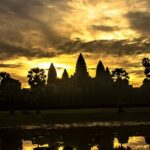
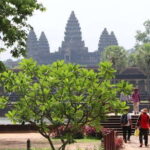
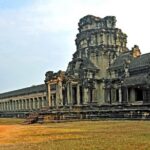
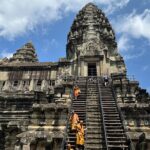
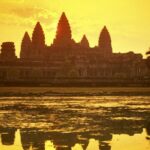
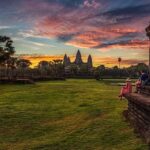
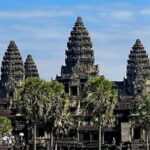
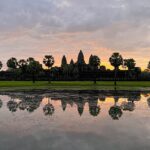
Angkor Wat is the big reason most people come to Siem Reap. This tour gives it real time, about 2 hours at the site, with guided walking and a focused route.
Here’s what you should watch for with your guide:
- The central areas of the temple complex, where explanations connect what you see to Khmer religious meaning.
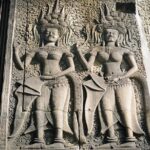
- The bas-reliefs, including the claim that this is the longest stretch of bas-relief carvings in the world. Even if you don’t count, your guide will point out how the stone scenes are arranged and what’s going on in them.
This isn’t just a quick exterior glance. You get time to move through the important sections and understand what the carvings are doing—myth, history, and everyday scenes mixed together. When someone explains it in plain language, you stop thinking of the temple as one big photo background and start noticing the “story panels” across the walls.
You also get breaks that keep the day practical. Your schedule includes a break for breakfast before moving on to the next area, so you’re not dragging yourself through the rest of the sites on empty energy.
Tonle Om (Southern Gate) and Bayon’s smiling faces
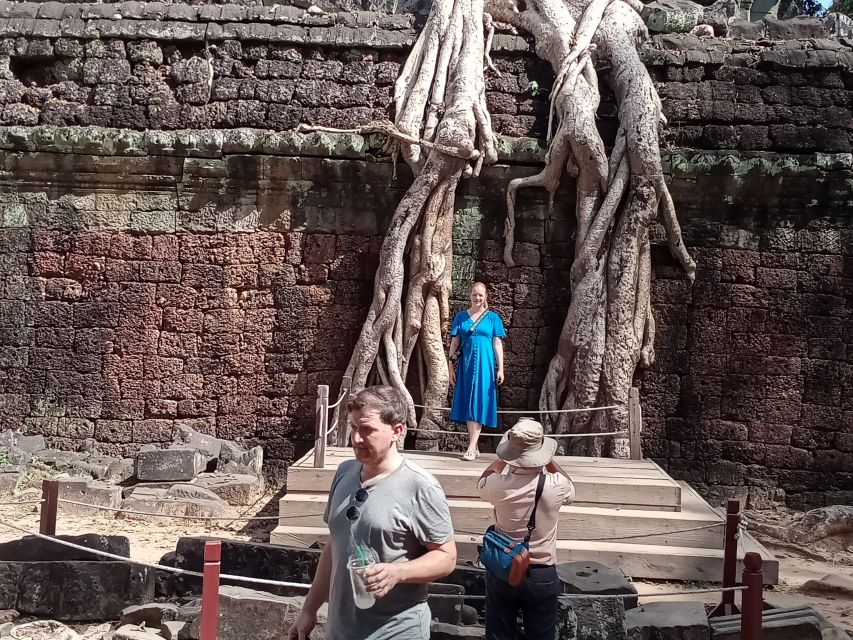
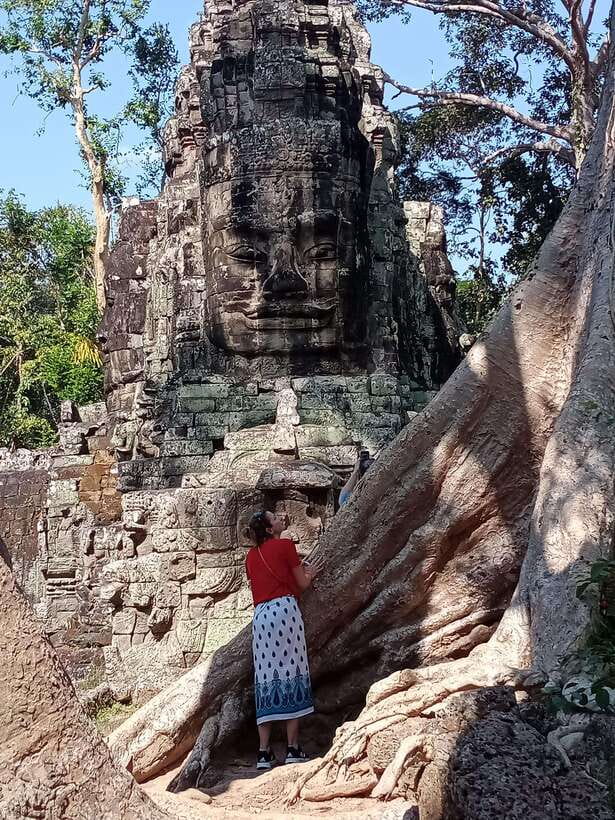
From Angkor Wat, you shift to the Tonle Om Gate (Southern Gate) of Angkor Thom. It’s a quick stop (about 20 minutes), but it’s a smart bridge between the two worlds: one temple designed with its own grandeur, and another part of the ancient capital city layout.
The gate stop is mainly photo and context. Your guide points out what you’re looking at and why it matters—useful when you don’t want to treat this as random wandering.
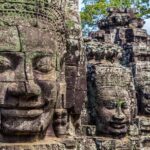
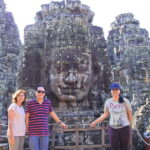
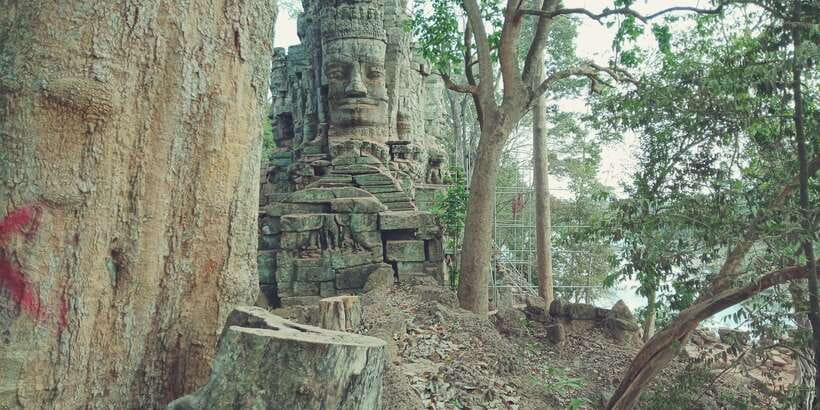
Then comes Bayon, one of the most recognizable stops in the whole complex. You’ll spend about 40 minutes there. Bayon is famous for those towers topped by more than 200 enormous stone faces, often called the smiling faces. Your guide helps you see beyond the “wow” moment and into what the temple’s scenes represent.
Bayon also has two sets of bas-reliefs. This is where a guide really earns their keep. Without an explanation, you can end up sprinting from face to face. With one, you notice how mythological, historical, and mundane scenes share space—and why the Khmer designers wanted layered meaning, not just decoration.
Baphuon, Phimeanakas, and the short stops that keep the day from dragging
After Bayon, you’ll visit Baphuon (about 40 minutes). It’s an 11th-century three-tiered temple mountain, built as a state temple. The key is how it looks in layers. Your guide can help you spot the structure’s rise and what “temple mountain” means in Khmer temple design, so the shape stops feeling abstract.
Next are Phimeanakas (also known as Vimeanakas). This is the end-of-10th-century three-tier pyramid temple, described as a celestial temple. Expect guided walking and photo time (around 30 minutes). This is a great place to slow down and look carefully, since it’s less “instantly iconic” than Angkor Wat or Ta Prohm, but it’s still full of meaning.
Between the major temples, you also get brief extra photo stops—like a “secret stop” (around 10 minutes) and a “hidden” style detour (around 10 minutes). The exact sights aren’t described in detail in the tour data, but the purpose is clear: quick viewpoints and short breaks so you don’t lose the day to long, aimless walking. Think of them as tempo controls.
One more timing tip: the whole route has a tight rhythm, so if you’re the type who needs long photo sessions, tell your guide early. A good guide will adjust. In the same way, if you’re tired, you can ask to shorten a stop and keep moving.
You can also read our reviews of more tours and experiences in Siem Reap
Terrace of the Elephants and Leper King: where size and drama matter
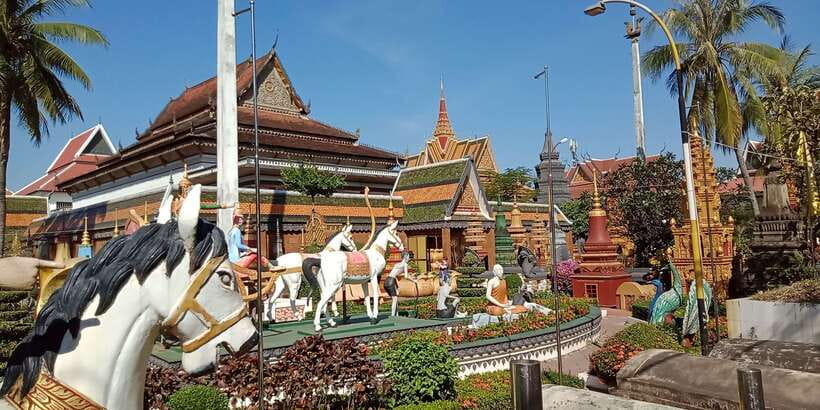
Two of the most memorable stops for many people are also two of the most different in feel.
First up: the Terrace of the Elephants. It stretches about 350 meters and was used as a giant reviewing stand for public ceremonies. The “elephants” part is more than a name—you’ll see why people remember the scale. This is a spot where a guide can point out angles and architectural lines so it feels less like a flat wall and more like an engineered stage.
Then: the Terrace of the Leper King (about 20 minutes). It’s a U-shaped structure, and the tour description notes that some people think it may have been used as a royal cremation site. Even if you don’t care about the theory detail-by-detail, you’ll still feel the odd, dramatic vibe of the site. It’s one of those places where “look closer” turns into “oh, that’s why it feels strange.”
These terraces also work because they’re a break from the intense crowd magnet temples. They’re still popular, but you don’t need the same kind of constant face-to-face attention you get at Bayon.
Ta Prohm in the afternoon: trees, ruins, and better photo time
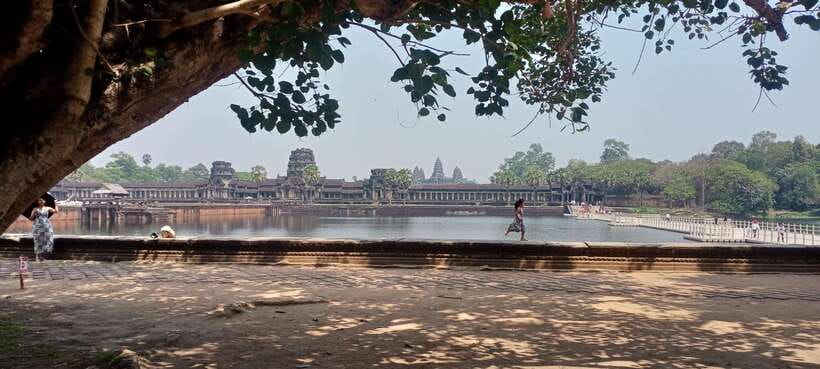
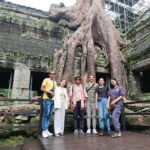
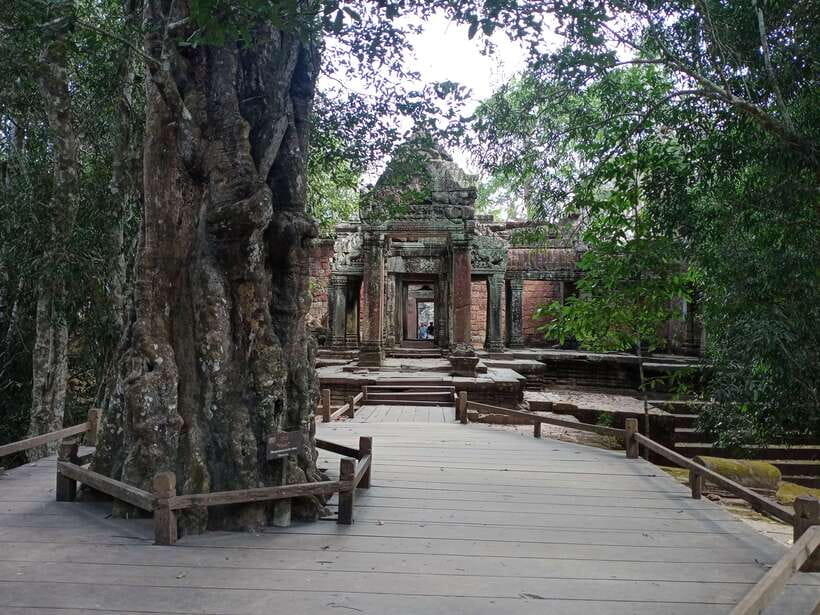
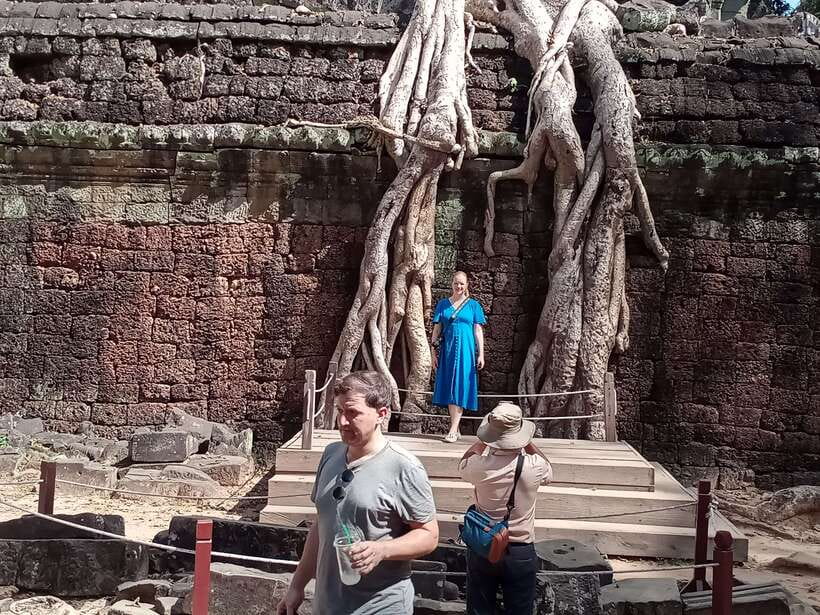
Ta Prohm is the temple people often call the Tomb Raider temple, and it’s easy to see why. You’ll spend about 1 hour there, with guided explanation plus free time for photos.
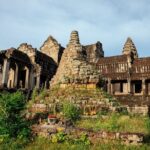
What makes Ta Prohm special is the way it was left. Unlike other Angkorian temples that have been restored more heavily, Ta Prohm was left in much the same condition it was found. That means the sight is part archaeology, part living jungle scene. The trees growing out of ruins create an atmosphere that photos can’t fully capture unless you know where to stand and how to frame it.
Your guide matters here too. They’ll point out photo angles and help you time your shots so you’re not stuck in the worst light or blocked by others. When the day has been hot and tiring, that kind of direction prevents frustration.
Ta Prohm is also a good place to slow down. If you only have energy for one “linger” site after the heavy hitters, this is often the one.
Transport and the guide team: the comfort details that make it work
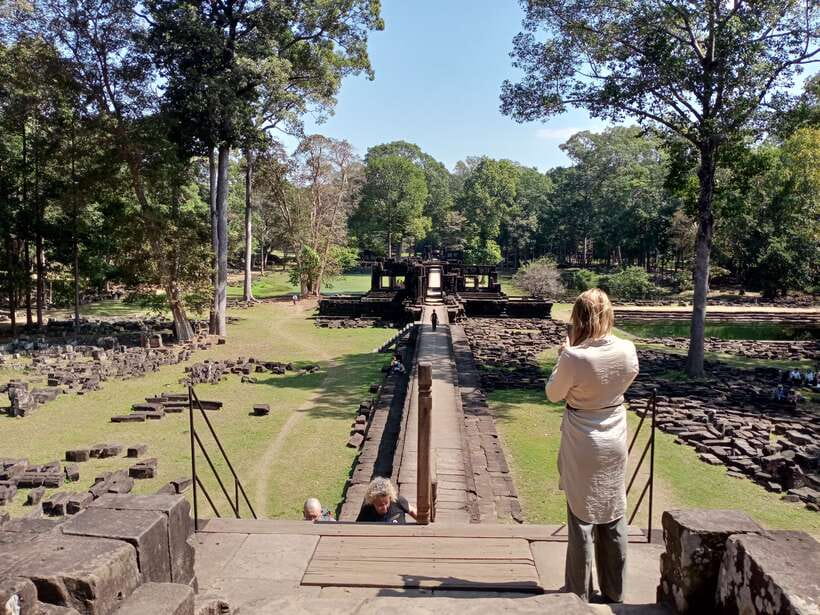
This tour rides in a private setup, meaning you won’t be sharing the day with random strangers beyond your own group. You also have a driver who stays with you the whole tour, so you don’t spend your time figuring out logistics.
Two comfort details show up repeatedly in guide experiences:
- Cold water at stops, especially on hot days.
- Cold towels handed out when you come back from temple heat.
Those sound small, but they stop the day from turning into a constant dehydration and wipe-down cycle. They also help you keep momentum so you can actually enjoy the temples, instead of just surviving them.
English guidance is another big win. The guides listed in the tour feedback include people like Arun, Sim, Som, Rith, and San. Different styles, same core value: they explain what you’re seeing and answer questions, including Cambodia-wide context and temple meaning.
And yes, photo help is part of the package. Many guides point out where to stand for the best shots and how to frame the temple towers or tree ruins so your pictures don’t look like everyone else’s.
Price and tickets: what your $34 gets you (and what you’ll pay separately)
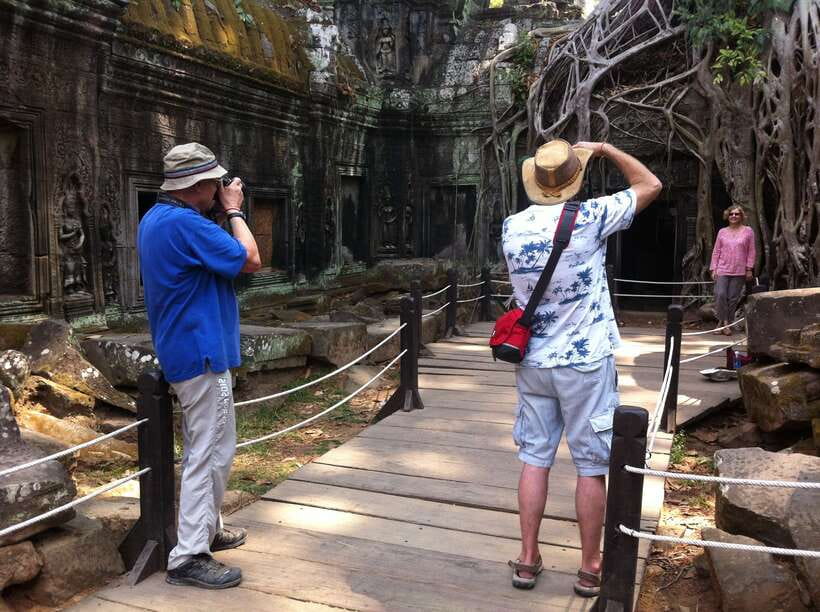
The tour price is $34 per person for a private 7-hour guided temple day with return transfers and bottle water. That’s not just “entry to temples.” It’s transport, one English-speaking guide for the full day, skip-the-line handling, and the timing of a route that packs in several major UNESCO sites.
Entry ticket is separate: Angkor Wat temple entry is $37 per person, covering all temples, and you pay it onsite. This matters for budgeting. If you’re trying to figure out total cost, you’re looking at roughly $71 per person when you add the included tour price plus the separate temple ticket.
Is it value? For most people, yes, because it’s hard to build a private, guided, multi-temple day on your own without wasting time and losing the meaning. The guide turns “I visited” into “I understood what I saw.” And the private format keeps the day from feeling like a forced march.
If you’re traveling on a tight budget, you can compare with group tours. But if you care about comfort, photo timing, and explanations in English, this setup usually feels worth it.
Who should book this private Angkor day
This tour fits best if you:
- Want a private day with control over pace and breaks.
- Care about explanations, not just photos.
- Prefer temple time over logistics stress.
- Appreciate comfort on hot days, including water and cold towels.
You might want a different approach if:
- You don’t handle walking well. Temple days involve a lot of ground and some climbing.
- You’re set on a very early-morning or very late-night schedule beyond what a 7-hour plan typically allows.
If you’re traveling with kids, note the rule in the tour info: children under 12 get free entry to any temple. That can be a real budget win.
Should you book this private Angkor Temple Tour?
Book it if you want Angkor Wat, Bayon, and Ta Prohm with an expert guide steering you through the meaning, not just the map. The private format plus skip-the-line access and heat-comfort details make the whole day run smoother than the do-it-yourself scramble.
Skip this tour only if you’re trying to minimize walking or you’re allergic to paying the separate $37 temple ticket. Otherwise, this is a very solid way to see the highlights without losing the day to crowds and heat.
FAQ
Is the Angkor Wat entry ticket included?
No. The tour price covers the guide and transport, but the Angkor Wat temple entry ticket ($37 per person) is paid onsite. The ticket covers access to the temples.
How long is the private tour?
The duration is 7 hours.
What’s included in the tour price?
Included are an English-speaking tour guide, return transfers, and bottle water.
Do I need to buy tickets in advance?
The ticket is described as something you can pay for onsite.
What’s the dress code for temple entry?
Shorts aren’t allowed. Shorts that cover the knees are allowed for entry.
Do kids get discounted or free temple entry?
Yes. Children under 12 get free entry to any temple.
Is this tour private?
Yes. It’s a private group tour, with pickup from your hotel lobby and your guide and driver staying with you for the whole day.