REVIEW · SIEM REAP
Siem Reap: Private Tour of Angkor Complex
Book on GetYourGuide →Operated by Euro Khmer Voyages · Bookable on GetYourGuide
Angkor hits fast, and this tour hits smoothly. It’s a private full-day route through the Angkor temple world in Siem Reap Province, with an English-speaking guide and air-conditioned vehicle to keep the long day manageable. You’ll cover major sites built by Khmer kings from the 9th to the 15th centuries, then abandoned around 1430, all in one organized plan.
I especially like how the day starts deep in Angkor Thom before shifting to Ta Prohm’s jungle feel, then finishing with Angkor Wat on the main plain. You’ll also get included perks that help in the heat—fresh coconut juice, cool towel, and bottled water. The one drawback to plan around: the Temple Pass entrance fee ($37/person) and lunch/soft drinks/beer are not included, so your final cost is higher than the base price.
In This Review
- Key highlights worth your attention
- The “full-day” rhythm: how your time is likely to feel
- Angkor Thom: South Gate to the terraces you shouldn’t skip
- Bayon Temple and Baphuon: when the carvings do the talking
- Phimeanakas, elephants, and the Leper King terrace
- Ta Prohm: the jungle temple that still feels unsettled
- Angkor Wat in the afternoon: the big-name finish on the plain
- Price and value: what $72 really buys you
- What’s included on the ground (and what you should bring to the day)
- Who this private Angkor complex tour suits best
- Should you book this Siem Reap private Angkor tour?
- FAQ
- What’s included in the $72 per person price?
- Do I need to buy the Temple Pass for Angkor sites?
- Is lunch included?
- How long is the tour?
- What temples and areas will I visit?
- What do I need to provide before the tour?
Key highlights worth your attention
- South Gate entry to Angkor Thom sets a clear flow right from the first moment
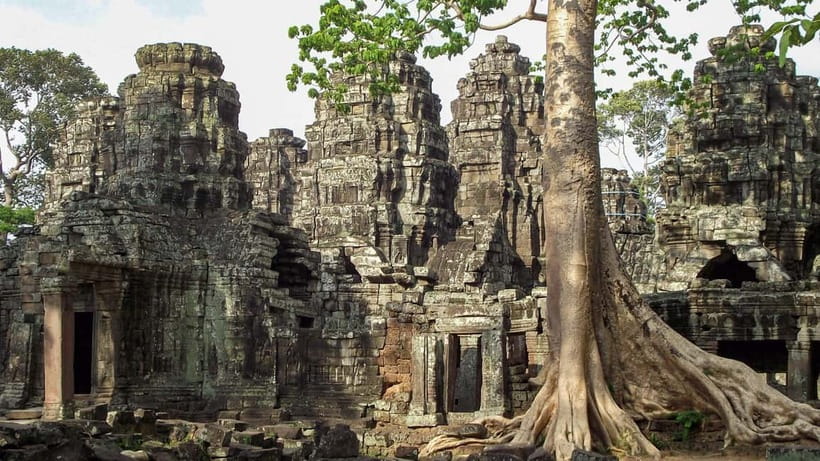
- Bayon’s massive carved faces give you a memorable visual anchor
- Ta Prohm is treated like a “jungle temple” stop that still feels unusual and atmospheric
- Terrace of the Leper King adds a darker, more dramatic stop to the circuit
- Angkor Wat in the afternoon gives you the big-name finish after the rest of the complex
- Hotel pickup and drop-off in Siem Reap City reduces decision fatigue
The “full-day” rhythm: how your time is likely to feel
This is sold as a full-day private Angkor complex tour, and the order matters. You begin in Angkor Thom, move through a cluster of major monuments and carved terraces, then shift to Ta Prohm before lunch-time. In the afternoon, you go to Angkor Wat—the best-known site—on the plain of Angkor.
That structure works for two reasons. First, you’re not bouncing randomly between temples; you’re following a logical route through the Angkor area. Second, you get the mind-bending contrast of styles: thick jungle energy and survival-at-the-temple feeling at Ta Prohm, then the more composed, iconic geometry of Angkor Wat later in the day.
If you’re the type who hates rushing, a private format helps. It’s still a long day, though, and you’ll want to be realistic about walking between sites. The tour includes water and a cool towel, which is helpful, but it doesn’t magically shrink the distance across the huge Angkor area (about 60 square miles of ancient city remains).
You can also read our reviews of more private tours in Siem Reap

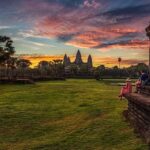
Angkor Thom: South Gate to the terraces you shouldn’t skip
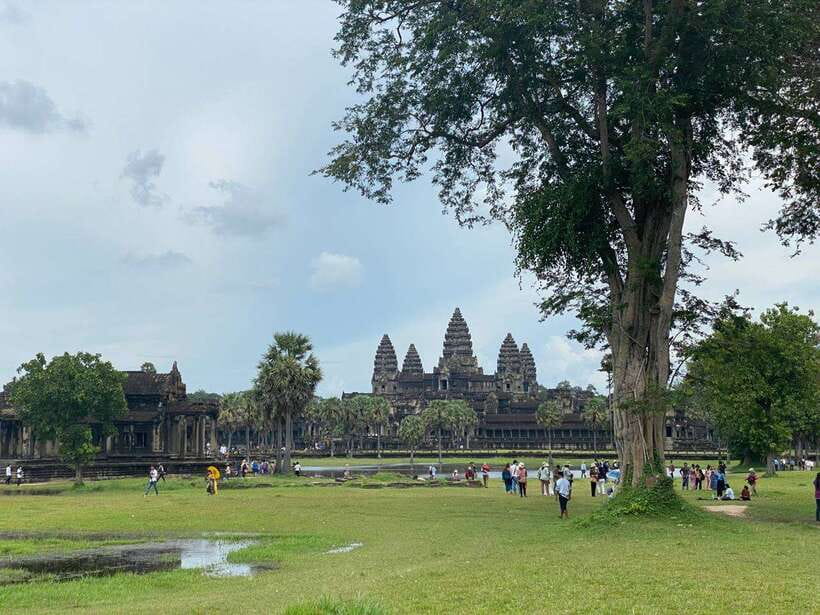
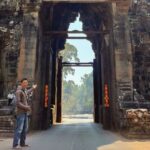
Angkor Thom is the ancient capital core, and the plan starts the way you’d want it to: entering through the South Gate and moving into the monumental center of the kingdom. From there, you’ll hit Bayon, Baphuon, and a string of royal-zone stops, including the Royal Enclosure and Phimeanakas.
Here’s what makes this section more than just a list of temples. Angkor Thom concentrates many of the Khmer Empire’s “power signals” in one area—stonework, official architecture, and carved storytelling in a tight radius. When you see Bayon and then immediately move into the other compounds nearby, you start to understand how the city was laid out for both ceremony and control.
You’ll also get the Terrace of the Elephants and the Terrace of the Leper King, which are unforgettable because they’re specific. These terraces aren’t just pretty backdrops; they’re carved environments tied to ritual and legend. They’re the kind of stops where you slow down naturally, because the details demand it.
One practical consideration: your guide’s explanation style can make a big difference here. Angkor Thom is where historical context helps you connect the carvings, layout, and royal meaning. With an English-speaking guide, you should be able to ask questions and get answers—just be ready to use that time.
Bayon Temple and Baphuon: when the carvings do the talking
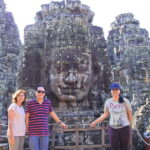
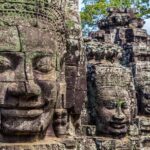
Bayon Temple is the visual headline of Angkor Thom, and the tour highlights the main experience: the massive carved faces. This is one of those places where you don’t just look—you keep noticing new angles as you move around. The faces act like a map for your attention; they pull you across the stone and encourage you to reframe what you thought you were seeing.
After Bayon, you continue to Baphuon Temple and then through other royal-area highlights like the Royal Enclosure and Phimeanakas. The practical value of this ordering is that it keeps your “story” coherent. You get a dramatic centerpiece first, then you move into other monuments that feel like supporting chapters in the same royal narrative.
If your goal is to understand Angkor as a functioning city rather than a theme-park of buildings, this sequence helps. You’re shown multiple temple roles in one day: face-forward symbolic structure, then a deeper look at the royal zone and the spaces that feel official and ceremonial.
Phimeanakas, elephants, and the Leper King terrace
A lot of Angkor tours skim the terraces. This one slows you down by placing the carved terraces right inside the Angkor Thom circuit: the Terrace of the Elephants and the Terrace of the Leper King.
The Terrace of the Elephants is a strong stop because it ties architecture to imagery. You get carved surfaces meant to be seen in a ceremonial context, not just admired like a museum artifact. And the Terrace of the Leper King adds a darker tone. Even if you don’t memorize every legend, you’ll feel the shift in mood when you’re standing there surrounded by stone carvings tied to that name.
Then there’s Phimeanakas, part of the royal enclosure area. This is the kind of stop where the guide’s context matters. Without explanations, you may see more “temple details.” With explanations, you start to understand why this zone mattered in the kingdom’s story.
Ta Prohm: the jungle temple that still feels unsettled
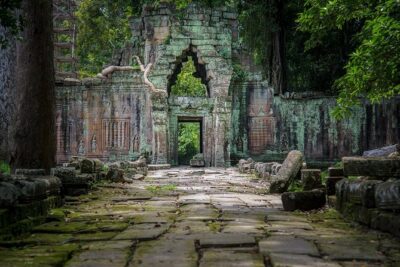
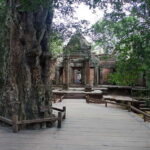
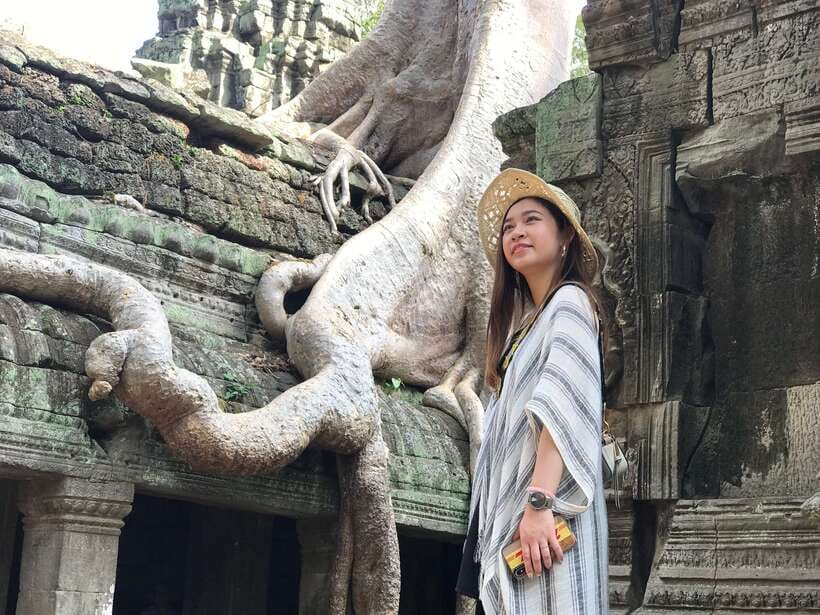
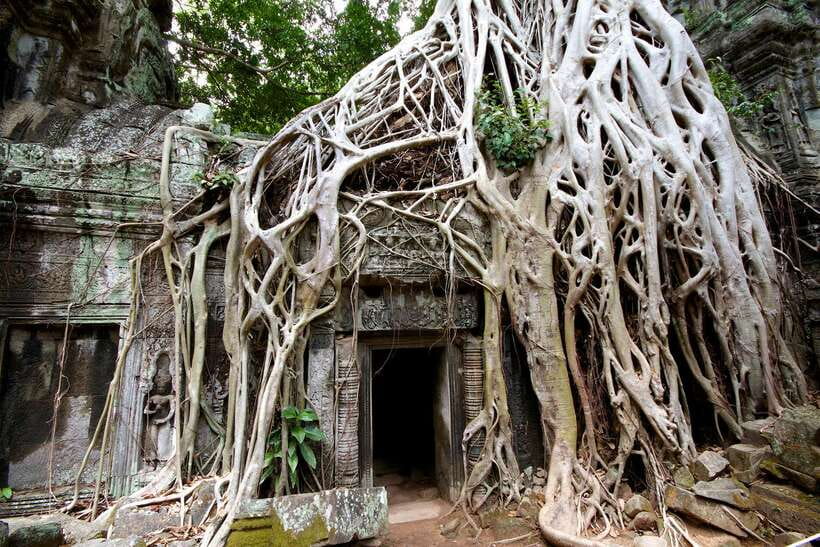
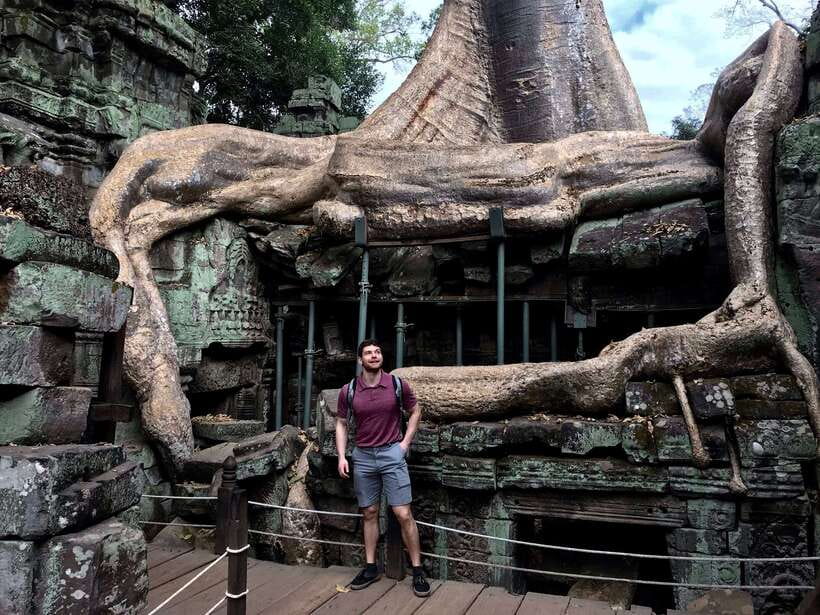
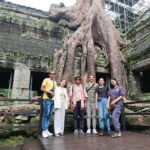
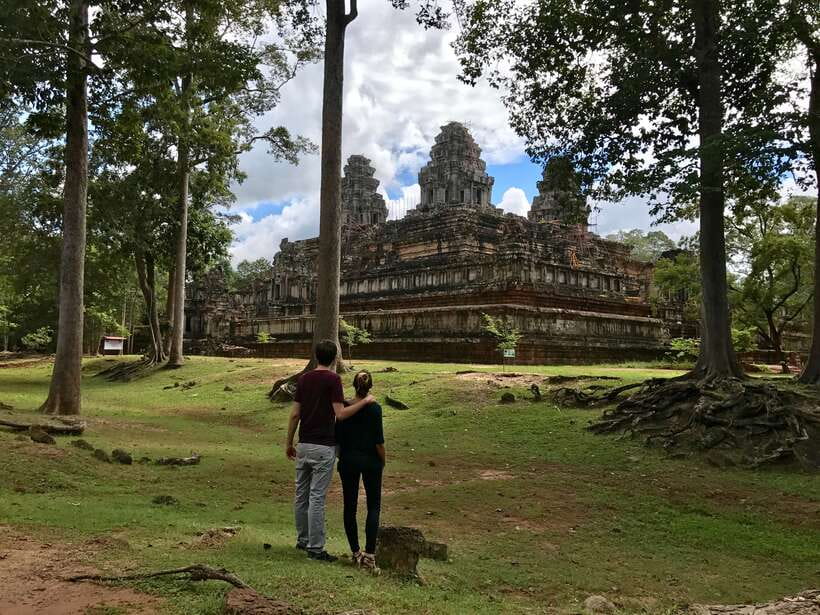
After moving through the Angkor Thom core, you head to Ta Prohm. This is described as a “lost jungle city” temple, and the key detail for your expectations is that it’s been relatively untouched since it was discovered.
That “left in place” feeling is the point. Ta Prohm is different from temples that feel polished and controlled. Here, the jungle makes more sense as a character. You’ll see how stone and roots share the same space, and it creates an atmosphere that’s hard to replicate anywhere else.
For many people, Ta Prohm is the emotional center of the day. It’s where the Khmer kingdom feels both distant and close at the same time—distant because of the centuries, close because of how the setting grabs you instantly. You don’t need a deep background to enjoy it, but you’ll enjoy it more if your guide points out what you’re actually looking at.
One thing to keep in mind: because the experience is tied so strongly to the setting, your comfort matters. You’ll have water and cooling support included (bottled water, cool towel), but the day still includes multiple temple stops, so pacing yourself helps.

Angkor Wat in the afternoon: the big-name finish on the plain
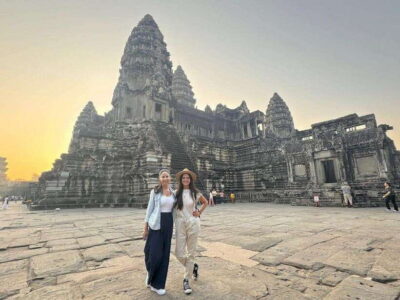
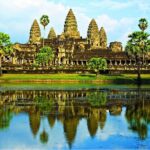
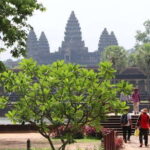
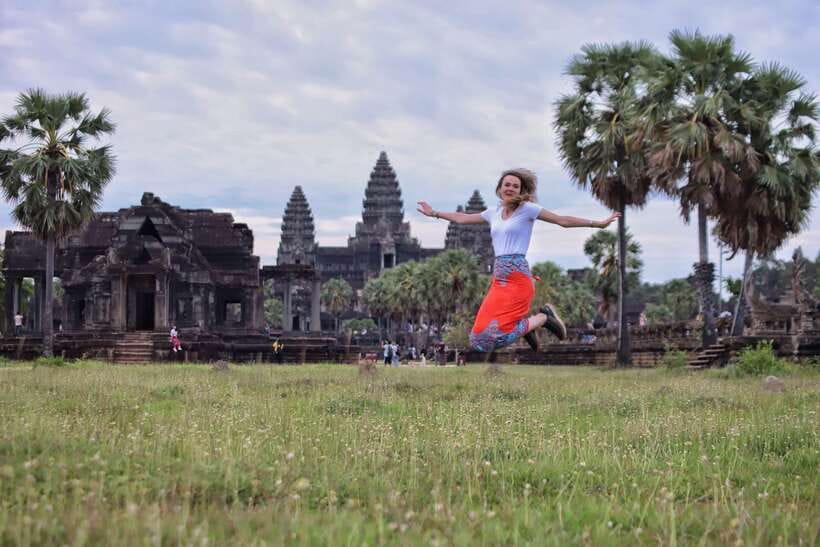
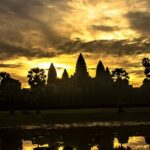
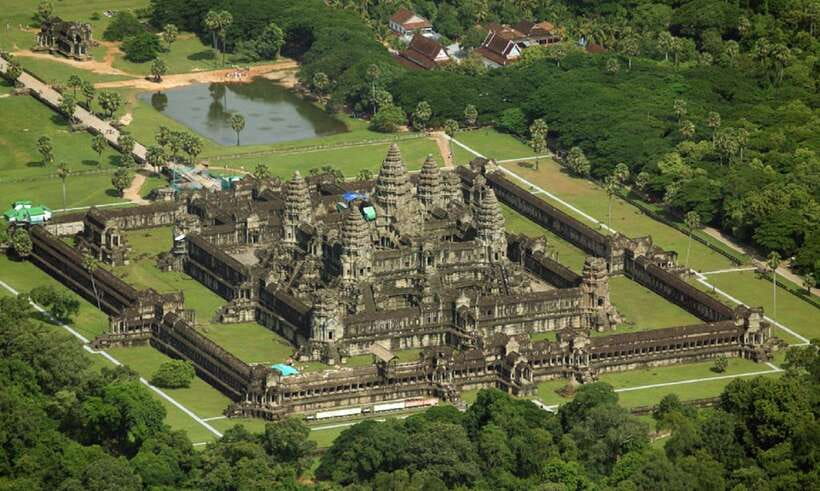
In the afternoon after lunch, you visit Angkor Wat, the famous centerpiece of the Angkor complex. The tour doesn’t treat it like a quick photo stop. It sets expectations with scale and design facts: the complex covers 81 hectares, and the plan compares its size to the Imperial Palace in Beijing.
Why that matters to you: size changes your pacing and attention. At Angkor Wat, you can’t treat the site like a single building. You’re walking through a large, planned composition where balance and proportions show up in how the space guides your movement.
The description also frames Angkor Wat as a lost city in the jungle—exactly the feeling people want when they come. And because you reach it after Ta Prohm, you get a stronger contrast between moods. Ta Prohm feels worn by time and nature. Angkor Wat feels engineered and formal.
If you love the idea of ending with the most iconic view, this schedule is a good match. You’re less likely to feel like you “saved the best for later” and then got tired halfway through.
Price and value: what $72 really buys you
The tour price is $72 per person, and it’s a private full-day experience. That base rate includes the practical stuff that often costs time and hassle: pickup and drop-off from your hotel in Siem Reap City, an air-conditioned vehicle, and a fully vaccinated English-speaking tour guide and driver. You also get drinking water, fresh coconut juice, and a cool towel.
But the big add-on you must budget for is the Temple Pass ($37/person). Entrance fees aren’t included, and that matters because it can move the total from “reasonable” to “okay, plan your budget first.” Food and drinks are also not included—lunch and any soft drinks or beer will be extra.
So how do you judge the value? For me, this tour looks strongest if you want:
- a full-day, organized Angkor circuit without coordinating transport
- an English-speaking guide who can explain what you’re seeing
- private comfort tools like air-conditioning, bottled water, and cool towels
It looks less strong if you’re trying to minimize every expense and you’re okay handling site logistics on your own. Since the Temple Pass is a fixed cost, you’re mostly paying for the private route and guide time.
What’s included on the ground (and what you should bring to the day)
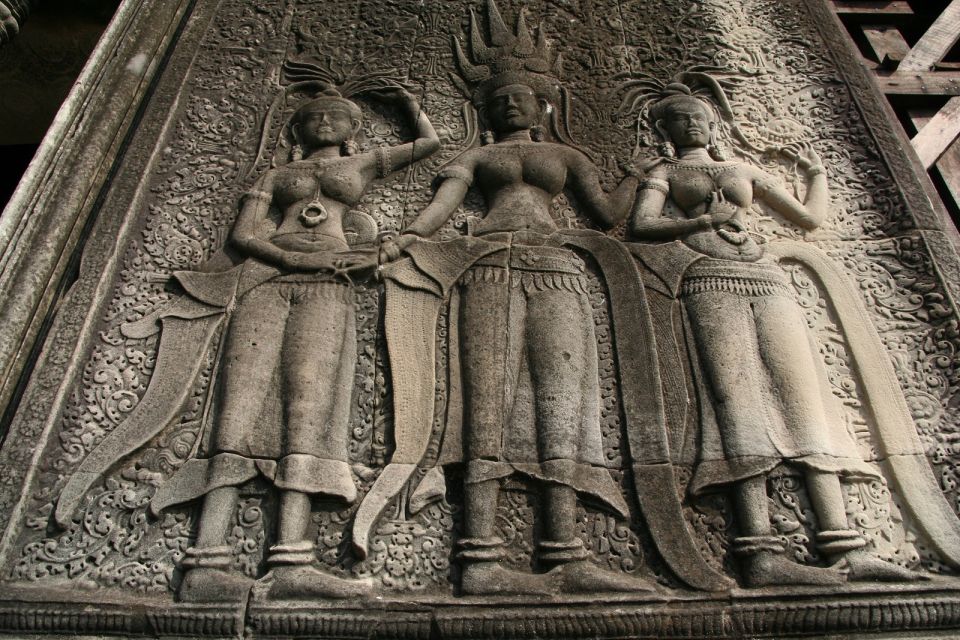
Included items are clearly listed, and they’re the ones that keep the day from turning into pure logistics:
- Transfers by air-conditioned vehicle (car/minivan)
- Pickup and drop-off from your hotel in Siem Reap City
- English-speaking guide and driver (noted as fully vaccinated)
- Drinking water
- Fresh coconut juice
- Cool towel
That’s useful because Angkor is a long day by nature. The cooling and hydration are not “nice extras”—they’re part of whether you stay pleasant and present for the carvings, terraces, and temple compounds.
Not included:
- Temple Pass ($37/person)
- Lunch and drinks (soft drinks or beer)
- Personal expenses
My practical advice: treat lunch as part of your planning and don’t assume it’s bundled. If you care about what you eat, decide ahead of time where you’ll stop for lunch so you’re not making decisions while hungry.
Who this private Angkor complex tour suits best
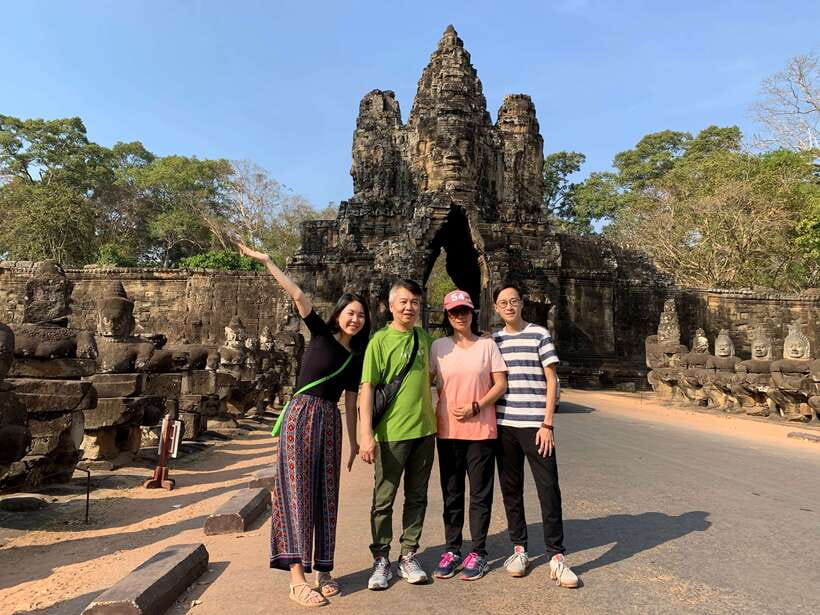
This is a smart fit if you want Angkor in one continuous, guided story. It’s especially good for first-timers who want major highlights—Angkor Thom (including Bayon), Ta Prohm, and Angkor Wat—without scrambling for timing.
It’s also a good choice for small groups or couples who prefer privacy and control over pace. Private usually means you can ask questions and adjust your attention from carvings to architecture to meaning as you walk.
If you’re the kind of person who hates structured tours and wants full freedom to skip or roam independently, you might find the “full day, set route” less satisfying. The tour is designed to take you through the big hits in a planned sequence.
Should you book this Siem Reap private Angkor tour?
I’d book it if you want a private, full-day Angkor complex plan that covers the core monuments in a logical flow: Angkor Thom first, then Ta Prohm, then Angkor Wat. The included guide, transport, and small comfort perks (water, coconut juice, cool towel) do real work on a day this long.
I’d pause before booking if your priority is minimizing total cost. Between the Temple Pass ($37/person) and the fact that lunch/drinks aren’t included, the final day budget can be noticeably higher than the base price.
FAQ
What’s included in the $72 per person price?
The price includes a fully vaccinated English-speaking tour guide and driver, air-conditioned vehicle transfers, hotel pickup and drop-off in Siem Reap City, drinking water, fresh coconut juice, and a cool towel.
Do I need to buy the Temple Pass for Angkor sites?
Yes. The Temple Pass entrance fee is not included and costs $37 per person.
Is lunch included?
No. Food and drinks (including lunch and soft drinks or beer) are not included.
How long is the tour?
It’s a full-day tour, with Angkor Thom and Ta Prohm in the first part of the day and Angkor Wat visited after lunch.
What temples and areas will I visit?
You’ll visit Angkor Thom (including South Gate, Bayon Temple, Baphuon Temple, Royal Enclosure, Phimeanakas, Terrace of the Elephants, and Terrace of the Leper King) and Ta Prohm, then Angkor Wat in the afternoon.
What do I need to provide before the tour?
You’ll need to provide your hotel or guesthouse name so the guide and driver can pick you up.