Angkor temples can overwhelm fast, so this route keeps things tidy. This 2-day plan covers the big icons—Angkor Wat, Ta Prohm, and Bayon—then adds two often-missed stops: Koh Ker and Beng Mealea. I like that you’re not stuck arranging your own rides across the park and beyond, because transport is organized the whole way. I also like the pacing: you get a guide, cold water, and time to look closely without feeling chased through crowds.
One thing to consider: temple entry fees (the Temple Pass and add-ons for Koh Ker and Beng Mealea) are not included, so you’ll need extra cash planning.
In This Review
- Key things I’d bank on before you go
- A practical two-day route through three temple worlds
- Day 1: Angkor Wat, Ta Prohm, and Bayon in Angkor Thom
- Day 2: Koh Ker’s seven tiers and Beng Mealea’s highway ruins
- Why the guide and transport are the whole point
- Temple Pass, dress code, and cash planning
- Pacing, private-group comfort, and walking time
- Price and value: what you’re really paying for
- Who this 2-day Angkor Wat + Koh Ker + Beng Mealea tour fits best
- Small reality checks before you book
- Should you book this tour?
- FAQ
- FAQ
- What’s included in the 2-day tour price?
- Are the Temple Pass fees included?
- What temples are visited across the two days?
- What’s the dress code for entering the temples?
- Do I need to arrange my own transportation between sites?
- Is free cancellation available?
Key things I’d bank on before you go
- Private, with your group only, so the schedule is easier to follow and you can move at your pace.
- Organized transport end-to-end, which saves you the hassle of motorcycles and random taxi negotiations.
- Cold drinking water is included, a small detail that matters in the heat between ruins.
- A guide who explains what you’re seeing, including the why behind the layout and the famous faces at Bayon.
- Fewer tourists at Koh Ker, where the dense jungle location helps you explore with breathing room.
- Bring cash for Temple Passes, because you’ll need it on site to enter.
A practical two-day route through three temple worlds
Angkor is famous for its wow factor, but the logistics can get messy. This tour is built around the reality that you have limited time, you’ll walk a lot, and you don’t want your day derailed by transport plans.
What you get here is a guided loop that strings together classic Angkor with two “different” temple atmospheres. Angkor Wat, Ta Prohm, and Bayon all sit in the main zone with major sight lines and heavy visitor presence. Koh Ker feels more remote and raw, while Beng Mealea reads like a ruined cousin of Angkor Wat.
You can also read our reviews of more tours and experiences in Siem Reap



Day 1: Angkor Wat, Ta Prohm, and Bayon in Angkor Thom
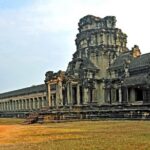
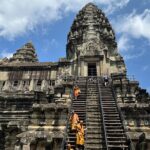
Day 1 is the headline circuit of the Angkor Archaeological Park. You start at Angkor Wat, the reason most people come to Siem Reap in the first place. It’s the largest temple built during the Khmer empire, and it draws well over 2 million visitors per year—so yes, you’ll see crowds, but you’ll also get to experience the scale that makes Angkor Wat so hard to forget.
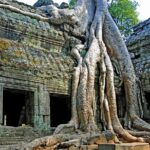
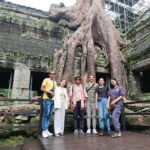
Next comes Ta Prohm, the temple many people know as the Tomb Raider temple. This is where you’ll see the jungle eating back into stone: the ruins are left exposed to the elements, with roots and growth pushing right through the structure. If you’re a photo person, it’s also one of those sites where angles matter, so having a guide who can steer your timing and viewpoint helps.
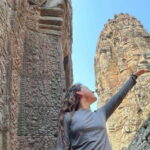
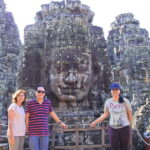
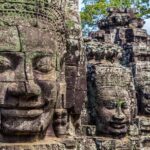
Then you move into Bayon Temple, located inside Angkor Thom, the ancient walled city that was the heart of the Khmer Empire for centuries. Bayon’s most recognizable feature is the series of towers crowned with large faces. You’ll learn that these faces are often interpreted as the king or as gods looking down over the city—an idea that turns the temple from just architecture into something more like a political message.
My favorite part of Day 1 is how the three stops create a mood shift. Angkor Wat feels monumental and composed. Ta Prohm feels wild and half-reclaimed. Bayon feels watchful—like you’re walking through a place designed for authority.
Day 2: Koh Ker’s seven tiers and Beng Mealea’s highway ruins
Day 2 takes you out into a different tempo. Koh Ker is known for its seven-tiered pyramid-style structure, and it doesn’t look like the other Khmer temples you’ll see around Angkor. That difference matters, because it signals that you’re not just repeating the same architectural language—you’re seeing another expression of Khmer ambition.
Koh Ker also sits in dense jungle, and the layout benefits you as a visitor. The tour info points out you won’t find thousands of people there, and that makes a big difference for walking and looking slowly. In practical terms, it means you can linger at viewpoints and enjoy the quiet without constantly dodging through shoulder-to-shoulder groups.
After Koh Ker, you head to Beng Mealea, a huge ruin complex that once sat on an ancient highway connecting major temples, including the route toward Preah Khan. Today, you’ll see a sprawling set of stone ruins that were designed to echo Angkor Wat’s form. It’s big, but it’s also intentionally not trying to replace Angkor Wat—it’s its own experience, more broken, more tangled, and easier to picture as a living road of movement rather than a single “must-see” monument.
If Day 1 is about iconic recognition, Day 2 is about atmosphere. Koh Ker gives you contrast. Beng Mealea gives you scale and drama without the same level of crowd pressure.
Why the guide and transport are the whole point
Temple tours often sell “see everything,” but the real value is what you don’t have to manage. Here, transport is arranged for your group size for both days, and that means you avoid the usual Angkor headache: booking motorcycles, lining up taxis, and spending time negotiating routes in between temple gates.
A guide also changes how your eyes work. With the right explanations, Bayon’s faces stop being just an image and start reading like a message. The guide can point out how the sites relate to Khmer planning, and they can help you connect what looks similar to what’s actually different. In a recent note from the tour experience, Sam was mentioned in a communication mix-up, and the guide was praised for in-depth explanations and intellectual curiosity about the past. Even when things run late (it happened due to a misunderstanding), strong guiding still turned the two days into something meaningful.
That’s the kind of practical value you want: less “collect photos,” more “understand what you’re seeing as you walk.”
Temple Pass, dress code, and cash planning
This tour has a clear budgeting reality: the Temple Pass is not included. The day pass is listed as $37 per person, with additional costs for Koh Ker ($10 per person) and Beng Mealea ($5 per person). If you don’t plan for it, you’ll feel stressed right at the point where you should be excited.
Then there’s the dress code: you need to cover shoulders and knees to enter the temples. This is easy to handle with light clothing, but it matters because rules get enforced on entry. If you’re traveling with shorts and a thin tank top, swap in something that meets the requirement before you arrive at the gates.
A small but smart habit: set aside the temple fees in advance so you don’t scramble for cash in the middle of your day. This tour specifically flags that extra cash is important, and that’s not a random warning—it’s just how it works on site.


Pacing, private-group comfort, and walking time
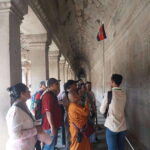
The tour is private in the sense that only your group participates. That matters for two reasons. First, it reduces waiting and confusion—there’s no random reshuffling with other groups. Second, it helps you manage pace, especially across two full days of temple walking.
The tour info also calls out that you can go at your own pace. That doesn’t mean you’ll get unlimited free time everywhere. It means the guide can adjust the rhythm—time for photos, slower viewing at key structures, and regrouping when the group naturally stretches out after a few minutes of landmark hunting.
Cold drinking water is included, which is a simple comfort upgrade you’ll genuinely appreciate. Temples create a long day of sun, shade shifts, and standing around to orient yourself. Water keeps your energy steady, and it helps you focus on the site instead of the discomfort.
Price and value: what you’re really paying for
The price is $147.44 per person for the 2-day tour. That may look straightforward until you remember the temple passes are separate, and food isn’t included. Still, the cost can feel fair when you compare what’s being handled for you.
Here’s what your money covers:
- A tour guide across both days
- Cold water
- Transport suited to your group size
- A plan that hits five major temple areas without you needing to assemble separate day trips
The value shines when you factor in time and stress. If you were to DIY this, you’d likely spend energy on vehicle arrangements, ticket timing, and route decisions between sites. Paying this price is really buying your day back—so you can spend your limited time in Cambodia looking at stone and learning how it works, instead of solving logistics.
Just be honest with your budget. With Temple Pass costs added, your total will rise. But if your goal is maximum temple coverage in two days, this tour structure is set up for that reality.
Who this 2-day Angkor Wat + Koh Ker + Beng Mealea tour fits best
This tour is a great match if you:
- Want the classic Angkor highlights and two different-feeling ruins on the same timeline
- Prefer a guide and organized rides over figuring out transportation day by day
- Like learning while you walk, not just passing through stops for quick photos
- Want Koh Ker’s relative quiet without turning the day into a do-it-yourself adventure
It might be less ideal if you hate a structured schedule or you’re determined to spend all day in one monument only. The plan is designed for breadth in 48 hours, so you’ll have a lot of stops with a lot of moving around.
Small reality checks before you book
I always think about two practical risks with any two-day temple tour.
First, timing and entry conditions can affect how your day feels. Even with a good plan, you might face late starts or slowdowns due to communication or coordination. In the experience note I saw, a misunderstanding between Sam and Viator caused a late start, but the guide still delivered in-depth explanations across the sites. That tells you something important: when the guide is strong, the tour can still work even if things aren’t perfect at the start.
Second, plan for the add-on costs right away. Temple passes and site fees aren’t included, and the dress code is strict enough to matter. If you arrive without the right clothing or cash, you’ll lose time at the worst possible moment.
Should you book this tour?
If you want a no-fuss way to see Angkor Wat, Ta Prohm, Bayon, plus Koh Ker and Beng Mealea in two days, I think this tour makes sense. The strongest reasons are practical: organized transport, a guide who explains what you’re walking through, and the fact that Koh Ker and Beng Mealea broaden your view beyond the most famous sites.
Book it if you value time, guidance, and a smoother day over DIY freedom. Pass on it only if you’re trying to avoid schedules entirely or you’d rather spend extra days in fewer temples so nothing feels rushed.
FAQ
FAQ
What’s included in the 2-day tour price?
The tour includes a tour guide, cold drinking water, and suitable transport for your group size. Food and drinks are not included.
Are the Temple Pass fees included?
No. You’ll need to pay separately for the Temple Pass: 1-day is $37 per person, Koh Ker is $10 per person, and Beng Mealea is $5 per person.
What temples are visited across the two days?
Day 1 includes Angkor Wat, Ta Prohm, and Bayon Temple in Angkor Thom. Day 2 includes Koh Ker and Beng Mealea.
What’s the dress code for entering the temples?
You must cover your shoulders and knees to enter the temples.
Do I need to arrange my own transportation between sites?
No. Transport is organized for the duration of the tour, so you don’t need to book motorcycles or taxis between stops.
Is free cancellation available?
Yes. You can cancel up to 24 hours in advance for a full refund. If you cancel less than 24 hours before the start time, the amount paid is not refunded.