REVIEW · SIEM REAP
2 Days Guided Historical Tour in Angkor
Book on Viator →Operated by Angkor Wat Shared Tours · Bookable on Viator
Sunrise at Angkor Wat is a jolt of awe. What makes this tour work is the early start plus a small group (max 15) and top-tier guiding from names like Sok and Sam Vone. You get a clear, paced route across the most important sights without the stress of figuring it all out at dawn.
I especially like the way the itinerary balances “big must-sees” with time for your own looking. You’ll cover 11 temples in two days, and the tour throws in comfort basics like cold water and a wet towel on the way between sites. Hotel pickup and drop-off also means you can focus on the temples instead of your tuk-tuk math.
One thing to plan around: temple entrance fees are not included. The tour price is $35, but you should budget the $62 per person ticket cost on top, plus meals during breaks.
In This Review
- Key things I’d plan around
- Before You Go: The 4:30am Start and How to Beat It
- Day One Route: Angkor Wat, Angkor Thom, Bayon, and Ta Prohm
- Angkor Wat at sunrise (plus guided inside time)
- Angkor Thom South Gate (quick and dramatic)
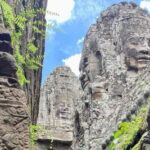
- Bayon Temple (the smiling faces, explained)
- Ta Keo (temple-mountain, then breakfast break)
- Ta Prohm (roots, ruins, and photo time)
- Day Two: Pre Rup to Preah Khan, Ending with Sunset Views
- Pre Rup (a temple mountain for big viewpoints)
- Ta Som (small temple, calm atmosphere)
- Neak Pean (an artificial island and a circular temple)
- Preah Khan (longer stop, more story)
- Phnom Bakheng and sunset
- Price and Logistics: What $35 Really Buys You
- Guides Make the Difference: What You Gain Beyond the Signs
- Comfort, Breaks, and What You’ll Want to Bring
- Who This Tour Fits Best (and Who Might Want to Think Twice)
- Should You Book This Angkor Wat 2-Day Guided Tour?
- FAQ
- Does the tour include hotel pickup?
- What time does the tour start?
- How many temples are covered in two days?
- Is the temple entrance fee included in the price?
- What’s included in the tour price?
- What is the group size?
Key things I’d plan around
- Max 15 people helps keep the pace human and your photos less chaotic
- Sunrise at Angkor Wat and sunset later gives you the light show most people miss
- 11 temples in 2 days means you see more than the usual highlight scramble
- Cold water and a wet towel are real lifesavers in the heat
- Guides who tell the story well (Sok, Vone, Ho Heang, Sem, Sary, Sam) make the stones make sense
- Restroom and food stops are built into the day, with breakfast and meals handled separately
Before You Go: The 4:30am Start and How to Beat It
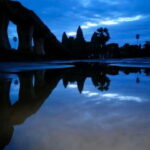
Your day starts at 4:30am. That’s early enough that you’ll likely be arriving at Angkor while the world is still half-asleep, which is exactly why it’s worth doing guided instead of winging it. If you want the calm version of Angkor Wat before the crowds fully show up, this timing is the whole point.
The meeting point is listed as the Siem Reap Pub Hostel area behind Angkor Night Market, with drop-off back around Pub Street or your hotel. In practice, I’d treat this as a “be ready before the call” situation. One low-rated review complained about pickup coordination, so the safest move is to confirm exactly where you’ll be picked up and stay easy to spot.
Some groups have reported getting a flashlight for that early darkness. Don’t count on it as a guarantee, but if you’ll be standing around at 4:30 in the dark, bring a small light or at least check that your phone has power.
You can also read our reviews of more guided tours in Siem Reap

Day One Route: Angkor Wat, Angkor Thom, Bayon, and Ta Prohm
Day one is all about the names you already recognize, but you’ll see them in a guided sequence that makes the complex feel logical instead of random. The tour moves early, then continues through the day with several major temple stops.
Angkor Wat at sunrise (plus guided inside time)
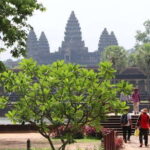
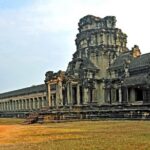
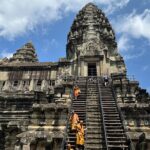
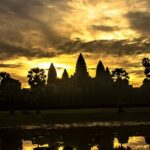
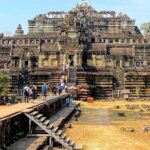
Angkor Wat is where your eyes will fail a little. You’ll start with sunrise and then explore inside with a guide explaining what you’re looking at. The tour duration for this stop is listed at about 2 hours, and the admission ticket is not included in the $35 price.
What you’ll love here is the context. Angkor Wat isn’t just a pretty silhouette; it’s built with a worldview in stone. A good guide helps you notice the layout and religious symbolism so it stops being “cool building” and becomes “I understand the point.”
The one trade-off: you’ll be up early and still doing real walking. If you’re not used to heat plus stairs plus dust, plan for a slower morning pace and make sure you use the provided water and towel.
Angkor Thom South Gate (quick and dramatic)
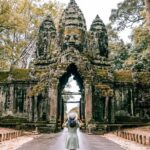
Next is the South Gate of Angkor Thom, a 12th-century city gate lined with carved faces and figures along a causeway. This stop is about 30 minutes, and again, tickets aren’t included.
This part is a good mental reset. You’ve been staring at Angkor Wat’s grandeur; now you’re stepping into the idea of the city as a whole. It’s also a photo-friendly moment because the gate is strong from multiple angles.
Drawback: since it’s short, you don’t get long “wander time.” If you like lingering, you’ll need to balance your curiosity with the group’s schedule.
Bayon Temple (the smiling faces, explained)
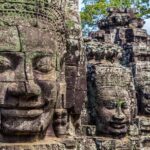
After the gate, you move to Bayon Temple, tied to Buddhism in the Angkor era. The stop time listed is 2 hours, which is a long enough window to actually slow down, not just rush through.
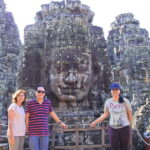
The big feature—those famous faces—can look almost surreal in person. A guide helps you understand how the temple fits into Angkor Thom and why the expression-based design shows up the way it does. You’ll also get time to look around without feeling like you’re constantly behind the group.
You can also read our reviews of more historical tours in Siem Reap

Ta Keo (temple-mountain, then breakfast break)
Then comes Ta Keo, a temple-mountain that’s described as possibly the first built entirely of sandstone by the Khmer. The tour lists 1 hour here, and before going in you’ll have a breakfast break.
Breakfast is not included in the tour price, so treat this as your chance to fuel up. This is one of the places where a guided schedule helps you avoid “hangry wandering,” because you’ll know when food is coming.
If you want a quieter feel than the busiest Angkor sites, Ta Keo can deliver that, but it depends heavily on the time of day and your exact visit season.
Ta Prohm (roots, ruins, and photo time)
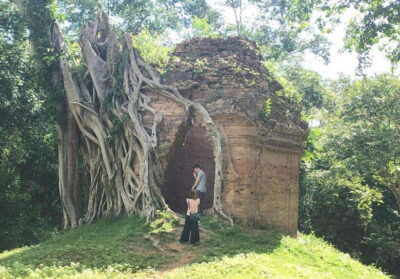
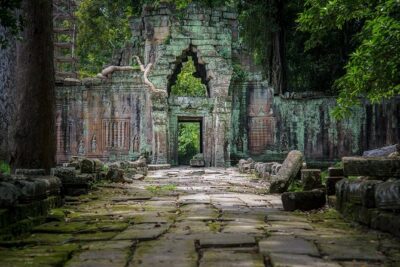
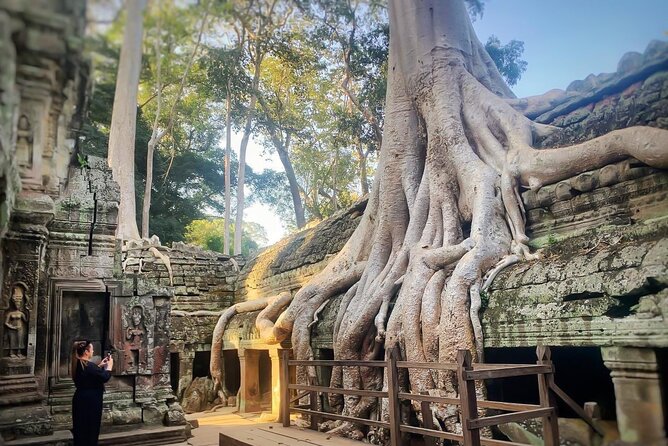
Day one ends with Ta Prohm, known for the dramatic tree roots that weave through the stones. The time listed is 1 hour, with a guided look before you likely have some space to take photos.
Here’s the practical truth: Ta Prohm is popular. Even when the stones feel magical, you’ll still be sharing the moment with lots of people. The upside is that a guide can help you find the angles and show you what to look for beyond the obvious.
Day Two: Pre Rup to Preah Khan, Ending with Sunset Views
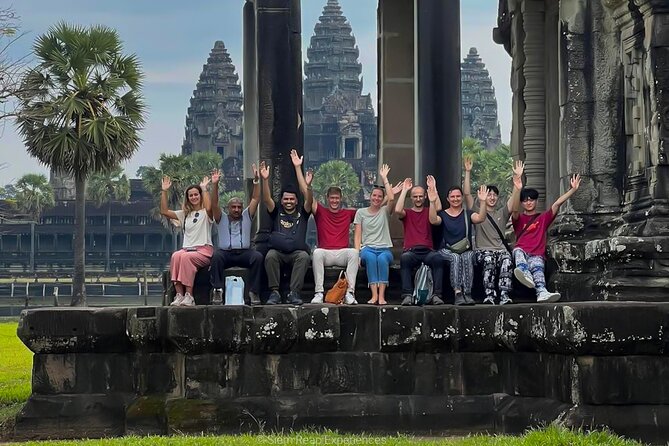
Day two is built for variety. The tour shifts toward additional temples that feel less like a frantic checklist and more like an exploration of different styles across the Angkor complex.
This day is also when you’re most likely to feel the cumulative walking. The good news is the small group size helps you keep your pace, and the provided water helps you stay sane.
Pre Rup (a temple mountain for big viewpoints)
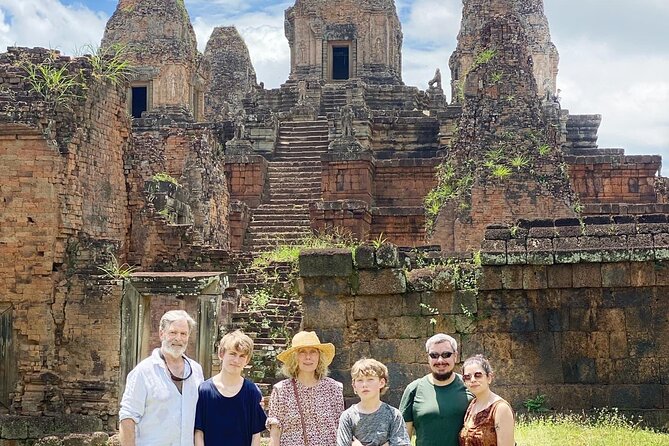
The first stop is Pre Rup, a Hindu temple dedicated to a Khmer king and associated with state temple building in the 10th/11th century era. It’s listed at 2 hours and it’s one of those sites where you can feel the “designed as a view” mindset.
You’ll typically get a bit more time here to see both structure details and the broader surroundings. A guide’s explanation matters because it helps you understand why these temples are built the way they are—step by step, tier by tier, with a reason for where your eye goes.
Ta Som (small temple, calm atmosphere)
Next is Ta Som, a smaller temple built at the end of the 12th century for King Jayavarman VII. The listing gives 1 hour, and the site’s smaller scale can make it feel more personal.
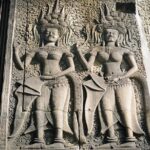
This is the kind of place where you can step back from the “famous faces” drama and enjoy stonework detail. If your legs are tired, Ta Som can feel like a good breather compared with the biggest stops.
Neak Pean (an artificial island and a circular temple)
Then you reach Neak Pean, an artificial island with a Hindu temple on a circular island in Jayatataka Baray. It’s listed at 1 hour.
Neak Pean is memorable because it’s not just a random ruin. It’s designed around water and an island concept. A guide can point out the temple’s relationship to the surrounding water system, which is the kind of detail most self-guided visits miss.
Preah Khan (longer stop, more story)
Next is Preah Khan, a 12th-century temple built for King Jayavarman VII to honor his father. It’s listed at 2 hours.
Preah Khan is where the tour earns its “see more than most people” promise. A longer stop gives your brain time to connect the dots: how different Khmer rulers shaped temple architecture and what religious purpose these spaces served.
Phnom Bakheng and sunset
The last stop is Phnom Bakheng. The listing shows a very short time at this stop, but the tour overview makes it clear you’re supposed to stay to watch sunset. So expect the real focus here to be the changing light and the view.
This is where the whole two-day rhythm pays off. After a morning sunrise and a full day of temples, you get one more payoff: the sky doing its thing while the stone cools down.
Price and Logistics: What $35 Really Buys You
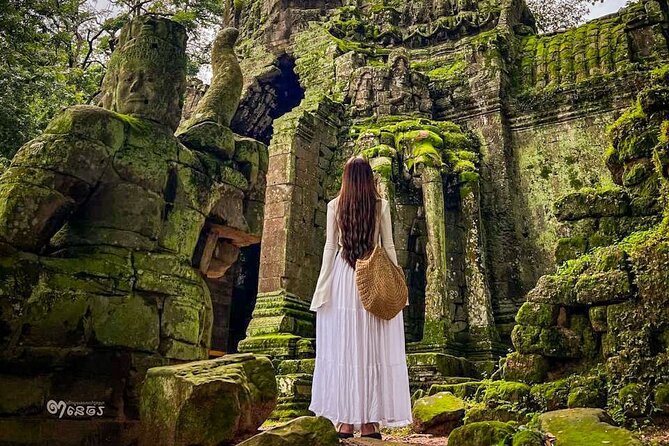
The headline price is $35 per person for a two-day guided tour covering 11 temples, with an air-conditioned vehicle, a tour guide, cool water plus a wet towel, and hotel pickup/drop-off. There’s also a mobile ticket option mentioned, which can simplify getting set up.
But don’t forget the big add-on: temple entrance fees are not included. You’re looking at $62 per person for the temple ticket, so your practical budget is closer to $97 total, before meals. Meals aren’t included, and breakfast is only a break, not a paid-included meal.
Is it worth it? For me, the value comes from three things:
1) You’re getting transport across a big area in air-conditioned comfort.
2) You’re getting a guide who can explain what you’re seeing, not just point at stones.
3) You’re getting the time-critical moments (sunrise and sunset) without needing to plan timing and routes yourself.
If you were to DIY this, you’d still pay for tuk-tuks and tickets, and you’d spend your time solving problems instead of learning. The small group size (max 15) also means the guide can actually manage people, not just herd them.
Guides Make the Difference: What You Gain Beyond the Signs
The best praise in the reviews is consistently about the guides. I’m talking about people who answer questions, slow down when needed, and connect temple design to the larger Khmer story.
You might be guided by names like Sok, who’s described as passionate and knowledgeable about Angkor Wat and nearby temples. Sam Vone pops up in reviews as well, with a mix of history and story plus humor, and he’s even mentioned as helping with photos and videos. Others include Ho Heang, Sem, Sary, and Sayon, all credited with making the information clearer and the pace easier.
There’s also a real comfort angle: at least one review mentions the guide responding to heat stress by providing water and allowing time to rest in the air-conditioned bus. That kind of practical care can be the difference between a memorable day and a miserable one.
One language note worth considering: one review mentioned French travelers having difficulty and suggested planning for a Francophone guide. The tour data doesn’t promise language matching, so if language comfort is critical for you, pick a guide style you’ll understand and ask how the group is handled.
Comfort, Breaks, and What You’ll Want to Bring
This tour includes air-conditioned vehicle support, plus cold water and a wet towel during the day. That’s a big deal at Angkor, where walking happens in intense sun. Even if you’re a confident traveler, you’ll feel it in your legs and sweat levels fast.
Pickup and drop-off are included, which saves time and reduces stress. Meeting the group early at 4:30 can still be a scramble, so I’d keep your bags light and your exit from your hotel quick.
You’ll also need to handle meals on your own. The itinerary mentions a break for breakfast before Ta Keo, but meals are explicitly not included. Use that break to eat something simple and water-friendly so you’re not stuck eating under pressure.
For what to bring, you’ll likely want the usual Angkor survival kit:
- hat and sunscreen
- breathable clothes
- comfy shoes for long walking
- a small personal water plan in case you arrive thirsty
That stuff isn’t listed in the tour details, but it’s sensible for a schedule like this.
Who This Tour Fits Best (and Who Might Want to Think Twice)
This is a great fit if you want:
- sunrise at Angkor Wat without figuring out transport and timing
- a guided historical layer so temples make sense
- a two-day plan that covers major sites plus additional temples
- a group that stays small enough for personal questions
It’s also a smart choice if you’re visiting for the first time and you’d rather spend your energy looking and learning than scheduling.
Think twice if:
- you hate early mornings and long walking days
- you’re very sensitive to schedule changes or late arrivals
- you’re on a tight budget once you add the $62 ticket fee and your meals
One low-rated experience mentioned problems with flexibility and the guide not waiting when meeting at the hotel didn’t go smoothly. That doesn’t mean every day is chaotic, but it’s a good reminder: be punctual and be clear about where you’ll be picked up.
Should You Book This Angkor Wat 2-Day Guided Tour?
If you like structure, comfort, and real explanations, I’d say this tour is worth booking. The combination of sunrise and sunset, 11 temples, max 15 group size, and practical comfort touches like cold water and a wet towel adds up to a strong value—especially at the start of your Angkor visit when everything feels overwhelming.
Just budget the total: the $35 tour price plus the $62 temple ticket, and plan to cover meals. If you do that, you’ll spend your two days seeing more of Angkor than most people manage, with less stress and better context at each stop.
FAQ
Does the tour include hotel pickup?
Yes. Pickup and drop-off are included, and the day starts at 4:30am.
What time does the tour start?
The start time is 4:30am.
How many temples are covered in two days?
The tour covers 11 temples across two days.
Is the temple entrance fee included in the price?
No. Entrance fees are not included. The temple ticket is listed as $62.00 per person.
What’s included in the tour price?
The price includes an air-conditioned vehicle, a tour guide, cool water and a wet towel, pickup/drop-off hotel service, and the guided visits to the temples.
What is the group size?
The tour has a maximum of 15 travelers. Confirmation is received at booking.