REVIEW · SIEM REAP
Angkor Wat: Full-Day Temples Small Group Tour
Book on GetYourGuide →Operated by Journey Cambodia · Bookable on GetYourGuide
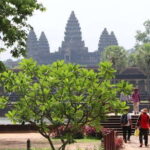
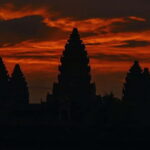
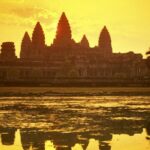
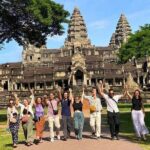
Angkor Wat at sunrise tempo.
This full-day small-group tour is interesting because it strings together the main hits—Angkor Wat, Angkor Thom’s South Gate and Bayon, plus the jungle mood of Ta Prohm—without turning your day into a chaotic queue shuffle. You also get hotel transfers, an air-conditioned van, and a live English guide to translate what you’re seeing into Khmer context.
I especially like two things: the way the guide explains the temples as you move from spot to spot, and the practical comfort touches like bottled water and cool towels that help you keep going in the heat. For many people, the small-group feel also means more room to ask questions and get help with photos.
One consideration: it’s an early start with lots of walking and steps, and you’ll still need to budget for the Angkor Pass entrance fee on the day of the tour (plus your meals).
In This Review
- Key things I’d mark on your map
- Why the 4:10 AM start actually helps
- Angkor Wat: the world’s biggest sacred building
- Angkor Thom’s South Gate: gods, demons, and serious stonework
- Bayon Temple: 200+ faces you can’t unsee
- Srah Srang stop: where the day resets
- Ta Prohm: the jungle temple that looks like a movie set
- What’s included, what costs extra, and what makes the value work
- Photo help and guide style: what you’ll feel during the day
- Who should book this Angkor Wat full-day small-group tour
- Should you book this tour?
- FAQ
- How long is the Angkor Wat full-day temples tour?
- What time will you be picked up in Siem Reap?
- Is the Angkor Pass included in the tour price?
- Is lunch included?
- Which temples and sights are visited?
- Do I need to buy tickets in advance?
- What should I bring and wear?
- Is this tour suitable for families and kids?
Key things I’d mark on your map
- Skip-the-line entry via a separate entrance, so you spend more time inside the ruins.
- Angkor Wat, Bayon, Ta Prohm, and Angkor Thom in one day with a guide to connect the dots.
- Cool towels and bottled water built into the rhythm of the day, not added at the last minute.
- South Gate details with 54 stone figures on each side (gods left, demons right).
- Bayon’s 200+ face towers—big, weird, and instantly unforgettable in person.
- Ta Prohm’s jungle setting (the famous Tomb Raider temple look) with guided time inside the maze-like structures.
Why the 4:10 AM start actually helps
Angkor looks best when it’s still cool and the crowds haven’t fully stacked up. This tour is built around that idea: you’re picked up from Krong Siem Reap early in the morning, then transported by van to the complex. The schedule notes can vary by hotel location, with a typical pickup window around 4:10–4:30 AM, and another stated pickup range between 7:40–8:00 AM—so rely on the exact time the operator confirms the day before.
The payoff for the early start is simple. You get to see Angkor Wat before the day gets sweaty, and you keep the rest of the route more manageable. The long day still has heat and walking, but you’re not doing it at peak daylight blasting time.
A small-group format also changes the feel. You’re not just herded through. You have time to stop, look closely at carvings, and ask questions that make the place click. Guides on this tour are repeatedly praised for turning the archaeology and religion into clear, understandable explanations (not just a list of names and dates).
You can also read our reviews of more tours and experiences in Siem Reap
Angkor Wat: the world’s biggest sacred building
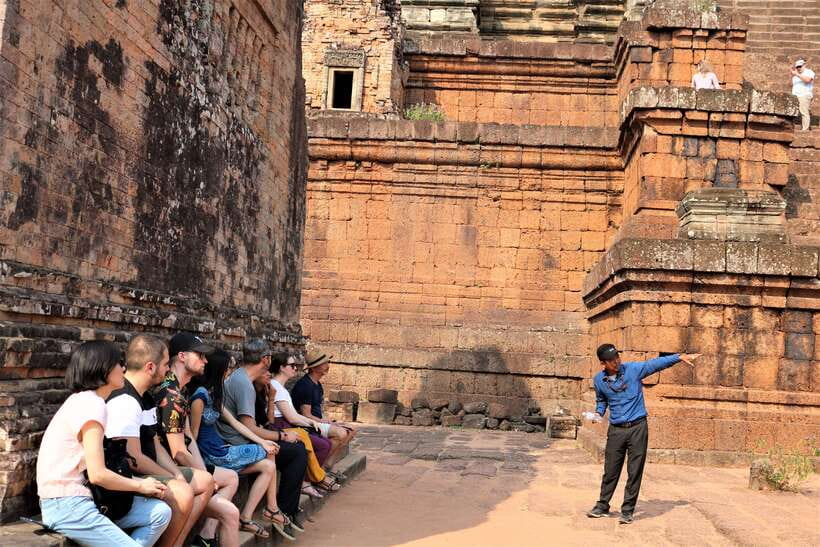
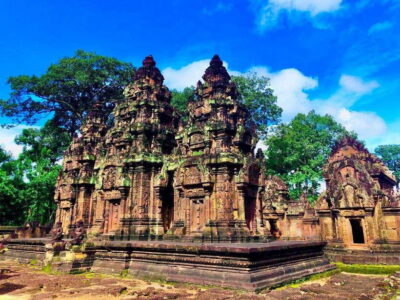
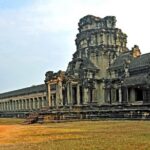
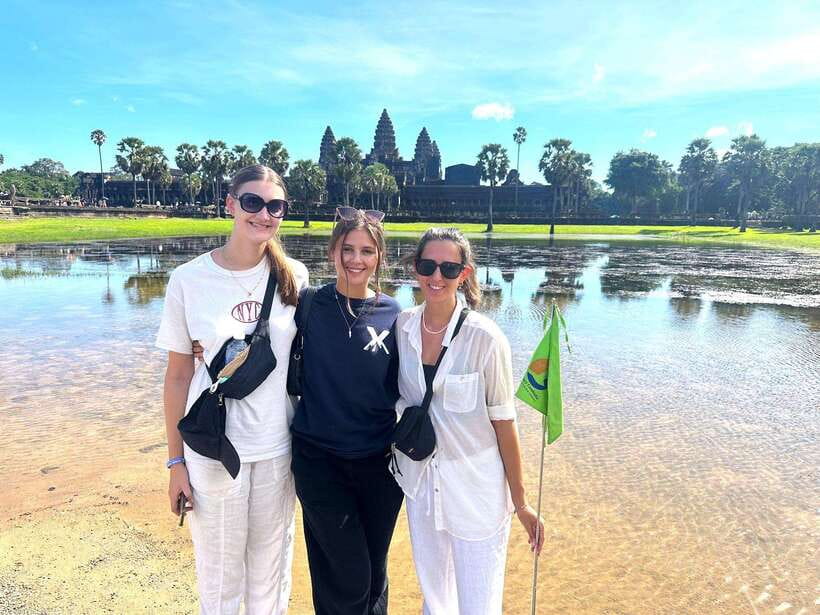
Angkor Wat is the headline, and it earns it. This 12th-century temple complex is described as the world’s largest sacred building and a major architectural achievement of Khmer civilization. You get about two hours for a guided visit, which is enough time to see the main layout without feeling like you only sprinted past it.
Here’s what to focus on as you walk.
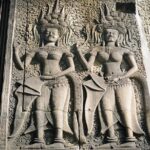
First, look for the temple’s overall symmetry and the way the causeways and courtyards pull your eye deeper into the complex. Second, pay attention to carvings and structural details. A good guide will point out what you’re looking at—like the stories behind the motifs and how the design signals meaning, not just decoration.
You’ll also benefit from the separate entrance that helps you skip the worst waiting. That matters at Angkor. Even a few minutes can turn into a long line if you arrive when everyone else does.
The main drawback here isn’t the temple. It’s you versus your own energy. With lots of sun exposure, uneven surfaces, and stairs, comfortable shoes are non-negotiable. Bring a sun hat and sunglasses, and keep insect repellent ready.
Angkor Thom’s South Gate: gods, demons, and serious stonework
After Angkor Wat, the route heads into Angkor Thom, and the first major wow-factor is the southern gate. This gate is flanked by 54 stone figures on each side—gods to the left and demons to the right—an easy detail to remember once you’re standing there.
This is the kind of stop where a guide matters. Without context, you’ll see impressive stone rows. With context, you start to understand why the figures are placed that way and what the symbolism is trying to say.
This section also sets up the rest of the day’s theme: Angkor Thom isn’t just another ruin. It’s a fortified city space, and it helps you see the temples as part of a larger urban and spiritual system. That makes the later stops feel less random.
There’s also a practical angle. Gates and courtyards can be surprisingly open, so you’ll want sunscreen and a water strategy. The tour includes bottled water and cool towels, which helps you stay functional instead of just surviving.
Bayon Temple: 200+ faces you can’t unsee
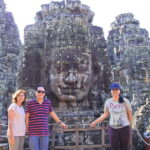
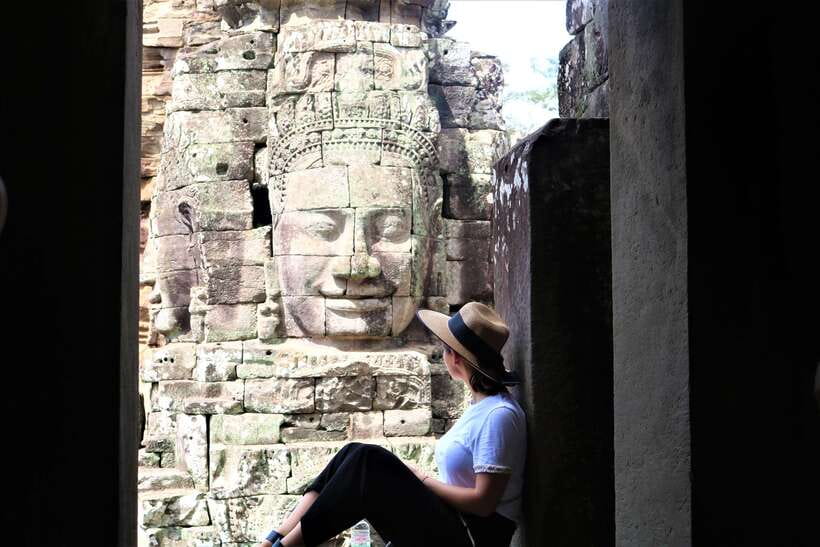
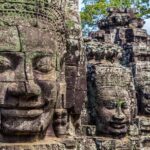
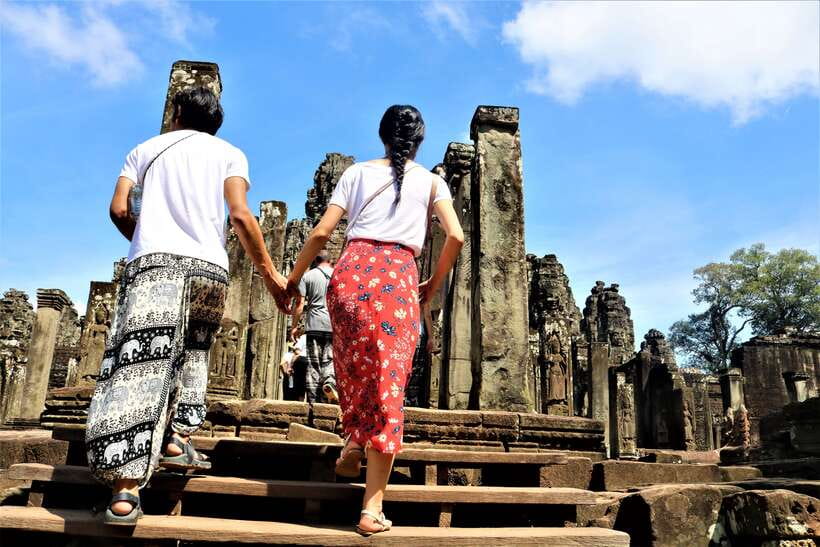
Next comes Bayon Temple, one of the most famous sights in Cambodia for a reason. Bayon’s central towers are covered with more than 200 enormous faces—a design that feels both human and otherworldly at the same time.
The best way to enjoy Bayon is to slow down for a few minutes at a time. Walk around, notice how the faces look different from different angles, and let your brain adjust to the scale. A good guide will connect this imagery to what was happening in Khmer religious life, instead of leaving you with only the visual wow.
You’ll also pass by notable terraces on the way—places like the Terrace of the Elephants and the Terrace of the Leper King. Even if you don’t have time to study every carving, the guide can help you pick out the key figures and patterns.
This is also where the tour’s pacing earns its keep. You don’t get stuck for hours in one spot. You get enough time to absorb the main concept of each temple and then move on while your attention is still sharp.
Srah Srang stop: where the day resets
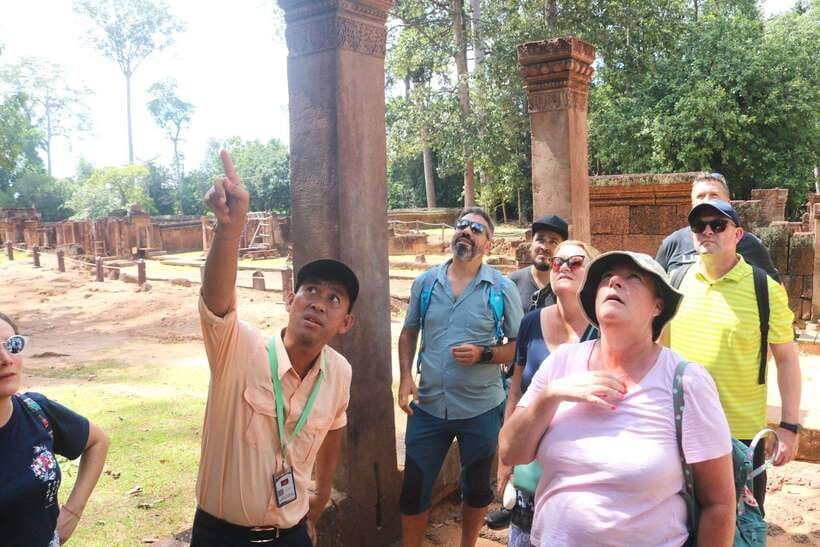
Between the temples, there’s a stop at Srah Srang. This is where you get a breather—there’s time for beer, coffee, tea, and lunch, plus about one hour of free time.
Even if you’re not a big drinker, this break matters. It’s your chance to refuel, use the restroom, and reset your feet before Ta Prohm. The tour format is fairly intense by design, so the break is built in for a reason.
A word of caution: the tour info lists lunch as not included in the basic price, even though the Srah Srang stop mentions lunch. In practice, expect that food may cost extra or be variable by what’s offered at that specific stop. Bring a little cash just in case, or plan to buy lunch at a local restaurant near the temples.
Also, use your free time smart. Don’t just scroll photos. Check your water, reapply sun protection, and make sure your knees and shoulders are covered properly for the next temple entrances.

Ta Prohm: the jungle temple that looks like a movie set
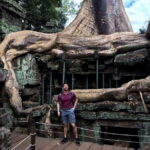
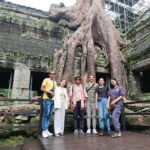
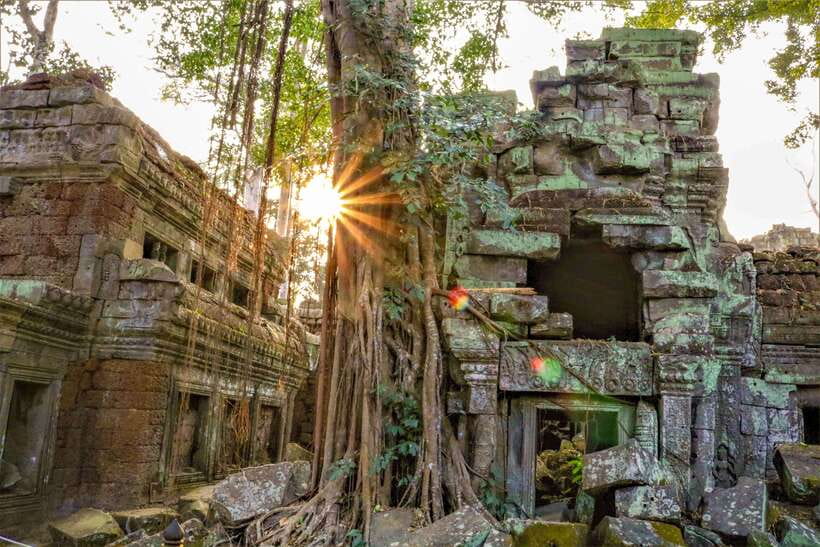
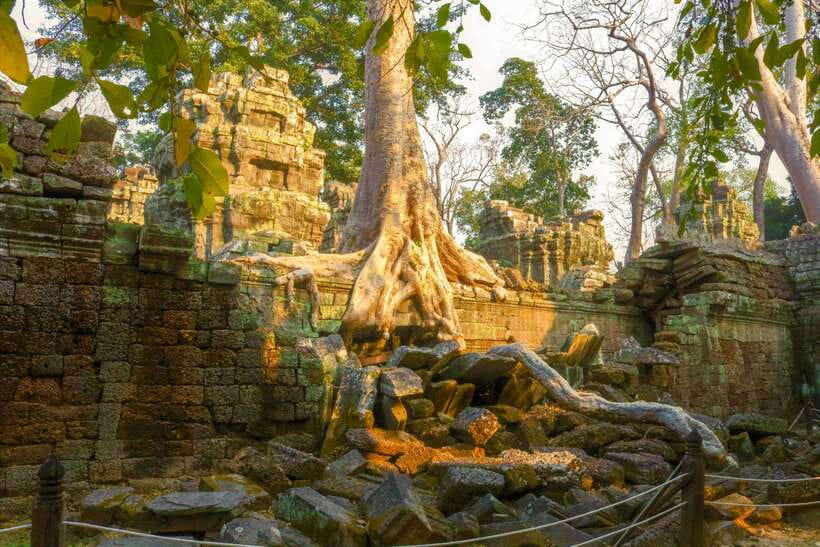
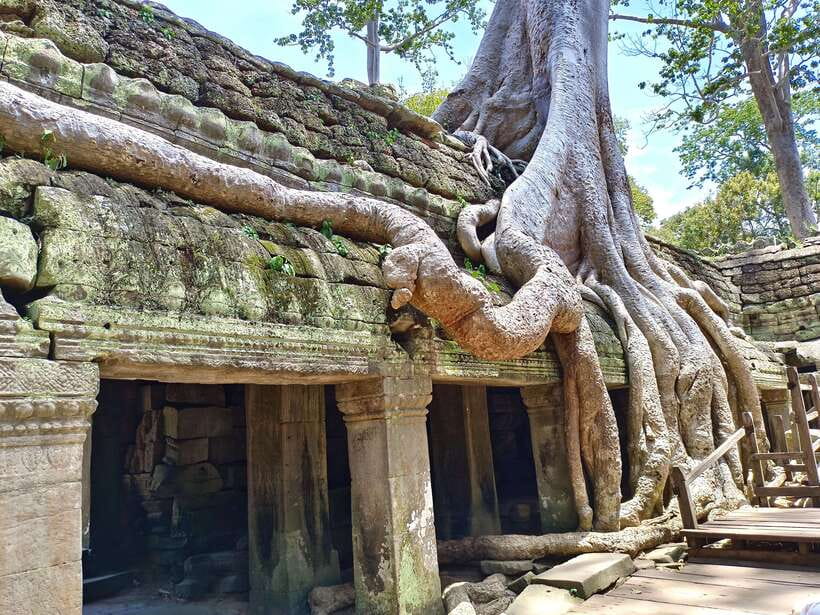
Then you hit Ta Prohm, often called the Tomb Raider temple for its jungle-wrapped, dramatic look. You get about one hour here, including guided time and a walking loop that lets you explore the maze-like interior.
Ta Prohm is famous for atmosphere. Roots cling to stones. Green matter grows through ancient structure. The result is a temple that feels lived-in by nature, not sealed off as a museum piece.
A guide’s role here is practical. Ta Prohm can be confusing if you only follow your instinct. With guidance, you understand what you’re seeing and where the major structures are in relation to each other. The maze aspect becomes a feature, not a problem.
You’ll also get context about its modern rediscovery. The tour mentions that French explorer Henri Mouhot rediscovered this crumbling site in the early 1850s, and Ta Prohm’s current look connects to that story. That kind of detail helps turn the scenery into something you can actually picture in your mind later.
When you finish, the tour heads back to your hotel and typically arrives mid-afternoon, with return drop-off expected between 4:00–5:00 PM.
What’s included, what costs extra, and what makes the value work
This tour sells itself as full-day value at a very low headline price: $17 per person for the tour. But the real math is mostly about the Angkor Pass.
Here’s the cost reality you should plan for:
- Angkor Pass (1 day): $37 per person, payable on the day of the tour
- Lunch: not included in the basic tour price (you may have a meal opportunity during the Srah Srang break)
So you should budget roughly $54 per person total, plus any drinks or snacks you choose at stops. That still can be good value because you’re paying for:
- an English-speaking guide
- hotel pickup and drop-off
- air-conditioned transport
- bottled water and cool towels
- a guided route across the most important temple sites
And the small-group promise matters for comfort. You can ask questions without shouting over dozens of people, and the guide can adapt pace when someone needs a slower path or extra photo time.
You should also know the temple etiquette rules so you don’t get held up. You’ll need to cover knees and shoulders at the temples. The tour notes that skirts aren’t allowed, so plan clothing that fits the rule before you leave Siem Reap.
Photo help and guide style: what you’ll feel during the day
One of the most consistently praised aspects is the guides’ ability to explain what you’re seeing in plain language. Names pop up often in feedback, including Pal Saruon, Yuth, Sam, Chhay, Chhay, and Sakriya, along with other guides like Mr. Sarkiya. The common thread isn’t just intelligence—it’s teaching style.
Look for these traits as you’re touring:
- They point out specific carvings and architectural details, not just big-picture descriptions.
- They answer questions in a way that gives you mental anchors (why a layout exists, what a symbol likely means).
- They actively help with group photos at the best spots, sometimes even doing extra hands-on photo assistance.
That can turn Angkor from a “watch-and-walk” day into a “now I get it” day.
Also, a good driver is part of the experience. Multiple mentions call out punctual, safe driving, plus extra water support during the hot stretches. At Angkor, that kind of reliability is the difference between enjoying the day and feeling stressed.
Who should book this Angkor Wat full-day small-group tour

This tour is a great fit if you want:
- the main Angkor highlights in one day (Angkor Wat, Bayon, Ta Prohm, Angkor Thom)
- a live guide to connect the spiritual and architectural stories
- the comfort of hotel transfers, plus water and cool towels
- a small-group pace that lets you ask questions
It may not be the best match if:
- you’re sensitive to early mornings and long walks (this day starts early and includes uneven temple paths and stairs)
- you need wheelchair access (the tour states it isn’t suitable for wheelchair users)
- you’re traveling with very young kids (it notes children under 5 aren’t suitable)
Should you book this tour?
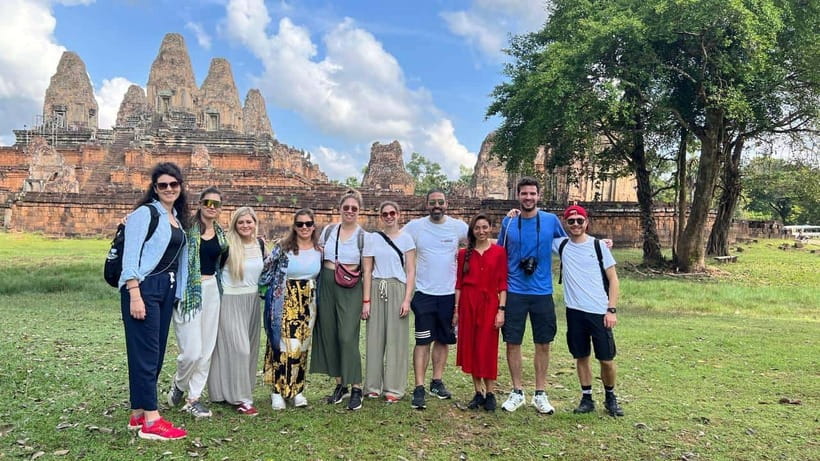
Yes, if your priority is a well-structured Angkor “greatest hits” day with a guide who actually helps you see more than you would on your own. The pricing can feel almost too low until you remember the Angkor Pass fee, but once you total it up, you’re still getting a lot: transportation, entry assistance, and guided time across the best-known temples.
I’d book it if you:
- only have one day in Siem Reap for temples,
- want small-group pacing,
- and care about understanding Khmer art, symbolism, and layout rather than just collecting photos.
If you dislike early starts and heat-heavy walking, consider shifting your plan toward a later-day option or booking a slower, more flexible temple strategy. Otherwise, this tour is one of the most practical ways to get real value out of a short Angkor window.
FAQ
How long is the Angkor Wat full-day temples tour?
The tour runs for about 8 hours. You’re picked up early and you return to your hotel in the mid-afternoon, with arrival typically between 4:00 PM and 5:00 PM.
What time will you be picked up in Siem Reap?
Pickup timing depends on where your hotel is located. One stated standard window is between 4:10 AM and 4:30 AM, and another note lists pickup time between 7:40 AM and 8:00 AM. You’ll be told the exact pickup time one day before the tour.
Is the Angkor Pass included in the tour price?
No. Entrance fees require an Angkor Pass. The tour notes an additional charge of $37 for the 1-day pass, payable on the day of your tour.
Is lunch included?
Lunch is not included in the basic tour price. The schedule includes a stop at Srah Srang with time for food, but you should expect to pay for your meal there or purchase lunch separately nearby.
Which temples and sights are visited?
The tour includes Angkor Wat, the southern gate of Angkor Thom, Bayon Temple, and passes like the Terrace of the Leper King and the Terrace of the Elephants. It also includes Ta Prohm and a break stop at Srah Srang.
Do I need to buy tickets in advance?
You don’t need to skip ahead on your own for entry because the tour includes skip-the-line access through a separate entrance. However, you do need to pay for the Angkor Pass entrance fee on the day.
What should I bring and wear?
Bring comfortable shoes, sunglasses, a sun hat, and insect repellent. You must cover your knees and shoulders at temples. Skirts aren’t allowed, so plan clothing that fits the rule.
Is this tour suitable for families and kids?
The tour is not suitable for children under 5 years old. It also notes it isn’t suitable for wheelchair users.