REVIEW · SIEM REAP
Angkor Wat Sunrise, Banteay Srei, Bayon & Ta Prohm Temple
Book on GetYourGuide →Operated by Euro Khmer Voyages · Bookable on GetYourGuide
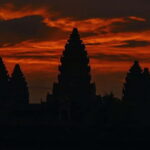
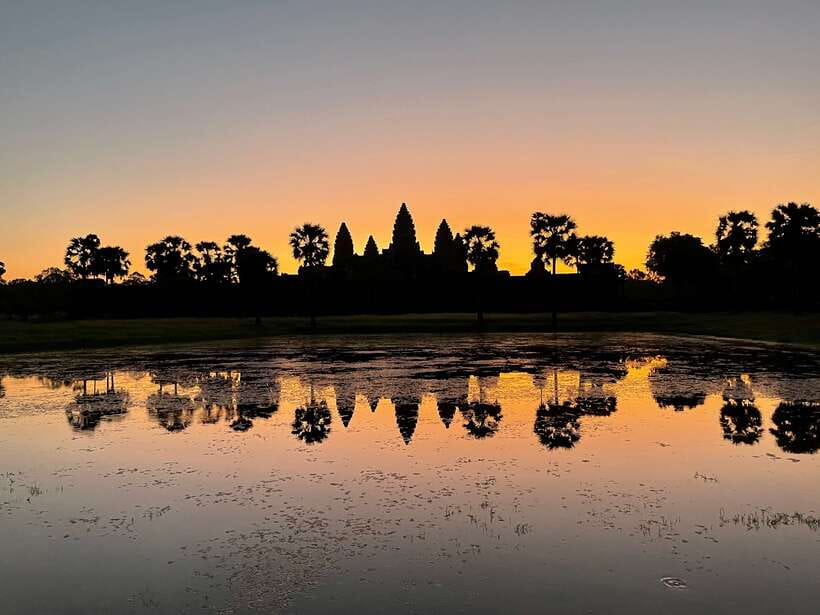
Sunrise at Angkor is a movie start. This early run to Angkor Wat helps you watch the towers glow before the day crowds arrive, and the stop at Banteay Srei is one of the best carved-wall experiences in the whole area. I also like how guides such as Sinan and Makara explain what you’re seeing with clear, on-the-spot context, even when the schedule is tight; the only drawback is it’s a long, hot day, so you’ll need solid shoes and sun-safe clothes.
You also get the practical stuff that makes temple days feel manageable: an air-conditioned vehicle, drinking water, cool towels, and a fresh coconut juice stop along the way. The temple lineup is built for variety too, from pink-limestone detail to jungle-overgrown stone to Bayon’s forest of smiling Buddha faces.
One more consideration: this tour isn’t suitable for pregnant women, and sportswear isn’t allowed. If you’re coming for photos, you’ll do best with clothes that feel comfortable for walking and respectful enough for the sites.
In This Review
- Key things I’d mark on your map before you go
- Angkor Wat sunrise: the calm start that makes the rest easier
- Banteay Srei and Pre Rup: pink stone carvings and six big towers
- Ta Prohm: when the jungle takes part of the ruins
- Bayon Temple: smiling faces and a maze of towers
- Price and value: what $80 covers, and what you still need
- Timing, comfort, and how to avoid the usual temple-day traps
- Who this Angkor circuit suits (and who should skip it)
- Should you book this tour?
- FAQ
- How long is the tour?
- Is pickup included?
- What temples are included?
- Do I need an Angkor pass?
- Are meals included in the price?
- What’s included besides transport and the guide?
- What should I bring?
- Is sportswear allowed?
- Is it suitable for pregnant women?
Key things I’d mark on your map before you go
- Angkor Wat sunrise timing that starts you ahead of the main rush
- Banteay Srei’s pink limestone and its famously intricate carvings
- Pre Rup’s six large towers as part of the temple-route rhythm
- Ta Prohm with jungle takeover plus fig and silk-cotton trees growing through ruins
- Bayon’s 54 towers and the 200 smiling Buddha faces
- Cooling support with bottled water, cool towels, and coconut juice
Angkor Wat sunrise: the calm start that makes the rest easier
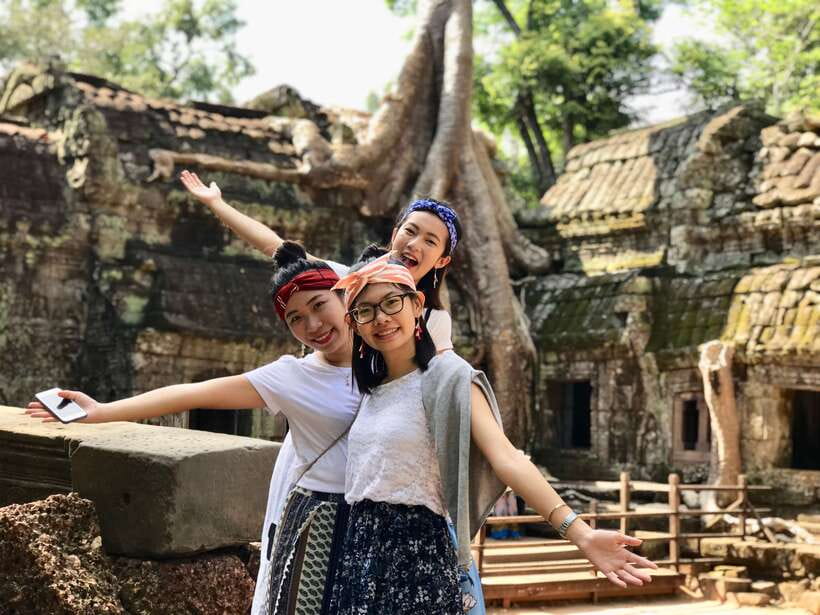
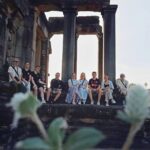
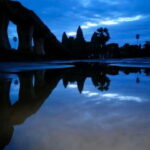
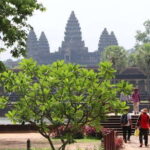
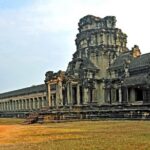
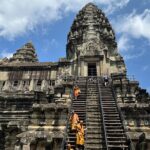
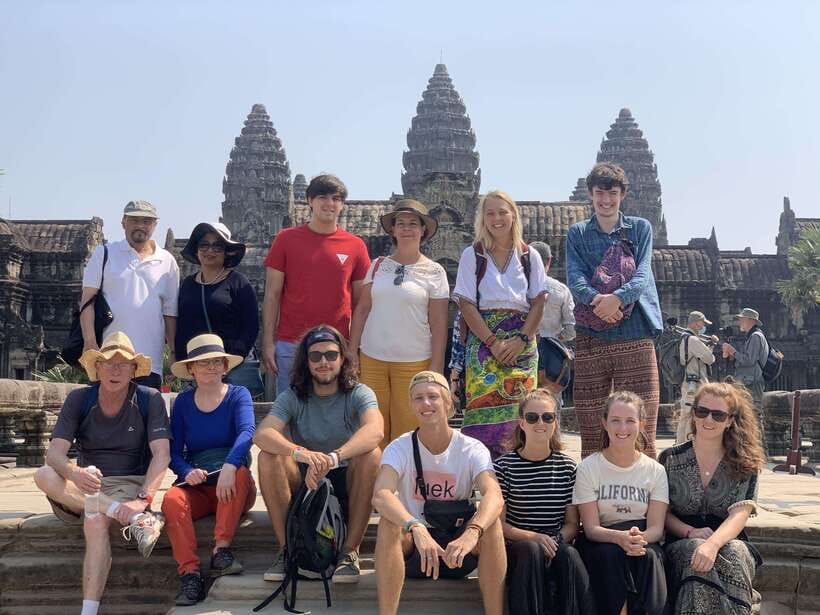
If you love temples for their atmosphere as much as their architecture, the sunrise start at Angkor Wat is the whole point. You’re going first, before the wave of daytime visitors hits. That means you get better light for photos, plus more breathing room to actually look at the bas-reliefs and the way the causeway leads your eye.
This stop runs about two hours, which is long enough to see the main views and also get your bearings. Early starts can be rough anywhere, but this route is designed with the day’s heat in mind. Once you’re done with sunrise, the tour shifts away from peak sun and into a more varied circuit with breaks and transfers.
One practical note: it’s still Cambodia, so “cool mornings” don’t mean you won’t get hot later. Wear what you’d wear for a long walk day, not just a quick photo run. The included water and cool towels help, but they’re not magic. Build the day around comfort first, photos second.
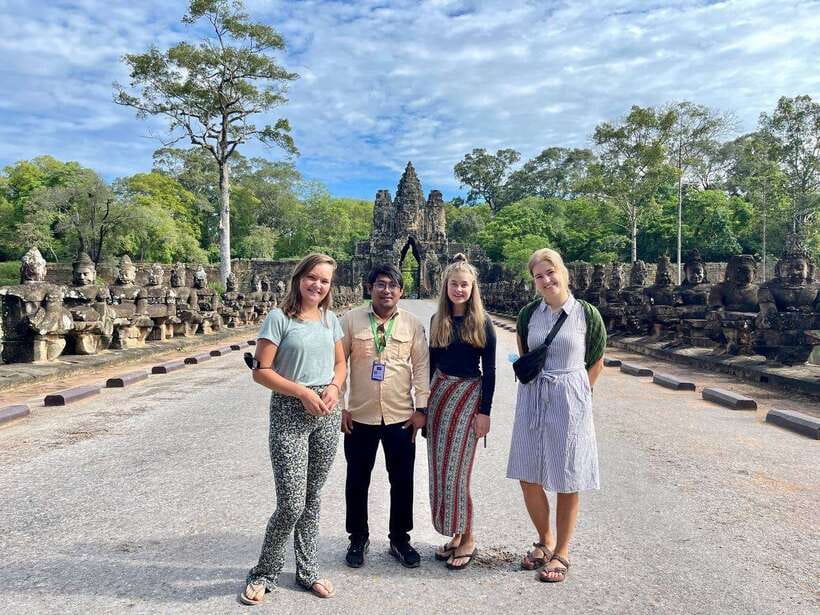
I also like that the guide role here matters. A good explanation can turn a pile of stones into something you can read. On this kind of route, you may get an experienced guide such as Sinan who can connect details on the temple to the bigger story around Angkor.
You can also read our reviews of more tours and experiences in Siem Reap

Banteay Srei and Pre Rup: pink stone carvings and six big towers
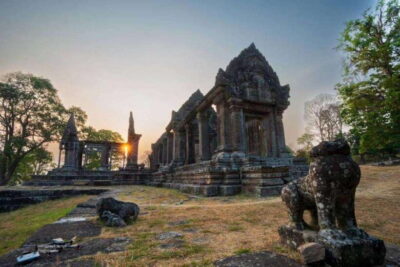
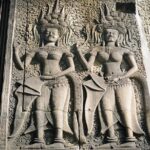
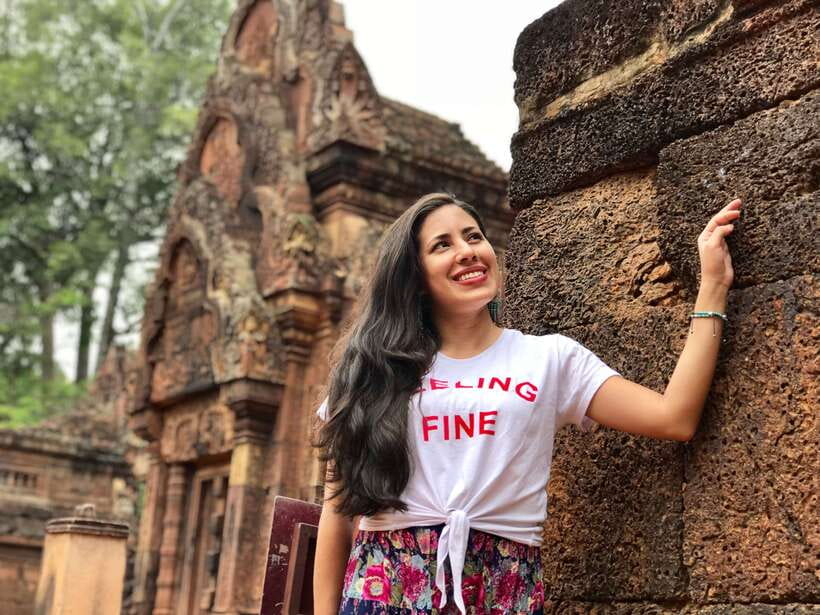
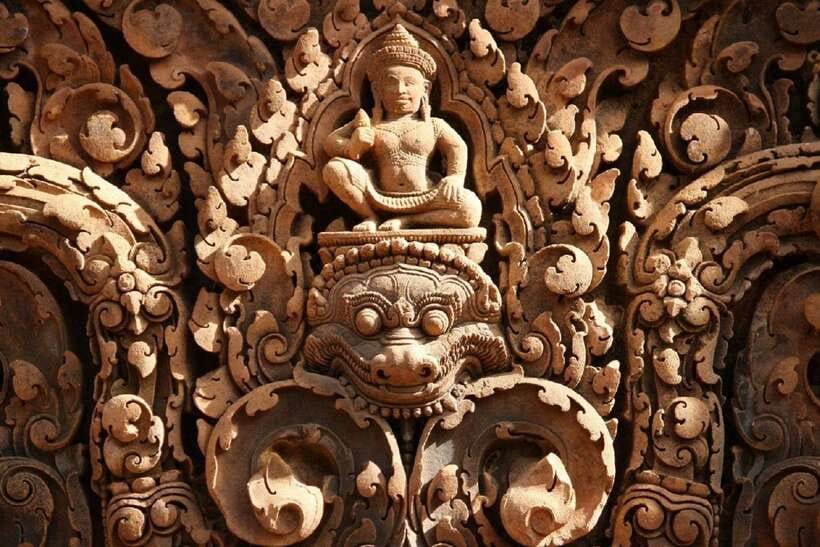
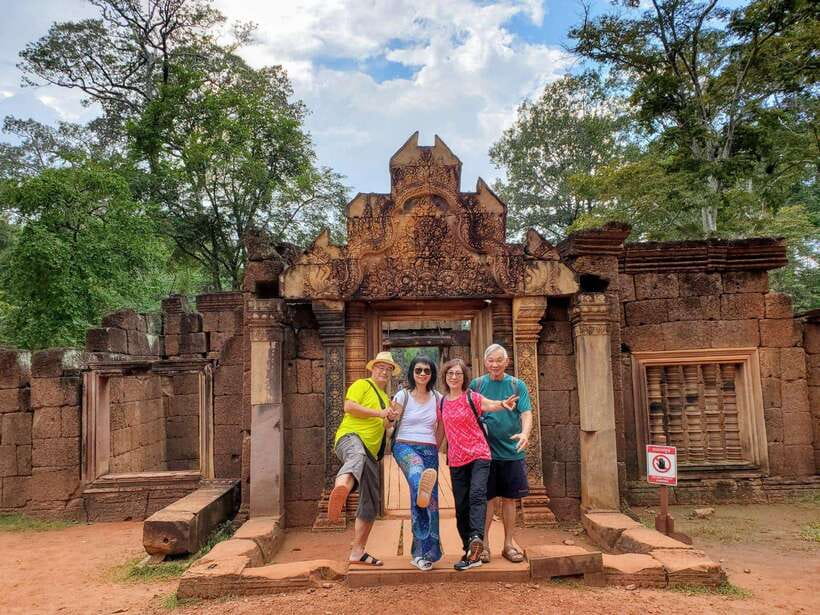
After sunrise, the tour moves toward the part of Angkor that many people remember for one reason: Banteay Srei. This temple is built on pink sandstone/limestone, and the walls are covered with some of the most intricate carving work you’ll see in the region. Instead of giant sculptural scenes at a distance, you get dense detail—carvings that reward slowing down.
The carved surfaces can feel almost addictive once you start noticing the repeated motifs: curves, figures, borders, and the layering of ornament. That’s why Banteay Srei works so well in a single-day circuit. It gives your eyes a different kind of challenge from the wide-angle views at Angkor Wat.
On the way, you also get a stop at the Pre Rup temple area, where you can admire the six large towers. Even if you don’t spend forever there, it’s a useful visual anchor: it helps you compare temple layouts across the route, instead of treating each stop like a separate postcard.
This is also where it helps to think like a photographer, not just a tourist. Look for three things:
- edges and symmetry in the carvings
- the way light hits the stone surfaces (it changes a lot during the day)
- viewpoints where you can step back and see how the smaller details connect to the overall structure
There’s typically a break built into this segment, plus time connected to shopping and sightseeing. That matters because it gives you a chance to reset before the jungle-temple portion.
Ta Prohm: when the jungle takes part of the ruins
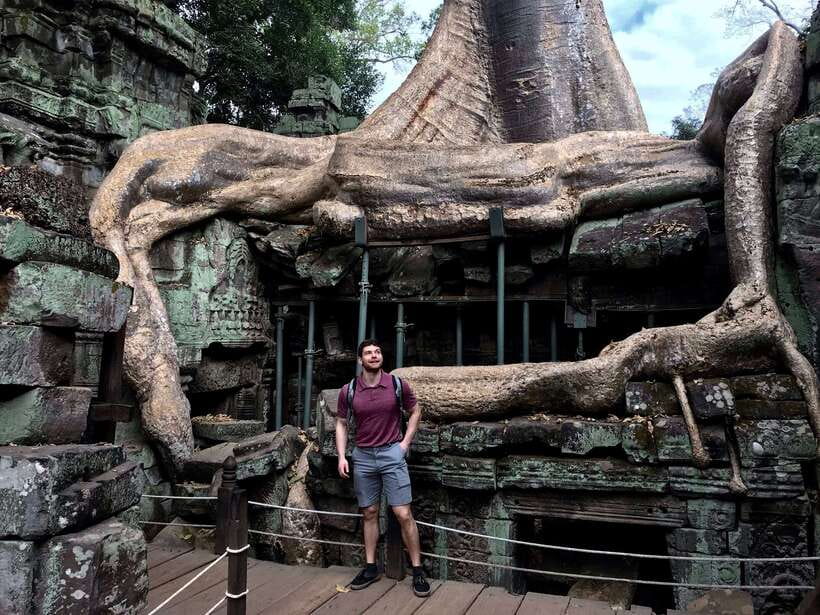
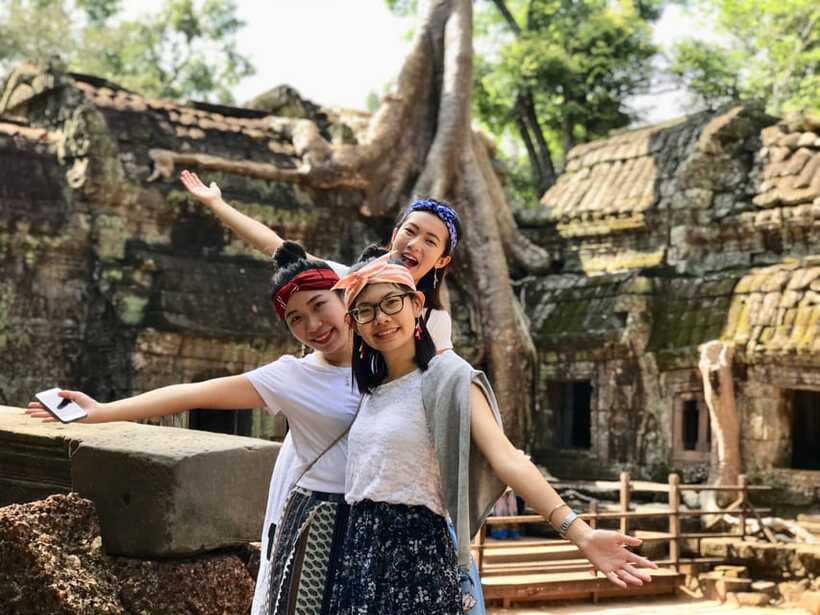
If Angkor Wat is your grand opener and Banteay Srei is your detail fix, Ta Prohm is the emotional middle. This monastic complex is famous because the jungle has overtaken the structures. You’re not just looking at ruins here—you’re looking at the collision of human planning and forest persistence.
What makes Ta Prohm stand out on this itinerary is the specific kind of nature you see. Expect to notice big fig and silk-cotton trees growing from inside towers and corridors. Those aren’t just dramatic for photos; they also change how you move. You can’t see everything in a straight line, and that’s the point. The trees create shifting viewpoints and pockets of shade.
The tour typically gives you about one hour at Ta Prohm. For a jungle-overgrown site, that’s a good amount of time—enough to walk through the main areas without feeling like you’re sprinting. You’ll want comfortable shoes here. Roots, uneven stone, and occasional slippery spots are common at temple sites, and this area adds more surface irregularity.
If you’re heat-sensitive, aim to take a slower pace through the hottest stretches. The tour’s water and cool towels help, and you’ll get those again when you’re back in the vehicle during transfers. Even with support, planning a calmer walking rhythm is what makes Ta Prohm feel magical instead of exhausting.
Bayon Temple: smiling faces and a maze of towers
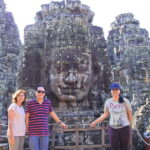
After Ta Prohm, the day shifts into Bayon Temple, one of the most recognizable Angkor stops. The headline is simple: 54 towers and 200 smiling Buddha faces. The first time you see it, your brain does that thing where it tries to count towers, then realizes the faces feel like they’re watching from every direction.
Bayon is about movement and perspective. Up close, you notice the carving work and the way each face has its own expression. From farther back, the towers become a pattern across the skyline. That pattern is the trick: the design keeps you looking around instead of staring straight ahead.
This stop comes with about one hour, plus some free time to walk and sightsee. That free time is valuable because Bayon works best when you can choose your own path through the corridors and stair angles. A guide can explain the bigger meaning of the iconography, but your feet still decide what you notice most.
For me, what makes Bayon a strong finish in a one-day circuit is the contrast. You go from jungle breathing around the stones to a temple that feels more controlled and structured, like the city’s core comes back into focus.
Price and value: what $80 covers, and what you still need
The price for this experience is listed at $80 per person for about eight hours. For Siem Reap temple circuits, that sits in the practical middle. The value comes from what’s included, not just the sightseeing.
You’re getting:
- air-conditioned transportation by car/minivan
- an English-speaking guide (the guide is stated as fully vaccinated)
- fresh coconut juice, plus drinking water
- cool towels during the day
That cooling support sounds small until you’re actually in it. Hot temple days turn into poor decisions fast if you’re dehydrated or overheated. Here, you’re paying for fewer stress points.
One big separate cost: the Angkor pass is not included. A 1-day pass is listed as $37 per person per day. So your realistic temple-day budget is closer to $117 plus meals, assuming you don’t already have a pass. Meals are typically around $8–$12 per person, so it’s worth setting aside that amount too.
If you already have a valid Angkor pass, this tour becomes better value. If you don’t, still not bad, but you should treat the pass as a planned baseline cost, not an add-on you forgot.
Timing, comfort, and how to avoid the usual temple-day traps
This tour runs about eight hours, starting with pickup in the Krong Siem Reap area. You’ll spend time moving between temples by van, then walking in each site segment.
The itinerary flow is efficient:
- sunrise at Angkor Wat
- then Banteay Srei (with break time) and a Pre Rup look
- then Ta Prohm
- then Bayon
That order isn’t random. Sunrise gives you the best light and the least crowd pressure. Banteay Srei is detailed and rewarding after you wake up your eyes. Ta Prohm is physically similar but emotionally different, with more uneven ground and more shade variation. Bayon is the structured finale before you head back.
Here’s what you should do to make the day feel smooth:
- Wear comfortable shoes you trust on uneven stone
- Choose clothes that are comfortable for walking, but respectful; sportswear isn’t allowed
- Bring sun protection in your day bag (even if towels and water are provided)
- Be ready for guide-to-guide variation in English clarity; one experience noted English wasn’t perfect, so ask questions and speak slowly
The tour’s inclusions help a lot with comfort. In particular, the cool towel moments after returning to the vehicle can feel like a reset button. One driver/guiding team example included continuous cold water and fresh towels, which is exactly the kind of small service that keeps the day from falling apart.
Who this Angkor circuit suits (and who should skip it)
This is a great match if you want a one-day, four-temple arc that hits the big visual notes: sunrise drama, carved pink stone, jungle ruins, and Bayon’s smiling faces.
It’s also a good fit if you like guided explanations. Guides such as Sinan and Makara were specifically praised for making the highlights easier to understand, which can genuinely improve your experience when temples are crowded with symbols you might otherwise miss.
You should think twice if:
- You’re not comfortable with long walking days and uneven surfaces
- You need an accessibility-first plan (no specific accessibility details are provided)
- You’re traveling with a limitation listed as not suitable for pregnant women
And if you’re the type who cares a lot about a single “perfect” photo angle, this tour’s mix is still strong, but the schedule is built for variety rather than lingering forever at one spot.
Should you book this tour?
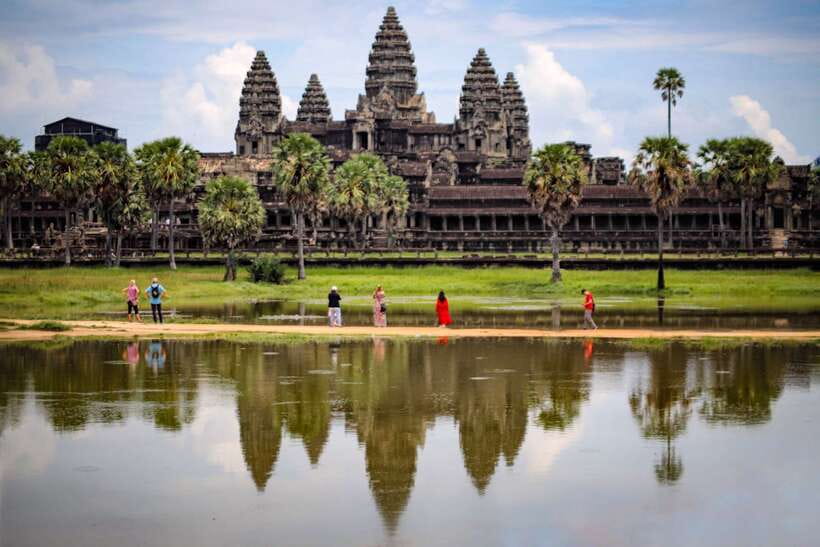
I’d book it if you want the classic Angkor highlights without turning your day into transportation research or crowd math. The early start at Angkor Wat, the precision of Banteay Srei, the unforgettable look of Ta Prohm, and the face-tower spectacle of Bayon give you a full spectrum of what Angkor feels like.
It’s especially worth it if you like having a guide who can explain what you’re seeing, and if you appreciate comfort extras like cool towels and coconut juice. Just go in knowing it’s hot, it’s walking-heavy, and you’ll need to budget the Angkor pass plus meals.
If you’re hoping for a relaxed pace with lots of long sits and slow contemplation, this might feel a little structured. If you’re okay with a well-managed day and want maximum highlights per hour, it’s a strong choice.
FAQ
How long is the tour?
The tour duration is listed as 8 hours.
Is pickup included?
Yes. Pickup is included from your accommodation area in Krong Siem Reap. You’ll need to wait in the hotel lobby about 5 minutes before the start.
What temples are included?
The route includes Angkor Wat (sunrise), Banteay Srei, Ta Prohm, and Bayon. It also includes a stop at the Pre Rup temple area with its six large towers.
Do I need an Angkor pass?
Yes. The 1-day Angkor pass is not included and is listed at $37 per person per day.
Are meals included in the price?
No. Meals are not included. Meals are estimated at around $8–$12 per person.
What’s included besides transport and the guide?
Included items are air-conditioned transportation, an English-speaking tour guide, fresh coconut juice, drinking water, and cool towels.
What should I bring?
Bring comfortable shoes and comfortable clothes.
Is sportswear allowed?
No. Sportswear is not allowed.
Is it suitable for pregnant women?
No. The tour is listed as not suitable for pregnant women.
If you want, tell me your hotel area (or neighborhood name in Siem Reap) and your comfort level with early mornings. I can help you decide whether the sunrise start is a good fit for you.